The Forecast
Our top story
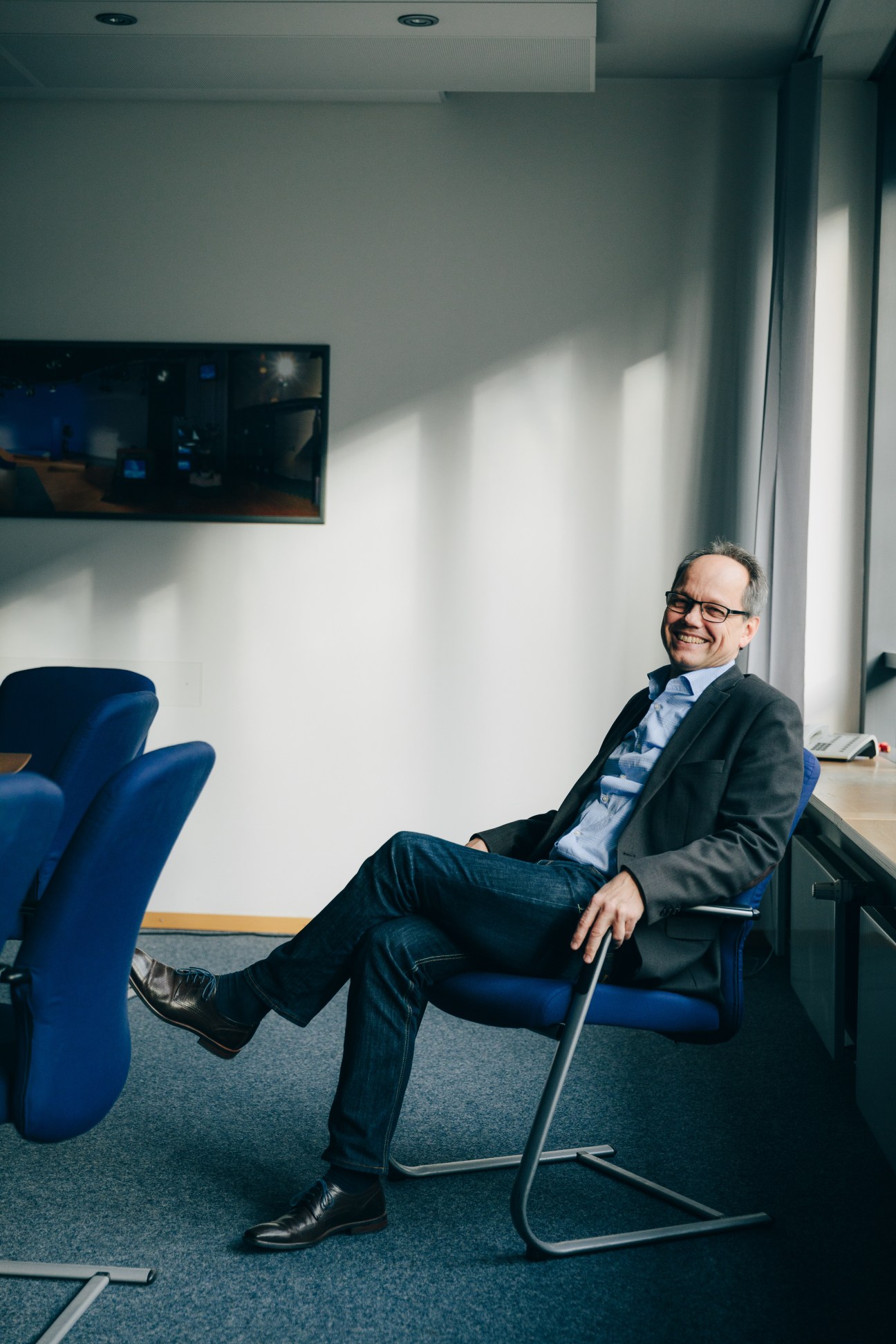
From the fall of the wall to the election of Donald Trump as US president, the Tagesschau has seen and reported it all. “It is one of the last beacons in existence that continues to bring people together for the news,” says Dr Kai Gniffke, editor in chief of ARD-Aktuell, which produces TV institution Tagesschau, along with Tagesthemen, Nachtmagazin and Tagesschau24 for the German public-broadcast service. The former is the most successful news show in the western world, beating even the BBC and PBS to pole position; its 20.00 edition draws in close to 10 million viewers every evening.
The Tagesschau has been a fixture since 1952 and during the golden age of television there was an unspoken rule: you didn’t telephone anyone at 20.00. Even now, television programming is anchored around the show: no channel would dare schedule a film at the same time and any that did would quickly realise their mistake and return to the 20.15 slot marked by the end of the nightly news. And unlike most newscasts, the Tagesschau is not branded by an anchor (that role is reserved for the daily Tagesthemen, which has recently welcomed presenter Ingo Zamperoni to its team). In fact, the evening Tagesschau is probably the world’s only news show that features six different presenters. “The news is the star, not the anchor,” says Gniffke. “This format wouldn’t work in America.”
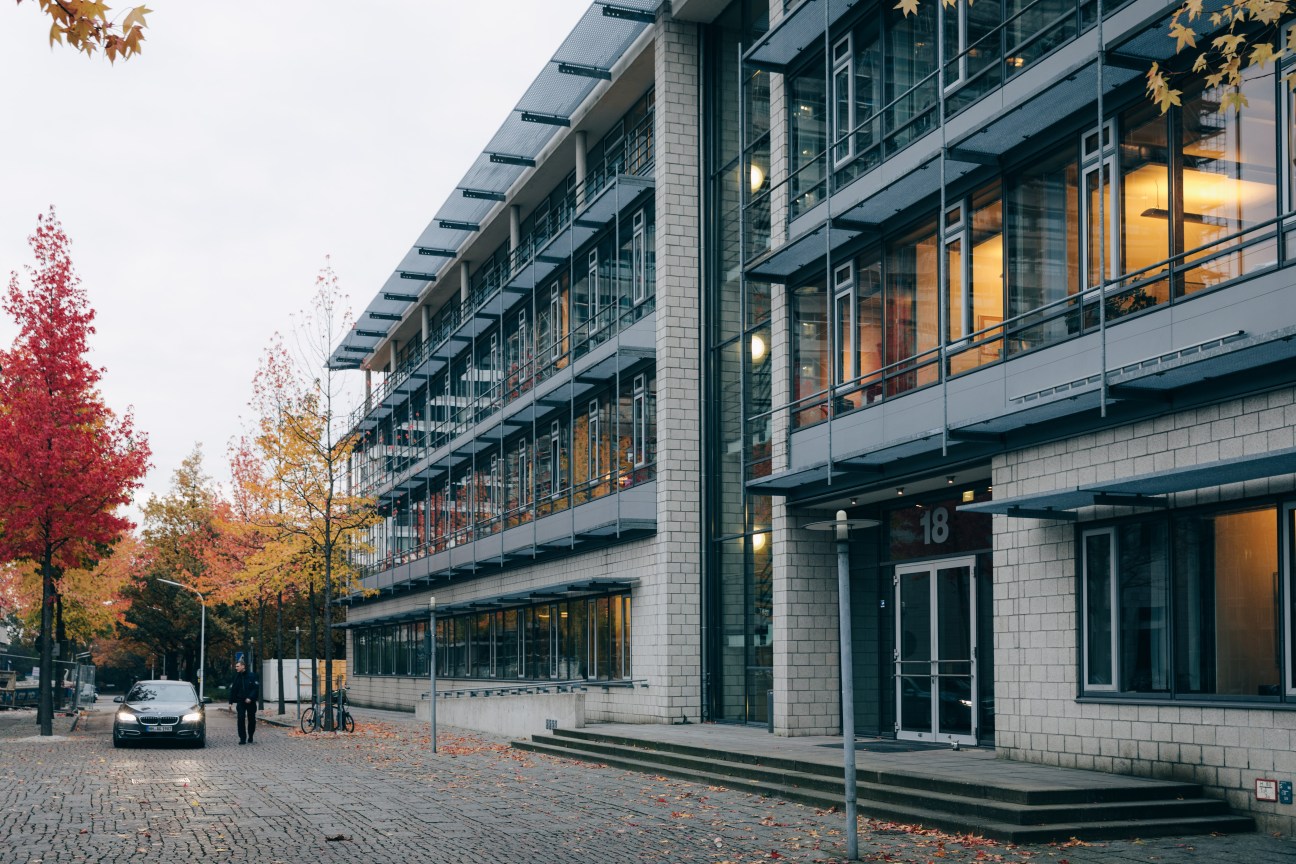
To find out how it works so well in Germany is why we’re making our way past the gatekeeper of Hamburg’s Norddeutscher Rundfunk campus and down the storied Hugh-Greene-Weg (named after the late director-general of the BBC and founder of public broadcasting in postwar Germany) to the home of Tagesschau. We arrive at the three-storey building just in time for the morning conference. At 10.30 sharp, Gniffke takes his seat at the top of the table next to producers from every department, who make up a fraction of the 300-strong team (if Gniffke were to attend every conference in the house he’d be in and out of meetings all day). It is illustrative of the fact that the ARD (the consortium of Germany’s regional public-service broadcasters) takes pride in running a very democratic process – though when a decision has to be made, Gniffke always has the last word. His authority is reflected in his outfit: he’s the only one in the newsroom sporting a smart suit. Everyone else is dressed down – apart from the presenters, of course.
Susanne Holst, who joined the Tagesschau in 2001, is suited in a pink outfit as classic as the show itself. She’s just finished presenting the news at noon and has taken a seat at her desk to prepare for the next broadcast. “The first time I heard that gong in the studio, I thought, ‘Fantastic, the Tagesschau is about to start.’ And then I realised – it’s me, I’m presenting! I’ve had to learn to subdue my expressions and personality to let the news speak for itself; we don’t want to influence the audience.”
Despite there being 20 daily editions of the Tagesschau, the production team’s day orbits around the 20.00 show and everything that comes before it is almost like a dress rehearsal for the big performance. “With an audience of nearly 10 million the tension is great,” says regular host Judith Rakers. “This is the show on which we’re all judged.” Every evening the Tagesschau pulls in a market share of about 33 per cent, making it the most watched newscast in both Germany and Europe. “After 64 years it’s a tradition. It’s rooted in the DNA of the people; the evening begins with the Tagesschau,” says Gniffke, with the kind of emotion a presenter wouldn’t dare express on camera. Yet it’s not only tradition that has made this programme a success: first and foremost it is a dedication to trustworthy coverage. “We wait for confirmation before we announce anything, despite the pressure of being live on air.”
Whether it was September 11 or the 2016 Munich shootings, the team did not release any information before it was checked thrice. “We don’t always have to be the fastest but the most reliable,” says Gniffke. And that’s the key: whenever something happens, the Tagesschau is what people turn to for the facts. “We have to try to explain this complicated, crazy world we live in to the public so that they can make informed decisions,” adds Gniffke, keeping an eye on the TV screens in his office as if to ensure that he isn’t missing any breaking news. “The way in which news is distributed has changed: 30 years ago we broadcast two daily shows, now Tagesschau24 is live throughout the day and we’re active on social media and the web. But one thing hasn’t changed: television is still the place people go for hard news.”
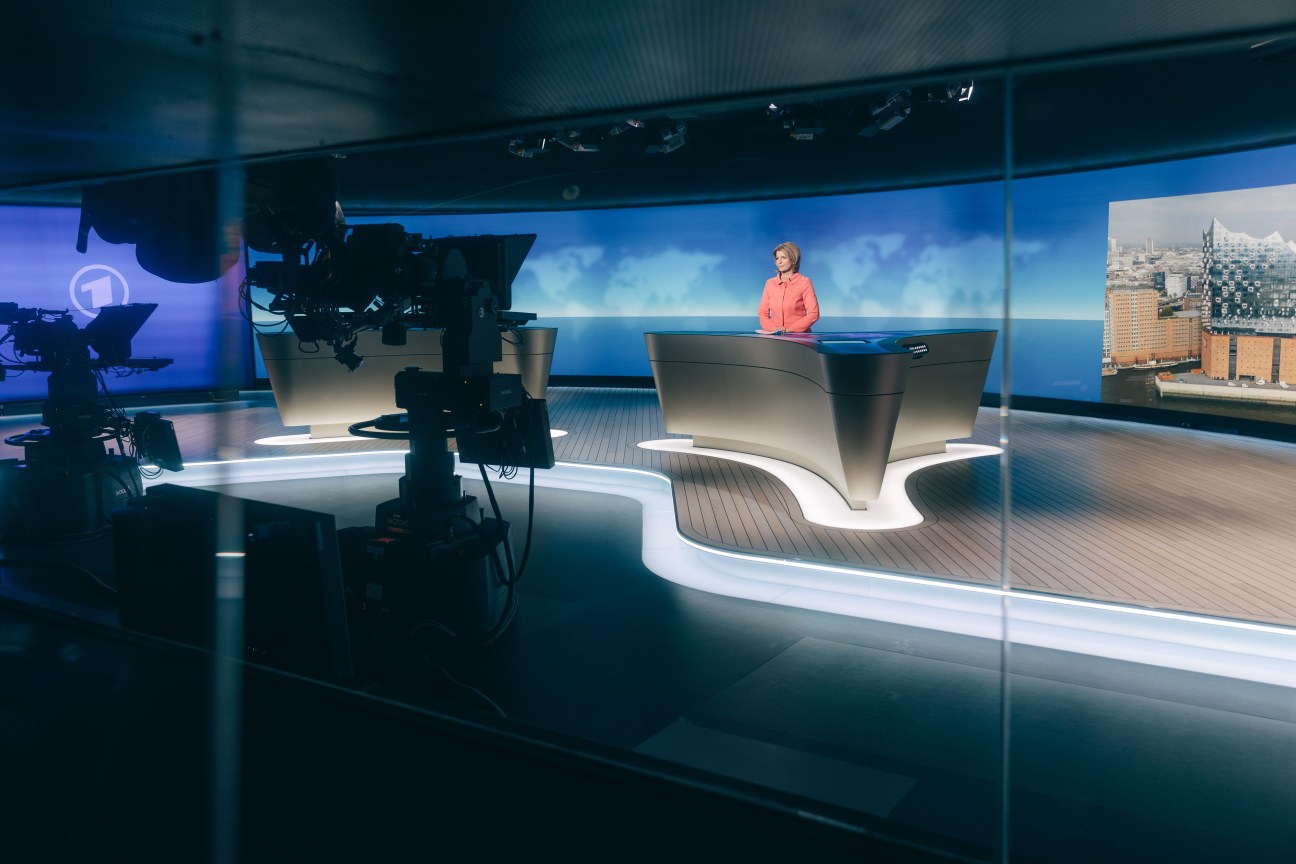
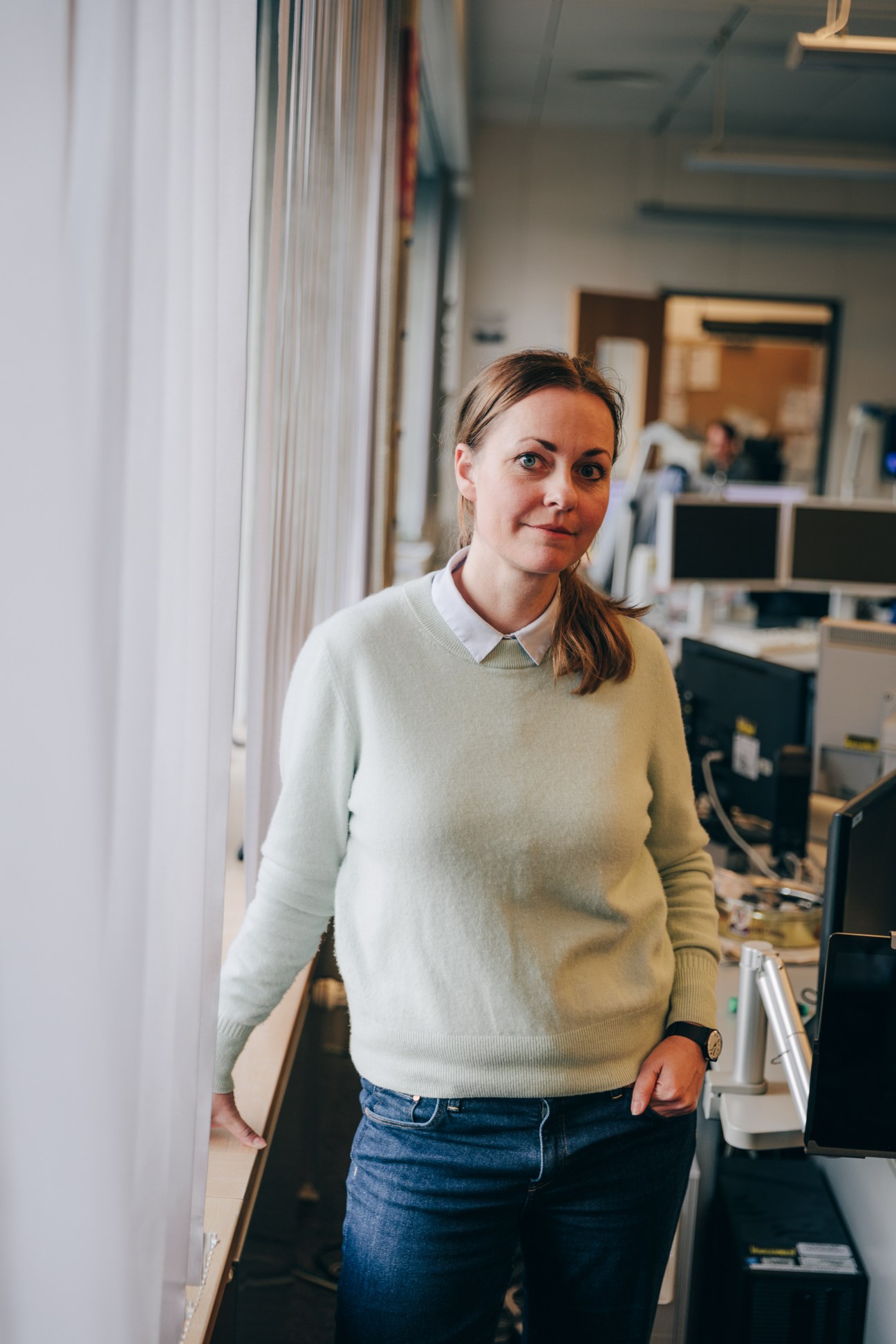
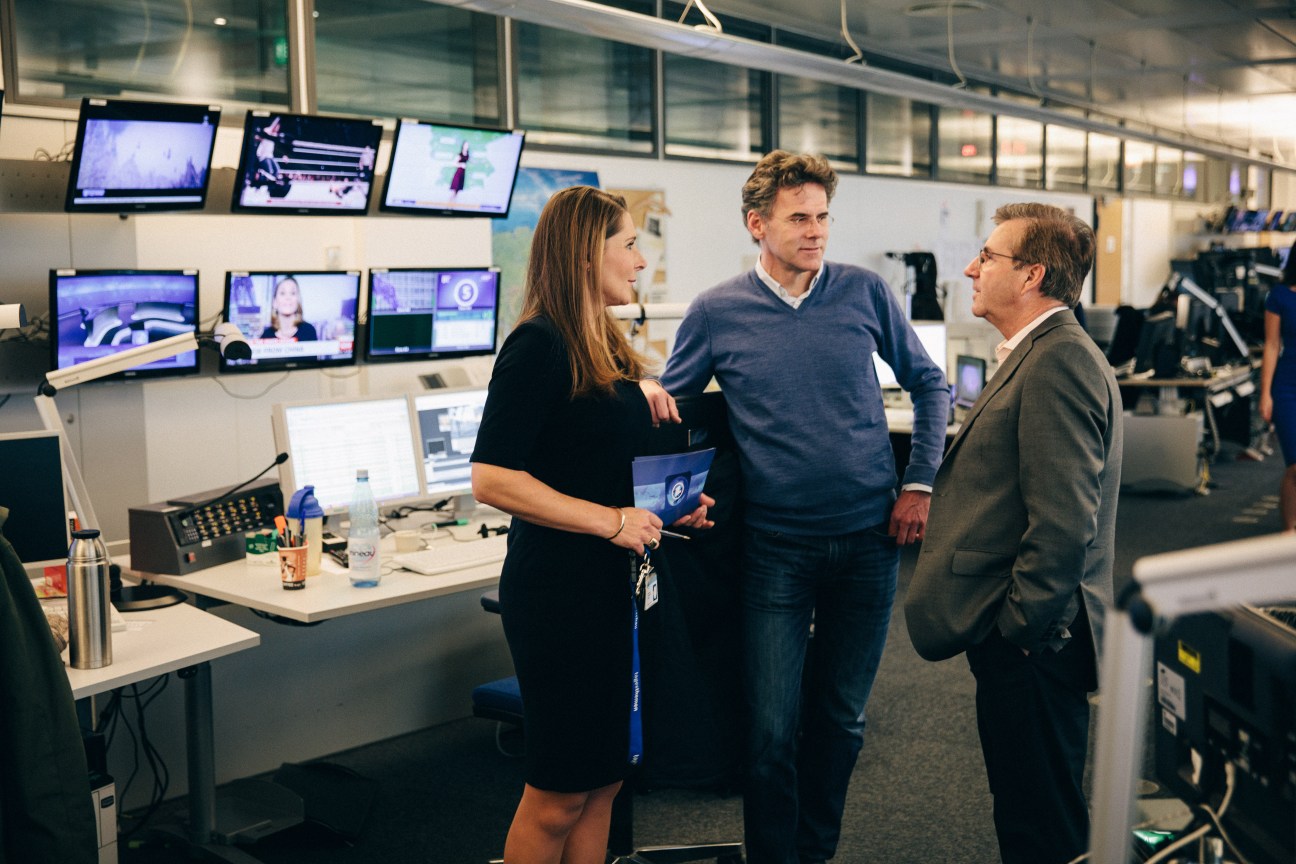
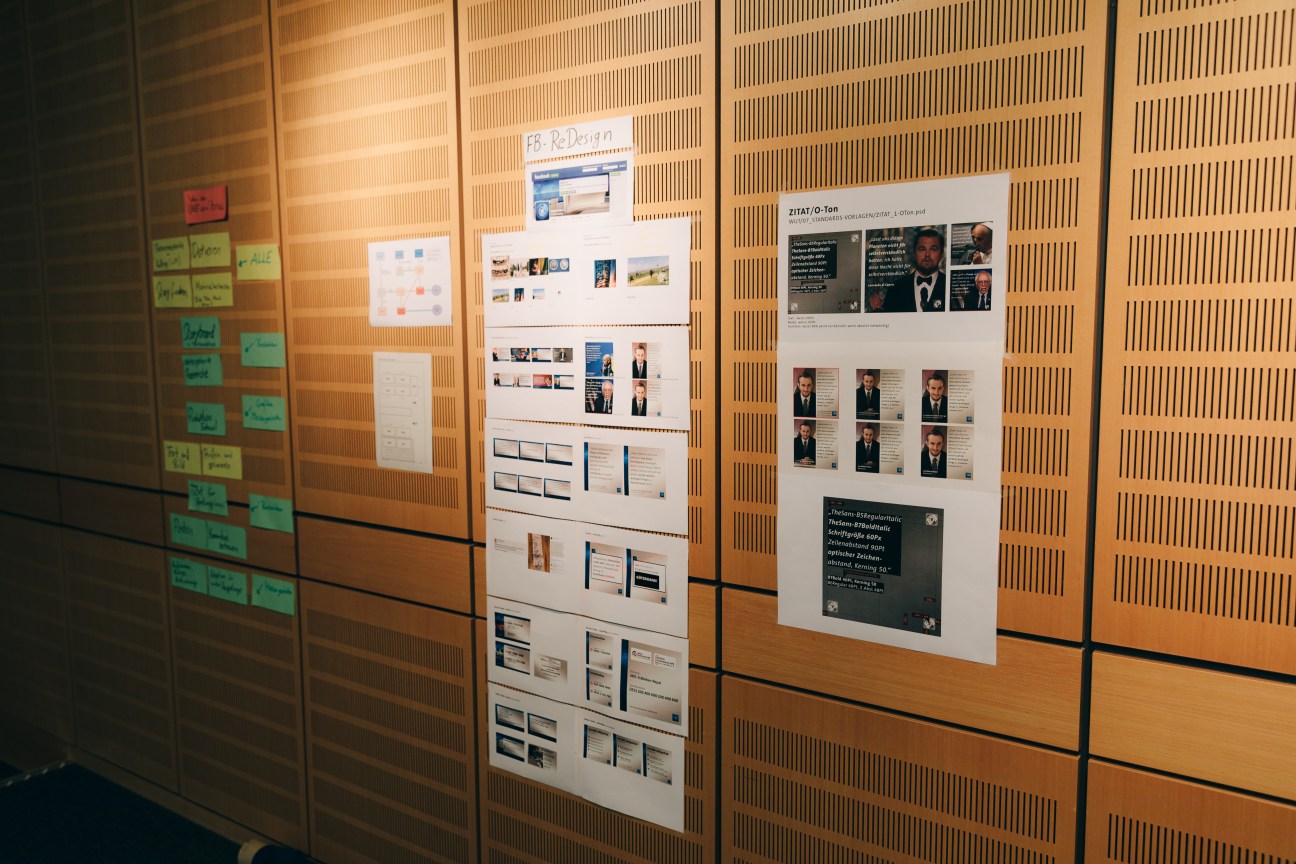
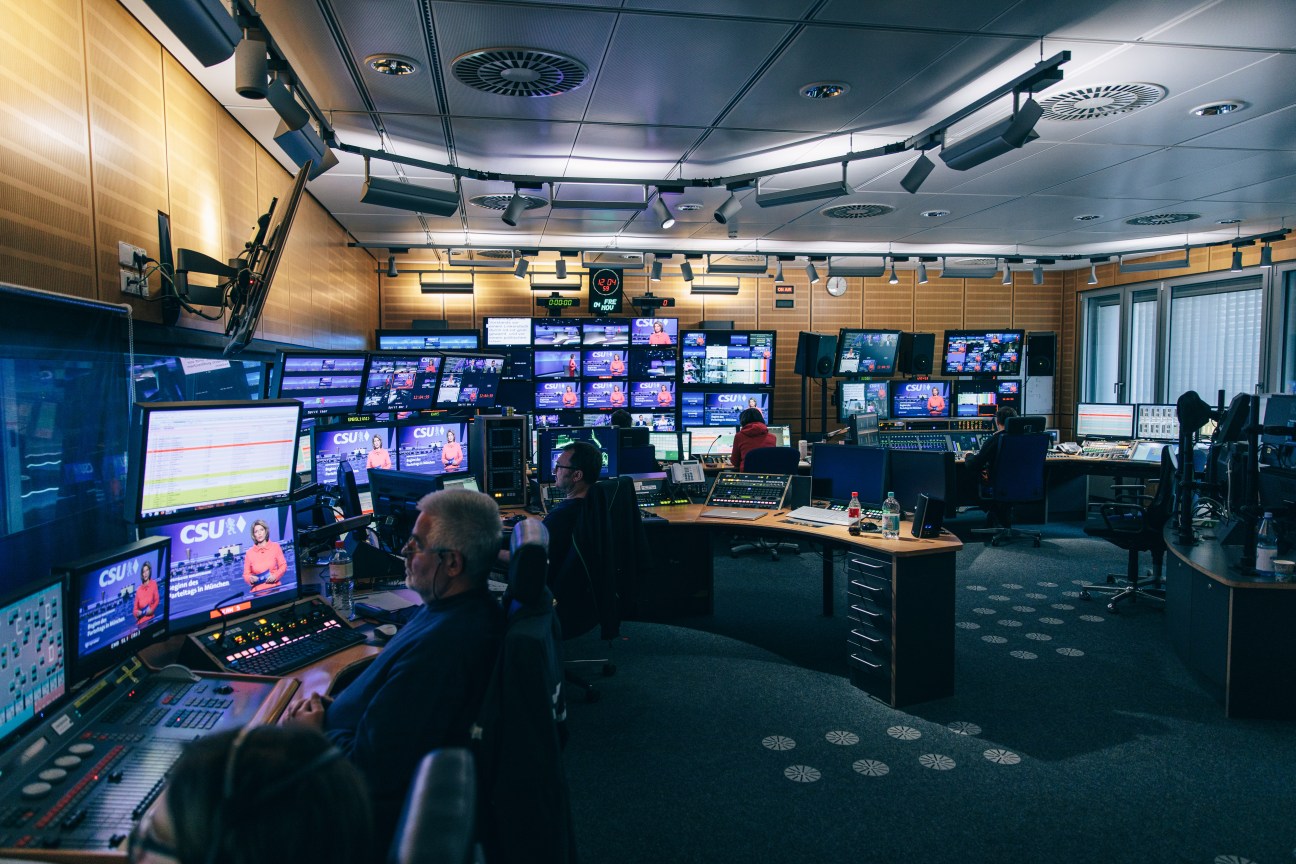

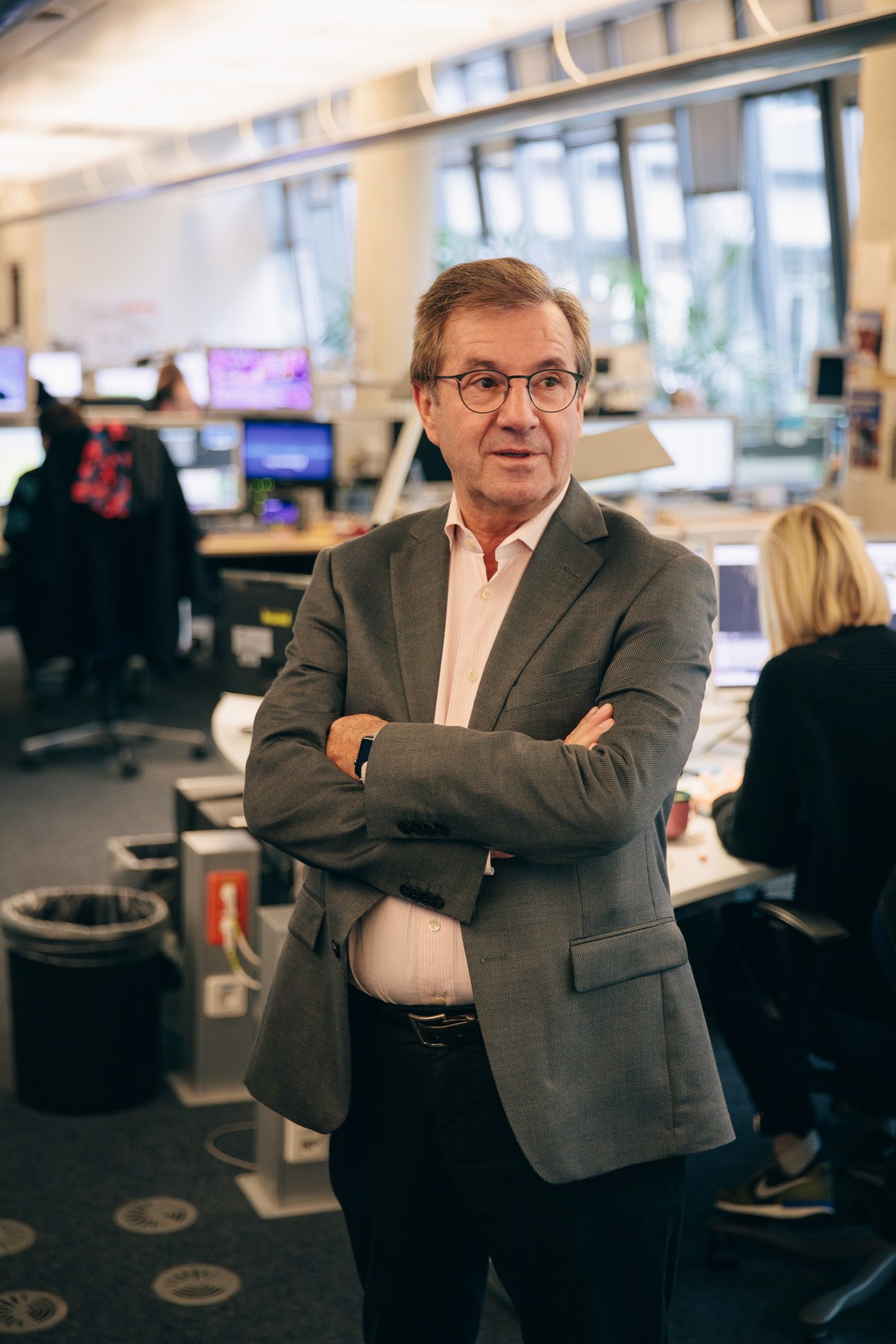
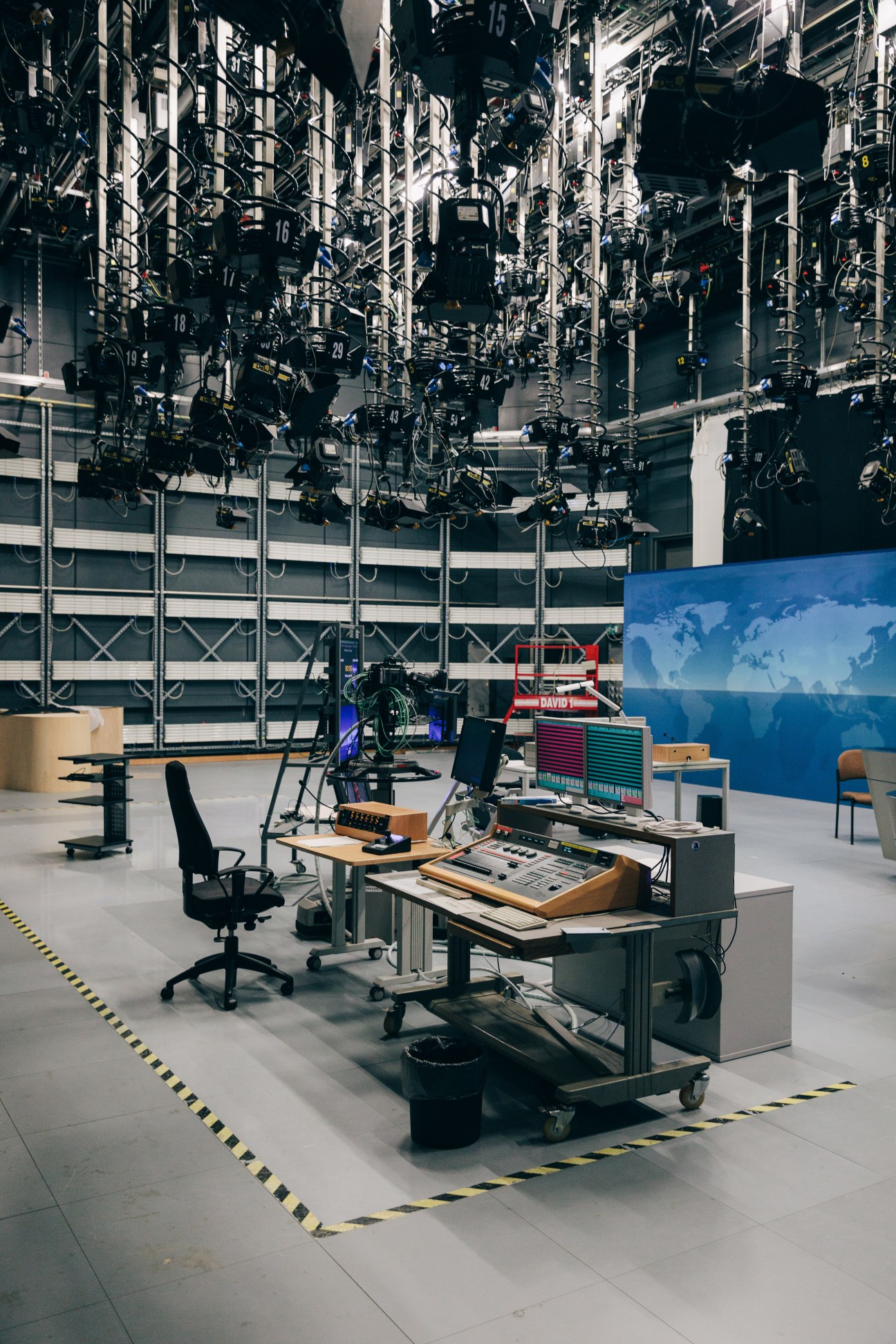


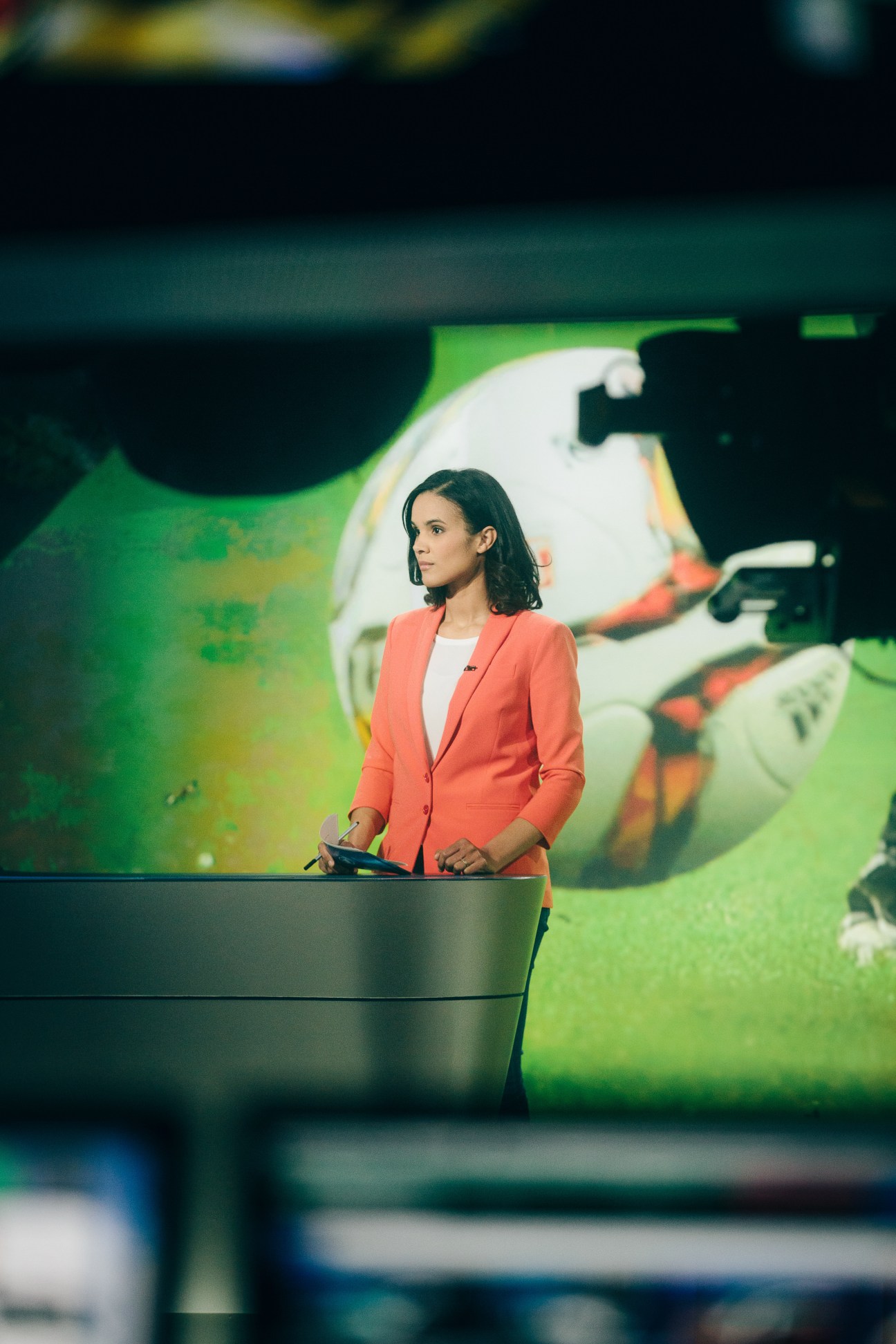
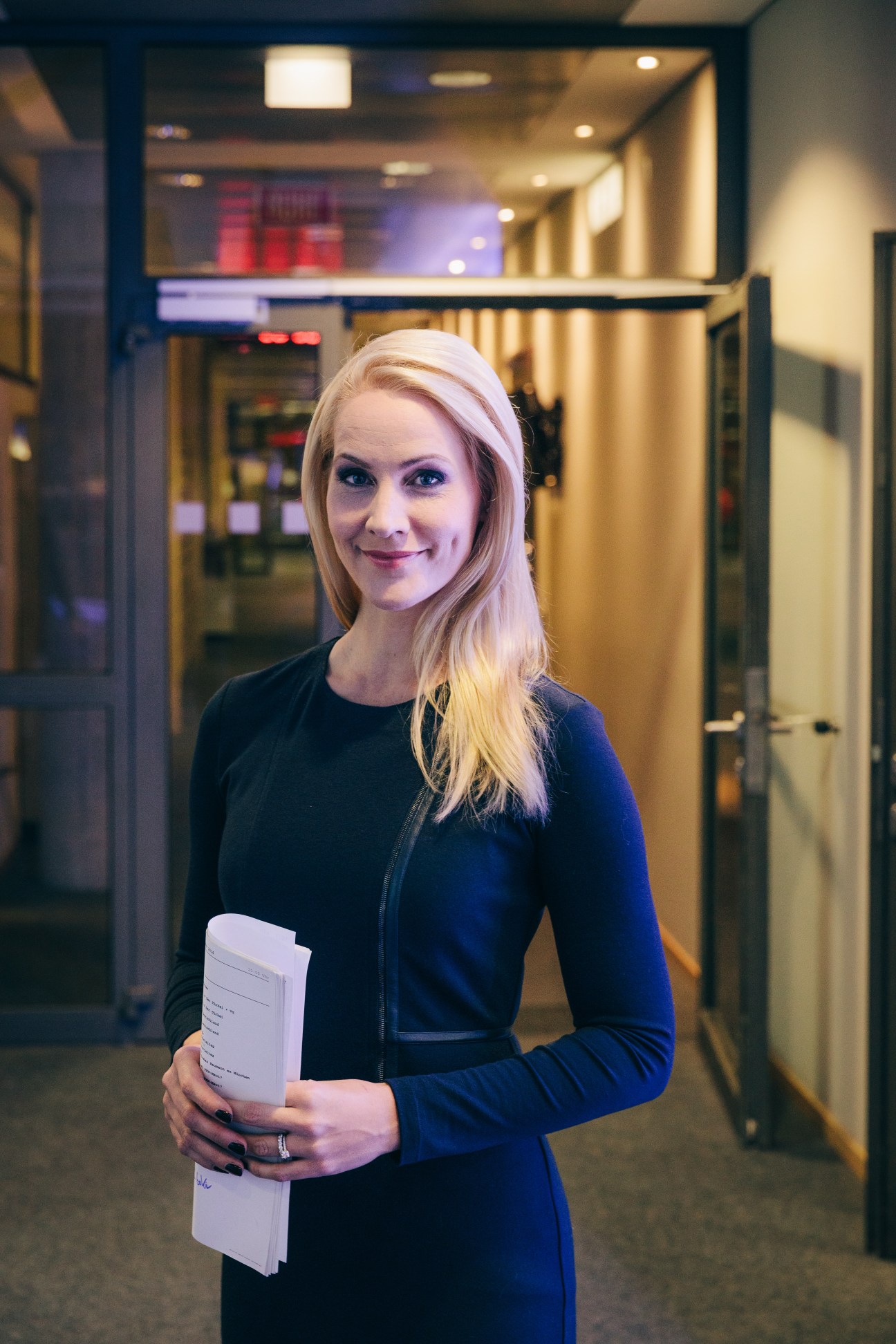
In order to stay up to date and relevant the ARD not only gave its studio a €23m makeover in 2014 but it’s also in the midst of launching a brand new Tagesschau app and investing in a social-media team. “We have to change,” says Birgit Klumpp, who co-founded the Webvideo Unit Tagesschau in 2015. “When I wake up I want to know if the world’s still standing so we have to be there. The Tagesschau brand is stable. But young people don’t wait for the 20.00 news: they check their phones. We have to adapt and react.”
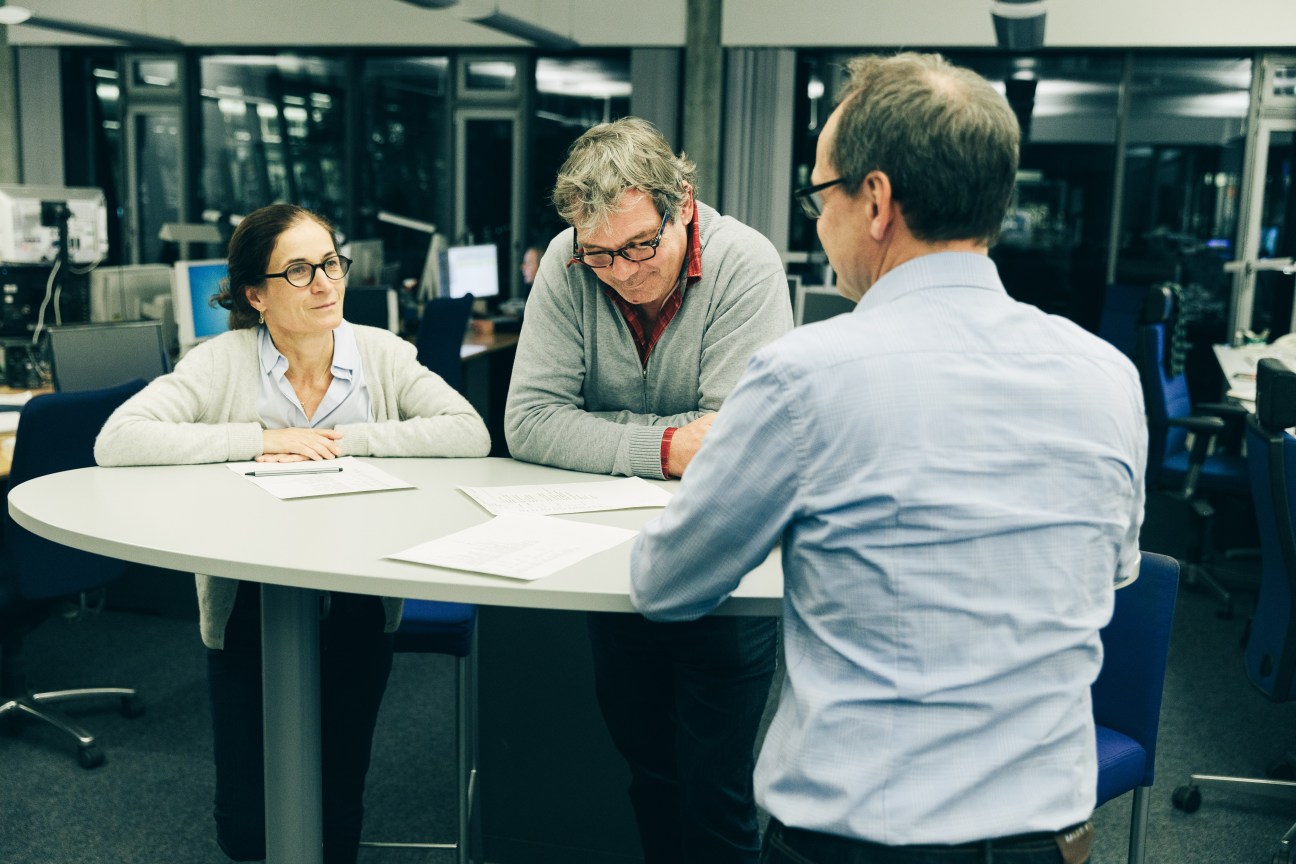
For now numbers for the programme remain strong and are even growing, as are the ARD’s bureaux around the world. The organisation has correspondents throughout Germany and in 25 overseas outposts, each of whom feeds news to the headquarters, where editors on duty Carmen Jakobs and Stephan Ziegenhagen are then left with the task of piecing together the most important show of the day. Every story is discussed and every word weighed before the script is printed on cards for the show’s host, even though they generally rely on teleprompters as the text is known to change at the last minute.
“The preciseness is our trademark,” says Jakobs. She and Ziegenhagen have worked together for many years and know exactly what it takes to produce the Tagesschau but having so much responsibility in deciding what millions of people see and hear never gets easier. “Sometimes your soul gets sore,” says Ziegenhagen, referring to the many horrific images and reports that they scour every day while selecting the stories that the ARD-Aktuell team deems newsworthy.
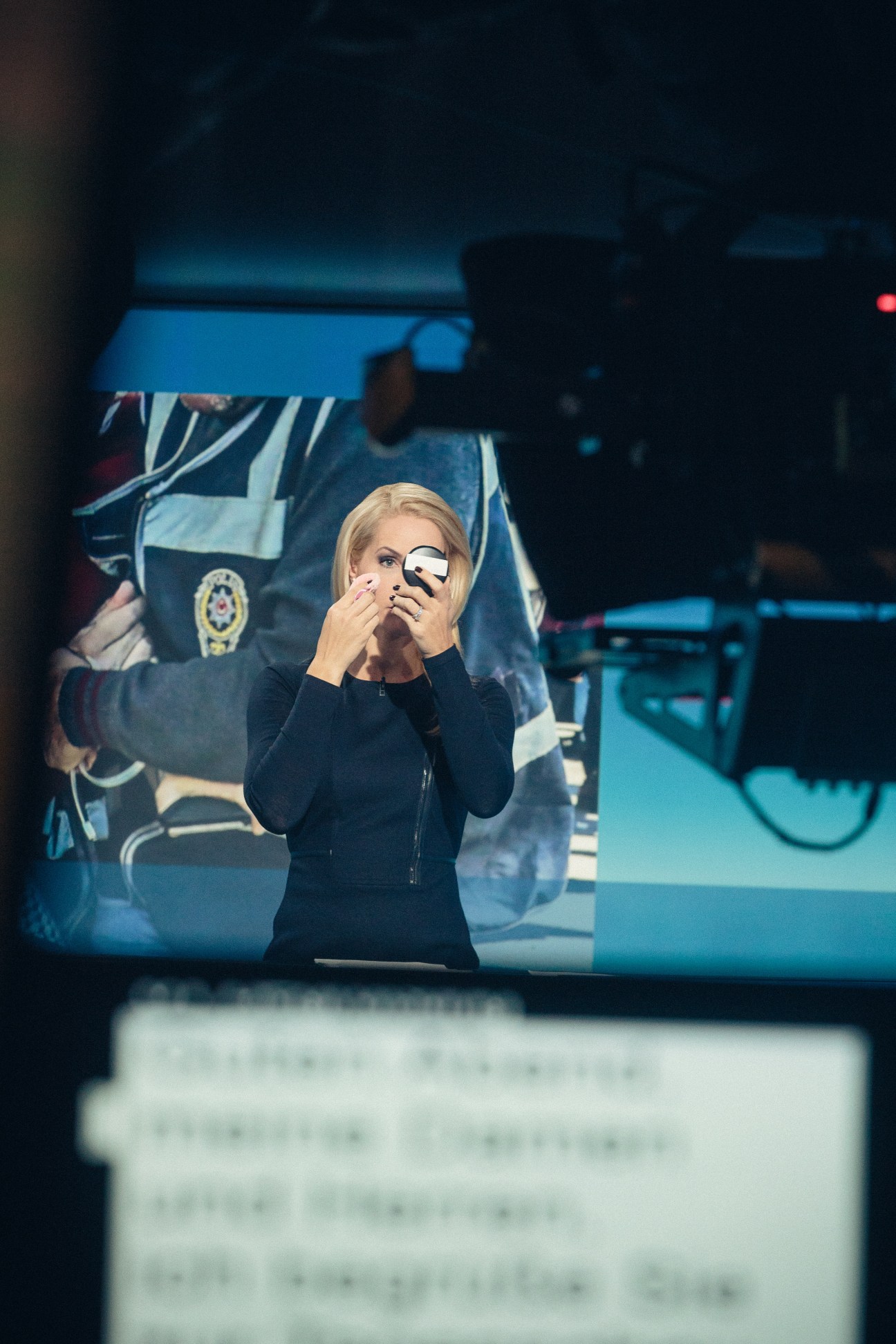
When presenter Judith Rakers arrives at 18.45 her script is still under construction and the tension is palpable. At 19.40 Rakers reappears from the dressing room in a little black dress and heels. She takes a seat next to Jakobs and reads through the text. At 19.50 she rushes down the hall to get mic’d and hastily touches up her make up: some hairspray, lipstick and powder. Then she’s off. With five minutes to go she’s in the studio, which Holst refers to as an “aquarium”. Here Rakers is all alone. It’s silent; only her earpiece connects her to the production team on the other side of the glass wall. The countdown begins and we hear the gong. It has begun. “Guten abend meine damen und herren, ich begrüsse sie zur Tagesschau.”
All is going to plan until the microphone starts to fizzle. “Do we have enough time to go in and change it out during this video segment?” asks Ziegenhagen. “No,” is the resounding answer from the crew. A few seconds aren’t enough. Buttons are pressed and switches pulled to alleviate the issue and then the cameras are back on Rakers, whose poise and authority overshadow the technical glitch. Images of Hamburg’s new Elbphilharmonie close the evening’s segment and Rakers bids the audience a good night.
“We’re almost like a goalie: if we remain cool, we can keep the goal clear,” she says once the show is over, noting that she never expected to end up on television; she’d actually planned on doing a PhD but when chief presenter Jan Hofer approached her for the position, she couldn’t resist. “They call me the icy one. I have a funny side but not on the show; objectivity is very important.” Before she’s had the chance to catch her breath she’s off again; the next newscast can’t wait. “Some may liken it to television from the 1950s but I say, ‘Never change a winning system.’”
Tagesschau milestones:
1952: the show launches
1959: the first presenter appears on screen
1961: the show begins to air seven days a week
1976: Dagmar Berghoff becomes the first female presenter
1992: Tagesschau adds a live show every half hour between 05.30 and 09.00
2003: the Iraq war sees the show reach a record-breaking 9.9 million viewers and 35 per cent of the market share
2004: Jan Hofer is made chief presenter of the Tagesschau
2014: the studio receives a €23m revamp
2016: the new Tagesschau app is launched
We cross to our expert…
Michael Hanfeld
Media editor, Frankfurter Allgemeine Zeitung
“The Tagesschau is characterised by a unique form of purism. It focuses on hard news and offers the most important happenings of the day in a flourish-free summary with an emphasis on political themes and an absence of commentary. It may seem anachronistic in today’s news business – considering that online, the news is updated by the minute – yet the Tagesschau continues to find a large audience, who expect to be presented with a concise news package at a certain time of day. The changing expectations that younger generations in particular have of television may stand in the way of this quasi-institution. However, it has proven to be extremely resistant and will continue to be so for quite some time.”
In other news…
While the BBC and others have adopted the pricey and demanding rolling-news model, as well as their day and evening-time news bulletins, the ARD remains focused solely on distinct news shows. While the traditional Tagesschau (“show of the day”) has branched out to include digital channel Tagesschau24, which delivers the headlines every 15 minutes from 09.00 to 20.00, each programme remains a show in its own right. Unlike across other channels, at ARD stories aren’t discussed ad infinitum: they are tightly edited, thus escaping the common trap of sensationalising headlines simply to keep the audience hooked all day. The strength of the 20.00 Tagesschau is that people seek it out for a summary of the most important news of the day; it is the feature film of newscasts. Other news directors might want to pay closer attention to the ARD’s Hamburg output.
Making a killing
At a disused military airbase 30km outside of Copenhagen, a replica of the Danish capital’s subway system has been built to stage mock hostage scenarios. However, this is neither preparation for a terror attack nor planning to stop one, but instead the production set of the latest example of Nordic noir.
“It’s an actual threat that we’ll have terror attacks in this country – and every other country – so we’re not just playing around with this as entertainment,” says Morten Kjems Juhl, producer of the upcoming Danish thriller Below the Surface. “We want to be careful and say something but also deal with the issue.”
Below the Surface is an eight-part dark, brooding thriller that follows 15 people who have been kidnapped by three masked men on a subway train. The show was created by Søren Sveistrup and Adam Price, two men who changed the course of the country’s small-screen fortunes through Forbrydelsen (The Killing) and Borgen respectively. The pair met when they were young writers at Danish public broadcaster Danmarks Radio (DR), where they worked on the soap Taxa (Taxi). In 2014 they established their own independent company, Sam Productions, with Melancholia and A Royal Affair producer Meta Louise Foldager. Below the Surface is one of its first developments.
The drama follows Philip Nørgaard (Johannes Lassen) and Louise Hjort (Sara Hjort Ditlevsen), leaders of a terror task force set up to rescue the hostages and who are also lovers. We visited the set on a snowy day in November where the pair were constantly putting on and discarding fur-lined parkas as they waited to shoot scenes outside the aircraft hangar’s construction-set-turned-terror-task-force headquarters. Lassen is coming off the back of smaller roles in period drama 1864 and white-collar crime drama Follow the Money but he wouldn’t look out of place in a Hollywood blockbuster. Hjort Ditlevsen, meanwhile, is a former child star (best known for Danish comedy Rita) and it’s conceivable that her character will rival Sofie Gråbøl’s Sarah Lund as the region’s next international crimefighter.
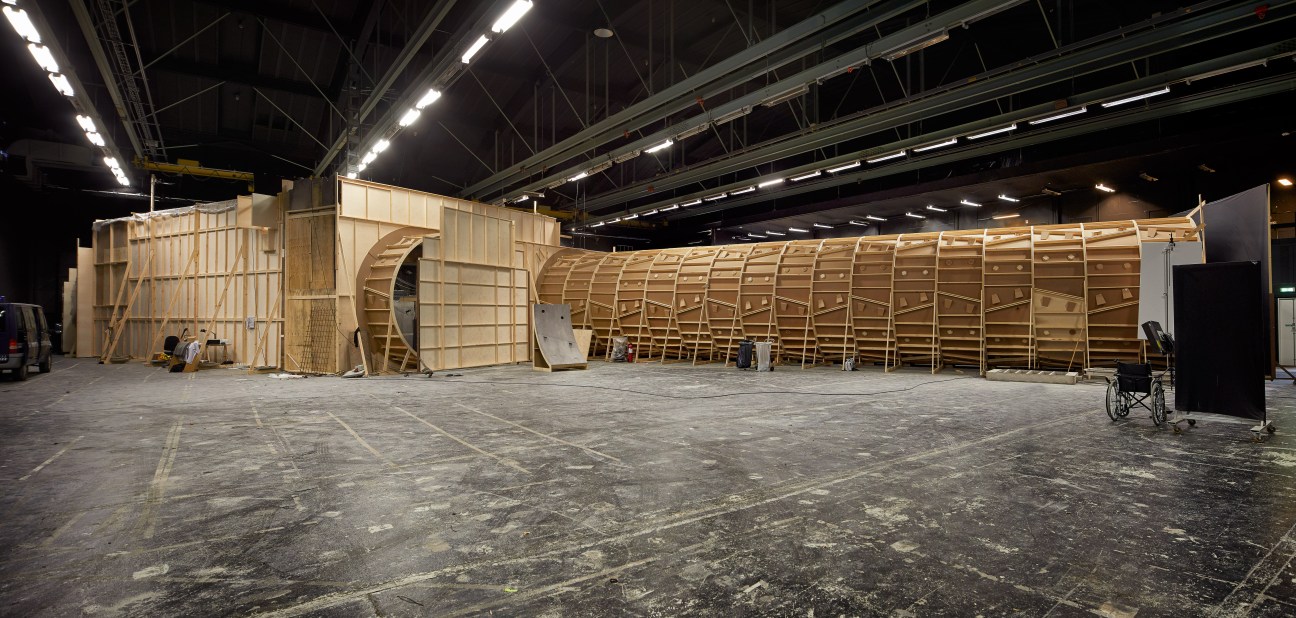
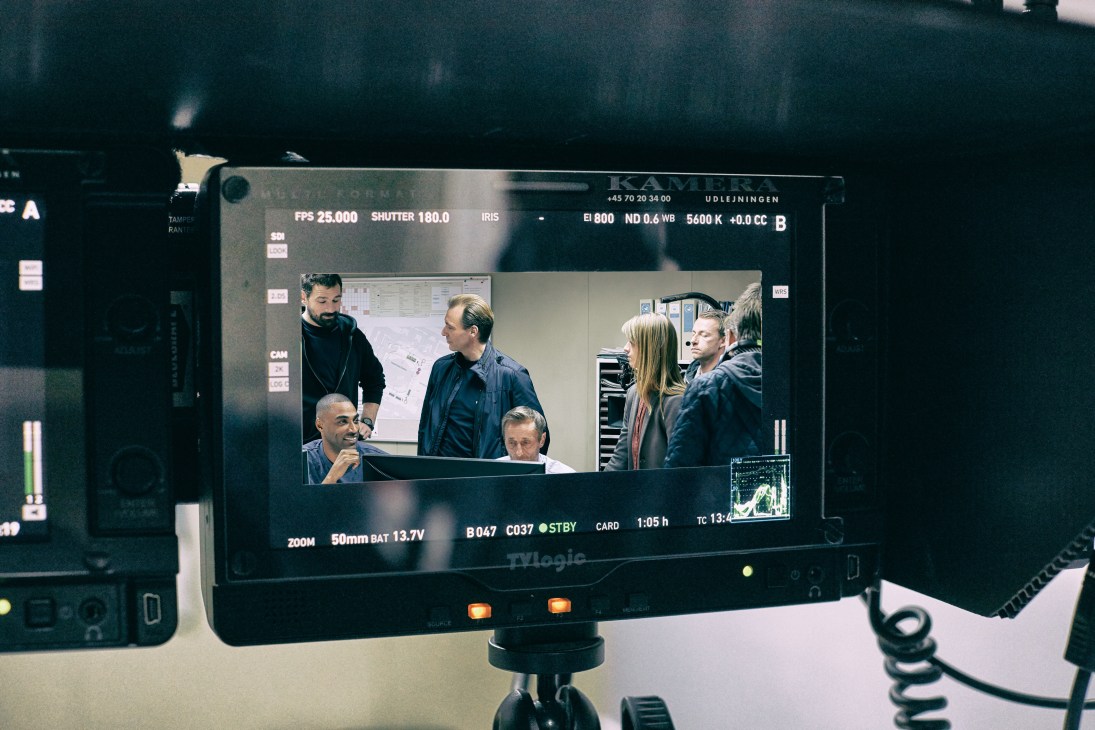
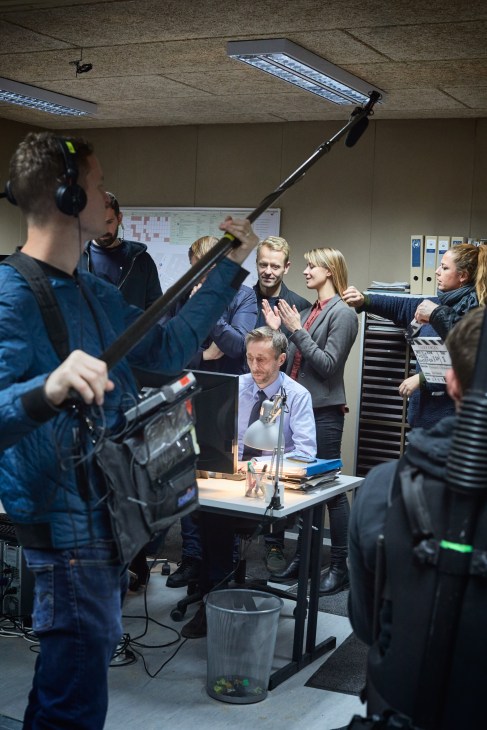
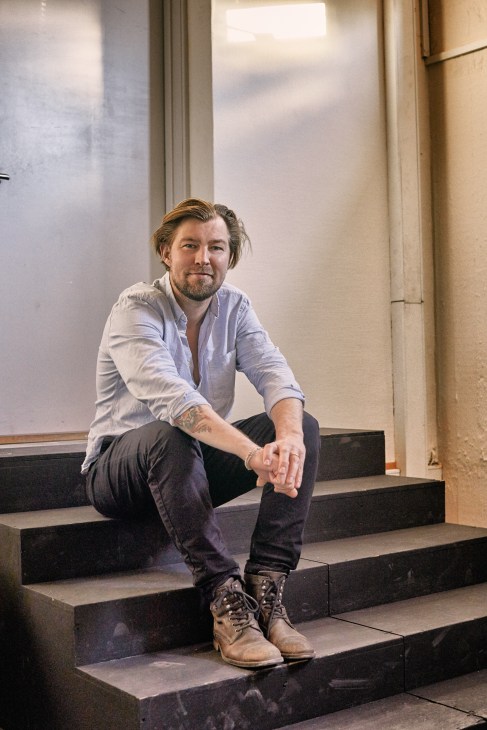
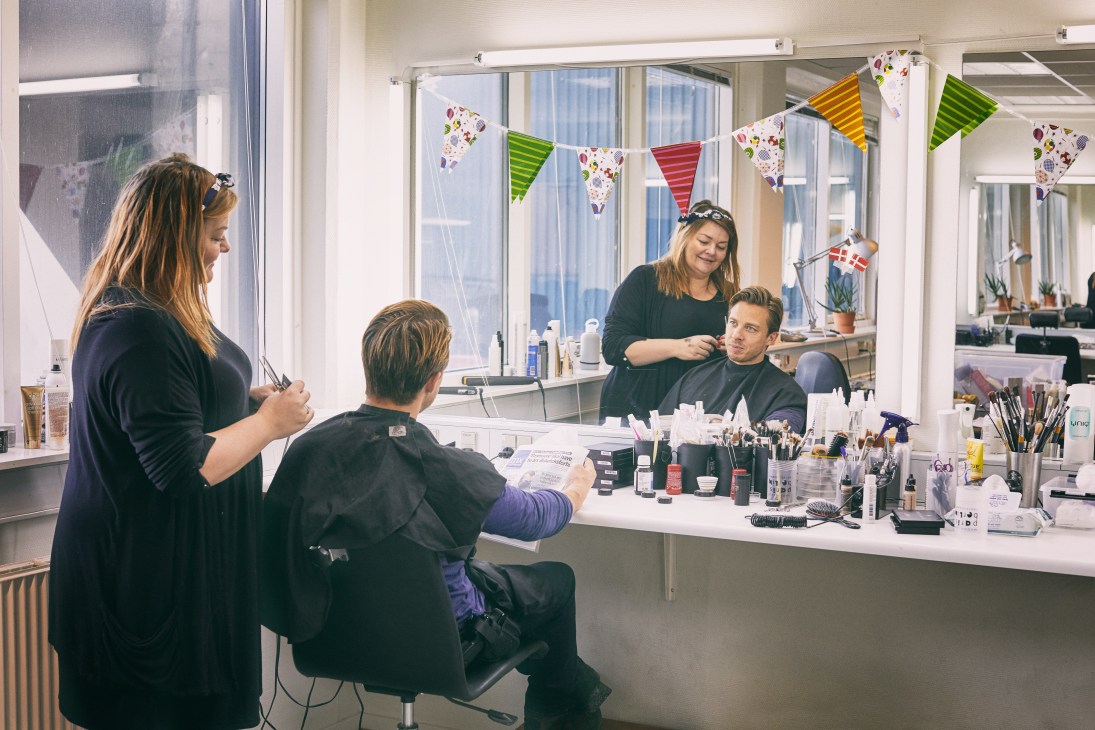
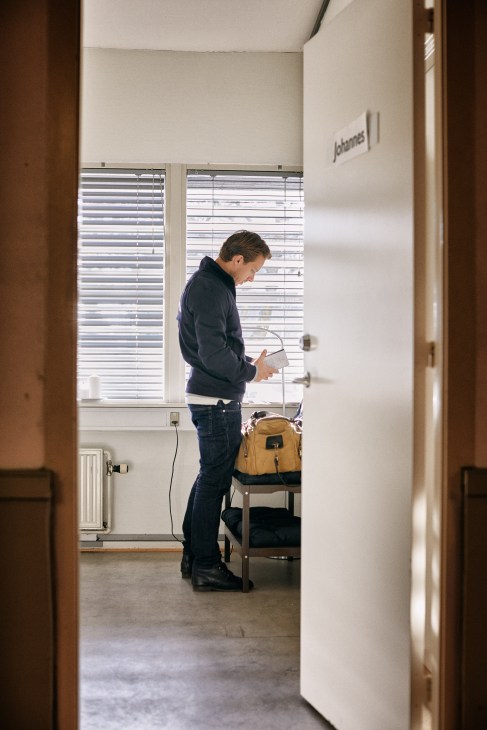
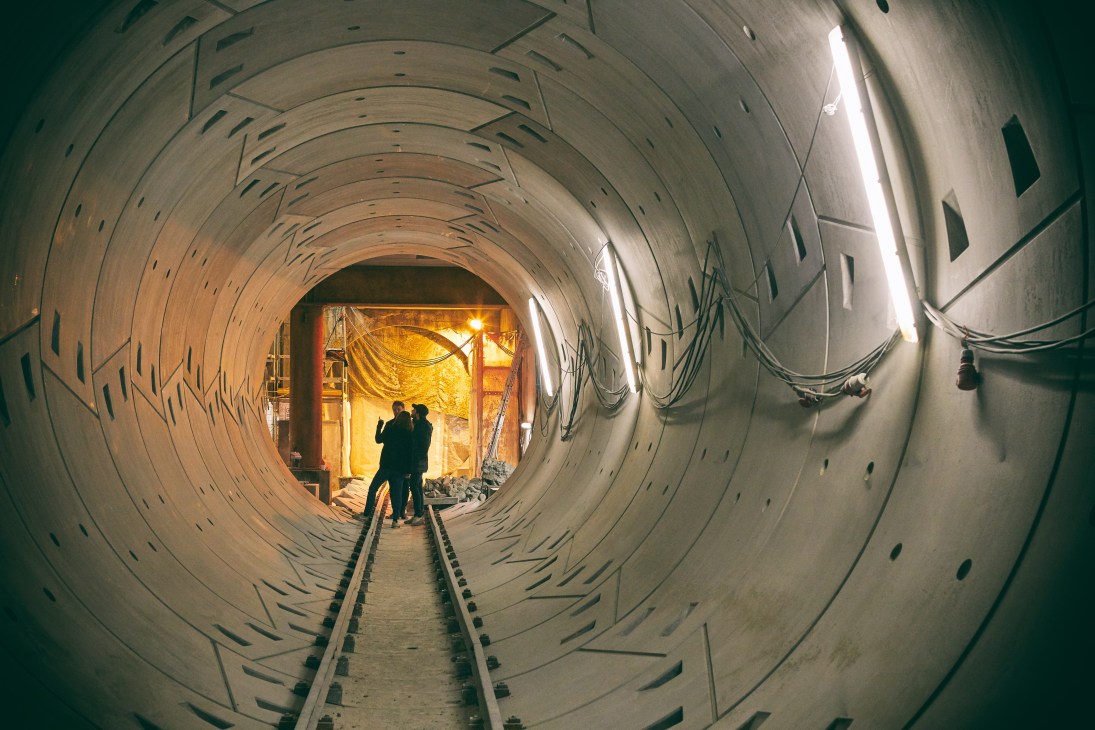
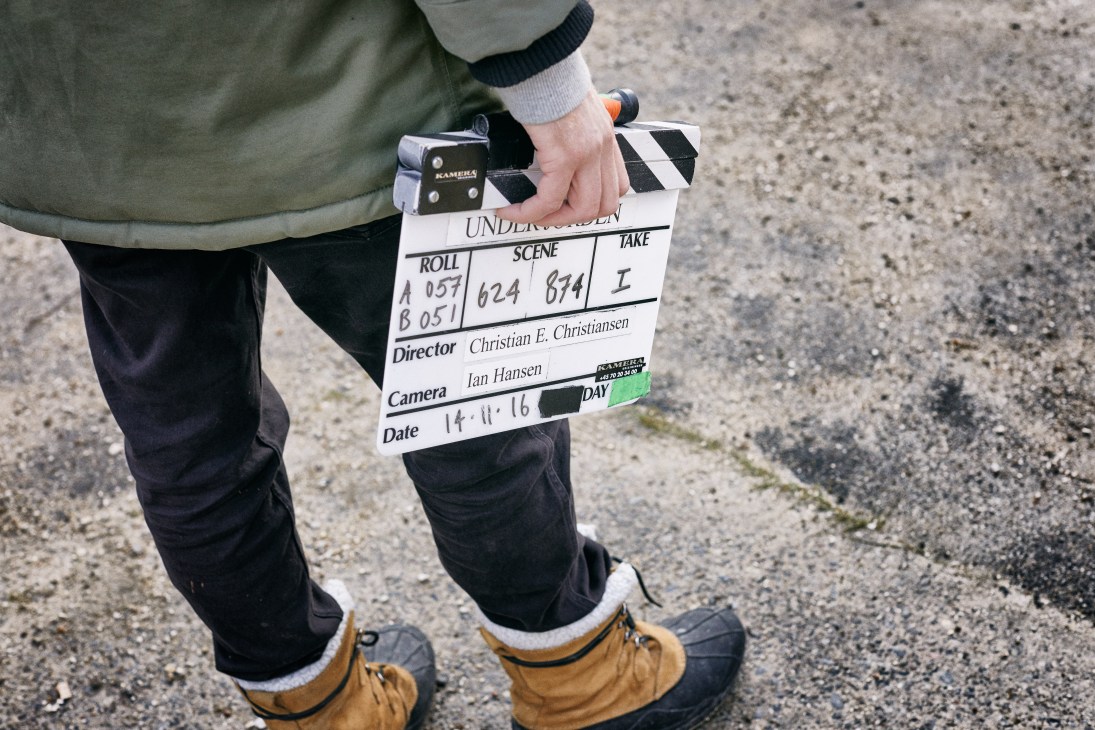
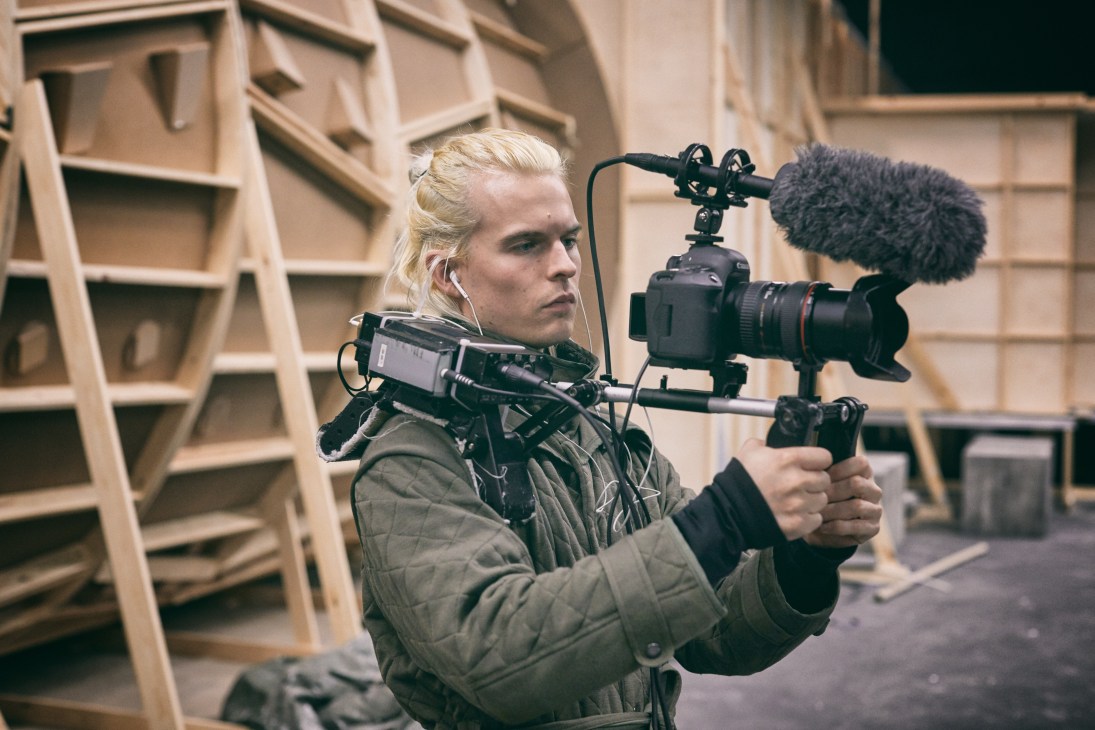
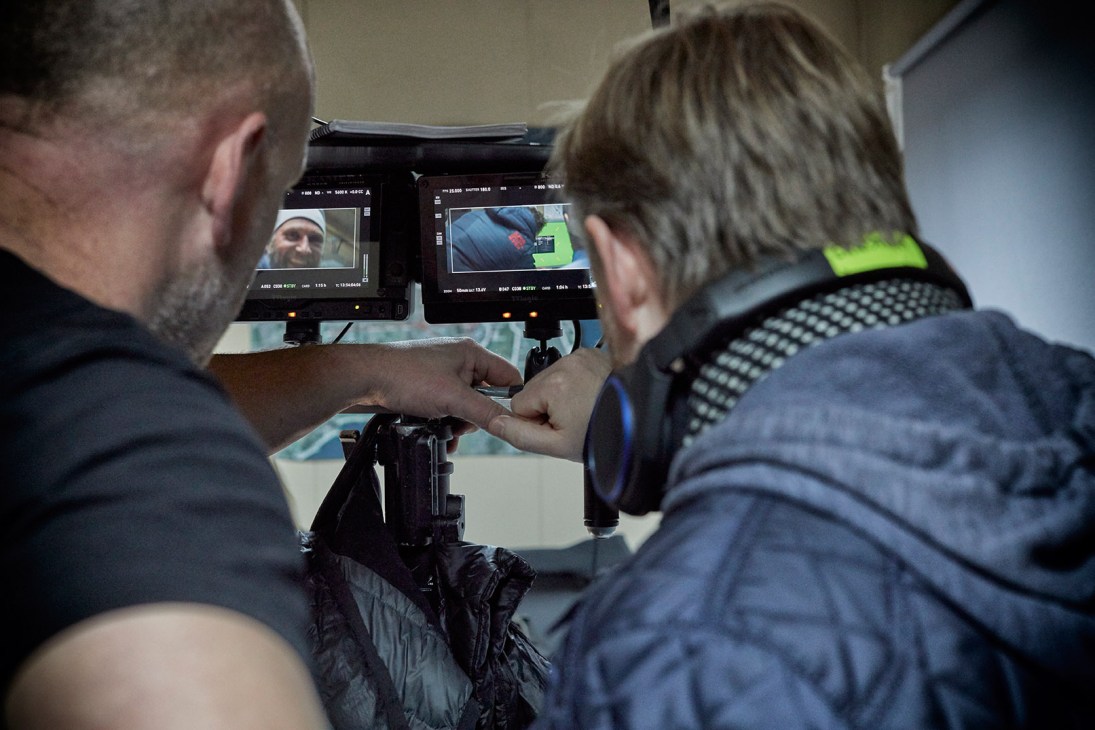
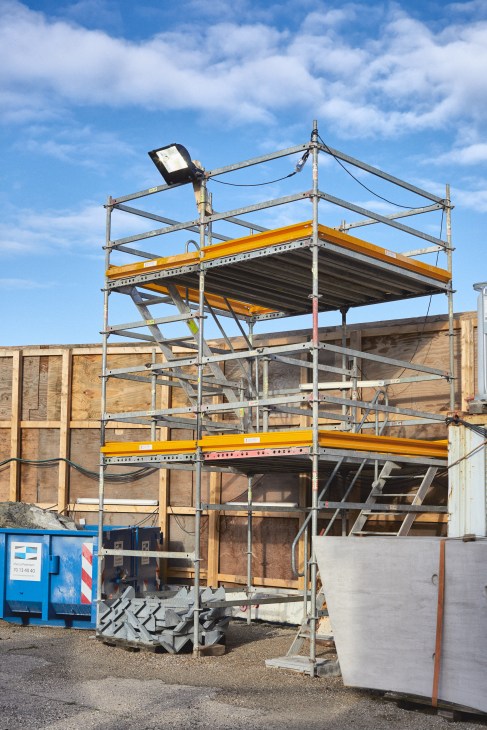
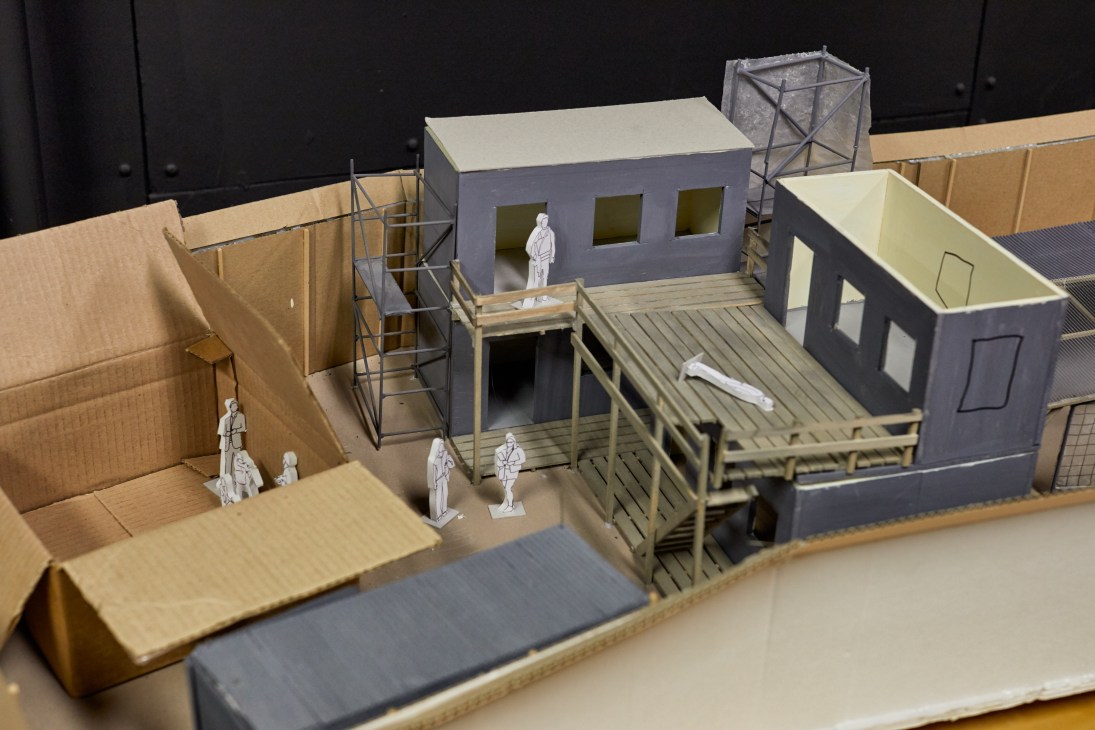
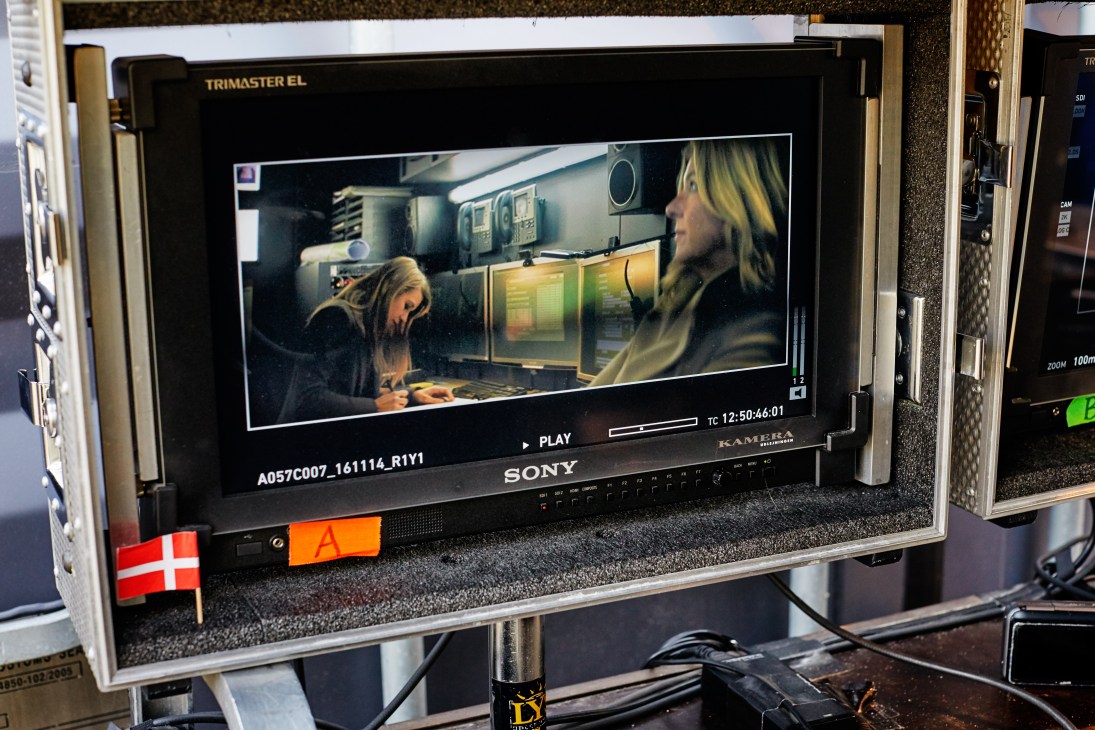
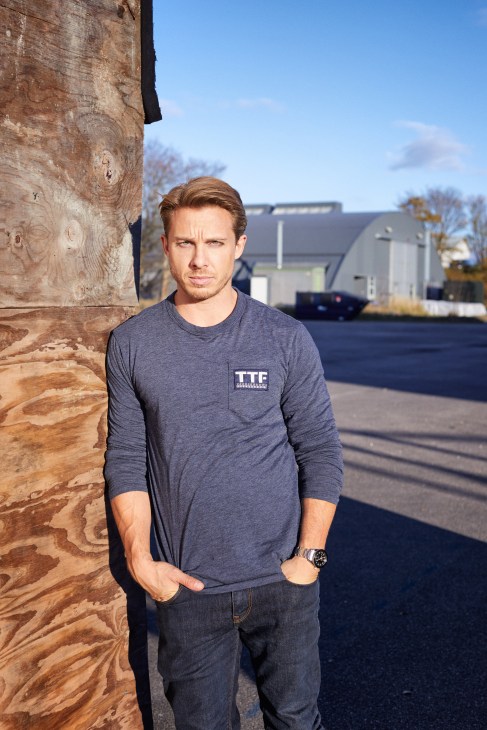
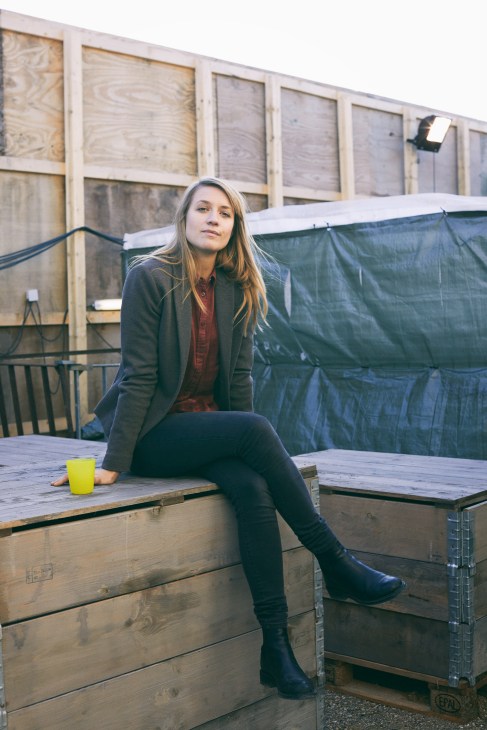
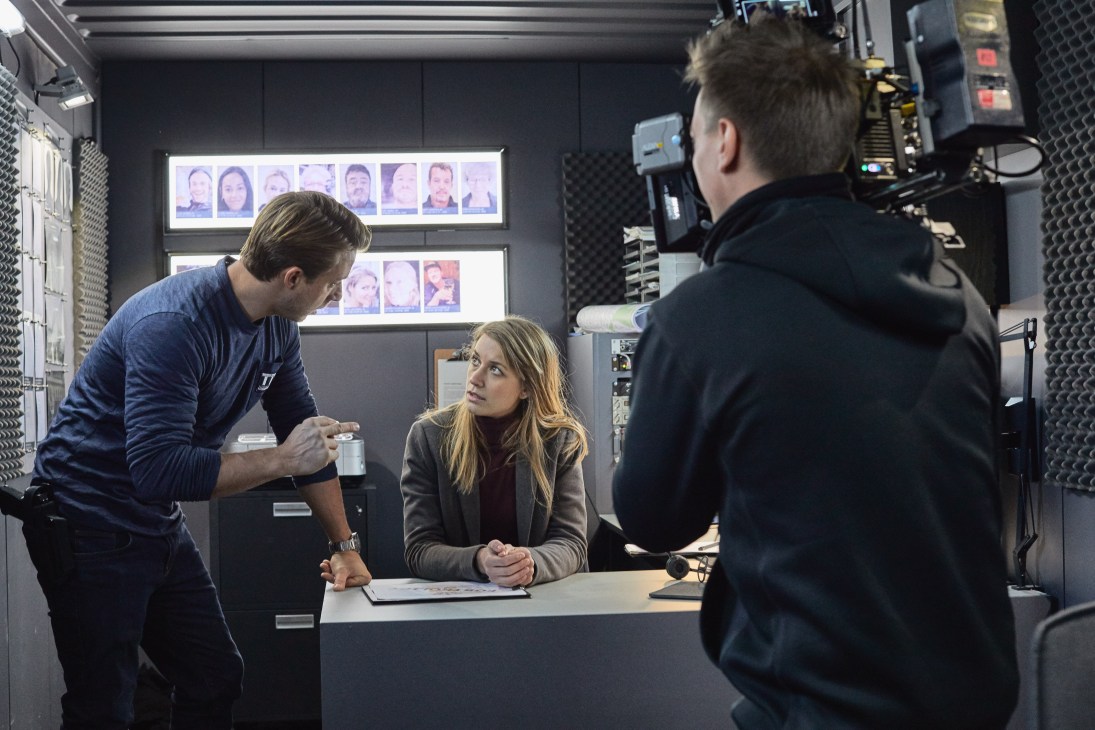
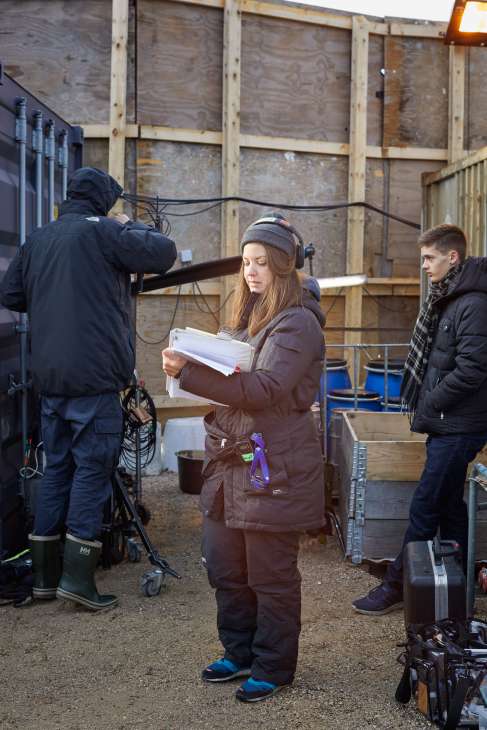
After Price and Sveistrup developed the idea for Below the Surface they scored financial support from the Danish Film Institute; they then brought on board Those Who Kill director Kasper Barfoed to write and direct and Morten Kjems Juhl to produce. The latter runs the show’s two studio sets at the Filmstationen base outside Vaerløse. The facility, one of the largest in Denmark, is a bleak canvas for this particular show.
While the action revolves around the terror unit, another theme comes from reporter Naja Toft, played by veteran actress Paprika Steen, who acts as a go-between for the hostage-takers and police. Her role highlights a moral dilemma. In Denmark, friends and families of a kidnap victim are legally entitled to pay a ransom, with the help of police and authorities, as long as there is no state money involved. “The problem with doing that is obviously that you finance terrorism, so you’ll have more people taken. It’s a question of society versus the individual,” says Juhl.
In this fictional case it’s not clear where the armed assailants are from. “One of the tensions is that we’re going to lead the audience in different directions. Could it be al-Qaeda or Isis or something else? It’s not just three guys wanting to get rich,” says Juhl.
The series will launch in early 2017, not in the classic Sunday 20.00 slot on DR as per previous Danish hits The Killing and Broen (The Bridge) but youth-oriented pay-TV station Kanal 5 because, says Juhl, Below the Surface is “faster with more action. We can see 24 on the horizon.” It’s set to travel around the world like its forerunners; The Killing, for instance, has been sold in more than 120 countries while Borgen has been acquired by broadcasters in at least 80 territories. The new series has already been picked up in the Benelux countries and by Denmark’s Nordic neighbours.
The “Scan dram” phenomenon, it seems, shows no sign of slowing down despite increased competition from emerging territories including Israel, which has been steadily funding international hits since Hatufim (Prisoners of War), and Turkey, which is fast becoming a global force with shows such as The End and Fatmagul. A growing global acceptance of subtitles and healthy creative communities have also opened the doors for countries such as the Czech Republic, with Agnieszka Holland’s psychological drama Wasteland, and Brazil, with period porn thriller Magnifica 70, to ship shows around the world.
However, it’s the US that Danmarks Radio really learned from, both in terms of show creation and keeping the business healthy. “Our machine in Denmark over the last 10 to 15 years is inspired by Los Angeles,” says Juhl. “DR took a chance on drama back in the day; they spent so much money on it that it became a playground for the best and newest talent and then that improved the quality of the whole system.”
With that the parkas are slipped from the actors’ shoulders for one more take in this eerie and – for now – fictional Danish world of heroes and villains.
Building momentum
Historically, architecture has been more about space than time; it still takes years for a conventional building to go from idea to built reality. But technology and need are accelerating everything. Disasters such as hurricanes or earthquakes, urban problems – including homelessness and skyrocketing rents – and mass migration all demand architecture and design that’s quick to construct. By necessity as well as by choice, architects have learned to think on their feet in extraordinary circumstances. As UK politicians debate the construction of 100,000 prefabricated homes to ease a housing crisis, fast architecture has never been more relevant.
“Rapid-response housing might be the most extreme part of this but I see a pride in being able to create constructions that are low-key and good living environments,” says Stockholm architect Andreas Martin-Löf. He designed Eda, a low-cost single-occupancy building in Knivsta, Sweden; its modules were built off-site and then assembled at a rate of up to 15 apartments per day.
He is one of many architects dealing with issues such as acute housing shortages; others work with NGOs in global displacement hotspots. Agora Architects, a two-person architectural firm working in western Thailand, recently erected classrooms and dormitories in a settlement near the border for Burmese refugees. “Every NGO or INGO worldwide should work with architects,” says Agora’s Jan Glasmeier. “We know a little bit of everything, we see what’s needed, we can connect things.” Besides the dormitories, Glasmeier and his partner Albert Company-Olmo built a nearby clinic using adobe-like mud bricks and old Thai know-how that came from his local team of workers.
Which brings us to the issue of materials. In many rapid-response projects, concrete is an adaptable favourite; one example is the sleek prefab Koda House hailing from Estonia, which takes seven hours to erect and is movable. Martin-Löf’s housing in Sweden, meanwhile, is clad in inexpensive polycarbonate. And in Germany, U3ba created a timber shelter for refugees and homeless people meant to last 40 years; most shelters are far more temporary.
Then there’s the Austrian design firm EOOS, which used donated wood to build kitchens in a sprawling institutional building in Vienna that houses hundreds of refugees. The firm adapted a design developed for high-end clients such as Bavarian kitchen manufacturer Bulthaup and, in realising it, sought collaboration: a Syrian carpenter headed a team of refugees who built the kitchens.
Urban or rural, temporary or permanent, one danger of many rapid-response projects is that they can look a little prison-like. Savvy designers counteract blandness by taking advantage of natural assets and using space well. In a Manhattan microhousing project initiated by former New York mayor Michael Bloomberg, nArchitects created 55 prefabricated micro-units using full-length windows to flood spaces with light, and customised furniture to allow the homes to have multiple functions. Impressively, the building took just four weeks to erect and now that it’s up, nearly half of the units rent for less than the city’s market rate; eight are occupied by formerly homeless US veterans.
Allowing residents agency in shaping their spaces also affects how liveable they become. Chilean firm Elemental is headed by Alejandro Aravena, who curated the 2016 Architecture Biennale in Venice, which was social solution-driven and called Reporting from the Front. He and his team have created “half-houses” on lots allotted to displaced and low-income residents throughout the country. Building only half a home makes the units affordable; the other half can be filled in or expanded when and how the residents wish.
The German pavilion at last year’s Venice architecture biennale founded its exhibition on the idea of heimat, an essentially untranslatable German word meaning “home” in both a physical and mental sense. “We have a housing-emergency situation and a refugee-emergency situation and [in the pavilion exhibition] we deal with both of them,” says curator Oliver Elser. “It’s really all about home and not just about shelter.”
Making shelters into homes might be the crucial thread running through the different approaches to rapid-response architecture. The idea is not entirely new – architects such as Bruno Taut managed to create quick low-cost buildings that were desirable machines for living when they were made a century ago – and are very much in demand again today.
Architecture and design will continue to shift along with the world’s changing conditions – they have to. After all, many housing booms were set into motion by emergencies (postwar Europe is a case in point) but “many of those old structures have proven to be good; the neighbourhoods have gentrified”, says Martin-Löf. “Buildings for poor people can later feel very different if the construction is of good quality.”
We’ve never moved so fast. Combining quick reaction times, good ideas, foresight and durability to achieve a new balance between time and space will be one of architecture’s biggest challenges.
A home in one day, Estonia
Estonian architecture firm Kodasema asked a question: why can’t houses be as smartly designed and affordable as basic cars? The result is Koda House, a movable two-storey dwelling made in seven hours by fitting together concrete-and-wood panels.
Assembly time: Seven hours
Best for: Long-term settlement for displaced people
Key materials: Concrete, wood, glass, metal, fibreglass beams
Cost per house: About €100,000
Tropical Housing Solution, Thailand
It took three weeks for Agora Architects to develop a sturdy hut that can house 25 people. Drawing on funding from the embassy of Luxembourg, it was devised as emergency housing for displaced Burmese refugee students.
Assembly time: Three weeks
Best for: Temporary housing in the tropics
Key materials: Second-hand timber and bamboo
Cost per house: €1,800
Quick Urban High-Rise, USA
Of the 55 compact rental units at Carmel Place in downtown New York, 22 are dedicated to affordable housing, including eight apartments for formerly homeless US veterans. The prototype is designed to be adaptable to different sites.
Assembly time: Four weeks
Best for: Two-people families in dense cities
Key materials: Steel, brick, sustainable natural materials
Cost per house: From €2,400
Refugee Relief Home, Germany
U3ba was approached by the council for Ostfildern, a town near Stuttgart, to design housing for homeless Germans. However, midway through the planning stage the project was adapted to meet the needs of Syrian refugees. The firm went well beyond the brief: it conceived a trio of incredibly attractive houses with angular planes in a monochrome palette.
Assembly time: Two months
Best for: refugee housing
Key materials: bituminous-coated corrugated iron, timber, oriented-strand-boards
Cost per house: €450,000
Disaster Recovery Community Centre, Japan
After two powerful earthquakes pummeled Kumamoto in southern Japan last April, prefectural government officials worked with architect Toyo Ito to conceptualise temporary homes that would be comfortable enough to live in for years. These dwellings were complemented by pop-up “Home for all” community centres; the idea is that they give residents a place to gather and bond outside of their tightly arranged houses.
Assembly time: Four to six weeks
Best for: Creating a sense of togetherness for disaster victims who have been relocated
Key materials: Wood, tatami mats sourced from Kumamoto prefecture
Cost per house: €86,000 for a one-storey, 60 sq m building
Notes: Camping out
In response to crises, the humble tent has long been a reliable shelter for the displaced. Often these dwellings become long-term homes and innovations such as the igloo-like, German-pioneered Domo tent focus on adaptable design to tailor to the individual and cultural needs of occupants.
Notes: Old tricks
With displacement at an all-time high we’ve never been more in need of smart ideas for speedily built housing. While new building technology is an asset, lessons can still be learnt from post First World War architects such as Bruno Taut, who brought colour into the design of affordable housing.
Piece together
The Lebanon pavilion at the 2016 London Design Biennale was a pop-up street made from chipboard, complete with a barber shop, falafel joint and Fairuz singing on repeat. It was a delicious Beirut of the imagination, of course, but it did capture the bricolage of this city: the Lebanese have a knack for making the most of whatever is to hand, even when things look bleak.
The past two years have seen municipal malfunctions in Beirut and a stalemate over who should be the country’s next president. Yet the calibre of the city’s designers and studios has only continued to grow. As some of Lebanon’s crises begin to ease, its status as the most important design centre in the Middle East is more assured than ever. Whereas other governments in the region pour cash into building design scenes from scratch, in Beirut design emerges from the streets with pop-up galleries, start-up studios and initiatives that can plug into a network of fresh graduates and local manufacturers.
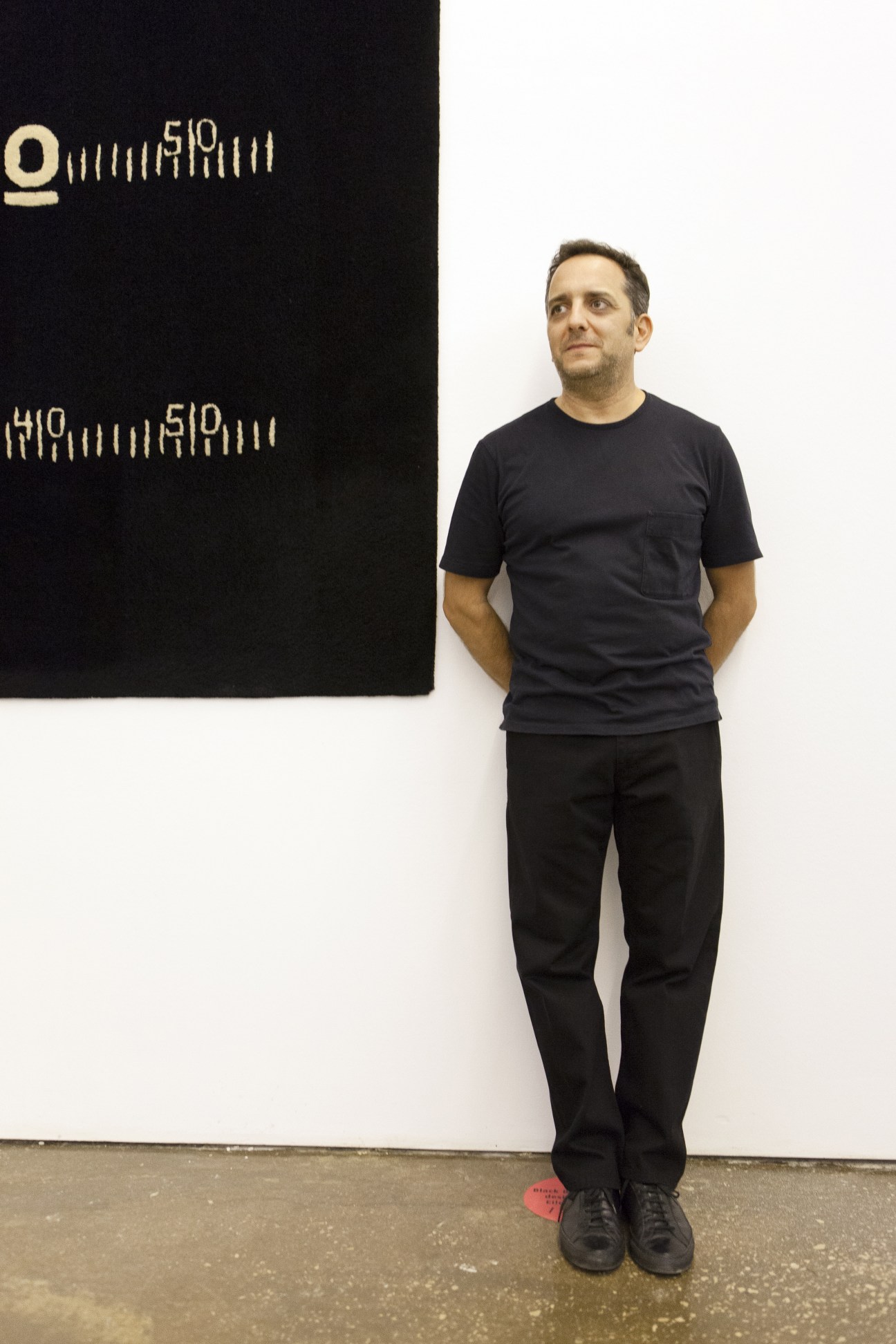
D Beirut is a new development housing design galleries and studios in the Burj Hammoud neighbourhood. Despite the civil-war-era landfill nearby, inside it’s an airy cavern with museum-scale glass walls separating contemporary-design galleries and bodies doing downward-facing dog in the Yoga Souk. “The volume got me initially excited,” says Karim Bekdache, the architect behind D Beirut, as we admire the natural corridor formed by columns preserved from a time when this was a factory making industrial kitchens.
Bekdache was approached by the owner to design a project that could do something with the space; his architecture practice turned the shop floor into eight high-ceilinged lots. Bekdache’s own studio, in D Beirut, doubles as a showroom for the pencil-legged sofas he finds and restores that have mid-century echoes of Lebanon’s heyday. The city, says Bekdache, is “where design emerges from in our region”. Some 3,000 people showed up to D Beirut’s opening night, hungry for new opportunities.
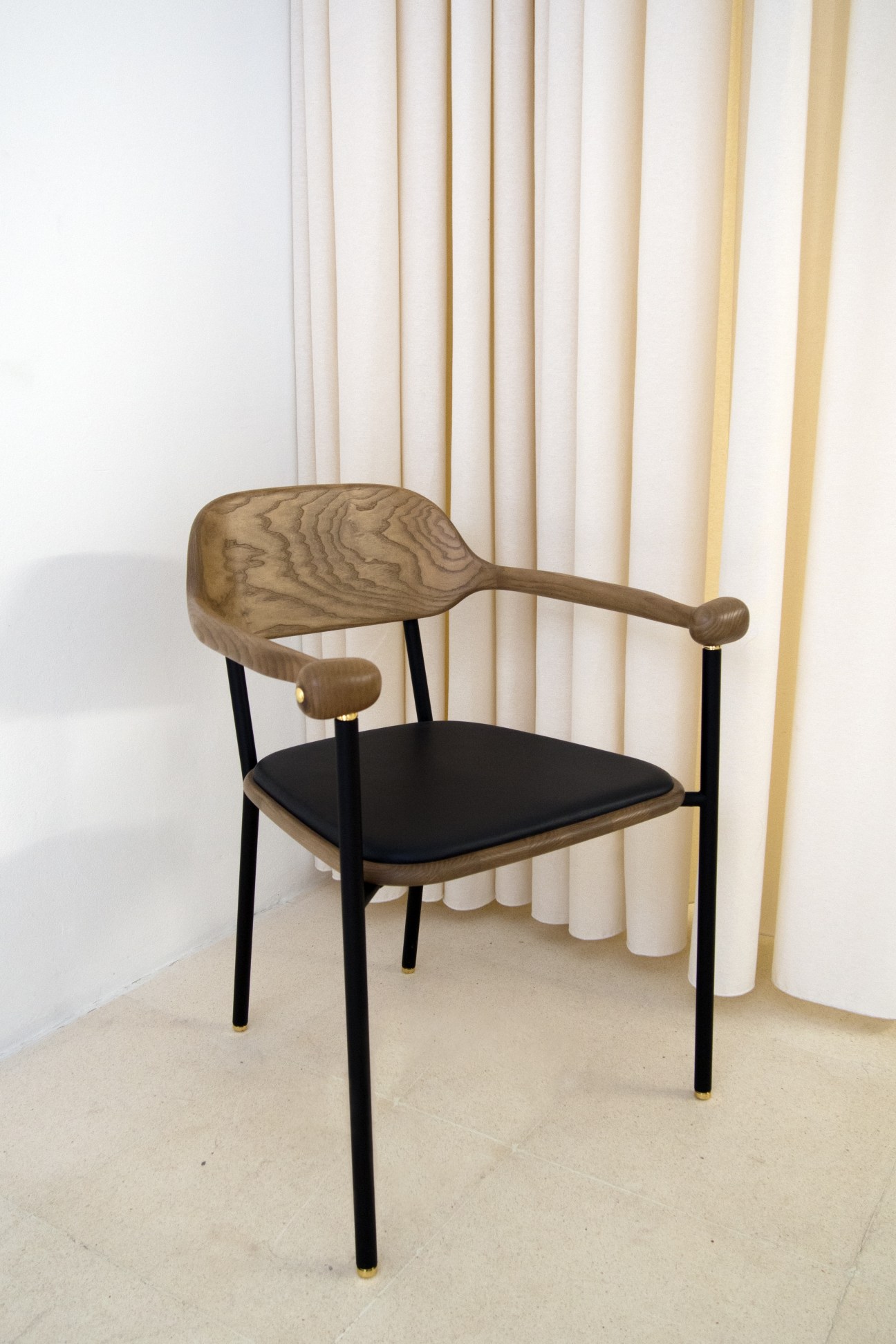
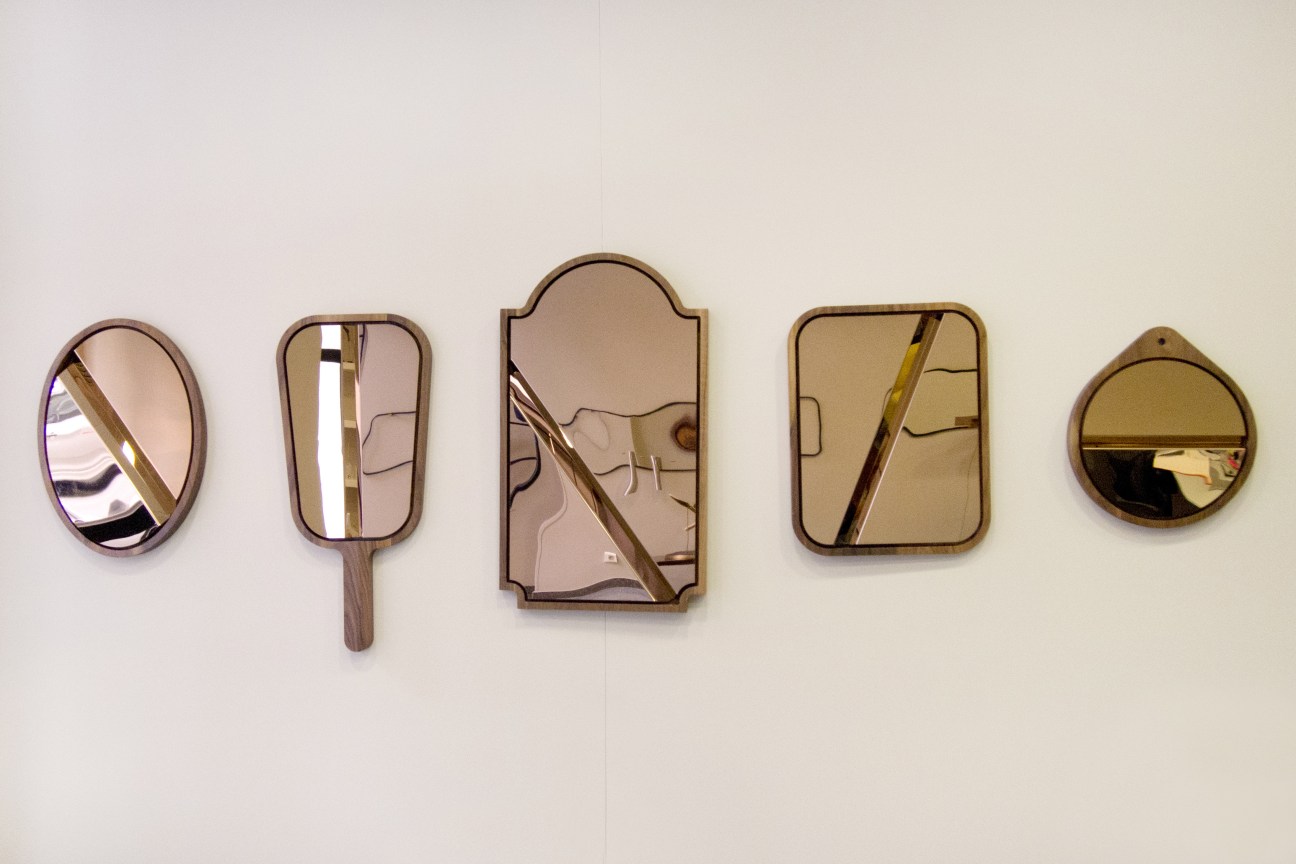
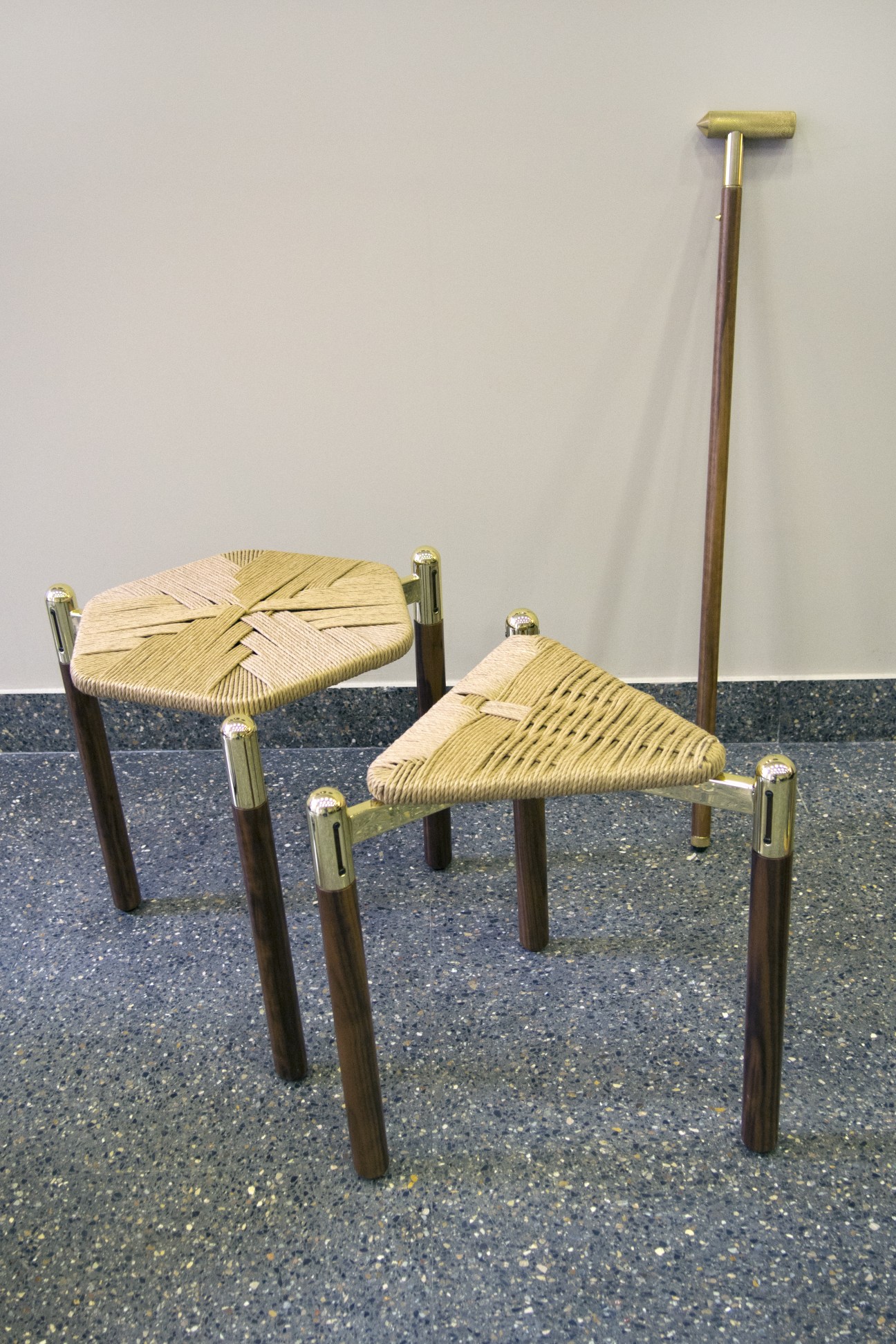
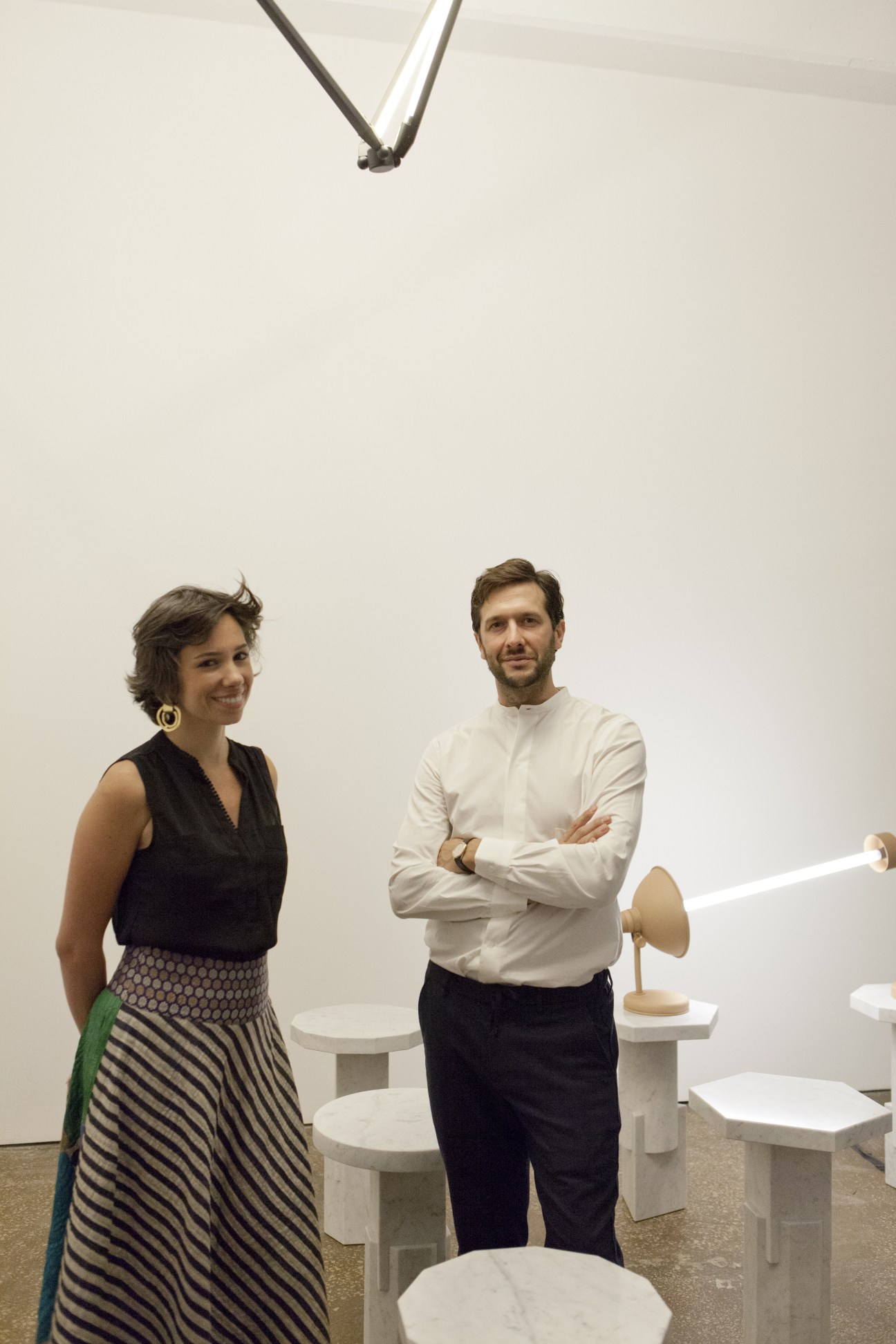
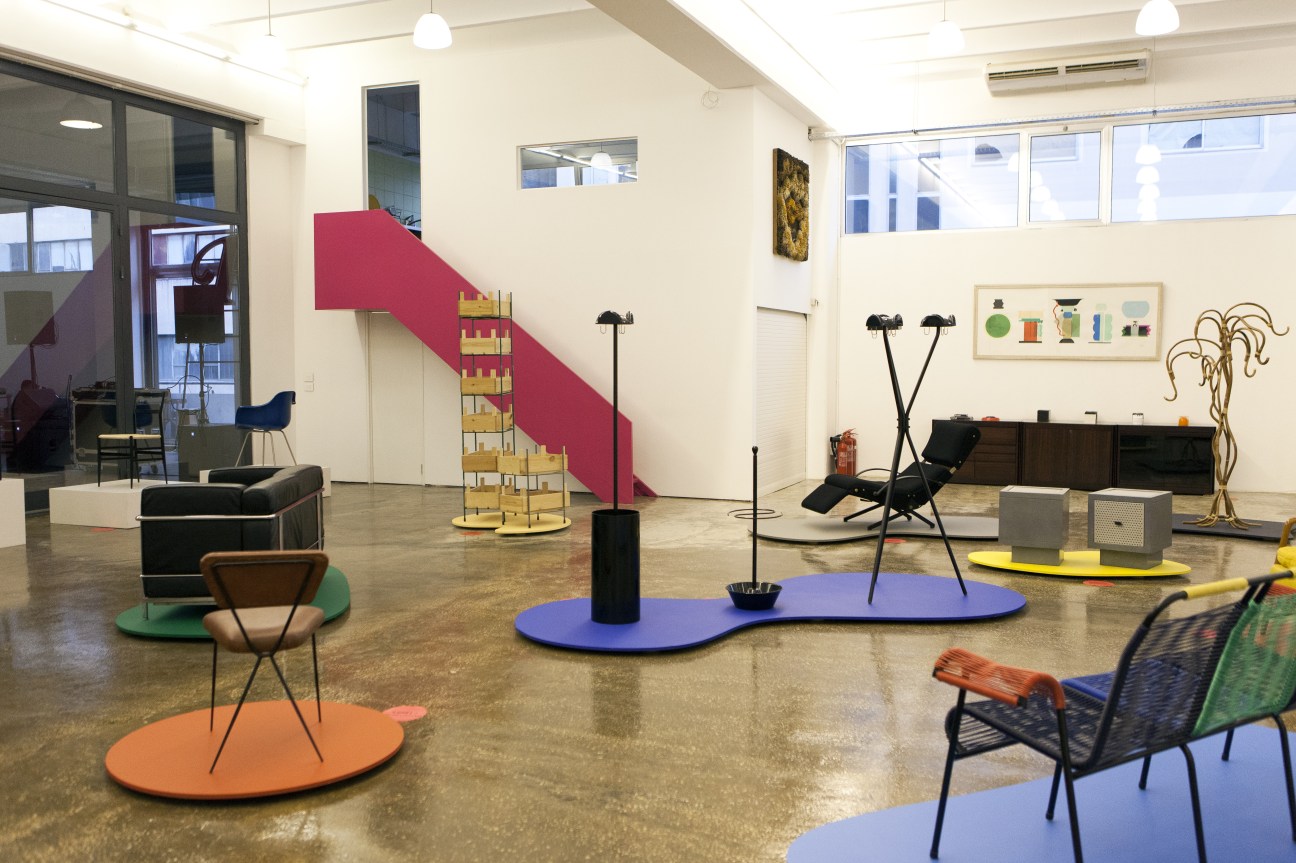

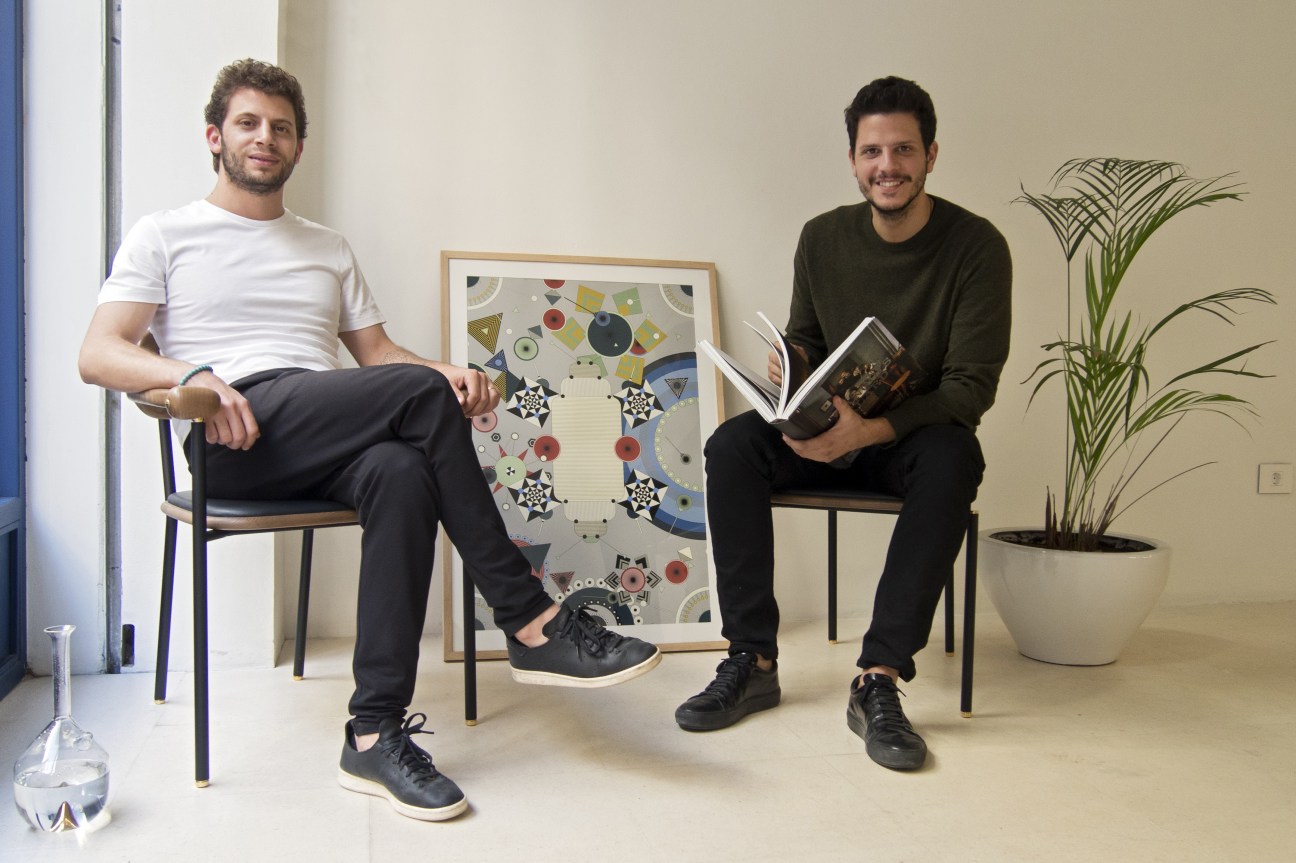
“Someday this whole street will be studios,” says Pascale Wakim, co-founder of Carwan Gallery, which launched in 2010. After six years of pop-ups and design-fair slots, Carwan opened a permanent space in D Beirut. It pitches itself as the first contemporary-design gallery in the Middle East and seven of its 27 represented designers are from Lebanon. The quality of the showing here demonstrates how competitive Beirut’s design scene is.
Clusters such as D Beirut are more familiar to mall-centric cities such as Dubai but it offers a fresh look at how to build a scene in a vast warehouse quarter. Previous efforts have only created isolated pockets amid post-industrial sprawl but D Beirut’s endeavour to culture a more casual footfall – the yoga studio is a start and there are plans for a restaurant – bodes well for other design initiatives following suit.
It’s a familiar story for Metal & Wood in the once-staid Clemenceau neighbourhood near the city centre. Founder Rached Sultan and his wife Josette Youssef say that bringing people to their shop was the initial challenge – now galleries are rushing here and rents are set to rise on cue. Sultan started importing vintage furniture in 2011, before expanding to homeware from Japanese and Scandinavian labels; in the past couple of years he and Youssef have introduced their own furniture line.
“We want to produce small-batch stuff well; be an affordable brand but not skip on materials,” says Youssef. Local buyers represent 70 per cent of the business and the market is hungry. Where it can, Metal & Wood manufactures in Beirut but Sultan says that dependable artisans are hard to find. “It hasn’t been a stable market for them, which makes it less easy for us.”
A stroll across town is fraught with the fractious nature of life in Lebanon: a district brought to a standstill by a political strike; the mid-morning calm disrupted by cars hooting for a politician. In the Downtown Beirut area, obliterated during the civil war and rebuilt for retailers in the past decade, entire areas lie abandoned.
Yet there are signs of fresh starts. Between the raucous cocktail bars in Gemmayze, Joy Mardini Design Gallery – a pioneer of Lebanese talent – has moved from an indutrial area to a street with foot traffic. In nearby Mar Mikhaël, David Raffoul and Nicolas Moussallem transformed a car depot into their first dedicated studio in 2016. “We knocked through the ceiling to create this skylight,” says Raffoul, as he flips through sketches of a bar cabinet illuminated by Beirut’s sun.
Their brand, David/Nicolas, has exhibited with Nilufar in Milan and in 2017 will show at the Carpenters Workshop Gallery in London. The designers eschew an unfinished aesthetic that they believe has saturated Beirut’s scene. They favour exacting details: complex carvings and an insistence on the best materials.
Studios such as David/Nicolas, which is eyeing a second workspace in Milan in 2017, are evidence of the maturation of Beirut’s design sector. The duo are hard at work on a top-to-bottom fitout for a new restaurant in Downtown Beirut, from the seats to the lighting. “We’re working on scenography: how can we create a scene, an atmosphere, in the middle of a powercut?” says Moussallem. “Blackouts may be a reality here but this is an alternative to letting it kick us in the butt.”
On the move
1.
En route to regional success
Rail Baltica, Baltics
One of Europe’s largest infrastructure projects is entering a crucial year. Rail Baltica is a major new rail network running 728km from Tallinn, Estonia, south through Latvia and Lithuania and linking up with existing railways in Poland. The aim of the line, the first phase of which is scheduled to open in 2024, is to connect these three countries not just to one another but to the rest of Europe; there is now even talk of a tunnel under the Baltic Sea to connect Tallinn with Helsinki. “This is the project of the century for the Baltic countries,” says Baiba Rubesa, CEO of RB Rail, the joint venture set up by the three nations in order to oversee the vast undertaking.
There are projections for five million passengers and 13 million tonnes of cargo on the line by 2030. “Rail Baltica will act as a catalyst for economic growth within the Baltics and beyond,” says Kristjan Kaunissaare, Rail Baltica project co-ordinator at Estonia’s Ministry of Economic Affairs and Communications.
But the project is fraught with complexity. On a technical level there is a difference in track gauges for the existing railways and some parts of the line may have to be built as “dual” gauge in order to facilitate transition to routes into Russia. Diplomacy is also tricky. “We are at the centre of a spider’s web of many different issues that all need to be agreed upon,” says Rubesa.
Although the first tracks will not be laid until 2020, there is much to be done before then. On the agenda for 2017 are assessment and feasibility studies and a 10-year business plan. Then there is the question of that tunnel between Tallinn and Helsinki under the Gulf of Finland. Costing an estimated €13bn, this would be the longest undersea rail tunnel in the world. The idea of a tunnel has been around for decades but, with Rail Baltica approaching, politicians are now taking it seriously. As Kaunissaare puts it, “We’re on the right track.”
2.
Welcome energy boost
Barakah nuclear-power plant, UAE
The Arab world enters nuclear-power territory in 2017 with the completion of the first of four nuclear-power reactors in the uae. The planned 5.6 gigawatt Barakah complex is the result of a sober 2008 assessment of the country’s ballooning energy needs, when it was found that demand was rising by 9 per cent a year – three times the global average.
The response was swift. In 2009 a contract was awarded to a consortium led by Korean Electric Power Corporation. Work on the first unit began in 2012 and, aside from an accident that killed two workers in 2016, construction has gone smoothly. The reactors are due to be rolled out on schedule over the next four years and by 2020 Barakah is expected to meet up to a quarter of national electricity needs and save about 12 million tonnes in carbon emissions annually.
Crucially it also allows the Emirati government to diversify its energy portfolio and reduce its reliance on oil; as a result the programme is being closely watched by others in the region. “Nuclear energy has its appeal for Middle Eastern oil producers,” says Carole Nakhle, director of independent energy consultancy firm Crystol Energy. She describes it as “a green source of power generation that will allow the region to reduce its carbon footprint and help to meet rapidly rising demand for electricity”. At the same time, she adds, “It will also safeguard oil exports instead of burning oil domestically and diversify the region’s primary fuel mix.”
One of the countries with more than an eye on Barakah is Saudi Arabia, which earlier in 2016 unveiled plans to triple non-oil revenue by 2020. The kingdom is currently deciding on a site for 16 nuclear reactors set to produce more than 17 gigawatts by 2040. Jordan and Egypt have also signed a deal with Russian state nuclear company Rosatom to build plants in the coming years to address their power-shortage problems. Others will be watching closely for other reasons, however. In an unstable region and with a newly resurgent and nuclear Iran, there are those who will see this development in the Middle East as a security issue.
3.
Fresh approach
The Bentway, Toronto
Life in North American cities in the 20th century was held up by three pillars: the suburban house, the car and the highway. Inner cities were seen as hubs of work and commerce but rarely as places to call home. But now that’s changing. Across the continent people are moving back into city centres in a process that journalist Alan Ehrenhalt has described as “the great inversion”. In Toronto the downtown population is currently growing four times faster than the population of the rest of the city. This shift is forcing officials to consider smarter uses of space in some of the densest districts.
Enter architect Ken Greenberg, who is spearheading a project that will rejuvenate the neglected underbelly of the Gardiner Expressway, a raised motorway that cuts into the centre of Toronto from the western suburbs. “The idea is to build a great civic living room on roughly 10 acres [4 hectares] of land that is located in the middle of this area,” he says. And while the spaces underneath the highway will be transformed, the key artery will continue to be used by cars and lorries. Christened The Bentway after the beams that hold up the elevated thoroughfare, the development will open in phases starting in the summer of 2017.
Landscape firm Public Work will help to realise the final vision: three main sections linked by a single kilometre-long ice-skating trail. The completed Bentway will be a vibrant park featuring community centres, cafés and performance spaces, all located under and around the expressway. A viewing bridge hanging from the Gardiner will offer vistas of historic Fort York. “Currently the only people with that view are those living in condos,” says Greenberg.
If Manhattan’s High Line is an original take on how to give expired infrastructure a new lease of life, the Bentway represents a fresh approach to infrastructure that is still serving its purpose. “Instead of thinking of it as solving an engineering problem, we need to use it to serve multiple functions,” says Greenberg. “In this case, how to make what’s under the Gardiner just as important as what’s happening on it.”
4.
Chugging on
Mombasa-Nairobi Standard Gauge Railway, Kenya
Creaking infrastructure has long been the bane of Kenya’s – and east Africa’s – economy. A single-track railway begun by British colonialists at the end of the 19th century remains the primary artery for moving goods inland from the congested port at Mombasa.
That railroad was nicknamed the Lunatic Line because of the dangers of its construction, with man-eating lions and a hostile environment compounding the difficulty of laying a railway into Africa’s then-undeveloped interior. It took three years and thousands of lives to build the 525km line that then became the lifeblood of the economy and the spark for Kenya’s capital, Nairobi, which grew from a few shacks by a railway siding into a bustling city of 3.5 million.
Kenya’s government is hoping that a new line – a $3.8bn Chinese-built standard-gauge railway (SGR) – will repeat the trick by increasing the volume of regional trade. The 472km Mombasa-Nairobi section is due to open in mid-2017 and the 620km extension from Nairobi to Uganda – and on to Kampala – is under construction.
The government projects that the railway will increase economic growth by 1.5 per cent. Everything imported into Kenya, and much of east Africa, arrives in the port of Mombasa and is then transported to Nairobi and on to its landlocked neighbours Uganda, South Sudan and Rwanda. The existing train currently takes 18 hours to reach Nairobi and the onward line to Uganda is in disrepair, while smoke-spewing trucks clog the highway.
The new railway line is intended to be transformative but has already run into trouble. As with so many Kenyan schemes involving public money, the sgr project is beset with allegations of inflated tenders, backhanders and other corruption. Commentators have questioned the high per-kilometre construction cost and the debt taken on to finance the line.
It has also run into controversy because the chosen route cuts through the 12,000-hectare Nairobi National Park, a wildlife reserve in the capital that is home to lions, rhinos and giraffes. Conservationists’ petition for the line to skirt the park has been unsuccessful.
5.
Ready and waiting
Gwadar sea port, Pakistan
Although construction of the Gwadar sea port in Pakistan concluded several years ago, it has sat virtually deserted on its finger of land overlooking the Arabian Sea. The problem is that the improvements to the highway that connects Gwadar with the western Chinese city of Kashgar, which should transform Gwadar into a thronging hub of commerce, have been complicated by political instability in the states through which the road runs. Officials now hope that 2017 will be the year the highway is finished and Gwadar realises its full potential.
The port is one of the flagship projects in the China Pakistan Economic Corridor, a set of infrastructure schemes totalling €43bn of Chinese investment. The hope is that the port – built by the Chinese at a cost of €231m – will rival Dubai, Hong Kong and Singapore, processing up to 400 million tonnes of cargo each year. For China the project is of paramount importance. The port provides direct access to the Arabian Sea, allowing Chinese energy imports to circumvent the Malacca Strait off the coast of Malaysia, where more than 80 per cent of its energy imports currently bottleneck. Gwadar and the highway to Kashgar also represent an important connection between the maritime and overland branches of China’s “One Belt, One Road” initiative, which was designed to generate stronger links between China’s economy and those of Southeast Asia, Africa and Europe.
Though the first convoy of cargo from Kashgar reached Gwadar in November 2016, the highway still faces substantial challenges before it reaches full capacity. The route takes it through the insurgency-affected states of Balochistan and Khyber Pakhtunkhwa in Pakistan and Xinjiang in China. Sameer Patil, an analyst with the Indian think-tank Gateway House, says that by bringing infrastructure and economic activity to the region “the Chinese believe they can buy peace”. In the meantime Pakistan isn’t taking any chances and has deployed troops to protect Chinese workers in the region. This is one project to watch – if the highway is completed by the end of 2017, the Gwadar port could finally become a key node for global trade.
Staying afloat
Like many in the luxury sector, business leaders in the yachting industry often hark back to the period before the financial crash. “Those years up until 2008 were very strong,” says Raphael Sauleau, CEO of full-service yachting company Fraser Yachts. “Then the bubble exploded. Now we have more of a market without huge peaks.”
Sauleau is standing on the deck of Pink Gin, a sailing yacht moored in Monte Carlo’s marina, which is available to buy through his company. It’s the opening of the Monaco Yacht Show (MYS), one of the industry’s last big autumn fairs in Europe before the whole circus sets sail for Florida. But it’s the best place to gauge the temperature of the sector. “Fort Lauderdale is a key show,” says MYS director Gaëlle Tallarida. “But it doesn’t have the same ambience as Monaco. There is more of a mix of people; it’s not so exclusive.”
While the majority of the delegates are in attendance to sell, many are refreshingly honest about the state of the market. Philippe Briand is one of the industry’s leading designers and is here launching a 70-metre yacht, Sybaris. “We won’t see an improvement tomorrow,” he says. “In the early 2000s there was too much demand; now we have a normal, mature market.”
After the frenzy of the previous decade there is a huge existing fleet already on the water. That spells trouble for shipyards: it’s more difficult to convince someone to build a boat from scratch when there are so many available to charter or buy secondhand. As such, yards are having to think creatively as they search out opportunities for growth beyond 2017.
According to Sauleau, the segment of the market that deals in yachts over 80 metres long is “booming”. While it has traditionally been dominated by German shipyards such as Lürssen, the Italians are muscling in. Ferretti Group has just announced further investment (€20m by 2021) into its Superyachts Yard in Ancona, which can build boats up to 90 metres.
Meanwhile, Benetti (part of the family-owned AzimutBenetti group), has launched an innovative new manufacturing model called Benetti Now. The scheme seeks to reduce delivery times by taking boat building closer to serial production: the shipyard will construct superyachts based on predefined naval platforms before securing buyers – something the industry has never done before.
“There is of course a risk in doing ‘ready-to-wear’ manufacturing,” says CEO Vincenzo Poerio. “But that’s the advantage of being a family-owned company. You have to invest even if that means making less profit.”
While optimism might not be the right word for what the industry is feeling right now, it’s clear that its top yards and designers are confident. The market has stabilised and there is a sense that growth will return. As Briand puts it, “There will always be a premium for the best professionals, the best shipyards and the best designers.”
Securing the skies
Here’s a bit of Estonian military lore: in the Soviet days, whenever a Moscow general visited the airbase in Ämari the Estonian soldiers would lay a table of food for him with a generous helping of vodka and a seat beside a small pond with a fishing rod. The method was perfected to pass every Soviet assessment with flying colours.
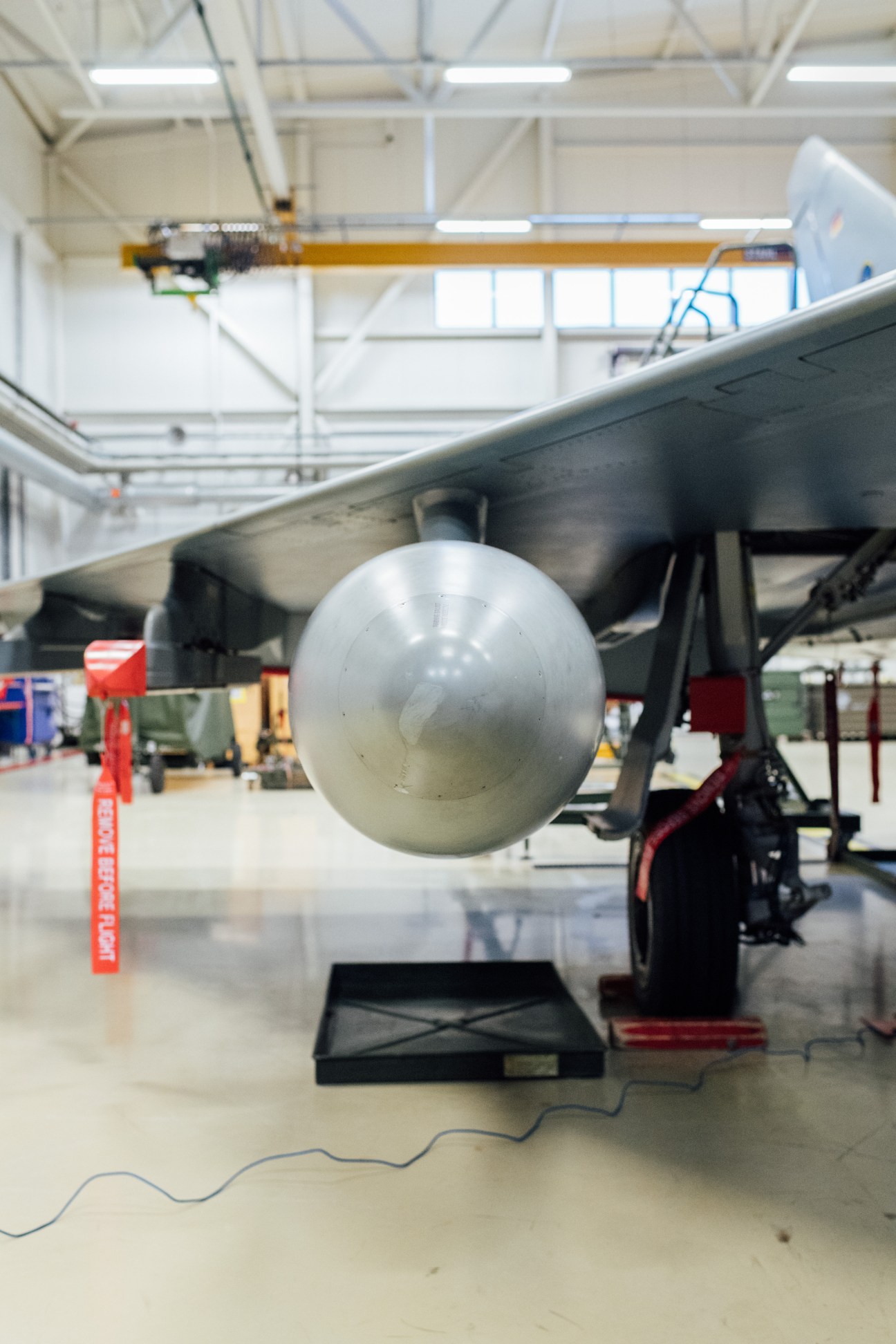
The Russian military doesn’t get that kind of reception today; Ämari is now a crucial airstrip in Nato’s air-policing across the Baltic states. It’s on alert 24 hours a day with a rotating contingent of foreign forces deployed to keep a close eye on Russian planes as they cross the narrow strip of international airspace over the Gulf of Finland. Most are en route to disconnected enclave Kaliningrad, where Russia keeps nuclear-capable missiles. Occasionally Nato pilots scramble to redirect Russian aircraft that veer over the Estonian border but more commonly they intercept Russian pilots who try to fly over this Baltic strait unseen.
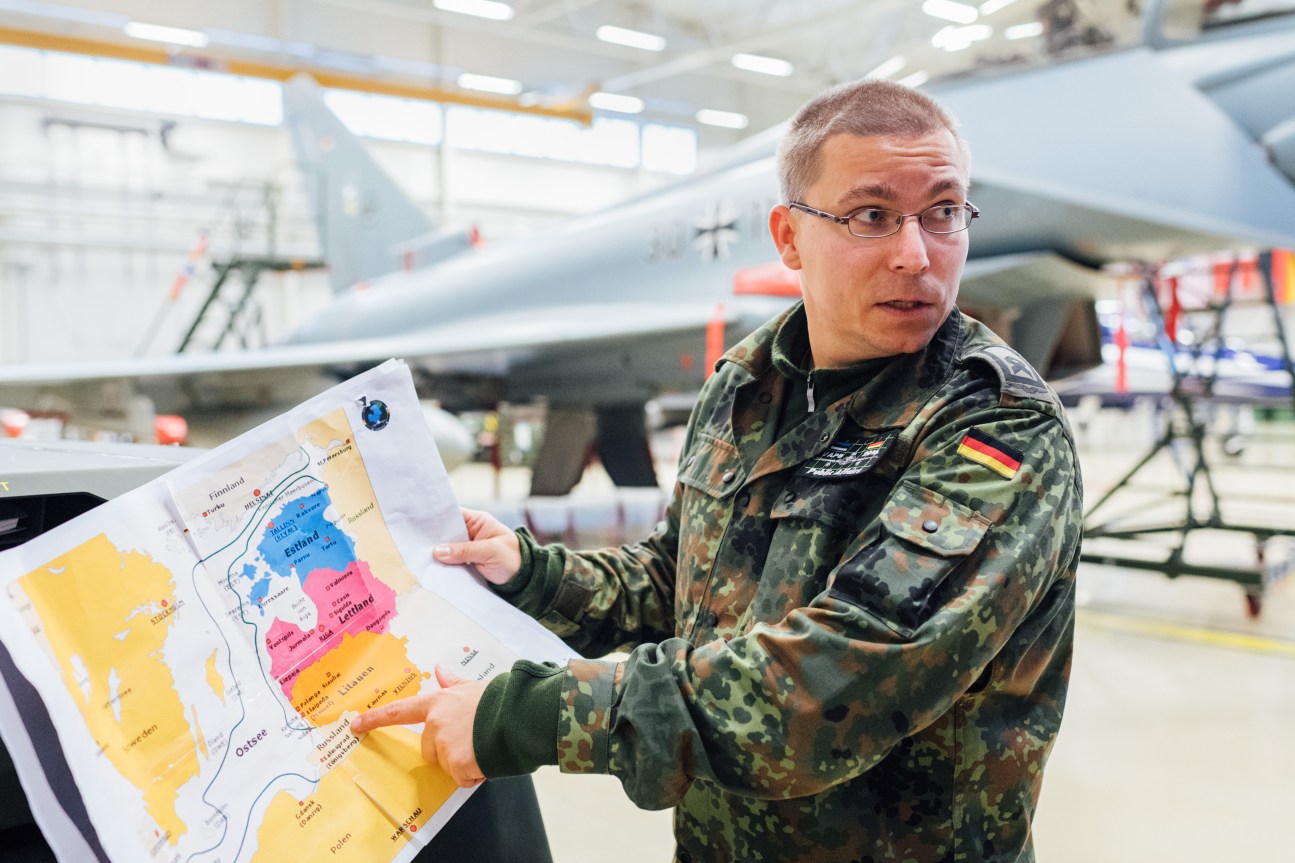
“The Russian planes either don’t have a transponder, they forget to switch it on or they do it on purpose,” says Lieutenant Colonel Johannes Durand, commander of the German Luftwaffe detachment. Like driving into a busy crossroads without your headlights on, it looks provocative – as was the Russian pilot who gave one of his men the finger.
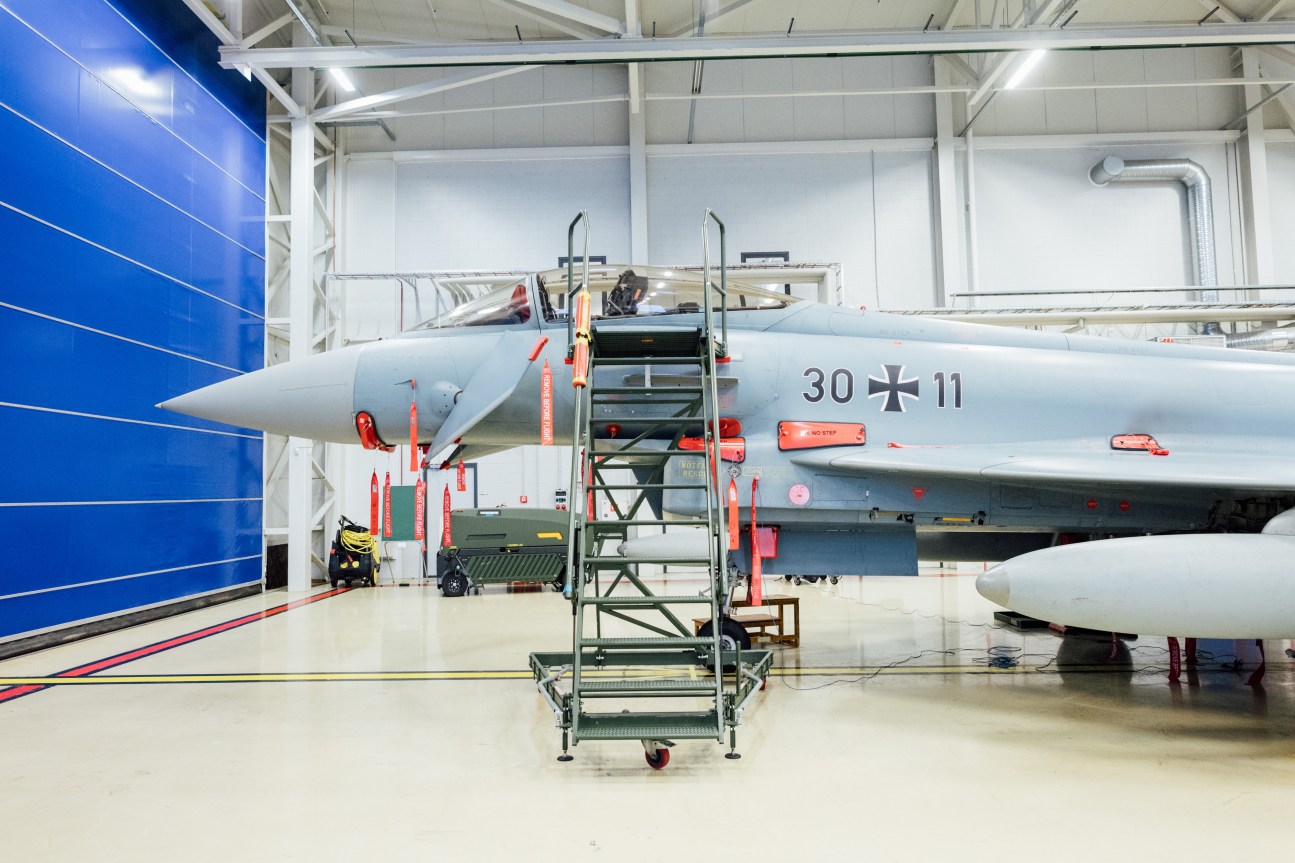
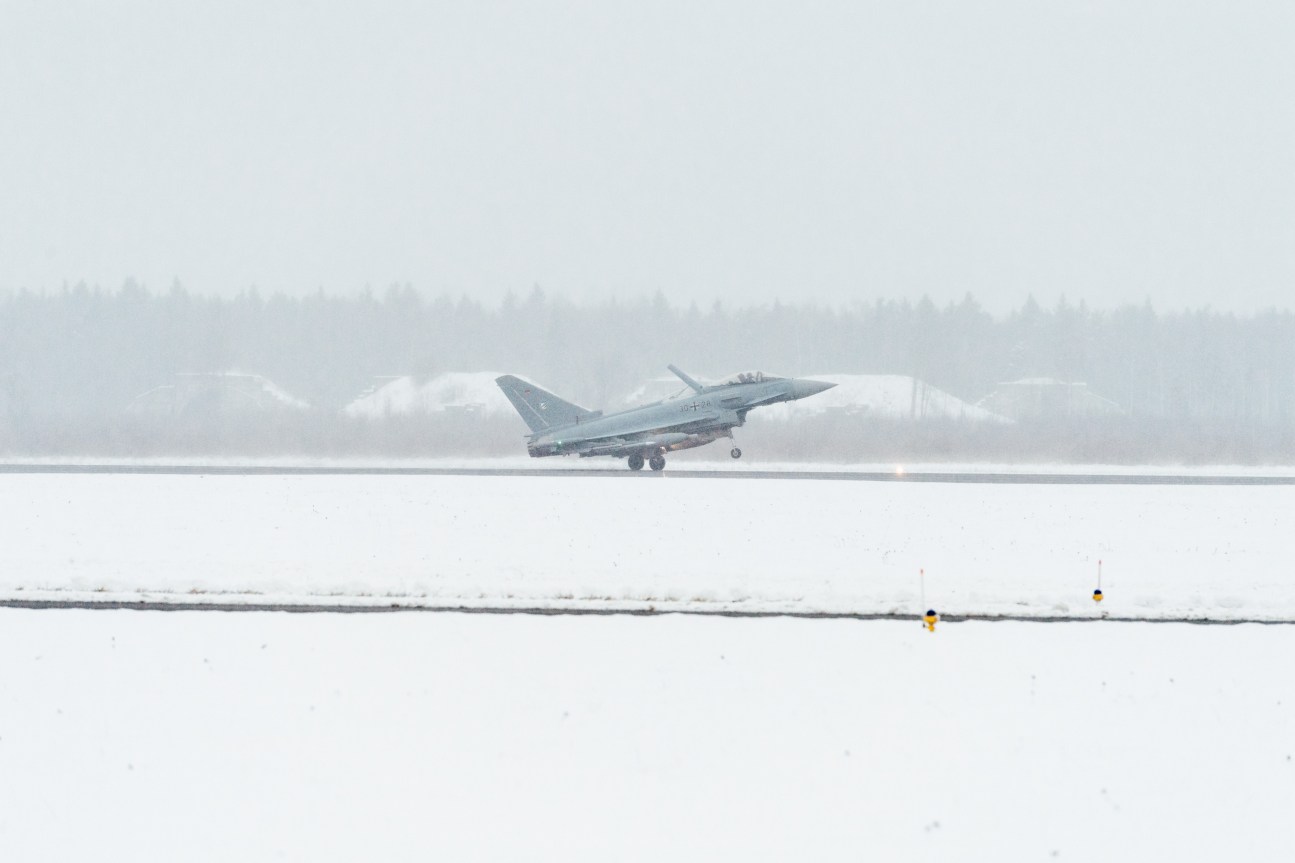
It’s the German air force’s turn to man Ämari after the British passed on the baton in September. But it is a team effort, with Nato forces working alongside their Estonian counterparts. On a squally winter’s morning, as two German Eurofighter jets prepare to land, the Estonian ground team are making sure the airspace is clear and the runway permanently free from snow.
Estonia is about to welcome its largest foreign force to date, with 4,000 soldiers due for deployment across the Baltic states and Poland next year. “It’s really about showing that we’re here,” says Durand. “By doing this every year you become predictable.”
Predictability is prized in Estonia. Since 2008 the nation has nervously watched Russian influence strike its neighbours, sparking separatist wars in Georgia and Ukraine. Six US jets came to Estonia after Russia annexed Crimea in 2014, while Nato has since steadily increased the number of boots on the ground across the Baltic states as members of the alliance conduct a rotating schedule of deployments and training missions. It is a policy based on assurance.
Then along came Donald Trump. “No one knows exactly his security policy, or policy towards Russia,” says Lieutenant General Riho Terras, commander of the Estonian Defence Forces (EDF), the country’s first-response force in the capital, Tallinn. “No one is against dialogue but I don’t think Russia wants dialogue.”
Trump has questioned the US’s spend on Nato and its future validity; he’s spoken admiringly of Russian president Vladimir Putin and said America should be more unpredictable in foreign policy. Newt Gingrich, a key Trump adviser, once referred to Estonia as “some place” in the suburbs of St Petersburg.
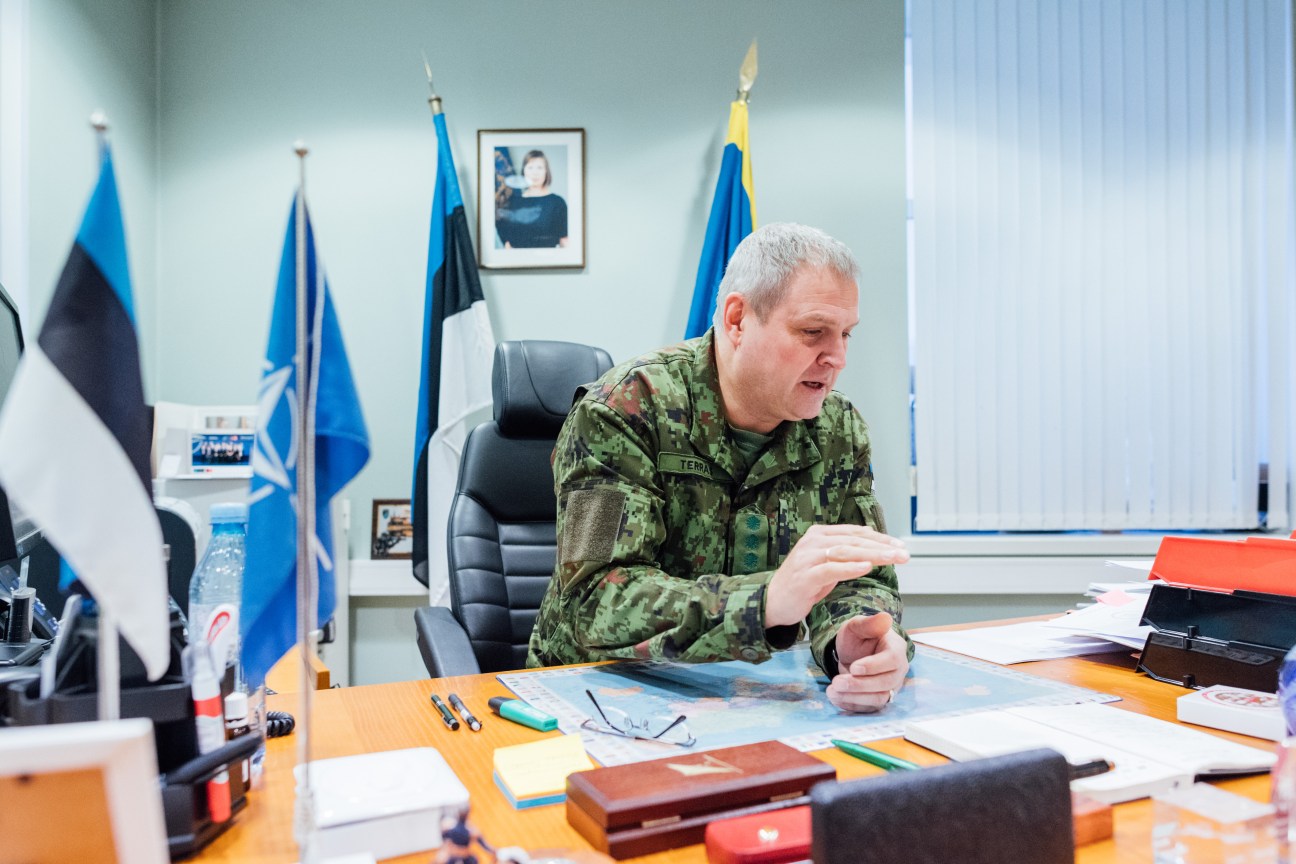
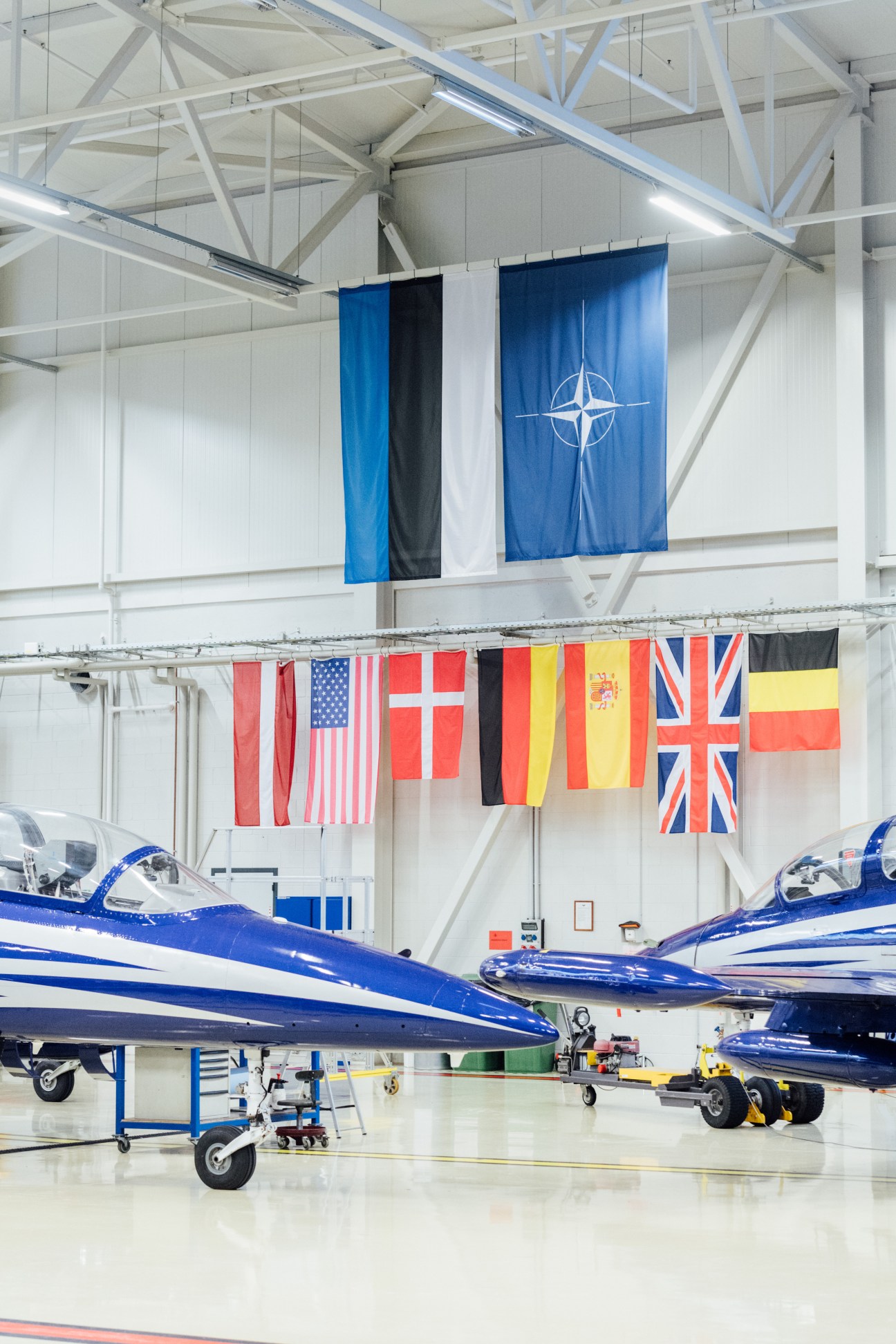
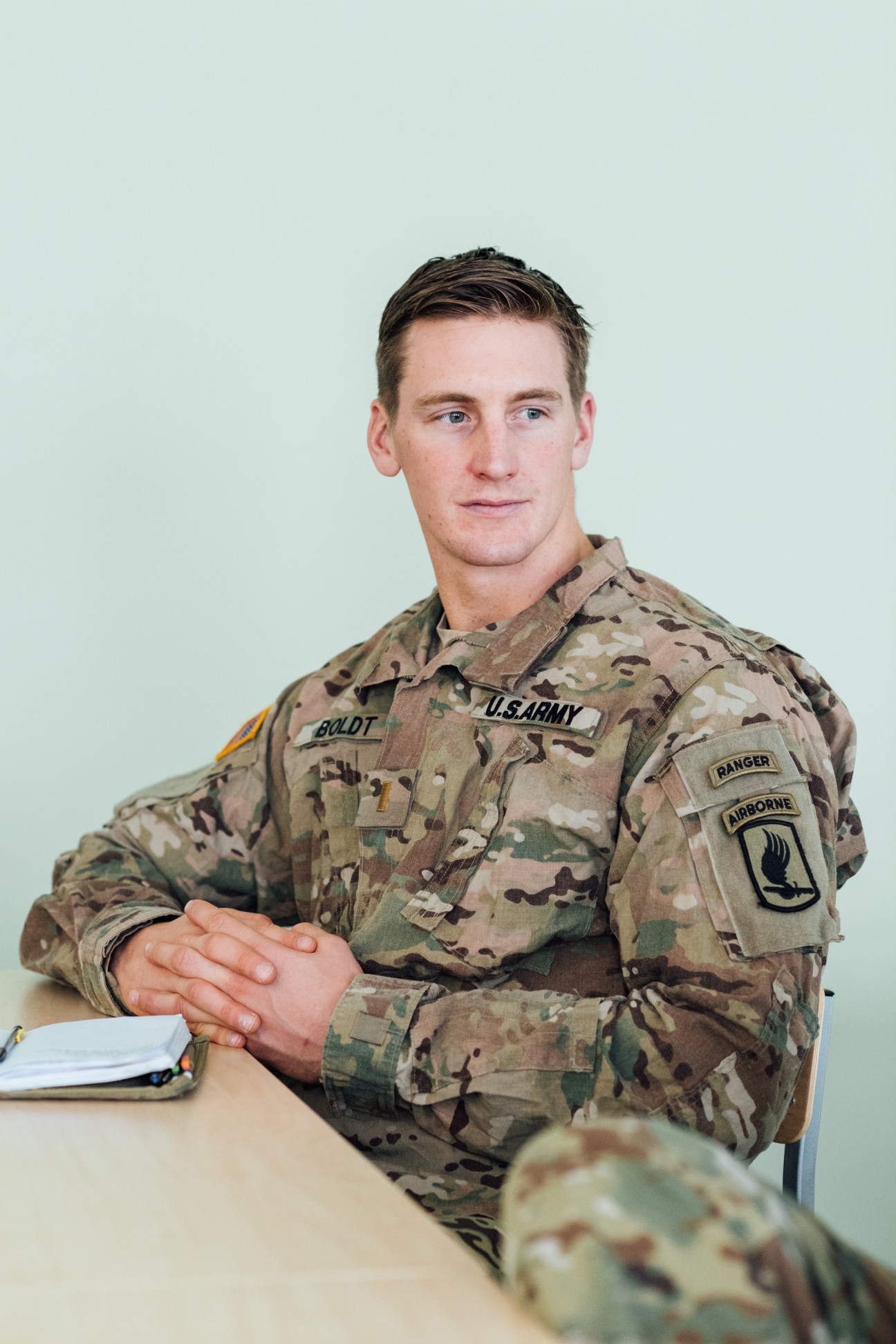



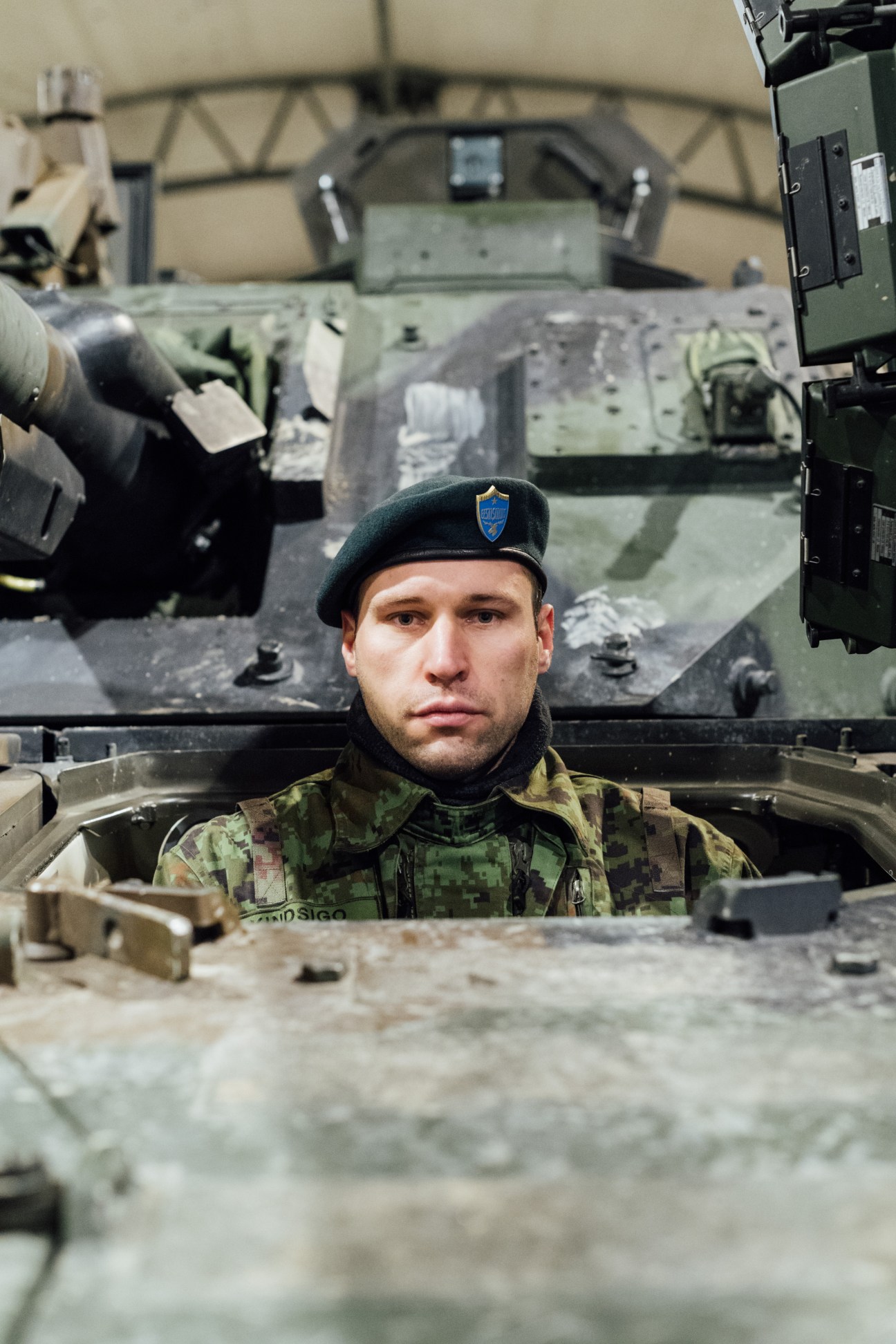
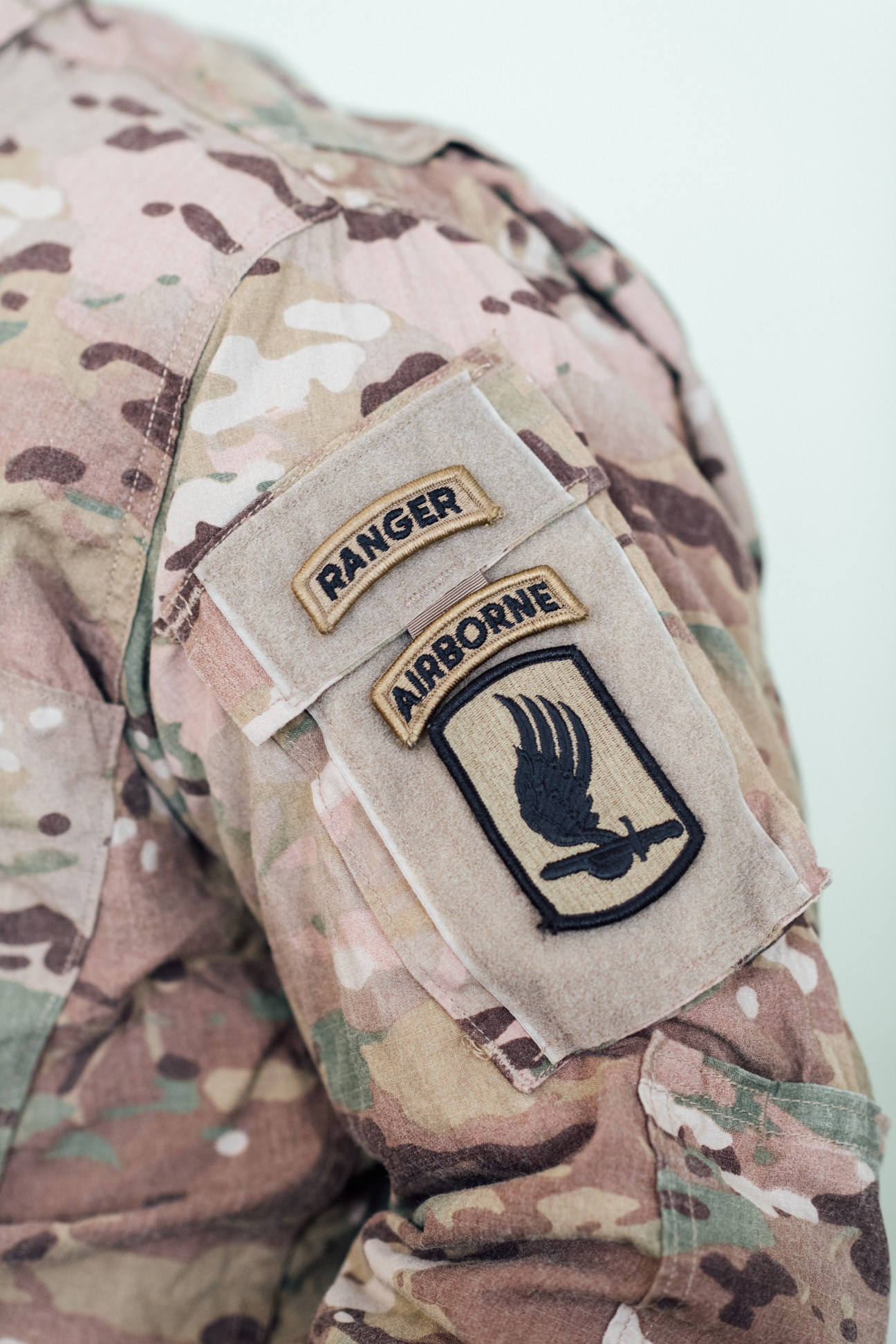
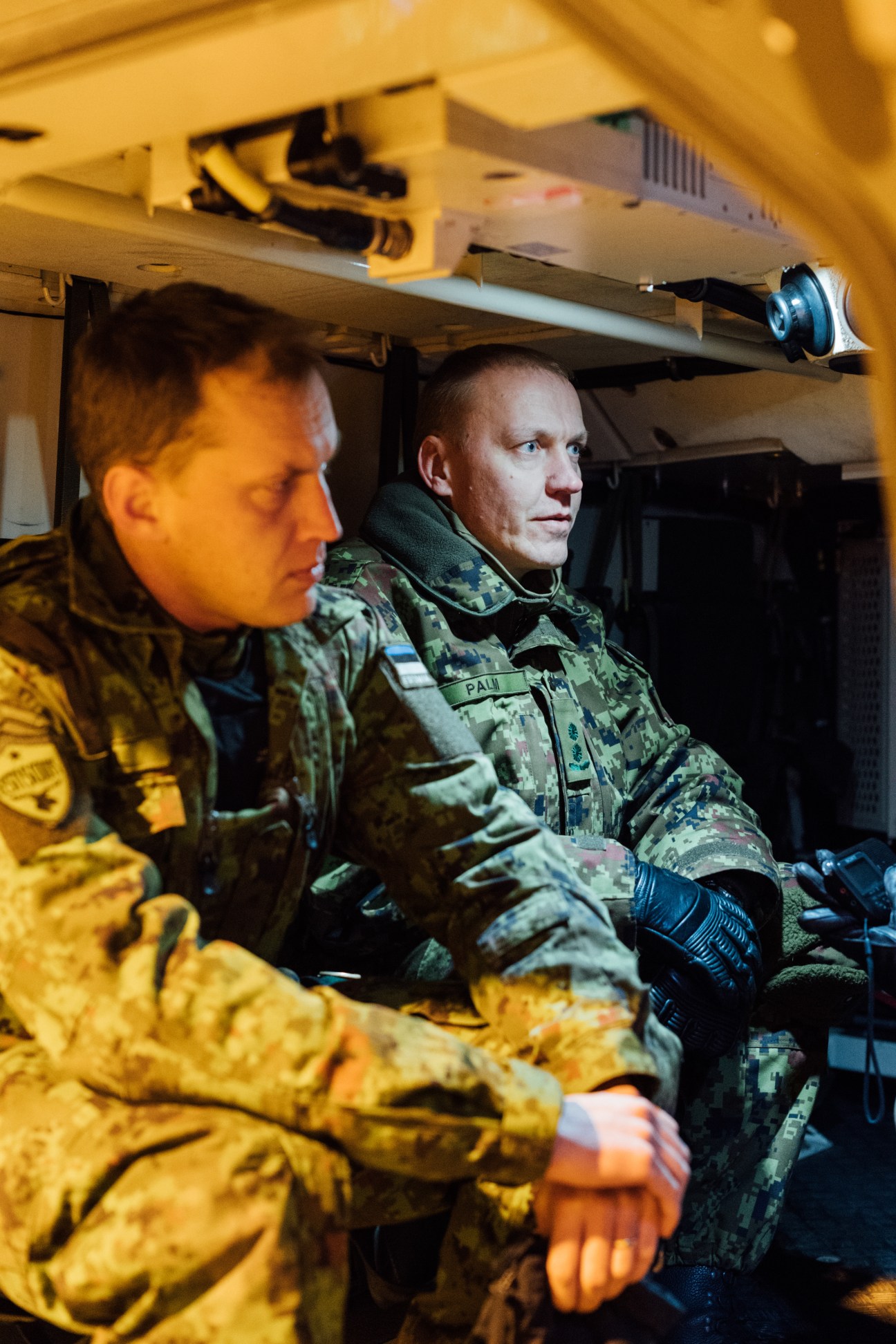
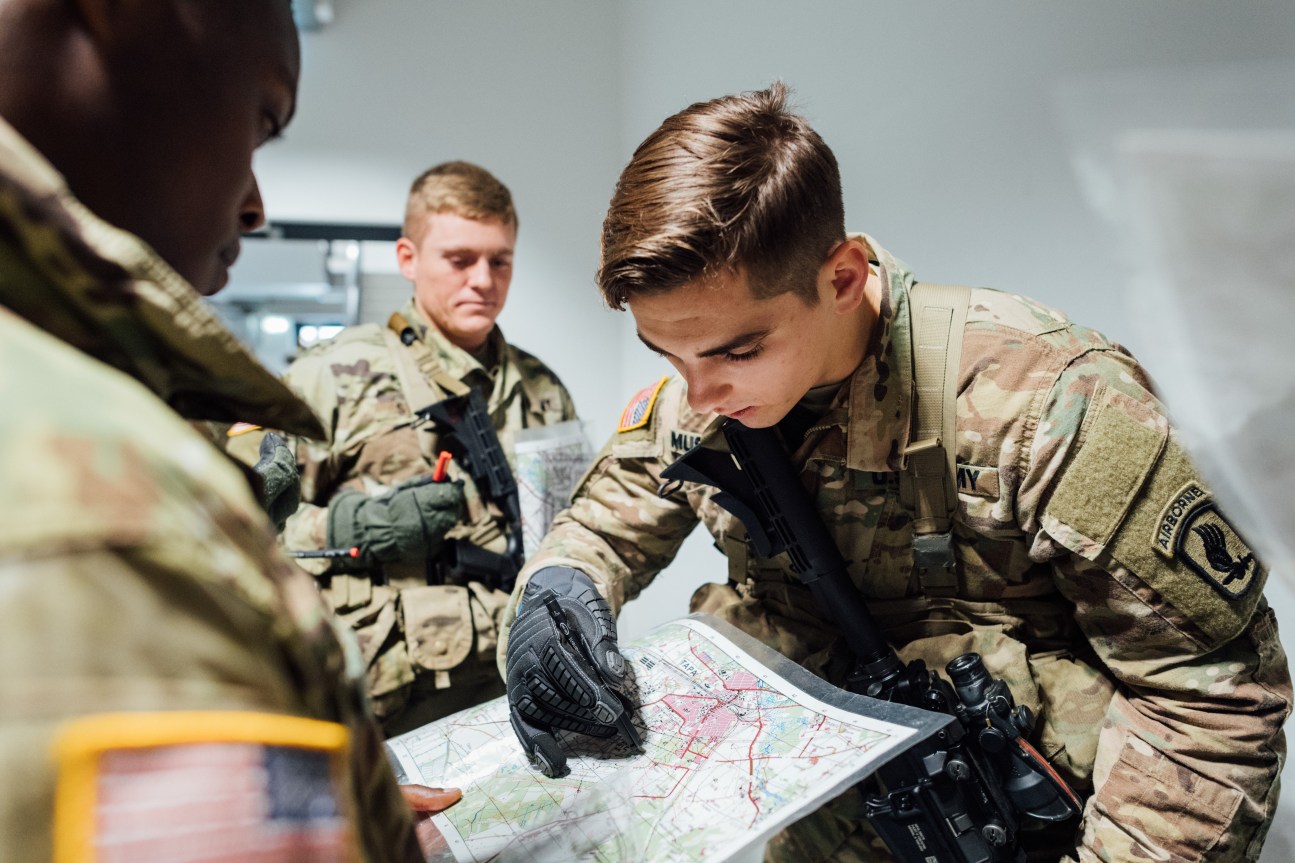
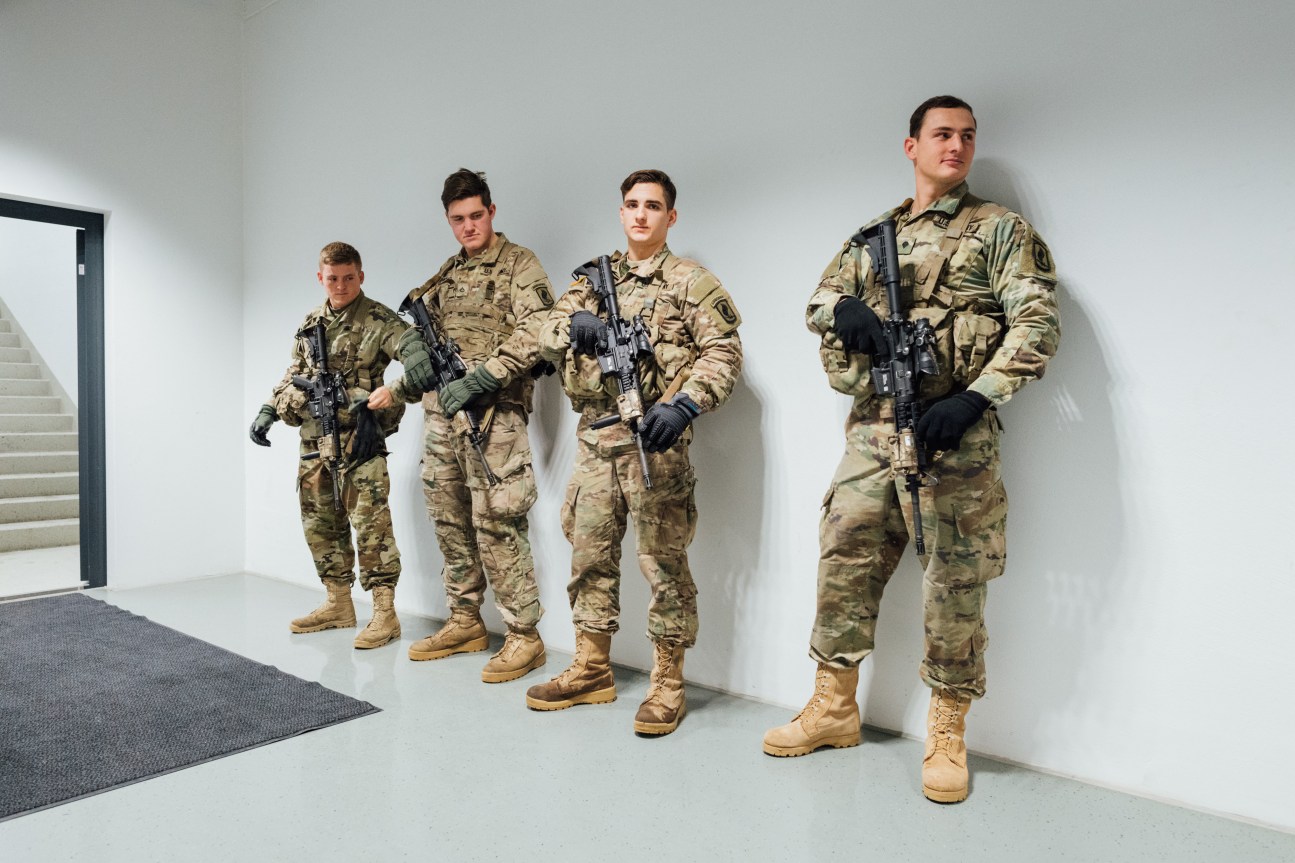
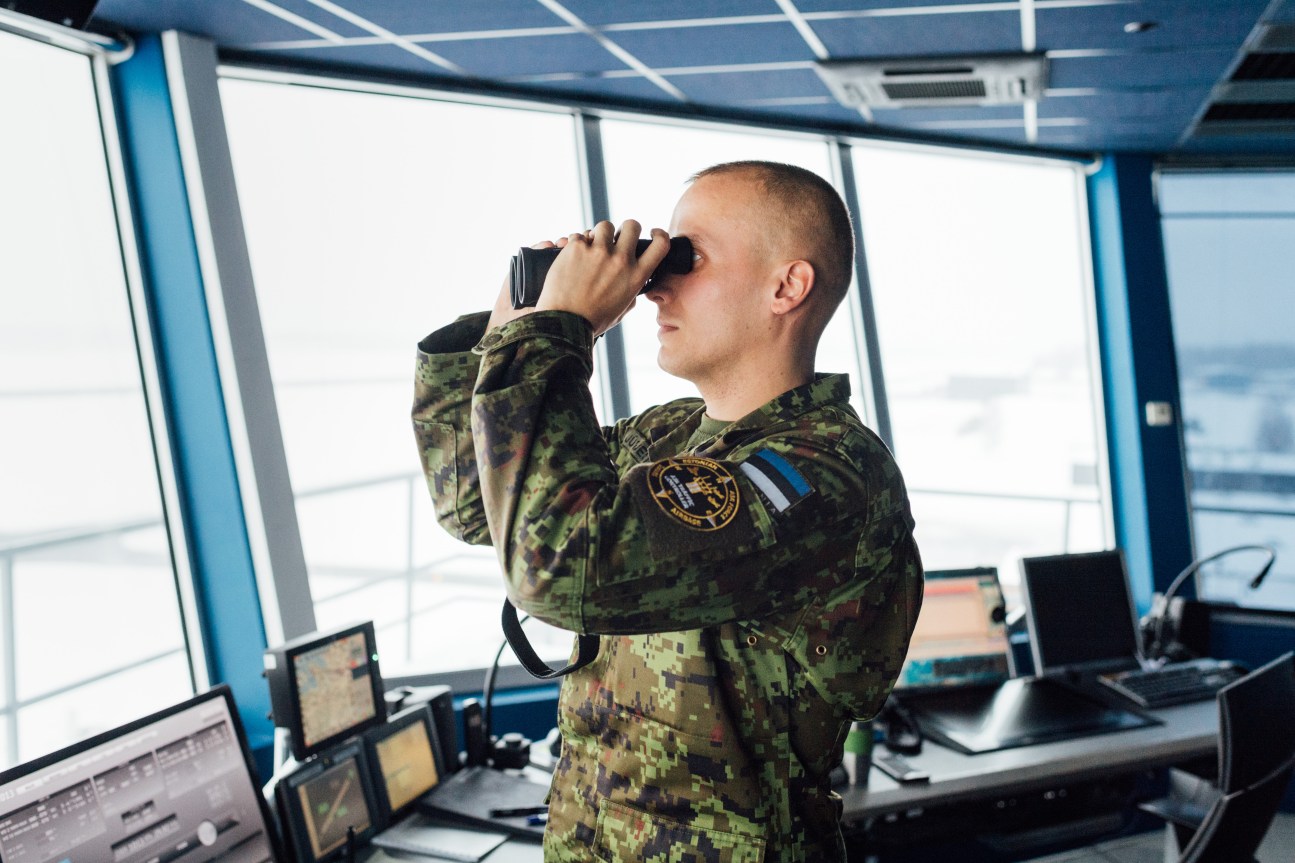
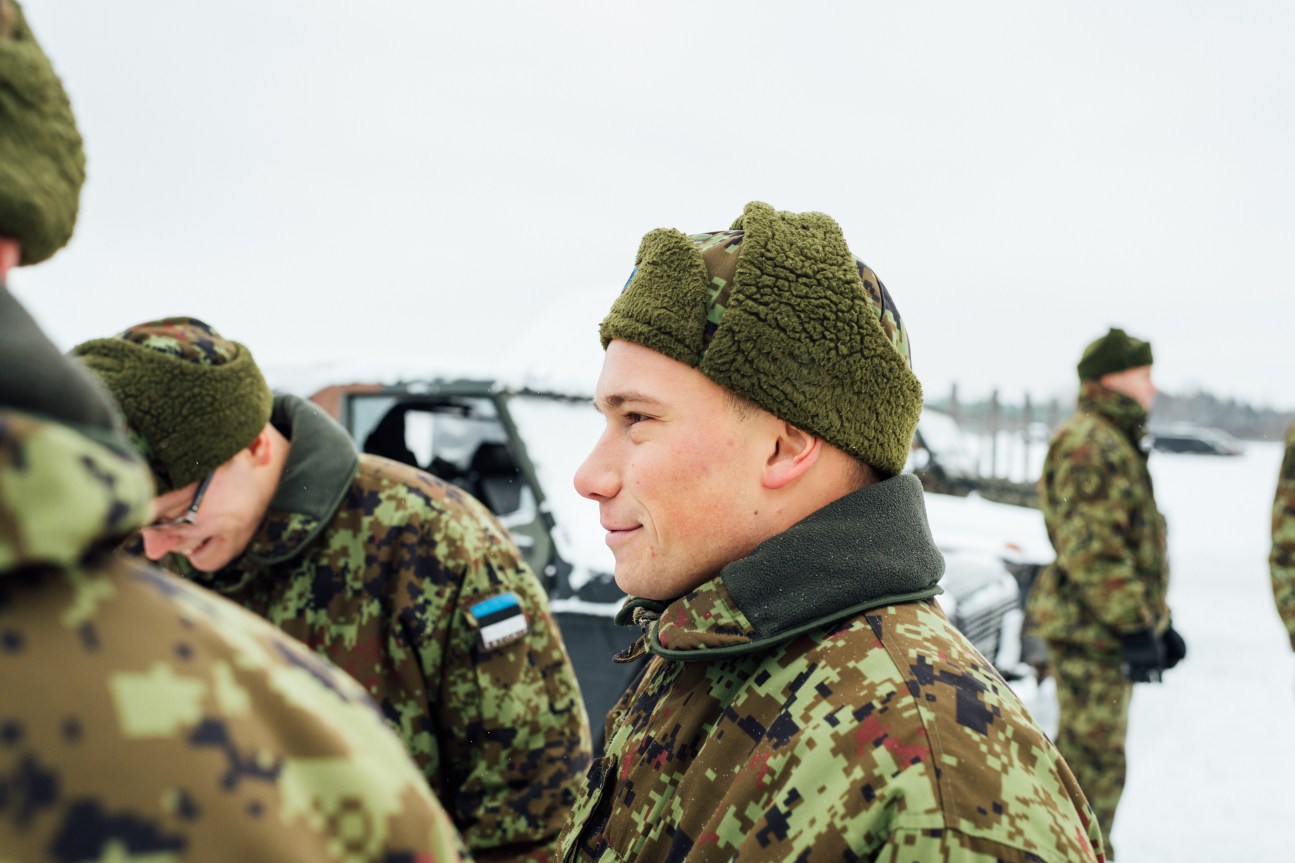
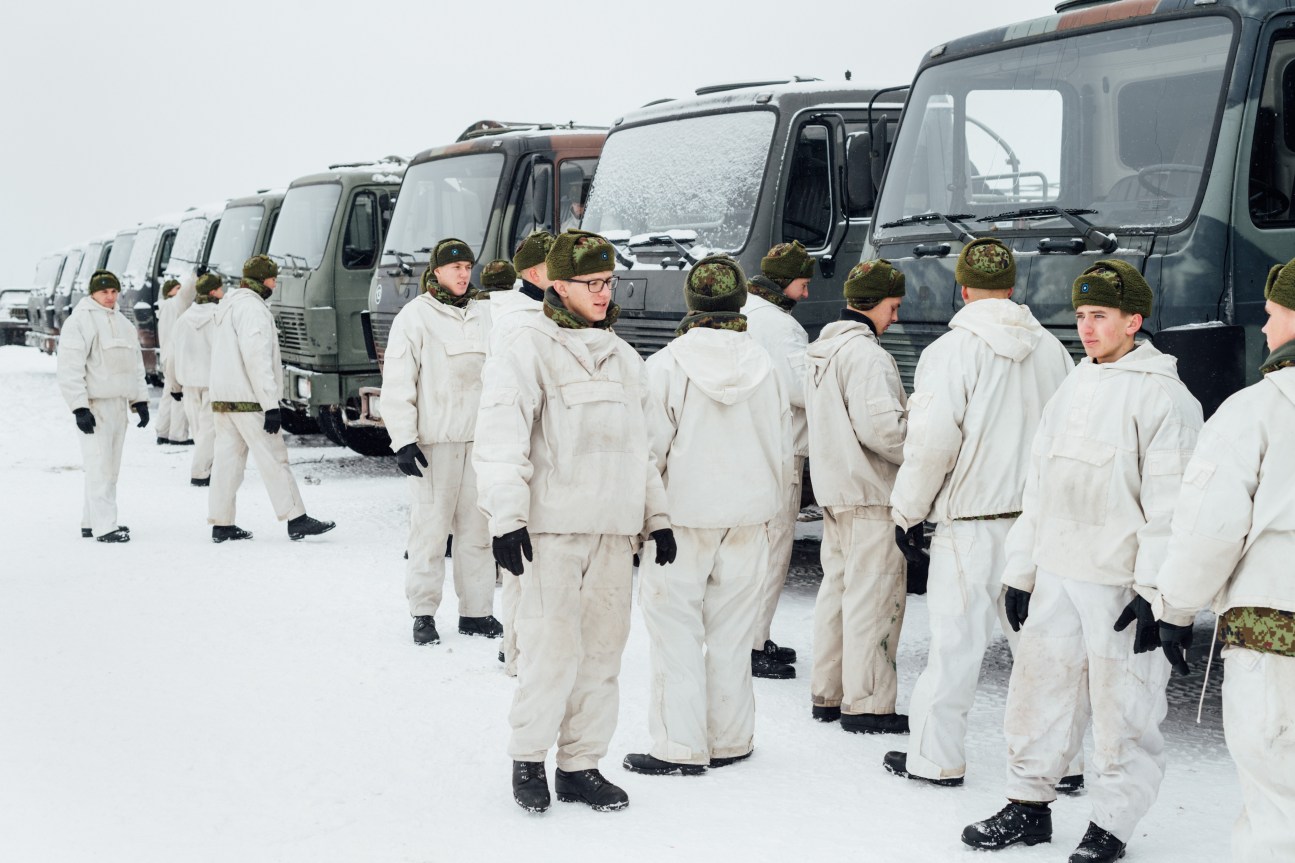
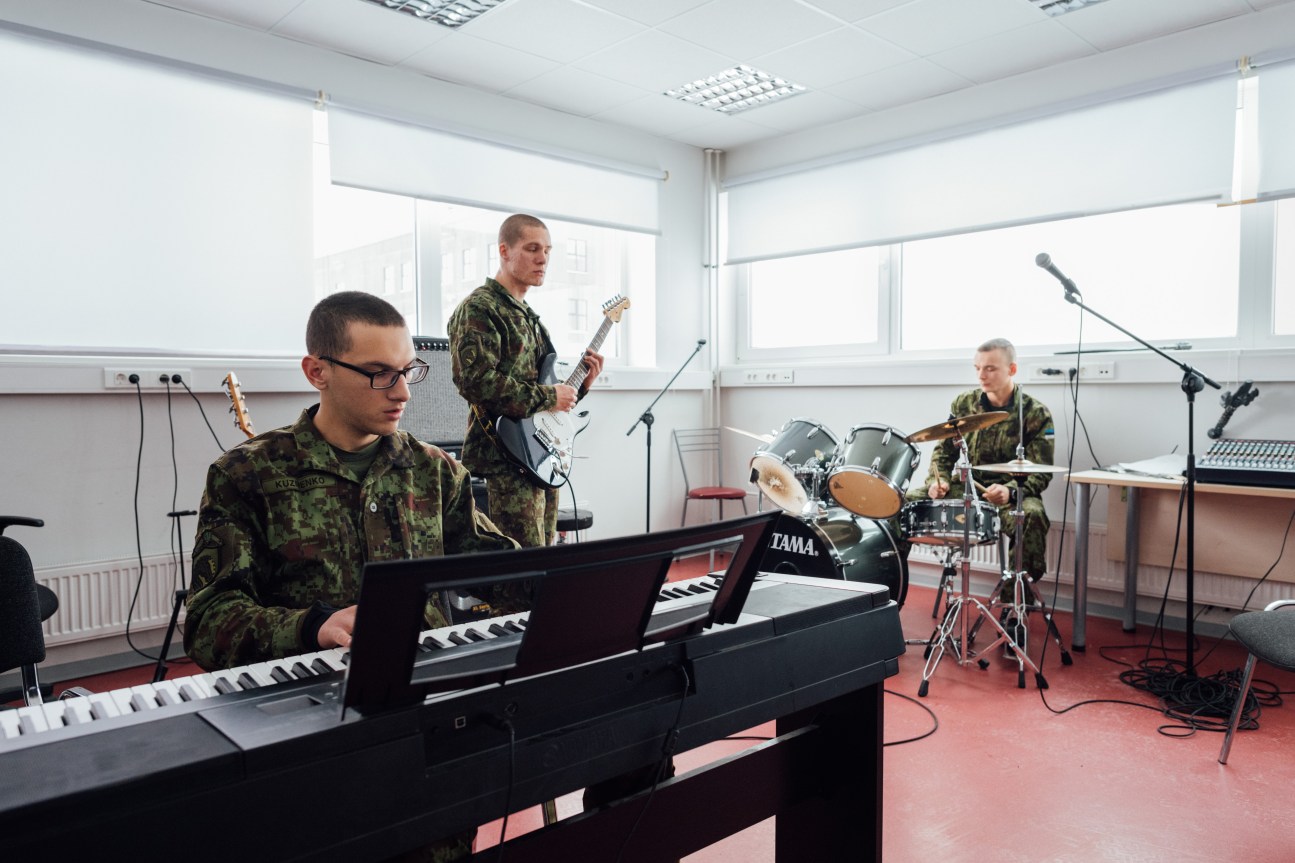
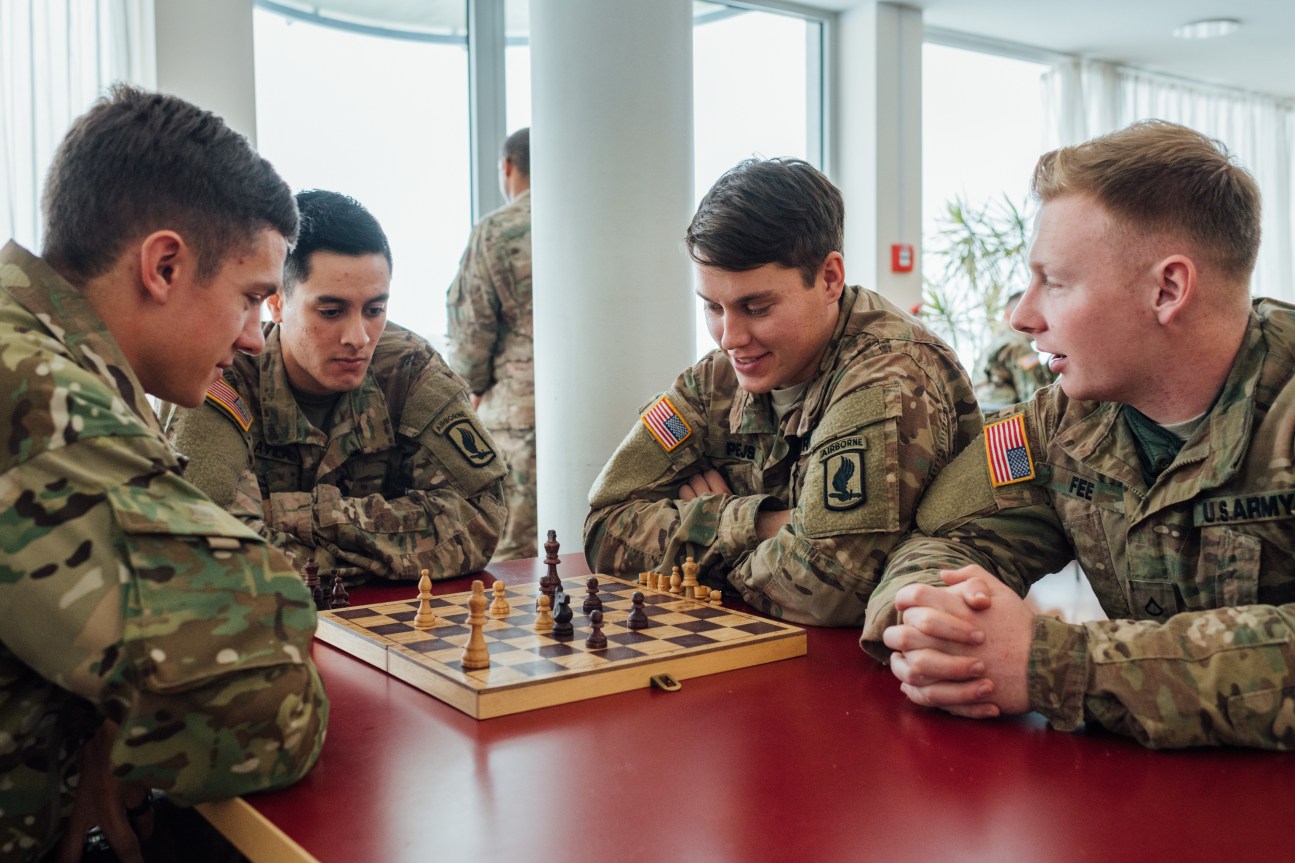
For Lt Gen Terras, the outlook has become insecure: Estonia spends 2.16 per cent of its GDP on defence annually, slightly more than the amount needed by Nato, but this equates to just €500m a year. The country looks to the alliance to plug the gap with air support and hardware. Foreign deployments, Lt Gen Terras believes, show that an attack on Estonia would be an attack on the alliance. “It has a very relevant deterrence value for me,” he says.
The Estonian government has committed an extra €62.5m to building infrastructure for its allies, from new barracks to expanded training areas. On the staircase of the EDF’s grand art nouveau headquarters, Captain Tõnis Sõnum carries an armful of files and is working to meet the demands of the growing military. “We are a small army so we need to perform a little better – we need to manage more food, more facilities,” he says. Cpt Sõnum has served in the EDF for 17 years, previously on the Russian border, and security is greater with the foreign presence. “Estonians talk about Nato solidarity and here it is; they can actually see it,” he says.
Apart from a brief period between the world wars, a succession of Swedes, Russians and Soviets have ruled Estonia for the best part of 500 years. The sovereignty of the republic, at a time when Russia is stirring trouble in lands it historically regards as its own, is taken very seriously. In 2015 a mobilisation exercise readied 14,000 troops for battle in 26 hours, a combination of reservists and professional soldiers. The plan is to have a hot reserve of 25,000 soldiers in the coming years. Not bad for a country of 1.3 million people.
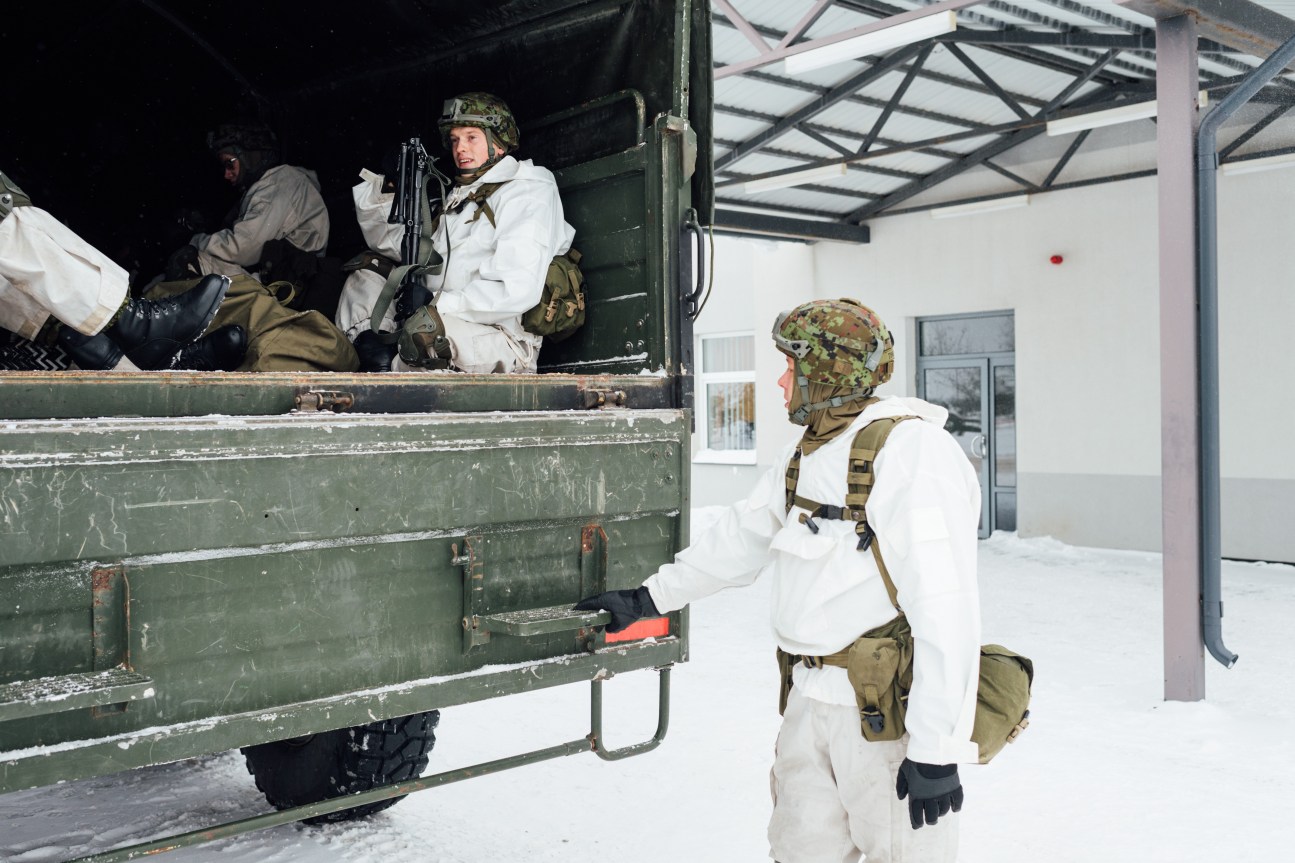
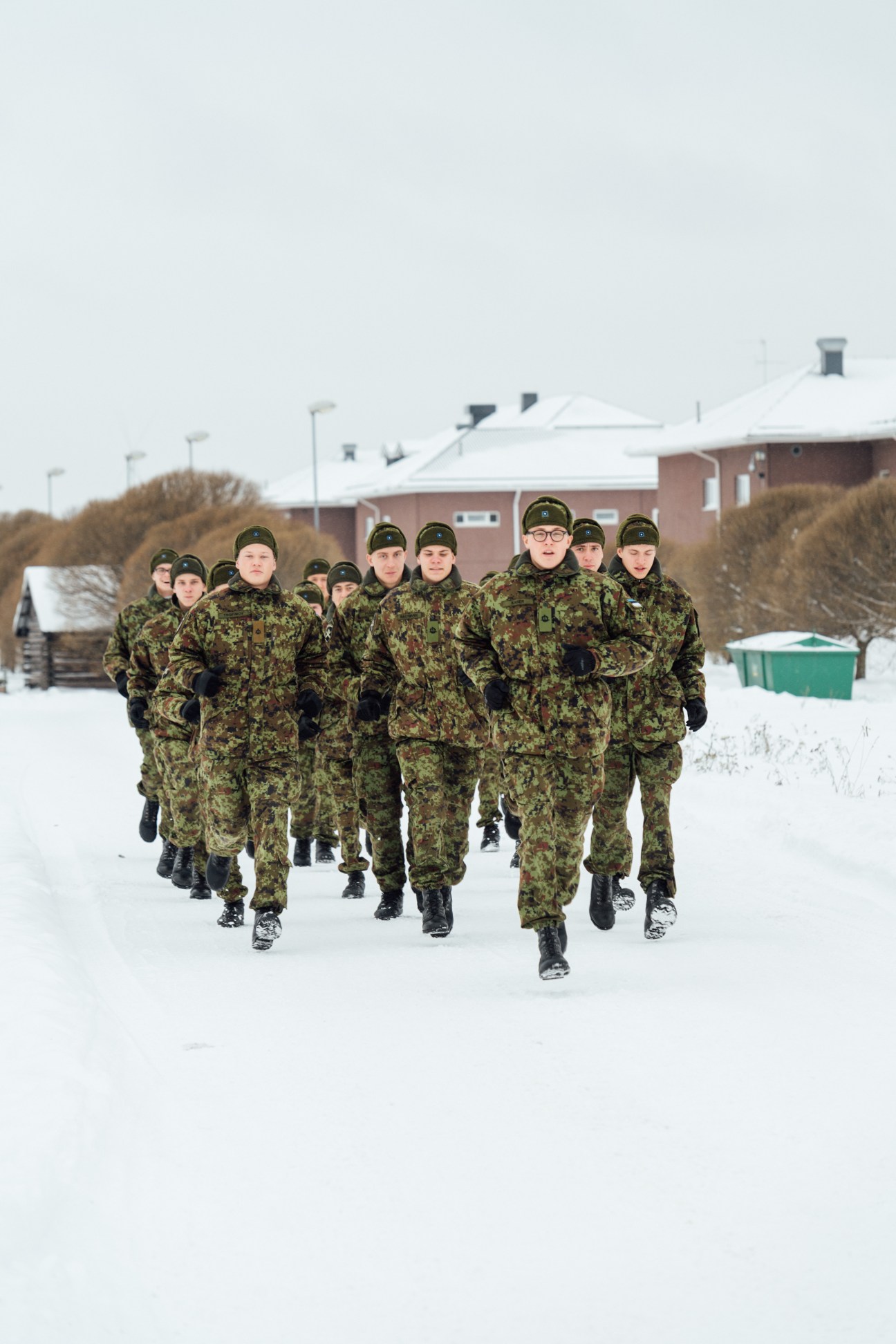
Conscription is the backbone of the defence forces. As we arrive at Tapa – one of the largest military bases in Estonia, an hour east of Tallinn – a batch of 1,000 conscripts are training; some are learning how to drive convoy trucks, others are doing physical exercises on a field blanketed with snow. Another platoon march towards the white fringes carrying spades. Estonian women are exempt from military service but a small corps do volunteer. Private Laura Toodu is hoping to go through military school when her service is done. “Of course, we do worry about Russia and want to feel safe here,” she says. “I think the presence of foreign troops makes a strong impression in the world.”
As we talk, US paratroopers with maps dangling from their necks return from the field to Tapa’s new barracks. The base receives the bulk of foreign troops into Estonia, and 125 US soldiers are stationed here; ultimately an 800-strong British unit combined with a rotating contingent of 300 Danes and French military will take over.
In a classroom a group of sergeants are wrapping up their Jumpmaster exam: the theory of pushing paratroopers out of aircraft. Soldiers come and go through the barracks and everyone we speak to comments on the quality of the accommodation. In the mess hall a group of soldiers remember a former Soviet base in Ukraine with a shudder. At Tapa there’s air-conditioning and televisions, and a sauna on the second floor (the EDF prides itself on its sauna-building). “It’s cold and wet out here,” says Devyn Mcintosh, a specialist from Toledo. “Maybe the next war we’ll fight will be in snow.”
The soldiers and top brass are tight-lipped about what Trump means for the US military’s future on this eastern flank (though one recruit says it’s a good thing he at least wants to talk to Russia). But the mission in Estonia affirms for many why Nato is important.
“We’re here to validate that we can fight together,” says Christopher Salisbury, a commanding officer. His company have just finished Operation Steel Shield in Latvia, training with the Estonian Scouts Battalion and giving US platoons vital lessons on staying unseen in a thermal war. “These relationships have a strategic impact that forces nations to come to the negotiating table.”
Salisbury served in Afghanistan and says war in this part of the world happens very differently. He talks about unmanned aerial vehicles “chasing you down in the snow” and so-called “Little Green Men”: mysterious unmarked soldiers in camo gear who appeared during the annexation of Crimea carrying Russian-made weapons and occupying Ukrainian airports.
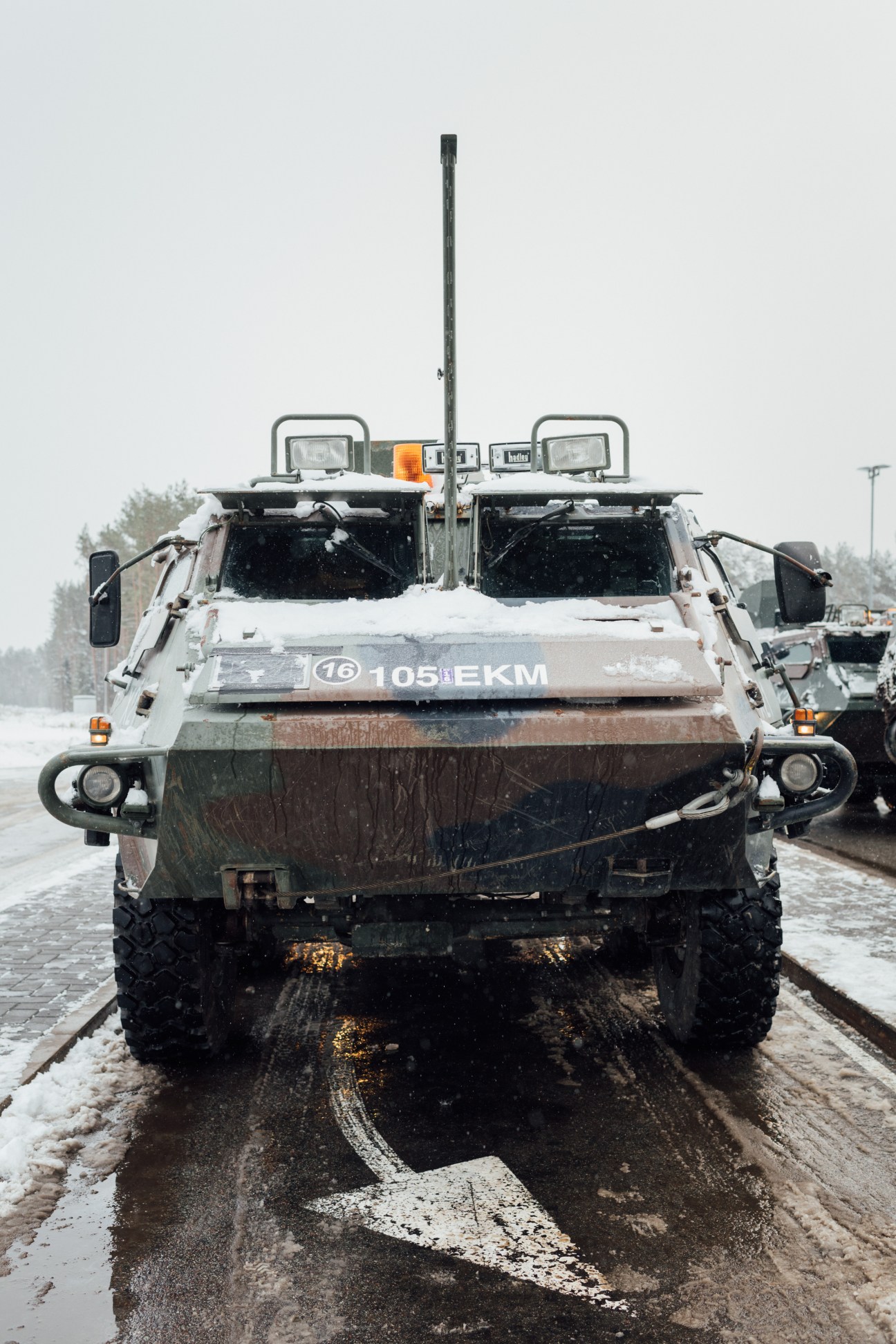
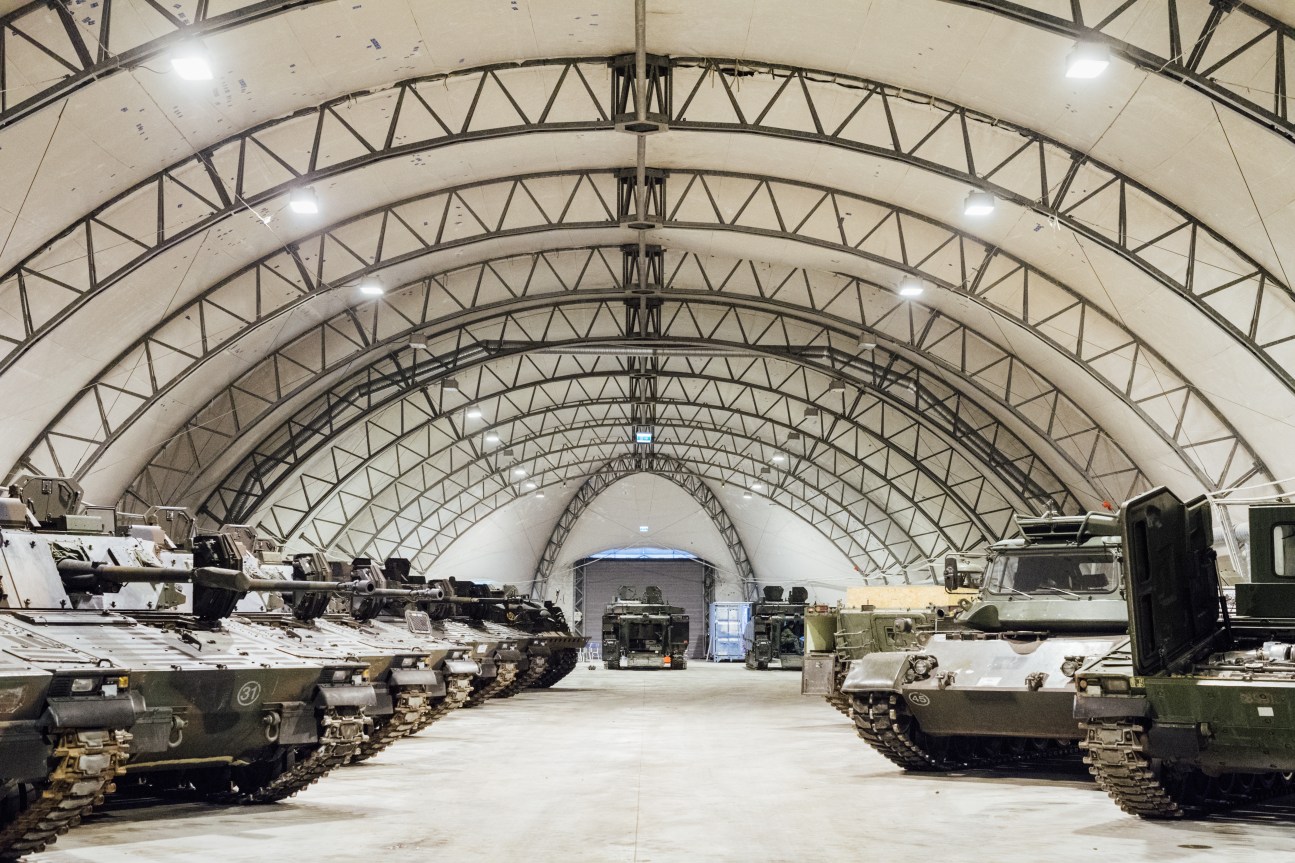
It’s threats like these that the EDF prepares for. In November a fleet of cv90-35s combat vehicles was delivered from the Netherlands with integrated weapons and thermal imaging. Lieutenant Colonel Veiko-Vello Palm sits inside one of these squat machines, parked in an ice-cold hangar lined with two rows of battle-ready tanks. “We’re training for hybrid warfare scenarios,” says Lt Col Palm, who commands the 1st Infantry Brigade at the EDF. “That includes paramilitary but also information operations, cyberthreat in peacetime and then the grey area: undercover agents and the kidnapping of personnel.”
Russian unpredictability is never far from the commander’s mind. “One of the most vivid supporters for raising our defence budget is Mr Putin,” says Lt Col Palm, adding that his brigade are more prepared and more capable then ever. Does the rise of Trump and his comments during his election campaign make him nervous? “Trump said a lot of things but they were pre-election promises. I do hope nothing bad happens.”
In the small town of Tapa close to the base, Pizza Kiosk is doing a roaring trade. Long lines of US paratroopers show up after manoeuvres in the forest and queue at the snowy hatch for stacks of steaming pepperoni pizza. Over at Pubi Tareke, the town bar, there’s been a small upswing in business: “Nato is good!” says the cheery owner as he pulls another frosty pint of A Le Coq. Estonians generally welcome the foreign military presence, especially since the spectre of Crimea still looms large. Meanwhile the political party typically popular with Estonia’s sizeable Russian minority, with ties to Putin’s United Russia, has recently joined the ruling coalition. Most ethnic Russians are committed to the Republic but there are exceptions.
On the way out of Ämari there is a row of graves for Soviet airmen with old tail fins welded to the headstones. At the road, an old woman in an electric-blue snowsuit emblazoned with “Russia” and the Romanov coat of arms picks her way over the ice with Nordic walking poles. She explains in Russian that she lives in the nearby town, and crosses her wrists in an “X” at the suggestion she works at the Ämari airbase. “I love Putin,” she says, before trudging away. That may be but she’s much better off living in the EU than she would be across the border. She is a firm reminder to Nato and Estonians that the battle on Europe’s borders will not just be fought militarily – and that not everyone is necessarily backing Estonia, even within its borders.
Christopher Lord has worked with Monocle since 2011, initially as our Dubai correspondent and then as Istanbul bureau chief. He is originally from Manchester and had a stretch as artistic director of an art gallery working with Arab and Iranian contemporary artists. He felt severely underprepared for Estonia’s minus-five temperatures during this report, given that he usually packs for a clammy city in the Middle East.
New direction
Certain readers may scoff at the idea of living in Canberra but the boring-by-reputation Aussie capital is quietly becoming a more attractive (and eminently affordable) place to live. Australia’s inland “Bush Capital”, so-called for its abundance of greenery, is a city of 390,000 that has long lagged behind glitzier Sydney and cosmopolitan Melbourne. But today there’s a frisson of optimism to be felt in the landlocked metropolis.
A recent sunny Saturday in the inner-north suburb of Braddon sums up the city’s agreeable turn. Here, a few minutes’ walk from the cbd, a lively crowd is gathered around food trucks in a half-covered marketplace called The Hamlet on Lonsdale Street. Young families and couples, plus a few dip-dyed blondes in leather jackets and another sporting a polka-dot bow, complete a colourful and lively line-up.
Canberra has been the nation’s capital since 1913 but the Braddon neighbourhood sprung to life a decade or so later as a hub for light industry, located mainly between the streets of Donaldson, Elimatta, Batman and Currong. However, in the past few years residential developers have been exploring the potential of the area’s handy mix of businesses and convenient proximity to the CBD.
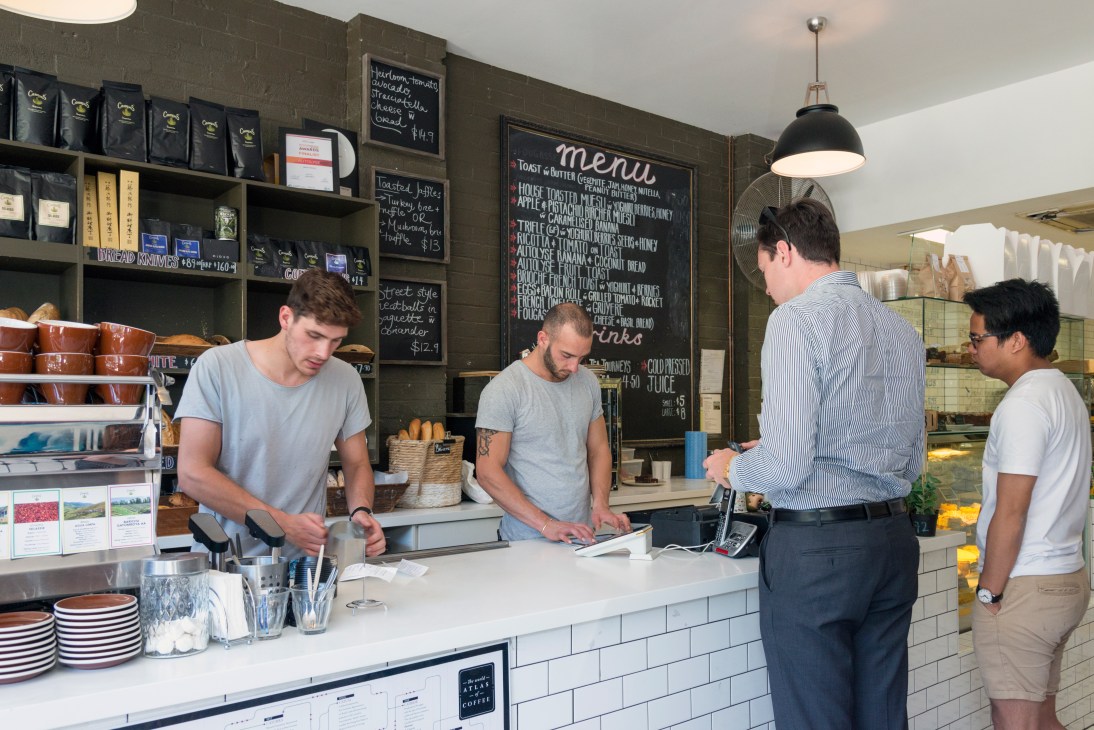
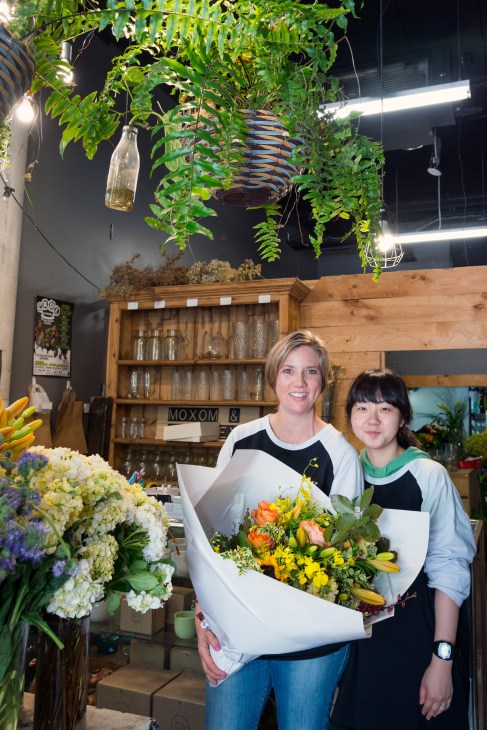
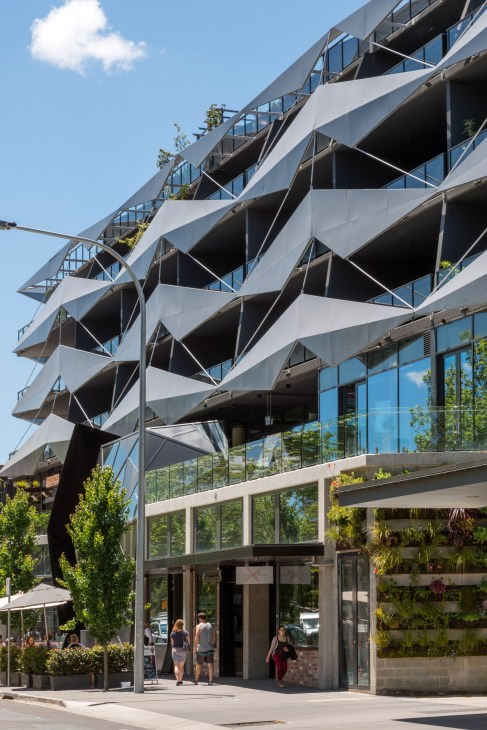

When Nik Bulum opened a homeware shop on Lonsdale Street just over 10 years ago, he recalls that the area was brimming with “mechanic shops and old empty warehouses”. It was a derelict-feeling neighbourhood and a venue for Friday-night drag races for the young and bored. “I saw the potential; the city is right there, there’s a nice little park here,” says Bulum gesturing towards Haig Park. Despite eventually shutting his shop, Bulum is today spearheading the development of a slew of tasteful apartment and retail blocks in Braddon. “This has taken 10 years and it’s still growing – organically – thanks to the people who live here.”
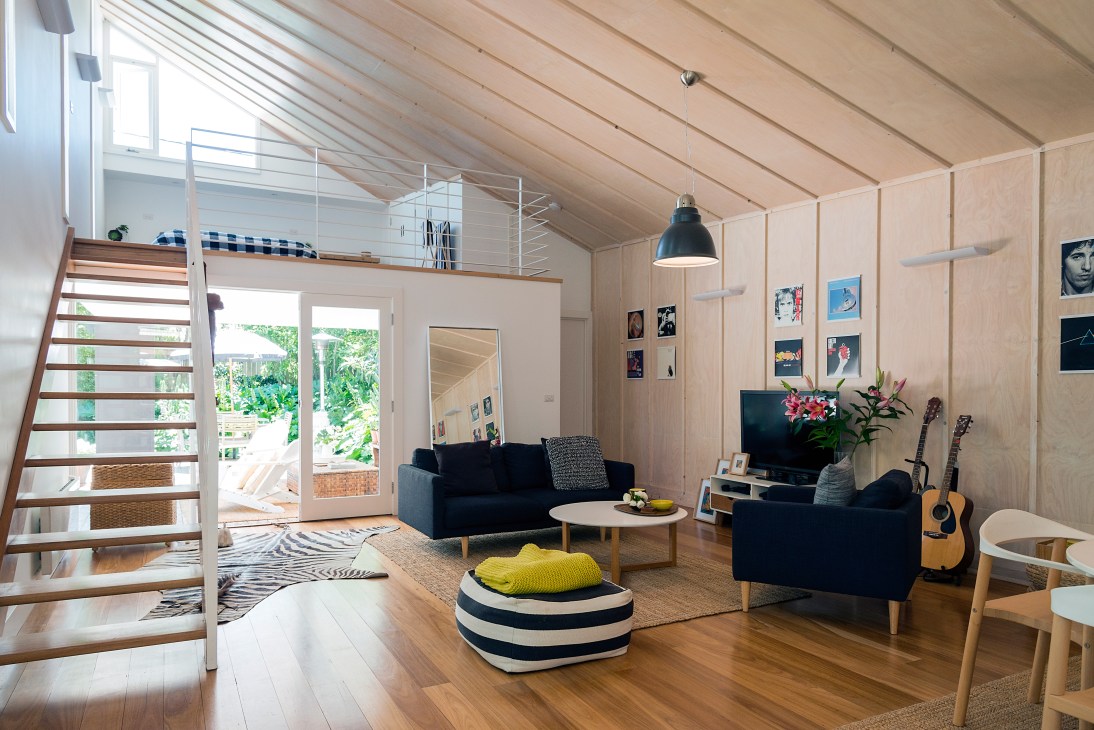
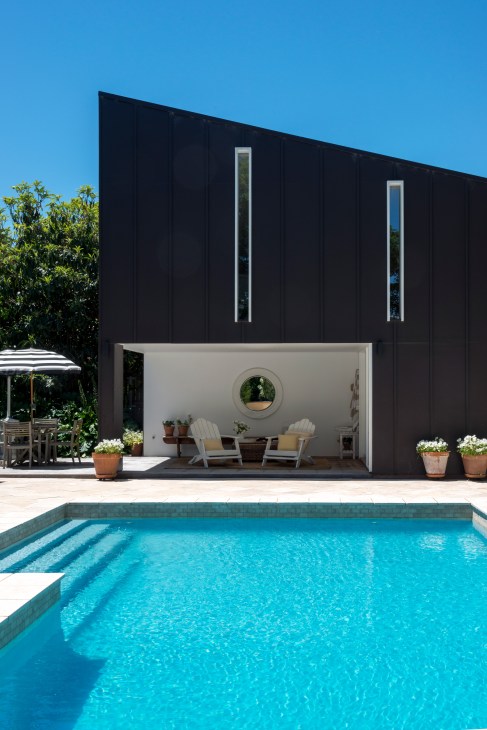
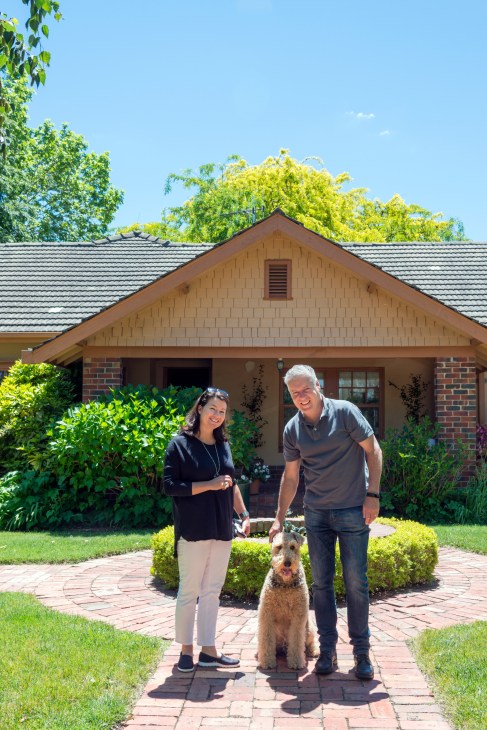
Lee and Bente Phillips were also sold on the area’s charms when they bought a light-filled four-bedroom house here in 1999. The couple live with their three sons and a shaggy grey Airedale terrier. Their home includes a roomy loft space and swimming pool, all a 10-minute walk from Lonsdale Street. “You’ve got the lake nearby and there’s the proximity to work; everything is cycling distance,” says Bente. “It’s buzzy but this street is really quiet,” adds Lee. “No traffic issues, no smog.”
Jobs in the city are also plentiful (in 2013 Canberrans earnt the largest pay packets in the country) and the city’s Australian National University was counted among the QS World University Rankings’ top 20 in 2015. In September 2016, Singapore Airlines became the first international carrier in more than a decade to operate direct flights to Canberra, servicing both the Canberra-Singapore and Canberra-Wellington routes. Meanwhile, the au$710m (€500m) Capital Metro light rail, currently under construction, will link outer suburbs to the city centre.
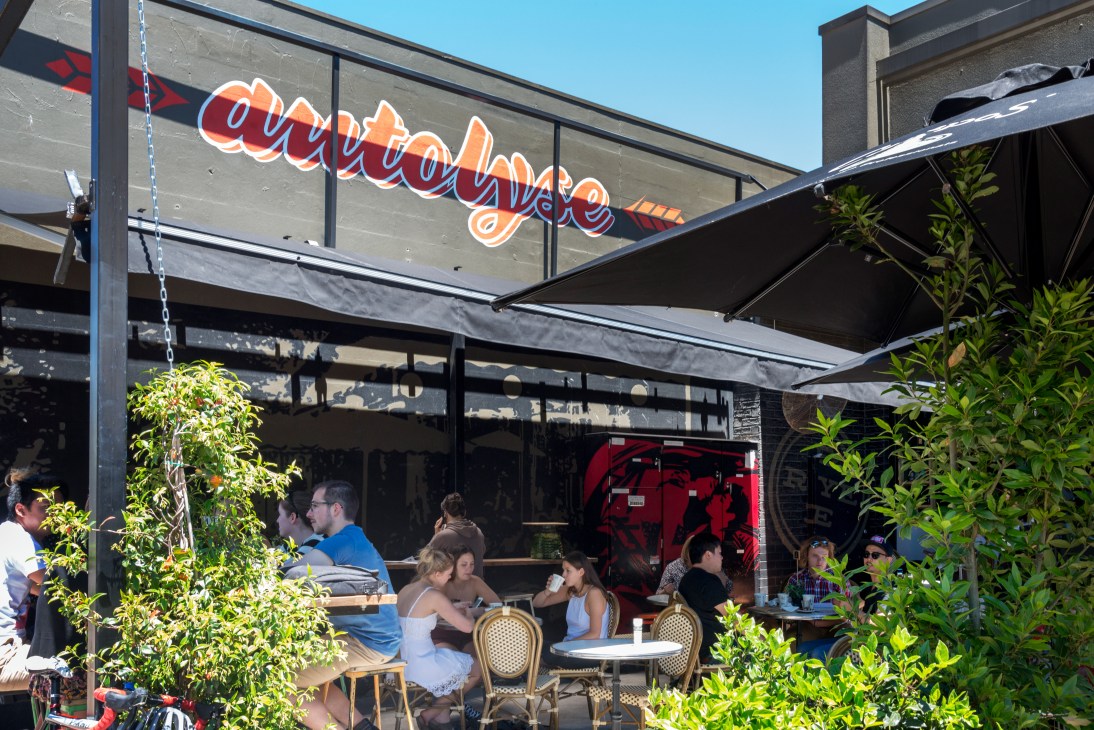
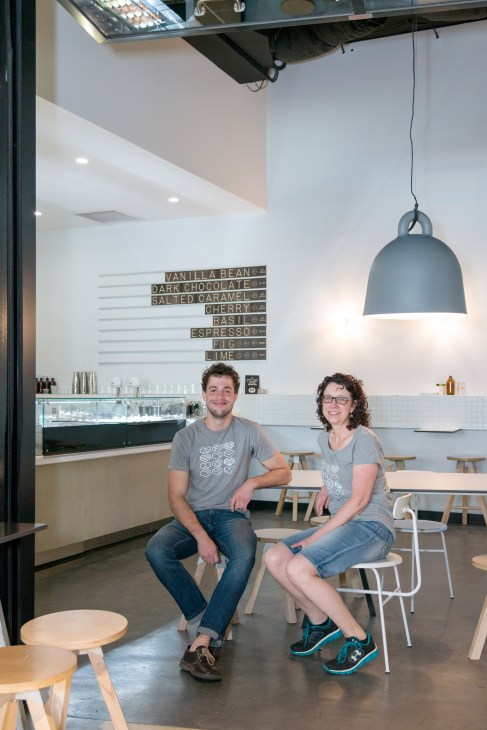
But economic prosperity aside it’s Braddon’s budding restaurant and café scene that’s wooing visitors and tempting new residents out onto the streets. In 2013, Miriana Cavic opened the Autolyse Bakery with her husband on Lonsdale Street. With its floors decked in black-and-white tiles, the open-plan bakery has become a neighbourhood favourite with its French-inspired menu.
“Chains are everywhere and it’s mundane,” says Cavic. In Braddon, by comparison, “shops are owner-operated”. Cavic caters to a food-loving crowd “who know their coffee and are willing to pay a bit more for good bread”.
“If you want to ski or go to the beach it’s just a drive away,” says Cavic of the Snowy Mountains and sandy South Coast. “I’m noticing a lot of younger people are happy to stay here – there’s more for them to do.”
Sunny outlook
Mehmet Tunc brings the golf cart to a halt at the end of a concrete jetty. To our right, breakers flop onto a white sandy beach; to our left a fishing skiff chugs into a newly built marina. “You should see this place in August; you’d never find a room,” says Tunc, general manager of a hotel group in the south of Oman. “They come from all over the Middle East for… how do you call it?” He waggles his fingers in the air. “The drizzle.”
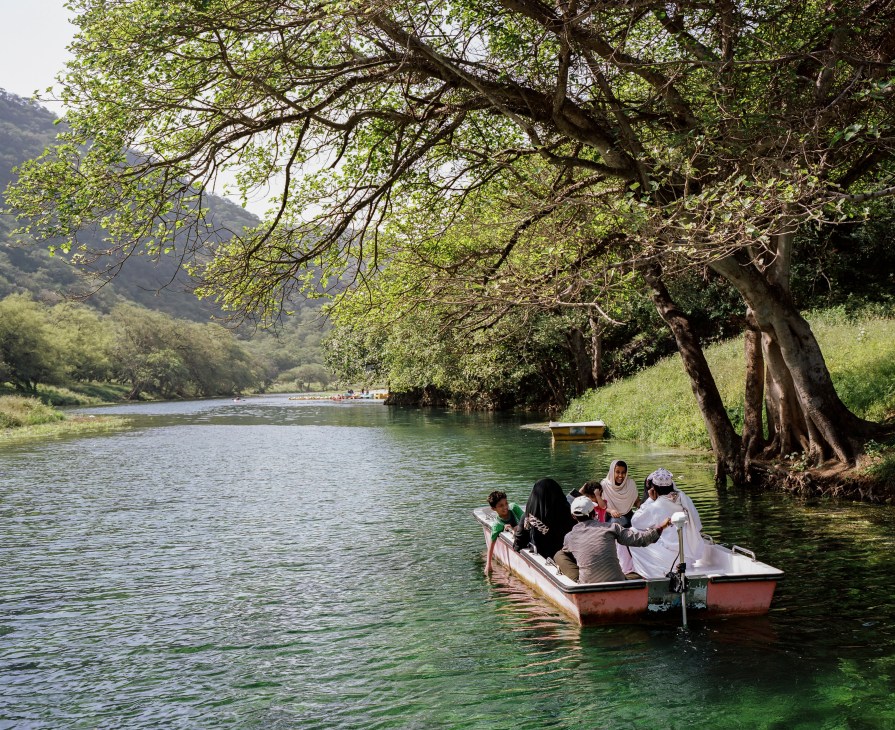
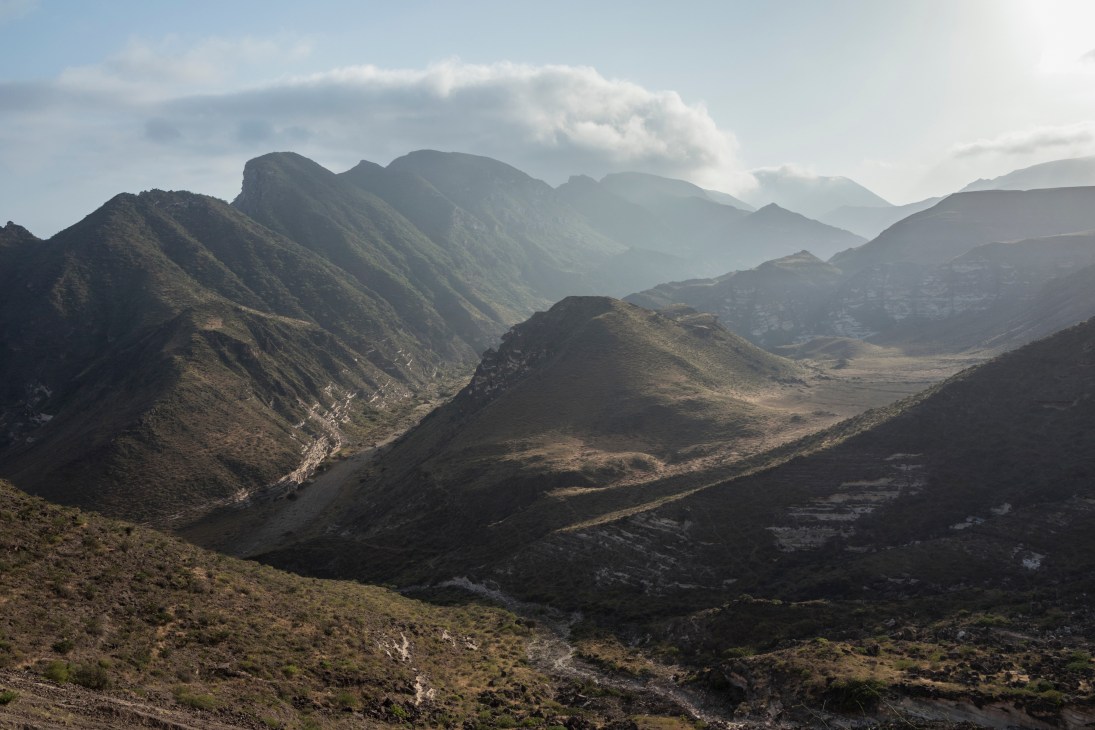
Salalah is an oddity on the Arabian Peninsula. Oman’s second city is in the mountainous Dhofar region just a few hours from the Yemen border. It sits in a sweet spot of the tropics, meaning that at the height of summer – when the rest of the region reaches boiling point – temperatures become comfortable and a fine monsoon rain called the khareef blows in off the Arabian Sea.
What happens next is hard to believe. As the dusty earth blooms with life, bemused camels graze on rolling meadows and cracked riverbeds rush with rain water. For years Salalah’s small clutch of hotels filled each summer with Arab travellers seeking cooler climes but now new hotels are launching up and down this stretch of coastline to take advantage of the tourism and a projected boom in trade.
Some 500,000 people visited Dhofar during the last monsoon, most coming from around the Gulf. There’s money to be made here and that’s attracting high-end hotel brands such as Anantara, whose target market is apparent on its opening night as couples from Kuwait, Saudi Arabia and Qatar saunter around the grounds. “Privacy is paramount for us,” says the duty manager as he whisks us past well-shielded cabanas.
By September the rains stop and the grass yellows again. The non-Gulf tourists who typically come for the sunnier months are a cadre of dedicated Europeans and a curious contingent of Mormons who interpret a passage from their holy book to mean that Salalah is a bit like paradise. Today Tunc shares the sentiment. “Until April we’re at 100 per cent occupancy,” says the Turkish hotelier in the lobby of his Fanar Hotel, where flags of the Czech Republic, Poland and Germany flutter in the forecourt. Tunc came here after running properties in saturated tourist towns in Turkey’s Antalya and Sharm El Sheikh in Egypt. “Here,” he says, “it’s virgin land.”
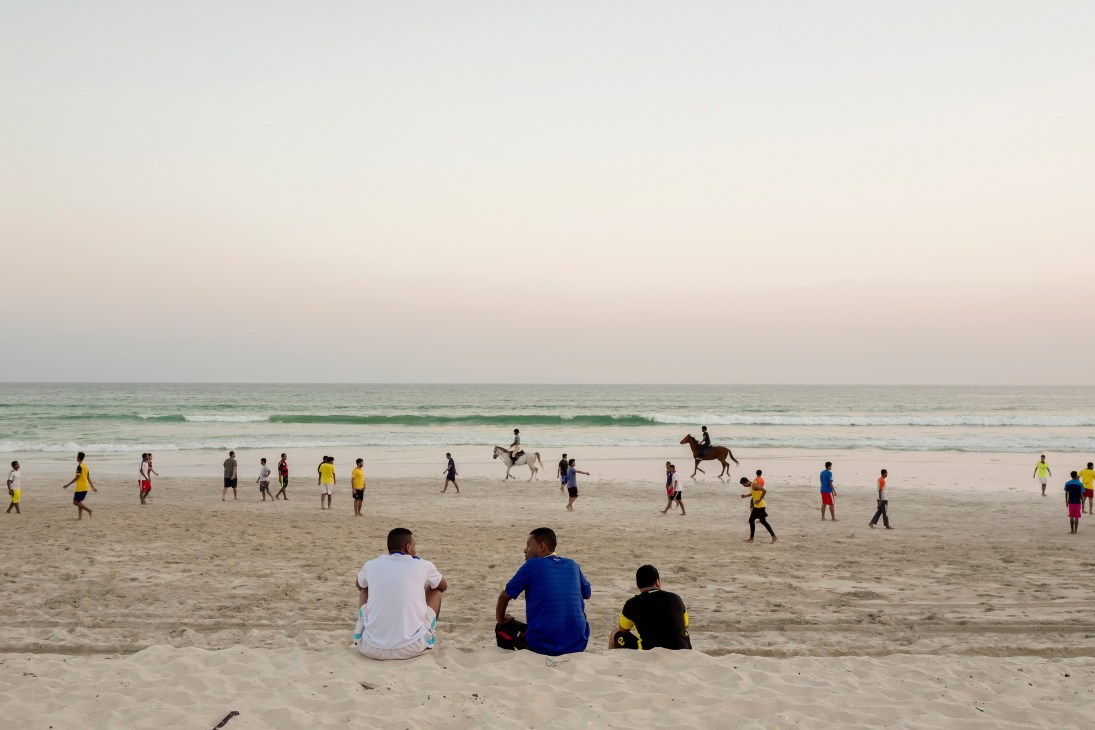
Hoteliers talk about bringing the “right” travellers to Salalah and the sultanate has long kept tourism on a tight leash. New developments are heavily regulated and few want to see another Sharm built here, however lucrative that might be. This has spared the country from the cowboy developers and less sagacious skyscrapers that sprang up in places such as Dubai but it also kept Oman’s economy more beholden to oil.
The country is now at a crossroads. The crash in oil prices is accelerating its diversification plan and in September the sultanate held talks that brought business and government together to hash out what needs to be done. Tourism, logistics and infrastructure are the linchpin sectors and, in Salalah, there’s a palpable gold rush taking place as the potential of its unblemished beaches, strategic location and weird weather becomes clear.
“We build towns,” says Ahmed Dabbous, CEO of Muriya, a private developer that as part of a public-private partnership has poured €374m into Salalah’s coastline and built a string of hotels, private residences and a new marina. Muriya’s projects, he explains in the company’s offices in the capital Muscat, emphasise creating opportunities for entrepreneurs and retailers. Dabbous predicts that by 2020 the firm will have built 1,000 new rooms across Salalah.
A grand steel-and-glass airport opened last year. Charters are landing from Köln-Bonn and the Turkish-run duty free is open for business. But right now it’s quiet enough to hear the crickets chirping. “It looks big today because there aren’t many flights,” says François Bouteiller, CEO of Salam Air, a new low-cost airline that makes its maiden Salalah-Muscat flight in 2017. About eight international flights a week land in Salalah but Bouteiller foresees a regional routemap out of Salalah in the not-too-distant future. “The reasoning behind Salam Air is to make it affordable for companies to get around Oman and do business.”
Outside there are brand-new roads flanked by curtseying coconut palms. The streets are quiet now but this is infrastructure built to cope with a busy future. Head north and it’s a long drive to Muscat and soon a direct route to Saudi Arabia; turn west and the highway leads to Yemen. And then there’s Iran. Omanis make no secret of the warmth between the two countries – Sultan Qaboos hosted talks between the US and Iran ahead of the nuclear deal and old alliances aren’t easily forgotten. Oman hopes to be first in line if and when trade barriers come down. “Iran needs five to 10 years to build its infrastructure,” says Ahmed Ali Akaak, deputy CEO of the Port of Salalah, which signed up in 2016 to help Iran expand its shipping facilities. “As soon as the sanctions lift, we will be the gateway for Iran to access the global market.” The port’s strategic location means it takes just two weeks to sail to New York from here.
Oman’s workforce is also a plus. Locals are employed in the tourism sector but there’s also a growing tide of graduates on the hunt for high-skilled work and the government is keen to encourage investment that gets more people into the private sector. Incoming businesses that can train and use the local workforce will find doors open. “We’re spending money on infrastructure and want investors to come in because we need jobs for our young people,” says Mohammed bin Abu Bhacker Al Ghassani, the representative for Salalah at the Majlis Al Shura, Oman’s elected consultative council.
The Majlis Al Shura reflects some of the shifts taking place in Oman. It was founded in 1991 to foster more engagement among Omanis; in the aftermath of the 2011 Arab Spring Sultan Qaboos endowed the council with greater legislative powers. At the same time reform is happening nationally: some overdue labour rights, being tougher on corruption and now a real bid to cut red tape for business. Salalah will be one of the first places to reap the benefits, although not much moves quickly here. “We may be slow at getting things done,” says Al Ghassani, “but it’s in our nature.”
Reasons to go:
1.
Surf:
Oman’s coast has some of the more consistent surf in the Middle East; Aseelah, four hours’ drive from Muscat, is a firm favourite.
2.
Pipe performance:
See the Royal Oman Police Camel Pipe Band at the Royal Opera House in Muscat. Their uniforms were cut in Savile Row upon the request of Sultan Qaboos.
3.
Honey:
Buy honey from Jifr in the Al Hajar mountains. It’s made by keeping bees in the hollowed-out trunks of palms.
4.
Resorts:
Oman has some of the best retreats, from the Chedi in Muscat to the village-scale Six Senses resort in Zighy Bay.
5.
Nature:
Explore the formidable fjords in the Musandam, a mountainous exclave of Oman.
Circus animals
It’s 23.30 on June 2013, Giudecca Canal, Venice. Russian gas billionaire Leonid Mikhelson is throwing a party, not on his yacht but on a converted cargo boat that has been transformed into a glittering venue. The four-course dinner is in honour of two artists, Pawel Althamer and Anatoly Osmolovksy, who are showing in the historic Casa dei Tre Oci. This is one of the 50 or so side events that accompany the Venice Biennale’s director’s show, not to mention the 80 or so national “pavilions” that range in size from a single artist in an Alvar Aalto-designed shed (Finland) to full-blown, multi-artist exhibitions in palazzi.
Althamer has also proved a surprise hit of the sprawling two-site director’s exhibition, this time by New York curator Massimiliano Gioni. Rumour has it that the fit-out of the show, which celebrates the art of “non-artists” – philosophers, mystics and “outsiders”, the inside art term for the untrained, the odd and the occasionally insane – among the better-known names, has been paid for by Mikhelson.
At the party are the super-rich, patrons, museum directors, curators, PRs, international press and beautiful youth. But dinner has been slow coming: the main course is just being whisked away, though the champagne and vodka are flowing. As Althamer starts dancing enthusiastically with two women, the fastidious director of the Tate, Nicholas Serota, seated by Mikhelson, turns politely to the guest on his left. As a troupe of New York scenesters swoop in, shake hands with all and sundry and then move on to a US Pavilion party, it is clear that this is going to be a long night.
The day before, many of the same faces were sipping bellinis at Cipriani in honour of Ai Weiwei. Some have come from the New York auctions and before that the first edition of Art Basel Hong Kong, adding Asia to the international caravan. “It seems I’m travelling thousands of miles to be with one group of people,” says an arts editor of a major British newspaper. And it’s not over yet: after Venice it will be on to Switzerland for the main Art Basel fair.
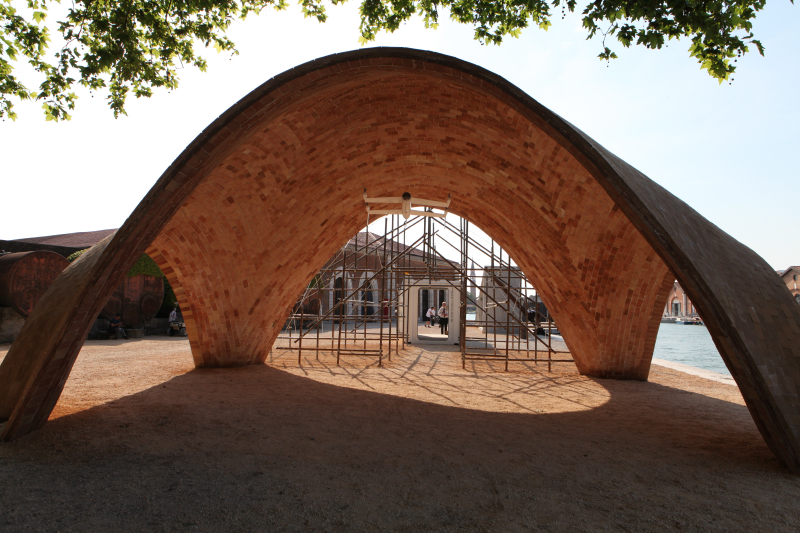
The Venice Biennale is the oldest in the world. In fact it calls itself La Biennale and it is the reason that many festivals – biennials, triennials and even the odd quinquennial – are generically lumped under the term. It was founded in 1895 to create visibility (and a market) for Italian artists and to give the medieval city a more contemporary air – an early bit of city-rebranding. Now a reference point for future biennials, its followers only appeared in dribs and drabs: the Carnegie International in Pittsburgh in 1896; the Whitney Biennial in New York in 1932; São Paulo in 1951; Documenta in Kassel, Germany in 1955. But since the 1990s the number of biennials and triennials has exploded. Recent research by Joe Martin Lin-Hill, deputy director of the Albright-Knox Art Gallery in Buffalo, tracks just under 100 biennials, all but 16 founded after 1989. The Biennial Foundation lists 199 operating around the world.
This rise mirrors the growth in contemporary art. Over the past 20 years the number of successful artists, commercial galleries, starchitect-designed museums and international fairs has multiplied. This has been fuelled by the rapidly growing number of “ultra-high-net-worth individuals” collecting and supporting art, the ambitions of cities to attract investment and tourists, and expanding middle classes keen to engage with art.
Some of the super-rich are behind the foundation of the new biennials. Academic Olav Velthuis argues that they are crucial in the development of a thriving arts scene in emerging markets. He says that after the emergence of a tight-knit group of artists, “bridging capital” is needed: often wealthy individuals who push the artists through biennial-like events onto a national and international stage. In the Bangladeshi capital, collectors Rajeeb and Nadia Samdani hope that their biennial, Dhaka Art Summit, which is now on its third edition, will prove just such a catalyst. For them it is a matter of national pride. Judging by the array of top international visitors – from the director of the Tate, Frances Morris, to Documenta curator Adam Szymczyk – and growing interest in the art of the Indian sub-continent among major museums, the strategy is working.
In Moscow, 5,500km away, the Garage Museum of Contemporary Art will launch a triennial devoted to new Russian art in the spring. It is founded and funded by Dasha Zhukova, wife of billionaire and Chelsea football club owner Roman Abramovich, and like many of Russia’s elite she plays a high-profile role in the country’s cultural scene. With state support patchy and increasingly doctrinaire, the cadre of new philanthropists are providing help for artists and heritage. It also keeps public opinion, and possibly the government, sweet. Rumours still circulate that when Viktor Vekselberg – dubbed “Russia’s richest man” – helped buy back the US-based archive of philosopher Ivan Ilyin in 2006, he did so to please the Kremlin.
Cities too have been keen to back the biennial bandwagon in an effort to lure cultural tourists. Since 2000, biennials have launched in Auckland, Gothenburg, Yokohama and Bucharest, among others. Adrian Ellis, the director of AEA Consulting, says that in an era of globalisation, “cities homogenise, they move from being brands to commodities, so establishing events such as biennials is one of the ways in which a city can reassert its identity”. And when a city with a sophisticated vision meets curators with something to say the result can be influential: Kassel’s Documenta, the Gwangju Biennale and Bienal de São Paulo.
The problem, says Ellis, is that “there is really just 5 per cent at the top and then a big gap to a slew of regional events. It’s hard to create another event like Venice. But there is a second strategy and that’s creating the best niche biennial.” Some cities have, as he suggests, managed to create experiences – through their exposure of lesser-known artists and the use of unusual spaces – that feel unique: in Marrakech, Sharjah, Istanbul and Kochi-Murizis in India. Artists using such spaces can be a big attraction locally as well as for an international elite, as a rare opening of the Toxteth Reservoir for this year’s Liverpool Biennial has shown.
Next year the art world will be enjoying a biennial bonanza thanks to the once-every-10-years confluence of the Venice Biennale, the five-yearly Documenta and the once-a-decade Skulptur Projekte Münster. Packed around this are some of the art world’s other favourites: Prospect in New Orleans and Performa in New York, Lyons in France and Istanbul. The art world is addicted and arguably with good reason.
Top biennials can still have a major impact on an artist’s career. Tino Sehgal, best known for his large-scale, participatory performances at the Guggenheim in New York and Tate Modern, broke through in Venice in 2005, as did Icelandic film-maker Ragnar Kjartansson in 2009. Chris Bedford, director of the Baltimore Museum of Art and co-curator of the US Pavilion in 2017, says that even for an already successful artist such as Mark Bradford, representing your nation is “a pinnacle”. Meanwhile, Marc Quinn’s dismal 2013 show at the Fondazione Cini was surely one of the reasons for the artist’s subsequent split from his gallery, White Cube.
The best biennials, according to Ralph Rugoff, director of London’s Hayward Gallery, are “the ones that are focused enough to make a coherent argument through the artworks on display, which often involves putting a spotlight on the types of work that haven’t received a lot of international attention”. Most famous of these is Okwui Enwezor’s 2002 Documenta 11, often called the first post-colonial “biennial” for its inclusion of artists from Africa, the Caribbean, India and beyond. Massimiliano Gioni’s Venice was admired for making a case for the inclusion of outsider art in the canon. Former Tate curator Jessica Morgan’s 2014 Gwangju Biennale was similarly applauded for what Rugoff calls “a range of lesser-known but utterly brilliant artists”.
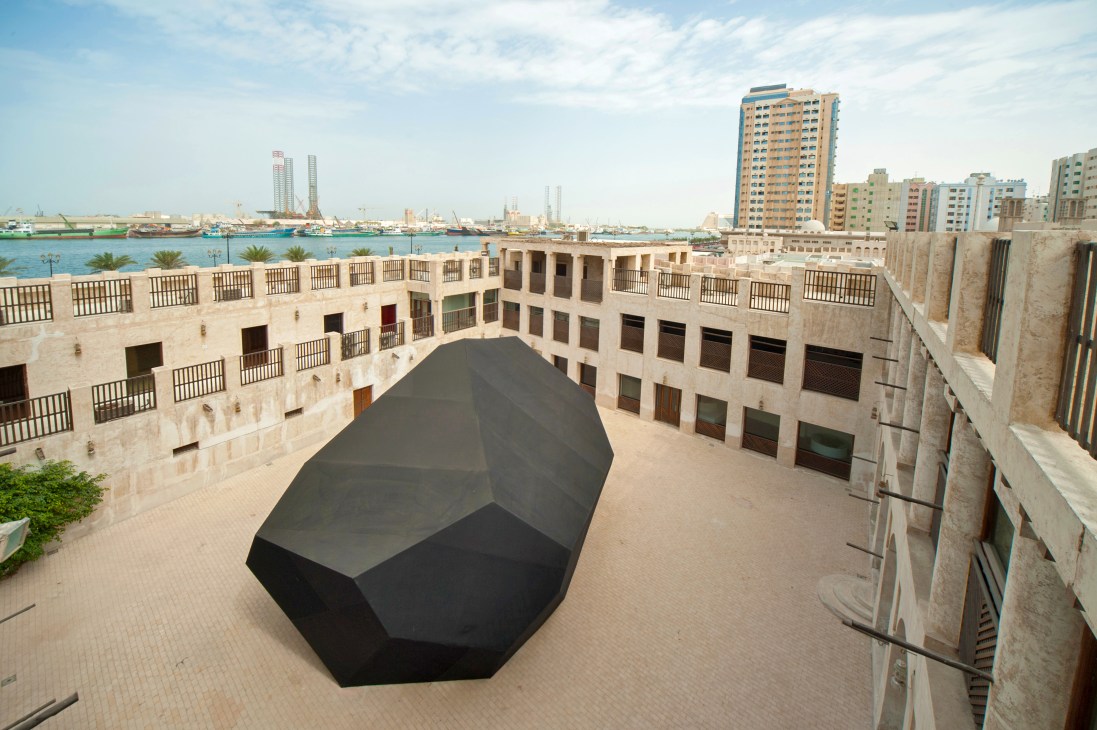
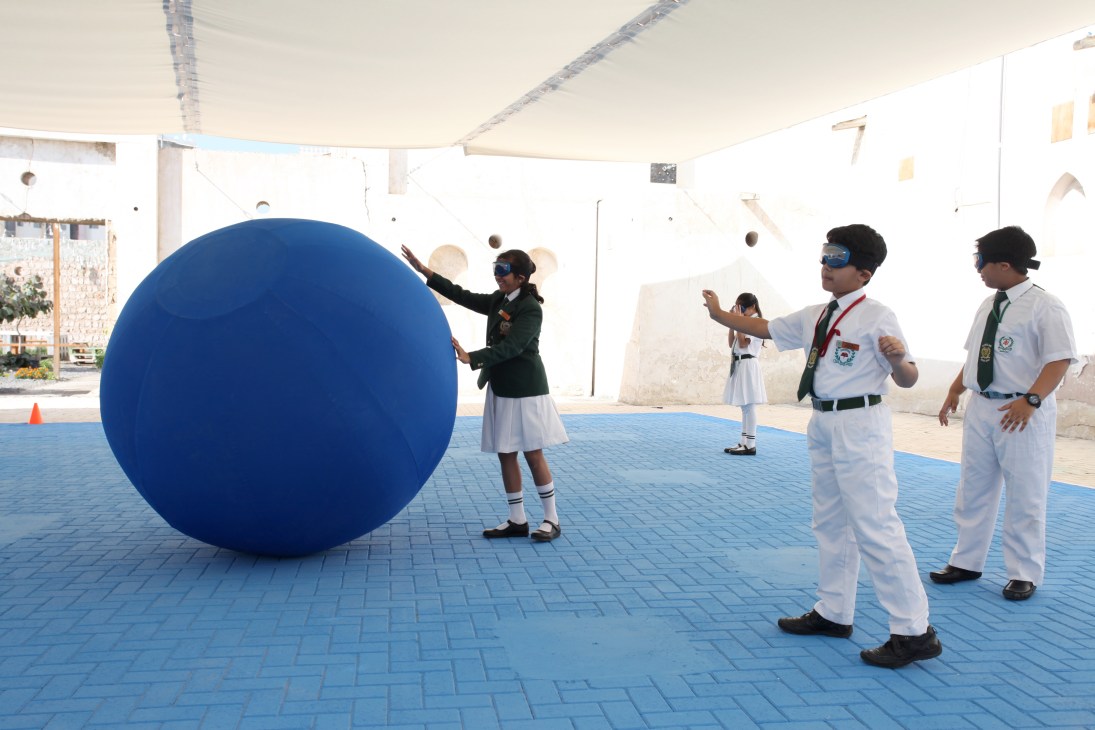
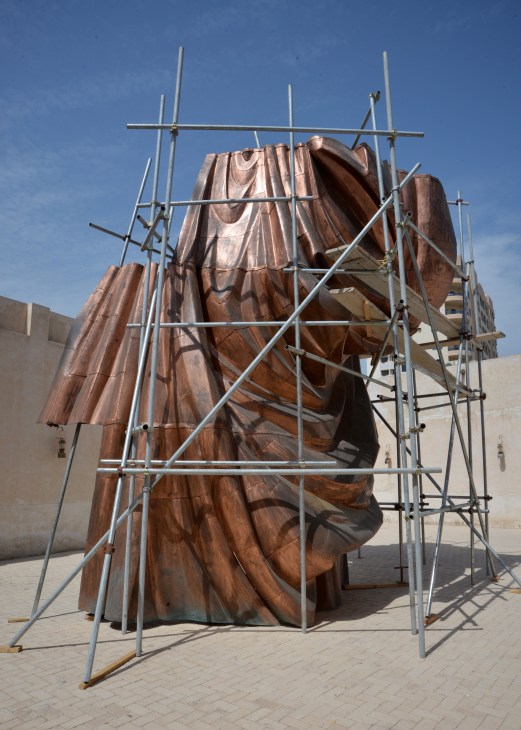
Biennials with strong regional identities can serve a similar purpose. “The Sharjah Biennial, especially when it coincides with the Art Dubai fair, has become a reference point for curators,” says Antonia Carver, director of the not-for-profit Jameel Foundation. Sharjah’s was established in 1993, with a focus on local painters. Its transformation started 10 years later, when Hoor Al-Qasimi, the London art-school trained daughter of the ruler of the city-state, took over its management. Inspired by Documenta, its focus has shifted to a more conceptual approach encouraging commissions from artists on a scale rarely seen in the region, with artists such as Wael Shawky cementing their reputations. But Sharjah also demonstrates what can go wrong. In 2011 a work installed in a square by Algerian artist Mustapha Benfodil outraged locals for apparently attacking Islam: it used the testimony of Algerian rape victims whose attackers had used religious texts to defend their actions. The Sheikh dismissed the biennial’s director and other works deemed offensive were removed or altered.
For those familiar with the region, such as the chair of the Tate Young Patrons committee, Alia Al-Senussi, the importance of the biennial is undimmed: “If you want to make a difference it’s going to be by inching things forward, so little by little you make a space. You don’t do it by blowing the space up,” she says. And after an initial outcry much of the art world now seems to agree. Nevertheless the international coverage was scathing, highlighting the risks when values of the international art world clash with local sensibilities.
One of the selling points of biennials is that they are not ostensibly about selling. As a result the work is often more adventurous: more installations, big sculptures, technology, video and performance; more site-specific works and fewer paintings that sell so easily at fairs. Yet behind the scenes it’s a different story. Adam Sheffer, sales director of New York gallery Cheim and Read, says that while most curators claim there’s no selling, “you turn up at Art Basel a few weeks later and everyone’s busy telling you about all the things they have already bought”. Deals are done in the bars of the Bauer in Venice, at after-parties, in hotels and at artist dinners. Collectors such as Miami-based Don and Mera Rubell make no secret of the fact that they have made major buys after seeing an artist’s work displayed at biennials.
Sheffer says that some of his favourite biennials are those such as Dhaka and Kochi-Murizis, which are less market-oriented. “But it would be crazy and disingenuous to pretend that all of us don’t go and look with an eye to spotting future talent,” he says. Cheim and Read first noticed one of its current roster artists, the Egyptian-born Ghada Amer, at the Venice Biennale.
Museums have one eye on the money too, hosting suppers and curator tours for their patron groups in return for future generosity. “Biennials are a wonderful offer for museums groups,” says Emma Dexter, director of art at the British Council. “It’s a great way for collectors and curators to see work and interact.” Smaller biennials can offer particularly unusual or intimate experiences: in 2015, Artangel took its patrons to the Marrakech Biennale to see a new presentation of the non-profit’s Ben Rivers White City installation.
The underlying fear, of course, is not that artists’ reputations are cemented by biennials: it is that powerful dealers, collectors and private foundations seek to influence what is actually put on. But the real threat to the onward march of the art biennial may well lie elsewhere. With the rise of nationalism in China and Russia, the election of Donald Trump, events such as Brexit and the bizarre snub that Philippine president Rodrigo Duterte gave to Barack Obama, the globalising engine that encouraged cities and sponsors to invest in internationally appealing culture may begin to stutter. “If it is true that forces we thought were ineluctable – and which drove and are still driving the international cultural boom – go into reverse then the incentives that built the new museums and funded the new biennials could go into reverse too,” says Adrian Ellis.
News perhaps for the Garage Triennial in Moscow, the Desert Biennial in the Coachella Valley, the Antarctic Biennale and the Honolulu Biennial, all of which will have inaugural editions in 2017. For now at least, the party goes on.