The Forecast
Breath of fresh air
Ever on the lookout for novel ways to stimulate the knowledge economy, countries around the world are pouring billions of dollars into glittering new “smart cities”. The promise is that these hi-tech science parks will lure the brightest minds and kickstart the next Facebook or Google. But examples such as the newly built Innopolis in Kazan, Russia, or countless others across Asia, sit virtually empty and in varying states of completion. The reason is often simply that these cities do not feel like welcoming places to live and work, lacking the promise of life, beauty and diversions.
Investors in such projects would do well to pay a visit to France’s Sophia Antipolis. It might seem counter- intuitive to take cues from a science-and-technology park that’s almost 50 years old but the very fact that it has thrived for so long – when others can barely get off the ground – is evidence that it has wisdom to impart.
Europe’s first (and still its biggest) science-and-technology park is a sprawling mass of low-slung idiosyncratic buildings sitting unobtrusively among the swaying pines and eucalyptus trees in the hills above Cannes. Back in 1969 its founding father, Senator Pierre Laffitte, envisaged the park as a version of the bustling Latin Quarter in Paris; technology, the sciences, philosophy and the arts were to mix and mingle, stimulating minds and leading researchers, developers and academics to share ideas and transform them into industry.
“I thought it was necessary to develop a concentration of brains because the future of humanity depends much more on brains than infrastructure,” says Laffitte, who at 92 is still keeping a close eye on the place. Although his project had its fair share of detractors – “At the beginning everyone thought I was crazy,” he says – he successfully petitioned the national government for the allocation of land and funds for the endeavour.
For Laffitte, a geologist by training, the park was a very personal project: apart from meaning “wisdom” in Greek, Sophia was also the name of his first wife. Mapping out the masterplan himself, Laffitte’s aim was to respect the geology of the hills. The science park still retains a generous green belt around clusters of buildings, whose owners have pledged to look after their individual plots.
The urban plan seemed to follow “a direct line from Broadacre City, the anti-urban utopia designed by Frank Lloyd Wright in 1932 but without the [road] grid pattern”, says architect Richard Scoffier, who has written extensively on Sophia Antipolis. As in Lloyd Wright’s vision, the science park is not beholden to the pedestrian and here the car is king. Fences were discouraged, while building overwhelming high-rises that might block views to the ocean is forbidden to this day. “The message is a strong one: it’s sustainability and environmental protection, which 40 years ago was revolutionary,” says Philippe Mariani, CEO of the Sophia Antipolis Foundation.
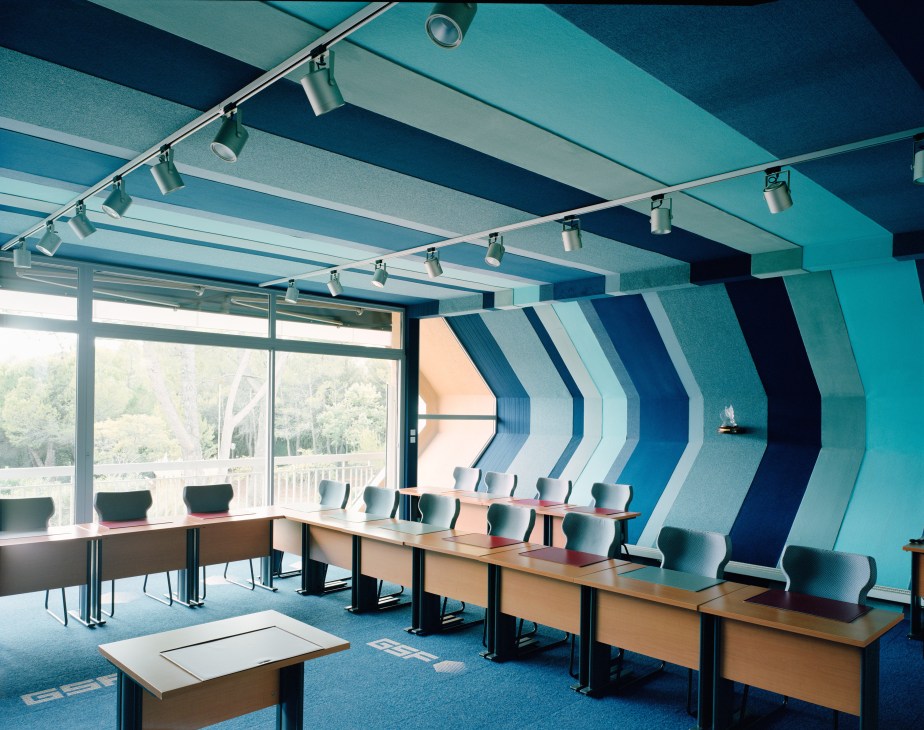
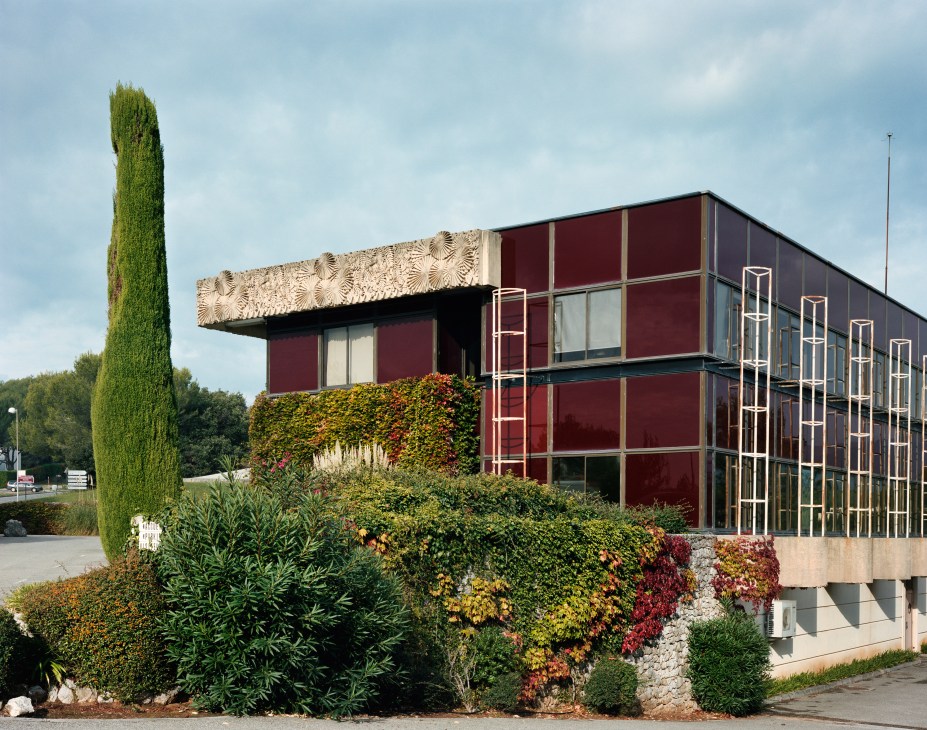
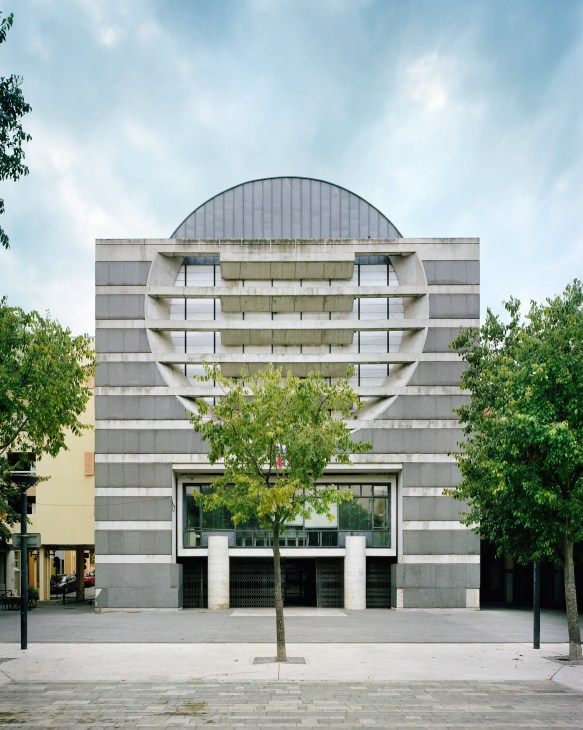

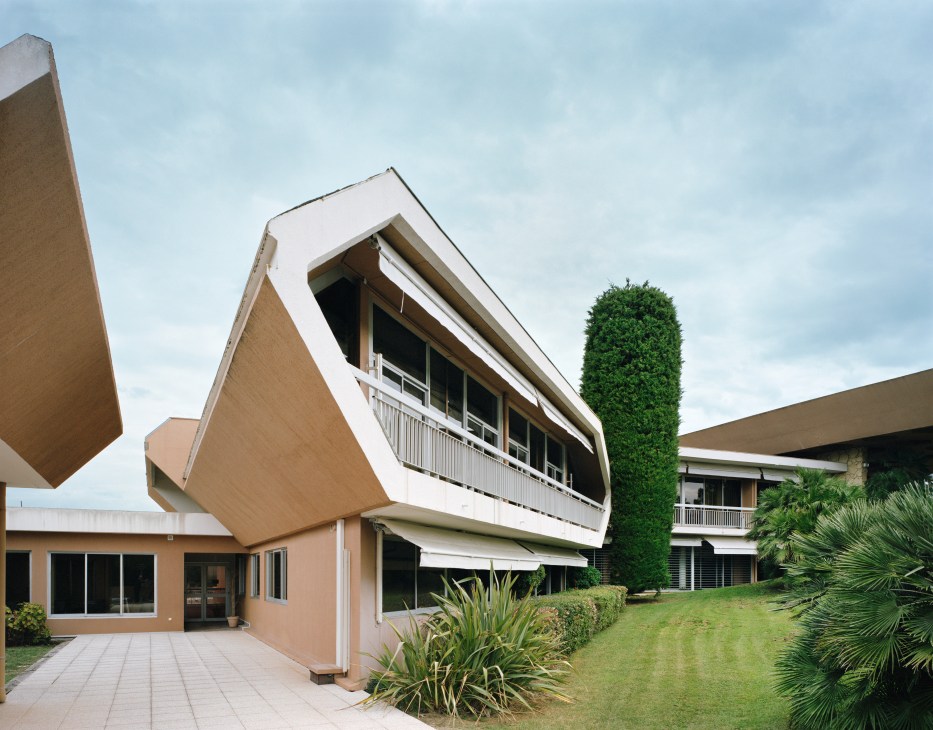
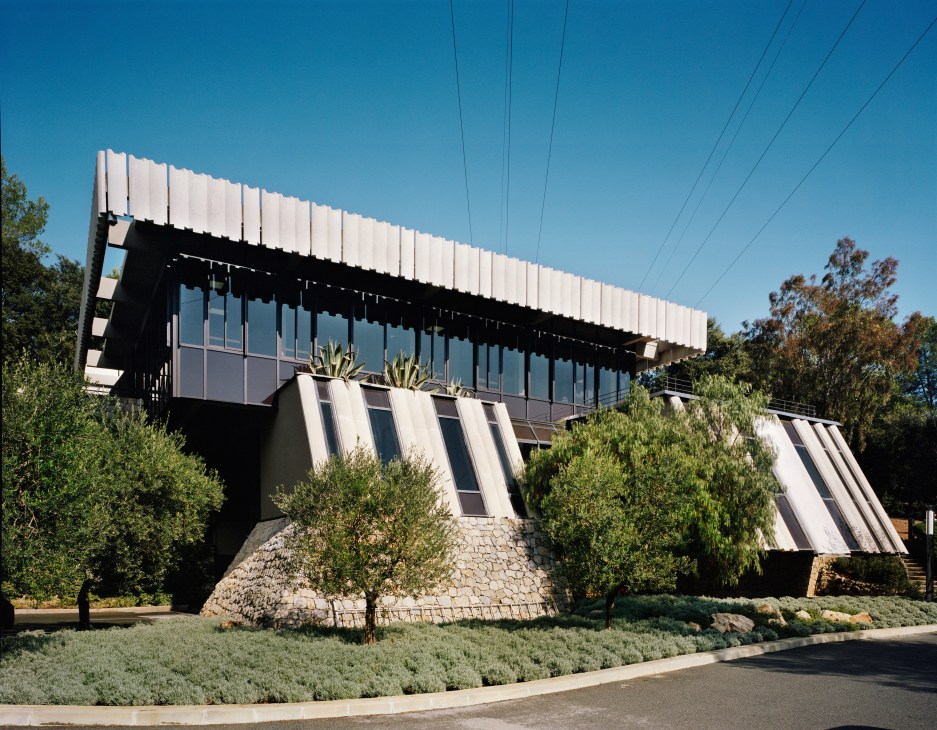
As the idea for the park caught on, companies bought plots of land and invited architects to get creative within Laffitte’s vision. The repeating moulded façade panels of the Les Algorithmes building, for example, are reminiscent of the molecular structures studied within. Meanwhile gsf – France’s leading industrial cleaning company – built an outlandish, futuristic cornucopia of hexagonal patterns and bold colours in 1978 as a symbol of the brand’s confidence in the world Laffitte was creating. But not disturbing the landscape was key: walking between buildings might take visitors through a grove of pines, down an unpaved path, while the striking postmodernist structures follow the curves and bends of the terrain and on occasion almost disappear into the forests that surround them.
Today the buildings shelter close to 35,000 engineers, developers, academics, scientists, researchers and students who toil in the fields of computing, electronics and biotechnology. International brands such as Toyota and a host of home-grown outfits including divisions of Air France, Orange and Chanel have found a home, as well as Mines ParisTech – an extension of the Paris-based engineering school – and a branch of the University of Nice. All in all, 1,350 companies now have a presence here and the park’s annual turnover of €3.5bn is a sizeable contribution to France’s third-wealthiest region, which otherwise gets the majority of its income from seasonal tourism.
Although some companies guard their r&d secrets closely, one key to the park’s success lies in its stimulation of cross-pollination. The Sophia Antipolis Foundation, for example, holds networking events where researchers, start-ups and angel investors meet to exchange ideas, recruit new talent and attract funding. Then there’s the park’s diverse community and recent refocusing on start-ups, which means that Sophia Antipolis has been able to weather crises such as the bursting of the dotcom and telecom bubbles. Businesses can fail and be reborn in a space that offers a strong support network. “There is an established ecosystem of funding and bright people so start-ups will always find a market here,” says Mariani.
Attracting talent, nurturing new businesses and encouraging gifted students are the park’s most pressing challenges. Sophia Antipolis stalwart Jean-François Carrasco – who in a black velvet jacket and thick-rimmed glasses looks more like an artist than a project director of Mentis Services, a software-engineering company – works with Telecom Valley, a cluster of digital businesses. It acts as a bridge between academics and companies in order to promote entrepreneurship among students. “Today we have dozens of people who can earn a living simply because we have helped a former student set up his own company,” he says. “If people want something to happen we will help them; it’s very empowering and rewarding.”
Although entrepreneurial Antipolitans say they are drawn to the park because of its parallels with Silicon Valley, Sophia Antipolis is still to foster a start-up on anything like the scale of the West Coast’s big hitters. Attracting adequate venture-capital funding and convincing investors to be less risk-averse are ongoing challenges, as they are across the rest of Europe. Sluggish growth within the EU in recent years hasn’t helped either.
Laffitte himself admits that it has been tricky to sustain his ambitious vision for Sophia. Apart from a few early concerts and some stabs at public statues, the park has not delivered on its cultural and artistic promise. Meanwhile its urban plan, which has dispensed with a discernible centre, means the park lacks a focal point and has few public places where people can come together to socialise. Following Lloyd Wright’s example has meant a reliance on cars, which frustrates some people’s 21st-century preference to get about on foot or two wheels.
Yet Sophia Antipolis still offers many lessons for those keen to establish a science-and-technology park that’s built to last and remain occupied – and one of its most evident advantages is its location. Nice Airport, France’s third-busiest, is on its doorstep and all the pleasures of the French Riviera are a short car journey away. Being in a nature reserve is also a plus. “The beautiful forests around us make us feel much more comfortable and less stressed than we might do in a big city,” says Carrasco. “If you’re stuck for an idea you can go for a walk or a jog around the park and be back at your desk with new inspiration.”
The park’s architecture, which respects its natural surroundings and eschews alienating glass-and-steel towers, helps to nurture a sense of wellbeing and has fostered a genuine community. “It’s a little like a holiday village: everyone knows each other,” says Carrasco. That helps in creating an attractive business environment too. “It’s more organic and flexible,” says Christophe Imbert, CEO of travel data-gathering start-up Milanamos. “Not like what happens in other parks, where everything is too structured and organised.”
And this is perhaps the key to the success of Sophia Antipolis: unlike in other recently designed technology cities, you don’t feel like you’re walking around an architect’s outsized, sterile model. It may have fallen short on some of its grand utopian ambitions – and it may not have delivered France its equivalent of Google’s HQ – but it has managed to organically evolve into a vibrant community of 35,000 inhabitants. As Carrasco puts it, “Sophia Antipolis is an answer – it’s not the answer but it’s one of the nicest I know.”
Notes: how to build a business park
For any city hall or municipality considering creating a commercial campus, Sophia Antipolis is an example to follow and reveals pitfalls to avoid. Here are some key lessons.
1.
Built environment
Don’t get carried away with glazed façades. They may feel “futuristic” but nobody actually wants to work or live in a glass box.
2.
Location
Avoid Siberia and plump for a plot in a warm climate, preferably near the sea.
3.
Sense of community
Fostering a community takes time but that’s how you ensure longevity. Nurture the business ecosystem, yes, but don’t neglect the need for some social interaction.
4.
Culture
One of Sophia Antipolis’s ambitions was to foster an artistic community – but it fell short. New developments should take up the challenge and invest in public artwork.
5.
Transport infrastructure
As the car is no longer king, make sure there is adequate public transport.
The shape of things to come
The celebrations in 2004 that marked the largest-ever expansion of the European Union spread, just as the newly enlarged union did, from west to east. There were concerts in Berlin, Warsaw and Valletta and a reunification ceremony took place on the Italo-Slovenian border between two towns that had been divided by a fence since the Second World War. On the German-Polish border fireworks were let off, accompanied by Beethoven’s “Ode to Joy”, as the 12-starred blue-and-yellow EU flag was hoisted into the night sky. “Europeans are no longer kept apart by artificial ideological barriers,” proclaimed then European Commission president Romano Prodi.
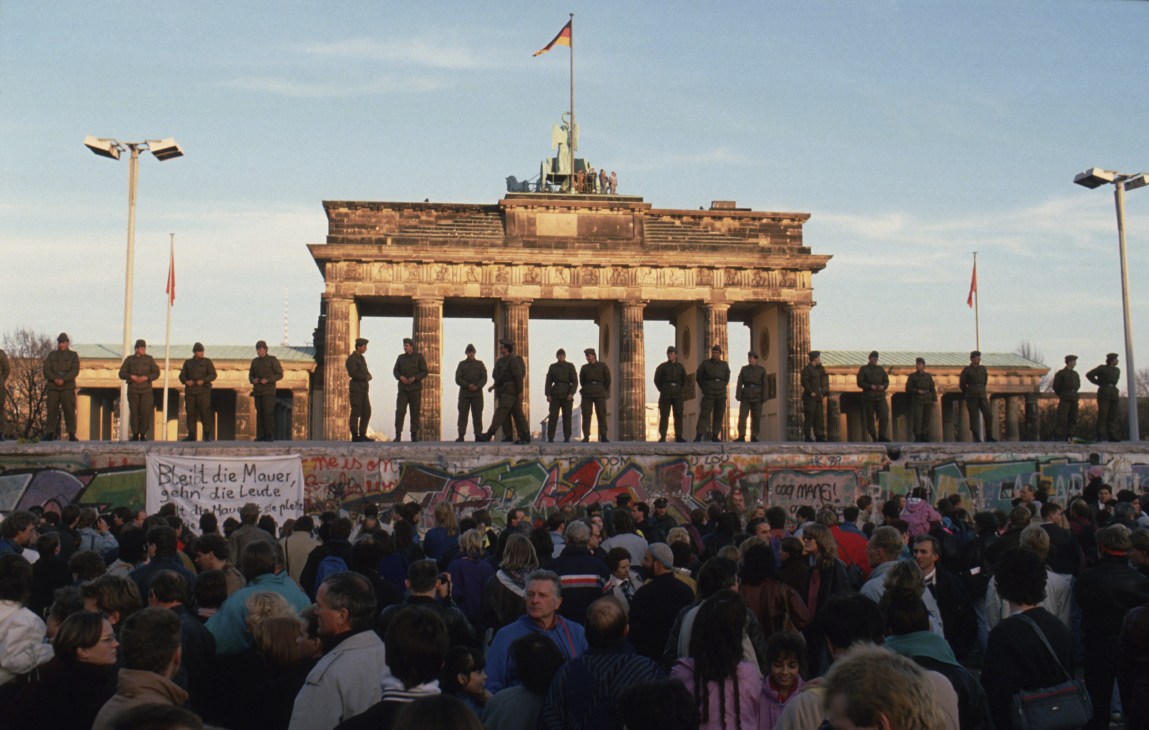
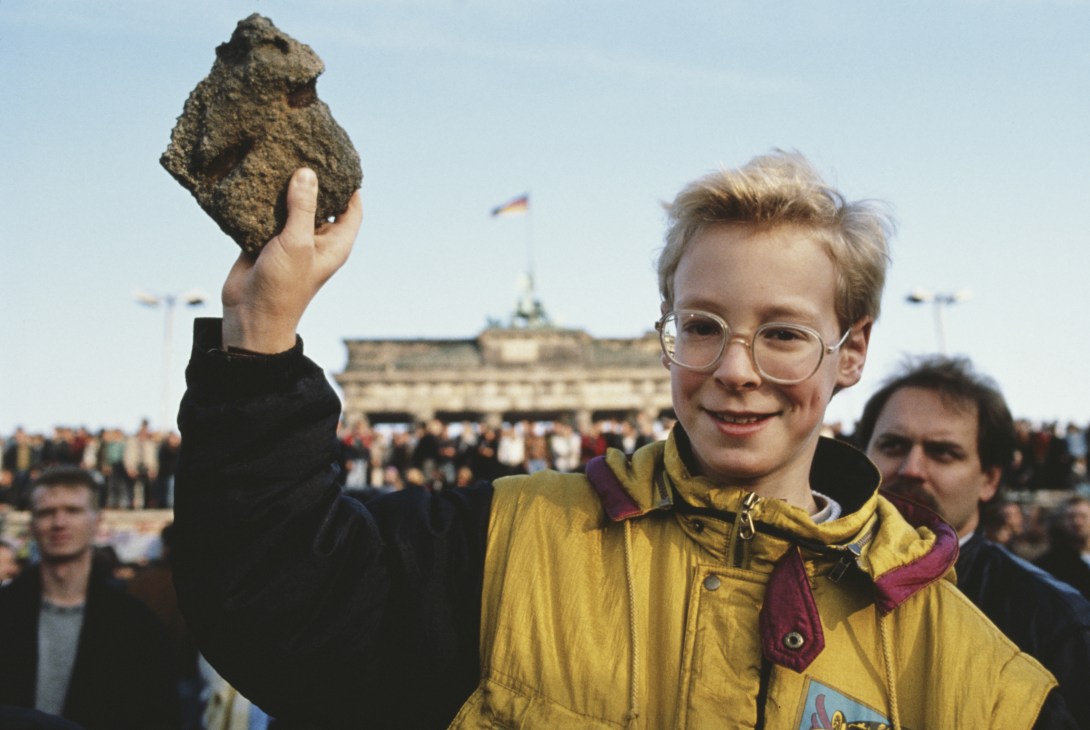
With the fall of the Berlin Wall and the collapse of the Soviet Union, Europe’s former communist states were on a path towards liberal democracy and free-market capitalism. EU membership was the confirmation that they had moved out of the orbit of Moscow and joined the West.
Over the following decade billions of euros in EU funds were spent each year boosting their economies, while membership of the single market led to a period of sustained growth: Poland’s GDP per capita, for instance, has doubled from $6,600 in 2004 to about $14,000 in 2013. Millions have also grown their own income by taking advantage of the EU’s freedom of movement and living – usually temporarily – in richer EU nations, often doing jobs that locals would rather not.
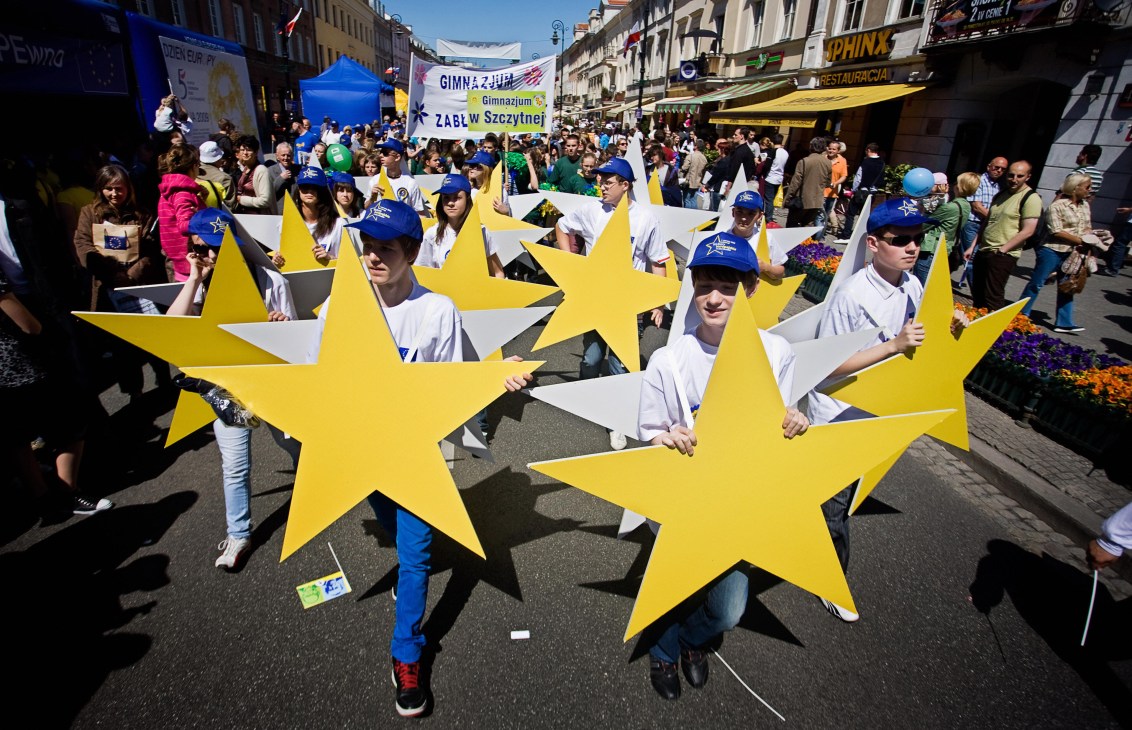
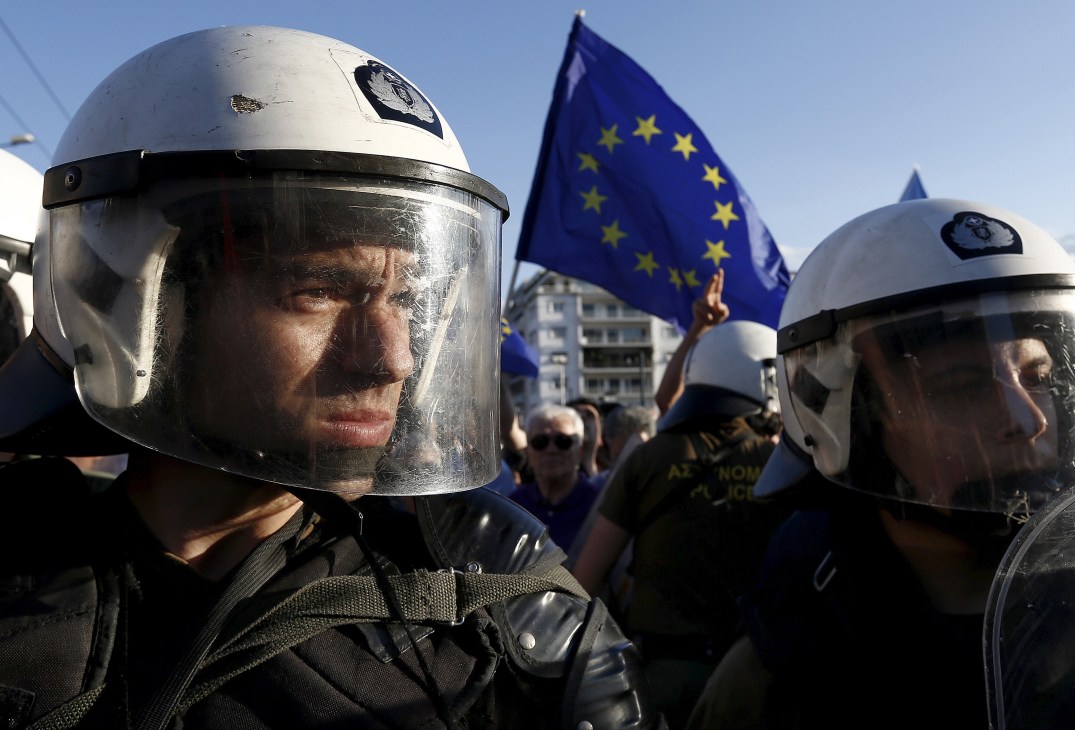
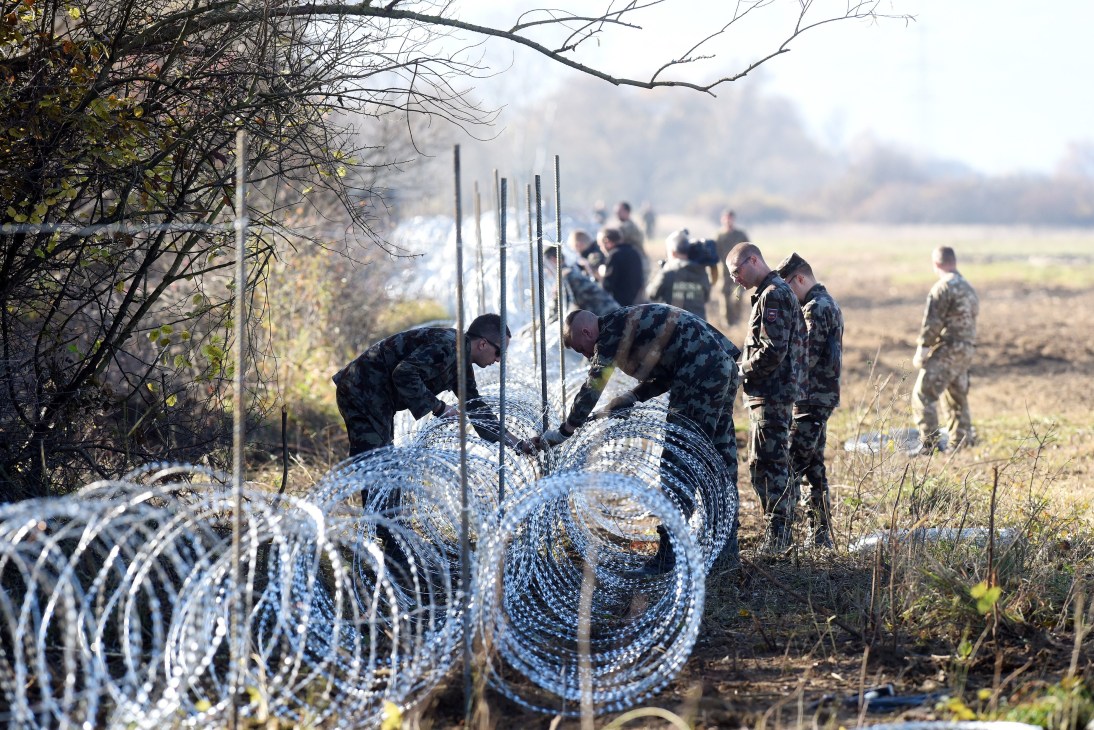
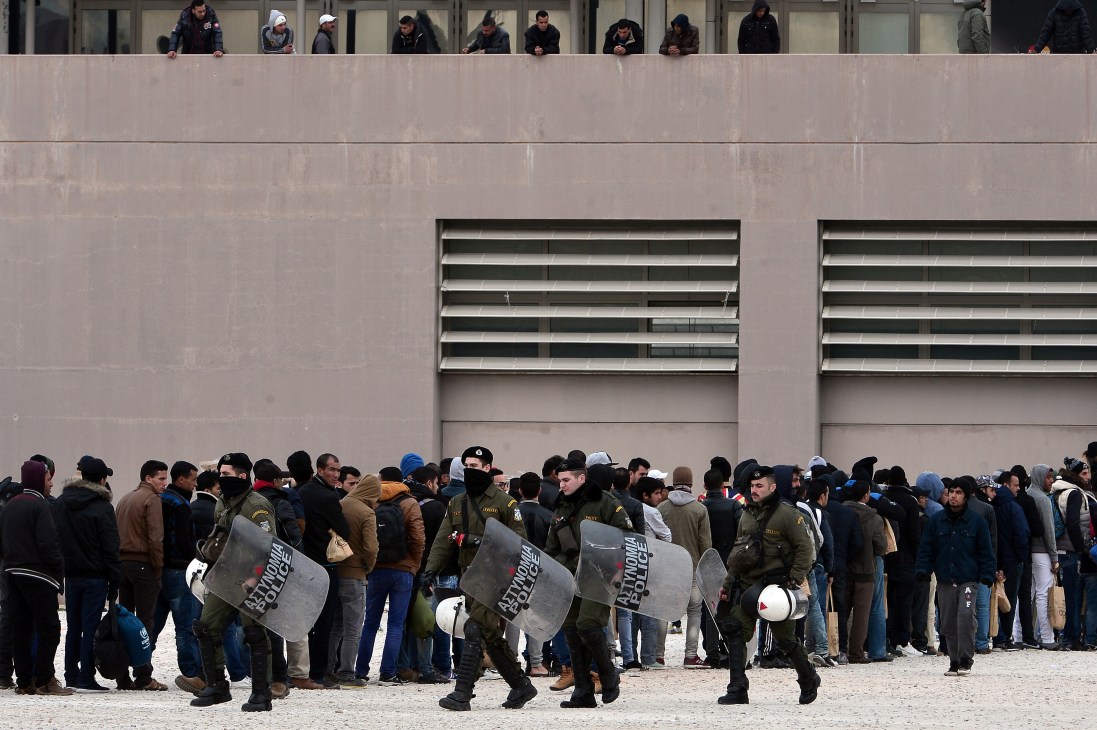
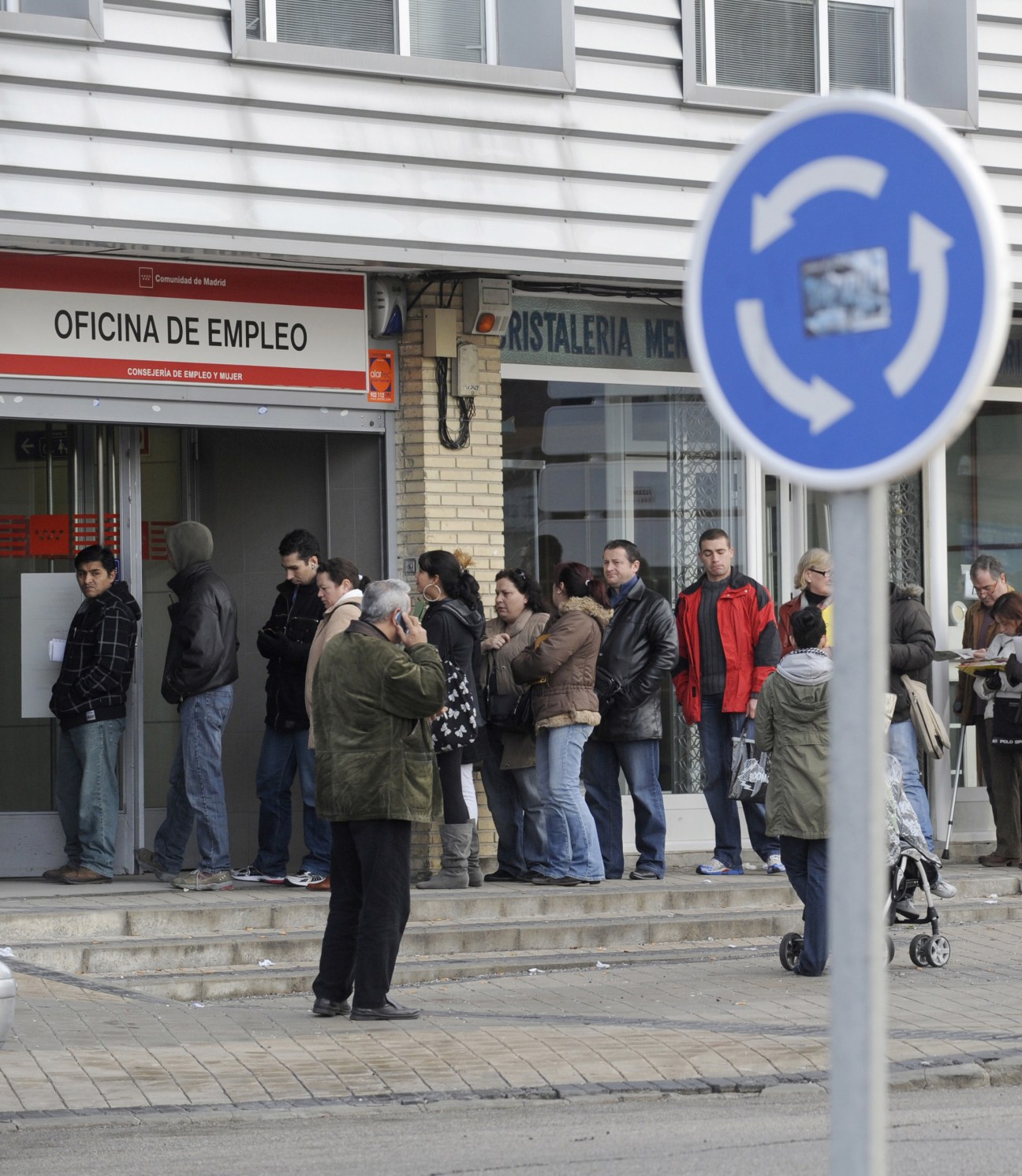

But in recent years much of the post-accession euphoria has evaporated. The EU they joined was prosperous and, on the whole, united. That’s no longer the case. Europe’s financial crisis, which resulted in emergency funding for Ireland, Portugal, Spain, Italy and Greece, frustrated many of the newer members. They were further annoyed by the push from Germany, Italy and Greece to accept refugees and migrants arriving from Africa and the Middle East. Anti-refugee sentiment has been strong in central and eastern Europe, with many nations refusing to take even a small number of the million or so refugees and migrants who have made the journey to Europe since 2014.
A pro-EU government in Poland has been replaced by a far more nationalist regime. In Hungary, Viktor Orban has dragged the nation further to the right and spoken of his desire to end liberal democracy and replace it with an “illiberal state”. The Slovaks have, like the Hungarians, increased ties with Vladimir Putin’s Russia, while in the Czech Republic the population has become increasingly anti-EU.
These four nations, which formed a loose coalition known as the Visegrad Group in the 1990s, have helped to shift the balance of power in the EU eastwards. While all four governments have different views – the current Polish leadership is vehemently anti-Putin, for example – they have become an effective bloc within the EU, generally pushing for a looser union of nation states that gives more power to individual governments.
Some of the longer-standing EU members also now consider the 2004 accession in less glowing terms. Western and northern European nations have not just had to foot the bill, they’ve also lost out on funds that previously would have been theirs. The EU’s Objective One funding, aimed at the union’s poorest regions, used to be spread across the continent – even Germany had six regions eligible for funding. That all changed with expansion as the vast majority of funding moved east. Their economies were so far behind the rest of the union that the vast majority of regions that had previously received funding no longer did.
With the UK leaving the EU and with France and Germany preoccupied by general elections, 2017 is likely to see the Visegrad Four exert more power over the rest of the union than ever before. Despite the EU’s problems – and despite the wilder anti-Brussels comments of some of the Visegrad Four’s leaders – most voters in the region are still supportive of their nations’ membership. They see their future in the union, possibly even reshaping it in their image.
There was an assumption in established EU nations in 2004 that “they” were going to become more like “us”. But just over a decade on, are “we” about to become more like “them”?
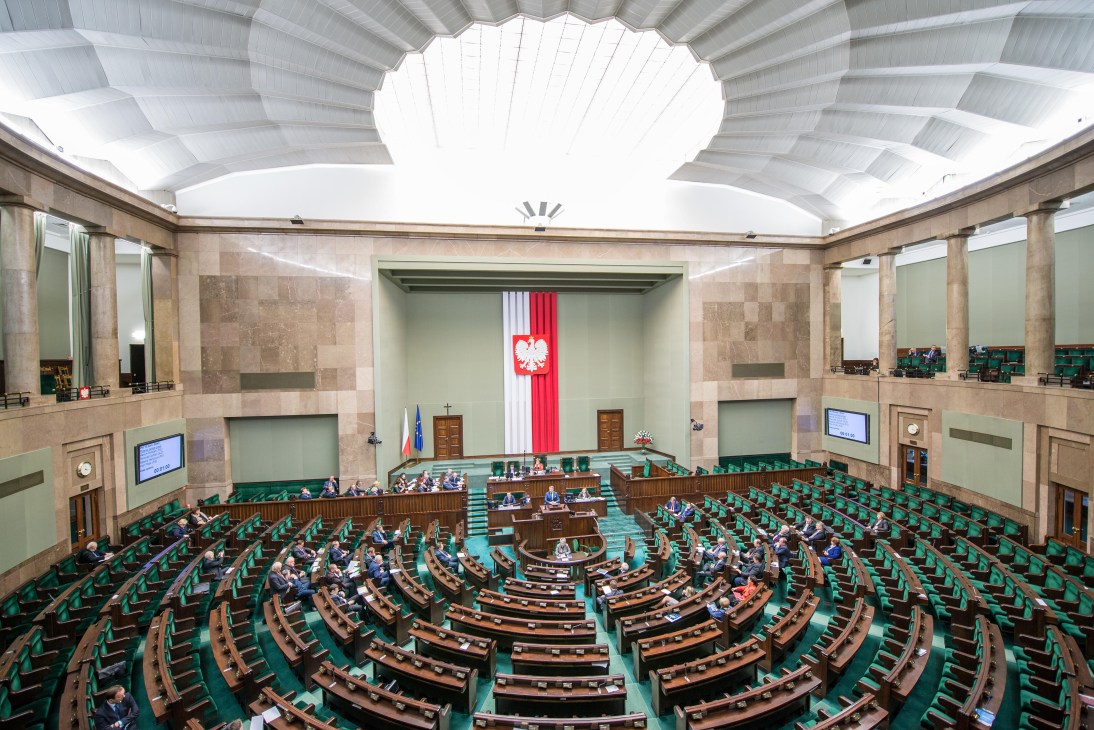
Poland
Population: 38.5 million
GDP (per capita): $12,494.46
Unemployment rate: 7.5 per cent
Since joining the EU in 2004, Poland has been a country to be reckoned with. The nation of 38.5 million is the bloc’s sixth-largest economy – fifth once Britain leaves. Yet things have been stirred up since the right-wing Law and Justice (PiS) party came to power in October 2015. While not opposed to EU membership, the party has adopted a more defiant stance to its centrist predecessor. Its leader Jaroslaw Kaczynski sees Brexit as an opportunity to reform the EU, shifting power back towards member states.
The past year has been rocky: in January 2016 the European Commission launched a probe into rule of law in Poland, its first ever. If it continues, Poland’s voting rights in the EU could be suspended but Warsaw believes that the spat can be transcended in 2017. Then there’s the former Polish prime minister and current president of the European Council in Brussels, Donald Tusk, whom Kaczynski has suggested Warsaw will not back for reappointment when his term ends in May.
Brexit will bring opportunities and challenges for Warsaw. International banks have already opened back offices in Warsaw and Poznan – now Poland is encouraging them to bring more frontline bankers. “Poland could be a champion of the free market and thus an ally of Germany, partly replacing Britain,” says Piotr Buras, head of the Warsaw office of the European Council on Foreign Relations. However, “the prevalence of domestic policy in the PiS government’s thinking makes this policy inconsistent”. Berlin and Paris are taking note.
The economy is run by Mateusz Morawiecki, a 48-year-old former bank CEO who is at once deputy prime minister, minister of economic development and, since September 2016, minister of finance. In the spring of the same year he unveiled his “Morawiecki Plan”, a five-pillar economic roadmap for the next 25 years. He has also visited London to court UK investors.
Poland’s attitude to outsiders is another challenge: the government has refused to take in refugees as part of the EU’s relocation programme. However, the number of foreign workers in Poland is rising. In the first 10 months of 2016 the number of people applying to legalise their stay was up 30 per cent year on year; mostly people from neighbouring Ukraine. With a rapidly ageing population and gaps in the labour market, this is good news for the country. “Poland will not catch up with the West without immigration,” says economist Marcin Piatkowski. “It will grow old before it grows rich.”
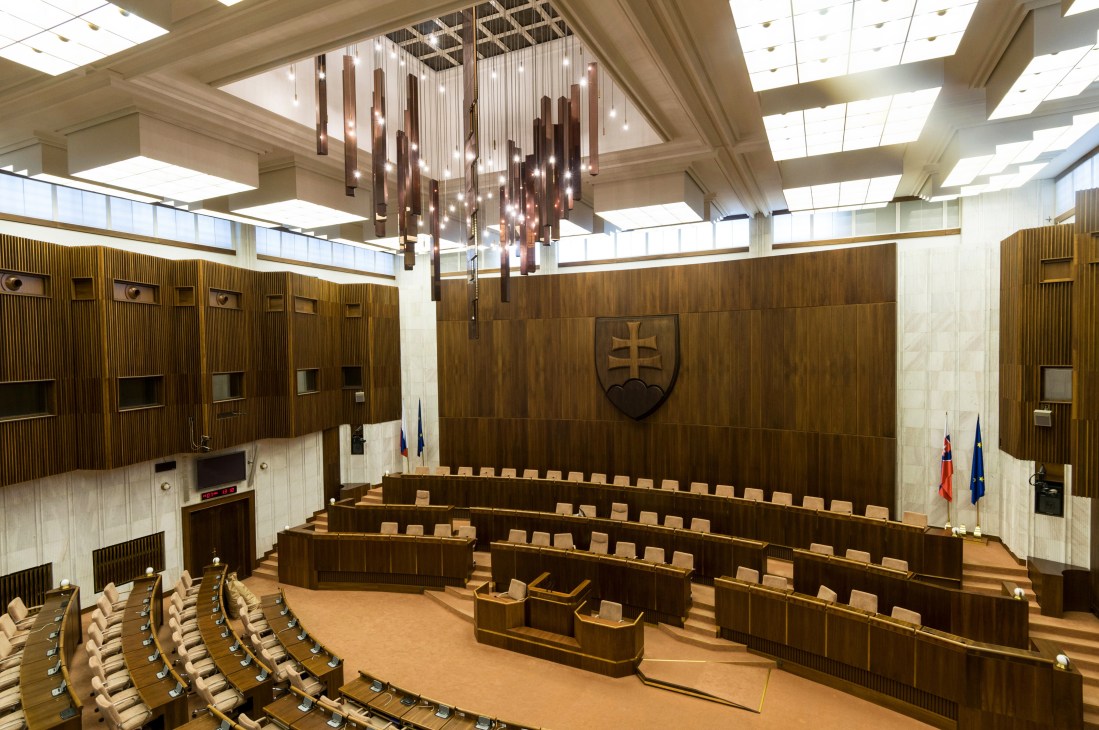
Slovakia
Population: 5.5 million
GDP (per capita): $15,962.57
Unemployment rate: 11.5 per cent
Bratislava is a mash-up of eras: the Old Town evokes the grandeur of the Austro-Hungarian empire yet within sight is the Novy Most bridge over the Danube, built in 1972 and topped with a structure that looks like a ufo. Under the imposing Bratislava Castle, parts of which date back to the 13th century, is the gleaming River Park complex and a few kilometres away is the glassy new terminal at Bratislava Airport, finished in 2012.
The mix of old and new reflects the many facets of this small country – but also its fragments. The March 2016 elections saw eight divergent parties, including two to the far right, gain or hold seats in parliament. In part this was a reaction to European migration, which indicates a larger trend. “Migration is one issue about which the Visegrad countries could come together,” says Aneta Vilagi, a political scientist at Bratislava’s Comenius University. “But we have different positions on most issues: Slovakia and Hungary are more pro-Russia, the Czech Republic and Poland are anti-Russia.”
Slovakia’s economy appears to be heading in the right direction. Its strong automotive sector provides 200,000 jobs and the country is the world’s biggest car producer per capita: in addition to the longstanding presence of Volkswagen, Kia and Peugeot, Jaguar Land Rover is opening a plant here in 2018. In 2015 the country saw accelerated economic growth due to EU funding but also increasing domestic consumption, hopefully pushing forward last year’s 3 per cent growth. Unemployment is also at a six-year low.
Vilagi points out that corruption within the Slovakian establishment remains and, looking to the future, educational reform is needed to assure qualified workers. The latter is a priority.
Bratislava was once a gateway between Budapest, Prague and Vienna. Then it was a forgotten capital near the Iron Curtain; now Slovakia’s mission may be to gain its populace’s trust and continue to build its economy. “In Andrej Kiska we have our first truly independent president with an entrepreneurial background and non-communist past,” says Juraj Vaculik, CEO of Aeromobil, which has developed a flying car. “However, we still struggle with extremist political parties.” He also mentions that a few of Aeromobil’s employees and board members – UK citizens – are concerned about Brexit. “But even if there were fragmentation within the EU, Slovakia would be in an integrative position,” says Vilagi. “We’re a small country so it’s beneficial for us to be in a larger market.”
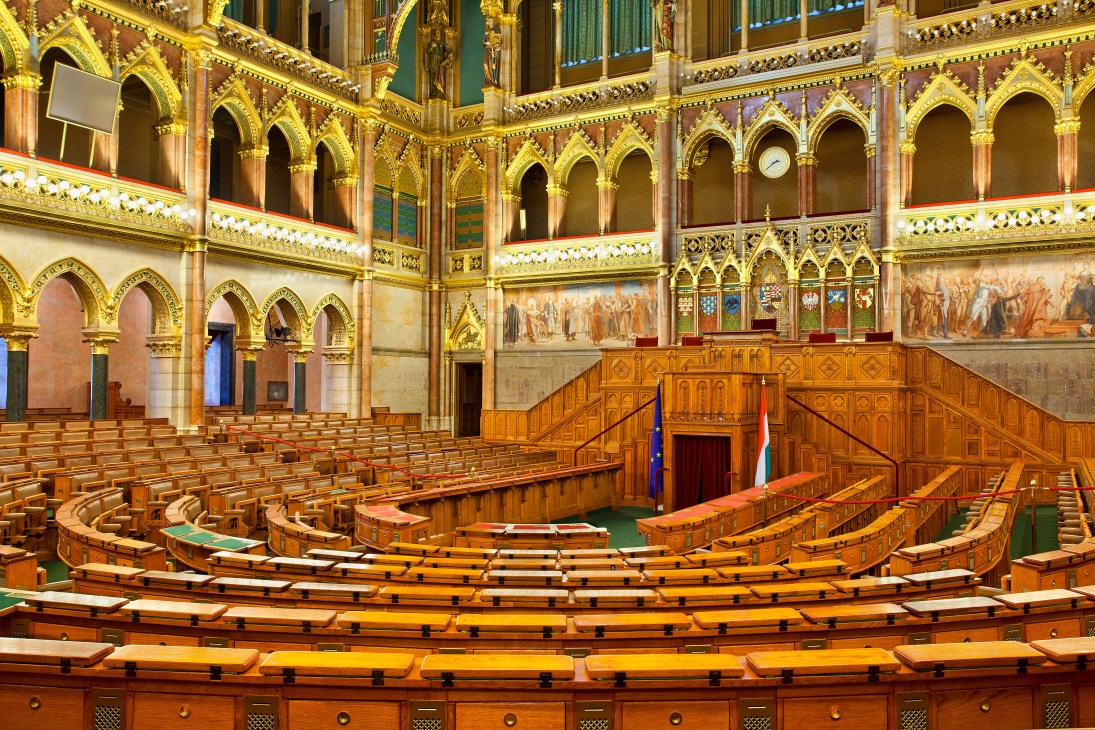
Hungary
Population: 9.9 million
GDP (per capita): $12,259.12
Unemployment rate: 6.8 per cent
Hungary is one of the Visegrad group’s smaller members but prime minister Viktor Orban’s independent streak – he describes himself as a “heretic” among EU leaders – has granted it a leading role in shaping the four countries into a formidable political bloc. The one-time liberal Hungarian leader turned EU critic is the group’s longest-serving prime minister and his opposition to the German-led EU consensus on migration, EU reform and multiculturalism has drawn attention to the Visegrad bloc’s increasing assertiveness.
In a speech in October 2016 marking the 60th anniversary of Hungary’s anti-Soviet revolution he said that the task of freedom-loving people is to “save Brussels from Sovietisation”. This fiery language has brought Hungary’s leader to international prominence but would garner less attention were it not for political co-ordination with his V4 partners. Operating as an informal caucus has established the bloc as a significant political force in an otherwise fragmented club of 28.
“Visegrad co-operation is now the most effective alliance within the EU,” says Hungarian foreign minister Peter Szijjarto. “It works because we’ve got each other’s backs. If we presented our positions one by one no one would care.”
At the core of Visegrad’s success is the strength of its members, Hungary included. Orban’s government is heading into its eighth successive year in office with a commanding parliamentary majority and a tight grip on state institutions. His radical economic measures since 2010 – nationalising compulsory private pension funds and slapping sector taxes on banks, media, energy and retail companies – have alarmed some but reduced public debt below 75 per cent of GDP. The EU now forecasts that Hungary’s economy will have expanded by 2.1 per cent in 2016 and will grow by 2.6 per cent in 2017, well above the European average.
However, behind the warm diplomatic words lie political faultlines. Czech and Slovak leaders don’t share Orban’s enthusiasm for rewriting the EU’s constitutional rulebook and are concerned by Poland and Hungary’s attacks on liberal western political values.
Until now differences within the group have been managed pragmatically. “One area where we have different approaches is Russia,” says Szijjarto. “But this doesn’t create a conflict.”
What unites the four in the debate on Europe’s future, says Szijjarto, is shared resistance to granting more power to EU institutions: “The stronger the member states are, the stronger the EU will be.”
Czech Republic
Population: 10.5 million
GDP (per capita): $17,231.28
Unemployment rate: 5 per cent
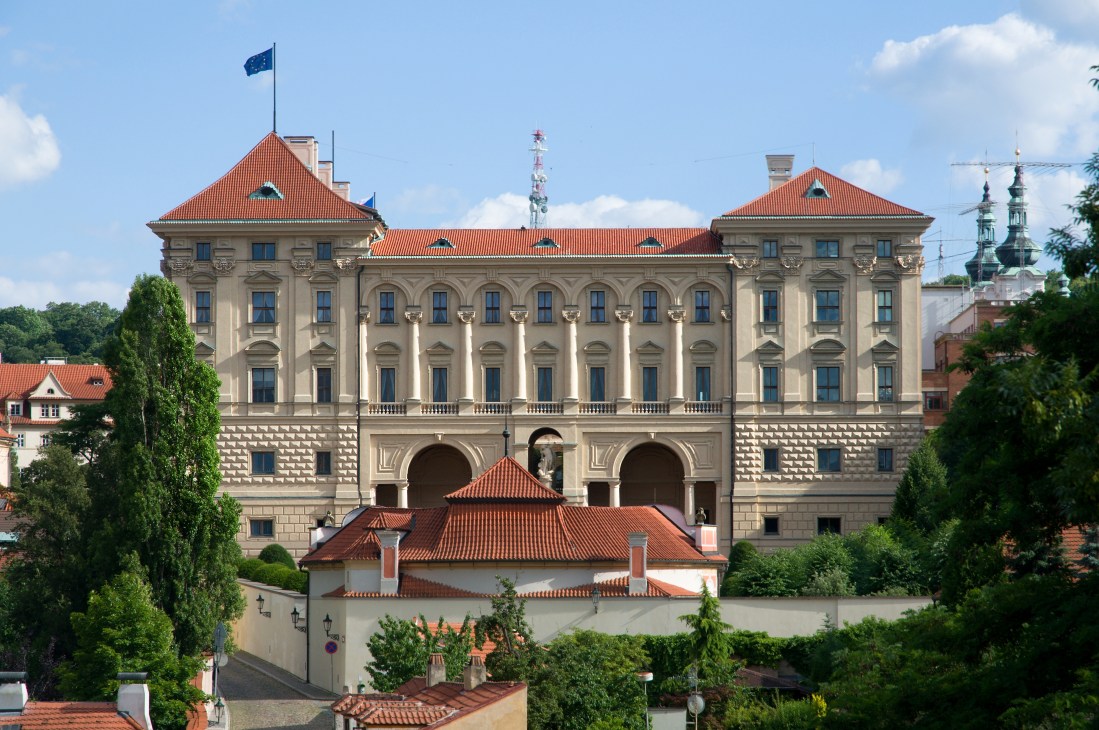
With its classical Habsburg architecture and chequered past, the grandiose foreign ministry building in Prague seems to embody the Czech Republic’s European conundrum: caught between a desire for self-determination and the feeling that it will always be denied by bigger foreign powers.
Here diplomats such as Jakub Durr, the Czech deputy foreign minister, strive to sell the benefits of EU membership to a public that is among the continent’s most Eurosceptic. Polls show that support for the bloc is lower here than in Slovakia, Poland and Hungary. Negative attitudes have been fanned by the anti-Brussels rhetoric of the country’s most recent presidents, Vaclav Klaus and the incumbent Milos Zeman, who has peddled the notion of a Brexit-style referendum.
Durr, a former deputy of the Czech mission to the EU, insists that a membership referendum is unlikely but says that there is resentment at decisions being taken “in a foreign city with the regular people’s voice not being listened to”.
This is a familiar feeling throughout Czech history: before 1918 Czechs (and Slovaks) chafed against Habsburg rule from Vienna under the Austro-Hungarian empire; after the 1939 Nazi invasion the country was subject to foreign rule from Berlin; and after a Soviet-backed communist takeover in 1948 many in the then Czechoslovakia felt that they were subjects of an alien regime installed by Moscow.
All three regimes used the foreign ministry building as a base from which to project their power. Now it is the EU flag that flies atop the imposing structure, perhaps subconsciously evoking the feeling in the mindset of many Czechs that they are still governed from afar.
Radko Hokovsky, director of the Prague-based European Values think-tank, says that such attitudes are driven by a “Munich complex”, stemming from the notorious 1938 Munich agreement struck with Hitler by the UK and France that carved up pre-Second World War Czechoslovakia. “There is a lack of self-confidence,” he says. “Czechs feel that they are not big enough to influence EU decisions.”
Yet the negativity overlooks a reality that politicians and economists agree on: that Czech EU membership since its accession in 2004 has been a success. “We can look at any aspect of the Czech economy,” says David Marek, chief economist with Deloitte in Prague, “from exports to GDP, employment and overall living standards, and we can see that for companies and ordinary people it is a big step ahead.”
Rain or shine
1.
Four Seasons
Go green
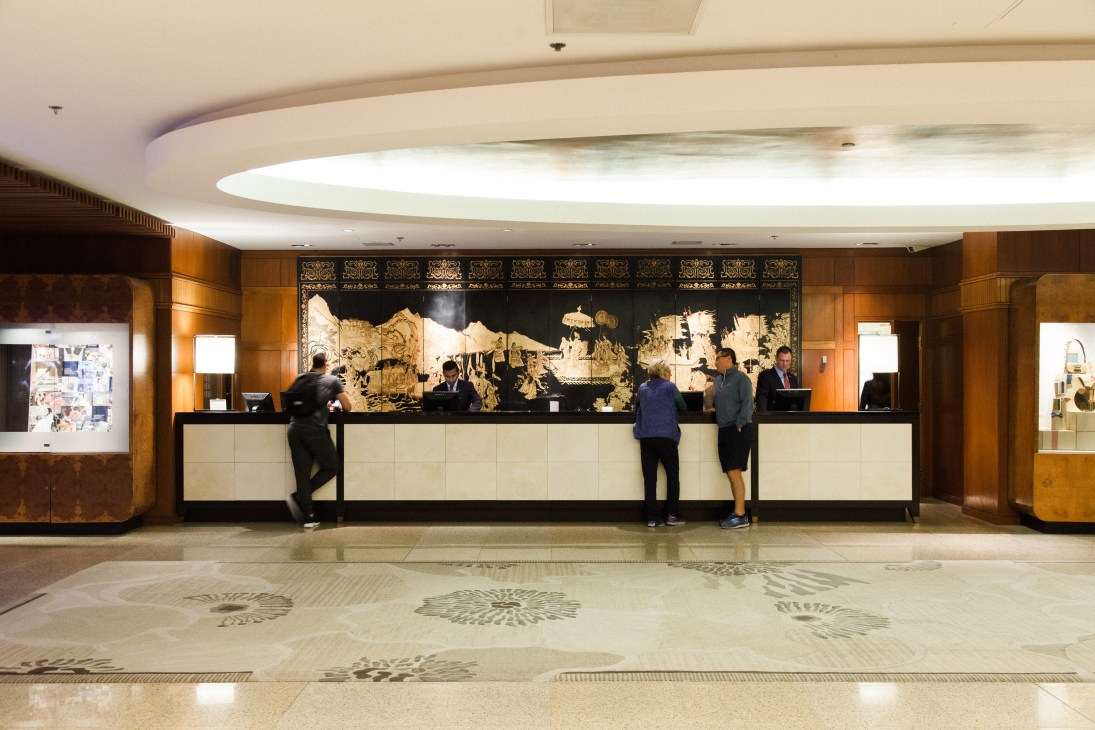
Vancouver isn’t lacking in green space but the rooftop garden at the Four Seasons is – figuratively and literally – a step up from the rest. It’s also a beautiful spot to watch the sunset. Platinum Card Members can enjoy valuable benefits here but if that’s not enough to tempt you perhaps the lure of one of the city’s best seafood restaurants will reel you in.
fourseasons.com/vancouver
2.
Revolver Coffee
Take your best shot
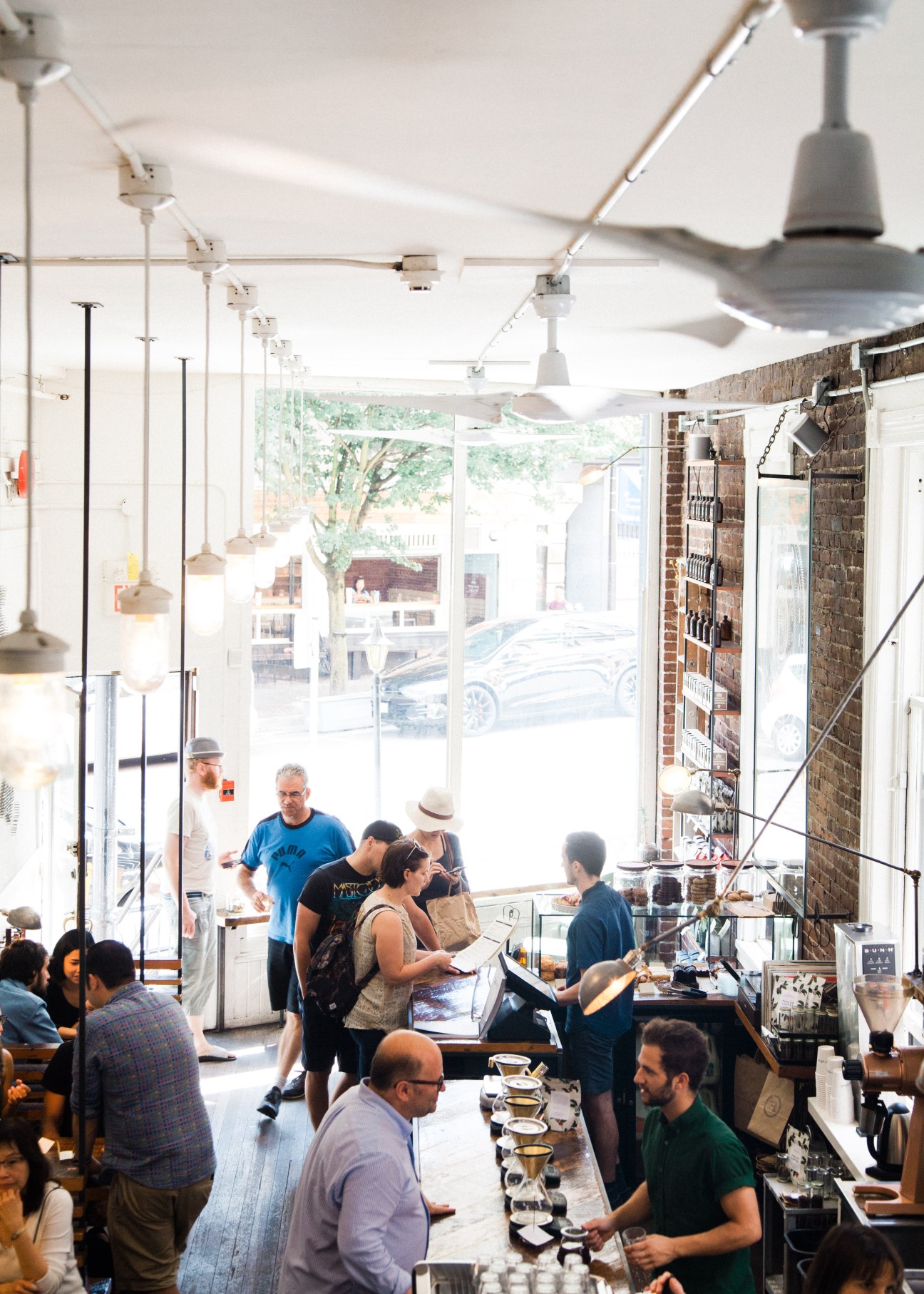
Grab a seat in one of the booths and watch the baristas tinker away. This cosy café in the Downtown prides itself on beans sourced from North American roasters such as Matchstick. Take note: the menu changes frequently.
revolvercoffee.ca
3.
Holt Renfrew
Raise a glass
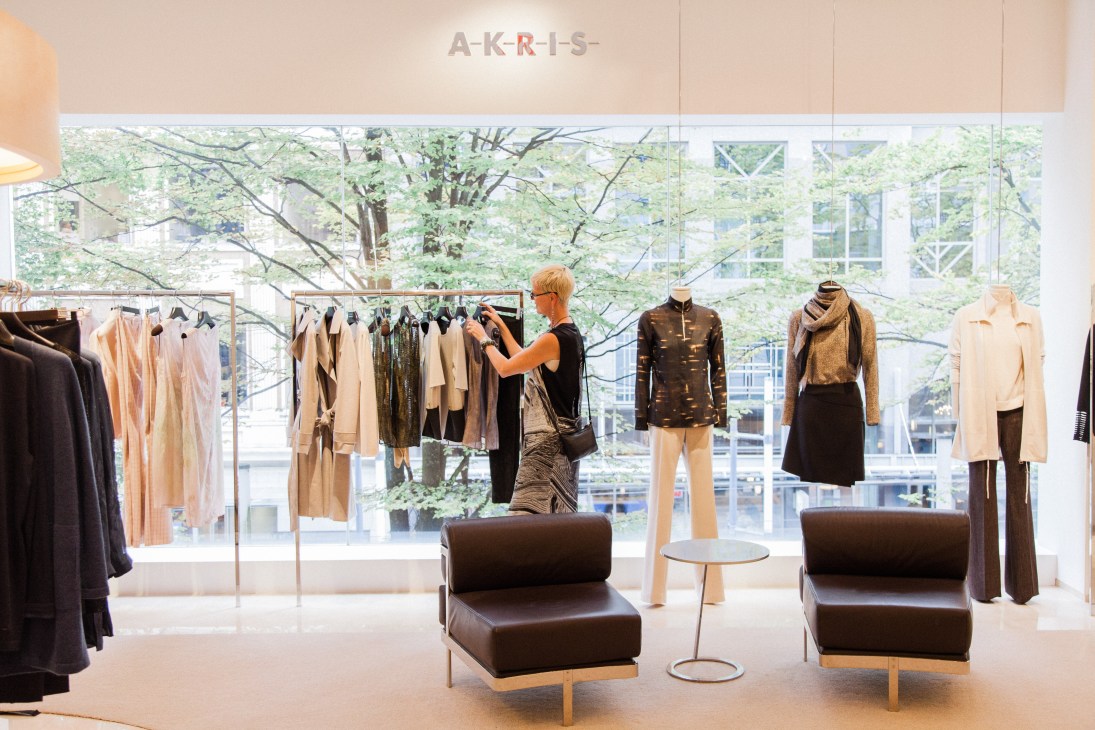
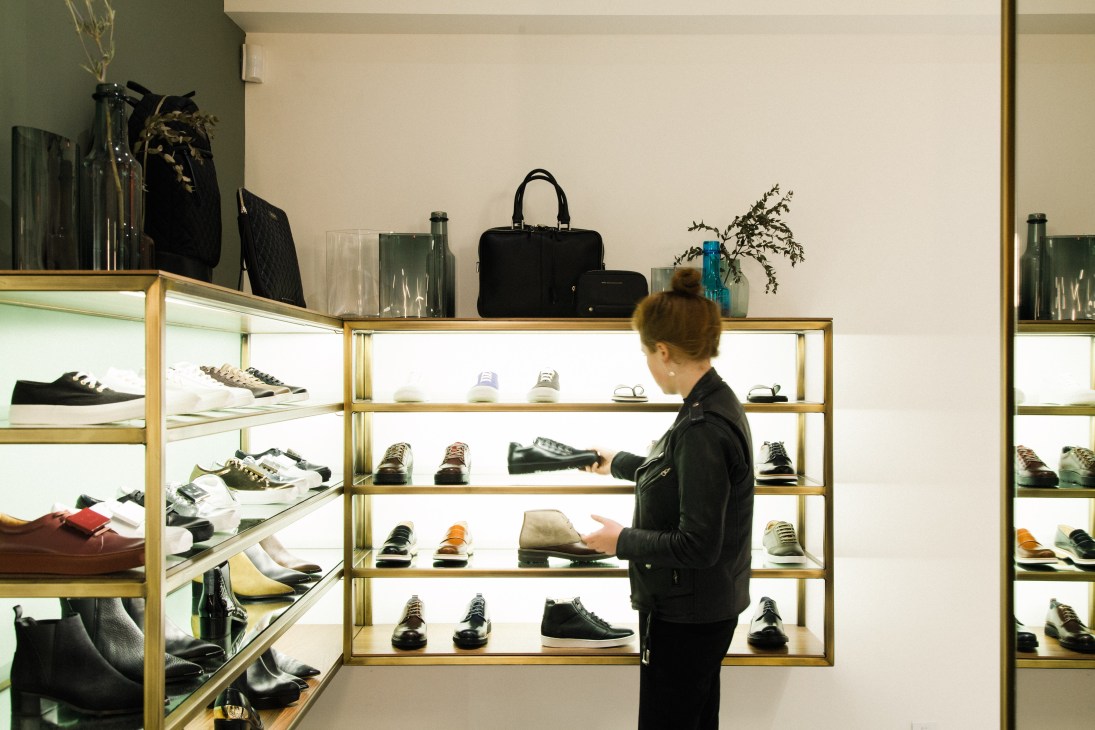
Whether you’re settling in for an indulgent afternoon or simply browsing for a gift, Holt Renfrew’s glass-fronted space offers a range that never fails to impress. Brands span from Tod’s and Hermès to home talent La Canadienne.
holtrenfrew.com






4.
Blue Water Café
Sea change
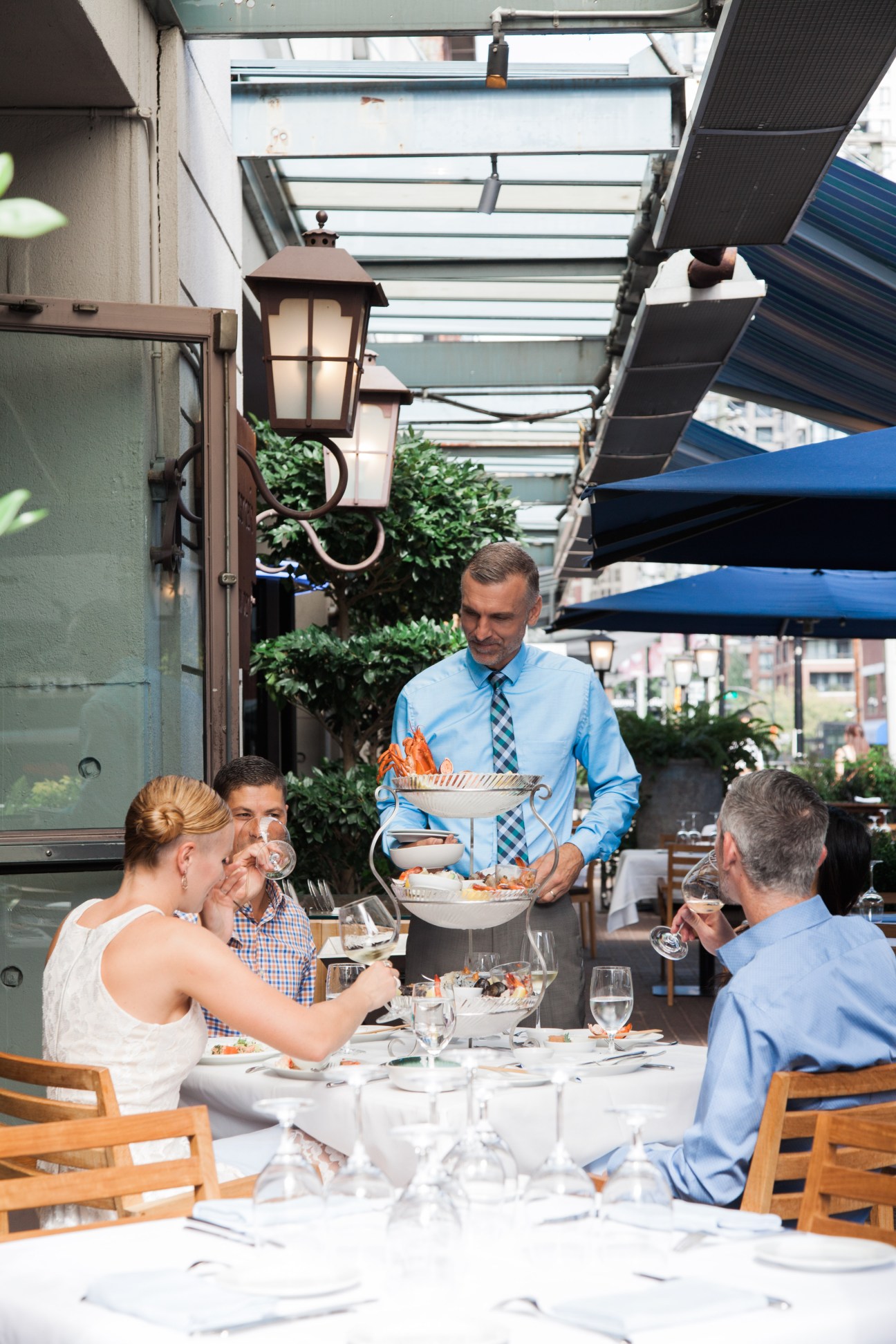
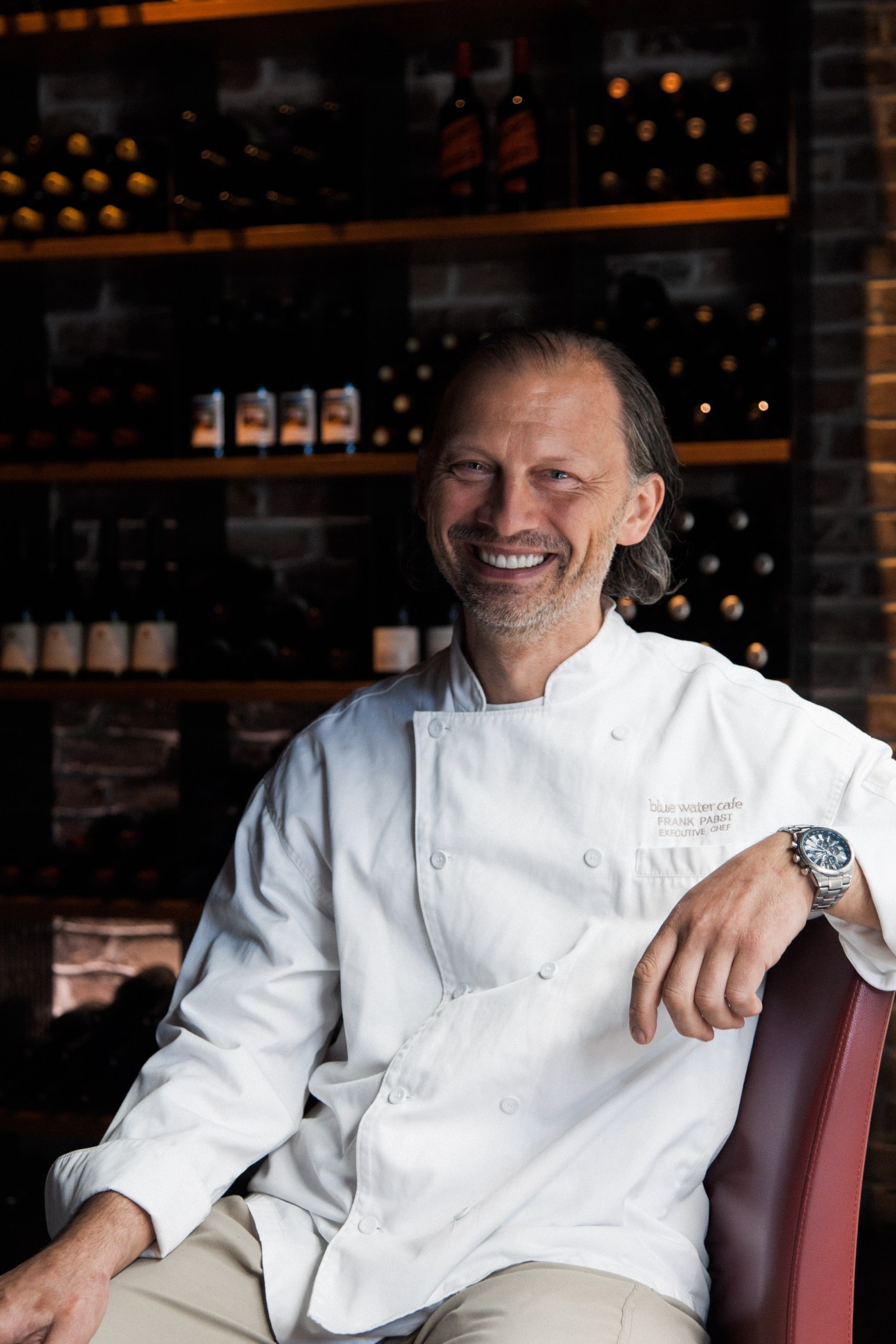
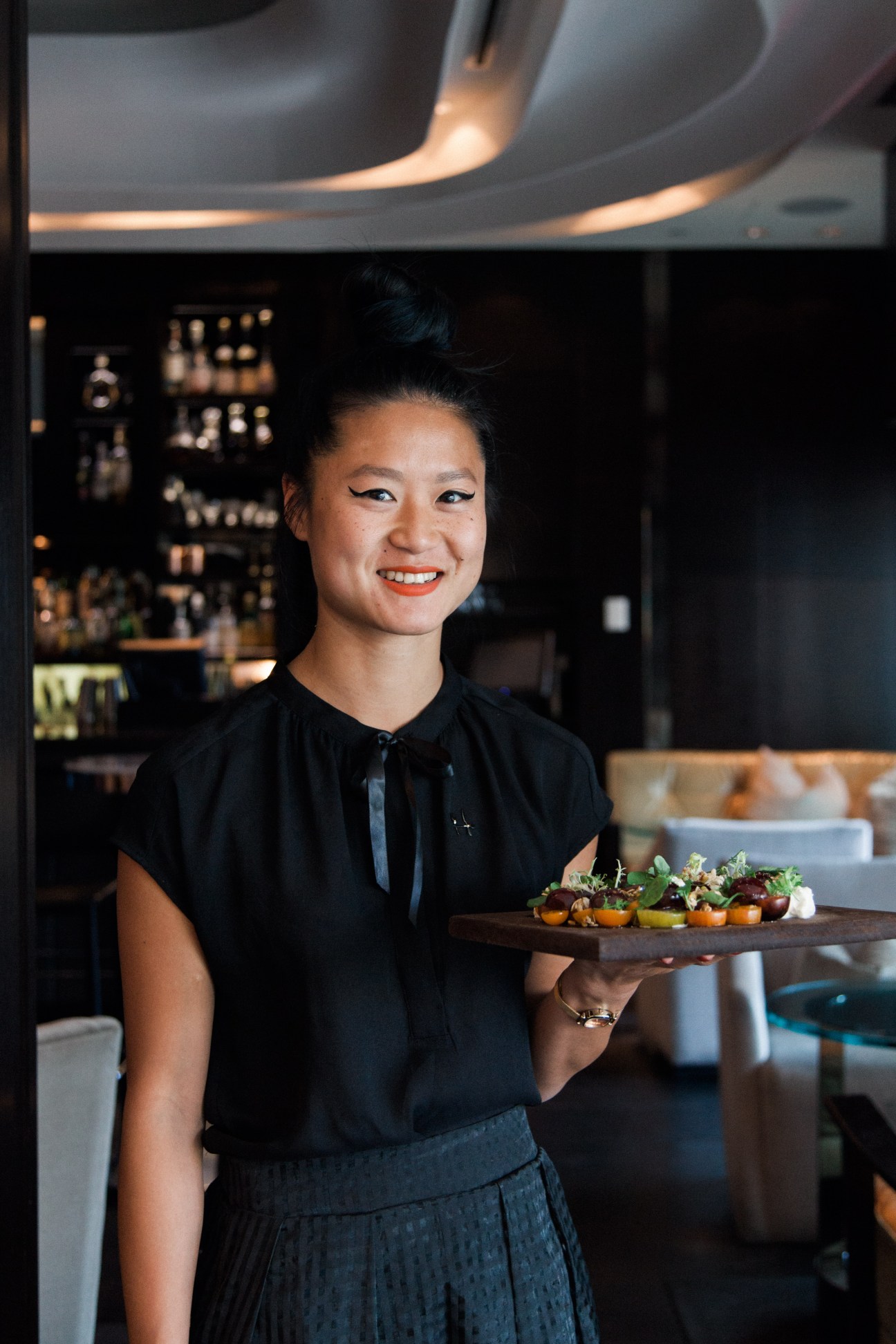
German chef Frank Pabst has been winning over residents and visitors alike since 2003. Though his menu caters to all tastes, those with a penchant for seafood will feel most at home – the miso-saké glazed sablefish is a house favourite. The warm interior is ideal for a tranquil lunch but feel free to grab a seat on the verdant terrace and soak up the rays.
bluewatercafe.net
5.
L’Abattoir
Behind bars
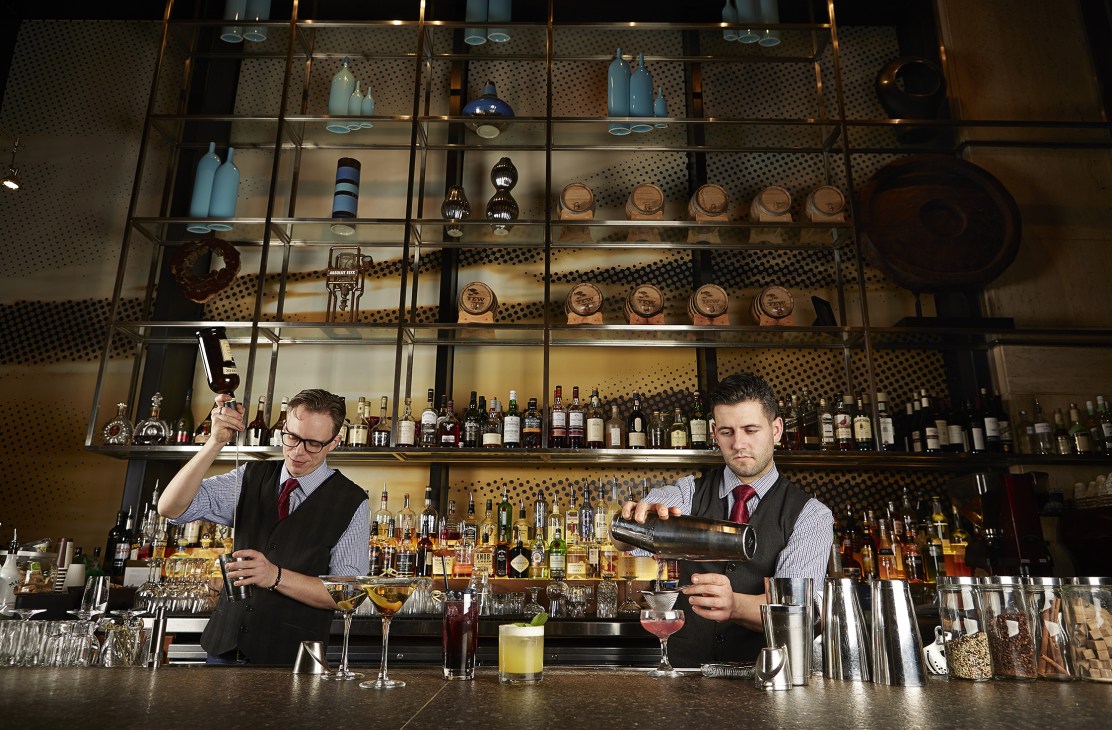
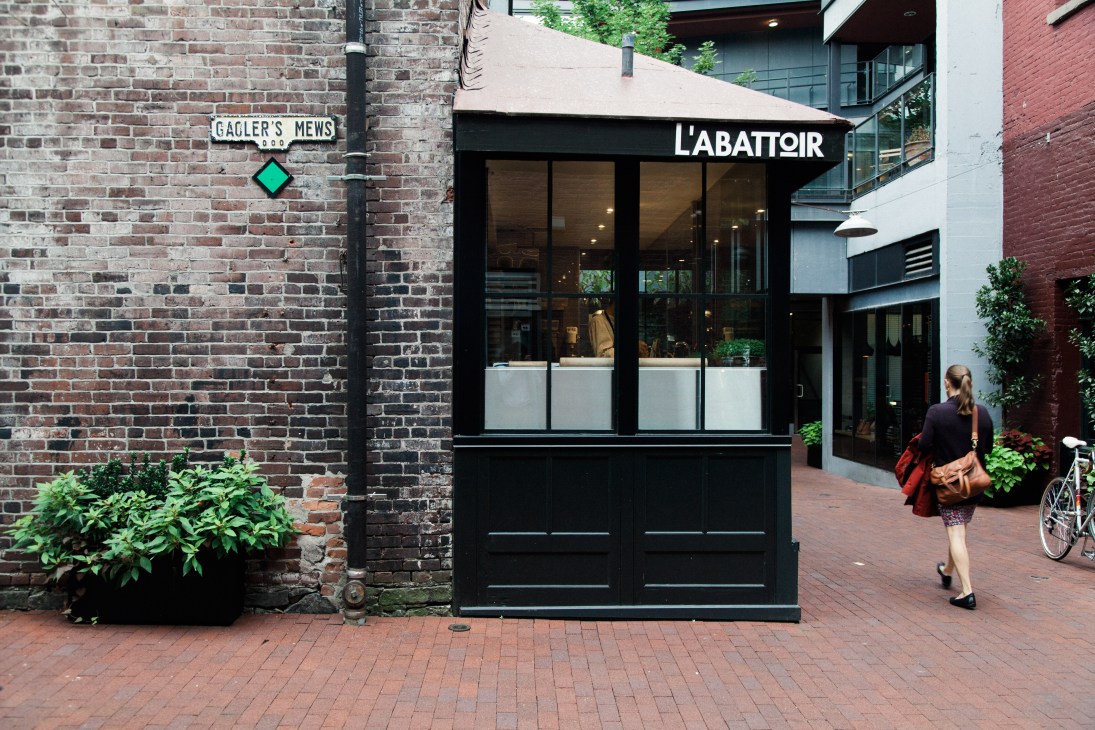
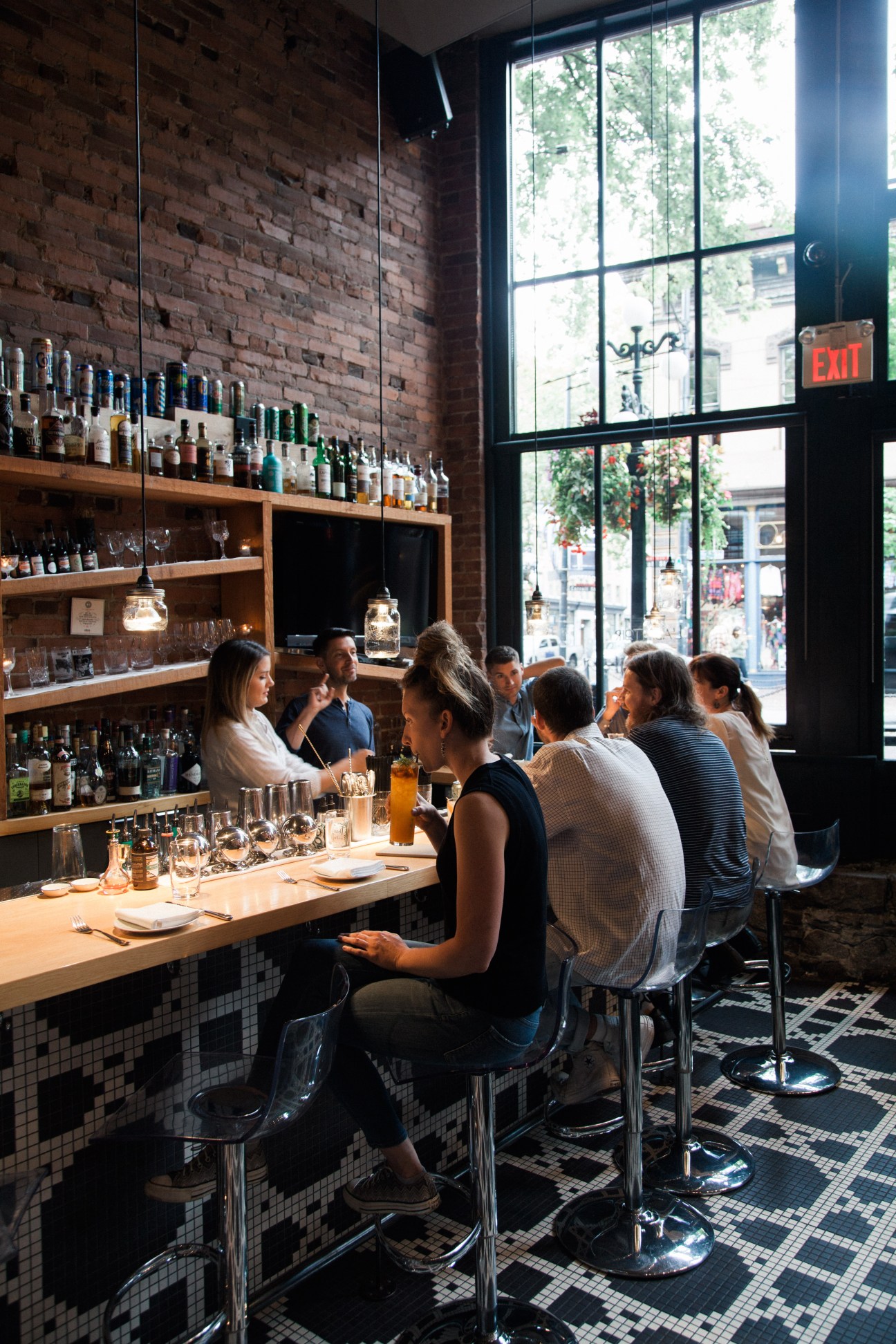
This Gastown favourite was built on the grounds of Vancouver’s first prison, which has been in continuous operation since the 19th century. Today it serves West Coast plates tempered with French flair alongside an enticing list of cocktails such as the elegant Mitton.
labattoir.ca
6.
Want Apothecary
Lotions and potions
Want Les Essentiels founders Byron and Dexter Peart modelled their boutique on the old-world charm of apothecaries. From the Carrara marble floors to the Verso cosmetics lining the shelves, the space has an inimitable allure.
wantapothecary.com
7.
Hawksworth
Table service
Chef and owner David Hawksworth fashions continental fare from Canadian ingredients. The waiting list can be a scramble but Platinum’s Concierge* is your ticket to a table, as well as a complimentary amuse bouche and pre-dessert to tempt the palate.
hawksworthrestaurant.com
8.
Lobby Lounge
Like a rolling stone
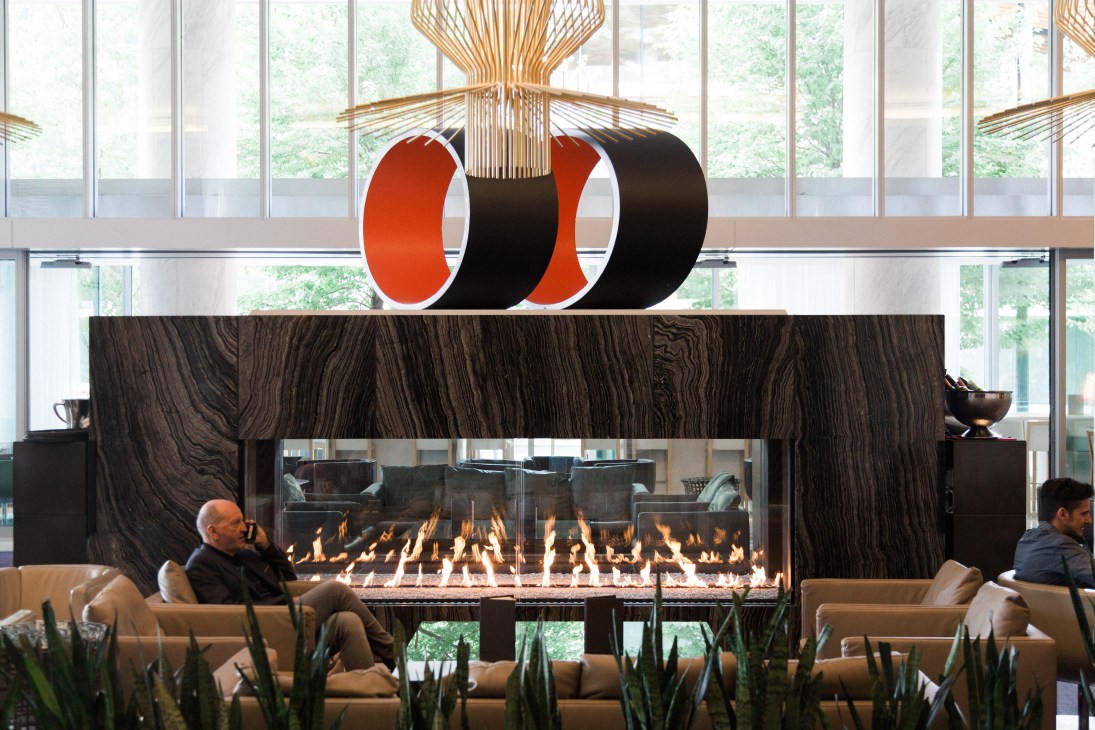
Fairmont’s Lounge Bar hums with melody seven days a week but is best enjoyed in the wee hours over a final cocktail. Grab a house-classic Vancouver Club and pull up a pew at the Bob Dylan-inspired tables.
lobbyloungerawbar.com
Search ‘Amex Platinum’ to find out more
*Terms and conditions:
There is no cost to you for services that a concierge performs on your behalf, although you are responsible for any purchases, fees and shipping charges you authorise to be charged to your Card account. American Express reserves the right to note profile and preference data for servicing and marketing purposes and is not responsible for notifying a restaurant of food allergies.
The conversation
In the early 1990s there was an advert on UK television for talking. It was ostensibly for BT, by far and away the UK’s largest phone operator, but it wasn’t aimed at new customers. Instead it was about persuading existing customers (or more precisely, existing male customers) to use their phones. To talk. To their daughters, their mothers – to anyone, frankly, so long as they picked up a phone and talked. The actor Bob Hoskins, best known for playing a gangster, was the front man, growling the catchphrase “It’s good to talk” with a slight air of menace. “OK Bob, we’ll talk,” the men of Britain said. And they did. The campaign, which ran for five years, supposedly earned BT €5.8bn.
A generation on and there is a new advert on UK television urging people to talk. This time the phone is the villain. A young poet called Sugar J sits in a café, fiddling with his phone, musing on how it can get in the way of real, face-to-face conversation. (The commercial is for a building society, reminding customers that it has branches as well as online banking). The telephone has become the object we turn to in order to avoid talking. We use it to distract, to read and to play – occasionally we use it to talk but more often than not we react with an involuntary shudder if it actually rings. Sugar J – real name Jeremiah Brown – still picks up the phone when someone calls. “We’re losing the art of conversation,” he tells us. “You become an expert in communicating through the phone, constructing the perfect response.” He’s right.
We self-edit. On email, social media and WhatsApp, there’s time to draft a reply, think, delete it and start again. In crafting a witty riposte we lose spontaneity. “You get a lot more in person,” says Brown. “I can see your face, which is more important than words. You may not be able to construct the perfect message but you can get your point across.”
An ocean away, James O’Reilly nods in agreement. Irish-born and New York-based, he is the co-founder of Neuehouse, a shared working space and members club for entrepreneurs and creatives that encourages digital-free conversations. “We are overwhelmed by the abundance of digital connection. I can see what my friends are doing all the time but we’re devoid of any physical connection and we yearn for that. A society that’s getting more individualistic needs to become more communitarian.”
Conversation is not simply about talking though. “The art of conversation has two parts,” says O’Reilly. “One is asking the right questions, the other is actually listening.” When he was a kid, O’Reilly and his siblings would complain if they were stuck at a family dinner next to a relative deemed boring. “My dad used to say, ‘Nobody’s dull, you just haven’t found the thing that lights them up.’ He put it back on us. Find what it is that fuels their heart and mind. If you can’t harness a great conversation with somebody, that’s on you.” At Neuehouse, O’Reilly is doing what he can to prompt others to engage in great conversations. There are areas that are phone-free and events where members are encouraged to talk to strangers. “It happens organically; the act of breaking bread and sharing a meal is something that’s so instinctual and human.”
The digital overload is not a new problem but it’s becoming more urgent. We connect but we don’t converse. There are too many tabs open on our laptops, too many push notifications on our phones. When conversations – real face-to-face conversations – actually take place, too many of us are present in body but not in mind. We are also losing the incidental conversations with strangers, the serendipitous chats with the man in the queue or the woman at the till. Our heads are buried in our phones; we’re afraid to spend even a moment undistracted and alone with our thoughts, and rarely open to the idea of conversing with a fellow human.
This all leads, as Sherry Turkle describes in her book Reclaiming Conversation, to a loss of empathy. The problem has become most striking, she argues, in families. “Parents give their children phones,” Turkle says. “Children can’t get their parents’ attention away from their phones, so children take refuge in their own devices. Then parents use their children’s absorption as permission to have their own phones out as much as they wish.” The fix is both straightforward and, if we’re being honest, difficult to enact: “Accept your vulnerability,” she says. “Remove the temptation.” Indeed, a sizeable telecoms company based in Bonn has even developed a game that demands players put their phones down or lose the match. Imagine such thinking from a telco.
But there is a sense that a shift, a rebalancing, is underway. Businesses are realising that they need to see and hear their customers. Every marketing company is suddenly seizing on the “conversation” word and promising to reconnect businesses with customers who have become nothing but data. Revolts are also happening at dinner tables, where people are finally ignoring the demanding texts.
And perhaps we all sense it too: that nagging feeling that we are missing out on talking, arguing, seducing, unburdening, all while looking people in the eye and feeling breath on cheek. We know that something special happens when we talk. So here’s to the fightback becoming a full-scale revolt. It’s good to talk.
Steve Bloomfield is the executive editor of Monocle magazine and the host of Monocle 24’s flagship global-affairs programme The Foreign Desk. Previously the Africa correspondent for The Independent, he is also the author of Africa United: How Football Explains Africa. (And, naturally, he’s a good talker.)
Ground control
Gather a group of seasoned travellers of a certain age around a fine dining table, gently steer the conversation to somewhere close to the South China Sea and before long a curious thing will happen. While the discussion might have been focusing on stalled infrastructure initiatives in Thailand or the attractions of buying farmland on Kyushu, a mention of Hong Kong will soon trigger one of the assembled cast to talk about the good old days of flying into the city’s old Kai Tak Airport.
No doubt you’ve heard this tale trotted out many times before. But in case you’ve somehow missed it or never had the pleasure of roaring between tower blocks in a Cathay 747 during an approaching typhoon, the guests will all have stories about how you could practically read the labels on the undies flapping on laundry lines or determine what the residents on the 15th floor of Wing Ho towers were having for dinner.
They will talk about the dips and swerves that were made during the complicated approach and why you would want a good Brit or Aussie at the controls of a jumbo if you were coming in with a stiff crosswind. While much of the reminiscing will be centered around the rush of landing in a big Boeing on civil aviation’s version of an aircraft carrier, what many might miss is the simple fact that touching down at Kai Tak also put them in the heart of Asia’s most important financial centre.
There’s something to be said for airports that specialise in total immersion, where you swoop in alongside the towers and monuments of a city centre, there’s life on the streets as traffic and pedestrians crisscross below and you can be part of it all 20 minutes after touchdown. Kai Tak might be gone but you can still get that feeling flying into Stockholm’s Bromma, New York’s LaGuardia, Toronto’s Billy Bishop, Taipei’s Songshan and Lisbon’s Portela. The grand international hub that is 70km away from the city it claims to be serving is often so remote that it makes the arriving passenger feel more disconnected than they might have felt in-flight. Whether its on a purpose-built highway or gleaming rail corridor, the transition from swooping terminal to the desired destination can be both tedious and something of a turn-off.
A knowledgeable traveller would much rather plan their travel via another Asian city so they can fly into Seoul’s Gimpo Airport rather than land at Incheon. The same goes for Milan and opting for Linate rather than Malpensa. While we’re not fans of Heathrow and would like to see London have a better international hub, we’re also happy that plans were shelved for a sprawling super-hub in the Thames Estuary.
The attractions of making a statement by building a new airport are obvious. It creates jobs, builds buzz, pleases constituents who live under the flight paths of existing airports and can keep teetering governments in office. Replacing an existing airport might look like an environmentally friendly exercise from a PR perspective but isn’t it better to refurbish rather than bulldozing a greenfield site? As aircraft become cleaner and quieter, doesn’t it make more sense to keep people closer to where they want to be rather than shuttling them an hour away? Isn’t it appealing to think you can cycle from your apartment in Toronto to the city’s island airport rather than sitting in traffic in an over-priced taxi or limo?
Just as we like inter-city trains because they take us from one city centre to the next, smart mayors and planners should think about how they can get more out of their conveniently located aerodromes rather than turning them into a collection of unsightly box stores.
Images: Corbis Images
What’s the big idea?
Chatham House, The Royal Institute of International Affairs
Location: London
Founded: 1920
Staff: 158 staff; 136 fellows
Attend enough controversial debates and panels and you’ll certainly come across the Chatham House rule. Favoured among those eager to discuss dicey matters, it requires that anything said in a discussion can be shared but the speaker’s identity remains strictly off the record.
The rule is named after its originator, the think-tank Chatham House, and is used around the world as well as at the London-based institute during sensitive meetings. “This is a place you can come to and talk very, very frankly,” says Michael Keating, Chatham’s associate director of research partnerships. “So we get very senior people coming in.” The UK prime minister, David Cameron, chose Chatham House as the venue for his November 2015 speech on Britain’s membership of the EU.
It is just one example of the influence Chatham House wields. The organisation was founded in London in 1920 as the British Institute of International Affairs, with the aim of preventing future wars by studying international problems. Later renamed for its headquarters at St James’ Square – once home to prime minister William Pitt the Elder, the Earl of Chatham – the institute’s mission has also shifted.
In addition to convening global leaders and international thinkers, Chatham House carries out research, with programmes divided by region as well as topic. The institute’s focus is broad-based – as is its funding. Chatham House took in £14.5m (€20.5m) in 2014-2015, almost entirely through donations and research-based partnerships, as well as its membership fees.
Though governments, corporations and individuals financially back research, the institute aims to secure its funds from multiple sources. Chatham House insists on independence so that it can hold the public’s trust. Without public trust, the think-tank wouldn’t be able to use its prestige, research and convening power to fulfill its fundamental mission: influencing those in power.
“We’re not a university,” says Keating. “We’re in the business of actually trying to change the way people think about things and the way people do things.”
Notes
Original thinking
Director: Robin Niblett
Raised in Mallorca and educated at Oxford, Niblett became director of Chatham House in 2007 after spending the bulk of his career at the Washington-based Center for Strategic & International Studies. In 2015 he was appointed Companion of the Order of St Michael and St George for promoting the UK as a global centre for foreign policy.
Five issues Chatham House is watching in 2016:
- China. Increasingly important in Chatham House’s research, the country’s economic muscle is being reflected in its growing military and diplomatic weight.
- The EU. It’s not just Brexit and Grexit: the whole European project is being tested.
- Refugees. The movement of people – and the instability that drives it and is created by it – will only increase.
- Security. In addition to taking a traditional approach to security research, Chatham House looks at global health from a security perspective.
- Syria. Insecurity in the region is not only down to the violence: the population exodus is also destabilising neighbouring countries.
Sahan Research
Location: Nairobi
Founded: 2012
Staff: 81
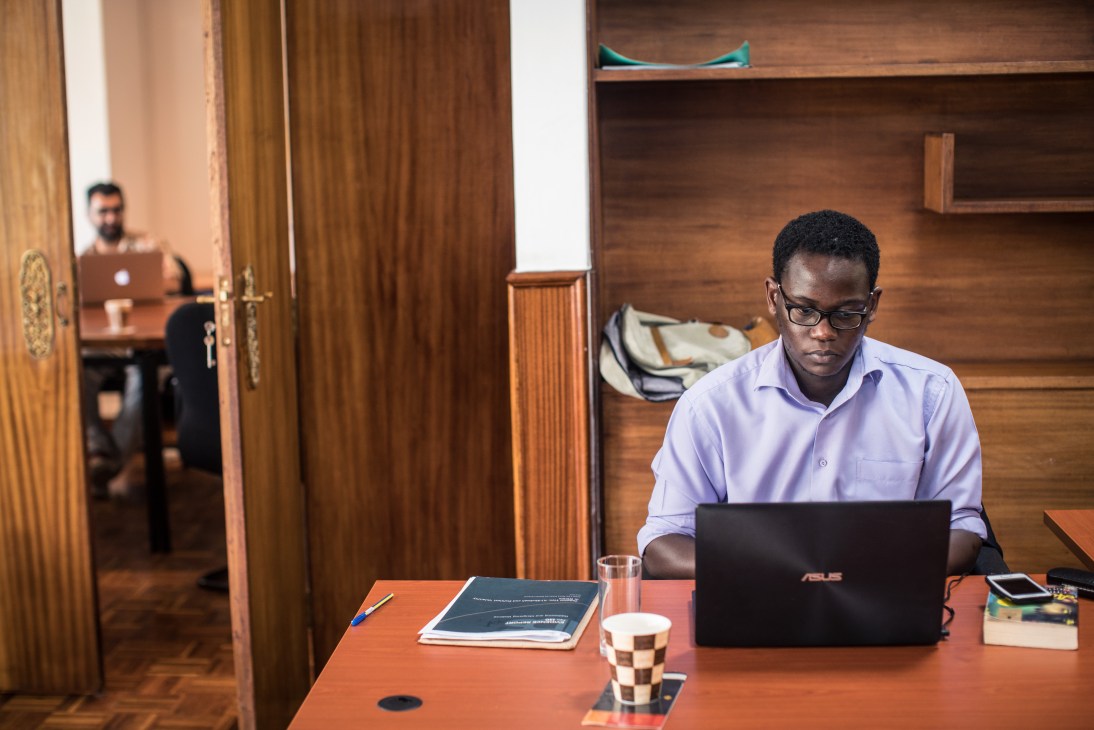
Earlier this year Sahan Research revealed that Isis had manufactured and used chemical mortar shells against Kurdish fighters and civilians in Iraq and Syria. The investigation – conducted together with illegal-weapons tracking group Conflict Armament Research – marked a step-change for the young organisation.
Sahan was set up in 2012 by former Canadian soldier and UN investigator Matt Bryden, Belgian arms expert and ex-paratrooper Emmanuel Deisser and Abdirahman Osman Raghe, a researcher and former Somali government official. Since then its niche has been as a Somalia and Horn of Africa specialist but its knowledge of Islamist groups and terrorism, chronic civil war and state-building means its expertise is in broader demand.
The research in Syria and Iraq is a sign of that intention to expand. So is a recent investigation into the organised criminal gangs smuggling people from Eritrea, Somalia and Sudan to Europe. Sahan’s payroll is also expanding, with 81 people now on staff and plans to swell to more than 100 in early 2016. The think-tank sinks its consultancy profits – it turned over €2.8m in 2015 – into pioneering research. “Sahan” is a Somali word for a scout or pathfinder; it’s the person sent ahead of a nomadic group to spot trouble and find the best way forward. “That’s what we want to do,” says Bryden. “Not just look at problems and provide analysis but provide solutions as well.”
Notes
One step ahead
Director: Matt Bryden
Educated and raised in Canada, Bryden moved to the Horn of Africa in the 1990s. Working first as an aid worker and then a political analyst with the International Crisis Group, he became fluent in Somali. Before founding Sahan, he also headed a team of UN investigators engaged in monitoring the arms embargo against Somalia.
Five issues Sahan Research is watching in 2016:
- Politics. Somalia’s political transition in 2016 and beyond.
- Terrorist groups. The growth of Al-Shabaab as both a regional and international threat.
- Counter-terrorism. Stopping the spread of violent extremism among young people in east Africa and the Horn.
- Weapons. The mass production of improvised explosive devices by Isis in Iraq and Syria, including the development and use of chemical weapons.
- Human-trafficking. Monitering aggravated smuggling between the Horn of Africa and Europe.
Real Instituto Elcano
Location: Madrid
Founded: 2000
Staff: 30
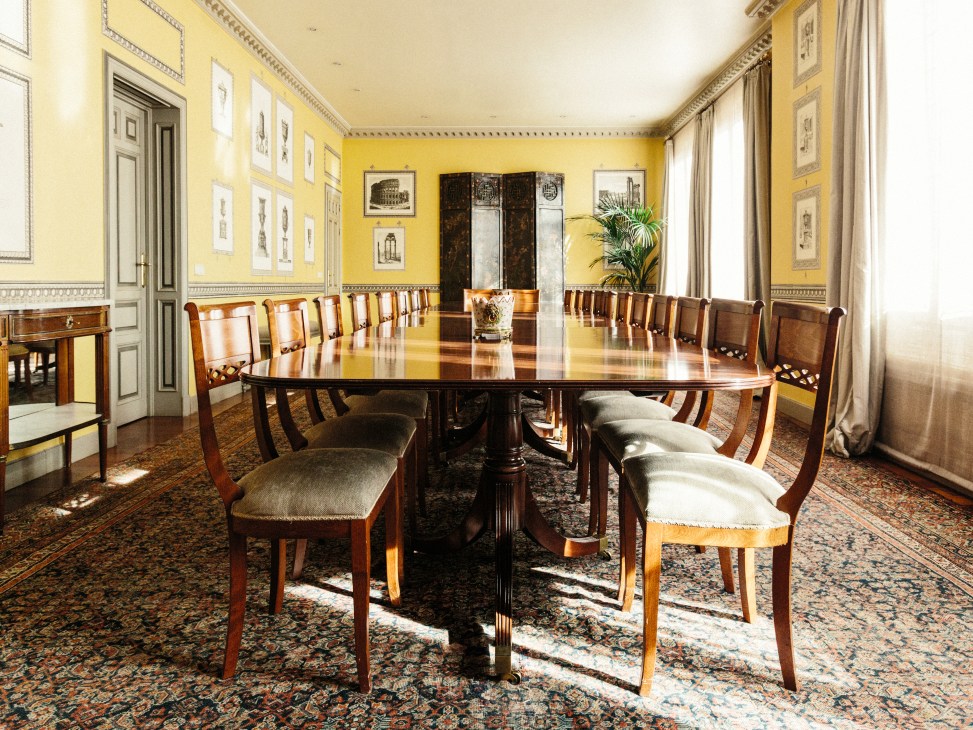
When Spain’s US-friendly prime minister José María Aznar spotted the prevalence of think-tanks during a visit to Washington, he wondered why Madrid lacked such institutions. Shortly after, in 2000, he set up the Real Instituto Elcano to provide the government and Spain’s biggest multinationals with a policy instrument to inform the country’s transformation. Fifteen years on, Spain’s economic isolation has given way to expansion: it now invests more in Latin America than China, fuelled by analysis conducted at the institute.
Real Instituto garners its €4m of funding from the corporate giants that make up its board of trustees, a compelling group from Repsol to Renfe, Iberdrola to Inditex. Also on the board are government ministers and three of Spain’s former prime ministers. “It’s an unusual structure but we define our own interests,” says director Charles Powell.
Despite the imposing make-up of the board, he maintains the team of 30 researchers and administration staff is not subject to corporate or political interference. A network of academics, scientists, ngos and journalists give teeth to analysis and collaborations. “We are often asked how companies benefit from being associated with us,” says Powell. “There are intangibles such as prestige but when Repsol was expelled from Argentina, we were right there to argue the case. We’re here to defend the national interest.”
Notes
Wise investment
Director: Charles Powell
UK-born Spanish citizen Powell was promoted from deputy director of research and analysis to director in 2012. He’s since increased collaboration with EU and Latin American counterparts and strengthened Elcano’s non-partisan credentials. “We’re more transparent than ever and future moves towards further depoliticisation will aid our credibility,” he says.
Five issues Real Instituto Elcano is watching in 2016:
- Catalonian secession. The stalemate will continue until a new central government initiates constitutional reform.
- Chinese slump and Latin America. China’s declining investment in the region could prompt big political change.
- Algeria. It’s incredibly opaque, has the highest military spending in Africa and the 78-year-old president has made few appearances of late; a potential powder keg.
- Cuba. Expectations generated by the opening up of relations have not been matched in reality but Spain’s longstanding presence endows companies with insight on doing business in Cuba.
- Middle East and North Africa. The region is in flux with a deep crisis of expectations.
Asia Global Institute
Location: Hong Kong
Founded: 2015
Staff: 5
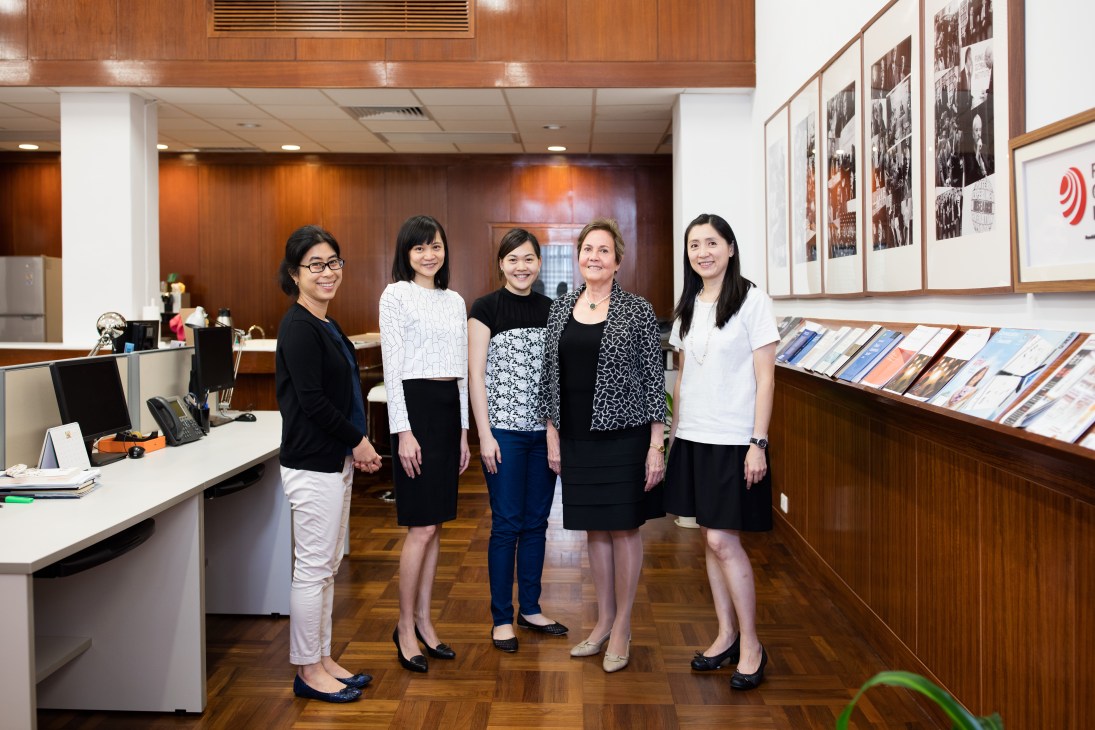
A new think-tank that focuses on Asian economies shouldn’t have much trouble finding issues to keep itself occupied in 2016. At least, that is the hope of the Asia Global Institute (AGI), which opened its doors in July 2015. All new think-tanks tend to worry about how to build their credibility but the AGI should be fine in that regard: Nobel laureate in economics Michael Spence will be overseeing its research.
The think-tank was also formed in partnership with the prestigious University of Hong Kong (HKU). AGI board member Barbara Meynert says the decision to partner with HKU was simple: “Either we build a think-tank and wait decades for it to grow or we become a part of a larger organisation.”
With a staff of just five, the AGI is testing a newer, leaner model of think-tank. This is something that has been possible through its relationship with HKU, which brings access to notable professors and a new space in the university’s main building, a century-old Edwardian Baroque-style structure.
The scope of the AGI’s research will be expansive. The think-tank will naturally delve into Chinese trade and the country’s finance issues, such as shadow banking and the internationalisation of the renminbi. However, the institute’s interim director, Professor Tao Zhigang, says that the AGI will also have a broader geographical remit – very much in keeping with the name above the door.
Notes
Economy class
Interim director: Professor Tao Zhigang
Professor Tao became interim director in October 2015. A veteran of the university, he is a conduit between think-tank and faculty and, he says, “a product of globalisation”. Shanghai-born and raised, he completed his economics PhD at Princeton University before moving to Hong Kong in the 1990s.
Five issues the AGI is watching in 2016:
- Digital economy. The mobile internet is transforming business models. How can it help Asian exports?
- Trade and investment. The Trans-Pacific Partnership agreement has enormous potential; could other bilateral trade-and-investment agreements be far behind?
- Sustainability. The rise of China and India has taken a toll on the environment; energy consumption should not be forgotten simply because the economy is slowing.
- Finance. Emerging markets are anticipating the US Federal Reserve raising interest rates; how can financial institutions and central banks support the global economy?
- Macroeconomics. What impact will China’s new Silk Road and other big projects have on its regional neighbours? Is everyone travelling in the same direction?
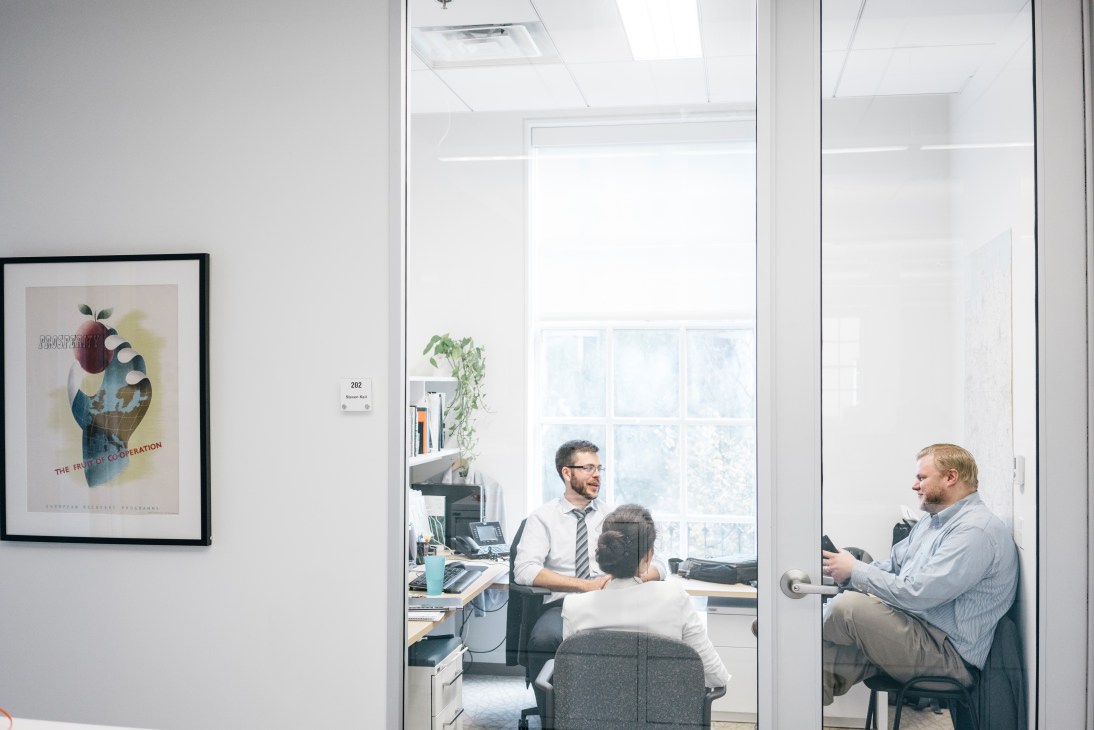
German Marshall Fund of the United States
Location: Washington
Founded: 1972
Number of staff: 121 employees; 42 fellows
The German Marshall Fund of the United States (GMF) centres its operations around the idea that what happens on one side of the Atlantic has implications for the other. The memorabilia at its Washington headquarters harks back to the Marshall Plan, the US-funded recovery scheme for Europe after the Second World War and the inspiration for the GMF’s founding. A West German grant established the foundation in 1972 to commemorate the European-US co-operation of the 1948 programme.
About 15 years ago, the GMF shifted from a single-issue foundation to a multifaceted think-tank with three areas of focus: a fellowship programme for US and European leaders, a civil-society programme that hands out grants and a policy-research arm. It has a presence in seven cities outside of the capital, including Berlin, Paris and Brussels. Its funding has diversified from the days when German state money first got it off the ground, with $28m (€26m) in income last year from a combination of private and government donations. Just as Europe has changed since the days of the GMF’s founding, so has the institution – but the spirit of its mission remains the same. Director of urban and regional policy Geraldine Gardner says: “We want to understand the ongoing conversation in a particular policy issue, within the US and European context, and then be able to translate those insights into what would be relevant for either the US or European context.”
Notes
Marshall Spirit
Director of urban and regional policy: Geraldine Gardner
She brought her urban-planning expertise from the DC mayor’s office to an international audience when she joined gmf in 2012. Gardner’s programme operates on the principle that policymakers from around the world can learn a lot from their peers on economic and sustainability matters.
Five issues the GMF is watching in 2016:
- European challenges. Shifting obstacles, including an influx of migrants and Greece’s debt crisis, will require research on how to adapt to these new challenges.
- European security. Russia and its actions in eastern Europe will change the nature of alliances such as Nato.
- Asia Pacific. How will the region’s changing politics, economics and defence affect the future of trilateral US-European-Asian relations?
- Cities and urban policy. At the cutting edge of change and innovative policies, how can cities in the US and Europe learn from one another?
- The US presidential election. The next occupant of the White House will re-evaluate the country’s position in the world, including its European relations.
Portrait of a nation
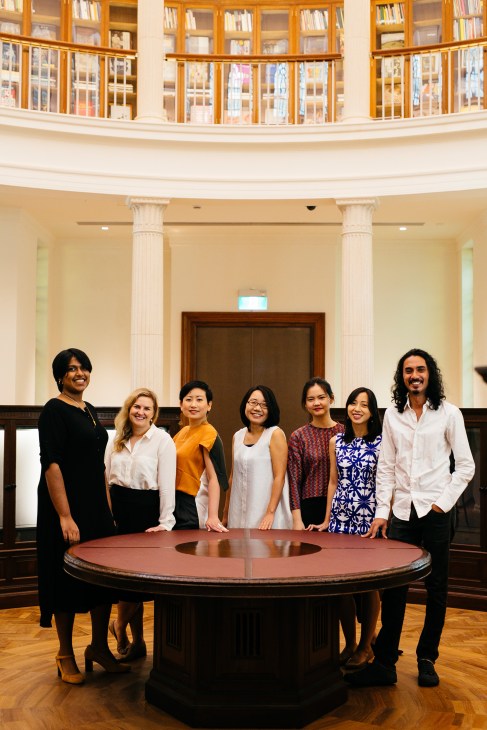
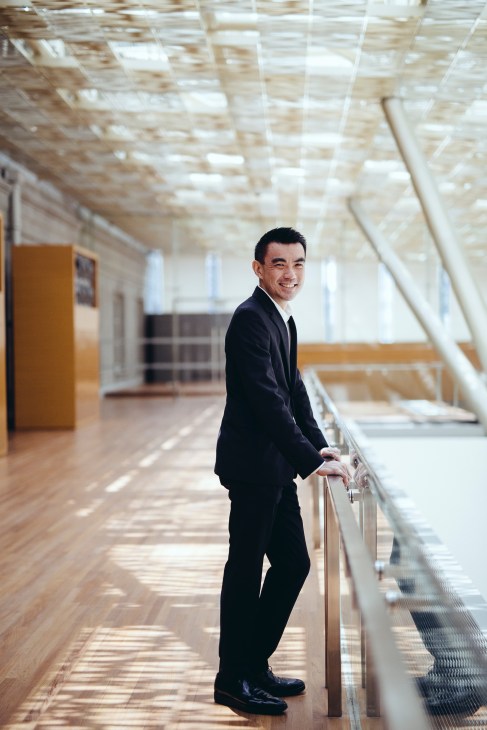
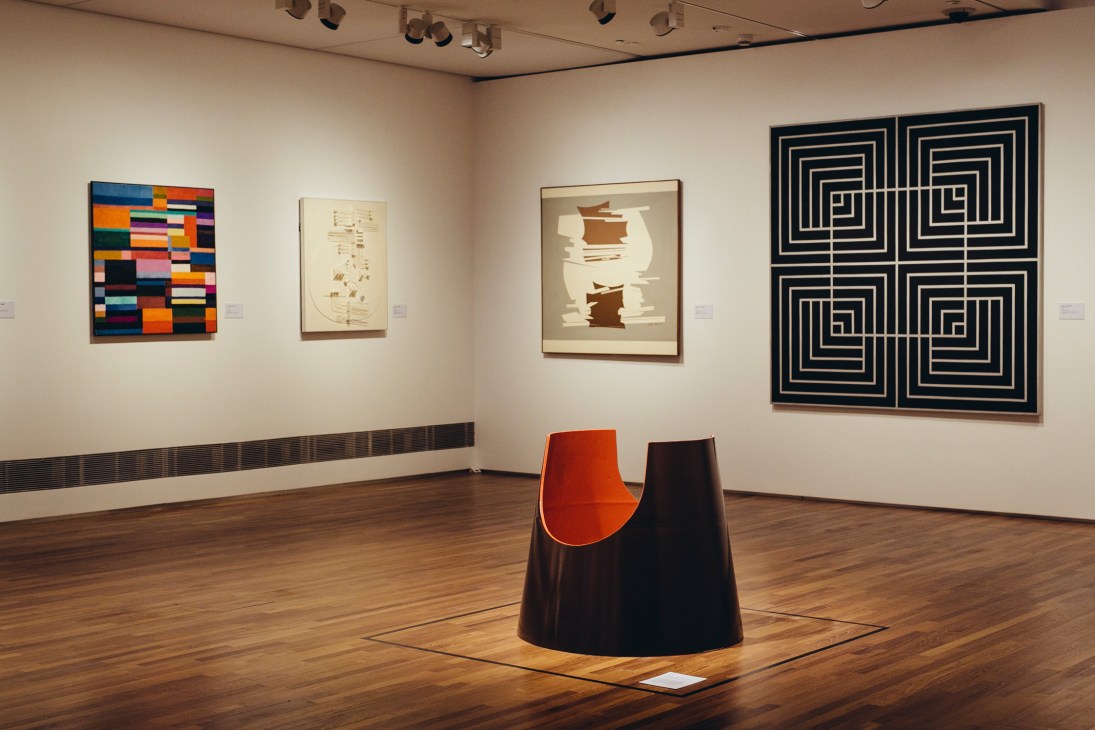
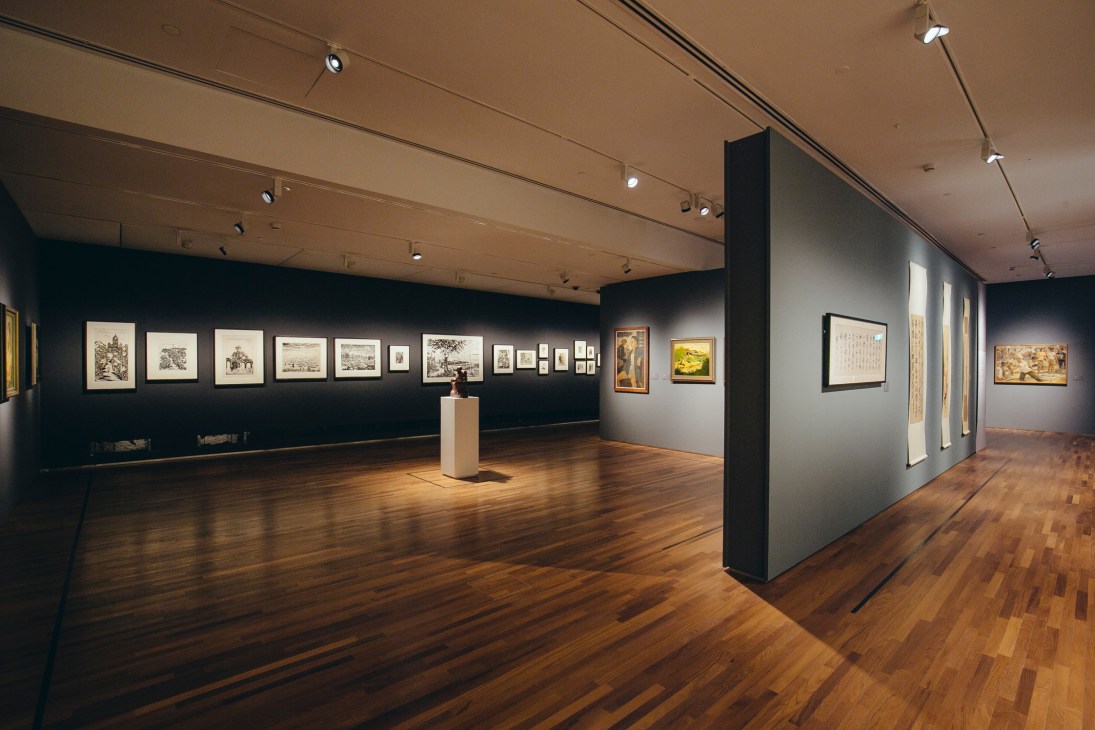
Whether it is the Tate, the Met or Musée d’Orsay, art galleries play a big role in contributing to the cultural capital of the great metropolises – and countries – to which they belong. So when the National Gallery Singapore opened its doors in November 2015, it was a reflection of a nation’s ambitions after 50 years of sovereignty. The museum holds the world’s largest public collection of Southeast Asian art from the 19th century to the present – a proclamation of Singapore’s aspiration to be the region’s artistic mecca.
“The National Gallery Singapore aims to be a leading visual-arts institution,” says Eugene Tan, the gallery’s director. “We want to create a dialogue between the art of Singapore, Southeast Asia and the world.”
The gallery, born out of a government policy paper, is the latest project in the country’s efforts to shed its sterile image as a commercial hub fuelled by office drones. The Renaissance City Report, released in 2000, looked at “internationalising the Singapore arts scene”. Unlike the Singapore Art Museum, founded in 1995, the National Gallery has a Southeast Asian rather than a national perspective, bringing together a collection of seminal works in a way that has never before been attempted on such a scale.
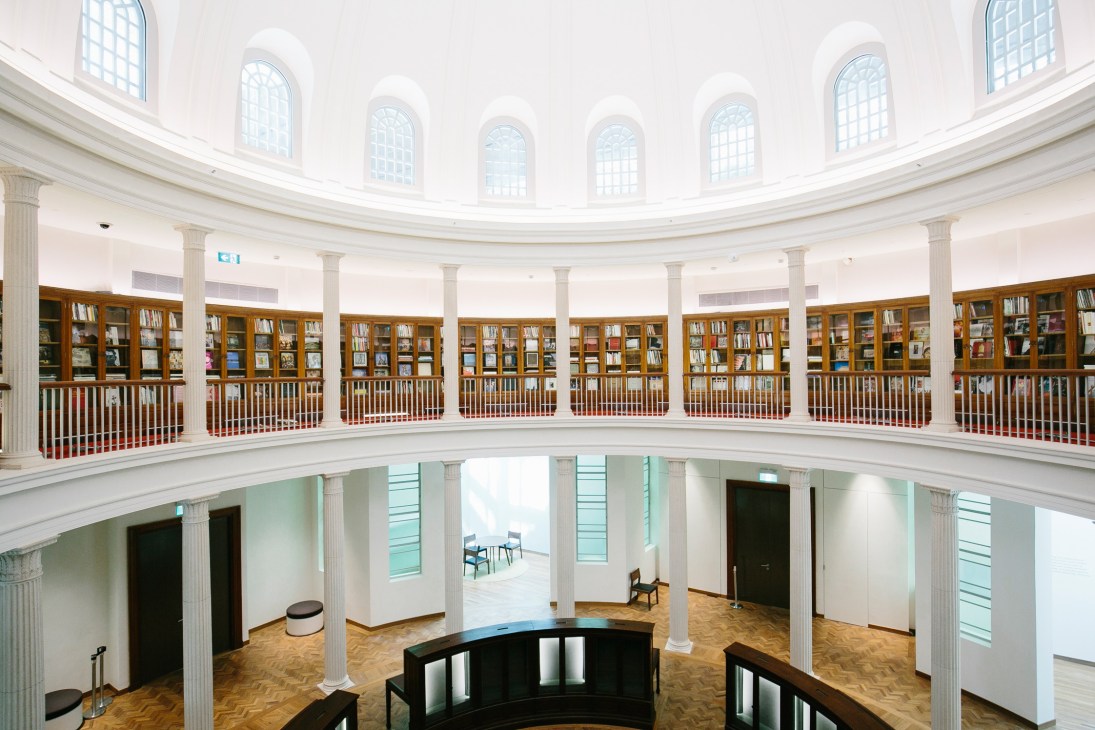
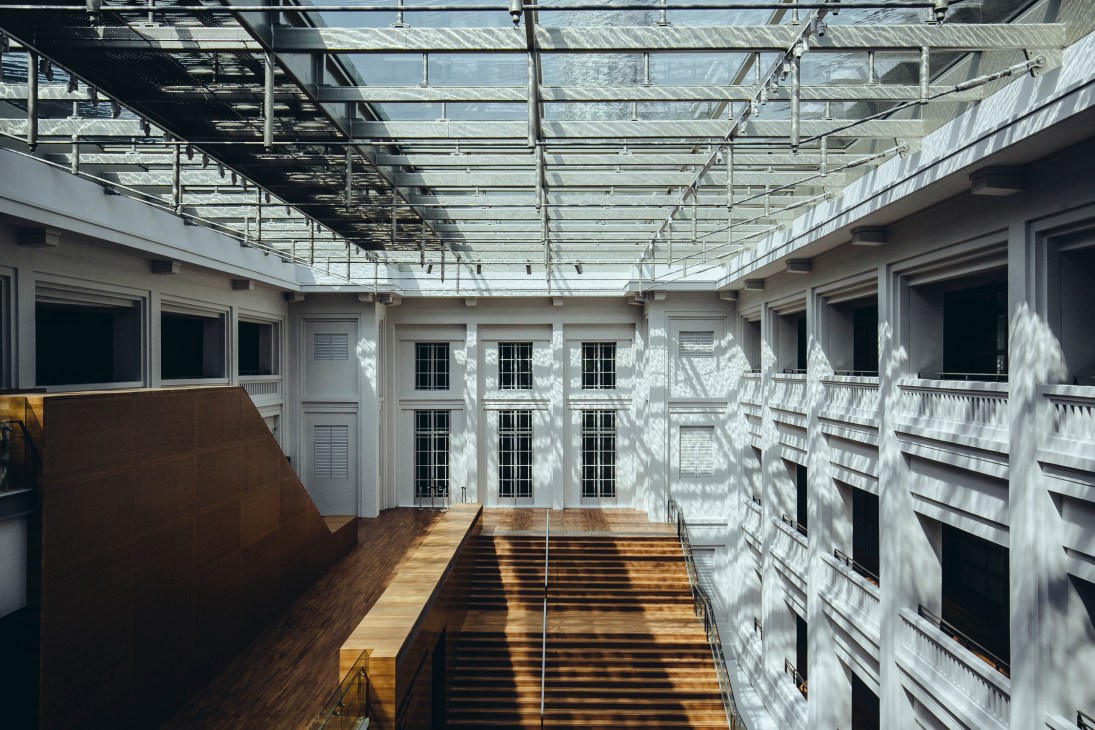
Finding the right venue was the first task. For the gallery to resonate with citizens and travellers alike, it had to be accessible while possessing a gravitas befitting the region’s great masterpieces. Eventually the former site of the supreme court and city hall was selected. “The brief was to inject something new and modern into these structures, which have formidable histories,” says architect and facilities director Sushma Goh, alluding to the neoclassical buildings’ fame as the spot where Japan relinquished its occupation of Singapore at the close of the Second World War.
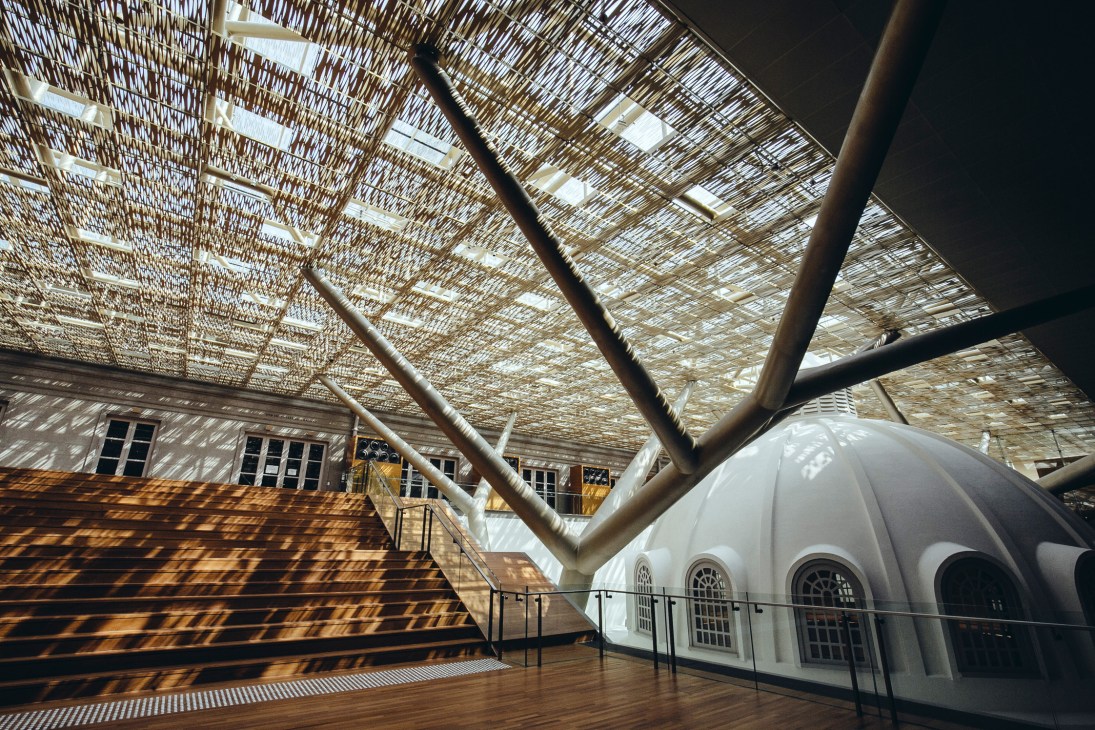
Paris’s Studio Milou worked with Singapore-based CPG to transform the two grand civil-district buildings into a single art space. “This is precious real estate for the nation,” says the gallery’s CEO Chong Siak Ching, who makes up for her lack of a professional art background with years of experience as a property developer. While the National Gallery is not her biggest project financially, she says it’s the most personal. The final result incorporates state-of-the-art architectural interventions. Two sky bridges connect the buildings and a “tree” has been planted in between: a metallic column that springs from the ground and expands into a vast aluminium-filigree canopy, which provides shade for visitors while allowing for sunlight to flood the space. “They look beautiful but they’re actually a very solid structural solution to hold up the roof,” says Goh. “We didn’t want too much resting on these old buildings.” The result is spectacular; this is Singapore’s response to the Louvre’s glass pyramid and it is a work of art in itself.
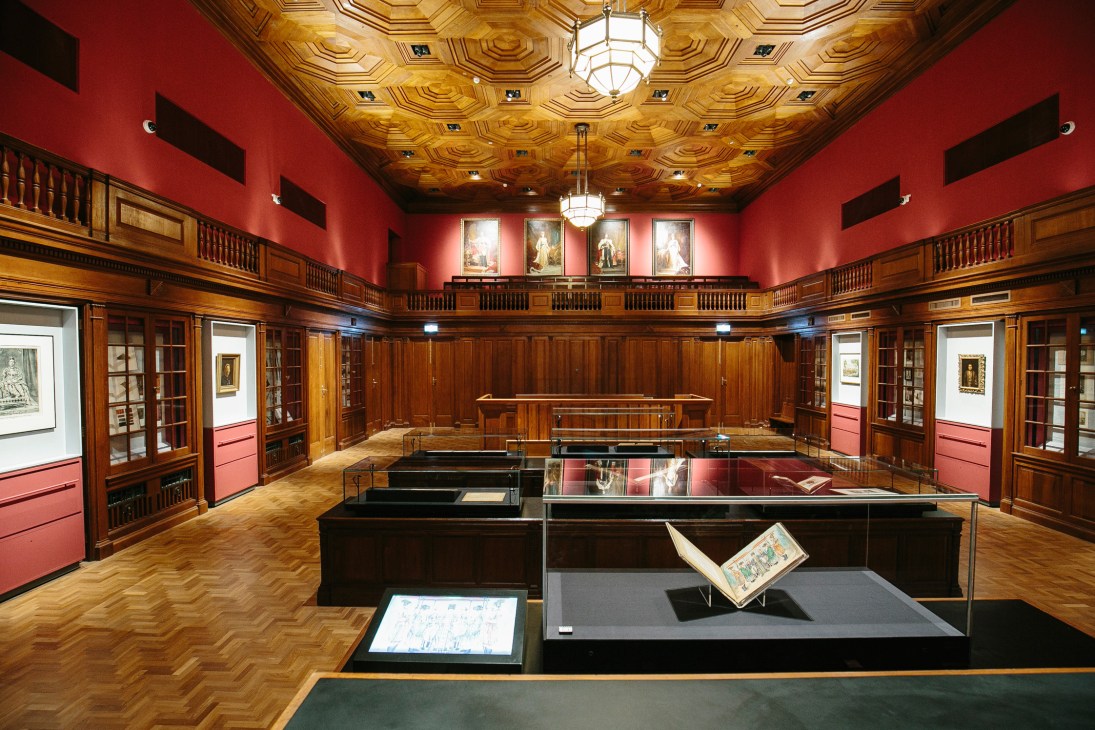
Other nips and tucks include the installation of skylights to suffuse the interior with natural light, plus ample natural-wood surfaces that contrast with the grey of the dominant plaster. Meanwhile, Singapore-based design agency Lekker has given the old courtroom benches a contemporary update to create public seating. The stereotype of big-government art galleries being underfunded, crummy and dim places has been dispelled; the National Gallery is a breath of fresh air.

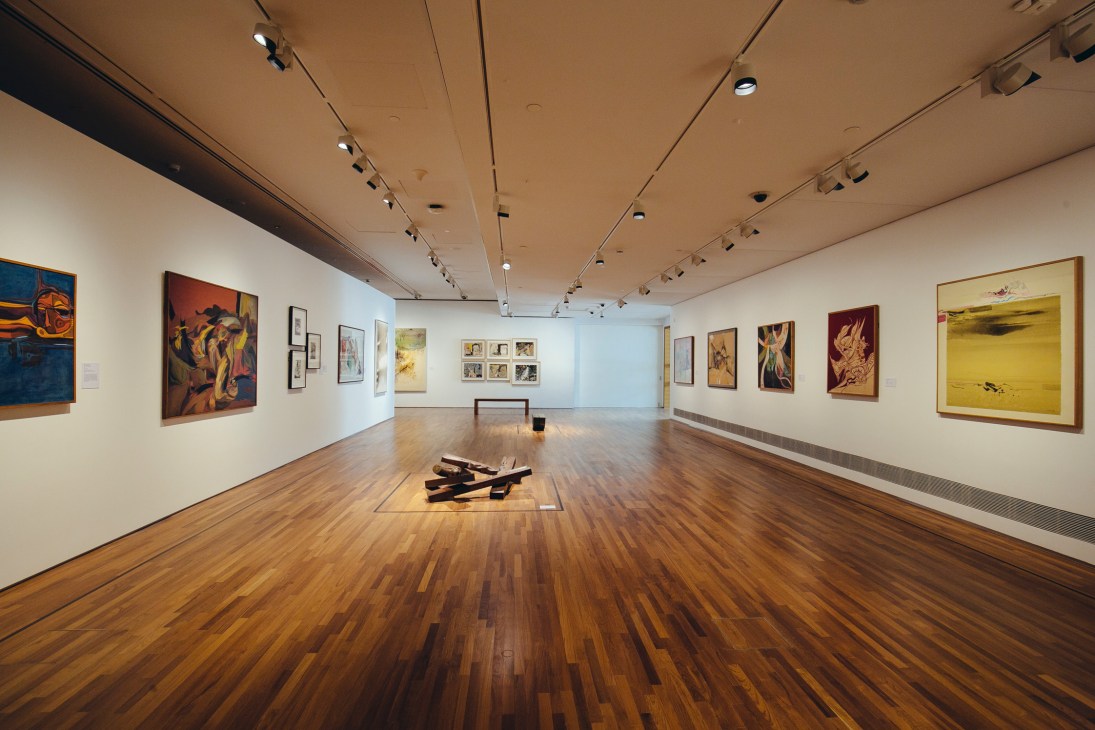
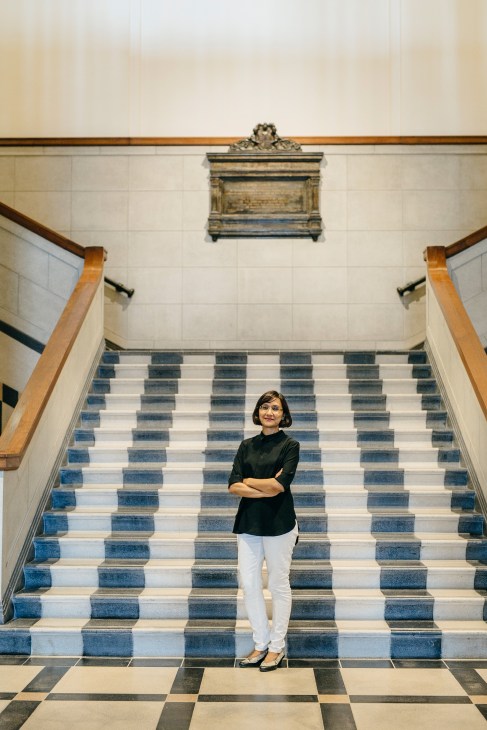
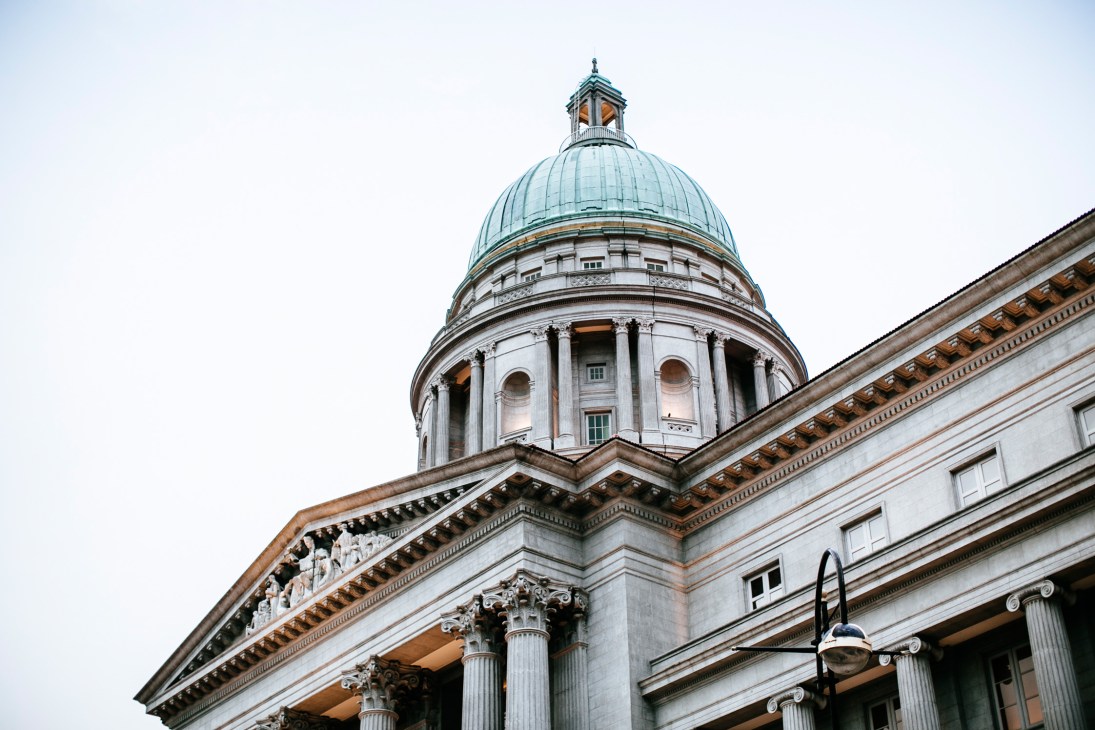
The best form of advertisement may be word of mouth but a trinket or two for friends back home never hurts. Singaporean hospitality entrepreneur Loh Lik Peng has collaborated with design agency Foreign Policy Design and retail-consultancy firm Luxasia to smarten up the museum giftshop. Their outlet, Gallery & Co, sells reprints of famous works along with unique souvenirs, from tote bags to coasters created by Singaporean designers exclusively for the gallery.
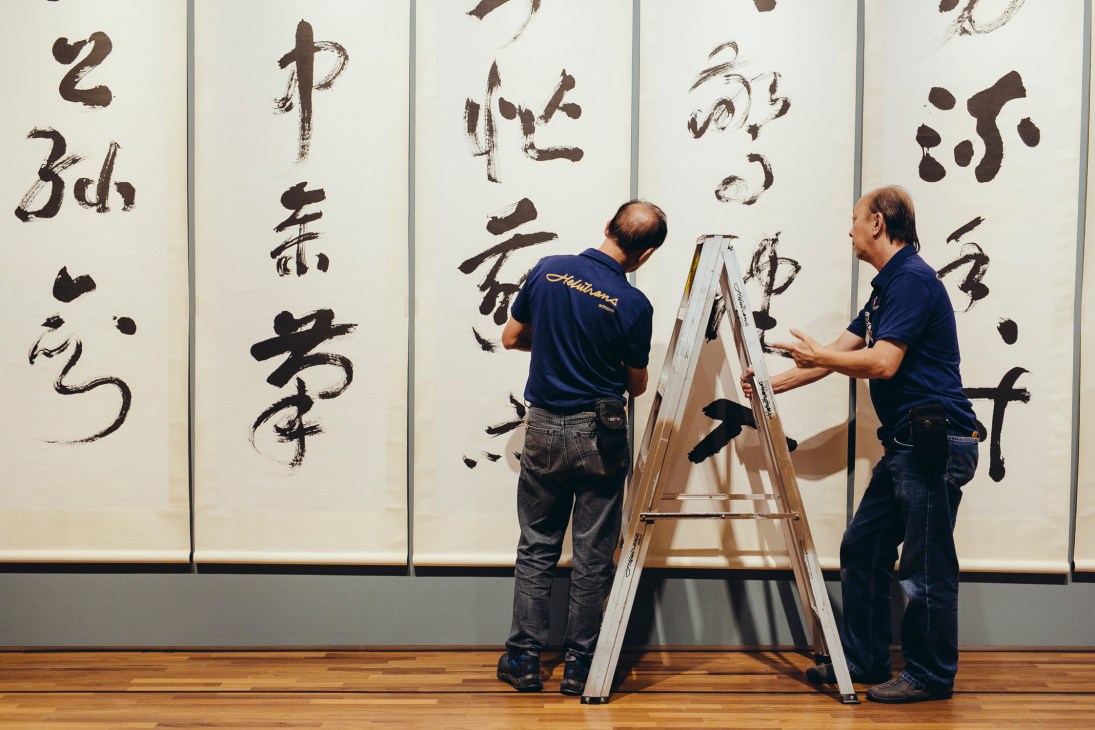
Many will visit the gallery based on the architectural and historical merit of the buildings alone but it is the artworks and exhibitions that will determine sustained success. The National Gallery comprises two permanent exhibitions: the Singapore gallery and the Southeast Asian gallery. Curatorial director Low Sze Wee turned to other museums and private collectors across all 10 Southeast Asian countries – and further afield to institutions such as Japan’s Fukuoka Asian Art Museum and Amsterdam’s Tropenmuseum – to borrow pieces that would flesh out the exhibitions.
Laid out chronologically for a comparative approach and with works from different nations displayed side by side, the pressing issues of each epoch become immediately identifiable. “We didn’t want to just present the national frameworks; the home countries are already doing a very good job of that,” says Low. “More interesting is how common themes and interests, such as the complex relationship the colonies had with their respective colonialists, link artists from across the region.”
Finding the key masterpieces to showcase is an ongoing process that has curators spending years zipping back and forth across the subcontinent to coax institutions such as the Vietnam Fine Arts Museum and the National Museum of the Philippines into parting temporarily with their national treasures. Some of these, such as “Christian Virgins Exposed to the Populace” by Filipino artist Félix Resurrección Hidalgo, are on renewable one-year leases.
“They trust us with the work; it’s more a case of whether the national galleries in the other countries can do without them,” says Low, adding that the gallery wanted loans spanning years instead of the usual three to four months. “We want our visitors to have time to get acquainted with the iconic pieces of the region.”
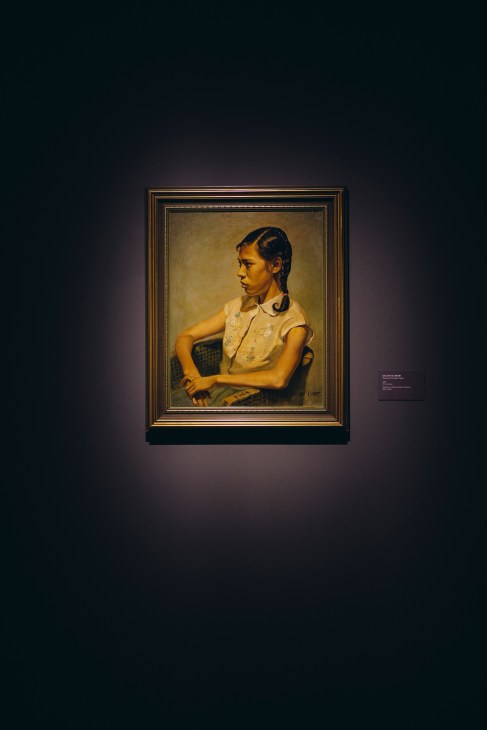
There is an oil-on-canvas work on display that encapsulates what the gallery is trying to achieve. Scribbled on the blackboard in Singapore social-realist painter Chua Mia Tee’s “National Language Class” is the following phrase: “Siapa nama kamu?” It means “What is your name?” in indigenous Malay; apt, as the issue of regional identity is exactly what the gallery sets out to address.
That task poses its own challenges but, while the Singaporean authorities are known for heavy-handed censorship, curator Adele Tan points to an installation that flirts with gender identities. It is an indication that the gallery has been given more leeway to push boundaries in a country where homosexuality is technically illegal, although the law is never enforced. That said, government-affiliated institutions have a history of buckling under pressure from public complaints; the test is whether such works are still on display in a year’s time. Furthermore, compared with the New York Met’s gargantuan vault of two million artworks, the gallery’s collection of nearly 10,000 looks anaemic. More sculptures and installations are needed and, while the curators are working to bolster the 19th-century collection, success is also dependent on its regional partners; will they continue to loan Singapore their best works? And will the gallery’s young staff be too inexperienced to be taken seriously by the art world’s old timers?
Whatever the outcome, the institution has fixed its sights on opportunities. “By situating the narrative in the region within a complex, cosmopolitan outlook the gallery will draw cultural tourists and academics alike,” says Bridget Tracy Tan, director of Southeast Asian arts at the Nanyang Institute of Fine Arts. “It’ll expand on the dialogue defining Southeast Asian art.” A co-curated exhibition with Paris’s Centre Pompidou is in the pipeline.
The dearth of scholarship on regional art gives the National Gallery Singapore a blank canvas to carve its own niche as the destination for all things artistic in Southeast Asia. Singapore – a country that takes pride in having engineered its own economic miracle – hopes it can replicate this success in the world of art.
Notes: More Asia collections
While the National Gallery Singapore is the first of its kind to take on a regional approach, there are other institutions that offer deep insights into their national art histories.
Vietnam National Museum of Fine Arts, Hanoi. This is set in a colonial-era house and showcases a mix of historical, modern and contemporary works.
Agung Rai Museum of Art, Bali. Located in Ubud on the island of Bali, this is the place to go to peruse masterpieces of Balinese art, ranging from traditional woodworks to batik.
National Art Gallery, Bangkok. Housed in the former royal mint, the key works from the Thai national art collection from the classical period to the present can be found here.
Thinking ahead
1.
Living in the arboreal world
by Lars Mytting
Notes: The sounds, the smells, the reassuring tedium: nothing is more rewarding than the slow and leisurely pursuit of chopping wood.
Neither Rome nor Paris were built in a day and neither will disappear if you get there one day later. Perhaps by steam train. Or by foot. Anything really slow will do. Speed is the enemy of admiration; the constant acceleration of our existence makes us alpha predators of life.
As an antidote I advocate chopping wood, preferably in the Norwegian forests. Unhurried, tedious work. A few times during the firewood harvest and always on the first day, I like to use a bow saw. A pure, analogue instrument. Two parts: the frame and the blade.
I walk until I find a tall but stout tree, one that is my age or older. I might have walked by it when we were the same height. Me on my way to school, the tree on its way towards the sky. Cutting it down is heavy labour, dangerous too. I sweat, I struggle.
Not many people hear a tree falling these days. It is an astonishing sound. And it falls slower than you would expect; it takes seconds because its first and final journey is stalled by the resistance of the branches against the air. The sound is long and creaking initially, followed by a great whoosh before it lands on soft winter snow.
This is the sound of the real world. This is work at its finest, not something we rush through with the goal of relaxing afterwards. Here, work is the goal – and the slower the better. There is no stopping point, no finish line, just more room for admiration of the moment and of the tree. Nothing can touch its majesty in the air nor on the ground. It still offers hours of heavy and rewarding work. Hauling it to the trailer, unloading it, cutting it and then – what I enjoy the most – the splitting.
I use an axe. Not because it is slow but because it is dangerous. I cannot let my mind wander; if other thoughts intrude the axe will embed itself in my knee. So I fix on one single, hard blow. And strangely my frustrations go into the firewood; and next winter (when it will be used for precious heating) into the stove. It is rewarding work because it is manual and it takes time and therefore I put a part of me into it. I can see the result, lift the result, smell the result, use the result.
So many of us have jobs with a great separation between what we do and what puts food on our table. Our work may not be tangible at all; it may only exist on a spreadsheet. Not so here: the weight of the log is equal to my reward. Double the labour, double the reward. I am present in the moment and I want to go on; it is repetitive but never boring, and when I split a log it is final. Most other things in life demand constant improvement but at the chopping block every log is different and each is good – and I want to keep going.
It is a big heap of wood now. I stack it loosely so that air will circulate. Then comes spring and then summer; I step back and know that nothing more can be done. The seasoning cannot be rushed. Later the stack will yield the odd creaking sound as it shrinks. I do not have to visit it every day to see the difference.
I cannot assist it nor does it need help. It prepares for winter by itself, the different logs like geological layers of my labour. It grew slowly and is to be consumed slowly: its value will not deteriorate. It is a protest against haste. Because speed is a currency always in deflation: things that change fast will change again soon. Not so with a woodpile.
ABOUT: Lars Mytting, writer:
A Norwegian author and journalist, Mytting has written three critically acclaimed novels that have been translated into more than 10 languages. His latest work, Norwegian Wood: Chopping, Stacking and Drying Wood the Scandinavian Way, is published in the UK by MacLehose Press and in the US by Abrams.
2.
Home is where the heart roams
By CM Patha
Notes: A new breed of foreigners known as ‘roamers’ are actively seeking out lives abroad – and the cities in which they settle should embrace them.
When it comes to citizenship, most politicians are stuck on an idea from the 1960s: “Ask not what your country can do for you; ask what you can do for your country.” These legislators have no clue what to do with an entire group of people who respond, “I love my country but I wouldn’t want to actually live there.”
There are 232 million people living outside their home country today. While many of these people are immigrants, refugees and expats, there are millions of people who live abroad in a way that isn’t explained by those narratives. Highly educated and globally minded, these foreigners make an active choice to live internationally so they can find better careers, more intellectual stimulation or simply more adventure abroad. I call these people “roamers”: a new breed reassessing where and how they live – and it is having a profound impact on cities, societies and economies.
Though passports and citizenship are meant to imply certain loyalties, predispositions and roots, roamers have a mobile notion of home. While immigrants build ties to countries and may be willing to wait five or 10 years to become fully-fledged citizens, roamers build indefinite ties to cities. Unlike expats, roamers don’t necessarily expect to repatriate, at least not for good; they pursue professional or personal goals unfettered by national borders. Today people increasingly say they’re “based” somewhere. In the same way that religions have a pious and secular divide, we may be in the middle of a nascent split between fervent patriots on one side and agnostic citizens on the other. In the same way you’ve probably heard someone say, “I’m a lapsed Catholic,” might people soon confess, “I’m Canadian but I’m not practising”?
This has left national governments scratching their heads; many countries don’t even keep track of how many of its citizens hold citizenship elsewhere. Cities on the other hand, could be the big winners here if their leaders have enough foresight to capitalise on the trend. Because in the same way that the ancients were citizens of city-states, roamers might be going full circle back to the earliest model of citizenship – at least emotionally.
Take, for instance, Taiwanese native Hsin, a self-identified roamer. Hsin lives and works in Germany but she longs to return back to where she feels most at home: Boulder, Colorado. Despite spending the first 20 years of her life in Taipei, when she moved to Boulder to finish her undergraduate studies something clicked. “It was like I was finally back in my own element,” she says. Importantly, Hsin’s affinity is city-specific. “I felt at home enough to call myself a Boulderite but I wouldn’t say I felt American.”
Forging a new and possibly temporary relationship with a city is more accessible than developing a bond with a country. It’s relatively straightforward to become a Londoner; becoming English is something else entirely. One can enjoy living in Beijing without having a similar affinity for China. The US is a much denser, more emotive concept than New York; the country has a national anthem, a constitution and an oath of allegiance. The US goes to war; the Big Apple does not.
Cities, for their part, are beginning to recognise the opportunity that comes with attracting large numbers of foreign-born residents. All global cities rely on roamers to feed their hungry economies. The world’s top 30 cities now account for roughly 18 per cent of the planet’s GDP and they need the professional skills that roamers bring. The UK’s most pro-immigration politician is Boris Johnson, the mayor of London and a New York-born Brit, who has said that the capital’s thriving economy depends on “talent being able to migrate in from overseas”. Yet professional firms, he adds, “are finding it very, very difficult at the moment to get in some of the people who you really need to keep London’s economy going”.
Though cities might recognise the economic value of roamers, they’ll also need to acknowledge that this new way of living requires a new way of governing. A city such as Paris might be a magnet for plenty of roamers but there could be an equal number of Parisians who are themselves roaming to cities abroad. The scales may balance out occasionally; at other times they’ll surely be tipped. As the idea of citizenship becomes even looser, cities will increasingly need to react in new ways.
Looking ahead to 2016 and beyond, it would be wise for cities to do what they can to attract as many roamers as possible. This may require an innovative approach. In New York, councillors are currently considering legislation that would extend electoral rights to its one million foreign residents, who also happen to be taxpayers. Although democracy isn’t entirely predicated on a monetary exchange, it doesn’t take a huge leap in logic to argue that all taxpayers, not just US citizens, should have a say in how their New York tax dollars are spent. While the bill will certainly meet with opposition from Washington – where conventional wisdom dictates that only American citizens should have the privilege of voting in elections on American soil – that it’s being considered at all is encouraging.
But beyond high-minded philosophical assertions of universal suffrage, New York has much to gain from the move. By offering foreigners the chance to vote, New York is offering them the opportunity to form a deeper connection to the city. Many roamers are frozen out of the political process because, by virtue of living abroad, they’ve lost their right to vote in their home country. Despite court battles to overturn the law, Canadians who have lived abroad for more than five years are not allowed to vote at home; registered Australian voters lose their voting rights after six years and New Zealanders must set foot on home soil every three years to keep their voting privileges. But for those roamers who are still able to vote in their home country – including Americans, the Japanese and recently departed Brits – an impressive 58 per cent still take part in the ballot in spite of all the red tape involved in voting from outside the country.
If New York extended voting rights to foreigners it would give roamers more than an opportunity to mark an “X” on a ballot every four years; it would give them a reason to buy in. It would send foreign residents an implicit message: “You live here, you pay your taxes here, you deserve a voice. Welcome to the club.” Invite a new member to your club and you can be sure they’ll be the first to volunteer for a committee. Like our Taiwanese friend Hsin, New York-based roamers may never feel American but the right to vote invites them to take ownership of their city – be that by donating money to a political party, investing in a business or volunteering in the community.
If New York passes the bill in 2016 it will be a marked step toward recognising the place foreigners have in global cities. The move could inspire other cities to follow suit, or at least spark a much-needed debate about non-citizen voting. Roaming is a growing phenomenon and whatever New York decides won’t stop more and more people moving abroad. But cities that are early adopters of welcoming and courting roamers will ultimately be the big winners in the global race for talent.
ABOUT: CM Patha, author:
Born in Canada, Patha has lived in the US, Singapore and the UK. Her book Roaming: Living and Working Abroad in the 21st Century is out in January 2016.
3.
Whatever happened to Brazil?
by Eduardo Graça
Notes: Despite a drubbing on home turf in 2014, the World Cup created a feel-good factor that swept Brazil. The cost of the Olympics may prove an own goal.
In August 2016, Rio de Janeiro will host the Olympics, the first to be held in South America and probably the biggest event in its history. The clichéd image of my country is once again travelling the world: samba, Carnival, women enjoying our beaches in tiny swimsuits and even the return – if we are lucky – of “the beautiful game”. Just two years after hosting the World Cup, Brazil has the opportunity to use perhaps the greatest soft-power tool in the sporting world to sell its brand globally.
There is just one caveat: what seemed like a golden opportunity back in 2009 – when the South American giant won the bid – has proved a bad omen. The exposure that both the World Cup and the Olympics have offered the country has instead focused a painful spotlight on social inequalities, political corruption and misspent resources. No one doubts that the Olympics will be a great celebration “Brazilian style” – but one that will leave a bitter taste. After the party is over, my country may well find its hopes of becoming a world power further away than ever.
It all looked so promising in the mid-2000s. As the world’s leading producer of sugarcane, coffee and oranges, Brazil benefited like no other country from the commodity boom throughout the region. Massive oil reserves were discovered in Rio state’s waters promising long-term prosperity, while state-sponsored relief programmes lifted 40 million people out of poverty. Impressive as this was, one doesn’t need to be Cassandra to see that circumstances have shifted rapidly. With the economy slowing, the once aptly named “country of the future” is left pondering just how auspicious that future is going to be. What the world will see in Rio in August – if it really pays attention – is a tale of lost opportunities.
The retraction of China’s economy – the main destiny of Brazil’s commodity exports – and a series of economic mistakes by president Dilma Rousseff’s administration offer a scenario that makes my fellow countrymen rightly ask: what’s the use of hosting the Olympics anyway? But before we pen a doomsday prognosis, perhaps it’s worth looking at the example of the World Cup. Despite Brazil’s dire on-pitch performance – losing in humiliating fashion (7-1) to the Germans in the semi-finals – away from the stadiums it wasn’t as bad as initially feared, championed by international media (including the New York Times) as a great success. Sure, it was hard to sweep some of our chronic problems under the carpet – including the ever-present social inequalities and poor infrastructure – but protests proved weak and the population ultimately enjoyed the event. It was futebol, after all.
But the Olympics are another game. Unlike the World Cup, they are concentrated in one city, diminishing the potential economic impact for a country as vast as Brazil. In several previous incarnations, the Olympics have proved a negative investment and this time should be no different: not good when Latin America’s largest economy is set to retract further still during the course of 2016.
The so-called feel-good factor from Brazil in 2014 will not be repeated either. But perhaps the more important point is that the Olympics will do nothing to shift the status quo: Brazilians are going to continue to feel the same way about the state of the country and its political leaders. Rousseff has approval rates of just 8 per cent according to some polls – an all-time low for Brazil’s young democracy – and faces a radicalised opposition.
The massive protests that took over the streets of Brazil in 2015 – a sign of widespread frustration with corruption and the empty promises by politicians on both sides of the divide – will be even bigger in 2016, this time including hundreds of thousands of striking workers due to the recession. And while people keep occupying the streets, the elites – intellectual, economical, cultural, social, political, you name it – have remained in a state of coma, waiting for 2018 to arrive when a new general election might offer some kind of change. What everybody seems to agree with is that the Rio Olympics budget – R$7.4bn (€2bn) – seems outrageous at a time of such economic instability.
However, we shouldn’t assume that Brazil’s international-tourism capital will be the same after the Olympics. Downtown Rio will be reinvented, with a transformation almost as effective as Barcelona’s port area. The construction of two new museums – Museu de Arte do Rio and Museu do Amanhã, the latter designed by Spanish architect Santiago Calatrava – are permanent cultural gifts. A new tramway connecting the city’s main bus station to the domestic airport will help reduce the huge traffic jams just like the contentious subway system expansion that is finally bringing the metrô to the populous West Zone.
But there have been overlooked opportunities as well. The subway extension has missed out parts of South Zone – notably the key neighbourhoods of Humaitá and Jardim Botânico – which is a lost opportunity to integrate a city geographically divided by mountains and the ocean. The bike lanes that are being built all over the city are in desperate need of improvement. The plans to solve pollution issues in both Guanabara Bay and several lagoons all over the city were never concluded. The expropriation of houses by the local government, for Olympics improvements, was severely criticised by independent institutions in a city where housing is a huge problem and 20 per cent of its 6.5 million inhabitants live in favelas.
Lula da Silva, the then leader of one of the world’s largest economies – one that even surpassed the UK for a single year – and a politician that left power with huge popular support, aimed to use both the World Cup and the Olympics to reposition Brazil internationally. Corralled by the opposition and ex-allies, suffocated by the mistakes of her own economic and political teams, Rousseff is facing a completely different reality. She could try – if lucky – to use the Olympics and the well-known Brazilian penchant for a good time (maybe I’ve been swept up in the cliché too?) to alleviate the economic and political mess in which our nation is immersed. But not much more than this; the dreams of a new emerging power have been postponed until after the Games.
That’s not to say that the Brazilian dream is completely over. The ambition to become a bigger international player is still there – and the primary focus is winning a permanent seat on the UN Security Council. My country too has become more involved in peacekeeping, taking the lead in Haiti and opening an operations centre in Rio. In 2015 Brazil was also one of the key members – along with China, Russia, India and South Africa – of the New Development Bank, a rival to the Washington-based IMF and World Bank. Brazil’s own development bank, the powerful BNDES, has been financing infrastructure projects in several Latin American and African nations, exporting the Brazilian brand with some success. And its social-welfare programmes, such as the Bolsa Família, has inspired similar policies in countries all over the world that are struggling with poverty.
Despite all of this, the Olympics will prove one decisive factor: Brazil needs to deal with its internal problems before becoming a more consequential player internationally. The list of urgent measures needed to modernise the country is vast. It is also in need of a complete transformation of its weak infrastructure, highlighted recently by the environmental catastrophe caused by the collapse of two mining dams in the mineral-rich state of Minas Gerais. The human cost (at least nine people dead) and the ecological one (thousands of hectares of protected area destroyed), plus the inefficient responses from the authorities, were the saddest aspects of this global embarrassment.
It is clear now that the significant investment in both the World Cup and the Olympics would have been better spent on developing our education system, improving our public-health system and creating new programmes dedicated to eradicate urban violence. Despite important social gains, the economic boom years were not used to effectively deal with some of our main failures as a nation. Olympics are seen as either a blessing or a curse to the cities that host them: if Barcelona 1992 is always pointed out as a success story, Athens 2004 is perhaps closer to what one can expect for Rio 2016. The decision to host the Games now seems like a nonsensical affirmation of a powerful Brazil that exists only in fiction.
ABOUT: Eduardo Graça, journalist:
Graça is a Brazilian journalist based in New York. He is a correspondent for Radio France International and contributes to outlets including Folha de São Paulo and the BBC.
4.
Ancient roads take the lead
By Ray Laurence
Notes: When it comes to road-building, the Romans were the original and best. Despite the passage of time, we can still learn from the Empire’s techniques.
Travellers will experience roadworks in most parts of the planet in the coming year. In Lagos, Nigeria, “Operation Zero Tolerance for Potholes” will be in effect; in North Carolina, €675m will be spent on the Monroe Bypass; a €747m loan to Sri Lanka is set to improve 3,100km of roads; and the China Road and Bridge Corporation, following its motto “Build roads and bridges, make contributions to the society”, is in discussions with the president of Chad over new infrastructure projects. If you drive from London to Land’s End, meanwhile, you will experience the effect of €2.8bn being spent on the creation of a dual carriageway that will go through a tunnel under Stonehenge. This may all seem a 21st-century priority but perhaps building roads is just what humans do – or perhaps it is something governments think they should be doing. Historically it was the Romans who pioneered road-building across Europe, North Africa and the Middle East. Even now they continue to offer solutions to our contemporary issues regarding infrastructure expansion.
Roman roads provide a counterpoint to our current concerns over migration in Europe. Our preoccupations with borders and nations would seem alien to those living 2,000 years ago. Roman soldiers were recruited into the legions from all parts of its empire. By the second century, Roman senators hailed from North Africa or the Middle East as well as from Italy. Analysis of skeletons has shown that 30 per cent of the Roman population of what is now the UK was migrant. The Roman Empire enabled far greater mobility than we experience today with the migration rate to the UK standing at 13 per cent. The Romans, like their contemporary European counterparts, sought to control those coming in and out of their empire by directing movement. The roads provided an infrastructure of mobility – straight, efficient and enduring.
Roman roads were created for the long term. In many ways they were over-engineered with layers of compacted gravel up to two metres deep. The first long-distance road, the Via Appia, initiated in 312BC and running from Rome to modern-day Brindisi, virtually bankrupted the treasury and caused Rome to mint its first coinage to pay for the work. Eight hundred years later, this road could still be called the “Queen of Roads” and Italy’s barbarian king Theodoric even initiated a restoration programme to ensure its survival. A Roman road was fundamentally an all-weather surface that would not wear out due to time or use. Such endurance nowadays seems almost unthinkable.
Roman roads show us an ability to disregard the restrictions placed upon humans by the physical geography and climatic conditions of a region. The Via Flaminia (built in 220BC from Rome across the Apennines to Rimini on the Adriatic Sea) created a new geography for Italy that disregarded the obstacle posed by mountains. Even in the Alps we can still find milestones and outposts from military officials living in extreme conditions. In the deserts of the Middle East too, milestones commemorate the construction of a road from the border of the province of Syria to the Red Sea – the first step in the creation of the new geography of the Roman province of Arabia by the emperor Trajan (98 to 117). This ability to disregard geography seems alien to us today but with global warming and sea-level change we may need to look to Rome to inspire new infrastructure projects that deal with the extremes of climate that humans will face.
However, even Roman roads needed to be repaired and this was a priority for the most famous emperors from Rome’s long history. In 27BC, Emperor Augustus conducted a programme of repairs to the roads of Italy. A generation later we find Gnaeus Domitius Corbulo was denouncing the poor condition of the roads in the senate. Legal cases followed with corrupt magistrates and contractors prosecuted in the courts by the emperor Caligula (37 to 41). The guilty were forced to sell their property to cover the costs of repairing the roads and many seemingly reputable people were impoverished. Today in Pompeii you can even find places where the Romans poured molten iron between the joints of paving stones to ensure that their roads remained bonded together.
The comparison with the potholed roads of today seen on global journeys point to an inability to maintain our basic infrastructure, something that we tend to feel is tolerable. Perhaps we are in need of a Corbulo to set our own politicians straight.
Repairs cost money and the Roman approach is worth considering: a partnership between the emperor and landowners, who would benefit from the improvement. Just over 25km of repairs on the Via Appia were fixed in about 124 at a cost of 2,039,100 sesterces. To put this into context, a Roman legionary was paid 900 sesterces a year and a senator – the wealthiest in the state – needed to own property to the value of one million sesterces. It’s the equivalent of constructing a road from Bexhill to Hastings (9km) at a cost of €1.6m. Clearly the lesson is that infrastructure expansion can’t be offset against short-term economic gains; these are investments for longer-term development.
Rome’s roads, like open borders in Europe today, enabled migration most clearly seen in the Eternal City at the centre of the road system. The population doubled each century to create Europe’s first metropolis, with a population of one million inhabitants by the 2nd century. Rome was also the first city to address traffic congestion in a way that seems modern from our perspective: a ban on large vehicles for nine hours a day. There was an exception, though, for construction traffic building new monuments in the city: the Colosseum for example, or a host of the emperors’ other projects. Like today, construction traffic resulted in fatalities. Roman poet Juvenal reported the danger in his Satires 2,000 years ago. Thirteen cyclists were killed on the streets of London in 2014 and there is a call for the banning of hgvs during rush hour, a measure that Juvenal would have endorsed. Inevitably development of capital cities has a cost and that can be measured in human fatalities; issues raised by the Roman yet still ignored.
There was a rhetoric associated with road-building in the Roman Empire that has much in common with today. When a road was improved, new milestones – more than two metres tall – were erected to ensure all knew that the emperor had taken action to address a problem by creating a new road or bridge. Signs announced a road as “old and collapsed” (the Latin had a ring to it: vetustate dilapsam). The message wasn’t that different to the UK’s chancellor of the exchequer, George Osborne, stating in 2014: “For years our roads have been neglected. Now that this government is fixing the economy, we can afford to invest properly in our roads.” Whether that investment is short or long term remains to be seen. Yet the Romans’ legacy is clear: today it is possible to locate more than 400 bridges in Italy that were built 2,000 years ago. They knew what timeframe they were building for – but do modern leaders?
With an empire of more than 5.7 million sq km, materials were mined, refined and transported on an unprecedented scale. The results can be seen from cores taken from the Greenland ice sheet: heavy metal pollution peaked in the first to second centuries, a blight on the environment that would not be experienced again until the Industrial Revolution. There was an impulse to create roads. It’s something perhaps better understood today in China, where 71,000km of motorways have been constructed in the last 10 years and 40 per cent of city dwellers are migrants.
Roads alongside the development of new cities created the shape of the Roman Empire and to some extent programmed the geography of Europe. The transport systems of the UK and France are centred around their capital cities today: London and Paris, both Roman cities at the centre of road networks. In Italy the Via Appia, the Via Flaminia, the Via Aurelia and many others take their names from the ancient roads established by the Romans. Many follow the same route, while beneath their modern surfaces lie the remains of ancient roads. Our new infrastructure projects are simply tinkering with a system of roads and cities created 2,000 years ago. The question is: do we need to take action on a similar scale to the Romans to create a new geography for Europe’s future wellbeing?
The Romans had a different timeframe: they counted years from the foundation of their city in 753BC and knew their history but could also stare down a future in which they expected the empire to exist “without end”. Rome sought to create cohesion in which movement was prioritised – a different scenario from our increasingly fragmented world with its lack of commitment to existing political geographies.
ABOUT: Ray Laurence, professor of Roman history and archaeology at the University of Kent.
Laurence is the author of numerous books on the Roman era, including The Roads of Roman Italy: Mobility and Cultural Change; Ancient Rome as it Was: Exploring the City of Rome in AD 300; and The City in the Roman West c.250BC-c. AD 250
5.
The popular future of art
By Dana Arnold
Notes: Blockbuster exhibitions are pulling in the crowds to galleries and museums like never before but where now for this new-found love of culture?
Modern and contemporary art has never been so popular. Ever increasing numbers of visitors flock to see and experience the museum and gallery displays on offer around the world. This makes me wonder about the changing attitudes towards visual art and if, in fact, the viewing public is becoming more culturally inclined. Put another way, is the surge in the attention to art signalling an important shift in cultural attitudes that is set to continue in the coming years?
Art now operates as a kind of cultural currency where blockbuster exhibitions tour the world, bringing with them key artworks from prestigious national collections. These shows certainly act as a bridge across social and cultural divides, and new ventures such as the Louvre Abu Dhabi enhance this international dialogue. That said, art as cultural capital also fuels the rivalries between prestigious collections and the cities they inhabit. We can see this in the fierce competition over visitor numbers between venues ranging from the Metropolitan Museum of Art in New York and the Louvre in Paris to the Tate Modern in London. Indeed the popularity of London’s museums and galleries adds weight to the claim that the city now rivals Paris and New York as an art capital.
Visitor figures certainly underscore the new-found status of London’s art institutions. Family-friendly and architecturally revamped museums such as the V&A and the British Museum continue to grow in popularity, although around half the visitors to the world’s museums and galleries are tourists. And it is easy to understand why. These establishments project national identity and taste; their permanent collections contain internationally renowned treasures and, in the case of the UK, they are accessible for free.
What is interesting is the different ways in which the public engages with visual art. Closer analysis of the increased footfall in art galleries raises important questions about what the public wants to see and what this tells us about the changing attitudes towards culture.
Blockbuster shows about impressionism or those focusing on household names such as JMW Turner or Andy Warhol attract huge numbers: in 2014 more than half a million people saw Henri Matisse: The Cut-Outs at Tate Modern. Refreshingly one of the UK’s most popular art exhibitions remains the David Hockney RA: A Bigger Picture, shown at the Royal Academy in 2012. The attraction of these exhibitions is obvious: large numbers of well-known artworks are accessible for a limited period. It is a rare chance to see with your own eyes an image that might have previously only been known through greeting cards. But rather than indicating a growing interest in art, do these shows belong more to the burgeoning “event” culture in the UK?
Unlike permanent collections, where access is free, a trip to a temporary exhibition can cost between €21 and €28 for an adult. Clearly these prices have not deterred the record numbers of visitors eager to queue for the privilege of shuffling past the artworks on display in an inevitably crowded exhibition space. But it is also apparent that the visiting public prefer to do this than go to see the many masterpieces in the comparatively blissfully peaceful rooms that house permanent collections. It is certainly true that temporary special exhibitions enjoy generous publicity budgets but are vigorous marketing campaigns enough of an explanation for their popularity?
This isn’t just about something only being of value if it has a monetary price; that is too simple an explanation. It has more to do with the entertainment value attached to exhibitions. Entrance costs little more than a film would and less than a theatre ticket. In return the visitor enjoys the narrative of the exhibition; it becomes almost a passive experience where the choice of the theme, the artworks and the sequence in which they are viewed have all been made. Compared to a trip to a permanent collection, the visitor is saved from the freefall of having to choose what to see and, importantly, why the selected works matter. This begs the question of whether permanent collections ever have the same cachet as their transient cousins.
Immersive or experiential artworks operate in a similar way to blockbuster exhibitions. In fact the only choice the visitor need make is to enter the gallery and witness the spectacle. Here I am thinking of the extraordinarily successful glow of Olafur Eliasson’s “The Weather Project”, a 2003 installation in the Turbine Hall at the Tate Modern. I remember vividly the giant sun reflected in a ceiling of mirrors, a defining moment in gallery attendance. Visitors now take it for granted that they will experience, enjoy and interact with these types of artworks without needing to know anything about art or its history. Whether we see these less as artworks and more as marketable experiences, they do draw in the crowds. The question remains why there still seems to be a barrier between a visiting public that is willing to pay to see art and experience it but at the same time remains resistant to engaging with a gallery’s free permanent collection.
The roll call of world-class artworks to be found in permanent collections is impressive. Here we find the work of figures such as Da Vinci, Rembrandt, Titian and Turner as part of a chronological display that might be subdivided into countries or stylistic schools of art. In some ways it is puzzling that these works are not seen as accessible when compared to modern or contemporary art. After all, they are presented as part of a narrative of the development of art and the visitor is invited to follow this story. Moreover most of these pictures are figurative; they represent the world we think we see. Whether the subject matter be landscapes or portraits, comparisons to nature are invited. And we must not forget that these works often depict episodes from the Bible, Greek mythology or European history.
But these are all reasons why these works might appeal to me specifically. I am an art historian and have studied and written about artworks throughout my career. Like any other profession, art history has its own taxonomies that easily morph into jargon. And this can be off-putting to the general public. Similarly, an emphasis on the social and historical context of artworks presupposes an interest in this and can alienate rather than engage the visitor. Not all gallery-goers are keen social historians and I have misgivings about presenting art merely as an illustration of historical events. The presumed preference for “realistic” art is squarely challenged by the record attendance at modern and contemporary exhibitions. The apocryphal popularist criticism of “a child of five could have done that” hardly seems relevant here.
How then could permanent collections become more provocative and engaging to the general visitor in the future? We need to encourage people to look at art and we can do this through an emphasis on the physicality of the artworks: what they are made from and the effect this has on their appearance. Rather than a routemarch through western history or the Bible, we can find unexpected connections between artworks linking them through themes relevant to the present-day experience. Perhaps something like the idea of devotion, for example. This does not uniquely apply to religious art but also to marriage pictures and stories relating to loyalty, family and the state; these are ideas accessible to all.
Getting people through the doors of our museums and galleries is not the problem; the interest in art as culture is clearly there. It is more a question of equipping visitors with the means of finding permanent displays as experiential and immersive as their temporary counterparts.
ABOUT: Dana Arnold, professor of architectural history and theory at Middlesex University London
Arnold’s A Short Book About Art came out via Tate Publishing in 2015.
6.
Why we don’t love films any more
By Karen Krizanovich
Notes: There are more movies being made than ever before so why aren’t we producing Hitchcock- or Capra-esque classics? The VCR has much to answer for.
My family was gripped by a movie on TV recently. Even those with other things to do stopped, sat and watched it to its end. Only as the credits rolled did anyone mention that the film, Alfred Hitchcock’s The Lodger, was black and white – and silent. This rare scene – at a time when having an evening meal together seems impossible – made me think about a pivotal moment from my childhood.
The scene took place in the living room. My mother was telling me to watch a movie that was about to come on TV. Like any teenager I whined, “Why should I?” “Because if it has Rome and Open City in the title, you should watch it,” she replied. Remembering that she had been right about Gone With the Wind, I sat down to watch. I rose in shock and wonder. Movies became my menu to a world of experience.
Good movies are still an enduring asset but they don’t seem to have the kind of life-changing effect on people today that Rome, Open City had on me. When Goldfinger came out in 1964, my brothers were so seized with James Bond excitement that they painted the lawnmower gold. Talk to any older moviegoer and they’ll tell you that entire families went to see the film that was released that week. Hit movies such as Raiders of the Lost Ark remained in cinemas for an entire year. Movies were social events; now they are non-events.
The cultural power of movies seems to be waning more each year. A big part of the problem is that too many movies are being made. In 2005, 5,559 films were made globally. By 2013 there were 7,587: a 36.5 per cent increase. The flood has become a glut.
Even movies on television were once considered event viewing. A limited number of channels meant that everyone was watching the same film. Sometimes movies were affordable enough for stations to broadcast them frequently and they would go on to become favourites through exposure. One example is Frank Capra’s It’s a Wonderful Life. This Christmas classic ended up on TV essentially because nobody cared about it. Only by relentless broadcasting did the Oscar-nominated drama finally reach a huge audience – the one it didn’t get on theatrical release.
This is why It’s a Wonderful Life belongs to a collective consciousness of which, up until the past two decades or so, viewers were automatically a part. Everyone who watched TV knew specific films, actors and songs – references from a shared history that went back decades.
The ability to record movies from TV was a sea change in moving cinema away from being special. Before then, if you didn’t see a movie in the cinema you’d get that sinking feeling that you’d never see it again. With VHS came the joy of not waiting by the TV to finally watch movies missed in previous years. But the twofold shift in film culture – an increase in the number of films being made and the technological advancements that allowed people to watch them at their convenience – started the downhill slide: movies are now quotidian.
When you can see everything you only watch what is considered worthwhile. There’s a generational divide: older people believe there were brilliant films made before they were born. People in their twenties don’t care about old movies because they don’t feel as if they need to; there’s so much current fare available. Movies are at their lowest ebb, valued as disposable. Only polished releases such as Spectre and Star Wars: The Force Awakens can be cinematic events as popular as Cleopatra or Lawrence of Arabia once were.
What can we expect? More movies, certainly. Expect even more growth in the filmed-entertainment sector, with rising output from China, Brazil and India. The big tent-pole movies and franchises will continue to cut across cultures because every country loves a hero. Specific humour, arthouse and local stories will fare less well.
The late studio boss Ned Tanen left us with this thought: “When you make a movie, it’s a movie. If they’re still talking about it in 10 years time, it’s a film. If they’re still talking about it in 50 years time, then it’s cinema. But you sure as hell can’t start out trying to make cinema.” Movies are not the events they once were but we are culturally and socially more impoverished if we underestimate their power to entertain and unite. If we lose movies, we lose that menu to a wider world.
ABOUT: Karen Krizanovich, journalist:
Krizanovich writes for newspapers and makes regular radio and TV appearances. She is the honorary secretary of the London Film Critics’ Circle.
7.
Habsburg hipsters and the future of Europe
By Joseph Pearson
Notes: While looking for solutions to the EU’s problems we should heed the advice of Austo-Hungarian emperor Franz Joseph I, here giving his first interview since 1916.
Can I convince you that Vienna in 1900 invented the hipster? And that this is important to the future of the EU? That it’s really very important?
Walk into an early-20th-century Viennese coffeehouse. It’s the iconic meeting point of fin-de-siècle intellectuals and artists. What you see ticks numerous familiar boxes.
Do they care about their beans? Check. Although I’d take a classic Wiener Melange any day over that “handmade” cold brew.
Do they cultivate their facial hair? Check. The levitating moustache of novelist Arthur Schnitzler (yes, he inadvertently inspired Eyes Wide Shut) predicts the future of facial ornamentation. Gustav Klimt had the mother of all hipster beards.
Have they outsourced their offices to public space? Yes, and those café proprietors are exasperated they don’t have faster turnover. You don’t see rows of Mac computers and requests for the wi-fi password. Back then, they had notebooks of a different sort and asked for the pencil sharpener.
How about clothing? Some hipsters today might be wearing the same trousers – yes, the very same ones – as the emaciated glamster Egon Schiele. They’re vintage, after all. If you know his paintings you will understand why you don’t want them touching your skin.
Let’s face it: the Habsburg hipster would be recognisable to denizens of Dalston, Neukölln, Bushwick, Naka-meguro, and other hubs where the children of the bourgeoisie like to show that they are eschewing the trappings of the bourgeoisie. But more seriously, the importance of the Habsburg hipster is not just in appearances. Cultural capitals – in fields as diverse as the arts, advertising, graphic design or start-ups – rely on a big pond of talent. They need innovators who come from diverse backgrounds and viewpoints. For this they need mobility. Vienna under the Austro-Hungarian Empire had the resources from which to draw. The city made the most of the people who inhabited its union.
Austria-Hungary had vast territories. The two kingdoms after 1867 had a power-sharing relationship dominated by one royal house: the Habsburgs. One emperor ruled these lands from 1848 to 1916 and that was Franz Joseph I. He was the uncle of Franz Ferdinand whose assassination in Bosnia would be the spark for the First World War. The war that ended the Austro-Hungarian Empire.
The lands of the Dual Monarchy used to stretch from what is now Poland (north), to Ukraine (EAST), to the Alps (WEST), to Bosnia (south). In the Austrian half lived Germans, Slovenes, Czechs, Poles and Ukrainians. In the Hungarian half were Magyars, Croats, Romanians and Slovaks. It was a multinational European state that in many ways closely resembles today’s EU.
The people who gave birth to modern art in Vienna came from all over the Dual Monarchy’s realm. These hipsters came first to study in Vienna or were born to parents who made that journey. Take a look around this coffeehouse and you see plenty of small-town boys. Minorities, outsiders, Jews, gays, corn-fed wonders. Sigmund Freud came from Moravia. So did Joseph Hoffmann and Adolf Loos, the fathers of interior design. Painters Oskar Kokoschka and Gustav Klimt had parents born in Bohemia, where composer Gustav Mahler was also born. Arnold Schoenberg, philosopher Ludwig Wittgenstein and novelist Stefan Zweig are outsiders of a different sort. All were Jewish and Ludwig was gay. The Jewish community was the great motor of Vienna’s intellectual climate. (Its destruction by the Nazis was a death knell for much of the city’s innovation in high culture).
In Habsburg Vienna, these hipsters produced arguably the first and most significant contributions to modern art. As cultural historian Carl Schorske argued, the bourgeois learned from these people how to appreciate art that wasn’t all that bourgeois. There was a breakdown of tonality in the concert halls. The men in Klimt’s “Beethoven Frieze”, in the Vienna Secession, took off their shirts. The deep recesses of the subconscious became the dominant location for exploration in psychoanalysis. And Arthur Schnitzler went down the rabbit hole of infidelity. Let’s think of a modern parallel: the way a generation of fairly affluent young people grew up with Berlin’s electronic-music scene and embraced an industrial aesthetic (not to mention polyamory and omnivorous sexuality).
All these Habsburg hipsters were people who, for the most part, did not imagine themselves as Czech, Polish nor Austrian but rather as individuals with transnational identities. They may well have been the first “citizens of the world” in the modern age.
When thinking of the Habsburg hipsters you can’t help but think of all those young people from troubled economies now moving to Berlin or London. They’re taking advantage of the EU’s rules regarding free movement of labour to pursue their dreams of being software engineers, industrial designers or painters. They want to live in places that are rather more cosmopolitan, creative and sensual than, say, Jönköping. It was the same back then.
Vienna in 1900 was a good place to be a creative hipster. There were no significant crackdowns on artistic freedom in the 1890s and 1900s provided you were careful. Let’s not forget that the state was authoritarian. We should not romanticise it. The very word “empire” should give us the chills. It had limited freedom of the press and assembly but there was an independent original judiciary and the ruling powers were more concerned about political rather than artistic opponents.
Of course, these relatively favourable conditions for hipsters would be thoroughly destroyed. Defeat in the First World War meant Austria-Hungary lost its vast territories and its well of talent. Petty national elements came to power. The Nazis’ war on culture and difference finished the job. Stefan Zweig (who inadvertently inspired The Grand Budapest Hotel) wrote in The World of Yesterday: “I grew up in Vienna, an international metropolis for 2,000 years, and had to steal away from it like a thief in the night before it was demoted to the status of a provincial German town.” The Nazis might have had an empire but it rejected diversity and its brutality far exceeded the Habsburg’s. Vienna transitioned to becoming a backwater.
Then the Cold War put the iron curtain at the city limits and Vienna became an outpost of the West instead of being placed at Europe’s centre. The Cold War city was a shadow of its former glory with a shrinking population.
Today’s Vienna, however, is on the rebound, with an increasing importance that echoes its Habsburg days. This is largely because of the fall of communism and the country’s accession to the EU in 1995. Borders fell. The former hinterland was once again accessible to the former capital. Diversity increased again as immigrants from the Balkans poured in during the 1990s. The 2004 EU enlargement brought more arrivals from the Habsburgs’ former territories, which were once its well of talent.
The red-green city government is investing in urban renewal and Vienna is the fastest-growing metropolis in Europe. The Viennese have new neighbourhoods, new train stations, a new airport, improved transport. There is flourishing social housing, meaning mixed neighbourhoods. And, lest we forget, one of their most celebrated figures is a drag performer. Vienna is decidedly future-oriented once again.
If you hanker after such things you can still enjoy the Imperial institutions on the Ringstrasse: the Staatsoper and the Kunsthistorisches Museum. But there is also an animated reminder of the empire to consider: that Vienna has finally regained the joie de vivre of the once-buzzing Habsburg capital.
You have no doubt anticipated the next step of my argument. Vienna and the demise of its Imperial hipsters stands as a warning. Seriously. It shows how capitals that lose their hinterlands and become overwhelmed by narrow national culture can become graveyards of creative thought. It is also the story of how membership of the EU has given Vienna its identity back.
Vienna is an object lesson in the destruction of a great creative metropolis. This cautionary tale should be well observed by those wishing to renegotiate EU rules regarding freedom of movement and open borders. Young people and artists just starting out need flexible rules of settlement. They don’t often otherwise have the qualifications to get visas as “economically viable” workers. Yet they represent the future of innovation. London, Berlin and Paris are today powerhouses of talent and keeping them vibrant and full of hipsters is something worth fighting for.
The world of the Habsburgs is one that makes emotional sense to me. I went to high school in a little Italian town on the coast near Trieste, called Duino. It is atmospheric, perched on a cliff, bilingual Italian-Slovene and was once part of the Habsburg Empire. It has an Austrian castle overlooking the Adriatic, owned by a Czech noble family. Part of it is occupied today by an international high school called the United World College of the Adriatic, where students from more than 90 countries study to show that education goes beyond borders.
You can stand on the battlements of the castle where the Bohemian-Austrian poet Rainer Maria Rilke began writing his Duino Elegies in 1912; he was inspired to contemplate angels and the terror of infinite spaces. The wind drives and gnaws at your face. Looking out to the Adriatic you can see the coastlines of three countries: Croatia in the distance, then Slovenia and, of course, Italy. They were all once part of the empire. Trieste is there in the middle ground, beyond the cliffs. It was the thriving port of Vienna.
Now guide your eyes to the highland above Trieste. The limestone karst there is full of sinkholes and the geological processes that create them are fascinating. Underground water erodes soft limestone and when the surface layer collapses, a deep pit is created. In Trieste a sinkhole is referred to as a dolina or foiba. Sometimes they are full of bones.
This corner of Europe, where the Slavic, Latin and Germanic peoples meet, was a front line in the Second World War. The disappeared, the arrested and the massacred, war casualties were all disposed of in these sinkholes. Both South Slavs and Italians point fingers at one another for war crimes. One pit, at Basovizza, is said to contain 500 cu m of corpses. At the bottom of it, First World War cannons belonging to Austria-Hungary were discovered. A cross-section of a foiba appears as a cross-section of European history – and its capacity for barbarism.
Strict borders crisscrossed the land over the foibe until Slovenia joined the Schengen Agreements in 2007. Before that time, in the 1990s when I studied in Duino, divisions ran deep. The region was full of Bosnian refugees. War felt very close. The massacres in the Balkans showed us that ethnic conflict in Europe was still possible. A train journey to the former capital of Austria-Hungary involved a careful passport check. Trieste was a traffic-clogged city of old people with a right-wing frontier mentality.
I hardly recognise Trieste nowadays. This region of Italy is no longer the “meaning of nowhere”, to quote travel writer Jan Morris. Trieste is now the centre of an integrated region without borders and with free movement of people, run by centre-left mayor Roberto Cosolini. Croatia, meanwhile, is committed to joining Schengen, expanding the open zone further. It’s almost impossible to think this was once a bloody war zone. It’s uncanny to think that the ground is full of bodies.
The integrated area around Trieste, in this way, can be seen as a microcosm of what has happened all over Europe. You can now travel from Estonia to Lisbon without ever encountering a border. A remarkable achievement for a continent that entered two world wars in half a century, killing about 100 million people. No wonder the Nobel Committee awarded the EU with their peace prize in 2012 for contributing “over six decades… to the advancement of peace and reconciliation” in Europe.
Sometimes I wonder whether too much peace has made us stupid. Why is it then better to live in a cosmopolitan superstate? Because its economic and political entrenchment prevents destruction based on race and nationality. For at least 50 years the EU has prevented war. You might argue that there is a cause-correlation problem here: that Europe has not experienced conflict for other reasons. But I’m not willing to gamble. If we do, we have forgotten Europe’s track record of mass murder. I’m haunted by the gruesome notion that the foibe are not yet full.
Today, with the refugees flowing from conflicts in the Middle East and Africa, countries as diverse as Slovenia and Hungary are rolling out the barbed wire again. Improvised visa checks are happening between countries as friendly as Austria and Germany. Once a border closes it is tricky to reopen. If a nationalist government is in power – using an emergency such as the influx of refugees or a terrorist attack as a pretext to preserve the nation state – it is almost impossible. This bodes ill for the future of the EU’s free movement of people. While policing borders and fighting terrorism, we might just trade away not only the dynamism of our cosmopolitan cities but also the peaceful achievements of two generations. We have to be aware of what we stand to lose.
Europe is obviously in trouble but I know whom to ask for advice.
We fly into Vienna’s new airport and take a taxi to the Ringstrasse. Through the royal gardens is a gate. It’s not long before we are in the square before the Imperial Chancellery building of the Hofburg Palace. Look at the monstrous statues: Hercules wrestling an enormous bull and then a lion. Is this an indication of what our conversation with the emperor will be like? The waiting room to the audience chamber has an elegant chandelier. It is less alarming.
Franz Joseph I receives audiences twice a week. He’s met almost 300,000 of his subjects over his reign. We are the first ones, however, from the 21st century. He has been advised of our visit. I hope we get more than the few minutes he normally consecrates to visitors. It’s not as if we are receiving a medal of honour or begging for a stay of execution. Won’t he be curious about the future? It’s only 1910, after all. We might just change history.
The audience room is cosy enough. There is an enormous, plush carpet on the ground that complements the red walls. From a chandelier, full of shapely lit candles, shadows dance. I expected a great vault, with the emperor sitting on a throne. But he’s standing calmly by the window in front of a lectern. He’s reading a book: the Oxford University Press’s The European Union: A Very Short Introduction by John Pinder and Simon Usherwood. How did he get his hands on that? The emperor is more powerful than we expected.
But that is not the first thing I notice about the emperor: he has amazing facial hair. Not the hipster variety but the Harley-Davidson kind. He really does have the fluffiest, bestest sideburns of any European ruler. They grow like extra appendages from the side of his head. His chin, however, is completely shaved. He should be a rock star. I wonder if he has biker tattoos. Under that uniform does he have winged skulls? A massive double eagle, perhaps? We approach. On closer inspection, with his sagging cheeks, he looks a little like the German chancellor in drag. Or rather, Angela Merkel looks a lot like Franz Joseph I.
There’s nowhere to sit. The whole audience will apparently happen standing up. The emperor – wait, did he just wink at us? – nods his head. It’s time to talk seriously. “Your imperial and royal majesty… how can we save the European Union? Is it worth saving? You have more than a little experience running a multinational European state, so I thought you were the right person to ask.”
I’m delighted to report that we get rather more than a few minutes with his imperial and royal majesty. We find plenty of points of comparison between the Dual Monarchy and the EU.
Rather than provide a long transcription of our laborious conversation in the subjunctive mood – weighed by polite formulations and styles of office – wouldn’t it be easier just to summarise his findings on the EU institutions and the economy? If the emperor were around today, here’s how he would have discussed the points of comparison between his empire of 1910 and the EU.
The emperor would have found the European Commission immediately familiar. The Austro-Hungarian system of Josephinism was just as bureaucratic and undemocratic. Some described it as “despotism tempered by slovenliness”. It’s worth remembering, however, that this system managed – quite benevolently – to carry a federalist system through more than 100 years. In the empire, the bureaucracy represented the interests of the Hausmacht, or emperor’s power. In a similar way, the EU Commission works in the interest of business and the free market.
In today’s Europe, Commission Eurocrats have enormous power but they are unelected and unaccountable. Only they have the power to propose legislation, not the elected European Parliament. This poses a problem for citizen participation.
It means that most Europeans don’t feel they are represented. Franz Joseph would say Europeans need an emperor to believe in! But for those of us who think democracy is a pretty good thing, enthroning an emperor of the EU is not the best solution.
What then could make Europeans feel represented? What would make them believe in the EU’s institutions?
The EU has “competences”, or policy-making power, in areas such as the customs union, agriculture, and consumer protection. But the emperor had real clout: competence in war, finance and foreign affairs and he could collect taxes.
I interviewed Brendan Simms, a professor in the history of international relations at the University of Cambridge and president of the Project for Democratic Union. His position is “that in order to cohere the Eurozone, it needs to be a single state with a single army to save the euro and deter Mr Putin. The common defence could in turn give the union an institution [with which citizens] identify, as it does in the UK and US.”
The emperor would agree. The army was the core unifying structure of the Austro-Hungarian state. It was powerful in overcoming national differences (although there were endless debates over whether the 70 or so words needed to function in the army should be in German or could be in Hungarian or a minority language). Allegiance to the emperor could today be substituted by allegiance to an active European citizenship. The EU has not been able to create a cadre so international, except perhaps in its own bureaucracies or in the Erasmus university exchange programme (where perhaps only as many words are needed to get your Spanish roommate into bed).
Likewise, a common foreign policy would unify a Europe that projects its power internationally, in conflicts as complex as Ukraine or Syria, instead of focusing it internally with ensuing bickering. Indeed, the EU is vested with some powers that could easily be given to the provinces but lacks others that could provide Europeans with a sense of common purpose. Without that common purpose, Europe’s quarrelling units turn on one other.
But a reorganisation of competences is unlikely as long as the chief mover in the EU remains the member states, represented by the European Council. These members could remove even more competences from the EU. David Cameron’s recent demands are to give an even stronger role to national parliaments and to strip the project of the goal of an “ever-closer union”. This would turn the EU into a small regulatory project instead of a state builder. The EU, rather like the emperor, needs more powers.
Like the EU, Austria-Hungary had a common currency, market and customs union. The empire’s krone-zone (as opposed to the eurozone) was arguably disadvantageous to certain regions, like the euro is for its southern economies. The empire also had great income differences, as the EU does today. Big money in the cities and misery in rural Romania. But the common market, its free movement of labour, the resulting expansion of rail links, banking, exchange of commodities and a decent level of growth, worked together to keep the Dual Monarchy and its disparate peoples cohesive. It was the First World War that destroyed the currency and the common market.
When the common currency fell apart after the defeat, as Stephen G Gross at New York University has argued, the new states of central Europe were convulsed by years of crisis as they tried to stabilise their fledgling currencies. The lesson from the Habsburg days: it is better to stick with the euro than face the stormy waters of new exchanges.
What made the Austro-Hungarian krone-zone more successful than the eurozone? Again, more control at the top. The krone-zone also suffered a debt crisis and had problems with public finances. But a central bank, a power-sharing relation between the federal entities of Austria and Hungary, was an effective authority operating with a single fiscal policy. Europe’s fiscal policy is now in tatters, torn apart by national interests and ideologies such as austerity.
The emperor summarises that we need institutions with power that Europeans can believe in: an army and centralised decision-making on currency and customs. Then he nods his head curtly to indicate that the audience is over.
As we walk back out into the square I must admit that our conversation with the emperor has me feeling rather more clear-headed about what we need to do. What solutions does the experience of the Austro-Hungarian Empire provide us with for the institutional, economic and nationality problems of the EU? There are two options: either more or less Europe.
Is it that hard to imagine a country that resembles Austria-Hungary but with a democratic government? One that is federal, multicultural and multilingual, with a strong central bank and army for peacekeeping? No, it’s not hard. That place is called Canada.
Or do we move away from the Austro-Hungarian model to armed borders and nation states in Europe?
Alan Sked, a professor at the London School of Economics, is both the best-known specialist on the Dual Monarchy and the man who founded the United Kingdom Independence Party (Ukip; he now calls them “fruitcakes” and “racists”). He says people don’t identify with flawed and anti-democratic European institutions. Few people today think of themselves as “European”.
When an emergency such as the 13 November terror attacks in Paris occurs, you can’t help but notice that people sing “La Marseillaise” in solidarity and not the European anthem “Ode to Joy”. But is it natural that we root for the national team? Couldn’t we just as well root for a bigger team? Football fans, after all, can cheer both their local team and their World Cup national favourite.
I think a better EU is worth fighting for because I am afraid of the people Sked calls “fruitcakes”: be it Ukip, the National Front in France or Pegida and the Alternative for Germany. In an increasingly multicultural Europe with refugees pouring in from conflict zones, these political parties peddle notions of citizenship that identify blood and nation with belonging. They do not represent the diversity of the states in which they operate.
I ask Sked, “What are the lessons of the Habsburgs for modern Europe?”
He replies, referring to the Empire’s destruction in 1918, “Don’t start wars.”
“Don’t start wars” – the words of a Eurosceptic – may well be the greatest lesson of the Habsburgs. They are words that bring me back to the battlements of Duino Castle.
Historian George Kennan wrote, “The Austro-Hungarian Empire still looks better as a solution to the tangled problems of that part of the world than anything that has succeeded it.”
Before its demise the Dual Monarchy had institutional, economic and intercultural successes we might well emulate. With the “ever-closer” EU in trouble we need more Habsburg hipsters, more powerful institutions and a little more leadership. Europe is a work in progress but one that we need to finish.
Listen to the emperor.
ABOUT: Joseph Pearson, writer.
Canada-born but Berlin-based Pearson is the voice of popular German blog The Needle; he is also an essayist and blogger for the state-funded Schaubühne Theatre in Berlin.
Hop on board
Madrid’s electric microbus is pottering along its route, picking up passengers as it makes tight turns from one narrow inner-city street to the next. The compact eight-seater feels like a cosy cabin on wheels and the frequency of friendly holas as people step on board boosts the tight-knit community feel. “It’s a familiar service,” says bus driver Luís as he waves goodbye to a disembarking señora. “You get to know the faces.”
For more than two decades, city authorities have ploughed billions of euros into extending Madrid’s substantial underground network but they still haven’t managed to curb the number of cars clogging the Spanish capital (and the air above it). The new city government is out to tackle traffic and air pollution and, with plans to get rid of cars from a number of inner-city districts, the bus is suddenly back in favour.
Madrid’s public bus-service operator, the EMT, set up a trial scheme in 2008 and there is now a fleet of 20 unassuming microbuses running along two routes in the city centre. The passengers hopping aboard – a mix of the elderly, young mothers and school children – are all residents of one of Europe’s highest-density cities. The service has clearly come as a welcome addition to Madrid’s occasionally steep and often labyrinthine streets. The historic city centre now sees a bus run by every 10 minutes for 13 hours a day, six days a week.
The 90-year-old Madrid Metro has progressively burrowed a complex network of tunnels beneath the city but growth has been slow and the €32m-per-kilometre cost has weighed heavily on the public purse. On the streets above, the little microbus is not only cheaper at €220,000 per vehicle, it’s also more nimble. “Each year there are about 4,000 programmed events that affect daily services,” says EMT’s director of operations Luis Álvarez. “But we have to be flexible and respond rapidly to unpredictable incidents as well.”
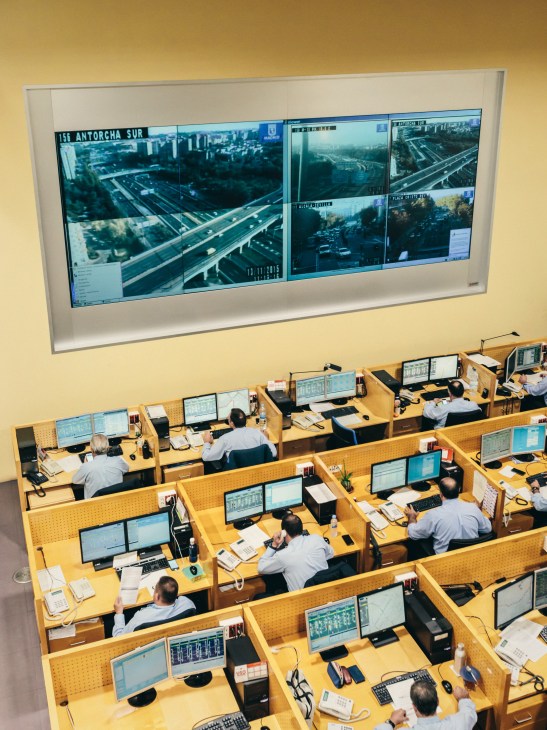
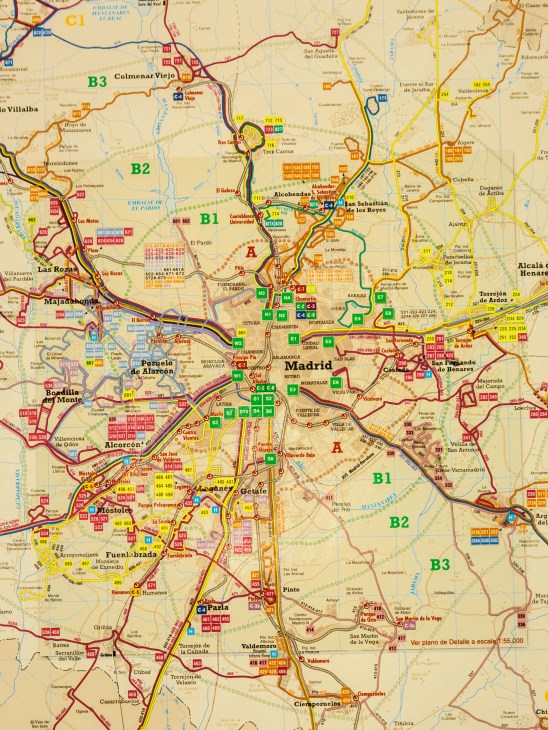

Back on the bus more benefits become clear as we bump along. The all-electric, battery-powered vehicle isn’t spewing out fumes in its wake for starters. It is also so quiet that plans were initially entertained to install a tram-style bell on it to warn pedestrians of its presence and rouse day-dreaming passengers at each stop. While the urban cacophony has long been a point of contention for residents and successive city councils, the stealth of the microbus means it has been left out of the noise debate entirely.
As our cities become denser and continue to limit the number of streets on which cars can drive freely, solutions such as the Madrid microbus will become increasingly relevant. The ride might be more rickety than the smooth-sailing underground and less charming than the quaint tram but the bus has both speed and flexibility on its side. Equally as important for belt-tightening city halls, it is cheaper than the alternatives.
Madrileños young and old happily take the bus, especially if it means avoiding a few steep inclines. Urban authorities elsewhere could do worse than to follow the city’s example in providing a hushed, clean way of getting about that’s still entirely at home in this fast-paced metropolis.
Notes: Bus builders
1.
Tecnobus, Italy
Electric bus-maker Tecnobus supplied Madrid with its 20 Gulliver buses – fully electric, zero-emmission vehicles that can run 12 hours a day and carry 13 people.
tecnobus.it
2.
Hino, Japan
Built by Hino, this is an evolved version of the low-floor Poncho bus, purpose-built to serve congested urban centres.
hino.com
3.
Siemens/Rampini Minibus Germany & Italy
These 46-passenger buses used in Vienna can be recharged using the city’s electric tram cables.
siemens.com; rampini.it
4.
Volkswagen, Germany
Volkswagen plans to rejig its iconic hippie-wagon as an all-electric microbus.
volkswagen.com
Notes: Rise of the Robobus
Residents of the otherwise unexceptional town of Trikala in central Greece are being afforded a glimpse of how the future of public transport might look. After months of tests, French robotics company Robosoft launched its new driverless bus in November 2015 to help residents of this town of 80,000 get around.
The EU has set Robosoft the task of developing and test-driving this technology in an attempt to work out what kind of regulations will be needed when the likes of Google and Mercedes launch their own driverless vehicles. Greece is the only country which has already amended its laws to allow for them on its roads, making it the only European country in which Robosoft’s buses can actually be tested under real-life conditions.
The six pod-shaped vehicles use various systems to navigate the streets, including GPS and a digitised map. “These methods allow for localisation and accuracy to a matter of centimetres,” says Vasilis Karavidas, the engineer who has been overseeing the project these past months. Specially designed lasers monitor the areas in front and on the sides of the bus, allowing it to reduce its speed or come to a complete halt according to the obstacles in its path.
It may be some time yet before the driverless bus wends its way to bigger cities around the world but anyone wanting to sneak a peek at what they might look like should head to Trikala. Just punch it into the GPS.
Ahead of the pack
1
Driving force
Traditional taxi firms can survive and thrive – but first stop complaining.
Taxis are in trouble. Like the airline industry before it, the trade is losing ground to convenient, low-cost competitors plying their trade through backlit screens. What’s worse is that traditional taxi firms are standing by feeling sorry for themselves as these new cheaper app-powered options purr off with the punters. The coming years will be telling for the future of four-wheeled transport; however, there’s much that could be fixed in the battle of the pick-ups.
Traditional taxis in the likes of Toronto, London and Hong Kong lack in comfort, have drivers who seem unaware that there’s a generation who pay for everything by card and, worse, engage you in conversations that too swiftly lead to suspect political opinions. The shakedown may prove brutal but if taken as a wake-up call, metered taxi drivers may yet stay at the front of the rank.
Remember, airline carriers were similarly dumbstruck when budget options began siphoning off customers who were seduced by low-fare flights, with which the established airlines couldn’t – or refused to – compete. The saving grace for many of the far-sighted carriers was not engaging with the race-to-the-bottom price war. Instead, the cannier ones redoubled their efforts to show that travel with their airline still had value. They knew there was room in the market for a premium option and that people would pay for it. Japan’s Nihon Kotsu is a flag-bearer for fine service. With a fleet of 7,000 cars, the firm has held off the advances of online competitors by keeping its fleet smart and drivers dedicated (think white gloves and a refusal to let passengers open the door for themselves).
The only way back for the old-school cab is to offer something that their adversaries don’t: deep knowledge, flexibility and a kindlier service. Here’s how.
- Get in the mood. In many cities cabs make money from carrying ads. But how much cooler to team up with artists during your city’s key art fair or designers during fashion week? Jumping in an Anish Kapoor-adorned taxi would be good and how about asking five architects to fix the interiors during design week?
- Listen up. Let people play their own music through your sound system via a simple docking unit. Drivers could pop a cap on the volume and have a separate control if it’s not to their taste. Make the journey fun again.
- Cash out. Make it simple to pay by card; who wants to have to find an atm before hailing a cab? Plus: once a year donate a percentage of takings to a charity to show you are part of the city’s fabric.
- Put a cap on it. standardised fares to airports and stations would make a taxi a more viable option for longer journeys. Getting to an airport in comfort and privacy is all the more alluring if you’re sure you won’t have to drop €100 for the privilege.
- Up customer service. Ultimately, cabs have come to see themselves as indispensable but competition has imperiled this and a service-minded attitude adjustment is well overdue. First, they should get off the hands-free phone call to their mum/wife/doctor. It’s rude.
- Sell harder. Why don’t cabs have mini coolers to sell you simple refreshments on the go, as well as packets of mints, tissues and perhaps an ice lolly in the summer? What about offering city maps or guidebooks?
- Clean up. Have a window that opens and be proud to ply your trade in a clean car. Carry a fragrance to get rid of the stink from sweaty customers. A uniform jacket would also help with brand building and keeping drivers smart.
- Be accountable. Leave something in a cab and that’s the end of it. Knowing a driver’s name and number makes the experience more personal and contact much easier should you abandon your keys on the backseat. If their details were on every taxi receipt you could track down a lost item instantly.
- Mind your manners. Taxi drivers are often a visitor’s first experience of a city so they should embrace it. How about offering to help with luggage? What about learning a few phrases in Spanish, German and Italian?
- Best practice. Taxi drivers should be the best and most courteous drivers on the road whether they have passengers or not. No more veering towards cyclists or screaming out the window at slow pedestrians.

2.
Taking flight
With its leading airlines and feathery food scene, no wonder Iceland’s on the rise.
There are more than a few reasons why we’ve got our eyes on Iceland for the year ahead. The Atlantic outpost has long held an eerie allure thanks to its mysterious isolation, treeless landscape, geothermal hotspots and windswept beauty. It’s the land of the northern lights, lagoons and steaming geysers (not to be confused with the steaming geezers: inebriated Norseman propping up Reykjavík’s bars with beer-soaked beards and Brennivín by the bottle-load).
The island expects to bolster its tourist numbers from 1.1 million in 2015 to 1.5 million in 2016. Not bad for a nation of 330,000 souls. Part of the reason for this success is the persistence of its airline carriers. Wow, the name of its budget option (“leisure” in North American speak), has forged routes from Montréal to Dublin and Boston to Baltimore. Meanwhile, the regal blue-and-yellow livery of Icelandair can now be seen from Toronto to Chicago and Aberdeen; it’s also been upping its London services.
Iceland’s geographical aloofness is fast becoming its strength in the stopover market and an increasingly intriguing dogfight for flights between Europe and North America. But what does this nascent-hub status mean for brand Iceland abroad? Visitors will likely be tempted to enjoy the nation’s charms en route between popular destinations and that means settling down at the dinner table to enjoy some of the storied country’s unique food.
The Grillmarkaourinn restaurant is a spacious, well-appointed option in central Reykjavík. Lively fair-haired Icelanders fawn over the visitors that peruse its excellent but curious menu. A quick glance yields a few eyebrow-raising specialities from whale to puffin and shark; your faithful reporter drew a definitive line under the latter. Icelanders have doggedly adhered to the diet enjoyed by the settlers that first graced the Nordic nation’s shores, having hopped off longboats leaving Norway eight centuries ago. For the squeamish there’s also fresh seafood galore, which the wise enjoy with lashings of lava salt.
It’s a whimsical culinary collection of expedient eats that have long been abundant here. What’s more, there’s something about the traditional and locally sourced nature of the offerings that chimes with a wider trend in the food world. Western menus have found themselves favouring indigenous produce and as provenance reigns and purveyors seek new ways to guarantee a nose-to-tail dining experience, Iceland is uniquely placed to service open-minded eaters with hitherto untried treats. Puffin burger anyone? “Aren’t they just the pesky pigeons of the Arctic?” you’ll find yourself reasoning with your dinner companions before plumping for the platter (full disclosure: puffin is smokey, duck-like and pretty agreeable to eat).
Something about Iceland’s isolation has given its people a profound sense of nationhood and unity when it comes to eating. Despite being under Danish and Norwegian control from the 12th century until the end of the Second World War, these hardy islanders still profoundly respect the nature of their homeland. And eating in this way is an attractive prospect. Unlike its Nordic neighbours, Iceland’s relative seclusion means that its mother tongue is also almost indiscernible from that of the Vikings who first landed here, many of whom fled the taxes imposed on them by greedy European kings.
A recent taxi drive in the city exposed my driver as a lifelong believer in the existence of elves (good spirits) and trolls (the baddies). It was a charming – if eccentric and anecdotal – reminder of how undisturbed Iceland’s culture and lore is thanks to its remoteness. Although the wise are already questioning the creaky airport infrastructure – the international hub Keflavík 40km from the capital Reykjavík needs a drastic rethink – whether it’s prepared or not Iceland is landing an enviable haul of new visitors hungry to taste what the country has to offer. Something about its idiosyncratic, enigmatic allure makes me think that the Icelandic saga – in tourist terms anyhow – is just beginning. While I can’t see shark or minke whale making the journey onto menus in London or Los Angeles, pushing puffin may yet prove a soft-power pull for Iceland.
Notes: Iceland’s animal menu
- Minke whale: Iceland resumed commercial whaling in 2006.
- Catfish: The dried variety served at Finnbogi in Ísafjörour is best.
- Reindeer: Ideally served as steak from Elvar in Reykjalín.
- Puffin: Try the burgers at Grillmarkaourinn, Reykjavík.
- Shark: Hákarl (as it’s known) is Iceland’s national dish – something of an acquired taste.
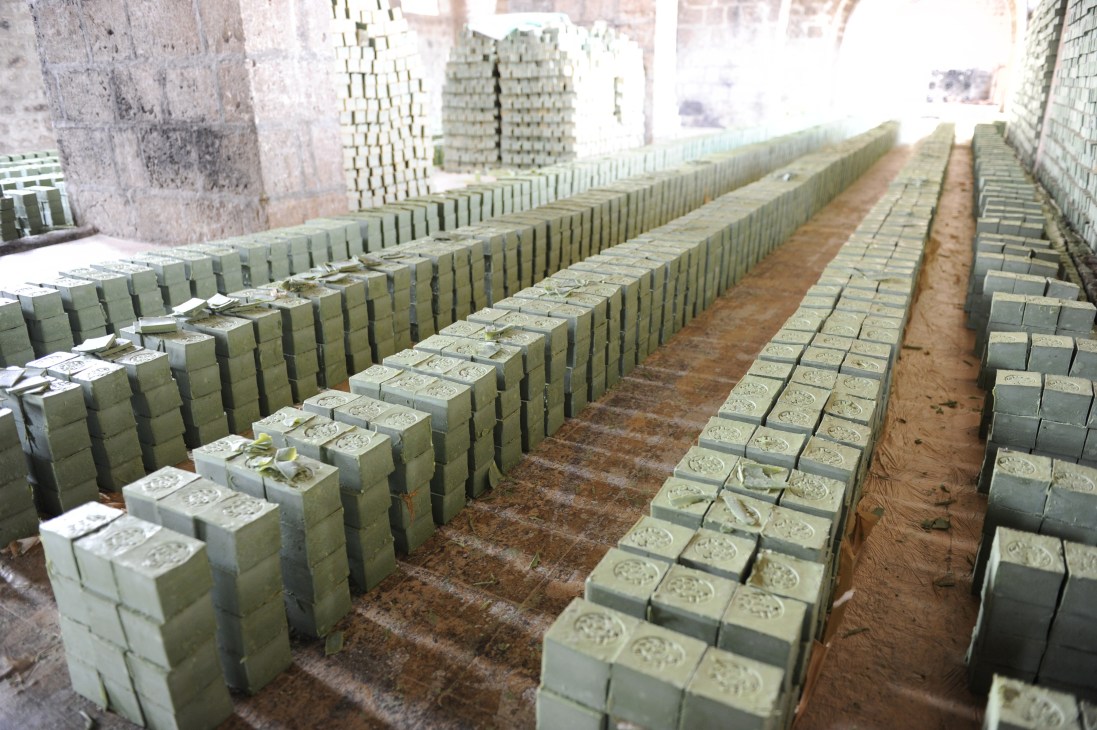
3.
Scrubs up well
The Syrian city whose soap scene has slipped across the border while its country is at war.
Aleppo was once Syria’s most populous city, known for its ancient citadel and in particular its soap: a product famous for its quality since Queen Zenobia of the Palmyrene empire enjoyed its antibacterial and moisturising properties. Made from three ingredients – olive oil, laurel oil and lye – Savon d’Alep is still prized from Marseilles to Beirut.
In many ways it came to define the city: a visit to Halab, as Aleppo is known in Arabic, would not be complete without buying a few bars, says Fuad Issa, an Aleppo-born soap-lover who now lives in Washington. “There was one factory, owned by the Fansa family in the southern part of the city, where you could smell the soap being made from 200 metres away. It was a beautiful smell; not flowery, more like something from a plant.”
After nearly five years of fighting, Aleppo – one of the oldest continuously inhabited cities in the world – has been reduced to a divided ruin and its ancient soap industry ravaged by war. “Before the war, Noble Soap was a well-established company producing different items from olive oil: Aleppo soap, of course, but also shampoo and shaving cream,” says founder Nabil Andoura, whose company once exported to Japan, Europe and the US. “We had one factory, two warehouses and headquarters in Damascus.”
That all changed when the violence intensified in the city. “The factory in the countryside just outside Aleppo was looted twice,” says Andoura. “They stole the equipment, the soap, the raw materials, the oil – everything. Then the building was destroyed completely by air strikes in 2013. We know nothing about what’s left there: we can’t reach the area any more.”
After a four-year hiatus, Andoura has established a skeleton operation across Syria’s border in Hatay, Turkey. “This will be our first batch of soap in four years. We are still trying to settle but we have made some soap and within a week it will be dry and ready to sell.”
From a company with between 75 and 100 employees and an annual production of 500 tonnes of soap, Noble Soap now employs just 20 people, 90 per cent of whom are from the former Aleppo factory. This year it has been able to produce about 100 tonnes. The new set-up is an attempt to keep sharing one of Syria’s “treasures” with the world and help those staff members who are left.
“The idea was not to re-establish Noble but to let the workers work again, earn some money and feel dignity,” says Andoura. “We still believe in Syria and its treasures. Our slogan is: ‘When passion becomes a profession’. We are not giving up on this business, we believe in committing to our land through this work. It’s our heritage and it should be shown to people around the globe.”
There is still a strong market for the soap, as well as entrepreneurs willing to take the considerable risks to export it. Mahmoud al-Naboulsi founded Kesabella in 2006 and has been exporting numerous kinds of Aleppo soap across the world for about a decade. To this day, he continues to transport soap from Aleppo and Latakia to Damascus, and then on to Beirut. “The journey from Aleppo to Damascus in particular is very dangerous but we trust in God,” he says from his small shop in west Beirut’s Hamra. “All of our business right now is under risk but we have to keep going and moving, we cannot stop.”
Out of the dozen or so soap factories in Aleppo that Kesabella used to work with, only two are still operational in the city, both in the government-held area. One of these, Dakka Kadima, is relocating to the relative calm of the eastern coastal region Latakia by the end of the year. The others have either collapsed, closed or already moved elsewhere. “We heard that some of the people who know how to make Aleppo soap have been killed,” says Naboulsi. “We don’t know where a lot of the factories’ owners are.”
Kesabella still boasts a huge range of Aleppo soaps, from the purest of the pure – made from 50 per cent laurel oil – to scented varieties packaged in boxes decorated with a map of Syria. But Naboulsi says business is not what it used to be. Before the war the company’s exports were worth $25,000 (€23,300) a month, whereas today their total value is about half of that. “Now we are doing one big shipment every two or three months,” he says.
This slump is largely down to the lack of functioning factories and the logistics involved in getting large quantities out of Syria, not a decline in demand; Aleppo soap remains an iconic and coveted beauty product. “Aleppo soap is popular in Lebanon, Jordan, the gcc and Europe,” says Ludmila Bitar, the French-Algerian founder of the Beirut-based Ideo Parfums olfactory company. She travelled to Aleppo and Damascus in 2010 to launch a collaborative soap-making initiative, seeking to capitalise on the product’s unrivalled reputation. But when the war started it fell apart. “We lost contact with them and it wasn’t possible to work properly together or send them the raw materials,” she says from her chic fragrance shop in east Beirut’s Gemmayzeh area. “During the second winter of the Syrian war [2012-13] the weather was so harsh that a lot of people had to use the laurel branches for fires in their houses to keep warm. So this key ingredient was missing. It became a nightmare to try and collaborate. People were not focusing on business: they were focusing on saving their lives.”
Unwilling to give up on the idea of stocking one of the world’s oldest soaps, Bitar is now in contact with some people in Damascus to try to work out if it would be possible to set up a new production line in Lebanon. This is something Syrians are unable to do due to hefty working restrictions imposed on them by the Lebanese government. For Bitar, this is both a business opportunity and a chance to save something that is part of the Levant’s craft heritage. “Lebanon needs to use this opportunity to make sure that this know-how does not die,” she says. “When these old traditions die out, it’s the history of a country that we lose.”
Aleppo’s challenges are many. The city has been under bombardment for so long that it is hard to see how it will ever return to a place where people once tucked into cherry kebabs and wandered the seemingly endless covered souk. By maintaining the ancient soap production process elsewhere in Syria and across the border – and keeping clients hooked on the product – there is a chance that the industry can be revived when the war ends. When this finally comes, industry will be crucial to any reconstruction process. Its laurel trees may be scorched and its factories looted but the city’s connection to its green gold is undiminished.
4.
Translating into profit
The dictionary publisher that is promoting language learning, one word at a time.
If you are a publisher of German dictionaries this should not be a good time to be in business. Smartphones can translate just as well without the added weight in your pocket and doesn’t everyone want to speak English anyway? The owners of Langenscheidt, the iconic German-dictionary publisher, would politely disagree – and they can express their dissent in 35 languages. The Munich-based company dominates the language industry in Germany, claiming 60 per cent of the domestic foreign-language dictionary market and 80 per cent of the foreign-language phrasebook market. “We are the brand when it comes to dictionaries and learning languages in the German market,” says Langenscheidt’s Eckhard Zimmermann.
This market is growing. According to the Goethe Institut, 15.4 million people are currently learning German. The strength of the country’s economy has played a role, as has its prominence in international affairs. As Germany becomes increasingly important, more people want to learn the language. And those numbers could rise thanks to the leading role it has played in welcoming refugees. The Goethe Institut has seen demand for German-language learning grow in 60 per cent of the world’s countries, primarily Asia, Latin American and Africa.
This has benefited Langenscheidt, with exports strongest in the UK, the US, Turkey, Brazil and numerous Arab-speaking countries. That’s despite the fact that, as Zimmermann admits, the name “Langenscheidt” is “not exactly easy to pronounce for non-German speakers”.
Gustav Langenscheidt developed a new phonetic method with his French teacher, which he brought to the market when he launched his publishing company in 1856. An elaborate “L” began appearing on book covers in 1903, followed by the addition of more languages to the portfolio and the market’s first gramophone record for instruction. Years later came travel phrasebooks. Then in 1983 the Alpha 8 appeared: the first electronic dictionary.
But the company’s biggest leap forward came in 1956, when graphic designer Richard Blank created the yellow-and-turquoise logo that became Langenscheidt’s enduring signature. “This ‘L’ has been modernised over time and the serifs have been dropped,” says Zimmermann, though he adds that the process was a delicate one. “If we change anything about the brand it’s approached with caution.”
The most recent incarnation of the Langenscheidt “L” was undertaken by kw43 Branddesign in Düsseldorf. Described by the firm as a “gentle redesign”, it received a Red Dot Award in 2013 for communication design. Thanks in part to this attention to aesthetics, the brand’s image and hold on the colour yellow has become so strong that in 2014 Germany’s high court ruled to protect the trademark hue from use by competitors, after Langenscheidt sued US company Rosetta Stone for attempting to do so.
Langenscheidt’s portfolio now spans more than 35 languages, with thousands of print and cross-media titles and 260 dictionary and interactive apps. Increasingly the company focuses on specialised products, such as b2b learning materials and technical dictionaries in fields such as architecture and chemistry. And, of course, it is constantly renegotiating the balance between print and digital.
Zimmermann started as an editor 30 years ago and is now head of digital business. He’s leading the company with targeted digitisation efforts, which are becoming more prominent as interest in Germany and its language grows. Zimmermann says the media revolution hasn’t crushed the market for print titles but it has meant supplementing these products with digital features. “We now have mixed formats,” he says. “Many say they don’t want to do without the book but will use an app while they’re on the go.”
The new digital market requires an ever more individualised, adaptable and mobile approach to customers, something that is evident when you look at the actions of the company in August 2015. As German authorities and volunteers struggled to communicate with the refugees and migrants at the country’s borders, Langenscheidt made its German-Arabic dictionary available online for free, complete with audio pronunciations. Traffic has not only been “tremendous”, according to Zimmermann, it has also revealed the needs of a new niche market as they unfold.
Now Langenscheidt is working to develop products to serve newcomers and those helping them get settled. “It’s not just about helping refugees but also volunteers and officials, many of whom are also looking for material so they can communicate,” says Zimmermann. “Our short-term goal is to simply enable initial communication but the second phase will be language that aids integration.”
Linguists say that language evolves like an organism, reflecting the concerns and desires of a society as it changes. Perhaps no one recognises this more than dictionary publishers, the stewards of language. In September 2015, one month after the Arabic-German dictionary went online, Langenscheidt published its most popular search words. Among the top 20? “Help”, “love”, “friend” and Zimmermann’s personal favourite: “Welcome”.

5.
Place in the sun
The weather-data companies with a clear vision and blue skies ahead.
The forecast for the coming year is in: expect a sunny outlook for the weather-information industry but storm clouds may be gathering for the traditional TV weatherman. Even before IBM’s purchase of the digital and data assets of the US’s Weather Company in October for $2bn (€1.9bn), the weather business was walking on sunshine. It’s a sector with a unique advantage: every human is a consumer. The need for good information is growing and the technology is improving. Big data doesn’t really get any bigger.
But trying to understand the weather business is like trying to establish where the weather comes from. For meteorologists in the US, however, all weather vanes point to leafy Norman in Oklahoma. It’s the centre for extreme weather, home to Tornado Alley and the top-rated University of Oklahoma’s Meteorology programme. It’s also the base for the National Weather Service and Noaa, the two US government storm-prediction services.
With an average of 47 tornados per year, Norman is the Wild West for anyone in the weather industry. Antonio Brizzo of Weathernews says, “If you want to see lions, go to Africa. If you like food, go to Italy. If you want to see a tornado live and big-scale weather, you go to Norman.”
Every country has its Norman and its particular customers and areas of expertise. France’s MeteoGroup – known for accurate and expensive forecasts – serves much of Europe. The UK has the Met Office, offering long-range precipitation forecasts. The World Meteorological Organization in Geneva focuses on climate change. In Japan, Weathernews has dominated the shipping-weather market since the 1970s and Japan Meteorological Agency excels not only in weather but earthquake analysis as well.
And there are more key players in the US: from Pennsylvania, AccuWeather provides world forecasts and sells data to clients such as Samsung Android and abc news; and WSI – part of the Weather Channel’s parent company, now with IBM – rules the aviation-weather industry.
While weather patterns have been affected by changes such as warming ocean waters, it’s a bit of a misnomer to say they are getting less predictable. Forecasting has never been better thanks to enhanced supercomputer models and sharper radars. Today’s dual-polarised radar, for example, can measure microscopic droplets in the atmosphere and determine the type of precipitation that is going to fall.
But it’s not just weather-related technology that has changed the industry: smartphones have also played a role. Weather sensors in mobiles now provide decent measures of temperature, air pressure and humidity. The information gathered by phones, combined with the data from radars, creates a more accurate forecast than previously possible.
Weather-data companies wasted no time in taking advantage of the controls in our pockets and today apps offer the same tools used to forecast in aviation and shipping. Weathernews was early to the consumer market and today has more than 2.7 million subscribers who pay a few dollars a month for mobile-weather content. Its recent acquisitions of crowd-sourced apps in China, France and the US give it direct access to 10 million people in 172 countries, whose phones send back localised weather data. Director Tomohiro Ishibashi says, “My dream is to create the world’s biggest weather communication company, where forecasts are made from the ground, not the sky.”
Consumers won’t really care where the forecast is made as long as it’s accurate. Spare a thought though for the humble TV weather presenter, a staple of news bulletins around the world: your smartphone may be about to put them out of a job.

6.
Royal flush
The Malaysian families getting ready to return to the spotlight.
Malaysia’s royals may not have the global recognition of UK princes Harry and William, or the Hollywood style of the Monégasque’s leading family, but you may be hearing a lot more from them in the coming months. They are not happy sitting on their hands and smiling politely any more: they want to flex their muscles. A beleaguered prime minister is in their sights and they’ve got the cash and connections to get what they want.
“Basically the only people in the country that have power are the royal families and prime minister Najib Razak,” says political commentator Murray Hunter. Nine of Malaysia’s states have their own royal family but the power they have is “residual”, he adds.
But that is beginning to change. Some of those once acquiescent royals are exasperated with Najib, who hasn’t explained how almost MYR3bn (€655m) wound up in his account from state-owned investment fund 1MBDB. The wealthy PM – whose luxury-loving wife has been dubbed “the first lady of shopping” – appears disconnected from his people. His inability to deal with the scandal has sparked an emergence of political activism from the sultan set.
“They see themselves as individual leaders having all sorts of privileges but collectively they have more power,” says Asia Sentinel editor John Berthelsen. “So when the Council of Rulers get together to issue a statement that the prime minister should address the 1MDB issue and an investigation should proceed, that is a powerful message.”
But these unruly sultans, whose powers were strangled by former PM Mahathir Mohamad, also have other preoccupations in a region once heralded as “the land of gold”. “They say in terms of wealth that the Malaysian royal families are up there with the British queen and the Thai king,” says Hunter. The latest royal splurge saw Johor sultan Ibrahim Ismail investing in the world’s most expensive Mack truck. This heavy hauler has gold trimmings and a paint job to blend in with the sultan’s 52-foot racing boat, which the truck was modified to tow. Yet a man should never be judged on his truck alone. When he’s not playing Xbox in his Mack’s cabin, Sultan Ibrahim is doing business for his home state. At the moment he’s literally raising an island out of an ocean, working with property developers from Malaysia and China on the multibillion dollar Forest City land-reclamation project.
Yet Sultan Ibrahim isn’t too busy for affairs of state: it’s in Johor that the loudest royal roar against Najib is resounding. “When Najib fired his deputy Muhyiddin Yassin for speaking out against him over the 1MDB debacle, the sultan sent his personal helicopter to fly him back to Johor,” says Berthelsen. “This was quite the gesture. Ibrahim is a powerhouse in that state like no sultan there before.”
This powerhouse’s son and heir, Tunku Ismail, has also stuck the boot into Najib. The prince, whose role model is Fidel Castro, wields grassroots appeal through his affiliation with Johor’s football association. Distancing his family from the political mess in Kuala Lumpur, he warned that if the terms of Johor’s federal membership were ever breached, his home state had every right to secede from Malaysia.
But Johor’s secession is unlikely, says Andrew Harding, director of the Centre for Asian Legal Studies at the National University of Singapore. At the heart of the royal family’s issue with the PM is that old devil, pride. “The leading people in Umno have often been Johor people and they feel that they have some ownership of Umno,” he says. “This is being taken away from them by a corrupt and unaccountable leader and they want to get rid of him.”
This is unlikely to result in political change though, says Hunter. “The royal families are state people and they aren’t united enough to make a bold statement.”

7.
Beat about the bush
The Australian newspaper that is putting the country – and its crocs – on the map.
Australians have long enjoyed projecting to the world an image of themselves as rugged, laconic bush-folk, wringing a living from a vast and unforgiving wilderness. The reality is that they – OK, we – are a nation of cossetted urban latte-slurpers, few of whom have ever skinned a goanna for breakfast. If the stereotype does live anywhere though, it’s surely in the Northern Territory, a region more than twice the size of France, home to about half the population of Lyon. They are by definition unusual people – and they are served by an unusual newspaper.
“It’s unpredictable, that’s for sure,” says Rachel Hancock, editor of the NT News. “The Territory produces some amazing and very different stories to anywhere else in the country. It’s partly the geography and weather but mostly because Territorians don’t take life too seriously and like to have fun, so we try and have fun with them.”
The NT News was founded in 1952 and has been owned by Rupert Murdoch since 1960. For most of that time it has been the only daily serving the Northern Territory capital of Darwin, generally doing so with little impact elsewhere in the country – Darwin is further from Sydney than Istanbul is from London – let alone the rest of the world. In the 21st century this has changed due to a combination of something new – the internet – with something the Territory has possessed since the Mesozoic era.
“I’m not going to lie,” says Hancock, “when a great croc story or picture lobs on the news list I’m somewhat comforted. But it really has just evolved. The best thing is, because of that reputation, readers are constantly sending us stories and pics, so it makes our job easier.”
Hancock is too modest. Though any encounter between human beings and one-tonne prehistoric reptilian death machines can barely help but be compelling, the NT News presents them brilliantly, with a splashy visual and an editorial tone entirely at home on the internet yet also evocative of a long tradition of dry, somewhat self-mocking Australian tabloid journalism that once flourished on the pages of journals such as The Truth and The Picture.
It has done wonders for the NT News; in 2014 it was Australia’s fastest-growing newspaper with 55 per cent growth in digital readership. In 2015 its Sunday edition ended up being the only one in the country to have increased circulation. About a quarter of its following on social media is overseas. It has opened a shop, offering fare tailored to its image: singlets and beer-can holders emblazoned with memorable headlines. A book, What a Croc!, has compiled some of the paper’s best-loved front pages. On first flick this may seem an exercise in finding out how many puns can be wrung from the paper’s favourite fauna; a crocodile stored overnight in a cell inspires “Jailhouse croc”.
While these zingers doubtless prompted richly deserved high fives around the sub-editors’ desk, the still greater joy of the NT News is its treatment of stories in which it has to be suspected that an excess of sunshine and/or alcohol has been a factor. Stories, that is, in which one or more protagonists would be diagnosed, in the local vernacular, as having “gone troppo” (troppo, adj: contraction of “tropical”, applied to person/s whose behaviour suggests they’ve been outside too long without a hat on). For all its facility with wordplay, the NT News understands that sometimes there is no improving on the bare facts of the case: see “Best man left bleeding after being hit in head by flying dildo”; “Sailor bashed for cheeseburger”; “Man stabbed with fish”; “Croc eats boat”.
Between all of these, the newspaper takes pride in solidly covering its local beat. “It’s a difficult balance,” says Hancock. “You do too much of the quirky stuff, you’re criticised, but too much of the hard stuff and you’re told to lighten up. We are the voice of the Territory and we need to reflect the issues that affect Territorians. We try and mix it up, light and shade.”
It may seem counter-intuitive to suggest that there are lessons for more self-consciously worthy media outlets in the success of a newspaper that is also not averse to running with the odd too-good-to-check ghost story. But there are: to prosper in an over-run and infinitely clamorous media landscape, every outlet needs an idea of itself in which it has complete confidence and an identity that is quickly understood – who we are, who we’re for.

8.
Distinctively average
The German village whose normality makes it a prime subject for market research.
The village of Hassloch in the Rhineland-Palatinate region of southwest Germany is quaint and peaceful. Its main thoroughfare is flanked by centuries-old half-timbered houses and on sunny afternoons birds flit past the church on its quiet central square. During the day many of its residents work in the nearby city of Ludwigshafen, home to chemical giant basf. That leaves the town largely to its elderly residents, who tend to greet each other with a friendly “Guten Tag” when they pass on their bikes.
At first glance the village of about 21,000 resembles a cookie-cutter version of small-town German life, albeit with a conspicuously self-deprecating name: “Hassloch” translates as “hate hole” in English. But Hassloch, it turns out, is both more average and more distinctive than it seems.
For Andreas Völtl, the director responsible for real-life test markets at the Gesellschaft für Konsumforschung (GFK), Germany’s top market-research institute, Hassloch’s averageness is a hugely valuable asset: it has helped his organisation turn the village into one of Europe’s most distinctive laboratories for consumer products. “When a company wants to reach the masses it is looking to the middle of society,” says Völtl. “Hassloch is the middle.”
The village, which is about 50km from the French border, is so demographically, geographically and economically similar to the German mean that it has become known as the country’s most average municipality. Hassloch’s score on the purchasing-power index, for instance, is only one point away from the national average; and because of its demographics, the village’s exit polls are sometimes used to help predict national election results.
For the past 29 years the GFK has granted large companies from Unilever to Bahlsen the opportunity to test not only their products but their entire marketing strategy on Hassloch’s residents. As a result, Hassloch is a curious bubble: its supermarkets contain food items that are available nowhere else in the country and residents are exposed to radio, print and online marketing for products that are still months away from their national launch. “What makes Hassloch so unique is that it allows companies the possibility to put all elements of their product launch to the test,” says Völtl.
The test market is headed by Bettina Bartholomeyzik, a 56-year-old who works in an office next to a dentist’s on Hassloch’s main street. When a company pays the GFK to test its products she organises their distribution to the town’s supermarkets. “It’s very expensive to introduce a product nationally and it can be embarrassing for a big company to pull it off the shelves, so they test it out here in advance,” she says.
In Hassloch, companies can experiment with a product’s shelf placement, packaging and adverts. In 1986 the GFK was partly drawn to Hassloch because it was one of the first communities in Germany with cable-television access, allowing the company to tap into the village’s incoming broadcasts. Today Bartholomeyzik’s employees control the town’s TV advertising from a studio lined with monitors, computers and shelves of old tapes.
Through its deals with local supermarkets the GFK is able to monitor how well the company’s advertised products do with its “average” shoppers. The local branch of the Edeka supermarket chain is equipped with technology that allows participating households – about a third of the village – to swipe a card when they shop, sending information back to the GFK’s headquarters in Nuremberg.
Aside from the introduction of technology to analyse data and tweak ads, Hassloch’s test-market has changed little since its inception. However, in 2016 and beyond it will face a growing challenge from so-called “virtual test-markets”: cheaper, simpler alternatives to real-life consumer laboratories. In the summer of 2015 the GFK acquired a Swedish company specialising in “virtual shopper research” – 2d and 3d computerised shopping simulations – but it remains convinced that Hassloch is the most all-encompassing way of determining the value of a product. “In Hassloch you can test everything,” says Völtl. “It is a cut-off world.”
Many Hassloch residents view their “average” status with both humility and pride. Bettina Finco, a 53-year-old mother of two, has been taking part in the GFK experiment for two decades. Her parents were also test subjects and being a tester, she argues, is a natural part of being a Hasslocher. “There is good average and a bad average,” she says. “We consider ourselves to be the good average.”
As Finco says, Hassloch is a pleasant place to live: it has good schools, high levels of community involvement and a friendly atmosphere. The most newsworthy event to take place in the village recently involved an escaped cow. “It has everything you need to live well,” she says. “We just happen to decide what goes on German shop shelves.”
9.
Altar-natives
The Greek churches and their plots of land that offer another option for your future house.
Take a drive from Kifissia down to the Athenian Riviera at Vouliagmeni and you’ll experience one very Greek thing on your way to another: you can’t get to the well-tended sandy beaches without passing a hoary old loophole.
Just what is that by the side of the road? An olive grove buzzes past. Not that. This again. What on earth are all those churches doing squashed up cheek by jowl against each other? Is it the most devout village in the world, boasting the tightest concentration of small churches, all higgledy-piggledy and packed on top of each other? A church for every worshipper. It sounds like an Old Testament quote; a bit of Orthodox demagoguery or a neo-con promise. But it’s not. It’s the depot of a church factory and the churches that this factory builds represent that ancient Greek tradition: the loophole.
Now, there are get-out clauses and dodges; there are unlevel playing fields and strange discrepancies. But this is really wonderful. In Greece it’s possible to buy land on which to build a house. But to avoid the red tape and expense of going down the official route and getting the correct permissions and utility connections from the government, you can take the path of least resistance and the spiritual high ground: purchase a prefabricated church, get the church authorities to give you the permissions to hook it up to the mains and then build the big house you always wanted for the plot as a secondary, attendant structure – a humble dwelling serving the church, if you will – and hallelujah! You have your house, rigged up and ready to rock, as well as a nice little church in the garden for your daily prayers. Of course you use it for worship if anyone asks but – heavens – it’s also so damned useful for storing the lawnmower and the rake. Bob’s your uncle. And God’s your planning officer.
When I say, “This is really wonderful”, I should also point out that the practice is, in fact, becoming too good to be true. Suspicious of such a bricks-and-mortar/nave-and-altar way of approaching religious rectitude, the Greek authorities have cracked down on the practice. But the supply and demand for prefab churches stays strong. We’re used to hearing that the church is powerful in Greece but this is ridiculous. Greeks want to build houses wherever they own land, hence the suspicious score of forest fires followed hot on the heels by house building. As we drove down Varis-Koropiou Avenue on the way to the beach, my Athenian friend told me that Greeks tend to shrug at this sort of “soft corruption” because they all practice it in their daily lives, either brazenly or just to get by and make things work in a country where things often don’t. Hell, there’s even a hole in this loophole.
In the meantime, maybe in the springtime, get thee to thy church factory while you still can. You can order any type, from Byzantine to Cruciform, with island-style flourishes and basilicas, or go for a miniature Hagia Sofia (with no joins). It seems that the great Greek church loophole is a dying sacrament. Is nothing sacred?
10.
Former glory
How will we be safer in the years to come? An old Nato chief has a suggestion.
Former politicians used to retire. There would be memoirs, a light bit of after-dinner speaking, the occasional wheeling-out to comment on great matters of state. But many of the politicians who reached the top in the 1990s and 2000s were a generation younger than their predecessors. Out of office in their fifties or early sixties, they are now too young to become elder statesman.
Anders Fogh Rasmussen is a “former” two times over: ex-prime minister of Denmark; ex-secretary-general of Nato. A fresh-faced 62, he is managing to keep himself busy. There is, of course, the inevitable book. Due out in the US before the presidential elections it will, he says, be “a kind of message to the next president”. Part of that message will almost certainly be about the threat posed by Islamist extremism and, in particular, Isis. Rasmussen oversaw the drawdown in Afghanistan but was also prime minister during the Danish cartoons crisis. He knows a thing or two about the strengths and weaknesses of a military fight as well as the tensions that can grow between communities.
“I think we need a reinforced military fight against Islamic State.” It needs to be “eradicated”, he says. “I also stress that I don’t see a long-term military solution to the problem in the Middle East. We need a political solution.” But even a former Nato chief struggles to explain how that can happen. He wants troops on the ground but local ones, not foreign. Yet he admits the options aren’t great: the Kurds won’t go any further south and attempts to arm and train moderate rebel groups have, so far, failed.
“We can’t just accept that,” he says. “We have to do something. There is no alternative to reinforcing the fighting against Islamic State.” The question of how is left hanging in the air.