The Forecast
Cleaning up its act
There aren’t many places in Singapore where you can hear cockerels crow in the morning. But for the residents of Jalan Besar it’s a familiar wake-up call from the birds that are kept around the ornate Peranakan-style shophouses here. A few kilometres north of the city state’s business district, the neighbourhood was once known for its ubiquitous hardware shops, not to mention brothels on Desker and Rowell Road and the thieves who favoured the market on Sungei Road. But the area’s lawless reputation is being slowly rehabilitated.
“My first impression of Rowell Road was that it wasn’t safe,” says Bjorn Yeo, who runs his graphic-design agency Tripple in the area. When he was scouting for an office three years ago he was deterred by the presence of the sex-workers openly plying their trade. However, eventually the charm of the neighbourhood and its colourful characters won him over and today he has no regrets about doing business here.
Yeo isn’t alone in being attracted to the once-overlooked area. In 2012 former banker Leon Foo converted a hardware shop into a coffee-roaster and café. It’s one of the first businesses to publicly signal the area’s shift and the potential for transforming the art deco and colonial shophouses that line the roads and alleys between the Rochor Canal and Lavender Street.
“Leon injected something new into something authentic and traditional in the area,” says Dean Chew, founder of Fuur Architects. He and his business partner Jasper Chia moved their practice into an old shophouse nearby in 2011, before the café opened.
In a country that has mostly embraced the future by scrapping old buildings and quickly erecting new ones, Jalan Besar is an anomaly thanks to its rich and still largely intact architectural booty. “This area has traditionally been part of the manufacturing supply chain and there’s a bit of romance here associated with craft,” says Chia. “There are tonnes of old businesses and it’s probably the last authentic working-class district in Singapore.”
While the bric-a-brac shops, car mechanics and clan associations (places where Chinese migrants congregated according to their dialects in the early 20th century) are still here, microbreweries, hotels and design-minded shops and galleries have sprouted alongside them. Mike Tay runs a homeware shop called Onlewu in one of the colonial-era shophouses. The former media professional breathes new life into old Singaporean iconography by turning it into vibrant and quirky designs that are applied to cushions, wallpaper and stools. “When residents chance upon us they are happy with what we’ve done to the place,” he says. Upstairs he runs an art gallery called Flaneur, which showcases homegrown talent. Recently a curator from the Singapore Art Museum (see page 155) bought a piece for the museum’s collection.
Many start-ups can be found in shared workspaces, including the somewhat joylessly named Workhouse. It was started in April 2015 by Kunal Pawa, who converted his family home into a mimimal space for young businesses. Swiss-born Patrick Jungo chose to base his tailoring firm Edit Suits in the neighbourhood because of its cheaper rents coupled with its proximity to the business district. “Many of my customers come here right after work,” says Jungo.
It’s not just entrepreneurs who are putting down roots here: the architectural stock and liveliness are drawing expatriates and natives alike. Taiwanese-born Andrew Lo, creative director of MTV Asia, lives in one of the conservation properties on Rowell Road. “It’s chaos but I love it; it’s convenient and there’s so much good food around.”
Another resident, artist Lucinda Law, recalls a makeshift stage that was erected overnight at her doorstep: “It was the Hungry Ghost Festival and there were offerings and incense everywhere.” It’s the unexpected that make living here a delight for Law. She enjoys wandering through the alleys and her favourite spot is her backyard, where she holds botany lessons. When she moved in it was, like Jalan Besar, something of a jungle. She cleared the weeds save for a sapling and in 2015 the tree bore its first dragon fruit. “I didn’t expect it to bloom,” says Law. “I didn’t even know it was a dragon-fruit tree.”
Notes: Need to know
Setting up:
It takes about two weeks from start to finish to register a business in Singapore, which can be done online.
Connectivity:
High-speed internet is the norm in Singapore; hotspots can be found in public places such as train stations. That said, installing an internet connection for your business might take longer than expected due to red tape.
Creative businesses:
Low rents have been attracting small design companies and agencies to the area. However, more can be done to welcome new businesses and foster a tighter creative community.
Pockets of calm:
The main Jalan Besar artery is a frenetic strip but turn west on Petain Road and you’ll find a quiet park that is flanked by a strip of beautifully restored shophouses.
Living:
Want to live in a heritage home? They are owned and managed by the Singapore Land Authority and prospective tenants can bid for them online.
Tools gold
From cathedrals to the Colosseum, Italy has its hands full keeping its monuments shipshape. Privately, residents also have their own problems to tackle in maintaining their homes in the historic palazzos and ageing apartment blocks that make up a big slice of the housing stock in the Bel Paese. While the state relies on an army of architects, engineers and restorers, homeowners simply turn to their neighbourhood hardware shop when they need some expert tips.
Take a walk through a district of any Italian city and you are bound to bump into people with bags of building paraphernalia from a nearby ferramenta: the word’s origin refers to a place where you can buy iron (ferro) objects or other metal tools for manual work. Today these shops remain part of the urban fabric and residents are finding that they can’t do without them.
“For Italians it’s something of an institution, like the neighbourhood café or newsagent,” says Genoa native Daniele Rizzo. A carpenter by trade, Rizzo works at Caffarena, a city hardware shop that opened its doors in the historic centre of Genoa in the early 1900s. A one-time client, Rizzo moved behind the counter two years ago and now helps customers solve problems big and small, from selecting the right toolkit to sourcing the correct shade of green paint for the traditional wooden shutters common to buildings in Liguria.
For customers, the advantage of owners’ know-how is a big draw. “Living here we have first-hand experience of the problems that residents have,” says Rizzo. “For example, Genoa is full of old palazzos with floors and balconies made from slate from the region, so people want to know the best polish to use when cleaning it.”
Though not immune to the recent emergence of big-box chains catering to DIY types, Italians are overwhelmingly faithful to traditional handyman shops. Since the financial crisis struck, independents trading in home-improvement supplies – a market worth €14.5bn annually – have weathered the storm with ease. They account for two thirds of the sector’s business and last year maintained their market share, while large chains went into the red. The country still has more than 17,000 ferramenta, most still family-run establishments with small floor spaces of just a few hundred square metres.
On close inspection, no two ferramenta are alike when it comes to inventory. Inside Caffarena’s bolthole-sized shop, tucked away in one of Genoa’s narrow lanes there are everyday household items such as the classic Bialetti stovetop coffee-maker. But the shop also offers staples of Ligurian cooking such as marble mortars for pesto or copper trays used to prepare farinata: a local pancake speciality made from chickpea flour.
However, many shops seek out an even more niche market to stand out from the competition. In downtown Turin, the Drovetti family woos passers-by with playful window displays that promote its most popular product: door handles. Inside the atmosphere is what Italians might describe as old-school: well-worn wooden counters upon which many a client and assistant have leaned in the past 110 years while discussing which lock to install or debating the ideal typeface for a door plaque. “Some of the furniture here is even older than the shop,” says Luigi Drovetti, pulling out drawers on a 19th-century walnut cabinet to reveal nails of various sizes.
Luigi, together with his father Francesco and sister Laura, aims to sell an assortment of tools but the firm’s focus is doorknobs, locks and fittings. Here you can peruse Italian design brands such as Olivari, maker of the super-sleek Gio Ponti-designed Lama door handles, alongside traditional brass pieces requested by residents of Turin’s palazzos. Over the years Drovetti has added offerings such as bespoke, handmade wooden letterboxes and wine-bottle racks fashioned to order from steel.
For a behind-the-scenes look, Luigi invites us to the store’s nearby workshop set inside a quiet residential courtyard. Here staff assemble various components, including hinges for cabinets and doors. Brass is the firm’s forte and it comes in an array of finishes, whether lacquered, brushed or tin-plated. The Drovettis’ skill with the material has gained them recognition and orders – even from high-end fashion boutiques, including menswear label Caruso.
The artisans at Drovetti are not above making house calls to assist with minor repairs. In their toolboxes, employees carry old-fashioned lock-picks (once used by thieves) made from iron to open latches on antique armoires when residents have misplaced their keys. “They come in handy all the time,” says Luigi with a smile. “We even came to the rescue of a church in the area, which hadn’t been able to open its tabernacle in years.”
Going the extra mile for customers is what owners of ferramenta say makes their business model work, even in today’s world of competing supersized retailers that stock thousands of items. “It comes down to service, service, service,” says Milanese shop owner Giulio Velati, who runs Viganò with his son in the city’s Zona Tortona neighbourhood.
For three generations his family has come up with solutions to broken radiators, fixed leaky pipes in people’s homes and procured bolts of all sizes from a darkened stockroom where items are still ordered (without computers) in cardboard boxes; numbers in black ink designate a screw’s diameter and length, while letters identify the metal type.
Watching Velati work an afternoon shift is like seeing a busy family doctor consulting patients. While fashioning a key for one client, he advises another on how best to fix a hydraulic jack for a sailing boat. Then in his back office he tracks down a pair of shears for a budding gardener before stepping into his metal shop to cut a bar for a customer’s work shed. Always on his feet, he’s a walking encyclopaedia of DIY issues.
“I was practically raised in the shop so I know the trade like the back of my hand,” he says, lifting his glasses and taking a much-needed pause. “I live and breathe this work, something you can’t say about staff at a big chain store. We make the time and effort and I think, at the end of the day, our customers appreciate it.”
Notes
Personal business
Don’t want to grow a beard and open a café? How about donning an apron and nailing it with a fresh take on repair and household essentials instead. And remember: a chat with a knowledgeable shop-owner goes a long way.
It’s a small world
1.
Ridge Shoto
Tokyo
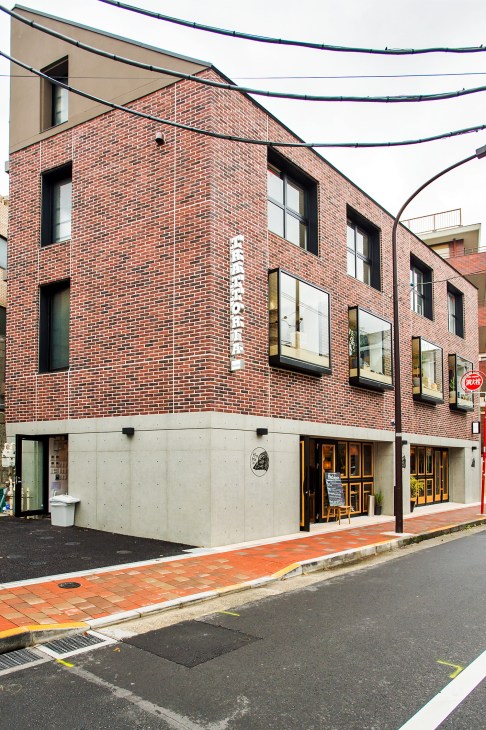
Ridge Shoto, a new three-storey building with a brick façade in a smart Tokyo neighbourhood, looks like it was built with its tenants – a restaurant, clothes shop and graphic-design studio – in mind. In fact, the aptness of its size and design was pure chance. Kota Engaku, a magazine editor and the man who pulled it all together, spotted the site when it was about to be redeveloped. The location, in the quiet hinterland of frantic Shibuya, was perfect and the owner had come up with a design that Engaku liked the look of.
Engaku had been thinking about creating a mixed complex for a while. “The magazine world is two-dimensional,” he says. “But I’d always wanted to create a space for clothes, food and living all under one roof.” Engaku’s compact editorial office is tucked into the middle floor, from where he oversees the production of publications ranging from the Japanese edition of Kinfolk to Slider, a quarterly skateboarding magazine.
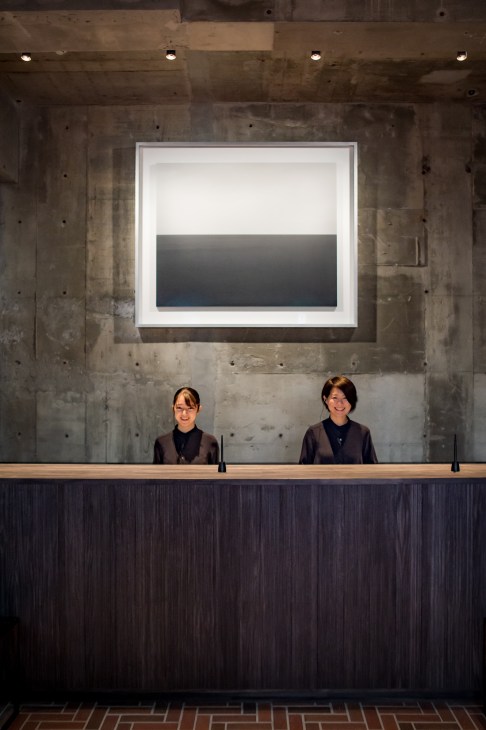
Engaku wanted a restaurant on the ground floor and he knew the man to call on: his friend Shoichiro Aiba. Aiba, who spent five years in Tuscany, is well known for his Italian restaurants; it wasn’t difficult to persuade him to join the project. “I liked the location: near Shibuya but not right in it,” he says. “We always want to be close to places where people come together and this is right next to Shoto Park.” Trattoria Babbo has a more classic menu than Aiba’s other restaurants – osso buco and tripa are staples here – and he worked with his regular collaborator, Tokyo design firm Landscape Products, to give the interior a modern feel with plenty of wood.
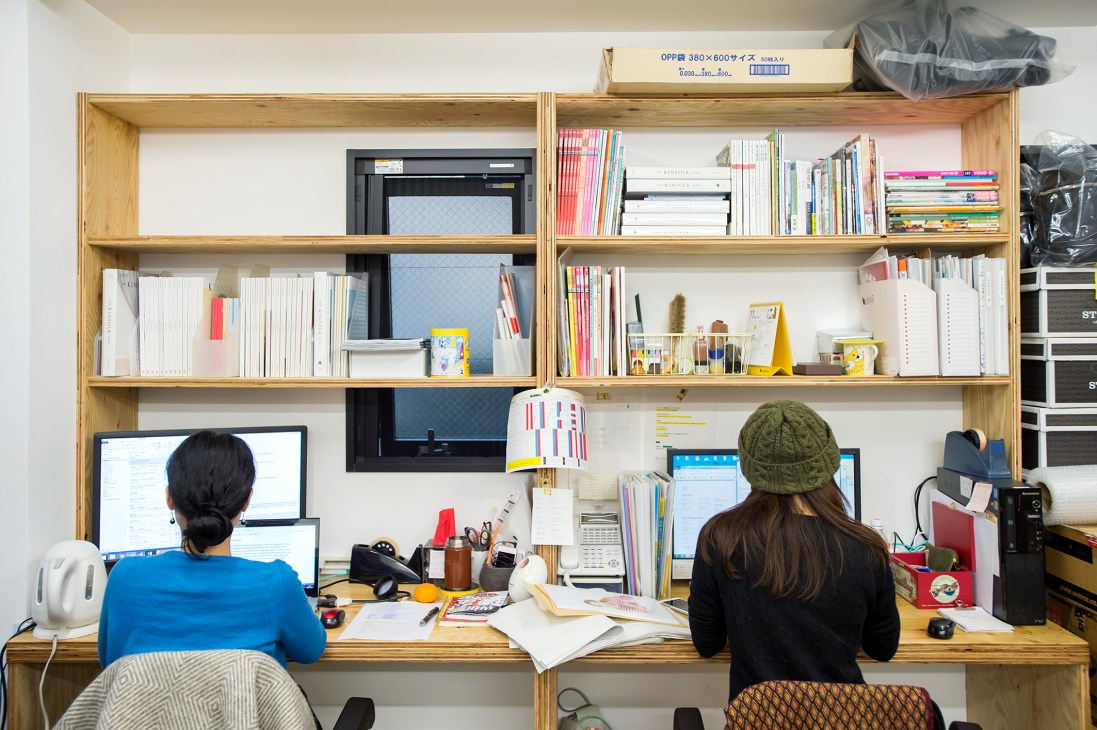
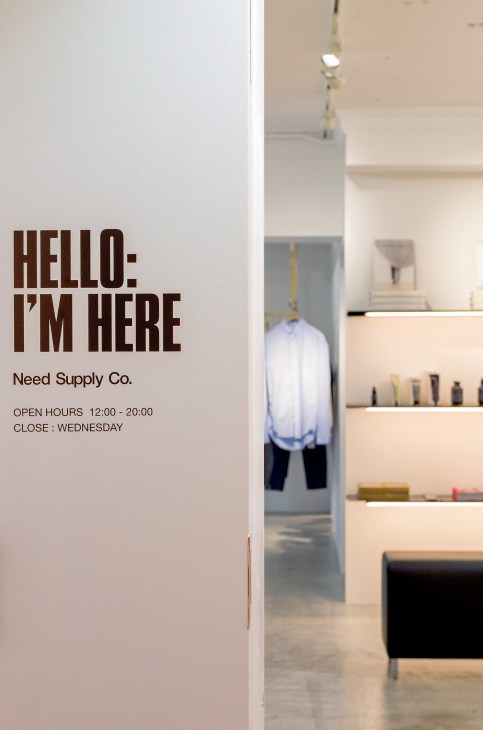
Most of the middle floor was given over to Need Supply Co, a lifestyle shop from Richmond in Virginia. Engaku had been editing the Japanese version of the company’s publication Human Being Journal and knew the brand’s blend of small labels would work well in Tokyo. “I’ve always been fascinated by Japanese culture and the excitement that can build around a brand there,” says Need Supply’s creative director Gabriel Ricioppo.
Engaku invited fashion retailer Takayuki Minami – the team from Virginia had admired the 1LDK shops that Minami has set up during multiple visits to Tokyo – to offer a new perspective on the brand in a smaller, more tightly curated shop. “Tokyo was the first project for Need Supply outside of the US,” says Ricioppo. “The outcome is an extension of our brand.”
Upstairs, in one of two apartments, is Goshi Sato and his graphic-design office Offs. Sato designs many of Engaku’s magazines and it made sense for him to move into the building. Aside from the camaraderie there has been a commercial upside, since Sato has pulled in work from the other tenants. He put together a newspaper for Trattoria Babbo’s opening and has done graphic work for Need Supply. “I don’t have to meet a client in my office,” he says. “We can go downstairs for a coffee or a meal.”
It’s good for Aiba too as the building’s other occupants mean there is a constant stream of customers. “There’s a good interaction,” he says. “Customers who come to Need Supply might come down here and vice versa.”
Meanwhile, for Engaku, the set-up has worked out just the way he’d hoped. “It feels like the old days in Japan when people lived at the back of their saké shop,” he says. “Here I can work on my magazines but still keep an eye on the shop and the restaurant.”
Notes: Who’s in the house?
Second floor:
Graphic-design studio Offs, run by Goshi Sato
First floor:
Need Supply Co; editorial space of Kota Engaku
Ground floor:
Italian restaurant Trattoria Babbo
2.
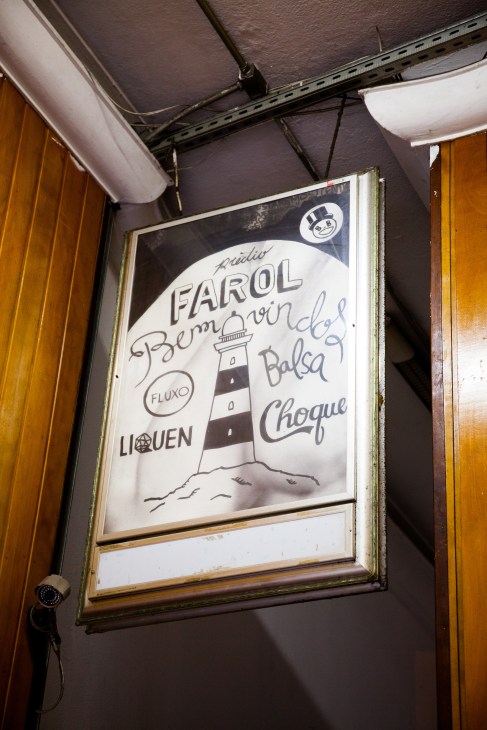
O Farol
São Paulo
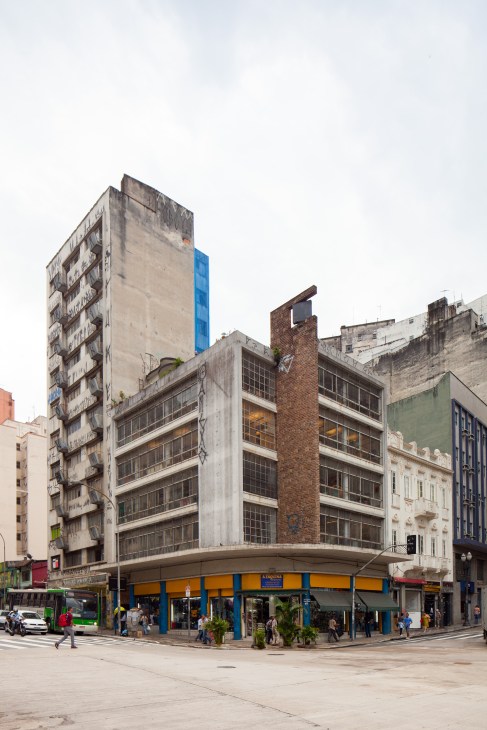
The founders of O Farol (“the lighthouse” in Portuguese) chose the name well. This building in the heart of São Paulo’s Centro district has in the past year become something of a cultural and commercial beacon. From the outside the four-storey building looks almost abandoned: the paint is worn in places and the entrance is through a small door without a doorman or reception. But don’t let appearances fool you: inside, the building is alive and buzzing with activity.
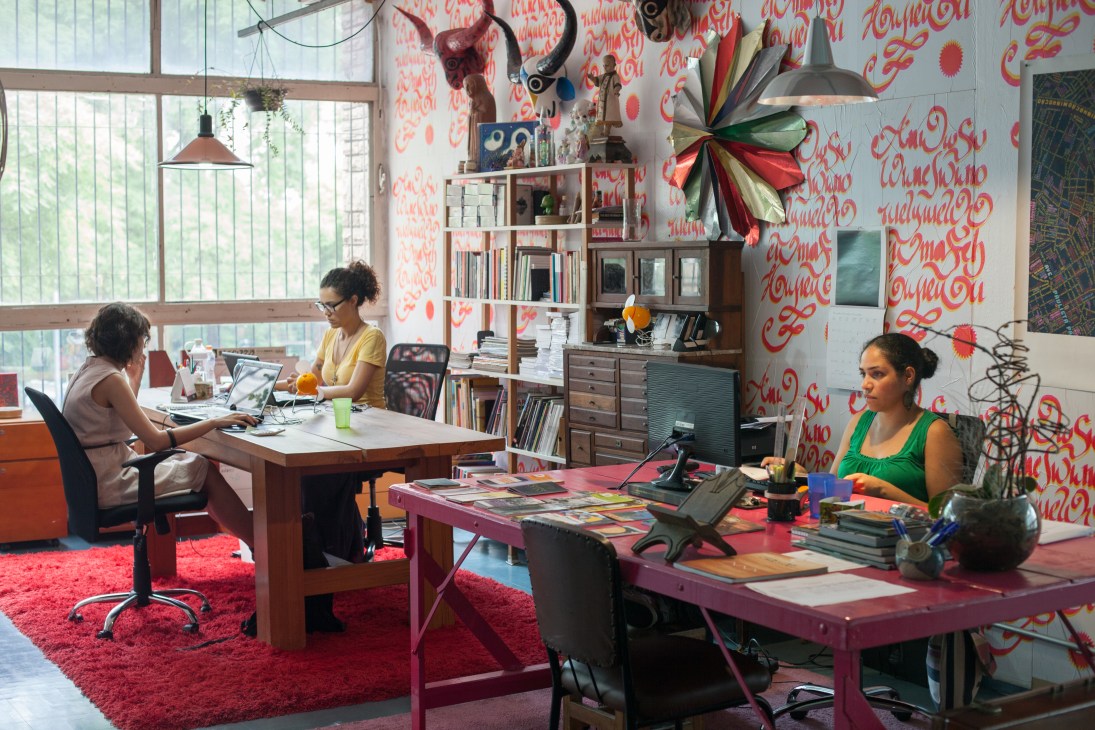
Art directors Elohim Barros and Renata Mein transformed this building into what it is today: a space for six different companies covering sectors from journalism to design, and a magnet for people from across the city. Six months after a large-scale renovation the couple moved in and occupied the fourth floor and rooftop. At first they were unsure what would come of it. “All we knew was that we were looking for a place with a rooftop,” says Mein.
It began at the start of 2013 with Balsa (“the raft”), an events space on top of the building. Over time, Barros and Mein began promoting events with ticket sales and renting space for corporate functions. Then from the beginning of 2014 the rest of the tenants started to arrive, all initially friends of the founders. Today the building is full; the final occupants arrived in October 2015.
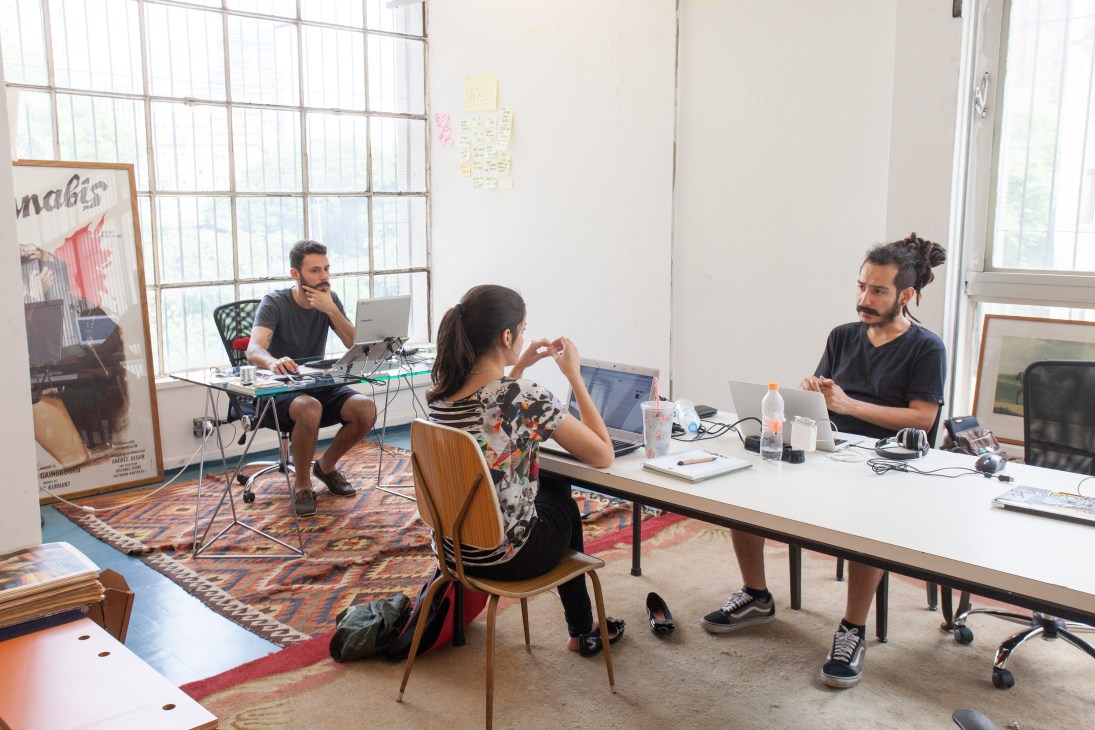
One floor down from Balsa is Fluxo, headed up by journalist Bruno Torturra and 10 other people. His business creates video content on political and citizenship issues. The team has also launched an online radio station. Sharing the third floor is Núcleo Digital, a tech start-up developing software to connect the government and businesses with society at large.
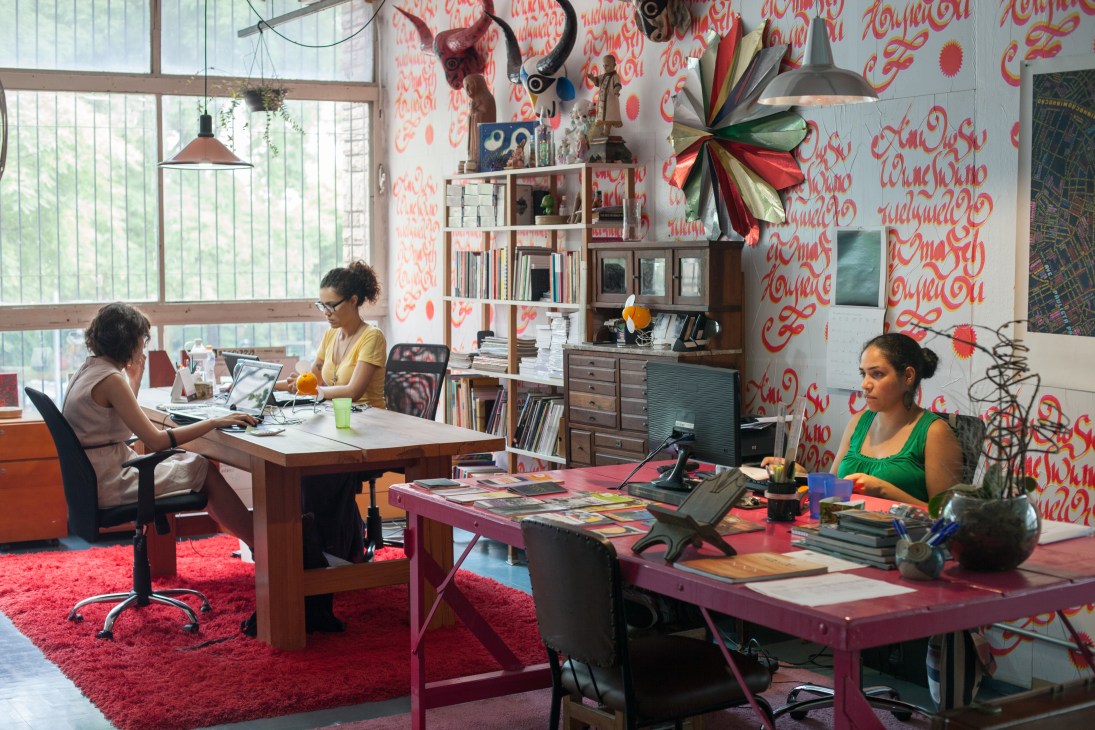
Walk down another staircase and you’ll find yourself in the bright Líquen design studio of Graziela Peres, who worked as an art director at Vogue Brasil before setting out on her own. Peres and her 12 colleagues work with clients such as São Paulo Fashion Week. Finally, the first floor is a cultural powerhouse shared between the Instituto Choque Cultural – the educational arm of the São Paulo gallery of the same name – and Cultura e Mercado, an online forum for Brazilian culture.
However, O Farol is not simply a standout project: it is also part of a wider transformation. Centro as a neighbourhood has been through a rocky period: it used to be known for burglaries and derelict buildings but it is turning over a new leaf. According to city hall, in the past decade the rate of vacant properties in the downtown area has fallen dramatically from close to 40 per cent to 11.7 per cent. New buildings are being erected on virtually every block and people are returning here to live and work.
Much of the credit for the revival must go to the city authorities, who have constructed bicycle lanes and expanded the subway, encouraging people to move back. But O Farol can take some of the praise too. Mein and Barros have created a vibrant hub for the area but the initial impetus actually came from a desire to explore new ways of sharing space. This even comes down to how the building is run: every company has its duties, from paying bills and cleaning communal areas to helping with security. “We are not a co-working space,” says Barros. “We are more like an ecosystem of independent firms that, when necessary, combine our expertise to develop a project together.”
Notes: Who’s in the house?
Fourth floor:
Balsa, an events space.
Third floor:
Fluxo, the website run by Bruno Torturra; Núcleo Digital, a tech start-up.
Second floor:
Líquen, the studio of Graziela Peres.
First floor:
Choque Cultural, an educational institute; Cultura e Mercado, a forum for culture.
3.
324 Oxford Street
Perth
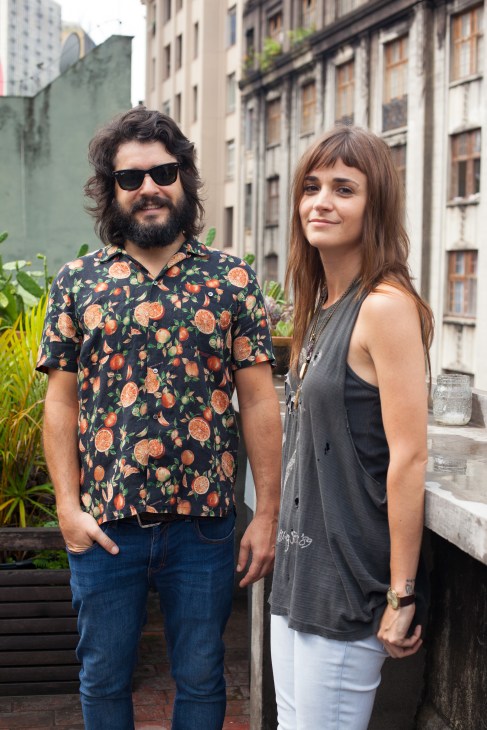
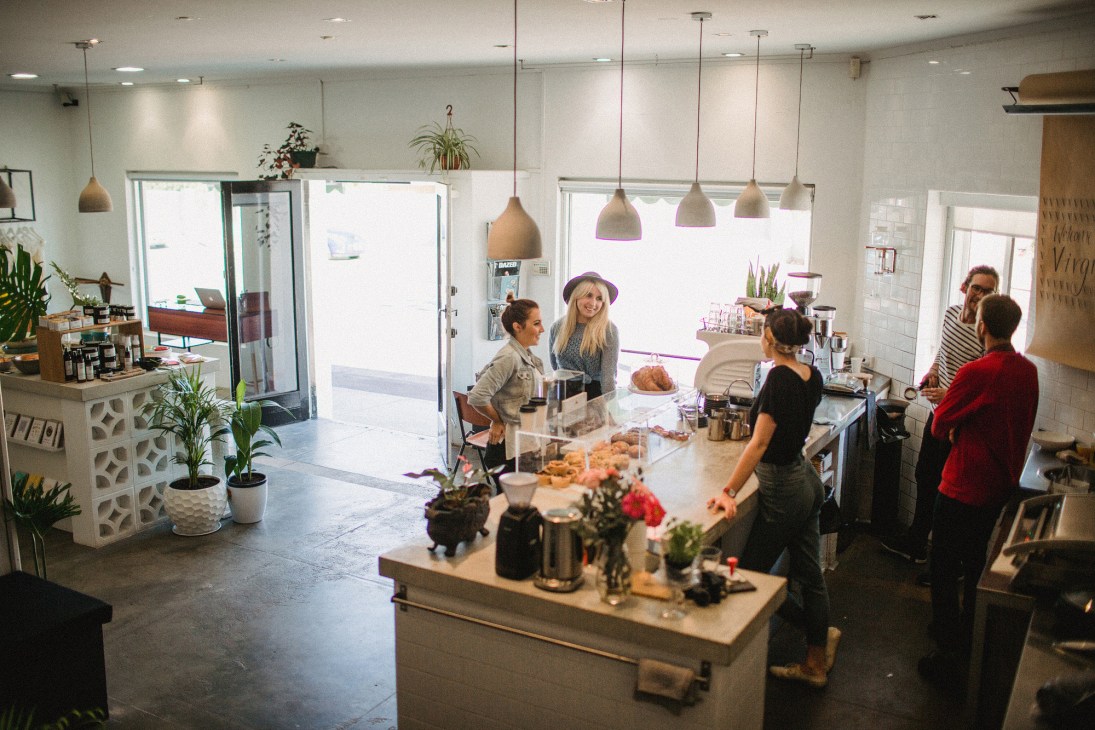
“We chose the space in this neighbourhood because there’s a community,” says graphic designer Leah Dent. Two years ago she set up 324 Oxford with business partner Angela Mitchell. “We can’t quite trace the building’s history, except that it was a corner shop in the 1940s.” The pair fully renovated the shop and what was once an adjacent house so that the building now contains a café, retail space and, beyond that, an office and studio.
From 324 Oxford – at 324 Oxford Street in the Leederville suburb of Perth – Dent and Mitchell run their practice Studio Bomba. They also have three other initiatives: a letterpress stationery company; First Comes Love, an annual fair for people planning to get hitched; and The Skillsmithery, a workshop series that includes classes on bookbinding and leatherwork.
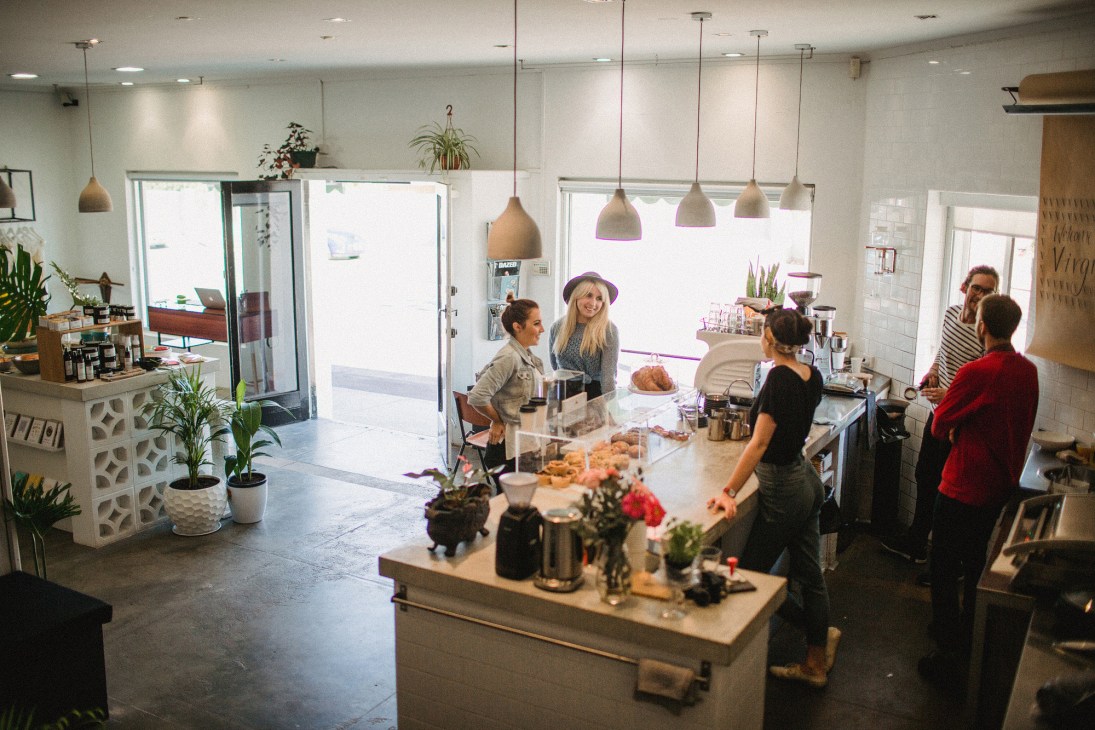
Since moving in they have recruited four other businesses. Entering through the front door, visitors are greeted by a café and a retail space. Fashion designers Erin Taylor and Kate Wilks and their label On a Whim occupy the shop, while the café, Virgil, is run by Levi Lothian and serves beans from roaster Loaded Coffee. Just beyond, on a mezzanine, sits an office and studio where photographer Natasja Kremers and designer Melissa Kitson work alongside Dent and Mitchell.
The nearest shop to 324 Oxford, which is situated among houses, is several hundred metres away. The one-storey building has therefore become something of a meeting point for the neighbourhood’s residents, who regularly drop in for a coffee or to peruse the clothes on offer.
According to Dent, all the businesses benefit from one another. “The exposure to other people’s creative worlds is inspiring. I work in 2D so watching the fashion designers create a 3D object from a sketch is remarkable. Working here is the antithesis of working in an office. There’s no commute, we walk to work and we’ve become not only a hub for the neighbourhood but a part of each other’s lives.”
Notes: Who’s in the house?
Mezzanine:
Studio Bomba, Mitchell & Dent and First Comes Love, all run by Leah Dent and Angela Mitchell.
Melissa Soraya, a graphic-design consultancy.
Kremers Photography.
Ground floor & workshop:
On a Whim, the shop for Erin Taylor and Kate Wilks’s fashion brand.
Virgil Coffee, owned by Levi Lothian.
Notes: Erik Spiekermann on Berlin
In Berlin, people used to live in the front of their buildings and work in the connected courtyards set back from the street. The further you walked into the building, the rougher the trades became. Bakers, shoemakers and tailors didn’t make much noise or cause a lot of dirt but metal and wood workshops did, so they would be housed in the third backyard. Below the flats in front were the shops so the things people needed most would often be easily accessible.
This mix meant workers wouldn’t have to cross the city to get to their workshops and shopping simply meant trotting downstairs to pick up a loaf of bread. We all know what has happened to our cities since: today we sit in traffic to and from work and have our pre-ordered shopping delivered by truck, causing yet more traffic.
Berlin still has those blocks of mixed flats and workshops. Too many of them have been turned into offices and lofts for the “creative industries”, while makers of food and other “ordinary” goods have been forced into industrial suburbs. But suddenly people are making things again and right in the heart of the city: bakeries make bread that actually tastes like bread, there are distilleries in cellars and craftspeople are back in the backyards. All these trades benefit from being in one space, with the people who run them living close to where they work.
UK designer Norman Potter’s definition of a workshop runs as follows: “A place in which small-scale, sometimes specialist manufacture is carried out, often with a shop-like availability of product or service by direct personal transaction.” This is exactly what more and more people are doing. Sounds romantic? Perhaps. But in Berlin at least, it simply means going back to what we once had.
Spiekermann is one of the world’s most celebrated living typographers and a designer with strong thoughts on the future of the city. He is on the lookout for a space in the centre of Berlin, at least 3,000 sq m in size, to house (among other things) a printer, shoemaker, picture-framer, baker and bike shop.
Image: Kremers Photography
Air mettle
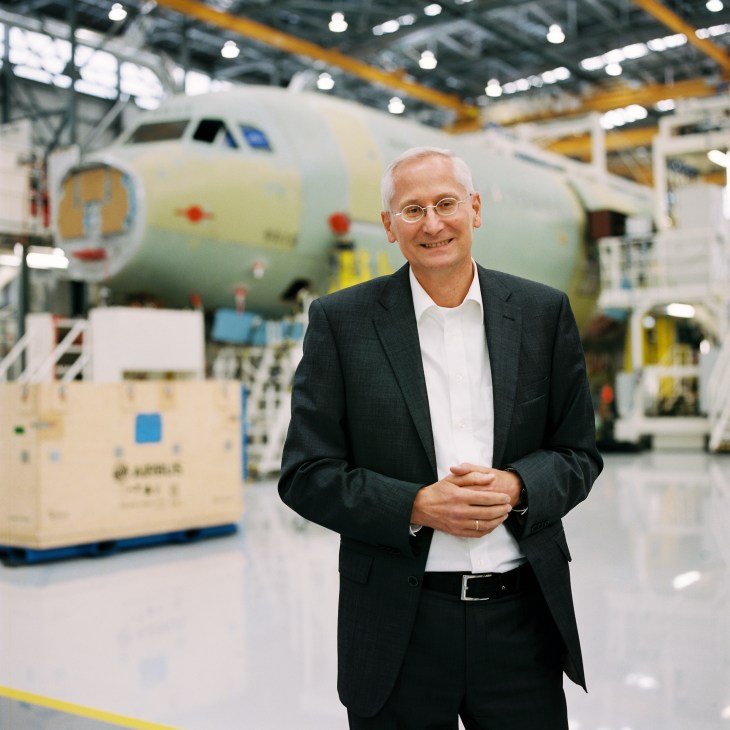
On the day we visit Airbus’s new assembly line in Mobile, Alabama, there are three jets on the factory floor in their final stages of production. “The first one is for Jetblue,” says Dr Ulrich Weber as he gestures towards the tail section of an A321 that has just had its wings attached. Behind him two more A321s, bound for American Airlines, await the fitting of their noses.
As vice-president and general manager of the assembly line, German-born Weber is charged with making sure everything comes together with precision and punctuality in this new $600m (€565m) facility. It was launched in September 2015 but is already a hive of activity.
To understand why the European aircraft manufacturer has put down roots in US soil – essentially in its rival Boeing’s backyard – it is crucial to look at the broader commercial hinterland. There is a turf war taking place on the tarmac of some of the world’s biggest airports. Many terminal stands where fleets of Boeing 767s once rested now host Airbus A321s, waiting to carry passengers on transcontinental journeys. In the US, American Airlines has retired much of its wide-body 767 fleet and now flies the narrower A321 across the country; in 2014 Jetblue began flying A321s too.
New technology and design enhancements mean smaller jets can now fly further and airlines don’t need big aircraft to make the longer hauls. Instead they are opting for smaller planes that are easier to fill with passengers. The result is a single-aisle-jet market that is booming and set to grow still further. Both Airbus and Boeing offer bullish estimates of how many jets the world will need in the next 20 years. Airbus’s forecast puts demand for planes of the A320 type at about 23,000 by 2034. The maker estimates the value of the global single-aisle-jet market to be worth more than $2trn (€1.9trn) over that period.
Airbus says the increased capacity at plants in Mobile, Tianjin in China and the long-established factories in Europe will allow it to roll out 60 units of this jet type per month come 2019. Boeing says it will increase the per-month output of its 737 family to 52 by 2018. Clearly the race is on. Both manufacturers sell the majority of their products overseas, which means they are always on the hunt for anything that will give them an advantage outside of their home markets. Airbus is currently winning the battle to build offshore production outposts.
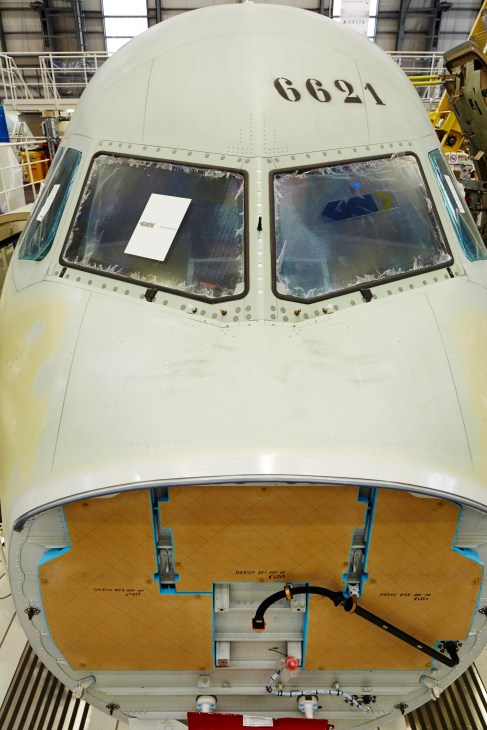


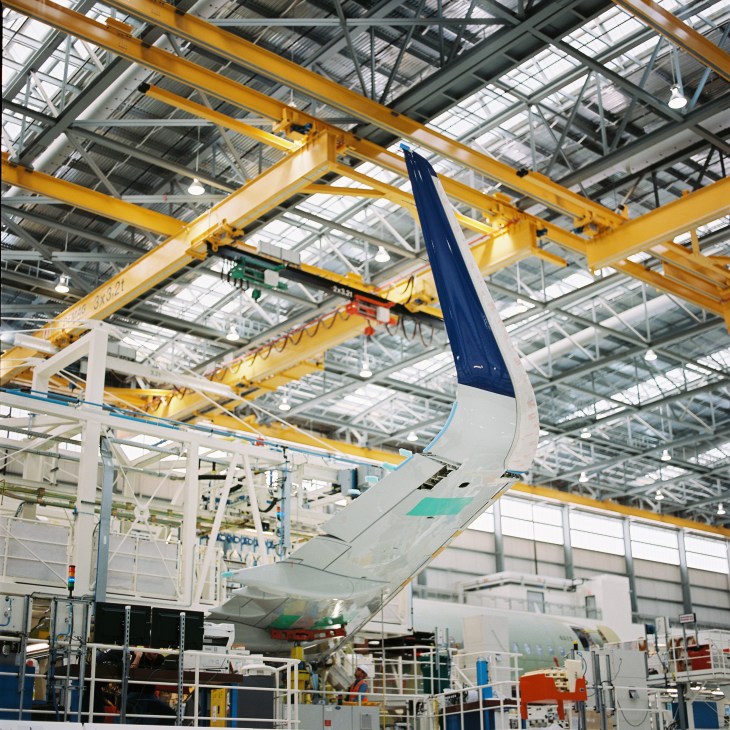

“The sun never sets on Airbus manufacturing,” says Barry Eccleston, president of Airbus Americas. “Internationalisation and a global industrial footprint are part of our strategy.”
Richard Aboulafia, vice-president of analysis at aviation consultancy Teal Group, believes this philosophy is about more than lowering costs. “These operations exist for other reasons: organic currency hedging, in case the euro gets strong; leveraging against European trade unions and politicians supporting them; and helping to establish a presence, which is good for cultivating political support – always useful when pursuing defence contracts.”
The single-aisle-jet market is gathering momentum. On a September 2015 visit to the US, Chinese president Xi Jinping visited Boeing’s production site near Seattle. There he announced a partnership between the US maker and aerospace companies in China that included a facility for finishing 737s bound for Chinese customers. It was a clear sign that Boeing has decided it too needs to mark its territory overseas.
Add to that the November 2015 initial preview of China’s new Comac C919 and the indications are that the Chinese are out to unseat the old duopoly by building a competitor to the A320 and 737 families. The C919 has yet to take its first test flight but aerospace leaders are looking on in anticipation.
However, while the global race intensifies there’s really only one goal that matters back in Mobile: the quest to get it right and get it done on time. “What I really like here is the pragmatism,” says Weber of his aim to have the Mobile plant and its technicians rolling out four planes a month by 2017. “If we want to get something done, we do everything to achieve it in a short period of time.”
Notes
Project new aircraft deliveries from all makers until 2034
Very large aeroplanes: 1,550
Twin-aisle aeroplanes: 8,108
Single-aisle aeroplanes: 22,927
Notes
Watch the skies
1.
Mitsuibishi Regional Jet (MRK)
Japan’s first commercial aeroplane in nearly 50 years, the MRJ is nothing radical but Japanese engineering rarely disappoints. A recent flight-test programme is proof it’s progressing well.
flythemrj.com
2.
Bombardier C Series
The CS100 and CS300 are the Canadian maker’s first attempt to compete with the smaller end of the 737 and A320 lines. The jet should make its first flight in 2016 with Swiss International Air Lines.
bombardier.com
3.
Comac C919
The jet’s range and passenger capacity could make China a force in the single-aisle market but it will be some time before the plane completes flight tests.
comac.cc
Go ape
It’s time to celebrate: the dreaded Year of the Sheep is finally coming to a close and the Year of the Monkey is nearly upon us. In the Chinese zodiac, the sheep is considered a meek, doltish creature, so some superstitious Chinese women tend to hold off having babies until its more auspicious simian successor makes an appearance. (It should be noted, for what it’s worth, that Bill Gates and Steve Jobs were both born in the Year of the Sheep and neither would exactly qualify as a “dolt”.)
Monkeys are prized for being versatile, good-humoured, clever and innovative. And the Year of the Monkey traditionally favours those who are shrewd negotiators and aren’t afraid of taking bold action. “The only weakness of monkeys is that they always want to change the current situation; they’re impatient,” says Tan Khoon Yong, a Singaporean feng shui grand master. “Overall though, their merits outweigh their weaknesses.”
So what does 2016 have in store? The Year of the Monkey may not only bring a boom for Chinese maternity wards but also great opportunities in business and creative endeavours. Here are our predictions.
Entrepreneurship
There may be no better time to take a risk on a new business venture or test unconventional ideas, even those that seem wild or impractical. Entrepreneurs must seize opportunities and be decisive – but also think long term. The monkey year brings luck to those who act quickly but don’t get carried away: short-term gains can be lost if business owners aren’t thinking ahead. By all means dream big but remain savvy.
Diplomacy
The Year of the Monkey may prove to be a volatile and complex time for international relations. As such, if diplomats are going to make breakthroughs they will need to rely heavily on their negotiating and lobbying skills. Foreign secretaries must also keep their wits about them: monkeys are known pranksters so even if deals are reached they may not always be honoured.
Creativity
Given the monkey’s curiosity, imagination and individualistic nature, this could be a bumper year for artists, architects and designers, particularly those willing to push boundaries and be at the forefront of new trends. Designers who excel at rapid change should see success (this may bode well for fast-fashion retail chains).
Travel
For luck and inspiration, look to the US and Europe. In the monkey year, the lucky directions will be east and west; the US is to the east of China and Europe is to the west. The sheep was certainly not friendly to the US and Europe (things got really baaad); the monkey should bring a change of fortune with more stable economic and political situations.
Business development
Monkeys are adept at short-term projects but they lose focus when it comes to longer-lasting ventures. Companies thinking about expanding their airline services or breaking ground on major commercial developments may want to delay their decisions until a more auspicious year arrives.
Entertainment
Bette Davis, Louis Malle and Diana Ross: they were all born in the Year of the Monkey. (Yes, Macaulay Culkin too but he may be the outlier.) The extroverted monkey will bring good fortune (and perhaps a golden statuette) to entertainers who take career-defining creative risks in 2016. But please note: Planet of the Apes has been done to death already.
Relationships
Monkeys don’t have great relationships because they get jealous easily and don’t like to share with others; when they are confronted with problems they tend to be evasive. As a result, people should take extra care of their relationships with colleagues in the coming year, and learn to share. Give credit where credit is due.
US politics
Former US secretary of state Hillary Clinton can update her business cards and reserve a moving truck. According to Chinese philosophy there must be balance between yin and yang in the universe. The monkey is considered a yang animal, which is a male symbol, so women are expected to have good fortune in the coming year. Unless Clinton faces Carly Fiorina in the US presidential election she should coast into the White House.
Notes
Born in the monkey year? Commit these to memory
Lucky colours: White, gold and blue
Unlucky colours: Red, black, grey and dark brown
Lucky numbers: 1, 7, 8
Unlucky numbers: 2, 5, 9
Lucky flower: Chrysanthemum
Best element: Earth
Reel deal
There’s a cartoon – sorry, animation – doing the rounds that features all those Disney icons from our infancy. But instead of the hand-drawn imagery of yesteryear, these characters have been brought crashing into the 21st century. The reason? Computer Generated Imagery (CGI).
Some say the prevalence of computer-drawn digital imagery is stripping the industry of individual creativity. But animation-studio giants such as Pixar are proving that technology can be harnessed to create the most detailed animation we’ve ever seen (it doesn’t have to look like a computer game if you don’t cut corners). And small studios from Japan to the UK are also finding an audience.
Spanning films, advertising and music videos, this is a world of attention to detail where drawing, painting and moulding still exist. We’ve visited the large and the small to find out what’s shaping up for 2016. The future of animation may not be so much about the techniques but the ability to tell a funny, clever or moving story; achieve that and you’re on your way to winning over the audience.

1.
Pixar
Emeryville
Wander around Pixar’s campus in Emeryville, northern California – yes, this is a “campus” – and you could be forgiven for thinking you were in Silicon Valley. Near the giant outdoor artwork of the company logo – a desk lamp – young employees flow in and out of the glass-doored Steve Jobs Building (the Apple man was one of the original founders). Nearby a vocal lunchtime game of basketball is taking place, while the more disciplined are doing lengths in a swimming pool that is neatly divided into lanes.
When it comes to animation, Pixar’s opuses trip off the tongue. The studio has been making a name for itself ever since its debut feature, Toy Story, in 1995; skip forward to the present day and the list of household-name films has swelled to Finding Nemo, Wall-E and many more.
Pixar is undoubtedly pioneering – and it’s set to continue in that vein. With its glimmering complex and membership of the Disney mega-family since 2006, it’s hard to imagine what it was like pre-Toy Story. “We had been on a shoestring budget for so long,” says lighting and photography director Sharon Calahan. “I had a third-hand desk that was falling apart and my chair didn’t have arms on it because they had broken off. Now we have a lovely campus and free cereal!”
While CGI has replaced hand-drawn movies, Pixar is stepping it up a gear and seeing how far it can push technology to remain at the forefront of animation. The stats for The Good Dinosaur, released in the US at the end of November 2015, are revealing. More than 900 effects shots in the film – a typically Pixar tale of a dinosaur who acts like a boy and a boy who behaves more like a dog – included work from by far the largest effects team on a Pixar film. “We’re all perfectionists,” says effects supervisor Jon Reisch, whose wife also works at Pixar. “You spend years on a film and we’re looking at really detailed minor points.”
While the animation business undoubtedly requires individuals with an obsessive personality and an ability to lock themselves in dark rooms for long periods of time, Pixar takes it to a whole new level. The effects team constantly has to pore over minute details, from creating a realistic CGI wine-pour action in Ratatouille to making sure the rapids and crashing waves of an angry river look realistic in The Good Dinosaur.
But it is the scenery in The Good Dinosaur that gives the clearest indication of where Pixar is heading in 2016. Modelled on parts of Montana, Idaho, Wyoming and Utah, the team downloaded 167,000 sq km of US geographical data and created a virtual set. They then zoomed through the area on a computer – CGI film scouts – and decided where they wanted to put their virtual camera. It was the first time such a detailed endeavour had been attempted.
With about 400 staff members contributing to any one film, which can take several years to complete, the number of departments and stages the film has to go through is overwhelming. And yet despite the protocols in place, Pixar president Jim Morris argues that the studio is old-school in many ways. “People here are staff as opposed to the majority of the motion-picture business where you go from project to project at different studios,” he says. “So we’re almost like an MGM of the 1930s or 1940s.”
Pixar seems to instil fierce loyalty and a desire to stay put but the studio isn’t resting on its laurels. It’s starting to slowly shift the emphasis away from founding directors such as John Lasseter to a younger generation that includes first-time director Peter Sohn. “I know it sounds trite,” he says with an earnest expression, “but there are a lot of people here who love making movies.”
Although with each of those people producing as little as five seconds of animation per week, it certainly seems like a tough kind of love.
pixar.com
2.
Tonko House
San Francisco
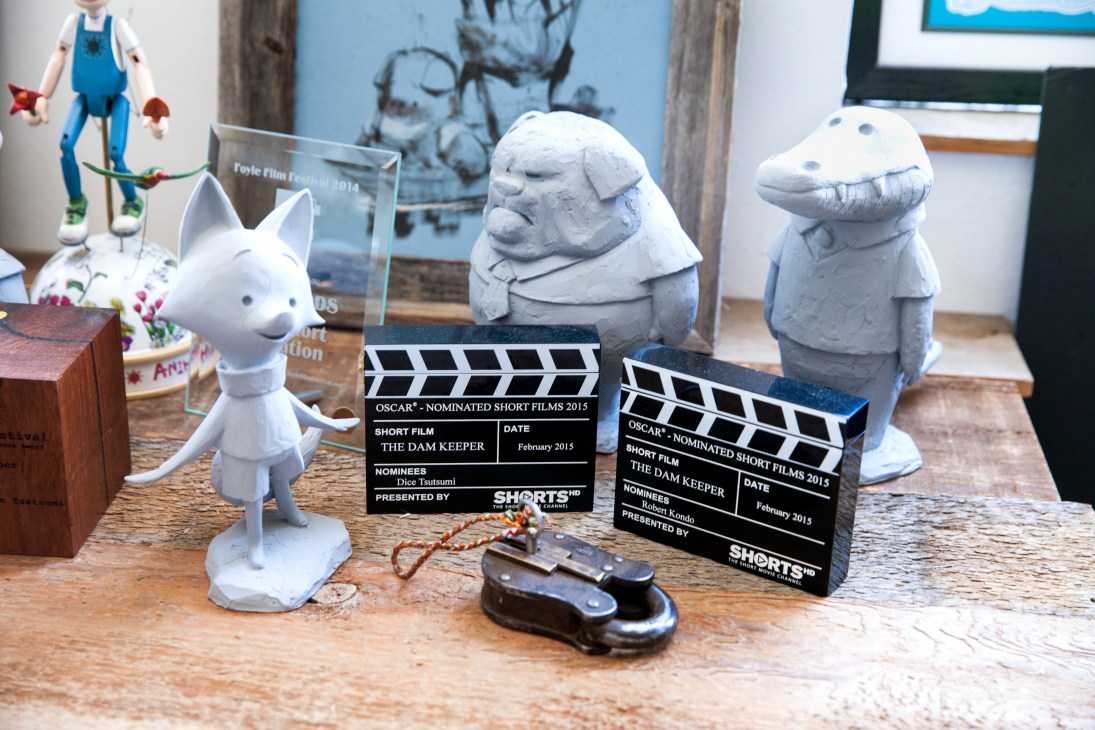
Robert Kondo is enthused. “This is the most exciting time to be in animation since we started working,” says the Tonko House co-founder. “There is a need for content everywhere.” And indeed, that hunger for animation has kept the fledgling studio that he set up with Dice Tsutsumi in 2014 solvent ever since.
The founders – both former art directors at Pixar – are finishing production on a 13-minute short called Moom. The pair hope that the film, based on a Japanese children’s book, will be touring the festival circuit in 2016. They’re also working on a CGI feature-length spin-off of their debut hand-drawn and painted short The Dam Keeper; it and an accompanying graphic novel are both in the planning stages.
With only four full-time staffers their set-up is different from the “old Hollywood model”, says Kondo. Mixing hand-drawing and CGI, Tonko House has the dexterity of a small company but also the challenges of cementing distribution and working with outside production staff. Yet Tsutsumi believes Tonko House – an amalgamation of “pig” and “fox” in Japanese, characters from The Dam Keeper – is in a unique position. And with Netflix expanding its animated content in 2016, both founders feel that new online distribution channels will only help studios such as theirs. “We want to share the journey,” says Tsutsumi.
tonkohouse.com
The CV
Founded: 2014
Staff: 4
Paintings created for ‘The Dam Keeper’ Short: 8,105
Pages in ‘The Art of The Dam Keeper’ Book: 168
3.
Oh Yeah Wow
Melbourne
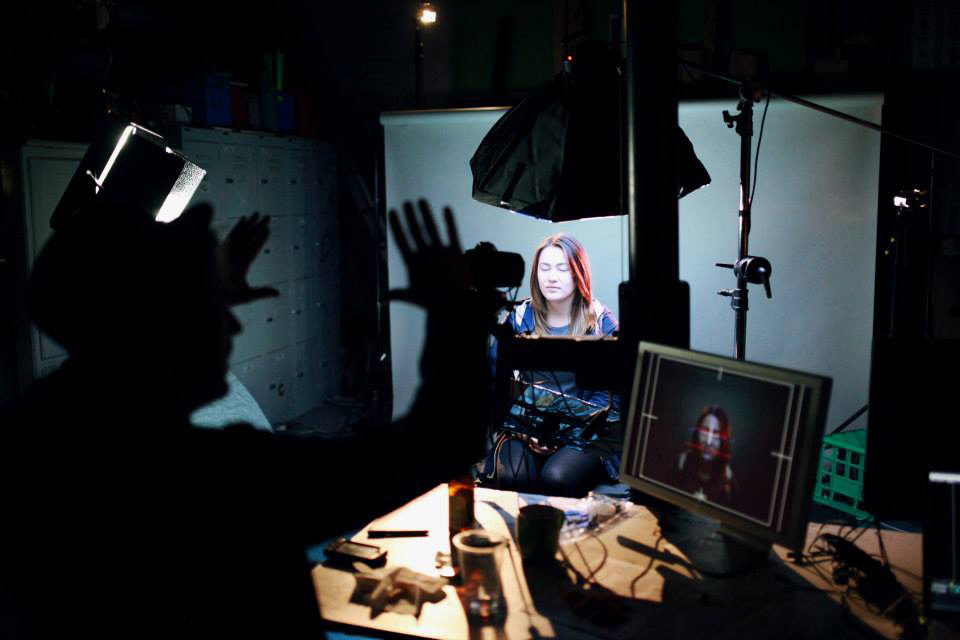
Darcy Prendergast has to think a little. He’s pretty sure that his Melbourne-based studio was formed in 2011 and has about 20 workers but it’s hard to know for sure given the flow of freelancers through the warehouse space in the Brunswick neighbourhood. However, business was never the major driver for setting up Oh Yeah Wow. “I didn’t want to have to work on somebody else’s feature film ever again,” he says with a chuckle.
Oh Yeah Wow is a hotchpotch of creative ideas spanning live action, stop motion and hand-drawn 2D animation, covering everything from advertising to music videos. And the results are always interesting. Indeed, you get the feeling that Prendergast and his colleagues are doing what they love best and carving out a niche for themselves along the way.
Prendergast talks about a “gap in the market”, given the lack of global stop-motion studios. Current and forthcoming projects include a cartoon series for Nickelodeon Australia called Supa Phresh, about three mutants in a supermarket universe; then there’s personal project Pongo, which uses clay stop-motion and focuses on the plight of orangutans in Sumatra. Monsters Playground, another stop-motion film, is set for release in mid-2016. The secret of the studio’s success? “We’re really good at storytelling,” says Prendergast.
ohyeahwow.com
4.
Calf Studio
Tokyo
Mention Japanese animation and most people will assume you’re referring to anime, from the epic big-budget films of Hayao Miyazaki’s Studio Ghibli to Pokemon cartoons and dystopian robots-in-space movies.
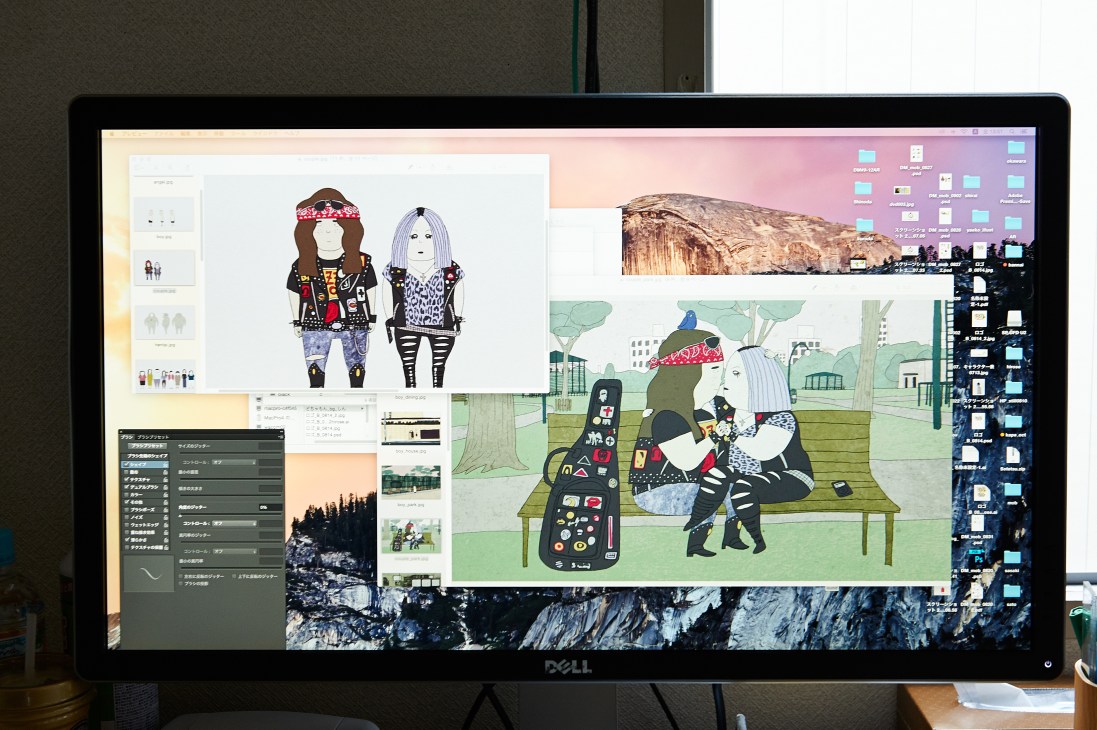
Calf Studio’s work doesn’t belong in this category. The small Tokyo-based independent outfit, formed in 2010 by three Japanese film-makers and a film critic, is known for animation that’s drawn by the artists, frame by frame. “It’s labour intensive,” says Kei Oyama, one of Calf’s co-founders. “There are 24 to 30 frames in every second of a film and you get distortions in each one. But that’s what makes it unique.”
Calf’s small office is located in an old building in central Tokyo. Early on the aim was to bring attention to the work of the collective’s film-makers – Atsushi Wada, Mirai Mizue and Oyama – through screenings at festivals overseas, art-house theatres in Japan and limited DVD releases.
Oyama, 37, is the only original member left and he has taken Calf in a more commercial direction. Recently the studio has worked with independent artists and film-makers on TV shows for public broadcaster NHK, educational publisher Benesse and big multinationals.
The studio’s speciality is adding movement to paintings and drawings. It evolved from a project Oyama and Wada worked on before Calf’s launch: in 2008, they brought a comic strip about manga artist Shigeru Mizuki to life for a feature film that was more zoetrope than Pixar.
Soon Benesse was asking them to work on TV show Shimajiro Wow!, which had more than a dozen animated shorts, each with a different artist. “Japanese anime mostly comes from printed manga; rarely do they start as illustrations. We felt there was potential for more variety and we wanted to surprise people,” says Oyama.
In Calf’s office six people – most of them students from Tama Art University, working part-time – are adding colour to digital sketches on touch-screen computers for a cartoon called Dochamon Junior. The five-minute programme has aired on NHK every week since October and to create one episode takes about 10 days.
The budget is small and Calf doesn’t expect big profits from the five-month gig. But the creative freedom and the chance to reach a mainstream audience were too good to pass up. “The offer came from the broadcaster, not through an ad agency, which is typically the case,” says Oyama. “We brainstormed with NHK on the story but animation decisions are left to us.”
On the screen next to Oyama’s, Shin Hashimoto pulls up a scene from another project. Boku no Bambi (My Bambi), a film that follows a screwball schoolboy, is one of several original stories Calf has in the pipeline for 2016. It’s reminiscent of the offbeat and absurd films that have earned Calf awards at Annecy International Animation Film Festival in France, the Fantoche International Animation Festival and Animafest Cyprus.
The awards never did much for the studio in Japan, where its commercial work comes from. So in 2013 Calf’s original members split up, leaving Oyama to restructure the studio. He still calls on his old partners for jobs but has stopped organising screenings and producing dvds. Calf’s reputation has spread to the point where requests for screenings of the studio’s work from festivals in the UK, Australia and Italy are trickling in; Oyama will start releasing work online soon.
The studio makes just enough to commission one of its own 10-minute films each year. Oyama’s dream is to do a full-length animated feature but for now he’s happy to challenge mainstream perceptions about Japanese animation. “There are a lot of artists here whose work is bizarre but they would do amazing commercial work if somebody could connect them to ad agencies and media companies. We can do more of that.”
The CV
Founded: 2010
Annual revenue: ¥40m (€300,000)
Staff: 4
Type of animation: Drawn or painted by hand
Types of media: Shorts, music videos TV and online ads, animated TV shows
Forthcoming films: ‘Dochamon Junior’ (2015/16), ‘Boku no Bambi’ (2016/17), ‘Keiichi Tanaami Art Exhibition’ (2016), ‘Eikoh Seminar’ (2015/16)
5.
Job, Joris & Marieke
Utrecht
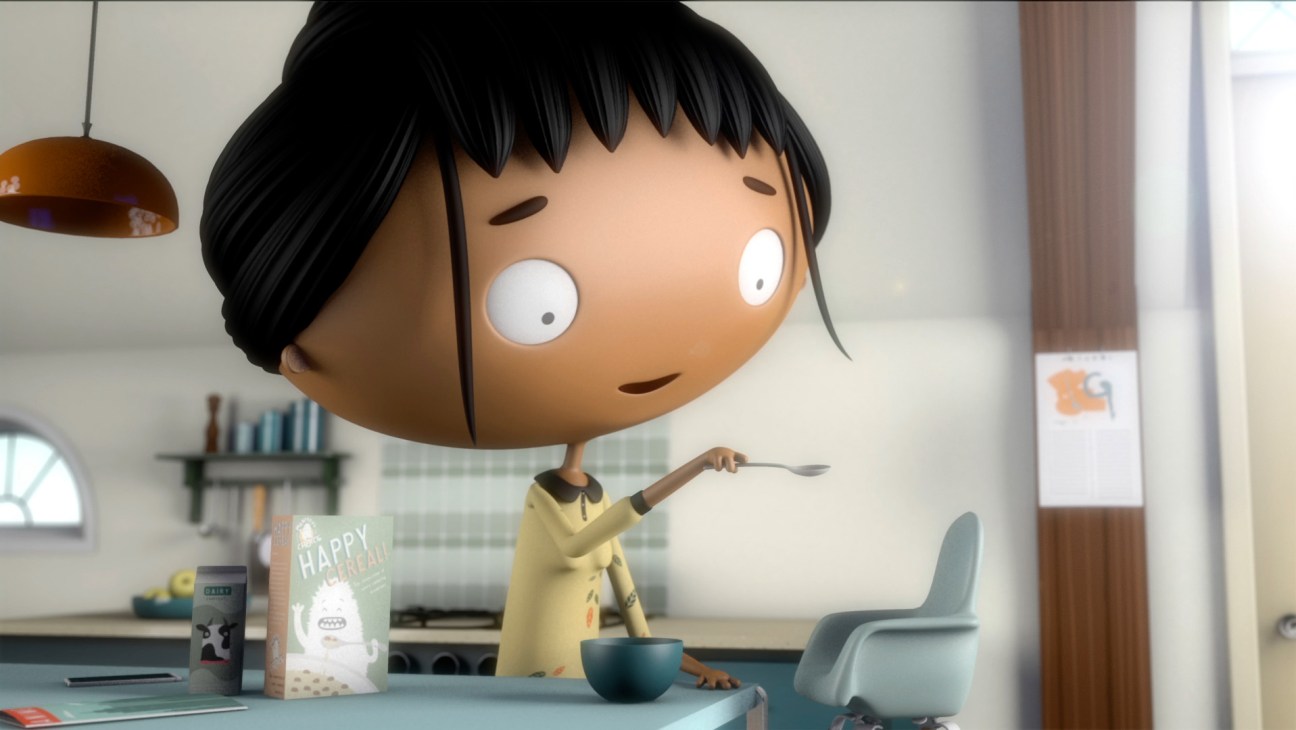
Joris Oprins met co-founders Marieke Blaauw and Job Roggeveen when they studied together at the Design Academy in Eindhoven. While they were meant to be designing chairs and water coolers they discovered their interests lay elsewhere. “We tried to tell stories with products at the beginning but that didn’t work,” says Oprins. “Then we started making shorts and they let us as long as we made some products occasionally.”
The friends are still working together – now in an unflashy, utilitarian space in Utrecht – producing adverts, music videos and short films. Oprins and Blaauw have a five-year-old daughter together, Aagje, who helped inspire their film Otto.
“When we were in Los Angeles lots of people told us they would love to have a three-person studio,” Oprins says. “You’re not a small part in a big film but a huge part in a small film, something we prefer.”
Oprins is, of course, being modest. The reason he was in California was because the studio’s 2014 short, A Single Life, was nominated for an Oscar. The trio admit they have to be careful that the attention and desire to expand doesn’t cause them to lose their winning formula. But Oprins denies they’re on the road to becoming another Pixar. “We’re more stylised and have slightly weirder characters.”
jobjorisenmarieke.nl
The CV
Founded: 2007
Size of studio: 60 sq m
Staff: 3 (plus freelancers)
Type of animation: CGI
Types of media: Shorts, music videos, adverts, feature film in planning stage
Forthcoming film: ‘Kop Op’, 25-minute film (October 2016)
Length of ‘A Single Life’:: 2 minutes, 15 seconds
International awards won: 29
6.
Daisy Jacobs
Gosport, UK
When it comes to animation Daisy Jacobs thinks big, which makes it appropriate that her breakthrough film – a Bafta-winning short – should be called The Bigger Picture. Shunning diminutive traditional sketched animation, small clay models and the constraints of a computer screen, her animation is life-sized – a technique that throws up its own set of challenges.
For the Hampshire-born film-maker, recreating her characters in such epic proportions actually makes the job of animating easier. “It’s a much more physical way of working and I think you end up connecting more with the characters,” says the 27-year-old.
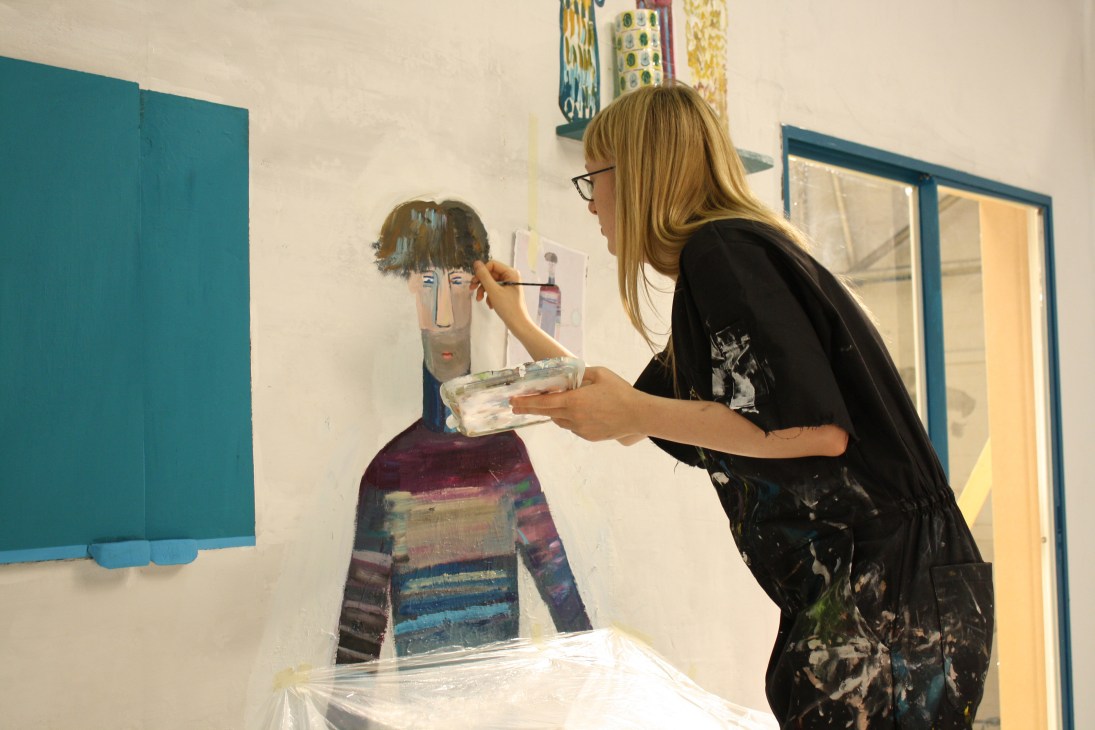
Not that she is making life easy for herself. The scale of her work makes it expensive as she has to rent a large studio space and invest in lighting and camera equipment. To create her animation Jacobs dons her overalls, gets out her brush and paints characters on a wall, making them 3D with papier-mâché. She then uses props such as tables, chairs and pictures to give the scene a surreal realism.
With 24 frames in a second, Jacobs may have to repaint the wall the same number of times just to create a second of footage – a time-consuming endeavour. “If we’re doing something big we can probably do two seconds – so 48 frames – in a day,” she says, laughing. The more complicated a scene – walking, talking and with 3D objects – the longer it takes.
With her contemplative responses and self-declared mission to create films that are “worthwhile”, Jacobs comes across as the antithesis of the big-name studio. Hers is stripped-down work that she writes, storyboards and designs on her own, only combinging with a team of people when it comes to physically putting the film together – and she works with just one co-animator, Christopher Wilder.
Operating this way has its advantages and is the only way she can see her future right now. “It’s as individual as something can be,” she says. And it makes sense: Jacobs retains creative control.
The Bigger Picture – an equally funny and sad story of two brothers dealing with their ageing mother and inspired by the death of Jacobs’ grandmother – was the film-maker’s MA project when she was studying directing animation at the National Film and Television School in Buckinghamshire. She had no idea it would get the reaction that it did, winning a Bafta and becoming an indie-festival favourite. That success has catapulted her into the limelight and set her up for an illustrious career.
With the awards money, an online-funding campaign and cash from an organisation (“I don’t think I’m allowed to name it,” she says), Jacobs is now making her next film in another giant studio space in Gosport. “It builds on what we did in The Bigger Picture,” she says. The name of her third film has recently been announced as The Full Story (her debut was the two-minute Don Justino de Neve) and will be ready for release by the end of next year.
Until then Jacobs promises to turn up to the studio every day, armed with her set of paints and brushes, and do what she does best: bringing her life-size characters into being and creating a really rather clever story along the way.
thebiggerpicturefilm.com
The CV
1988: Born in Hampshire
2009-11: Undergraduate in illustration at Central St Martins
2011-12: Postgraduate in character animation at Central St Martins
2012: Bafta scholarship to study at National Film & Television School (NFTS)
2012-14: Masters in directing animation at NFTS
2014: Release of ‘The Bigger Picture’
2015: Wins Bafta for Best British Short Animation
2016: ‘The Full Story’ to be released at end of year

7.
Blue-Zoo
London
The offices of Blue-Zoo have all the trappings of a creative space: mandatory table football, colourful posters on the wall and someone using an exercise ball as a chair; even the walls on the third floor have been turned into doodle-covered blackboards. But the aesthetic is not merely symbolic: real creativity happens here, manifesting itself in a hushed silence. The team is knee-deep in a new project: “Digby Dragon,” says co-founder Tom Box excitedly. “It’s a 52-episode TV series. Just look at the quality of the animation.” He shows us a feathery-looking character, one of Digby’s companions; the detail is so intricate that young viewers will be able to see every aspect of his plumage.
This small studio off Great Portland Street in London has 130 employees yet it has already garnered three Baftas and worked with everyone from Microsoft to Disney. Its beginnings, however, were much more humble. Computer-animation classmates Oli Hyatt, Tom Box and Adam Shaw founded Blue-Zoo at Bournemouth University in 2000. “Oli sent an email around the department asking, ‘Who wants to start an animation company?’” says Box. It was as simple as that.
The newly formed trio didn’t have to wait long before their first commission: creating a cartoon character for the BBC, prophetically named Blue Cow, who travels around the countryside on a red double-decker bus and embarks on all sorts of misadventures.
The studio has broadened its horizons since then, producing adverts, visual identities and corporate infographics, as well as TV series; its overall success derives from the latter. When the team started out 15 years ago, animated TV was an unorthodox trade and CGI existed only in feature films; even the BBC hadn’t ventured into animation. Today the humour, creativity and quality that brought Blue-Zoo success in children’s TV has trickled down to the rest of its work. “We can apply our high-calibre tools and expertise from long-form animation to our commercial work, which means we can produce high-quality, engaging commercials in a short time,” says head of services Damian Hook.
Blue-Zoo is growing fast but the team doesn’t want to lose its small-studio mindset. “It means you have creative freedom,” says Will Cook, a lead animator. Part of their strategy is promoting the studio’s sense of “Britishness”. With the animation industry dominated by US funding and production – even for a film as seemingly British as Paddington Bear – Blue-Zoo is keen to start making in-house big-screen efforts and compete with the US animation industry.
“We want to address this imbalance and work is underway,” says co-founder Hyatt. “We’ve won funding from the British Film Institute to produce our own feature films.” Now all they have to do is track down a decent screenplay.
blue-zoo.co.uk
Q&A
Tom Box & Oli Hyatt
Co-founders, Blue-Zoo
How do you make Blue-Zoo stand out from other animators?
TB: A combination of quality and making sure that our work has personality to it. We have a cheeky sense of humour and that’s what shines through.
What is your most memorable project?
TB: A few years ago we animated the Rolling Stones gorilla for the band’s 50th anniversary. Seeing our work on-stage at Glastonbury in front of 100,000 people was mind-blowing.
Why is there a golden postcard from the White House in your lobby?
OH: Olive the Ostrich, one of our cartoon characters that’s popular in the US, is a mascot for the White House Easter Egg Roll. Michelle Obama sends us thank-you cards every Christmas.
Which side of animation is the main earner?
OH: Creating a TV series because you can license them out and receive royalties for decades. Commercial work is great but it’s a one-hit affair; it doesn’t have years of profit.
Read all about it
Are we on the same page? Did you really expect to be reading on paper 10 years after Amazon’s Kindle launched? Well, here we all are. Each of us will have our own reasons for holding onto paper but we are not alone. Print will be getting an injection of youthful vigour in 2016; data, that cold, hard, digital source of information, tells us so. So sit back; the story you are about to read is a global journey through publishing full of ups, downs, twists and turns.
Page one begins in September 2015 with a titillating headline in the New York Times: “The plot twist”. E-book sales are falling in the US; at the same time, independent bookshops are on the rise. For added intrigue, major book publishers are buying warehouse space for larger inventories. But think twice before you throw your Kindle on the fire: let’s first find out what’s really going on with American readers.
In the publishing world’s biggest market, print is still the most popular format according to the Pew Research Centre. Yes, numbers tend to move up and down each year but publishers report stability in adult book divisions. Meanwhile, e-book reading is indeed plateauing and the market for e-readers is being consumed by smartphones as consumers balk at carrying multiple devices.
Alas, a happy ending for books in any form is not guaranteed as the overall number of adult readers has dipped. But the demographics make better reading: those aged 18 to 29 are the most likely to have read a book, both in print and digital form. Some in the industry speculate that “digital natives” exposed to screens all day cherish an opportunity to turn away and turn off. There is a new consensus in the industry that print and e-books have a complementary rather than cannibalistic future among younger readers.
Professor Naomi Baron of the American University in Washington has surveyed 400 university students in five countries for her recent book Words Onscreen: The Fate of Reading in a Digital World. “What amazed me was how many millennials all over the world believe that reading in print is a different and preferable experience to reading in digital,” says Baron. A staggering 92 per cent of those surveyed said their concentration is highest when reading in print.
Across the Atlantic, the digital-book business in the UK and Germany – Europe’s two largest publishing markets – is getting a makeover. In 2015 the UK’s biggest bookseller, Waterstones, stopped selling Kindles due to lack of demand. A year earlier Pearson, the world’s largest publisher, sold back its stake in Barnes & Noble’s Nook e-reader for a third of the original price. Back in 2013, a competitor to Amazon’s Kindle platform emerged in Germany. Tolino is a digital reading device and platform created by Deutsche Telekom and four German booksellers. Offline booksellers can use it as an extension of their own shop, avoiding the showroom effect (browsing in store and buying from someone else online). It is attracting other German booksellers and expanding into Belgium, Italy and the Netherlands; the brand accounts for about 40 per cent of the German e-book market.
Richard Charkin, an executive director of Bloomsbury Publishing and president of the International Publishers Association, is unmoved by US data charting a digital downturn. Self-publishing and genres such as romance and westerns remain hugely dependent on digital sales, he says: “Taking the totality of the world, digital reading is going to grow and grow.” During the first half of 2015, print sales generated 79 per cent of Bloomsbury’s revenue and 77 per cent of the year-on-year revenue increase. Even so, Charkin says publishers are intellectual-property traders, not manufacturers of books. Customers will ultimately decide which way the industry goes.
Juergen Boos agrees: publishers are not talking about format, says the director of the Frankfurt Book Fair (FBF). During the week, the FBF is for trade; the chat is about content and rights. The book stalls exist mainly for the weekend consumer crowd, who still want to leaf through a hardback. The feeling is that the book industry in Europe has avoided the disaster that hit the music industry and is enjoying a period of healthy stability.
Morale is high and Boos’ attention is piqued by possibilities in international markets. Under his decade-long tenure of the fbf the majority of German exhibitors have become international. Large numbers now travel to the fair from Asia and Latin America; Indonesia was made the guest of honour at the latest FBF. He has recently returned from a trip to Southeast Asia to meet the young people getting into publishing.
One of those is Laura Prinsloo, who was 27 when she left her finance job in New Zealand to join down-at-heel Indonesian print publisher Kesaint Blanc. Now she’s 32 and the company has grown 200 per cent under her direction. Indonesia’s enviable adult literacy rate is kept busy by a social-media frenzy but co-publishing is proving a profitable addition to its core foreign-language training books; the Japan Foundation, for example, is financing a book on how to learn Japanese.
Back in London we meet Shumi Bose, the founder of the Real Review alongside Jack Self. “As digital publishing reaches maturity we have got better at processing different kinds of information in different formats at different times of day; it is not one or the other anymore,” says Bose. Their high-quality print publication, launching in 2016, owes its origins to a decision by the Architectural Review to discontinue its review section (the world’s oldest existing architectural publication is going solely digital soon). Writers will be paid using a crowd-funding campaign that easily exceeded its target.
Bookshops themselves face a mixed future. More than one million people attended the consumer-driven Hong Kong Book Fair, a few months after book chain Dymocks closed the last of 10 shops in the city due to unaffordable rents. Taiwanese bookshop Eslite, however, is in expansion mode. Its store in Hong Kong turned three in August 2015 and a new shop in Suzhou, near Shanghai, marks its first foray into the mainland market. China is now the second-biggest market for books in terms of revenue and titles published.
“When we create a space we think how to make people comfortable,” says Allen Su, vice-president of Eslite. “When people feel comfortable, they stay. When they can get something from a book, like wisdom, they buy it.” Eslite has never stocked Kindles because e-reading has so far failed to grab the eye of consumers. A version of Tolino called Super Book City launched at the same time but it has not enjoyed the same success.
Time for one last cliffhanger. Just as the global book world began to ponder a bright 2016 the old adversary has opened a bricks-and-mortar bookshop in Seattle. Amazon may not have matched its US digital dominance in the rest of the world but its actions are talking points the world over. Brett Wolstencroft, manager of Daunt Books in Marylebone, London, is worried for the independent-bookshop revival in the US: “Publishing has only just begun to move back their way,” he says. Still, sales growth at Daunt has been as good lately as it has ever been in its 25-year history. Expansion is back on the table in 2016.
Wolstencroft provides a thoughtful epilogue: what if Amazon finally learns what it means to run a bookshop? It will have to provide trusted reviews by knowledgeable staff; curate a range of unusual editions; connect the right books on display; and stage community readings. No algorithm can explain why book fans travel from all over the world to visit Daunt. Forget 10 years from now: few readers will travel to Seattle to buy a bestseller from Amazon in 2016. Especially not when they can get the same experience online.
Notes
How bookshops should celebrate the written word
- Books can be beautiful so show them off handsomely; from the window to the maps section, display is king.
- Retail is about atmosphere as well as quality so pick your niche and exploit it.
- Throw a bash: signings, readings and talks work wonders for selling books.
- Choose your staff wisely: the book trade should employ readers with a keen eye on a sale. If a customer goes in looking lost they should walk out with a week’s worth of great finds.
- Staff need to choose wisely too: personal recommendations from bright employees are worth their weight in words.
- Encourage browsing but don’t go for free wi-fi; the Starbucks model is not a good look for a bookshop.
- Confidence is key; remember, you are not a charity shop.
- Scrap the bestsellers shelf: would you buy a scarf because everyone else was wearing it?
- Don’t sell anything else. You’re a bookshop – why are you selling Monopoly, batteries and umbrellas?
- Be local but not parochial. Celebrate your street but keep an eye on quality.
Branching out
Gian Luca Innocenzi swings open a custom-made, garage-size steel door to reveal his new creation. In the high-ceilinged showroom, sunlight streams in from above and ignites the boughs of a tree. But this is no ordinary tree: it is a seven-metre tall, moulded-concrete sculpture with “branches” that curve upwards. In fact it is the centrepiece of a gym built for the outdoors and it is Innocenzi’s brainchild, four years in the making.
“I wanted something that would harmonise with nature,” says the fitness and wellness expert. “The more beautiful something is, the more you want to use it.” The tree (a prototype of the final design) is surrounded by islands of push-up handles and elastic resistance bands; sit-up benches and balance boards; monkey bars, trapeze rings and pulley ropes.
But the finished product belies the arduous story of how it came to be. It was during a session in the drab indoor gym of a Maldives resort – while all the other visitors enjoyed the sunshine – that Innocenzi dreamt up an outdoor workout space that would integrate functionality with a clean aesthetic. He imagined it offering equipment versatile enough for diverse fitness practices. He revealed the concept to Vito Di Bari, a Miami-based Italian whose design firm specialises in forward-looking monuments and art installations for cities. “I was sure Gian Luca would be successful with his idea,” says Di Bari, “so I wanted to help him make sure that our parks weren’t invaded by these horrible workout machines that look like Transformers.”
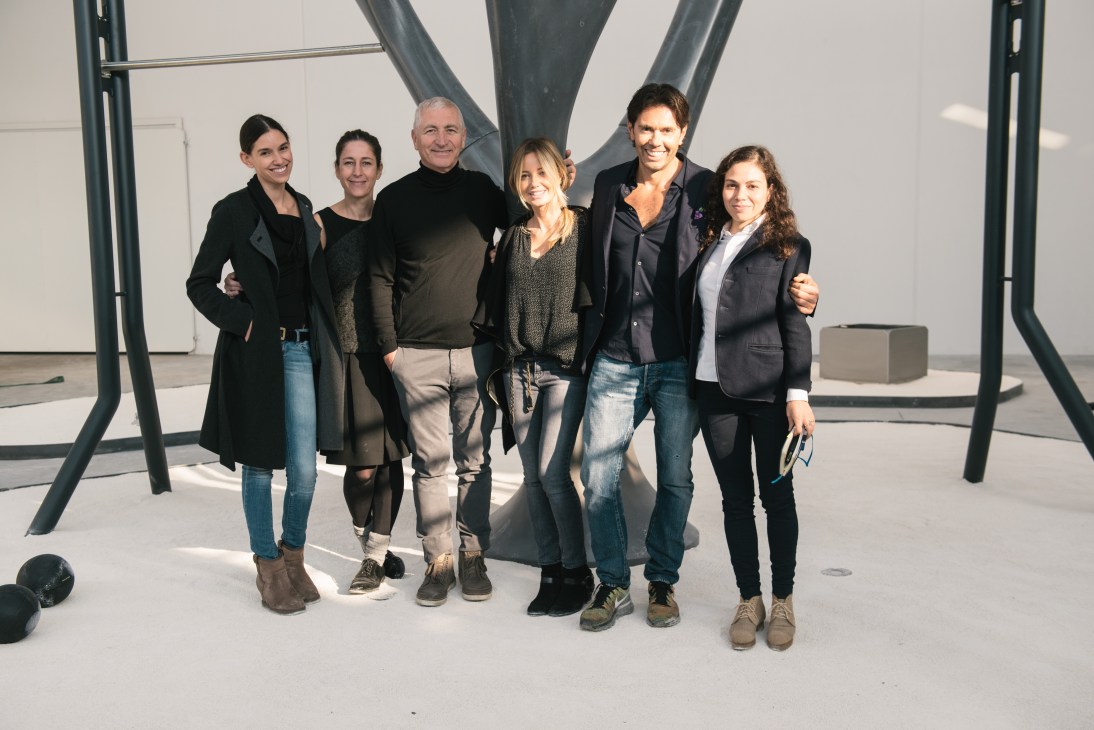
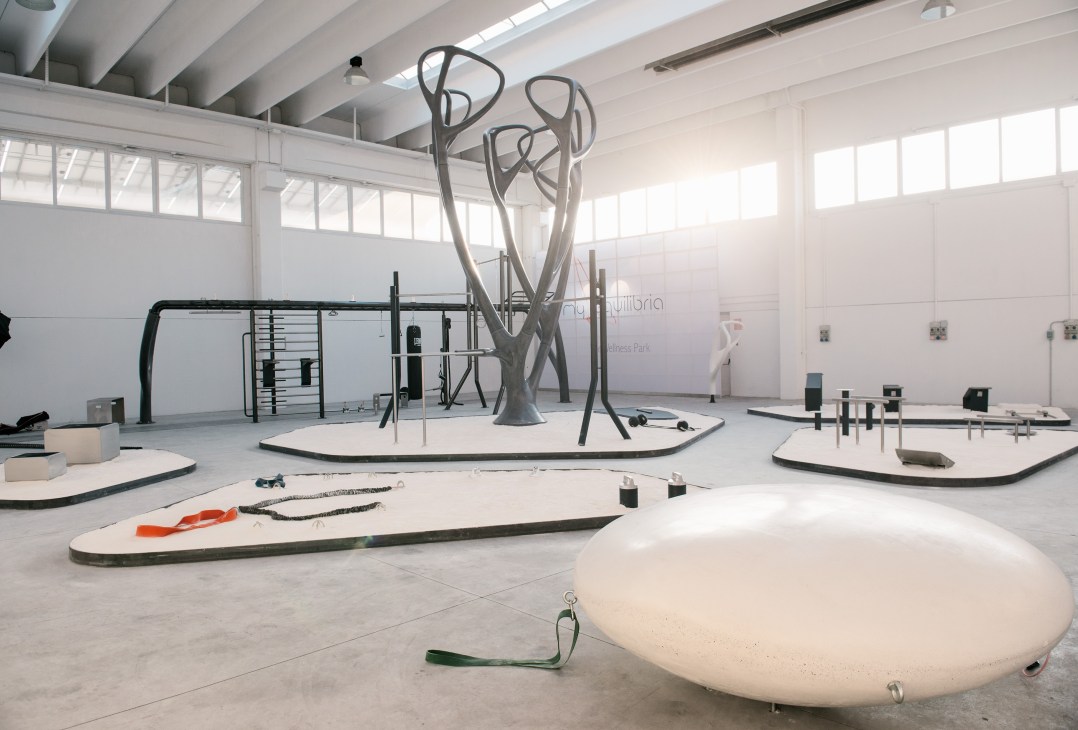
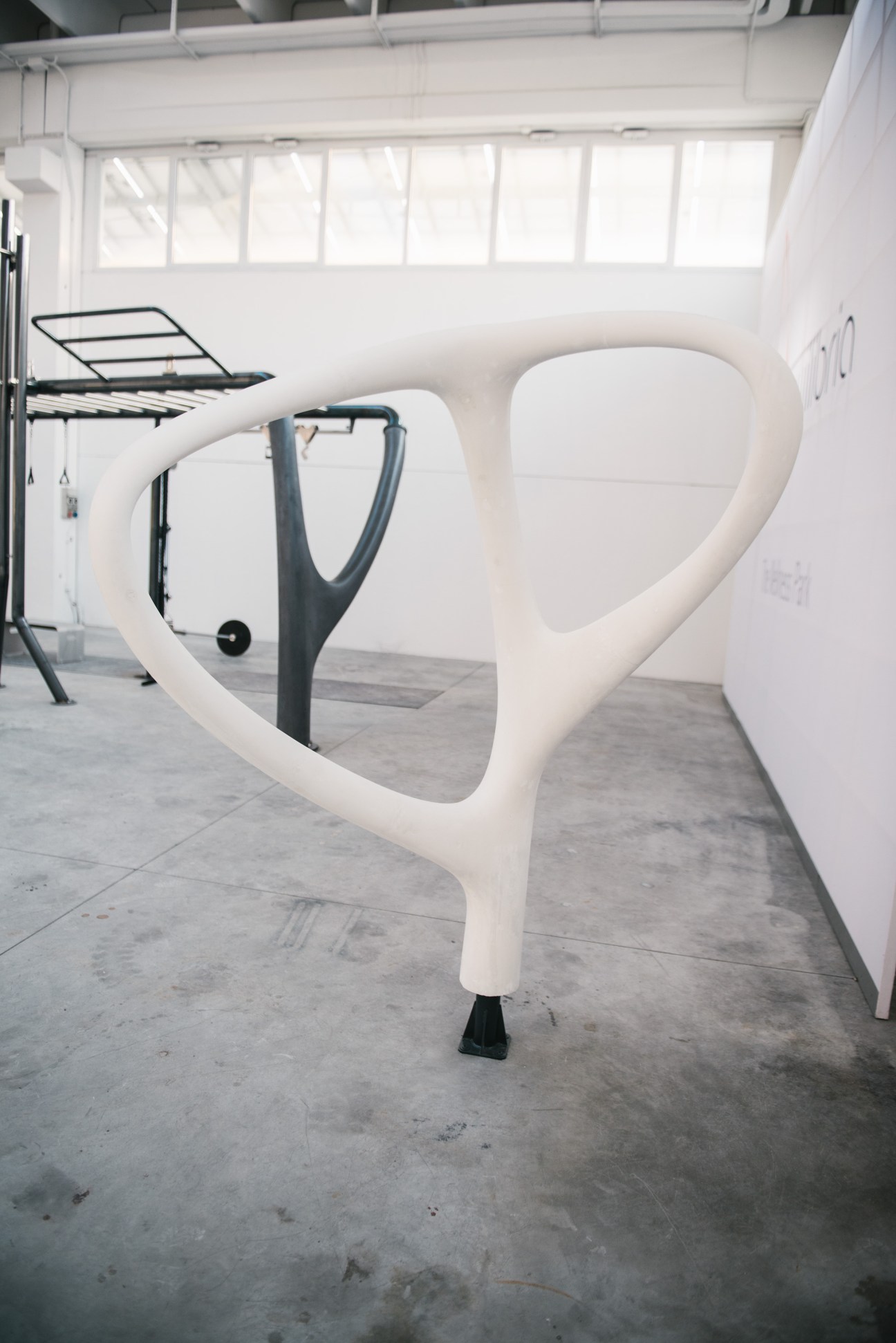
Di Bari began with the notion of equilibrium “between ourselves and the nature around us – and nature for humans is symbolised by the tree”. He took the building blocks of humanity – cells – and designed a towering tree with branches in the shape of cells, a fusion of humans and nature. The team called the project MyEquilibria. The final prototype looks a bit like it might be a prop in a Hollywood sci-fi film but it’s certainly eye-catching – and will surely be a hit with anyone who liked Avatar.
Innocenzi describes the central tree as “a sort of totem” but as well as attracting attention it also acts as the anchor for the multi-use equipment fastened to its trunk, which was developed in collaboration with the Miami-based Wellment company. But it was the sculptural tree itself that proved to be the initial problem. An outdoor gym must be made to resist the pushes and pulls of human bodies as well as decades of battering by the elements. Knocking on factory doors across Europe, time and time again Innocenzi found himself rebuffed by manufacturers who believed that the project required a material that did not yet exist.
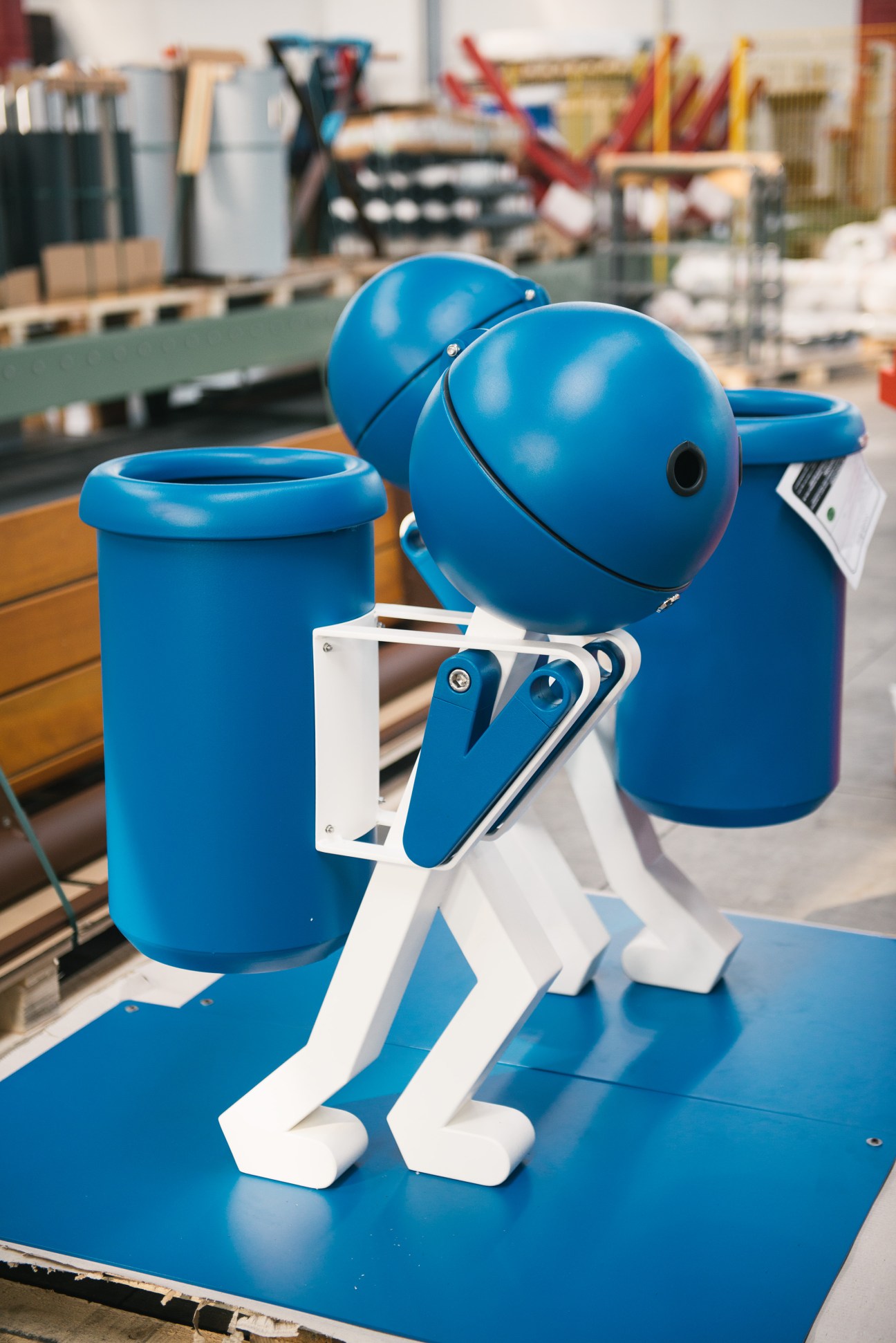
Then he met Alfredo Tasca, founder of street-furniture manufacturer Metalco and a designer who believes in city furnishings as tools of social integration. The inventor and the industrialist each recognised in the other a worthy partner. Based in Castelminio di Resana, a small town in the industrialised region of Veneto in Italy’s northeast, Metalco creates everything from benches to bike racks, rubbish bins to plant holders. Six months prior to meeting Innocenzi, Tasca had begun manufacturing playgrounds and saw that MyEquilibria was an evolution of that work. “I liked the social aspect of bringing people together.”
Realising that this project would require an extraordinary material, Tasca turned to Il Cantiere, the innovative concrete company renowned for bringing complex projects (such as Zaha Hadid staircases) to life. He partnered with the firm to create a material capable of turning MyEquilibria into a reality.
It took a year to develop a suitable material – an ultra-high-performance concrete mixed with resin and rocks reinforced with carbon fibres – that would prove up to 10 times stronger than regular concrete and as flexible as metal. This material was then moulded over a steel frame and MyEquilibria was brought to life.
As cities struggle to keep their growing populations healthy, government plans increasingly include the construction of outdoor gyms among their wellness projects. These adult playgrounds are not only a solution to rising obesity levels: they are also relatively democratic, offering fee-free equipment that brings together all levels of society with little needed in the way of supervision and maintenance.
Tasca and Innocenzi are now honing their pitch. MyEquilibria will come in modifiable configurations from 50 to 500 sq m, the largest accommodating up to 100 people. Priced between about €50,000 and €250,000, depending on the size, the gyms are aimed at city parks and public beaches, as well as corporate campuses, hotels, resorts and private homes. Production will begin in January 2016; several cities in Italy’s northeast have already expressed an interest but the team behind MyEquilibria has ambitions far beyond the country’s borders.
In the 19th century, urban parks came to be appreciated for their health benefits as much as for their beauty by citizens choked by the polluted air and gritty reality. In the 1960s, fitness trails – woodsy running paths dotted with workout equipment – proliferated in Europe as exercise and nature started to gain an affinity. Now, when we are desperate to reclaim nature and govern our health, we may soon find ourselves gathered around a concrete tree.
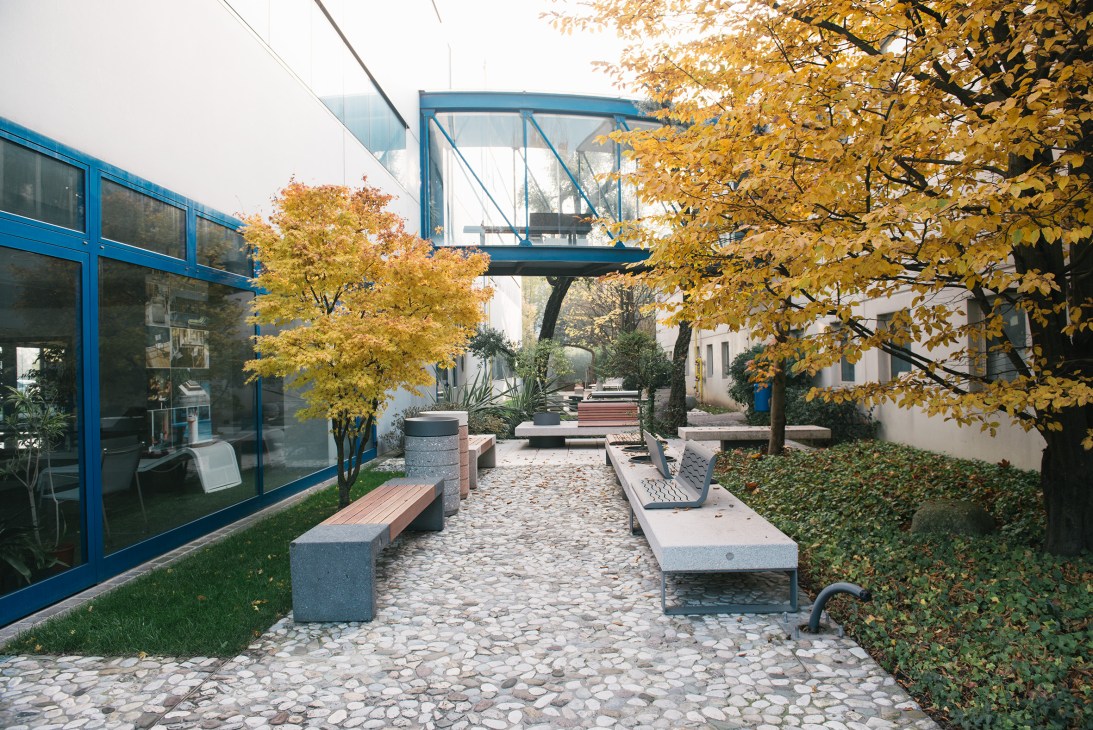
Notes: Sitting comfortably
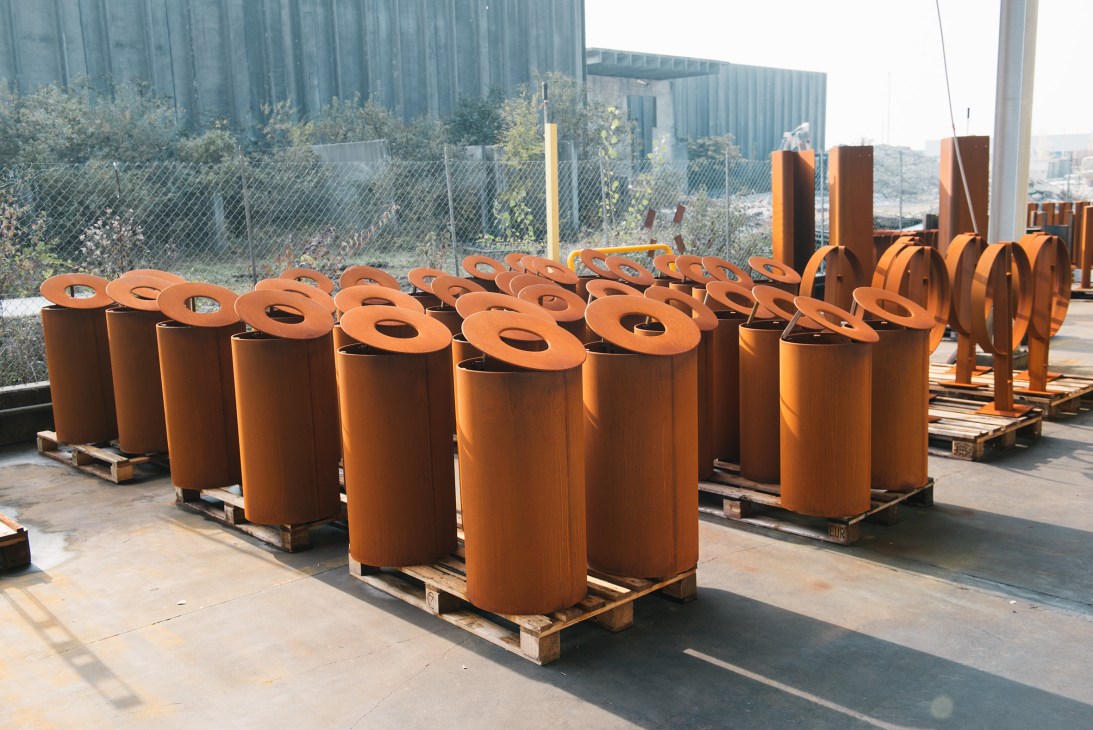
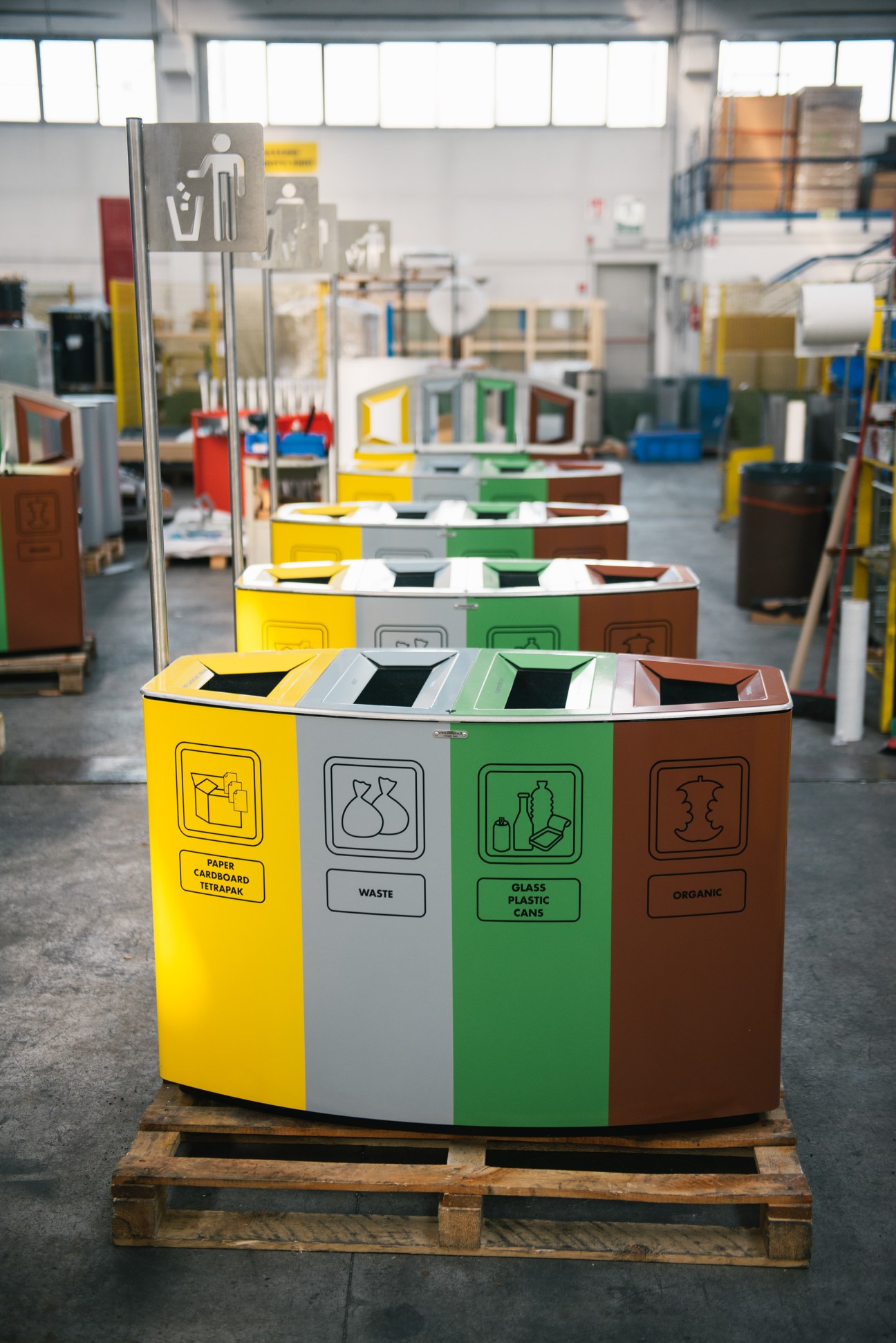
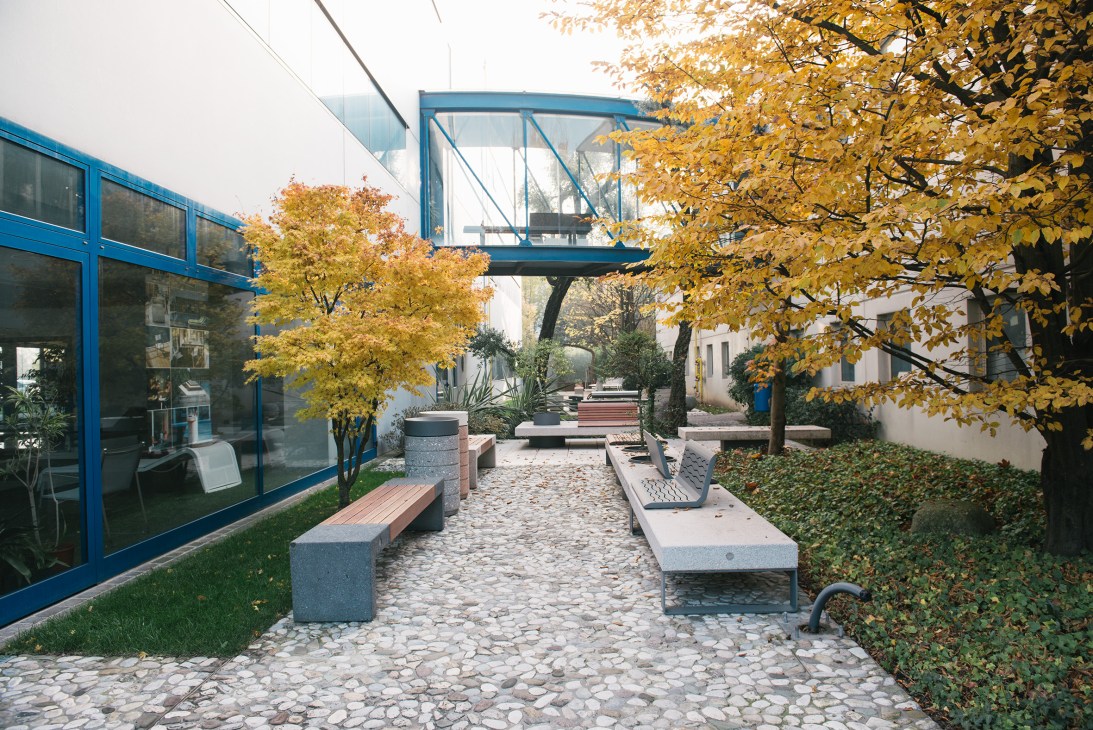
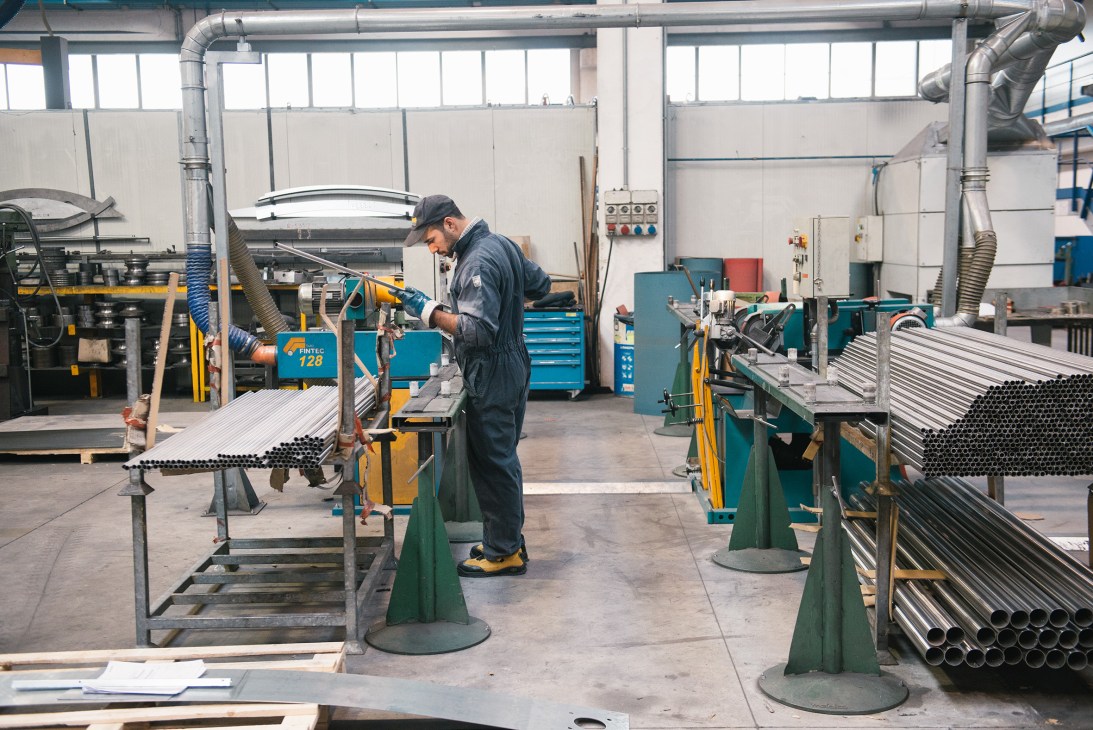
When Alfredo Tasca founded Metalco in 1984, he claims that no one else was manufacturing street furniture for the urban environment and that cities were throwing wooden planks together and calling them benches. While many may disagree, Metalco’s influence on the designs that shape our everyday experience in today’s cities is undeniable. The huge manufacturing headquarters is filled with a team of 100 operators, artisans, researchers and designers. They are creating the range of urban outdoor decor and fixtures, visible in 4,000 cities, in steel, aluminium, wood and – with the recent collaboration between Tasca and Il Cantiere – ultra-high-performance concrete.
Tesla Supercharger stations and interactive information points for the Paris Métro are built alongside well-designed billboard frames destined for Brussels and recycling bins for Venice’s airport. More than 5,000 sq m of solar panels installed on the rooftop generate enough solar energy to power Metalco’s entire operation. Tasca’s passion is communality: benches, his favourites, are “a tool for sociability”, part of what he calls the “outdoor urban living room”.
Reportage: Captains of industry
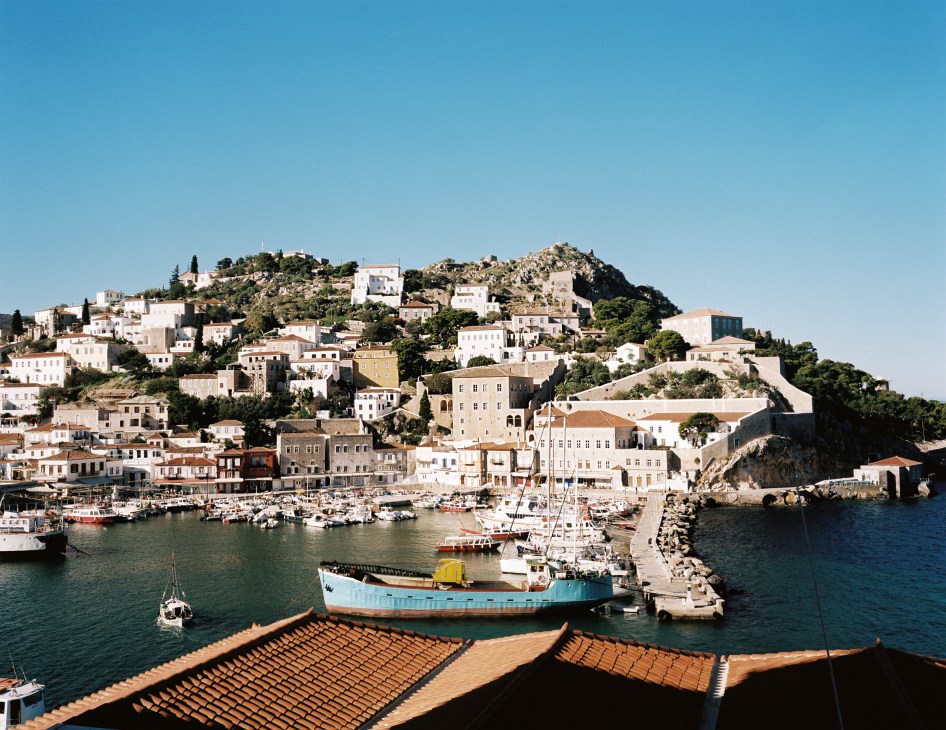
On the picturesque island of Hydra, a two-hour ferry trip from Athens, tourists clamber off the catamaran that’s docking on the eastern side of the tiny harbour. Greece’s islands have survived on tourism, never more so than during the financial crisis that has battered the nation for half a decade. The images of beaches lapped by blue waters, the labyrinths of winding alleys and the sun-bleached ruins have made this nation a prime worldwide destination, regardless of competing images of protests, riots and seemingly endless elections.
But the islands also have a powerful maritime tradition that has spawned generations of capable, cool-headed sailors and shrewd ship-owners. Despite the crisis, Greek shipping-magnate families remain some of the most influential in the world.
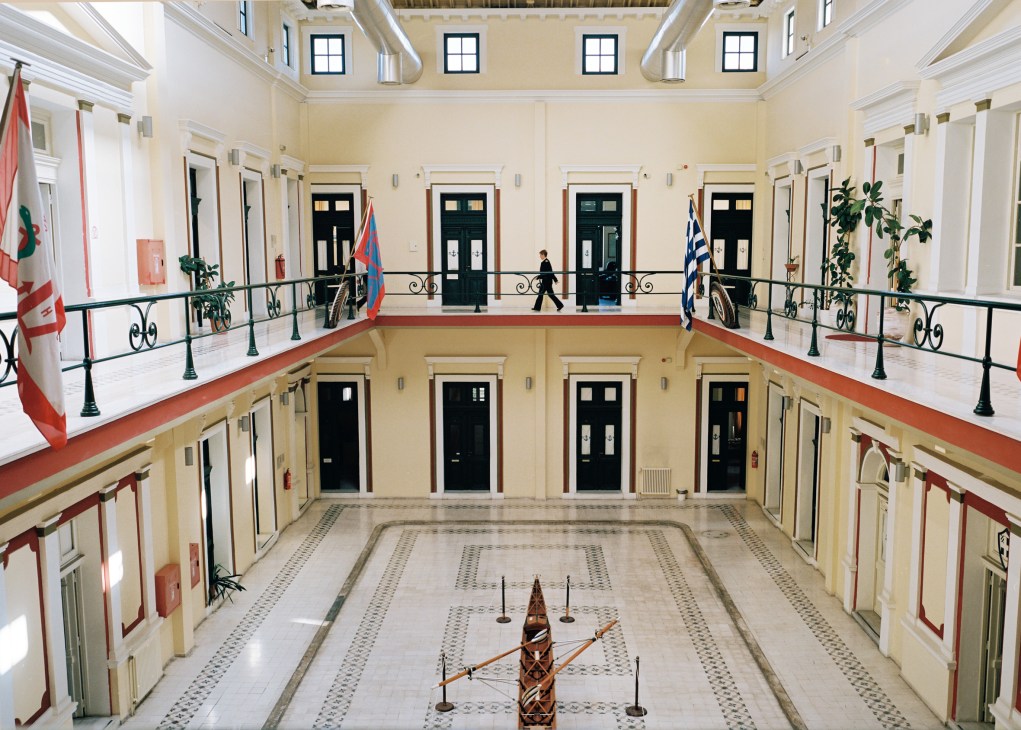
Part of the reason can be found looming over the harbour where tourists disembark: the Tsamados Mansion is a three-storey 19th-century building housing one of the world’s oldest merchant marine academies, dating back to 1749. One of 11 maritime schools scattered across tiny Greek islands, it educates 140 mostly male students every year. With unemployment hitting Greek youths the hardest, naval academies are witnessing a revival; applications have increased tenfold in the space of a few years. “There aren’t any land jobs available and Greeks have traditionally turned to the sea as an escape during difficult times,” says Vasilis Stavropoulos, the academy’s director of studies. He estimates that about 80 per cent of students will end up with well-paid jobs.
The academy’s curriculum ranges from nautical sciences to meteorology and English. The students are no older than 24 and must complete two full semesters at sea. During their school breaks they wind down at nearby coffee shops. “The crisis has hit both land and sea but the sea has definitely not been as affected,” says Thisseas Tsioutsas, 18, who has only just moved to Hydra. Captain salaries can reach up to €10,000 a month, a phenomenal figure in a country where the average is no more than €1,000 per month. The amounts go some way towards compensating for the sacrifices of life at sea: six months to a year away from home.
“The salary is still too little,” says Thisseas. He hopes to end up as a ship-owner; the students around him giggle. “I hope you manage – and make sure to get us a job!” says 20-year-old Santa Spinokia, one of the few women attending the school. “Life at sea doesn’t dissuade me at all; I take it as a challenge,” she adds. Women were only admitted to maritime schools after 2007 but their progression to companies hasn’t been easy. “I try to forget that I’m different. I’ve always been fond of the sea and ships, and have always dreamt of doing this; no one can stop me. Hydra is among the best: organised, with excellent staff – and it’s a historic establishment.”
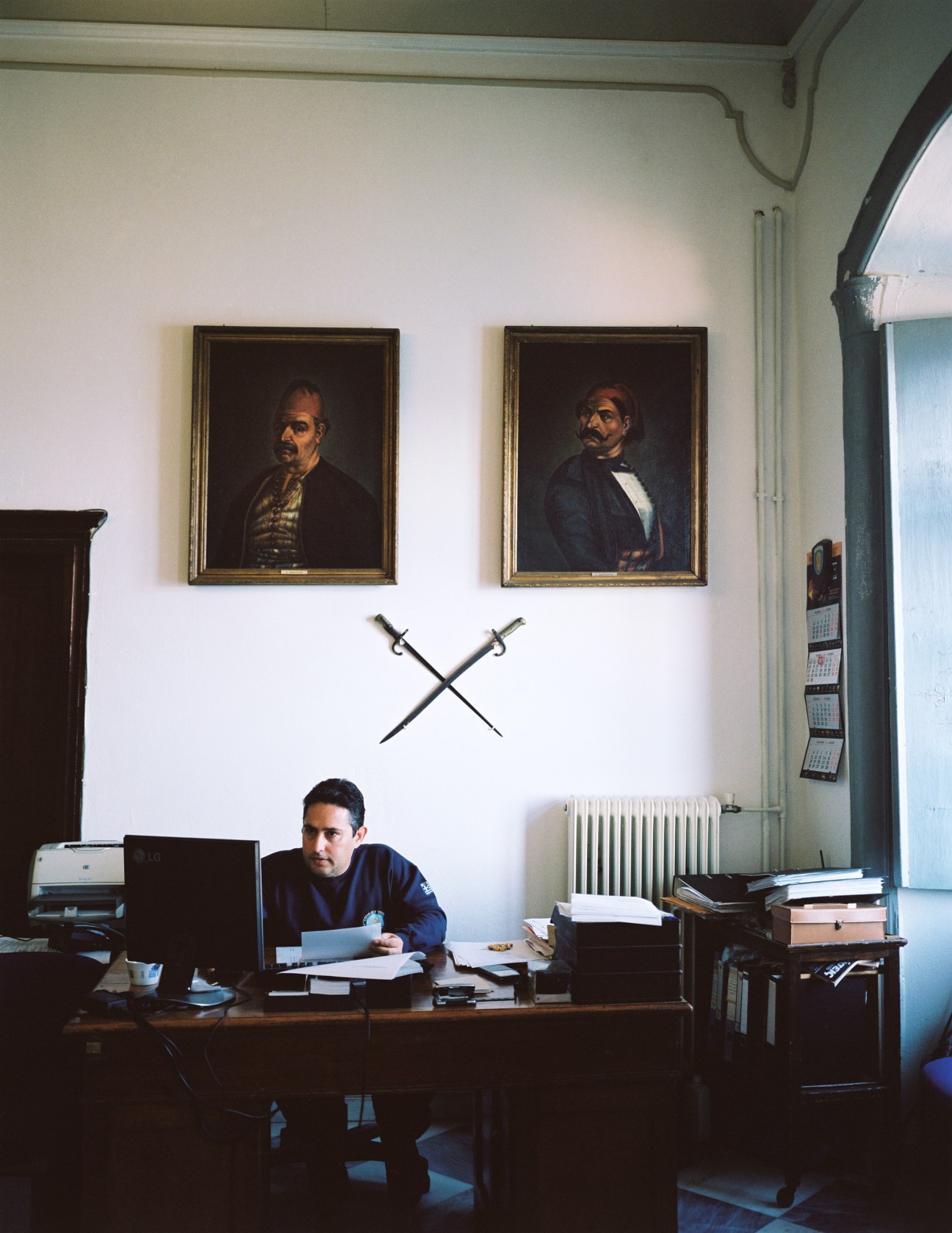
The antiques and sophisticated decor in the building attest to it: swords adorn walls, telescopes are encased in large wooden furniture and an old ship cannon is centrally placed on the chequered marble floors. Commanding officer Ioannis Kokios sits behind a wooden carved desk overlooking the sea, from where he runs the school. Above him hangs the icon of St Nicholas, patron of sailors, while leather-bound shipping volumes line his bookshelves. The room feels as if it has barely been touched since the school moved into this building in 1930.
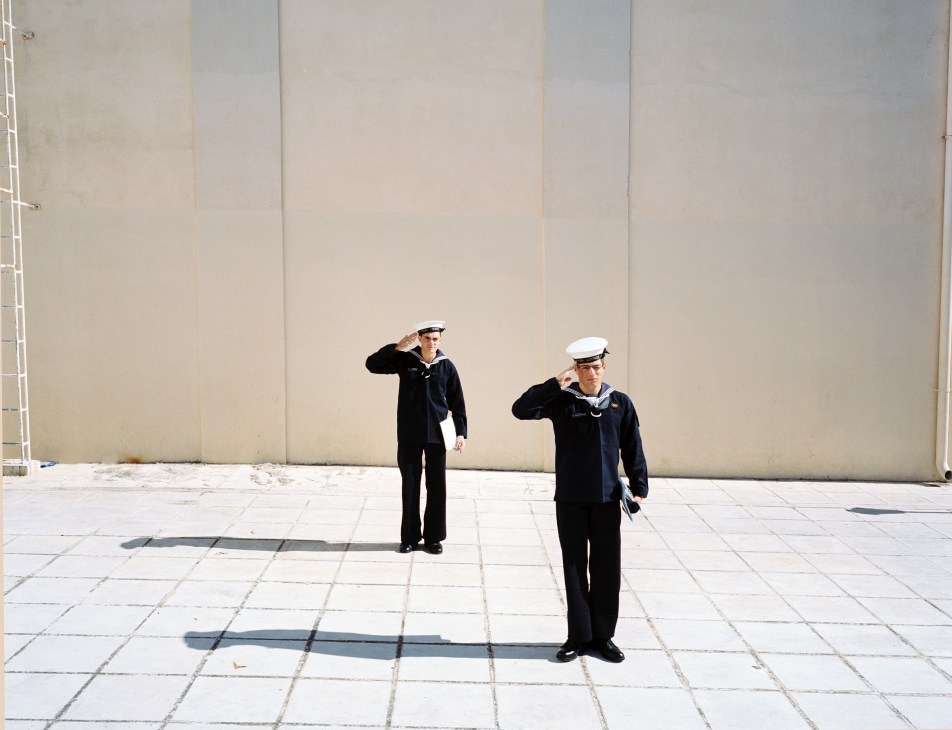
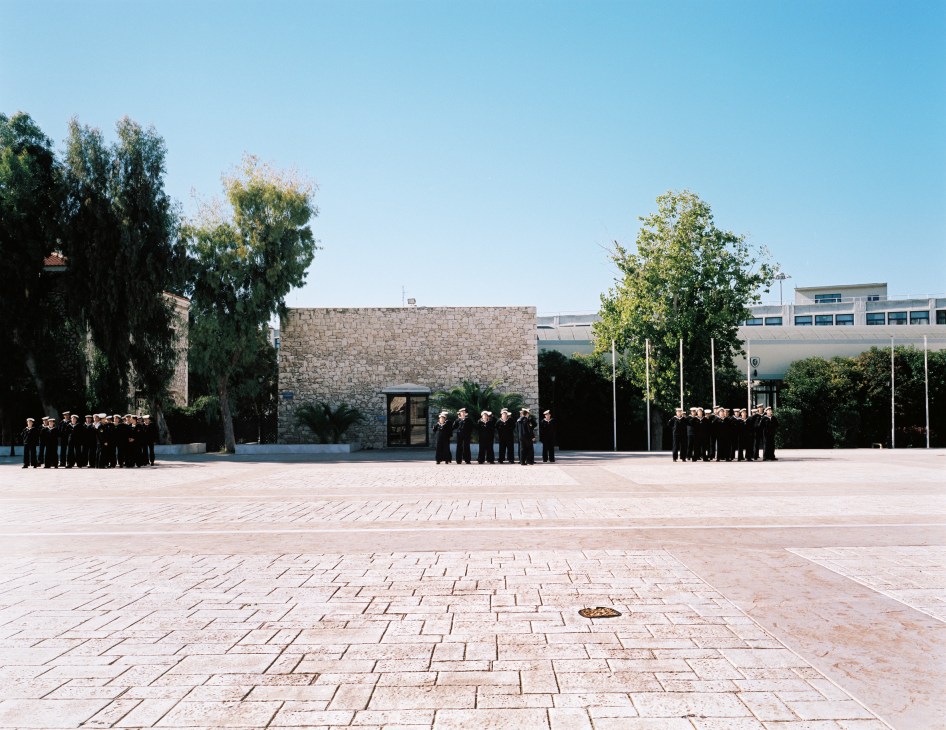


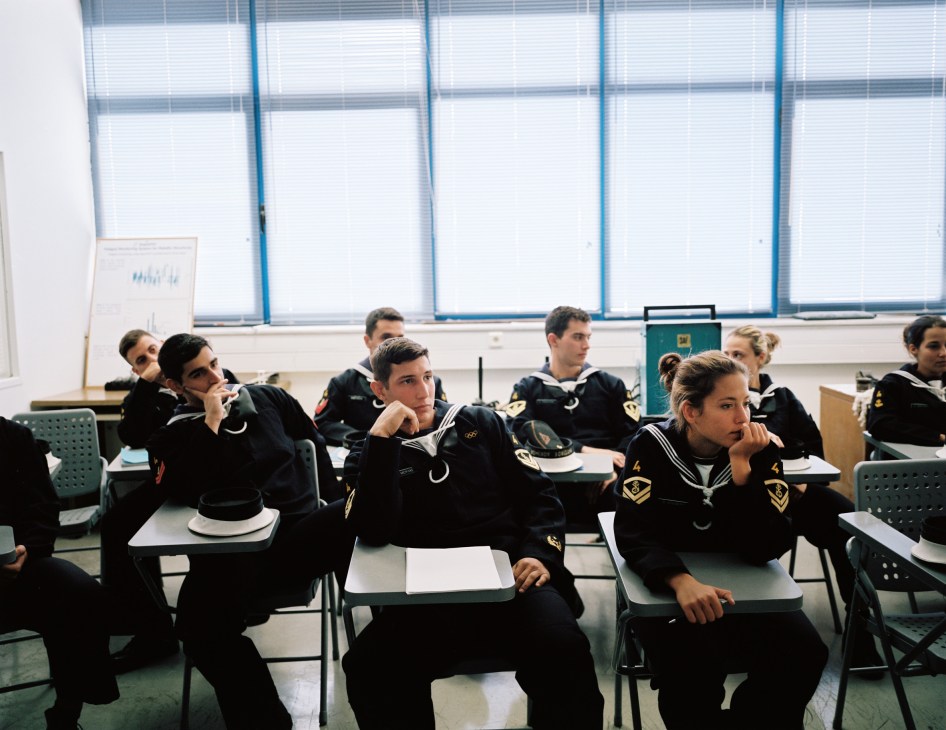
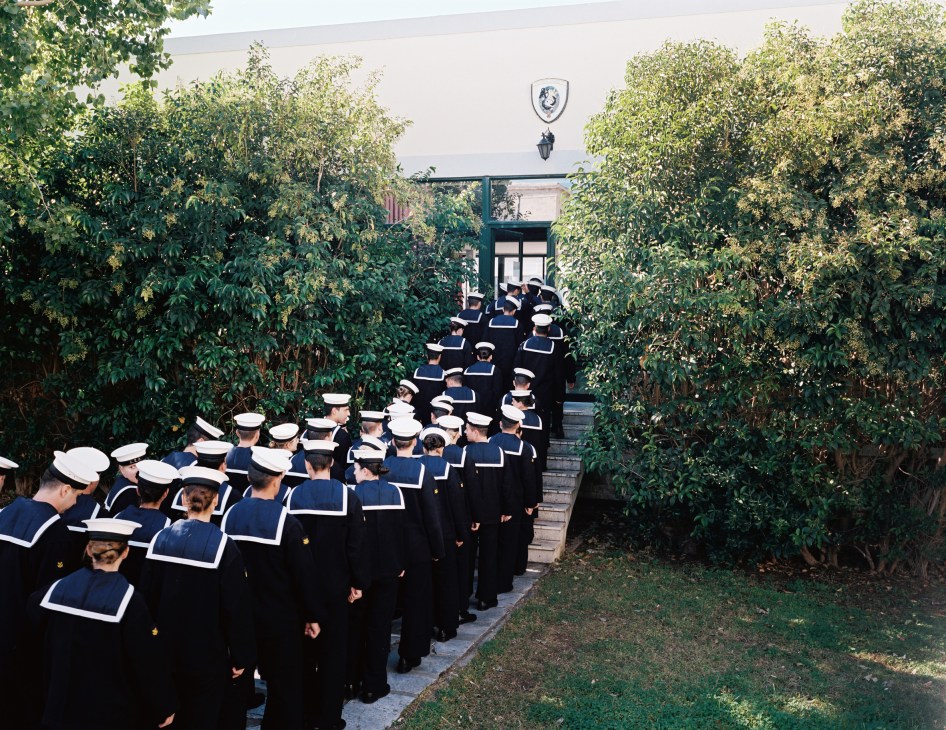

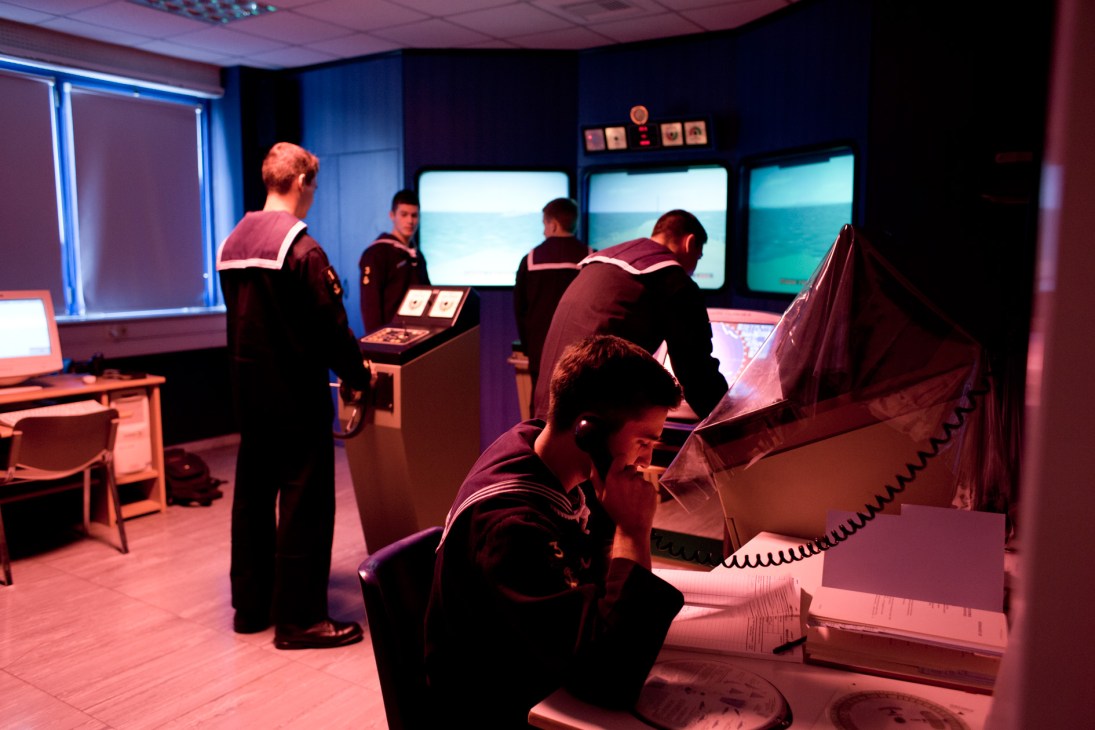
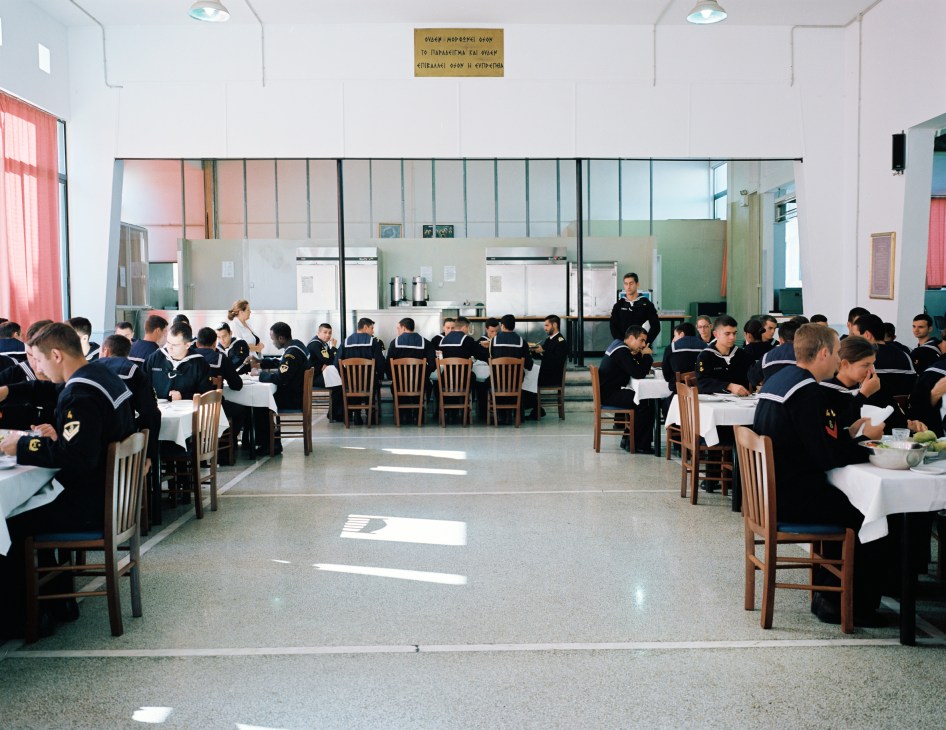
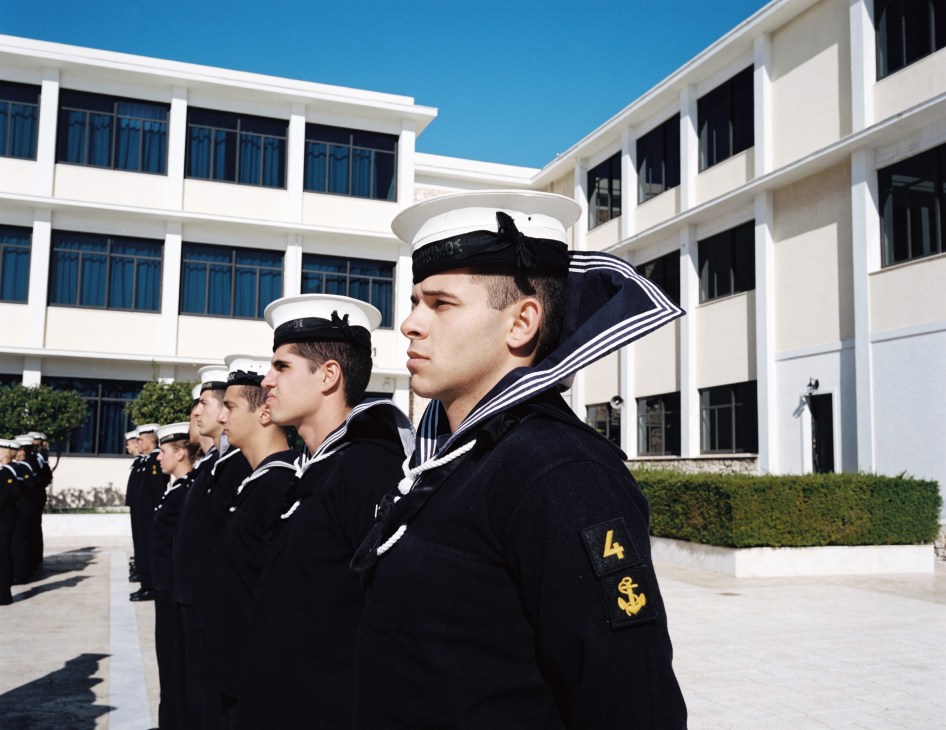
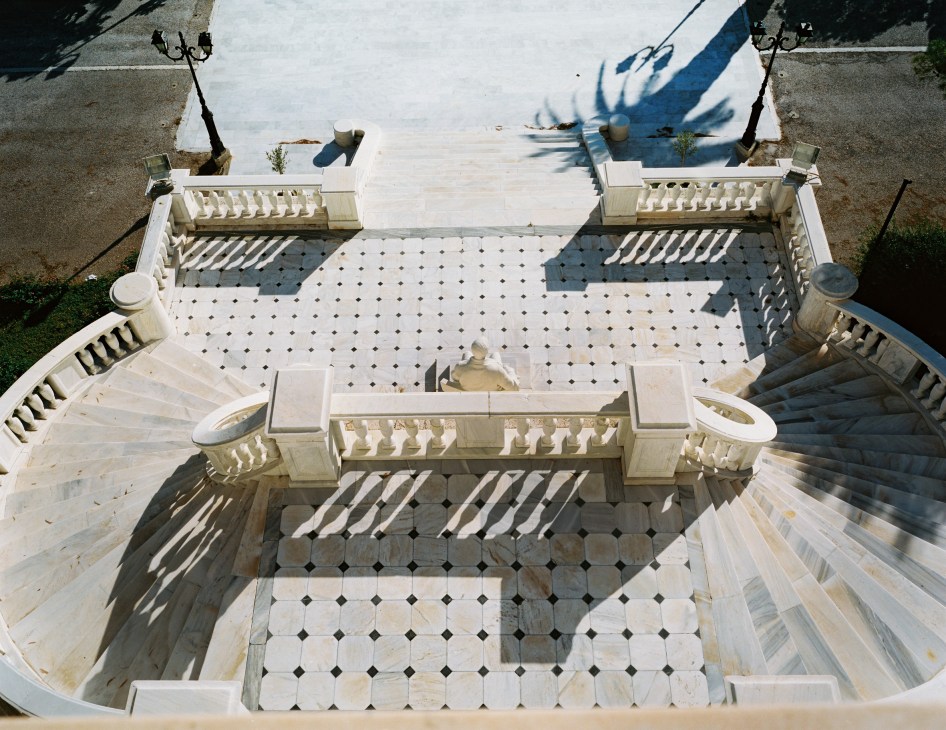





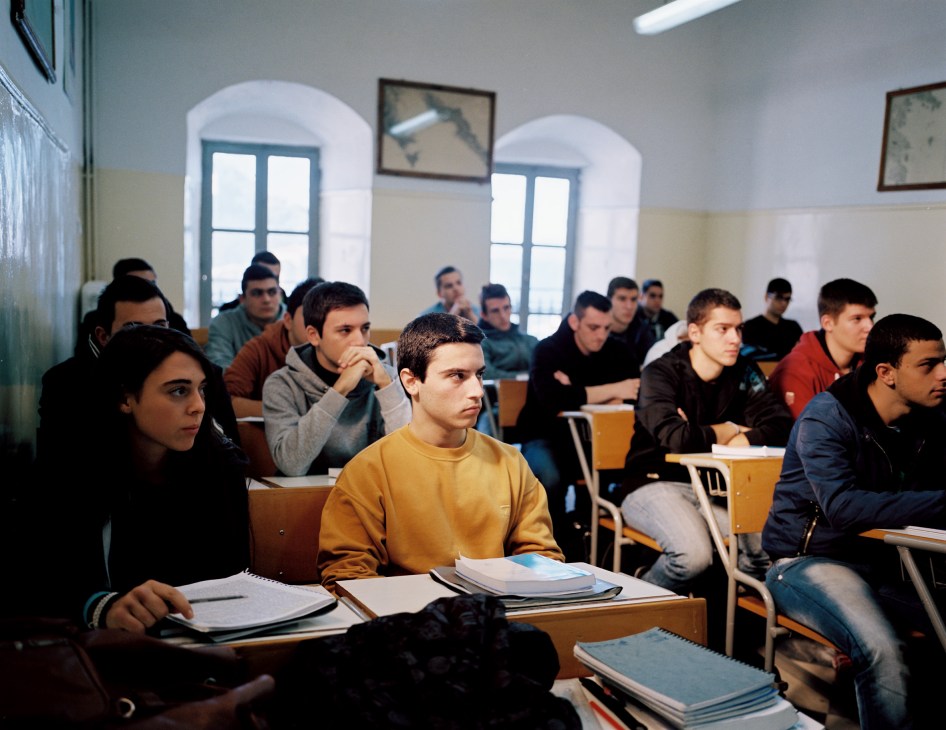


“The sailing profession has resurfaced and due to unemployment the level of the students has improved; highly educated students now pick marine academies as their first choice,” says Kokios. While the rules have relaxed, the establishment is strictly administered. “Discipline is very important; if they’re going to lead tomorrow they also need to be led.” Students are expected to appear in class shaved, well groomed and with no earrings. Final-year students take daily shifts helping out with studies, supervision and hierarchy, which are key principles for life at sea.
Not all of the students want a career at sea though. Sat in one of the dormitories is 21-year-old George Pandis. “This school shapes you for life, instilling discipline, ethics and a proper mentality,” he says. Above each of the entrances to the austere dormitories filled with wooden bunk beds and cupboards, notices read, “Greece isn’t land, it’s a sea embraced by land.”
Dotted around the school are other golden placards reminding them of the shipping benefactors who fixed the showers, bought the navigation PCs or overhauled their bedrooms. Yet despite the lack of funding, the school frequently distinguishes itself in the Lloyd’s List maritime and shipping-industry awards.
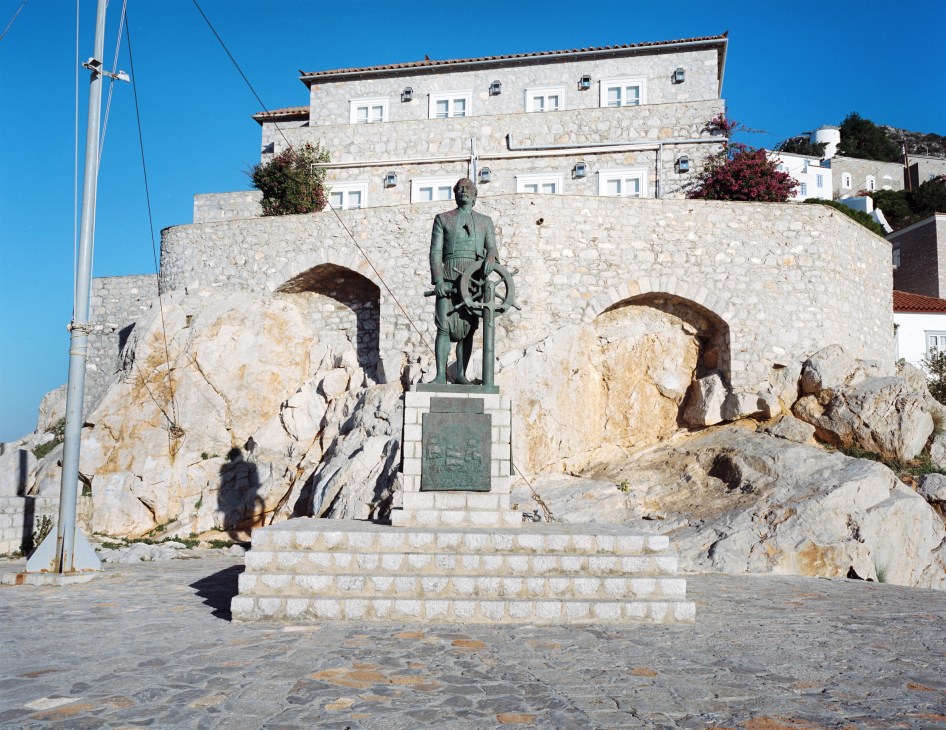
Ship-owners in Greece have been patrons for centuries. During the country’s war of independence many of them turned their vessels, which were already equipped with a small arsenal to fend off pirates, into warships. One was Andreas Vokos, nicknamed Miaoulis, from the Ottoman empire, a hero of Greece’s 1821 war of independence and a captain and corn trader who led the naval resistance. After the founding of the Greek state, Miaoulis encouraged the creation of a military naval academy. Today it’s found on the mainland in Athens, right at the end of Piraeus harbour, the country’s main port.
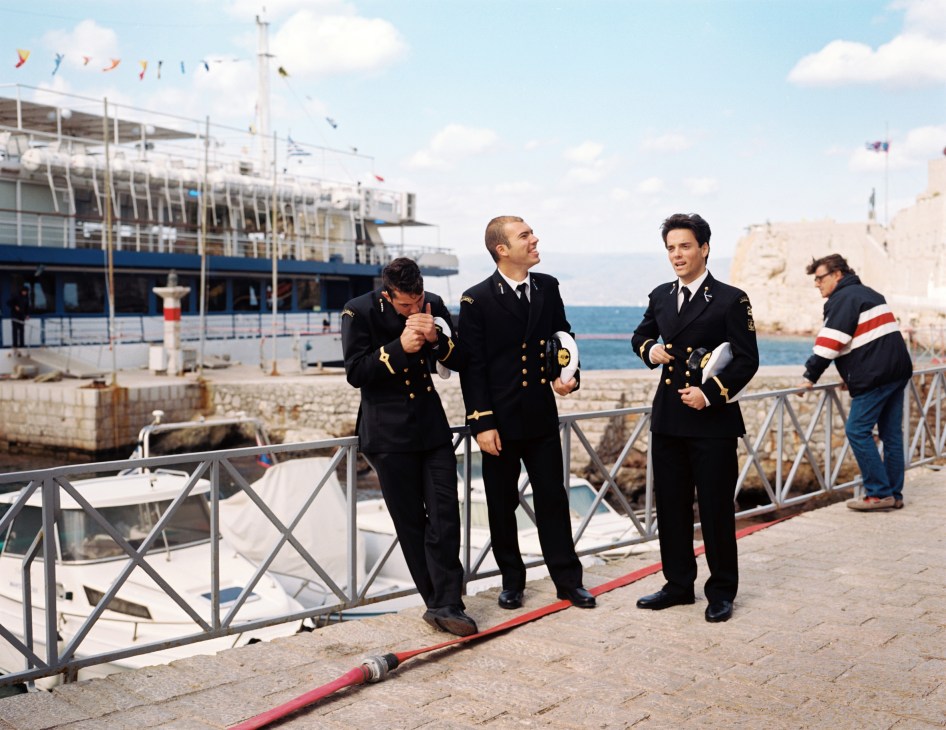
On a walk from the main stone building to the classrooms, cadets are seen jogging from their classes to have lunch, study or work-out. But they keep their senses on high alert, halting to attention whenever they stumble upon a superior, who more often than not will ignore them.
Running is pretty much what they’re doing from 06.20 until the end of their day at 22.30. In between runs they attend classes, eat four times a day, pray three times a day and go to the gym. Besides the love of the sea, patriotism is what appeals to these youngsters. “The criterion here is to protect your country and love it,” says Ilias Mouleas, 21, a final-year student.
Despite the financial crisis, Greece still spends 2.2 per cent of its GDP on defence; that’s joint second highest in Nato. “The expense is not very high considering our neighbourhood and its problems,” says rear admiral HN George Leventis. “This isn’t Belgium: we’re surrounded by countries with territorial claims to our land.” The academy’s museum includes a room dedicated to the fallen. The most recent victims are naval officers who died in 1996 during the ongoing Aegean dispute between Greece and neighbouring Turkey, a reminder of the enduring tensions.
At lunchtime the students are summoned to Eleftheria (Freedom) Square, located between the main building and the refectory. Perfectly aligned companies of cadets are quickly formed. Within minutes they disband for lunch in the shadow of aspen trees and against the backdrop of the glistening waves of the Aegean. Greek staples are laid out on the refectory’s large rectangular tables: tomato and feta salads, bread, pastitsio (Greek-style lasagna) and pears feed about 170 mouths. That figure is 30 per cent lower than it was before, thanks to the country’s economic woes. But smaller admission numbers mean stiff competition for a place. “The financial crisis has become an excuse for many but we’re showing we can do more if there’s will,” says Leventis.
Despite the variety of lessons on offer, staff here say that the Greeks’ comparative advantage is a focus on maritime skills and practical training. Despite the cuts, foreign students primarily from North Africa and the Middle East continue to move here for their studies.
Seydouna Hamza Amar, 23, is among the 29 foreigners attending the academy. He moved to Athens from Senegal in 2011 after completing his baccalaureate and already speaks fluent Greek. “I have no regrets about coming,” he says. “I feel more advanced than my friends studying in France. Not only on an academic level but I’m also proficient in maritime studies and more mature; the Amar who got here was different to the one speaking to you now.”
The islands and their maritime traditions are helping Greece through its recovery as they always have done, through good times and bad. And it seems a sailor’s adage from the lips of a Senegalese is useful advice for the debt-battered country. “It’s not because there’s bad weather that a ship will stop its course,” says Amar. “The navy teaches you patience and a will to never give up.”
Fertile markets
A seminal shift occurred in 2009, when the global urban population eclipsed the rural population for the first time in human history; it’s a worldwide trend of urbanisation that shows no sign of slowing down. For agricultural businesses, this means fewer people are there to till the fields and drive the tractors. Kubota, a Japanese agricultural machinery-maker, is partnering with farms to prove that new technology can counteract a dwindling rural workforce.

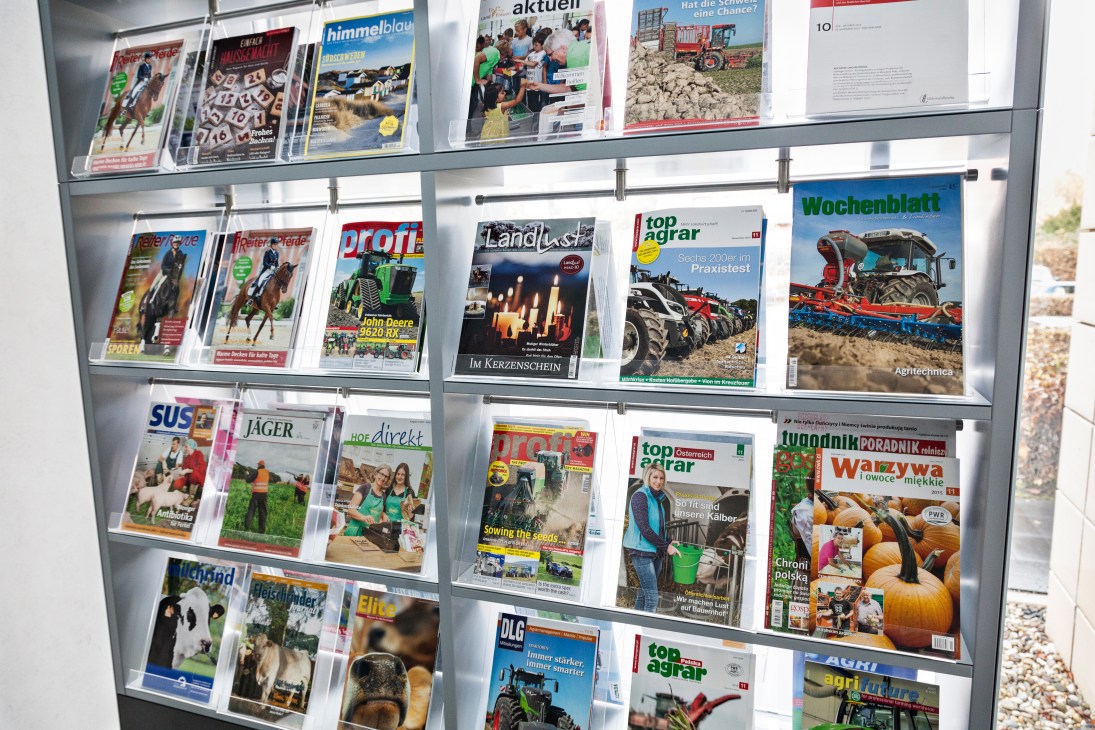
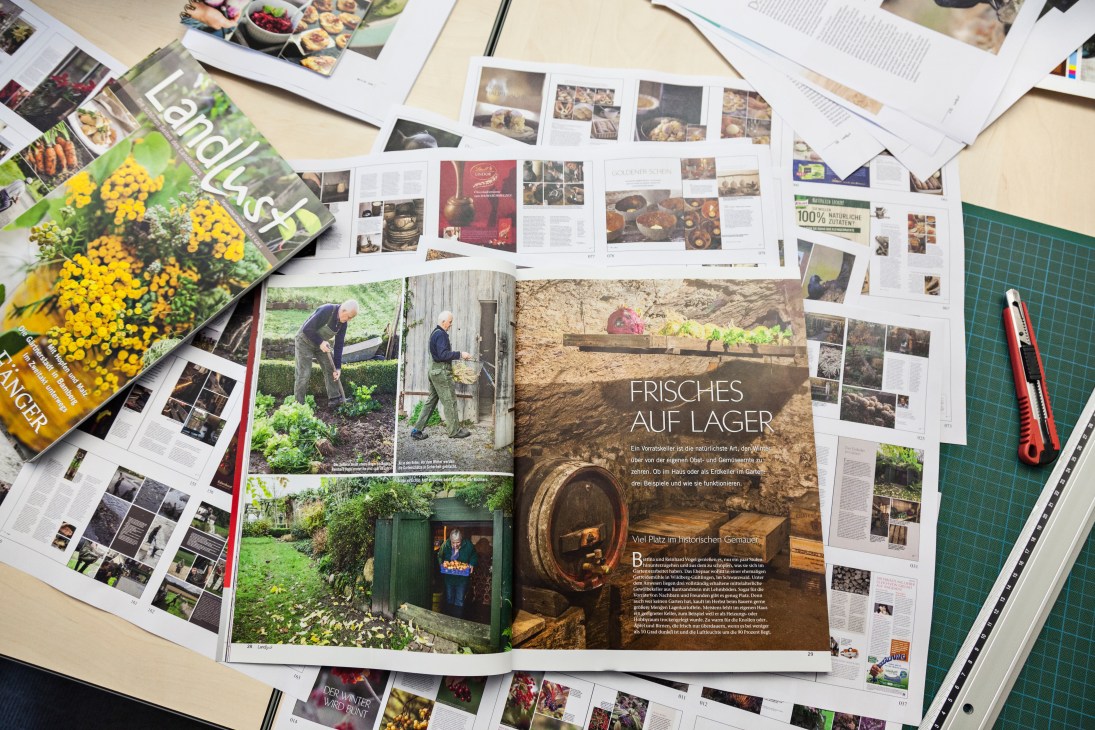
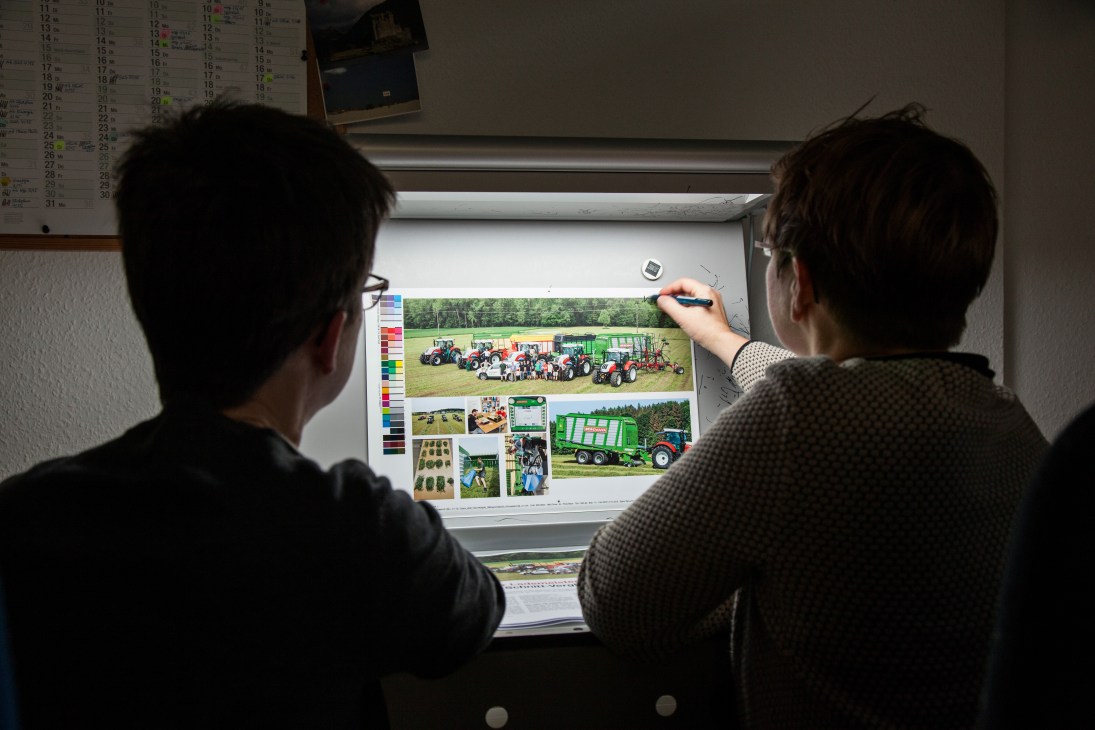
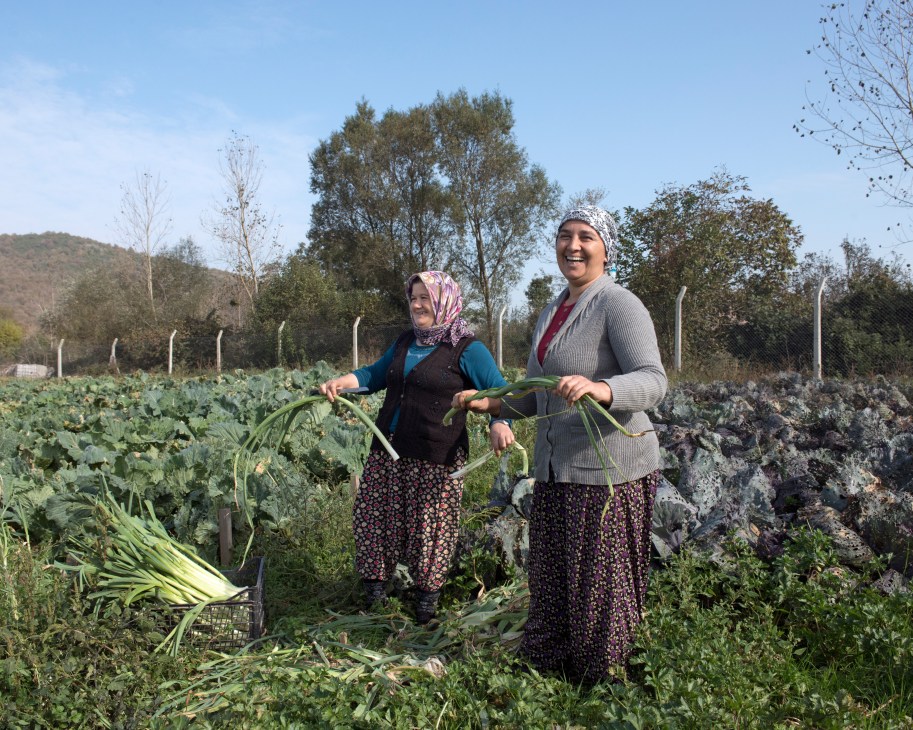
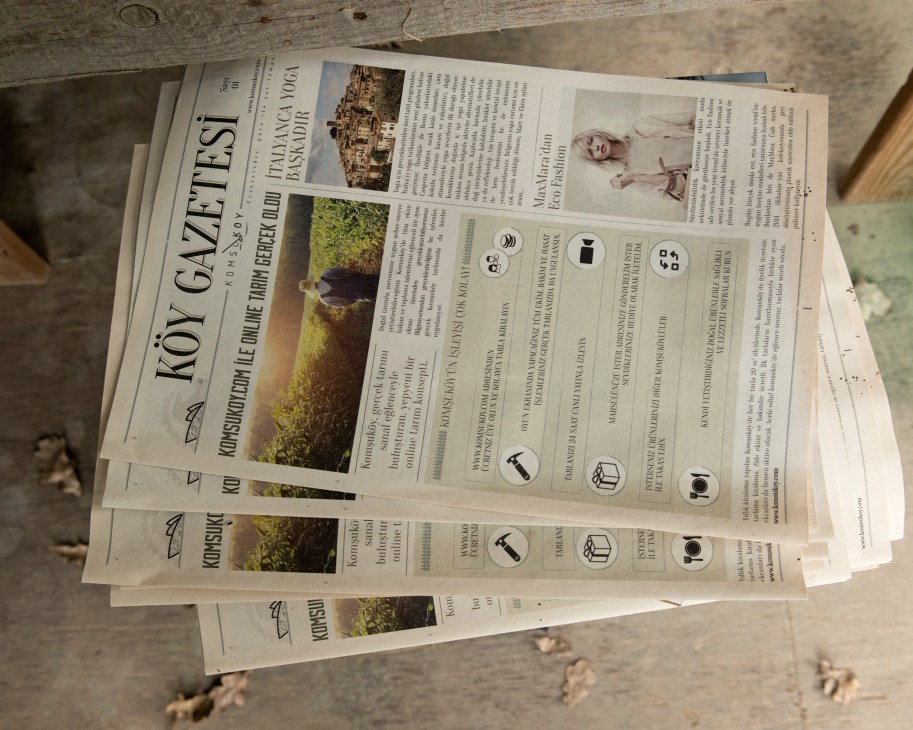
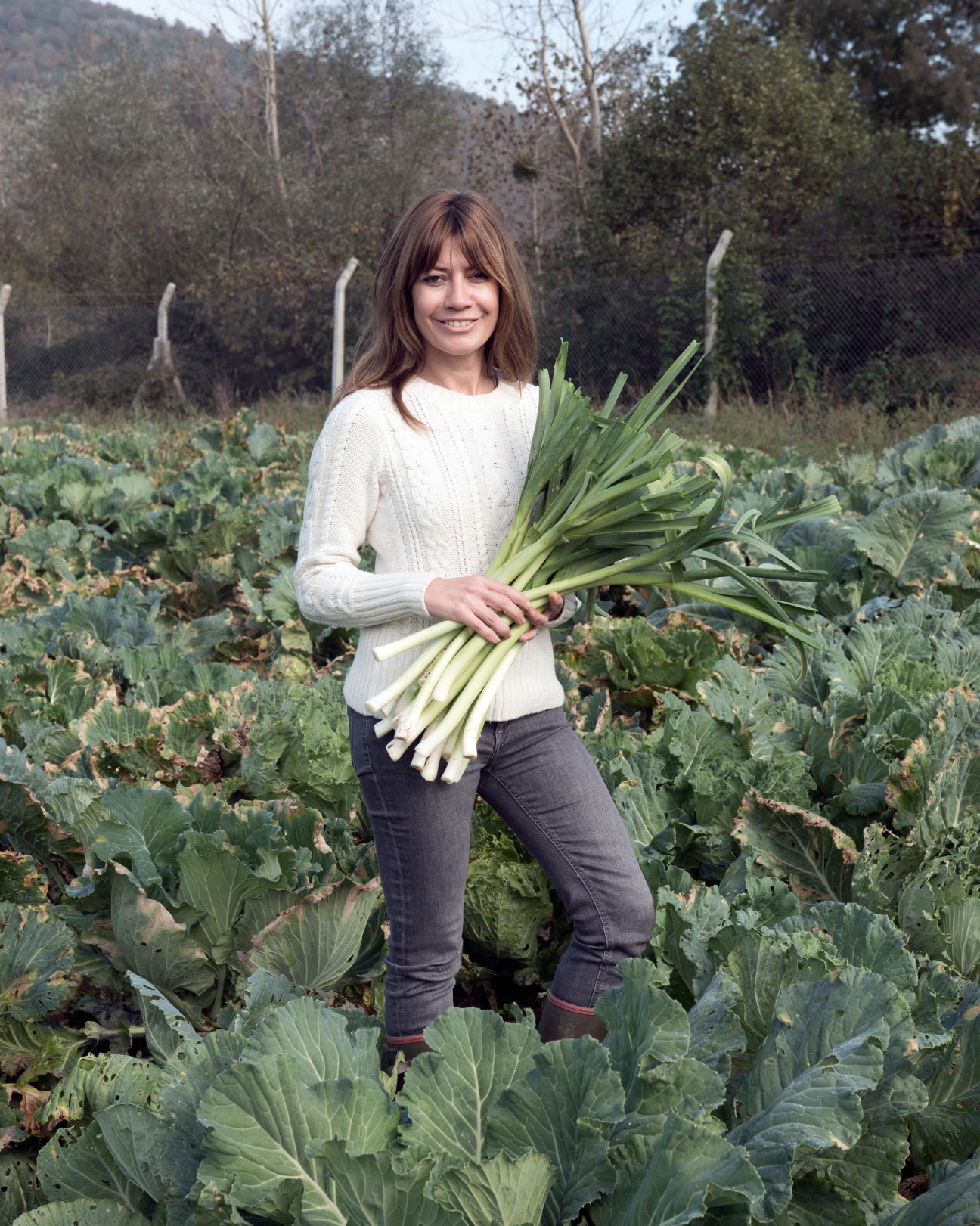

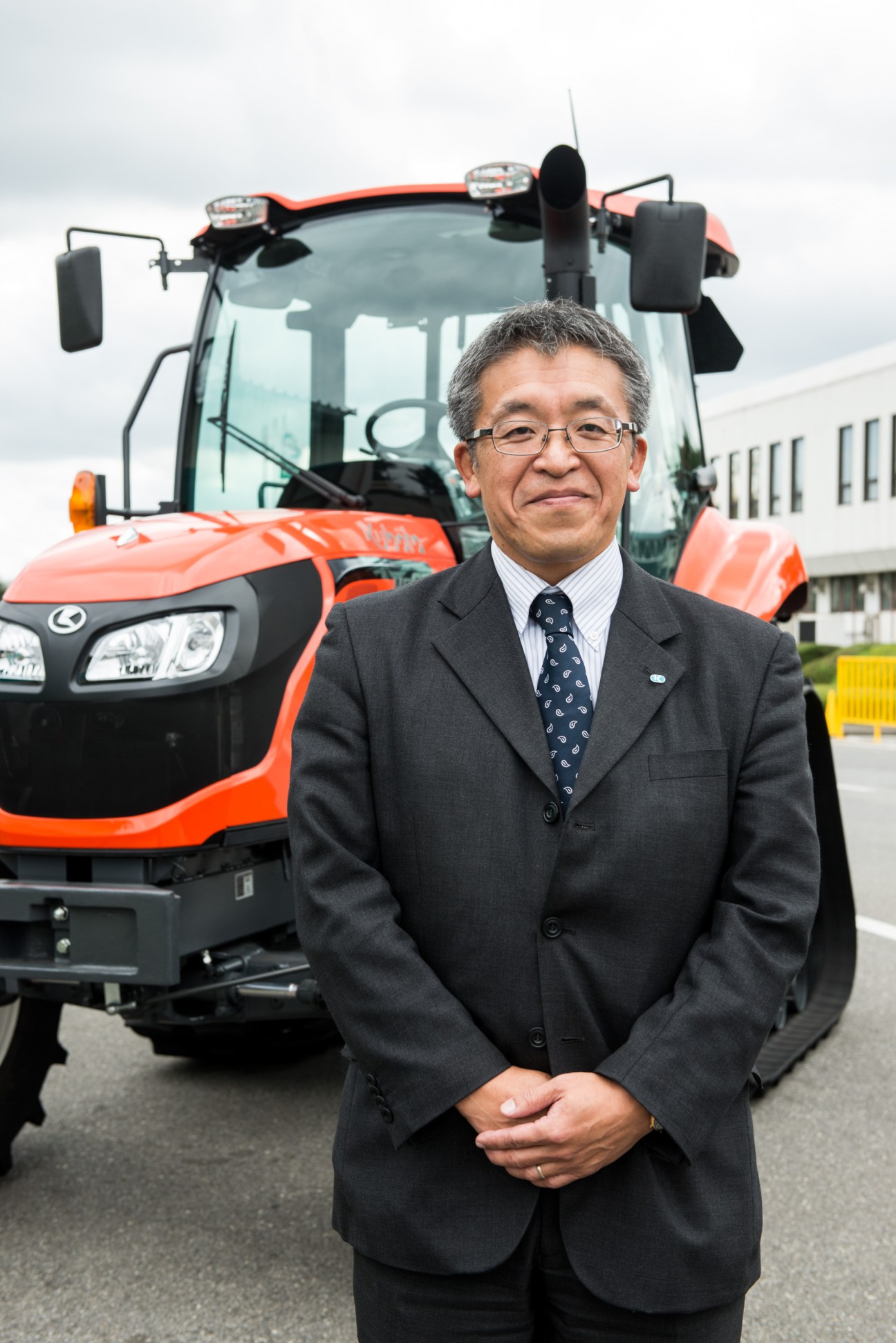
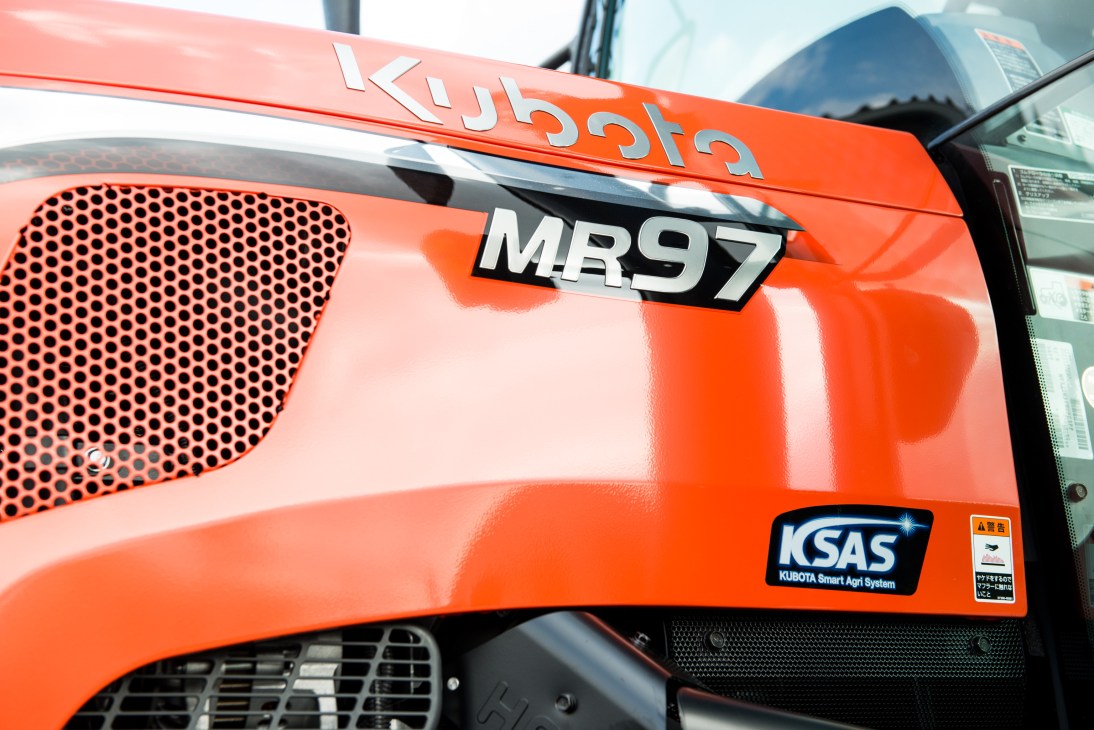

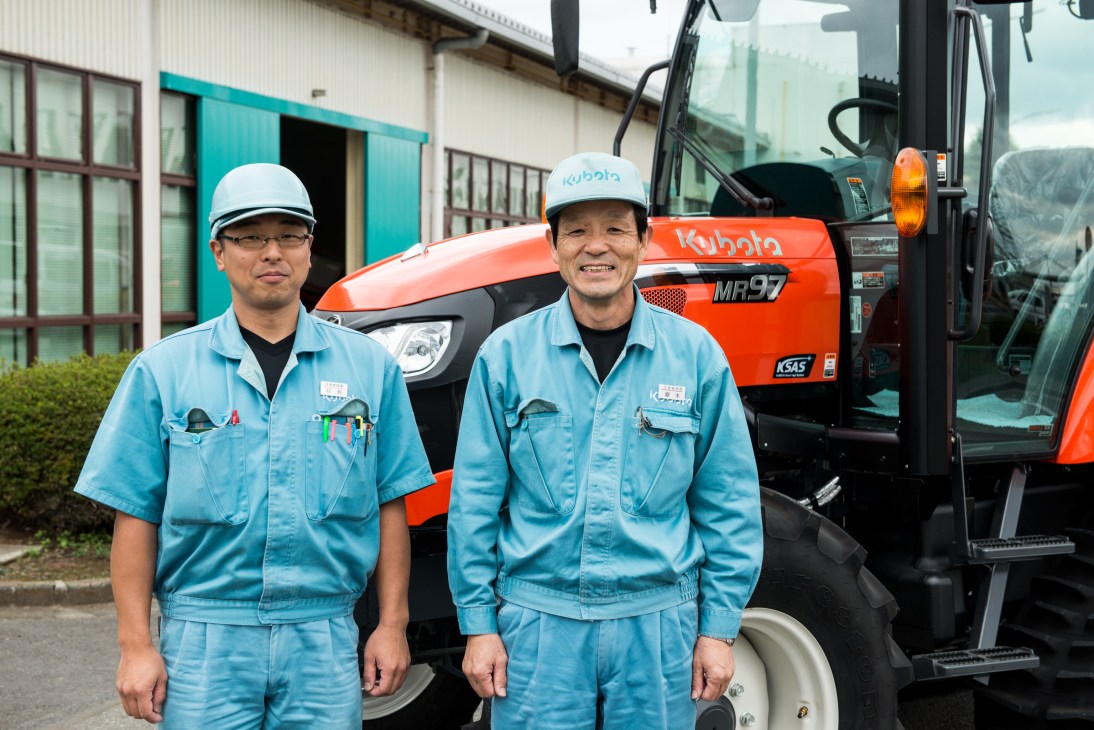
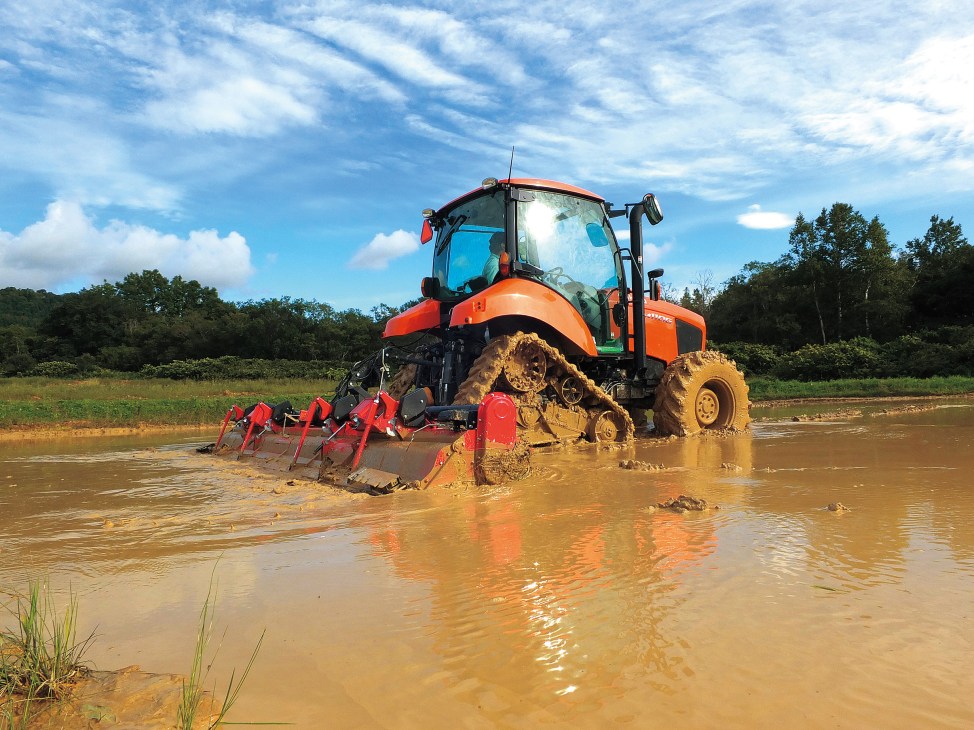

At the same time city dwellers are yearning for the land. You can see this in the popularity of LandLust, a magazine published by Landwirtschaftsverlag in Germany that focuses on the joys of a bucolic life. Or Komsukoy, a firm that helps Istanbul residents grow fruit and vegetables on smallholdings away from the urban hubbub. As our cities swell and rural areas empty, we need to keep the countryside vital.
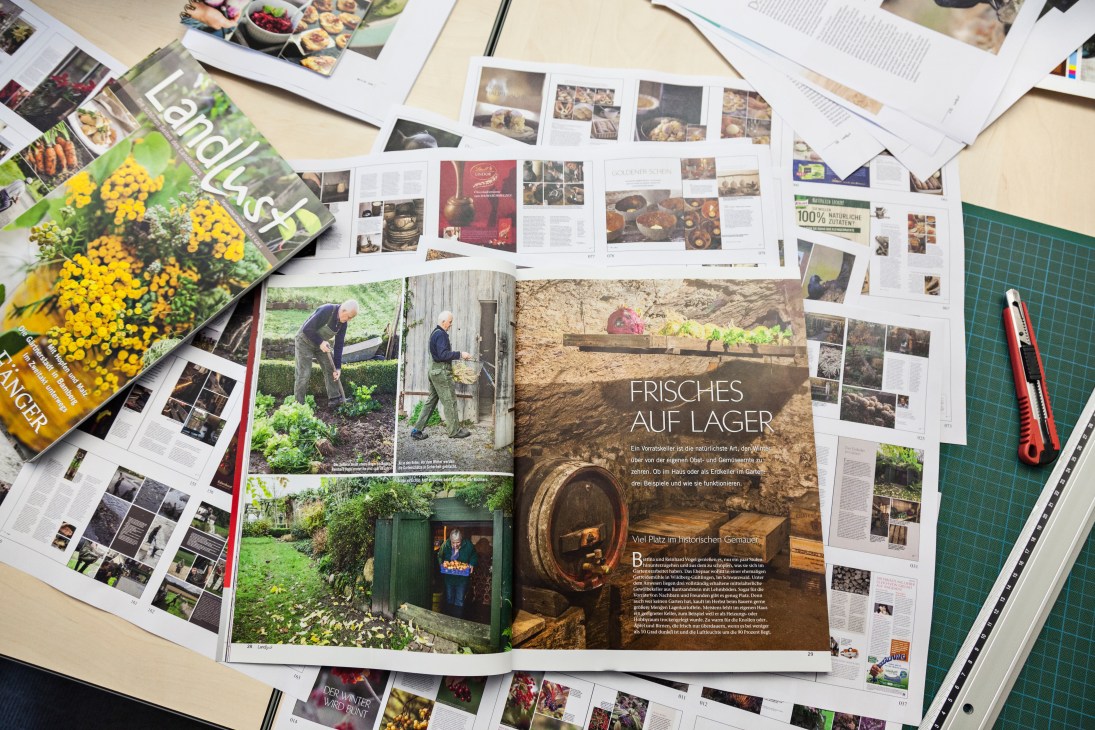
1.
Landwirtschaftsverlag
Münster
You might expect the CEO of Landwirtschaftsverlag, Germany’s leading agricultural-magazine publishing house, to dress and behave a little more, well, like a farmer. But today Hermann Bimberg sports a blue suit and a shirt, and his office on the top floor of a sleek five-storey building in a prosperous suburb of Münster is full of modern art.
But appearances can be deceptive. Bimberg, who has run the Verlag for 14 years, studied agricultural science. When he’s not running a publishing juggernaut with a staff of 500 and revenue of about €100m he can be found on his 110-hectare pile in the countryside near Dortmund, which has been in his family for more than 200 years.
The publisher was a one-title operation for more than a century, its weekly Wochenblatt the sole product. It made a bid for national circulation in 1970 with full-colour monthly Top Agrar, aimed at farmers across Germany. Now its stable includes dozens of titles covering everything from farm machinery to equestrian sports and dairy cows.
The publisher’s halls are lined with framed covers and abstract artworks. It’s a fairly urbane setting, the life-size fibreglass cow on the second floor aside. Yet almost every member of staff has farm experience: they’re either farmers themselves, grew up on farms or have degrees in agricultural sciences. Some, including Bimberg, tick all three boxes.
Ludger Schulze Pals runs flagship monthly Top Agrar from a pristine corner office on the second floor. He started his career as an intern here before leaving to earn a doctorate in agriculture and spent more than a decade working in a variety of ministries as a speechwriter and press spokesman. “Everyone teases me that I left as an intern and came back as the boss,” he says with a smile.
Schulze Pals’ years treading the halls of power are a real asset: German farmers need to keep abreast of European, national and regional politics. He grabs the November issue to prove the point. The three-pager he penned on the politics behind the milk-price crisis gripping Europe’s dairies walks readers through the key players.
Down a floor in Wochenblatt editor Anselm Richard’s office, the vibe is different. Richard wears jeans and a wrinkled blazer; his desk is piled high with papers, burying his iMac. Standing in front of a wall-mounted map of North Rhine-Westphalia, he says nearly every farmer in the region gets the Wochenblatt. It’s been published weekly, save for a brief period after the Second World War, for 170 years and local deals for cows, sows and soy are made based on its Market Telegram. “Farmers don’t need minute-to-minute prices,” he says. “Our readership is already fairly old and conservative. They rely on the print product.”
Yet while the print offering remains strong, editors at Landwirtschaftsverlag have to bridge the gap between old-fashioned farmhands more comfortable around a combine than a computer and a new generation of digital natives tweeting from their tractors. Take the 32-page package in Top Agrar about all things swine, which includes a feature on burnishing your cruelty-free credentials using Facebook – plus a gentle explanation of what Facebook actually is.
Back in his office, Bimberg praises his employees’ embracing of the web. Some of the Verlag’s newest ventures aren’t included on the rack of magazines in the lobby, such as LandReise, a travel platform for people who want to spend holidays on farms. Its biggest digital venture so far is traktorpool.de. Launched in 2001, it’s now Germany’s leading classifieds site for used farm equipment. Too niche? “It’s actually a big earner for us,” says Bimberg. After all, when you’re in the market for a gently used Putsch Beetmaster mobile beetroot washer and corer, a bargain at €211,820, eBay is probably not going to be much help.
Notes: New crop
Ute Frieling-Huchzermeyer, editor in chief of LandLust, is excited – and with good reason. It’s a crisp autumn day outside her office on the ground floor of Landwirtschaftsverlag, the perfect time of year to launch an English edition of the country lifestyle title that’s taken over the German magazine world.
Since it launched in 2005, the bimonthly’s circulation has soared to about 1.1 million copies. Its leisurely pace and focus on topics other magazines might overlook succeeded where flashier competitors failed. “We’re focused on authenticity,” she says. “Food photos aren’t styled and we don’t use models.”
Frieling-Huchzermeyer is convinced that UK readers will love the finished product. “People spend their working life online,” she says. “You need a balance. Quality journalism, great photos and magazines that are comfortable to read have bright futures.”
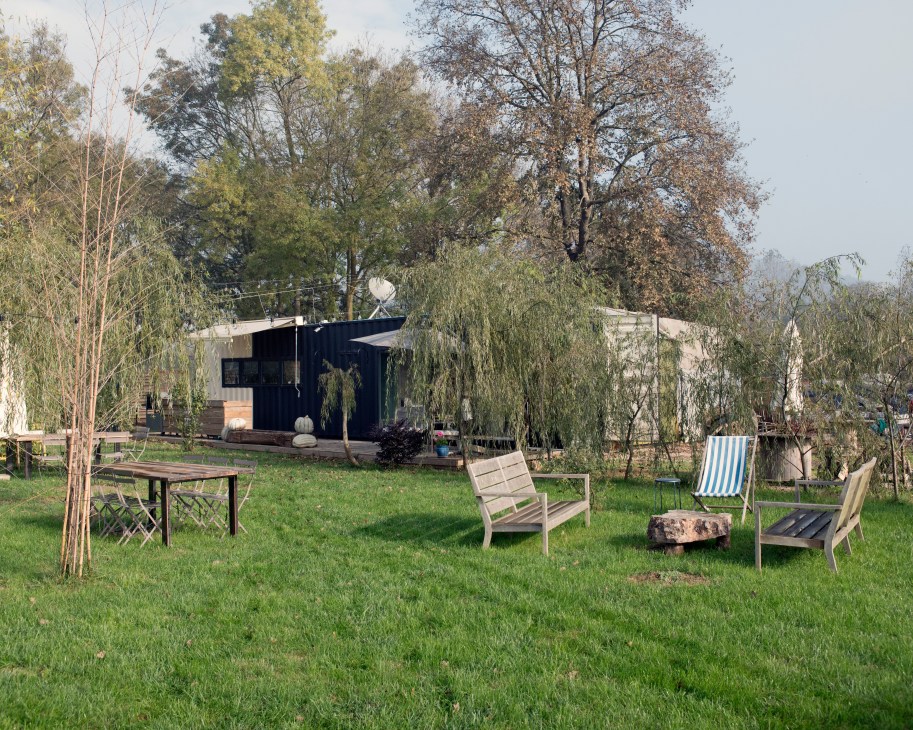
2.
Komsukoy
Turkey
The neighbours didn’t quite know what to make of Komsukoy’s three founders when they first began tilling the fields. They certainly didn’t look like the hardened farmers usually found in Cumhuriyet, a conservative area on the eastern outskirts of Istanbul. In fact the trio normally run an advertising agency in the city; out here they like to play jazz across their fields of cauliflower, carrots and broccoli.
“At first it was hard to find people to work for us around here,” says Ogulcan Atay, who launched Komsukoy in 2014 with siblings Ozden and Ugur Akyildiz to give Istanbulites the chance to become small-hold farmers. “Now they all want to work here,” he adds as two women in colourful headscarves trundle past to the strains of Fela Kuti. “It has become a very attractive option.”
Komsukoy’s subscribers sign up online, paying TRY3,250 (€1,050) a year to rent a plot of land where they can grow up to seven different crops of their choosing. Alternatively they can select rows of plants to rent across several fields for a more diverse haul. Every day up to 15 workers from the surrounding villages weed, water and tend the crops until they’re ready for harvest. The produce is then delivered the same day to members’ kitchens in Istanbul.
But the magic of Komsukoy is that the members are also encouraged to spend time on the farm tending their own crops. It is not uncommon for them to arrive in suits from the city, ready to roll up their sleeves and get to work, trowel in hand. Otherwise they can manage their crops remotely via an online application, deciding what they’d like to plant and when to harvest. “We needed a simple, easy way to get people and their children into farming,” says Ozden.
Patience is key to this business. Members are told from the start that there’s always a chance a bad spell of weather might produce a slim harvest. Komsukoy was founded as a response to the increasingly industrialised farming processes being used elsewhere in Turkey and so chemicals remain strictly off the agenda. Instead the team employs “companion farming”, which enlists the natural properties of certain plants to keep away bugs and create soil humidity, or act as a compost when left to wither.
Growing a community, the founders say, has been essential to the venture’s success. Members are invited to regular meetings where a day spent working in the fields is followed by a meal at Komsukoy’s onsite café The Village, usually rustled up by one of the members; unsurprisingly, there are a few chefs on the subscriber list. A members’ newspaper, the Koy Gazetesi, includes recipes based on whatever happens to be growing at Komsukoy in any given season.
The farm is now full, with 150 members signed up and a growing waiting list. Komsukoy has also attracted a number of corporate members as farmers and several restaurants in Istanbul receive their produce from here each week. “This is about providing healthy food but also about getting people to be part of production, not just consumption,” says Ozden.
“Komsukoy allows people to meet nature and see how farming works,” says Atay. It is a feeling that’s shared by Emre Buga, an anchor at one of Turkey’s television stations, who joined Komsukoy at the beginning and currently has rocket, radishes, cabbage, broccoli and leeks in his fields. “I miss the summer because I haven’t tasted watermelon like those grown at Komsukoy before,” he says. “I once found a snail in my spinach and I was so happy because it meant I was sharing this with nature; it means these crops are alive.”
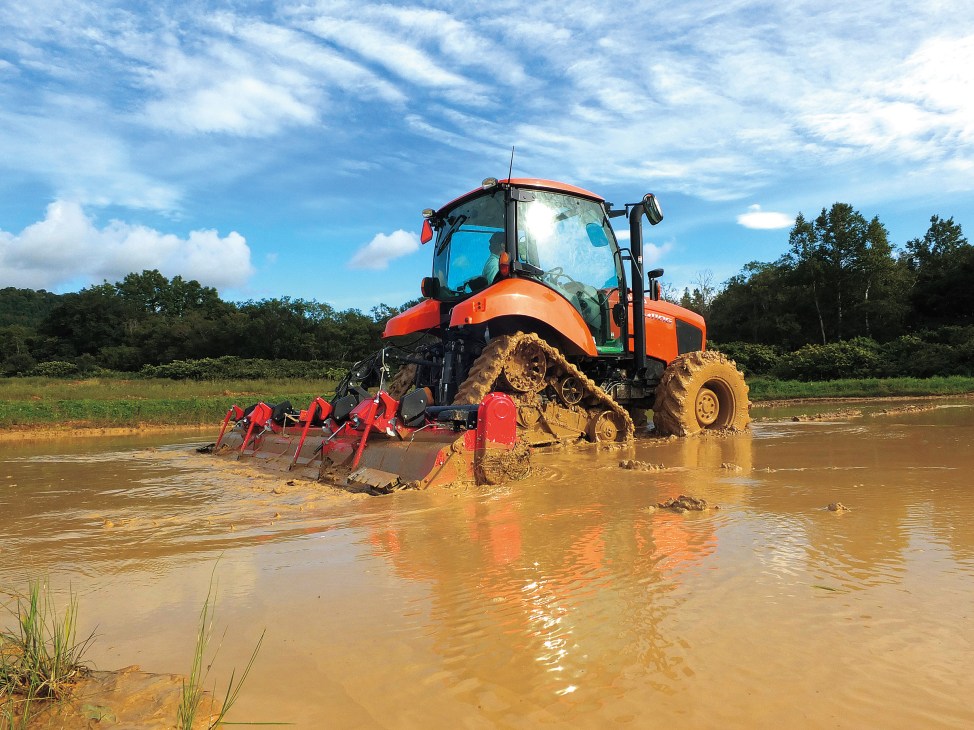
3.
Kubota
Japan
Demographics are doing Japanese agriculture no favours: a dwindling, ageing population of farmers means fewer people are working larger farms. Factor in the deluge of imports that could come if the 12-nation Trans Pacific Partnership (TPP) trade agreement is ratified and it is likely that more farmers will leave the rural life behind.
None of this should be good news for Kubota, Japan’s largest manufacturer of agricultural machinery. And yet the company has decided to take the battle to the rice paddies and get involved in the business of farming itself. It has two farms up and running and by 2019 it will co-own 15 in Japan, totalling about 1,000 hectares of land.
These partnership farms will serve as a testing ground for new ideas and machinery. The jewel in the crown is the Kubota Smart Agri System (KSAS), designed to bring agriculture into the 21st century. Using the handheld device, made by Kyoto-based Kyocera, Japanese farmers can now track the planting and harvesting of crops precisely. Kubota’s KSAS-compatible combine harvesters can measure protein and moisture in rice crops and use the data to calculate future fertiliser requirements.
Tests between 2011 and 2013 showed that this close management of farms improved rice quality in just one year. “One farmer can be looking after 100 or 200 fields now,” says Yasuo Kammuri, who manages Kubota’s farm-machinery operation in Japan. “Once the worker completes the task, the business manager or farmer can check immediately.”
The agriculture sector hasn’t had a good press in Japan, where it has been seen as too dependent on government subsidies and import tariffs. However, Kammuri says the challenges of modern farming here present opportunities. “We can expand into greenhouses and rice export,” he says. “Our aim is to provide a good environment for farmers; we don’t want them to leave the industry.”
Notes: Thinking bigger
Kubota has long focused on the needs of rice farmers who use light tractors but it has just launched the M7001. The 170HP tractor can handle European or US upland wheat farms and is the first of its kind built by a Japanese manufacturer.