The Forecast
Southern Belle
With just shy of 220,000 residents, the southern city of Richmond, Virginia, is one of the oldest in the US and the place where Patrick Henry ignited the American Revolution with a famous speech on liberty. It was also a centre of trade for the tobacco and cotton industries before the American Civil War and was the capital city of the Confederacy that seceded from the rest of the Union in the 1860s. Today the city is proving popular with Americans previously drawn to places such as Austin and New Orleans.
There’s an optimistic spirit here and it’s nowhere stronger than in the city’s oldest neighbourhood Church Hill, which overlooks the James River. After a 1980s downturn, the tight-knit quarter has been reinvigorated by tax incentives for historic renovations and a five-year grant programme for new businesses. The latter project is led by Church Hill-based hospital Bon Secours as part of a wider mission to improve the health of the city.
The environment these commercial incentives have created is visible in the urban efforts of Tricycle Gardens to farm locally and provide fresh produce at the city’s weekly farmers’ market. Catherine Illian’s Richmond Rides, a bike-tour firm showcasing Church Hill, is another success story. Illian has a symbiotic relationship with Richmond business; her fleet visits neighbourhood favourites and has been sponsored by city heavyweights such as independent hotel Quirk and denim-maker Shockoe Atelier.
Nearby neighbourhood Shockoe Bottom is home to Ledbury, a clothing brand co-owned by Paul Trible. He and his wife Brit moved here from Richmond’s Fan district a year ago to set up home in a 19th-century house with six-metre-high ceilings and a grand porch. Their jointed row of buildings is the oldest attached property in the city, built in 1818 and set along a tree-shaded pavement. “There was more of a small community and an invested sense of building it up,” says Paul. “It’s a different atmosphere.”
The same sentiment persuaded Austin transplants Jennifer Elsner and her husband David Shields to move from the Fan to Church Hill two years ago. “We knew right away,” says Elsner. “It feels really special to be here because of the history but also because of what it is becoming.” An artist and a graphic-design professor respectively, the couple longed to live in a neighbourhood with as much vibrancy as the one they left behind in Texas.
A loaf of flatbread from Church Hill baker Sub Rosa is cooling on the table when we visit. As well as heading out and about in Richmond to find such appealing cuisine, Elsner also brings the community into her home by opening her back garden for summer concerts.
It’s an open-door policy that reverberates around the colonial-era houses here. Before they opened their restaurant, The Dog and Pig Show, Isabel and James Eckrosh launched a supper club from their Church Hill home. It served as a platform to introduce James to the culinary community after the two moved here from New Orleans. Following the 2014 launch of their petite café, they have found their feet. “New Orleans is a mistress of a city; sometimes you just want a wife,” says Isabel.
Richmond, it seems, is a city of happy unions, with the Bon Secours grants having given seed-funding to a number of Church Hill start-ups. Metzger Bar and Butchery is one such enterprise, while grants have helped expansions at the likes of Sub Rosa, where Bon Secours helped the bakery’s brother-and-sister team Evrim and Evin Dogu buy a stone mill to grind their own flour.
The relative ease of finding both funds and neighbourly support doesn’t mean Church Hill’s entrepreneurs are lax on quality. From outstanding dishes at The Roosevelt or Dutch and Co to well-conceived packaging at The Dog and Pig Show (or Sub Rosa’s stone-ground flour), the businesses here would stand tall in any town. Whether they are Virginia-born or newly drawn, a fresh generation of residents are united in turning around the fortunes of this historically important city.
Notes: Need to know
Room to grow: There’s no shortage of excellent cuisine here but Church Hill needs a few speciality shops. We’d suggest a well-stocked stationery store, a place for smart clothing and homeware and an inviting flower shop.
Trading partners: US citizenship and residency are not required to start a business in the US so there aren’t many hoops to jump through for a start-up in Richmond. However, foreigners may be asked to make a larger down payment on property or pay higher interest.
Totting up: On average, Church Hill homes cost about $275,000 (€260,000) but prices can range from $150,000 (€140,000) to $1m (€940,000).
Here to stay: Richmond’s first independent hotel, the Quirk, opened in 2015. It’s good but the city is yearning for another. More staying options would boost visitor numbers, give tourists a base from which to explore this blossoming area and offer a hospitality-minded entrepreneur an enviable niche.
Strong language
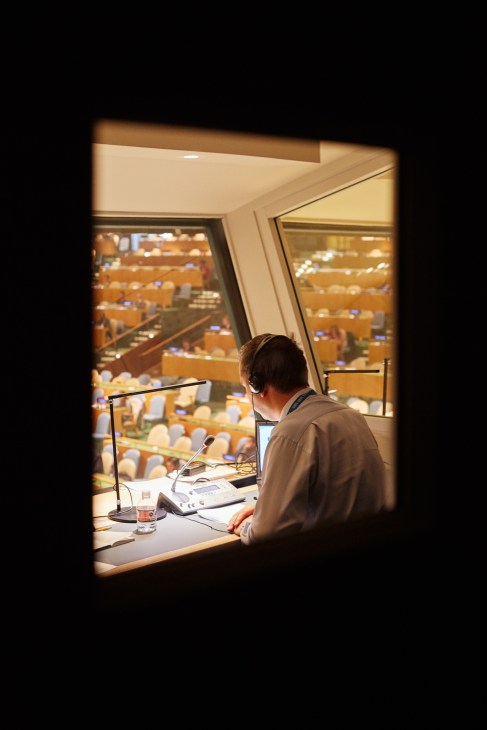
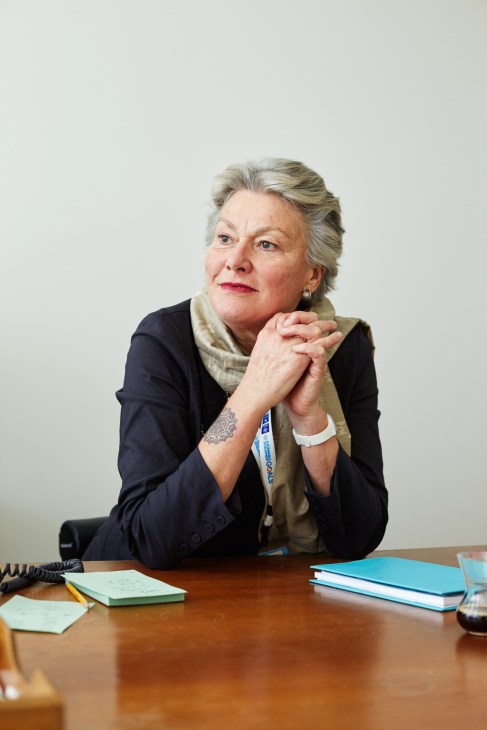
It’s Friday morning at the UN headquarters in New York and Sophie Louyot – chiffon scarf wrapped tightly around her neck – is marching around the corridors of power. In a few minutes a discussion will start in the recently renovated General Assembly Hall about changing the archaic make-up of the Security Council. As acting head of the organisation’s interpretation service, Louyot will need to make sure all of her staff are promptly in place to help the 193 member nations decipher the formal prologues and impassioned speeches of each other’s delegates.
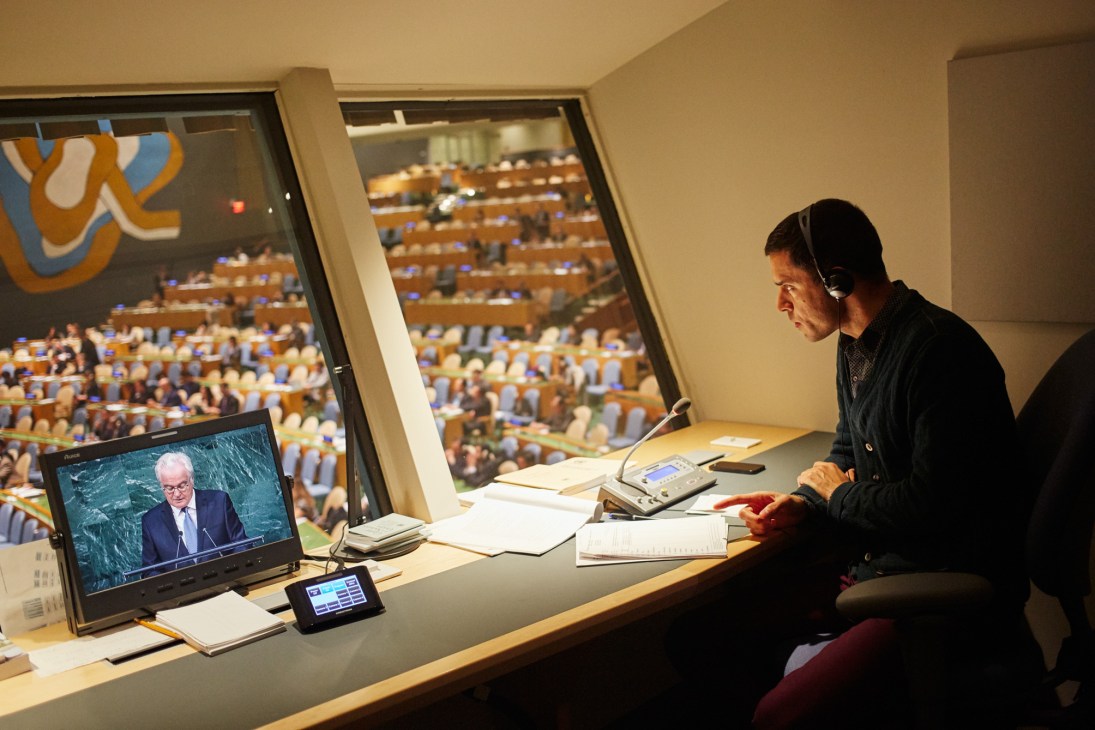
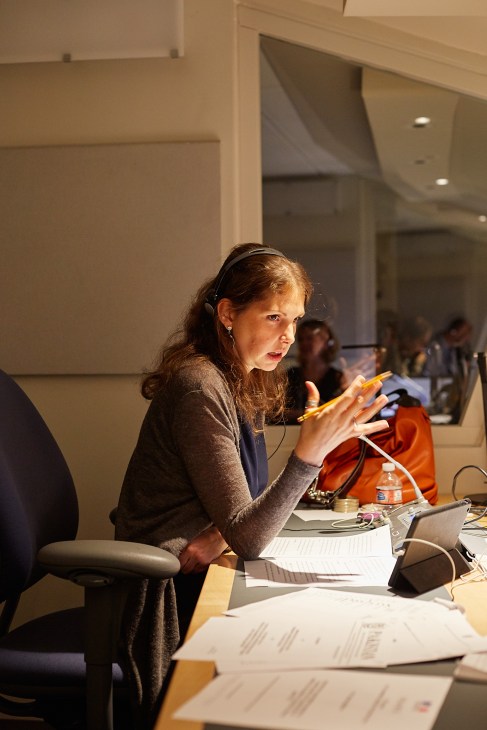
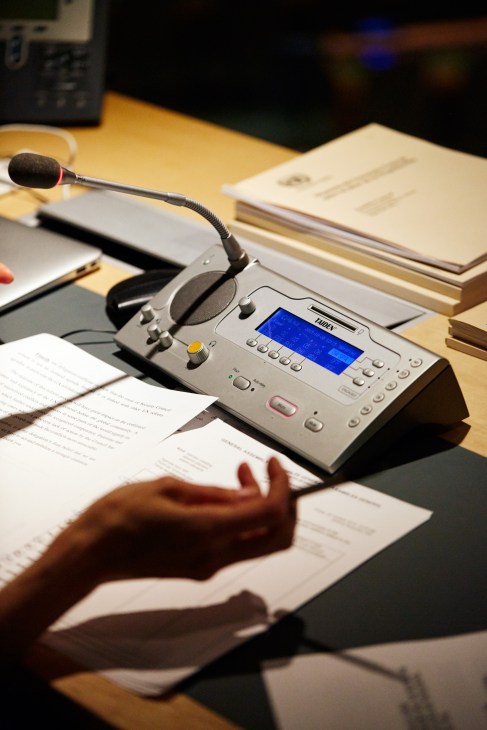
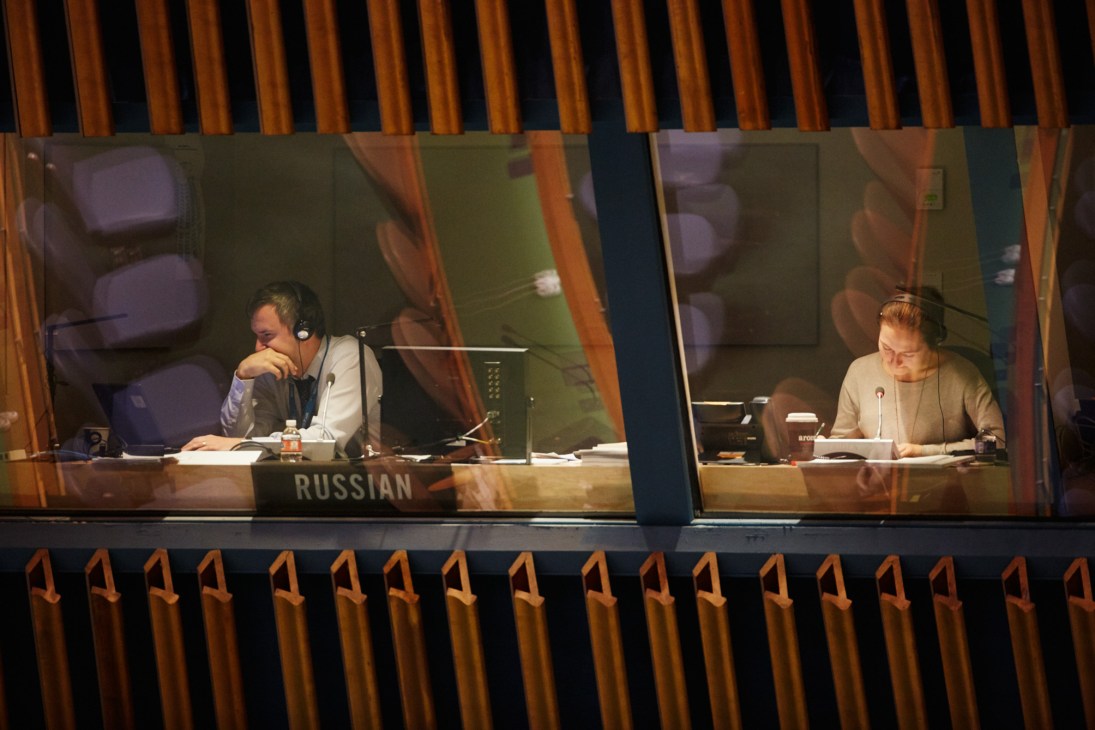
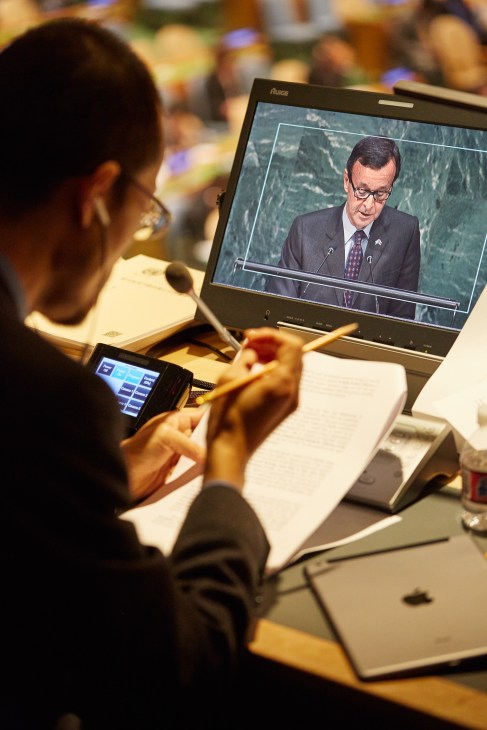
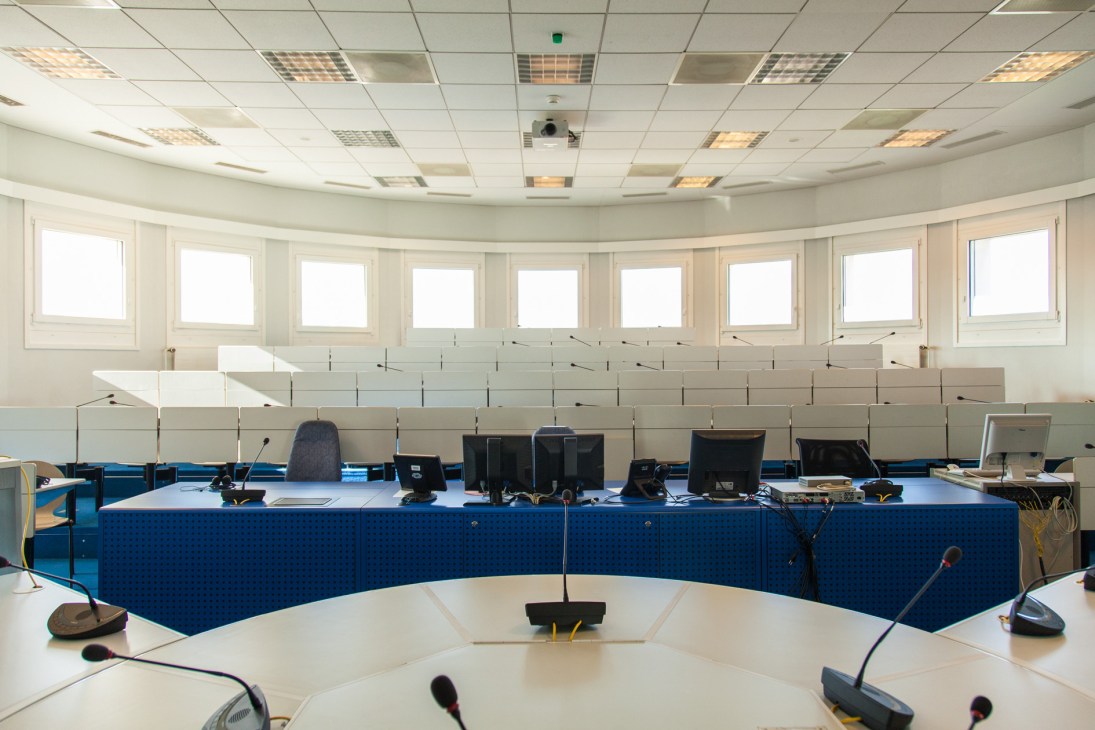
Perched above meetings in booths that curve around the circumferences of the main debating halls, interpreters provide an invaluable service, often making it look far easier than it is. Hunched over microphones, they peer through tinted windows at the delegates, simultaneously interpreting the audio feed from their headphones (usually into their mother tongue, often fired out in a rapid staccato to keep up with the interlocutor below). The mental acrobatics taking place are second to none, which may explain why interpreters only work half-hour shifts at a time.
“You have to be listening and you have to be talking at the same time,” says Belgian-born French interpreter Véronique Vandegans. “If you interpret literally that isn’t going to work. And if you have time, which isn’t usually the case, you have to be able to correct yourself.” As well as making split-second decisions and performing multiple tasks, understanding what is happening doesn’t simply involve following the speech. Interpreters, whose salaries start at about €44,000, have to be abreast of the inner machinations of the UN, from jargon to current affairs. This is a seven-days-a-week job where, in their half days and free time, staff need to be reading up on official documentation and making sure they are consuming media in the multiple languages from which they interpret. “But the main language we have to master is our own,” says Vandegans who, for a recent meeting, had to learn how a nuclear power plant worked, along with all the accompanying vocabulary. “You need to be able to express yourself in a way that is easily understood by all delegates.”
A strip-lit corridor links the language booths above the General Assembly Hall, which span the official UN languages of French, Spanish, English, Chinese, Russian and Arabic. Here all the interpreters seem to have similar motivations: the thrill and even the stress of the job, as well as the feeling they’re making a difference. “I really think that in my humble capacity I can do my part,” says Chinese interpreter Chen Ji, speaking with a refined English accent from years living in Oxfordshire. For Jamaican Paul Pottinger, who works in the English booth, motivation comes from the mental challenge. “It draws on every aspect of your being,” he says. “Your personality, your voice, your intellectual capacity, your general knowledge. You’re just always growing.”
While interpreters may be removed from the theatre below them, the essential part of their job remains communication. And when they have to travel with UN missions around the globe, the interpretation can be much more hands on, such as when Véronique Vandegans went to El Salvador to visit ex-gang members in prison and had to sit and whisper in the ears of delegates. Everyone seems to have a Damascene moment when they were converted to the idea of interpretation as a career path. Vandegans, for example, battled a speech impediment for nine years and wanted a “kind of revenge against the past”, while Spanish booth worker Irene Pérez, who used to be given Mafalda comic books by her father when he returned from trips to Argentina, remembers one strip about the six-year-old main character deciding she wanted to become a UN interpreter. For Aitor Arauz, also from the Spanish booth, his job at the UN supplanted any dreams he had of moving to London and becoming an actor. “This has fulfilled all my performative aspirations,” he says with a grin. “You’re closely engaged with world peace, politics and all the wheelings and dealings of a highly staged international attraction.” Interpreters, who can train for up to six years before taking a job, sometimes also have to battle against being swept up in the constant political bun-throwing. “I am Russian so, of course, when some issues are discussed that are very sensitive I have my own opinion and feel something,” says Russian booth interpreter Anna Tuneva. “But you cannot let it reflect on your job in any way.”
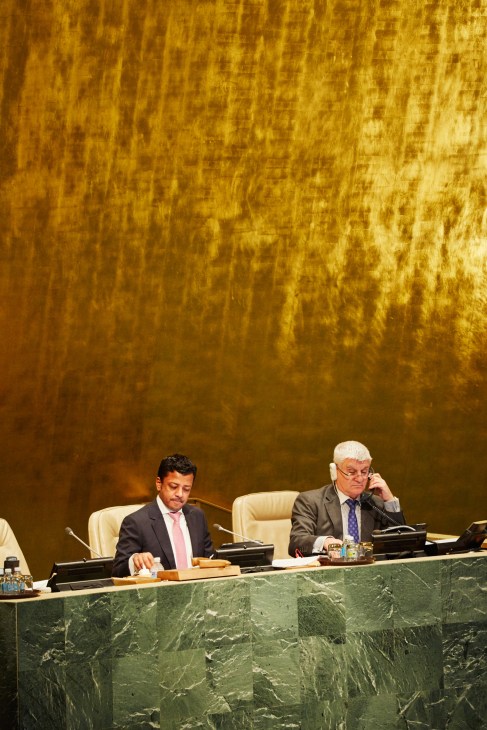
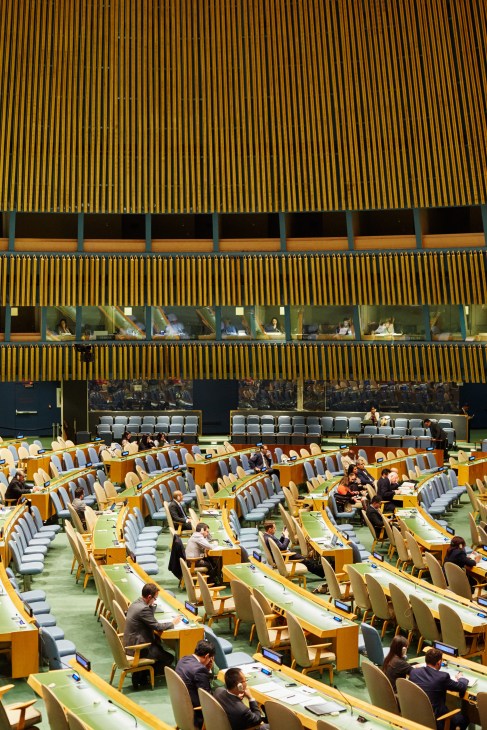
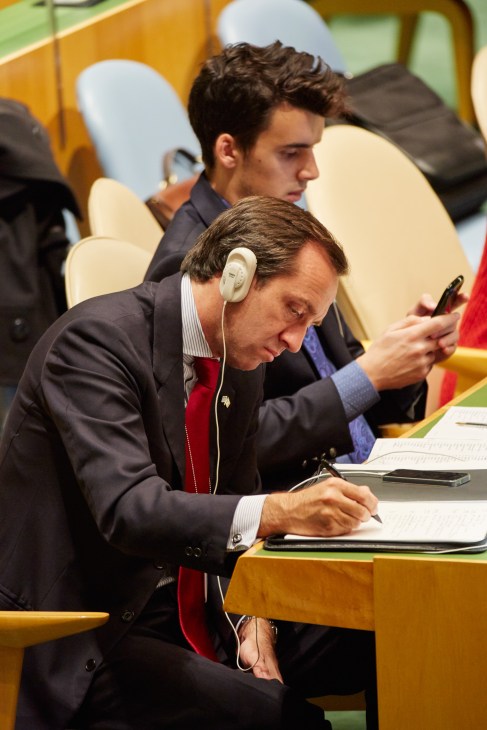

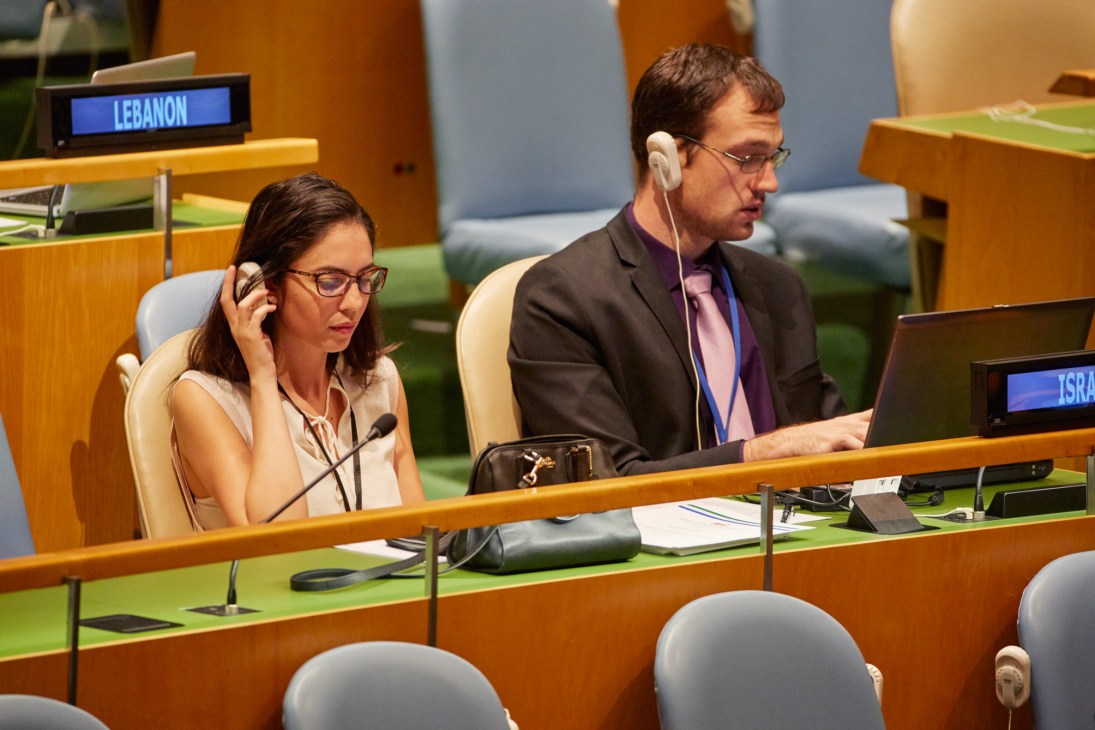
Invariably “language use is political”, according to English booth interpreter Penny MacDonnell. Rwanda’s decision to switch its official language from the French of its former colonial ruler to English speaks volumes; likewise the move by Ukrainian delegates, fluent in Russian, to speak English at most official UN meetings. Many delegates across the language spectrum have trained themselves to simultaneously listen to the interpretation while they’re giving their speeches because they want to ensure it is as accurate as possible – or, put another way, they want to ensure it conveys their message exactly the way they see it.
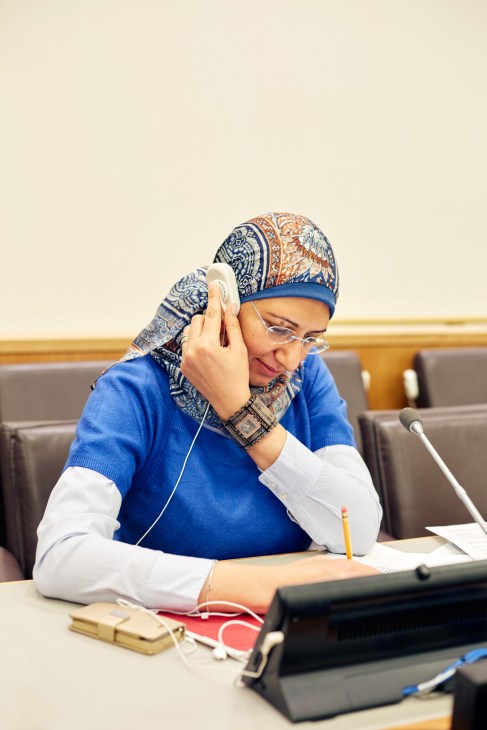
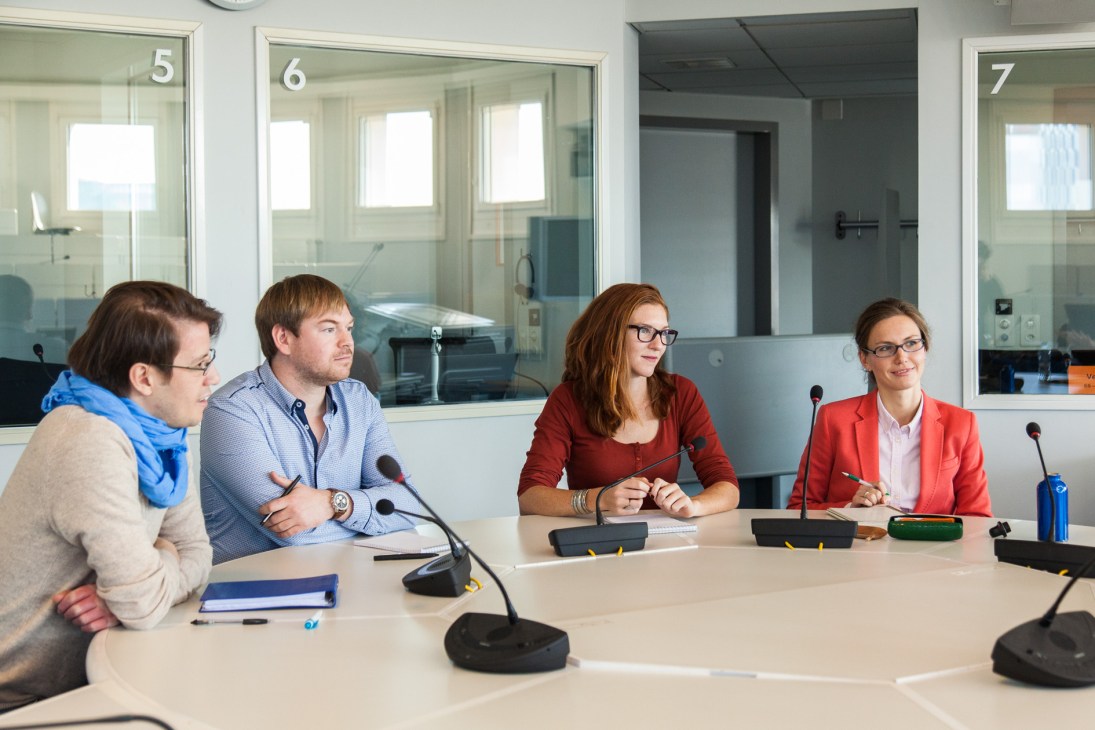
Away from the heated debate in the General Assembly Hall, students gather around a table in a conference room for Arabic language training. Unlike the majority of UN languages, where interpreters work from one or more foreign languages into their mother tongue, Arabic goes both ways. This is largely because of the nuances of the language, which make it very hard for a non-native speaker to master; the only other language with the same set-up is Chinese. Despite the 129 permanent staff members, the UN currently has a shortage of Arabic interpreters and the teaching, culminating with exams in January, is directed at correcting that disparity. Tutor Rama Ahmed says her task is to make trainees “inter-lingual”. This is not always easy when the classical Arabic required at the UN is essentially “a foreign language” compared to the colloquial, regional forms that pupils speak on a day-to-day basis.
Watching over proceedings is Arabic section chief Ashraf Kamal, originally from Egypt. Stressing the importance of a job where “you could unwittingly start a war, or just about”, he cites the notorious occasion when there was a furore in the Knesset after a slip of the tongue during Arabic interpretation at the UN informed delegates that Israel and Hezbollah had always exchanged “secrets” instead of POWs. Kamal has been at the UN for more than three decades and, despite stints as a spokesman for the UN’s Independent Inquiry Commission and a public information officer at its Iran-Iraq Military Observer Group, he has always returned to his first love: interpreting. “The day you take it for granted,” he says, turning serious for a moment, “is the day you should quit.” Mentally and often emotionally exhausted, interpreters wouldn’t have it any other way.
Hear this
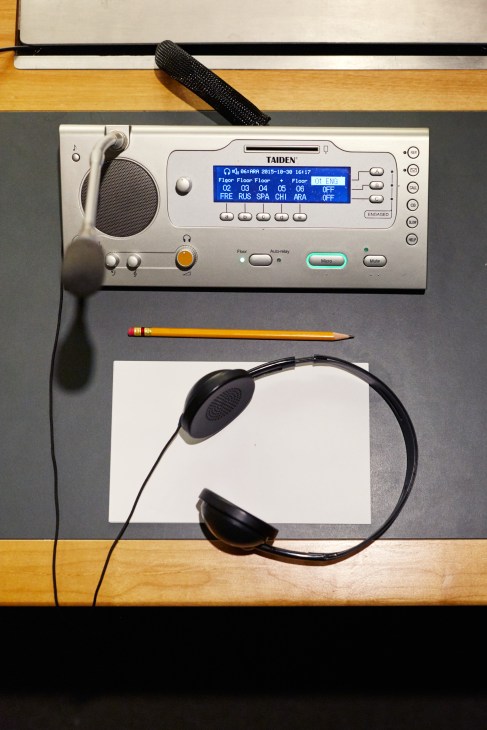
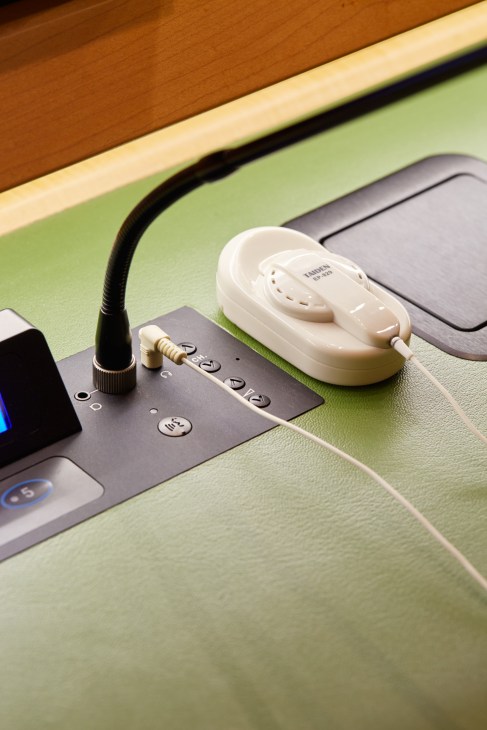
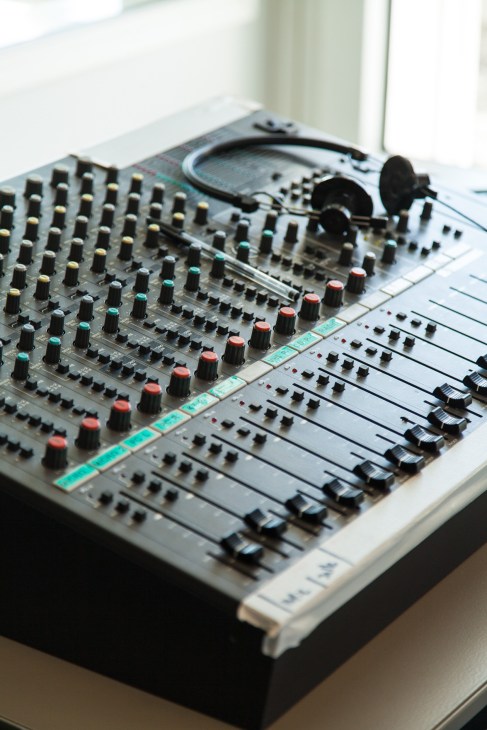
Low-cost Chinese manufacturer Taiden has broken onto the international conference circuit.
Founded: 1996
Global HQ: Shenzhen, China
Interpretation products: 140
Models of Stem microphone: 11
Wired channels: 64
Key clients: UN HQ, World Bank
Star product: Taiden HCS-8385 conference system, to be released in January. New features include connection to iOS and Android devices for sending messages to other interpreters.
Let’s talk
Although interpreters are best known for the simultaneous service they provide – the taxing, instantaneous voiceover fired out on world stages such as the UN General Assembly – they also fulfil another role: consecutive interpretation. Performed at smaller gatherings and when the UN goes on missions, it means interpreters listen to a speaker for up to five minutes before they respond with the interpretation.
Interpreting by numbers
2013: The year Taiden, the system used at the UN headquarters in New York, was introduced
126: interpreter booths
315: interpreter stations
17: inter-parliamentary meeting rooms
1,238: formal meetings supported by interpreters in 2014
Becoming an interpreter
- Course: MA in conference interpreting at the University of Geneva
- Applicants per year: 200
- Students accepted annually: 20
- Languages represented: 7
- Staff: 35 (2 professors, 30 lecturers, 3 doctoral assistants)
- Course cost: CHF500 (€460) per semester
- Course length: 3 semesters

Not lost for words
Graduates of the University of Geneva’s interpreter-training programme are some of the best in the world; here’s how they learn their craft.
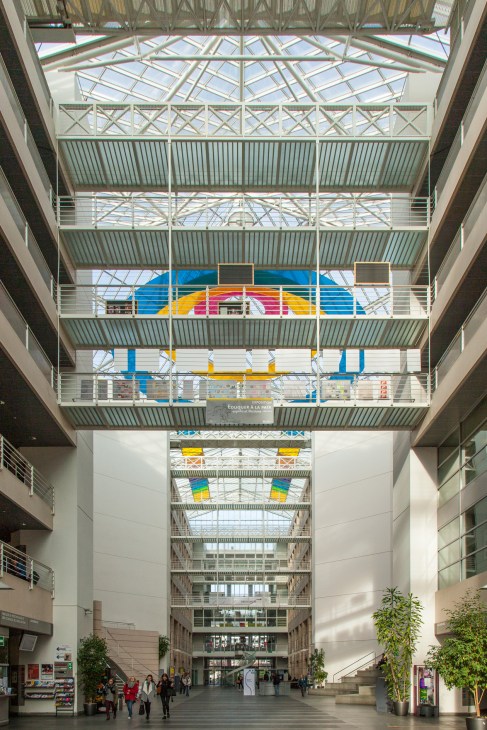
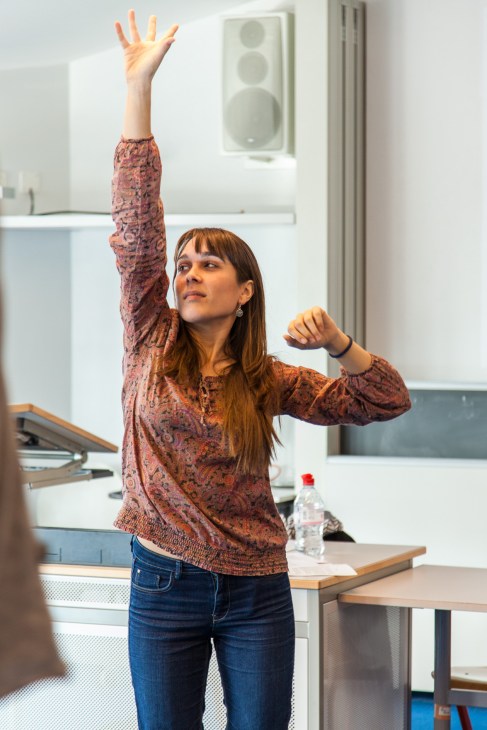
In the University of Geneva’s airy main building, sun streams into a top-floor classroom. Ten young people chant, stretch and do relaxation exercises. But this isn’t a yoga break: it’s a voice-training workshop for students of interpretation. The voice is their main tool so keeping it strong, healthy and confident is essential.
The workshop is part of an MA in conference interpreting, where students spend 18 months honing skills such as listening, comprehending and analysing in one language while speaking and essentially performing in another – in real time. “How is the human brain capable of such an unnatural task?” asks Kilian Seeber, director of interpreting at the university’s Faculty of Translation and Interpreting. “We believe in a teaching method based on research and we do a fair amount here on multilingualism, cognitive psychology, psycholinguistics and how the brain performs.”
The interpreter-training department opened in 1941, making it the oldest programme of its kind in the world. In its early years interpretation – which became widely known during the Nuremberg trials – was taught intuitively but things have changed since then. “Rather than throwing students in at the deep end, we identify subtasks,” says Seeber. Students first learn consecutive interpretation, then move on to simultaneous, at ever-increasing speeds. Comprehension and message analysis are early steps; memory and voice training are constants.
About three quarters of the students pass their exit examinations. “Most of us don’t pass on the first try,” says Andrew Stead, who will take his exam before a jury of instructors and interpreters. His job prospects are good. “Our programme allows graduates access to the highest level of conference interpretation,” says Seeber. “I see recent grads with heads of state; I see them in reports on the World Economic Forum.”
Interpretation is an exceedingly high-pressured job that demands focus, endurance and nerves of steel. “It’s a great reward to have people depending on you,” says student Toufik Kacem Chaouche from Algeria. “You won’t get a thank you but you feel you’ve helped communicate. When we think about this reward, we forget the stress.”
Key to a happy home
The early modernists had a thing for light, air, hygiene and health. Johannes Itten, one of the first masters of the Staatliches Bauhaus in Weimar, would assemble his students every morning for a series of rigorous lunges, breathing exercises and meditation. (He also prescribed a vegetarian diet and imposed regular fasting periods at the school.) From Le Corbusier’s Cité Radieuse in Marseille, complete with a rooftop gymnasium and running track, to Berthold Lubetkin’s Highpoint in London with its tennis courts and long outdoor pool, buildings had a social function: to keep their occupants healthy and invigorated in body and mind.
The debate has moved on from how buildings can influence lives, brains and bodies. Today architecture is often in pursuit of a grand statement, an original concept or – at the behest of developers – a projection of affluence. If anything the tenets of the early modernists – light and openness – have been hijacked. When a swimming pool is placed in a residential complex it is usually in the spirit of luxury, a statement of prestige rather than physical self-improvement.
Yet the notion of health and wellness is re-emerging and it is not simply a discussion about hi-tech circadian lighting features and molecular air purifiers. For designers such as Ilse Crawford, director of the London-based Studioilse, it is time to readdress some fundamental principles. “Why is it that how we live has somehow become a sidelined part of the debate?” she says Crawford, having worked on projects that range from small apartments to the Ett Hem hotel in Stockholm. “There’s a sense that [the home] is not designed around what people really do but around an abstract idea. We’ve prized the spectacular over the normal.”
Crawford puts human behaviour at the centre of her designs; she aims to venerate the acts of everyday life to create spaces that have warmth and intimacy. “Ultimately we are primal beings; we have a whole range of responses to the world that are fundamental to our nature and need to be part of the brief of any project,” she says. “It’s a question of analysing those things that make us human. We need to look to cultures that value the daily rituals – Japan or Denmark – where they prioritise the ordinary and give everyday moments a special context.”
Most homes are objects of pride; purveyors (and creators) of property and interiors have tapped into this urge to showcase and impress. Yet it is rare to find a developer who asks, “Will these large plate-glass windows make the new occupants feel overlooked, exposed and a little lost?” Or, “Will these materials communicate with their owners in a way that makes them feel safe and secure?” Even less likely: “This slick new wet room is impressive but will it make its owner happy and grounded? How will they relax without a bath?”
Yet some architects are starting to see the emotional pitfalls of the language of glass and volume. In a recent lecture called Treacherous Transparencies, marking the 2015 Riba Jencks Award in London, Jacques Herzog talked of the profound unease found in Mies van der Rohe’s iconic Farnsworth House in Plano, Illinois. Mies van der Rohe had obsessively sought ways to create large-volume spaces but ended up creating an exposed glass house that troubled its owner.
Our attachments to home are imbued with emotions. Details evoke responses, from the feeling of a brass key turning in the lock to the heavy and reassuring oak of a kitchen table. The tessellating pieces of a hardwood parquet floor are intricate, tactile and handsome but also bring an element of solidity and security. “Materials govern our responses to the home,” says Crawford, who works with natural materials such as cork, hemp, mohair and wood. “Touch is our first and last sense; it has a direct connection to our emotions.”
In fact there is a very good case for bringing natural materials into the heart of the home. “Wood has been proven to reduce stress and cortisol levels,” says Robert Penn, author of new book The Man Who Made Things Out of Trees. “It has a sensual power over us. I recently had a desk made from 125-year-old ash that I felled. You can look at its growth rings and think about the great storms and the winters. That’s a connection to the natural world. It has a positive effect.”
Penn’s book also makes a convincing scientific case for why trees should be part of every new project. He cites an experiment by US-based professor of architecture Roger Ulrich, which found that patients recovering from surgery in hospital rooms with a bosky view healed faster, took less medicine and had fewer postsurgical complications than patients with a window facing a brick wall. “There’s a lot of evidence to show that trees are incredibly beneficial both physiologically and psychologically,” he says from his house in a glade in Wales, where he spends his days chopping and seasoning wood. “Our relationship to them is primal.”
Some forward-thinkers in the healthcare sector are incorporating these ideas into patient care. “Views are very important,” says Laura Lee, a former nurse who is now CEO of Maggie’s, a UK cancer trust that has become a design pioneer. (Maggie’s has commissioned the likes of Kisho Kurokawa, Rem Koolhaas and Steven Holl.) “Your gaze needs to go somewhere. It might not be rolling hills but it could be a plant, a piece of art or an internal courtyard. It is a distraction.”
Maggie’s centres use the language of home to comfort cancer patients, who are often dealing with pain, discomfort and emotional upheaval. Lee talks of the importance of the “architectural journey to the kettle”. While the architects are free to interpret each brief, there are certain features the trust insists on: there must be somewhere to hang your coat, no signs on the lavatory door and the approach should welcome visitors. “At one of our centres you step off the tarmac onto a garden path and it’s got a subtle crunch to it; you’re surrounded by plants. It declares, ‘I’m alive and I’m present.’”
Our houses, flats and condominiums should also pique the senses: distract, soothe and elevate the most basic acts of everyday life. How we live, our human instinct to ensconce, congregate, hibernate and relate to nature and light, should provide some basic principles for the homes of the future.

1.
Human interaction
Residential developments should think of ways to bring people together. We are social beings so too many machines can leave us isolated. A concierge is worth investing in, especially one who doesn’t mind keeping a spare key handy and the communal areas clean.

2.
The approach
How does the path to your door make you feel? Do you relish the key turning in the lock or scramble across the threshold glancing over one shoulder? Homes should welcome us. This is a question of scale but also detail; the postbox, the door-knocker, the coatstand and shoe rack.

3.
Views out and in
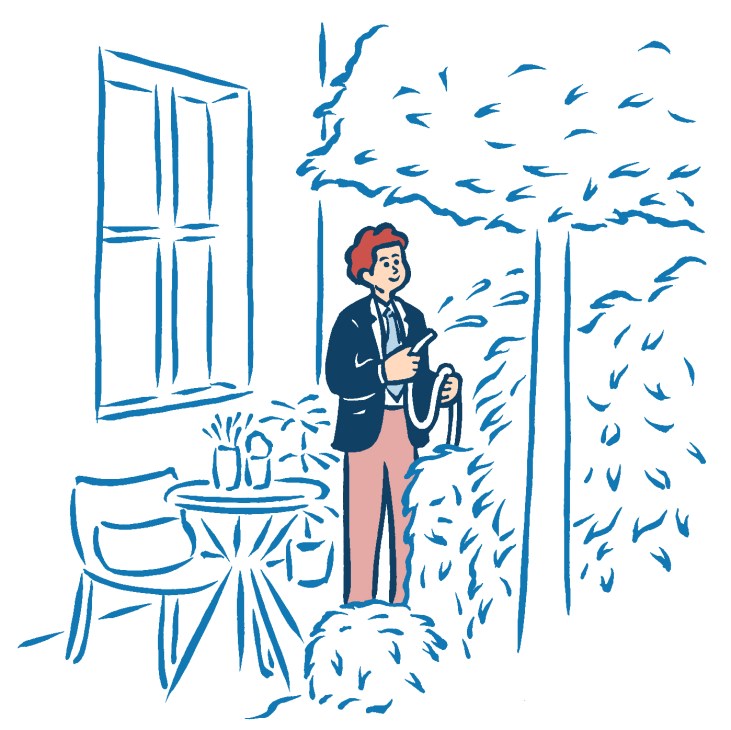
It doesn’t have to be an awe-inspiring alpine vista but the concept of “seeing out” has a bearing on our state of mind. There is a question of balance here: being overlooked can make you feel exposed and unsafe. Slatting, a clever use of shutters, should be a feature of every new home.
4.
Greenery
Planting should be an integral part of any development. Trees and plants are a source of oxygen, an energising, distracting and calming influence. Indoor plants soften and lift an interior.

5.
Cars
Parking your car in the drive may be coanvenient but it encourages a sedentary lifestyle. New developments should promote parking clusters to make residents walk to their front doors.

6.
Materials
Natural materials such as wood, cork and rattan all communicate different messages; we respond to them in the home.

7.
Rooms
There is a slavish adherence to “open plan”; so much so that the merits of rooms with doors have been overlooked. They give privacy and warmth. Humans can feel lost (and cold) in vast double-volume spaces.

8.
Rooftop exercise
Outdoor exercise space, rather than an airless basement gym, gives a feeling of freedom, not to mention some bracing fresh air. Residential developments should utilise flat roofs as a space for running, swimming and workouts.

9.
The kitchen
Why is it that people always cram into kitchens at parties? They are human places and should be the malleable spaces that provide the living, organic centre of the house, not fitted showpieces.

10.
Light
A southwest terrace with enough space for a table (and a spot of exercise) was the signature of the early modernists. We need to reinstate the sunny space and make sure home-owners can stock up on vitamin D.
Part with the furniture
Fabien Naudan, vice-president of the Paris-based auction house Artcurial, began investing in furniture when he was just 20 years old. “I bought a simple Jean Prouvé daybed for my apartment,” he says. “I had to resell when I moved [to a larger space] and I realised I was making a profit. It was then I decided to buy more than what I needed.”
The contemporary market is much more competitive – it’s safe to say there are fewer unwitting twenty-somethings sitting around on iconic chaises longues – but Naudan is adamant that with a good eye a first-time investor can amass an important collection that will increase in value. “The really good pieces are getting so rare in the market that the price is rising,” he says. “My advice is that you always have to think beyond your possibilities. So, if you have a chance today to buy a Prouvé chair for €5,000 that’s repainted or one that’s in perfect [original] condition for €7,000, choose the latter.”
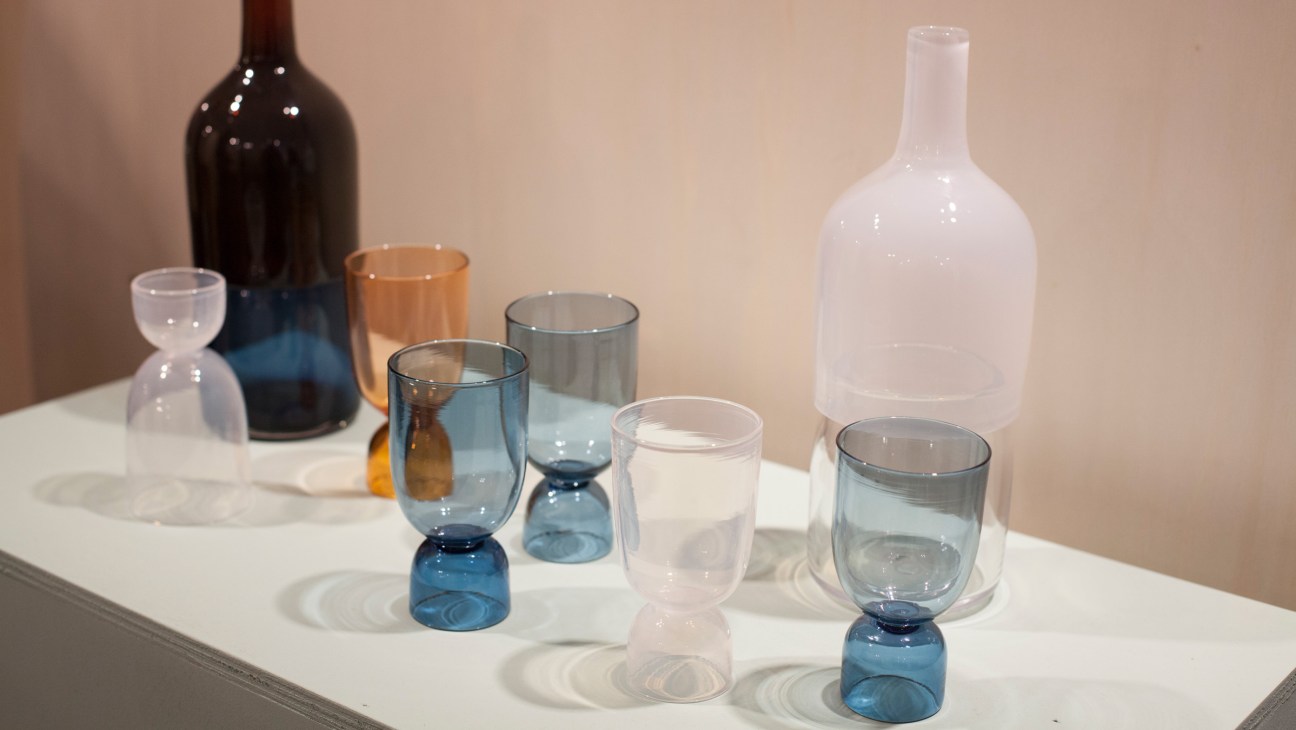
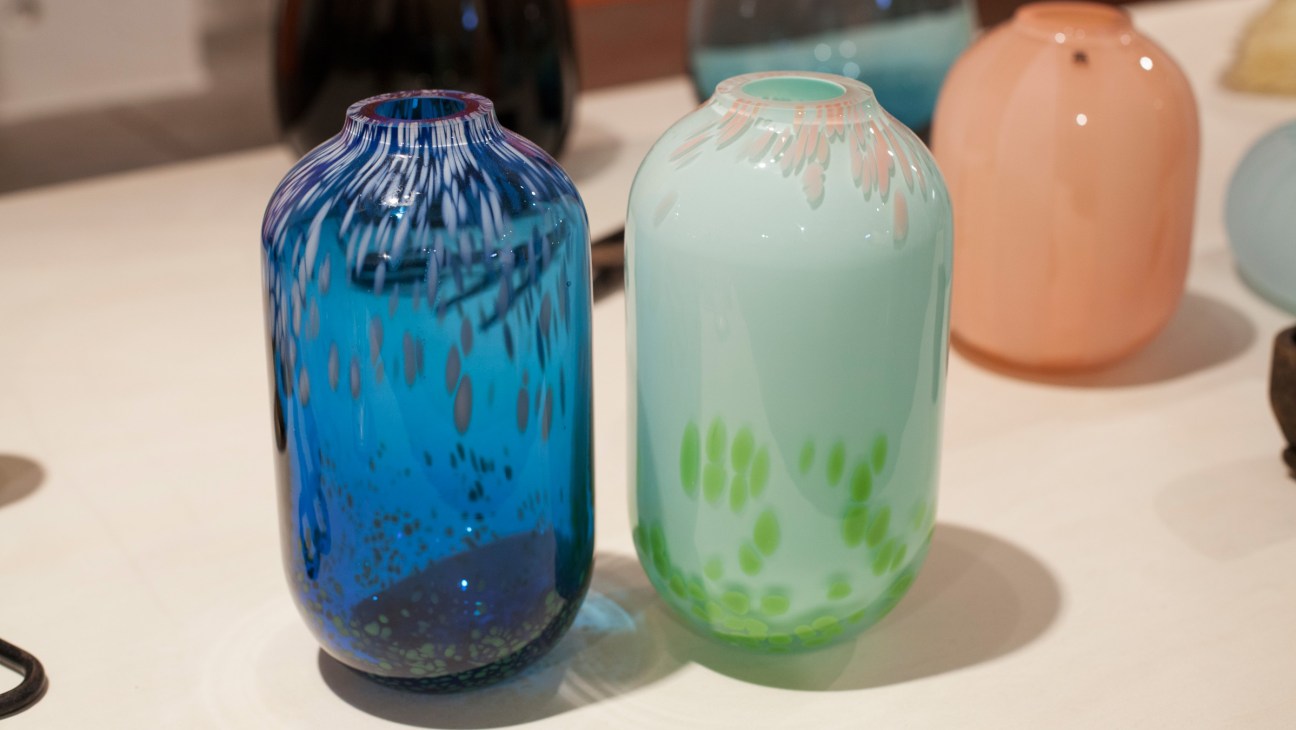
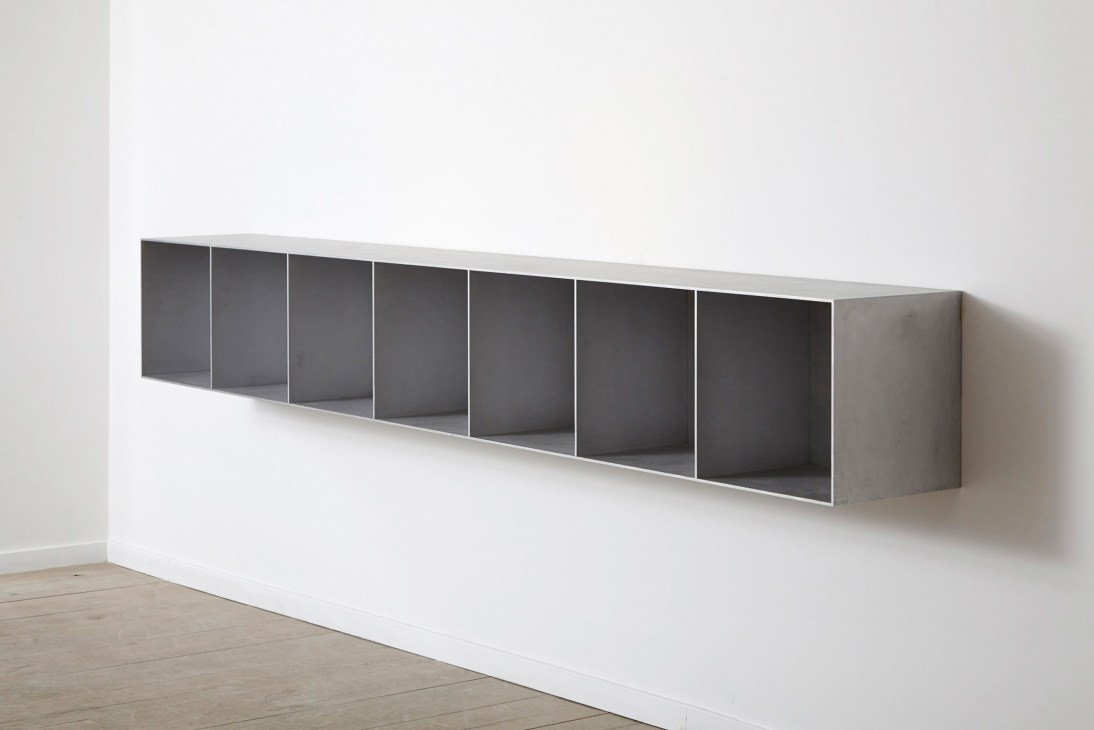
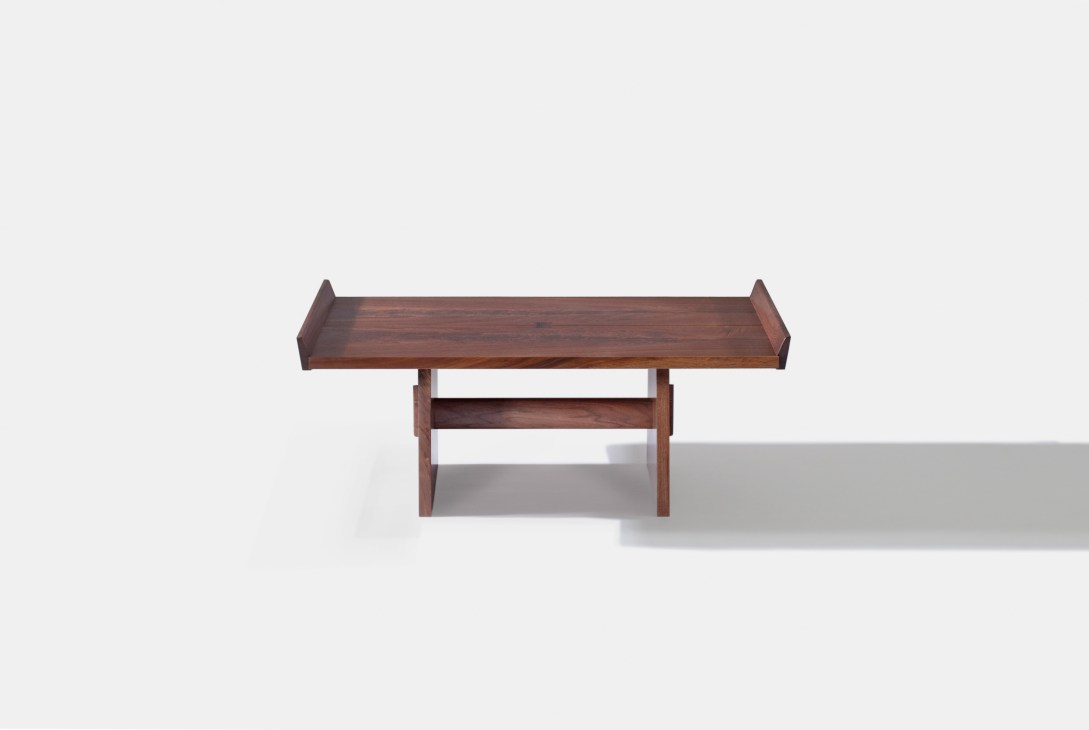
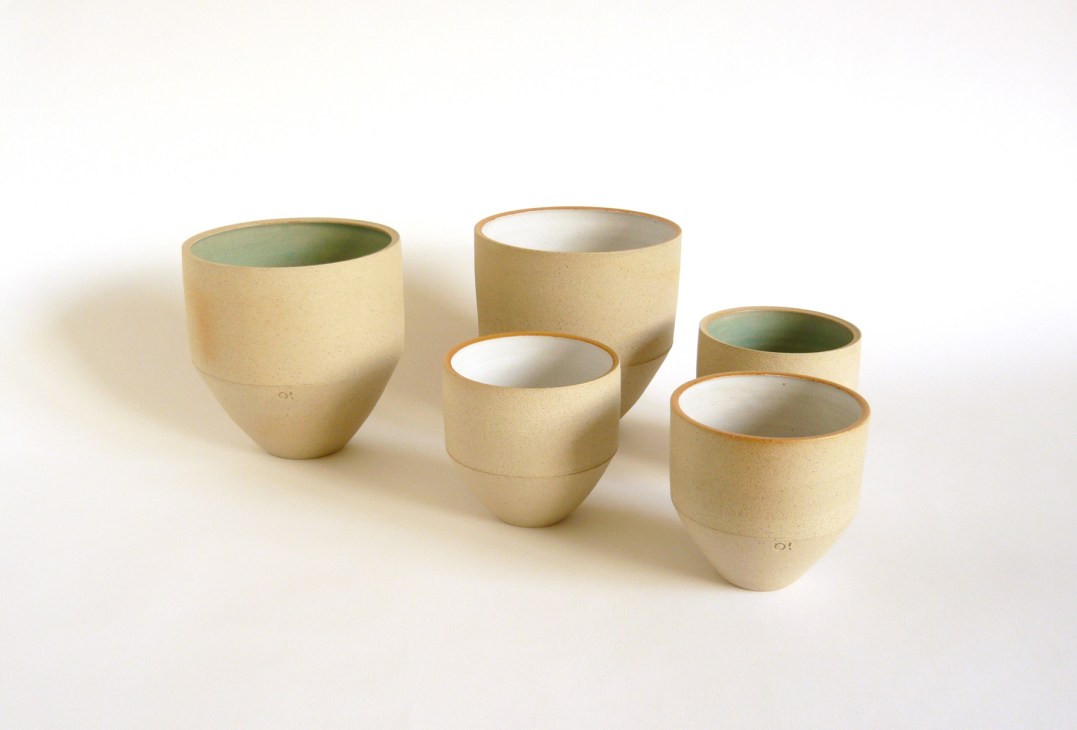




Modern design – furniture, textiles, ceramics and glass – is increasingly the preserve of investors with an appetite for risk and deep pockets. Last October saw London auction house Phillips break the world record for a piece of Nordic design when it sold a wooden dining table by Denmark’s Peder Moos for £602,000 (€860,000). In 2014, Artcurial sold a Jean Prouvé Trapèze table to a US collector for €1,291,400. But Naudan insists the market is accessible. “You can find an important piece by Le Corbusier for under €10,000.”
Buying design shouldn’t be simply a money-making venture: it should be instinctive and practical. Though it might be coveted by collectors, all good furniture was made to be used. However, buying top-quality modern furniture might just leave you with an appreciating asset. Jonatan Jahn, a design specialist at Stockholms Auktionsverk, says, “Some names are still very cheap on the auction market and they have all been very important for Swedish design history. Sweden was a great contributor to the important design fairs throughout the world. [I would recommend] Carl-Axel Acking, Anna Petrus and Estrid Ericson among several others.”
With collectors snapping up choice pieces from the postwar era there is also value in buying contemporary design items in the hope they will become future classics. One-off collaborations from larger furniture houses are also likely to have cachet with collectors of the future. However, Naudan warns that the production shouldn’t be too niche. “The design market is one of social identification, so if you have only one or two articles in production the culture isn’t large enough to have any currency. If an artist is great but makes just one chair a year then it’s beautiful but unknown; it won’t have the same value.”
Above all, Naudan is adamant that design should be used and loved whatever its value. “My son learnt to walk holding on to a Charlotte Perriand bookshelf,” he says. “I don’t have a museum at home; I use all my pieces.”
Q&A
Peter Loughrey
Director and founder of Los Angeles Modern Auctions
What does the Lama collection look like?
Our design collection is a diverse mix of classic design and contemporary works. We have Giò Ponti next to Tejo Remy, Charles Eames next to Gaetano Pesce and George Nakashima next to ceramics from the Otani Workshop.
Are there any unsung producers or products that are noticeably gaining in reputation?
Californian design has been increasing in popularity around the world; names such as Dan Johnson, Arthur Espenet Carpenter and Ralph Bacerra. Collectors who mythologise Italian, Danish or French design should pay attention to how much California’s design history is quickly becoming the next major area for museums and historians to put in context.
What is the potential of the US design market?
Unlike traditional antiques, modern design has now captured the attention of baby-boomers, Generation X buyers and even millennials. These next-generation buyers will ensure strong potential for decades to come. Regardless of the medium, collectors can depend on investment-quality examples retaining or increasing in value.
Which contemporary designers do you expect to become assets in the years ahead?
Just as the art world is correcting past mistakes of overlooking certain minority artists, the design world is sure to celebrate the point of view of minority designers. Look for more attention on Latin American designers from the likes of Pedro Friedeberg and Pepe Mendoza. The Campana Brothers from Brazil are quickly becoming blue-chip staples.
Images: Trent McMinn, George Nakashima Woodworker, SA, Twentytwentyoneshop
Ordnance survey
1.
The next generation of warship
USA
When the first of the next-generation Ford-class ships comes onstream early next year it will mark a new era for US supercarriers. The USS Gerald R Ford, named after the 38th US president, will be able to do more than current vessels but with a smaller crew. It will reduce the operating costs of these giant floating airfields – but with a price tag of upward of $13bn (€12bn) it is the most expensive warship in history.
At 1,092 feet (333 metres) long and with a displacement of more than 100,000 tonnes, it will also be one of the largest. A crew of 4,500 will project US power around the world and relieve pressure on the overworked and ageing Nimitz-class carriers.
A new electromagnetic catapult system will replace the steam-driven versions used on all previous carriers. This should be more reliable, easier to maintain and will put less strain on aircraft taking off. The system will also be able to launch light, pilotless drones.
Carrying up to 90 aircraft, the Gerald R Ford will be able to conduct 160 sorties a day for a 30-day period, surging to 270 sorties during a crisis. It has been designed to accommodate the new F-35 Joint Strike Fighter, in addition to the FA/18 Super Hornet.
As well as new technology, the Gerald R Ford has a number of features that should make life a little more comfortable for the sailors and aircrew onboard. Wider corridors make it feel more spacious and the huge 200-person berths on the Nimitz carriers have been replaced with smaller 86-person facilities. Three gyms will be kitted out with the latest equipment.
A further nine Ford-class carriers are planned, although to date only three have been ordered. However, the programme is not universally popular at home: as China and other rivals to US power develop carrier-killing cruise missiles, critics argue that America’s tight defence budget could be better spent.
Ready for take-off
- The US navy’s newest super-carrier will become operational in 2016.
- The ‘Gerald R Ford’ will be able to launch 160 sorties a day, surging to 270 during a crisis.
- A new electromagnetic catapult system will revolutionise the way carrier-borne aircraft are launched.
2.
The new intercontinental ballistic missile in pole position
Russia
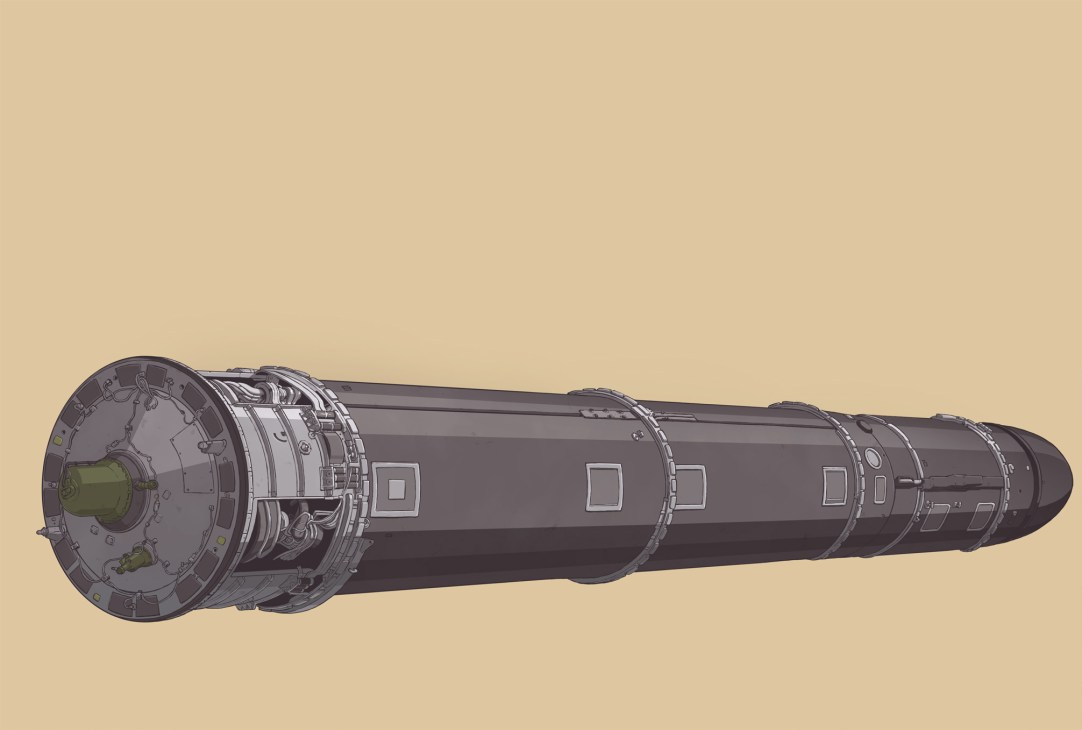
Ongoing tension with Nato states and recent commitments in Syria have pushed Russia to accelerate the development of a new intercontinental ballistic missile (ICBM). Reports from Moscow suggest that the country could conduct drop tests and flight tests of the new ICBM by the third quarter of 2016.
Known as the RS-28 Sarmat, the missile will replace the SS-18 Satan, still the world’s heaviest strategic missile. The SS-18 will be kept in service until the RS-28 is fully operational; some time between 2018 and 2020 if forthcoming tests are successful.
The missile’s development forms a key part of Russia’s massive programme of rearmament and the modernisation of its military. Exact details remain secret but Russian media close to the government report that Sarmat will be able to fly at 24,500 km/h and have an operational range of between 5,500km and 11,000km.
It will carry the missiles into sub-orbital flight before delivering up to 15 separate warheads onto its targets. It will be able to fly over both the North and South Poles and Russian officials have made no secret of the fact they require it to breach US missile defences.
It has been classified as a “heavy” missile, meaning it is more than 105 tonnes, but precise specifications are yet to be revealed. It is likely to be smaller than the 200-tonne Satan. It’s expected that Russian president Vladimir Putin will order it to be based either in the west or far east of the country to give it the greatest coverage possible over Europe or the US.
US and EU sanctions against Russia in response to its actions in Crimea are not thought to have affected production of the ICBM, because the missile will be driven by Russian-made technology.
Although Russia and the US both made attempts to reduce their nuclear stockpiles following the collapse of the Soviet Union, neither the Strategic Arms Reduction Treaty nor the Nuclear Non-Proliferation Treaty prevent them from replacing old warheads. Indeed, the US is currently looking to upgrade its own nuclear arsenal.
Nuclear power-up
- Russia is accelerating production of a new intercontinental ballistic missile.
- The RS-28 Sarmat will replace the SS-18 Satan. It is due to come into operation between 2018 and 2020.
- The Sarmat will be able to fly at 24,500 km/h with a range of between 5,500 km and 11,000 km.

3.
The high-energy laser that could take the sting out of drone warfare
Germany
2016 could well be a decisive year for a weapon that might change the dynamics of naval warfare: a high-powered laser capable of shooting down drones or of targeting small surface craft will enter final testing before emerging onto the international market.
Manufactured by Düsseldorf-based Rheinmetall, with some funding from the German government, the MLG27 laser can now be mounted aboard a ship, from where it is capable of hitting slow, small airborne threats such as Unmanned Aerial Vehicles (UAVs). In the past, moist sea air has reduced laser power but this has now been overcome using a revolutionary new technique.
The MLG27 has four 20kw lasers, designed to be fired simultaneously in a configuration known as “superimposition”. Each laser stream is then brought together to combine into a powerful single 80kw beam. In theory, using this technique means there is no limit to how many beams can be focused onto one target; making the weapon more destructive is simply a matter of adding more lasers at the superimposition stage. At low power the beam can disrupt instruments and equipment; at full power it can destroy targets.
The initial cost of the weapon is thought to be high but that outlay is a one-off investment: the “ammunition” is essentially free and unlimited, depending only on the ship producing enough power to regenerate rapidly. Lasers also tend to suffer from less wear and tear, making them cost-effective to run.
In 2014 the US navy demonstrated a ship-borne laser in the Persian Gulf. Rheinmetall has managed to design a far more powerful product and release it to the mass market. It was debuted at the Defence and Security Equipment International exhibition in London in September 2015 and a number of major western navies were reported to be interested.
Under Protocol IV of the Geneva Convention, laser weapons are banned for use against humans. However, as the use and tactical importance of UAVs dramatically increases, the High Energy Laser looks set to play a major role in future conflicts.
Light brigade:
- A laser that is mounted on a warship will enter final testing next year.
- It is capable of shooting down small airborne threats such as Unmanned Aerial Vehicles.
- Using new technology, the laser’s four streams are combined to make one powerful beam.

4.
The deep-water naval base sending a message to China
The Philippines
The Philippines is responding to Beijing’s moves in the South China Sea by dramatically increasing its defence budget and reopening a strategic naval base. Two new Incheon class frigates will be stationed at the facility to assert the country’s presence in the disputed region. They are multi-role vessels capable of submarine warfare and coastal patrol.
The Philippines government has taken the decision to refurbish and reactivate the massive former US base at Subic Bay, on the edge of the South China Sea. It will be the first time the base has operated since it was closed in 1992, when Manila cancelled an agreement with Washington following the end of the Cold War.
The deep-water harbour will allow any warship currently deployed by the Philippines navy to operate out of Subic Bay, including its new frigates purchased from South Korea. The port is just 145 nautical miles (270km) from Scarborough Shoal, the sandbank that the Chinese seized in 2012. That proximity would allow the Philippines to station surveillance drones in the region to watch Chinese movements around the clock. And the new South Korean-built FA-50 attack aircraft could be over the area within minutes.
Manila’s defence budget in 2016 will be five times that of 2013, reflecting concerns over Chinese foreign policy in the region. Although that represents a significant leap in spending, it will equate to just 0.5 per cent of what China spends on its military – a stark demonstration of the gulf in power. The Philippines has suffered from having a relatively weak military in recent years and its navy has borne the brunt of underfunding as the government strengthened the army to take on internal guerrilla factions. The administration is now addressing its naval weakness as China grows more expansive.
Recently the Philippines navy has been active in the South China Sea, taking part in joint exercises with the US and Japan. Washington, which has been helping Manila improve its military capability, will seek greater access to the renovated facility, not least because its ships could use the port for refuelling and maintenance.
Sea change:
- The Philippines will reopen a massive naval base to counter Beijing’s South China Sea moves.
- Subic Bay has a deep-water harbour and is only 270km from the disputed Scarborough Shoal area.
- Two new frigates will be stationed at the base along with a squadron of fighter jets.

5.
The surface-to-air missiles that could change the dynamic in the Middle East
Iran
The lifting of sanctions against Iran following the recent nuclear deal has allowed Russia to agree a contract to supply the Islamic Republic with S-300 surface-to-air missiles. Although technical details are still being discussed, Iran could receive the first batch in early 2016. Their arrival would change the dynamic in the Middle East and potentially embolden Iran in its regional ambitions, to the concern of the Gulf states.
The system could be useful in protecting nuclear sites; as well as targeting aircraft, Iran would be able to engage incoming ballistic missiles for the first time. That capability is one reason Saudi Arabia, Israel and the US all oppose the sale, knowing it will blunt the military superiority they currently enjoy.
Iran’s current air defences suffer coverage gaps, leaving it weak in places. The S-300, whichever variant is eventually settled on, would considerably improve that capability. Although the US might look to call on technical intelligence from allies who use the S-300 system, such as Greece and Ukraine, it would undoubtedly make a pre-emptive strike on an Iranian nuclear target far more risky and costly.
Comparable to the US Patriot missile system, a single S-300 battery can fire at multiple targets up to 27km high, making it one of the world’s most potent anti-aircraft systems.
The €750m contract was first signed in 2007 but Moscow voluntarily suspended it in 2010, following the imposition of sanctions on Iran and pressure from the US. That led Iran to pursue a €3.7bn claim against Russia for breach of contract. But this is a valuable deal for Moscow and so, despite protestations from the West, president Vladimir Putin retracted the ban in April 2015.
The sale is consistent with Putin’s recent foreign-policy direction and underscores how little Moscow is willing to take Washington’s views into account when dealing with Iran. It is also a demonstration that the Kremlin is determined to play tough with a US administration that has one foot out of the door.
Defensive play
- Russia is expected to supply Iran with the S-300 missile system after sanctions against Tehran were lifted.
- It will give the Iranians better airspace coverage and make aerial attacks riskier for enemies.
- One battery can hit multiple targets at altitudes of up to 27,000 metres.
Back to the future
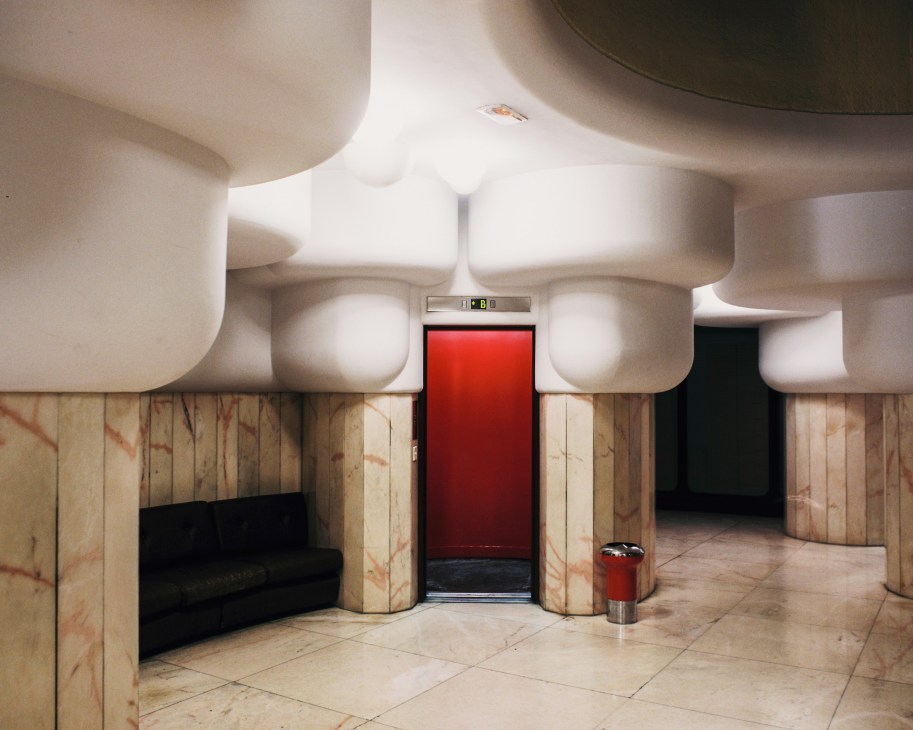
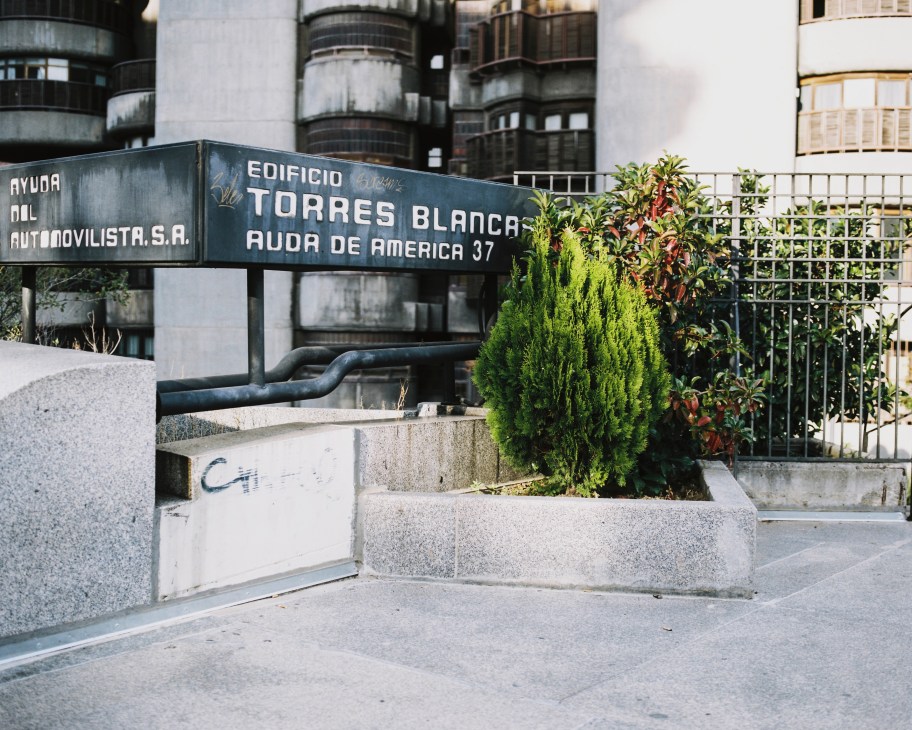
“Everything you’ve read about this building is untrue,” says Javier Sáenz Guerra as we step into the crimson capsule-shaped lift of Madrid’s Torres Blancas. “When there’s a lack of information, fanciful stories tend to flourish,” he adds, alluding to the stream of myth and misinformation that swirl around his father’s iconic apartment tower. Completed in 1969, Francisco Javier Sáenz de Oiza’s high-density housing complex was leagues ahead of its time. At 74 metres tall, the eccentric structure soared above the cheerless vernacular of Spain’s entrenched fascist dictatorship. Now, more than four decades later, people are still marvelling at its audacity and the alluring mystery that envelops it.
Every Madrileño, it seems, has an opinion about the Torres Blancas. Yet a culture of secrecy, reinforced in part by a veteran team of doormen determined to keep uninvited guests at bay, has given rise to rumour and fiction. One theory claims that two other towers were initially planned, hence the titular plural. Another states that it was supposed to be covered in marble but that this was deemed too dangerous. “All nonsense,” says the architect’s son as he gives us a tour of his childhood home, now the residence of his younger sister. Later, from the vantage point of the low-slung balcony, he elaborates: “Perhaps all this speculation speaks of my father’s ability to rouse the imagination.”
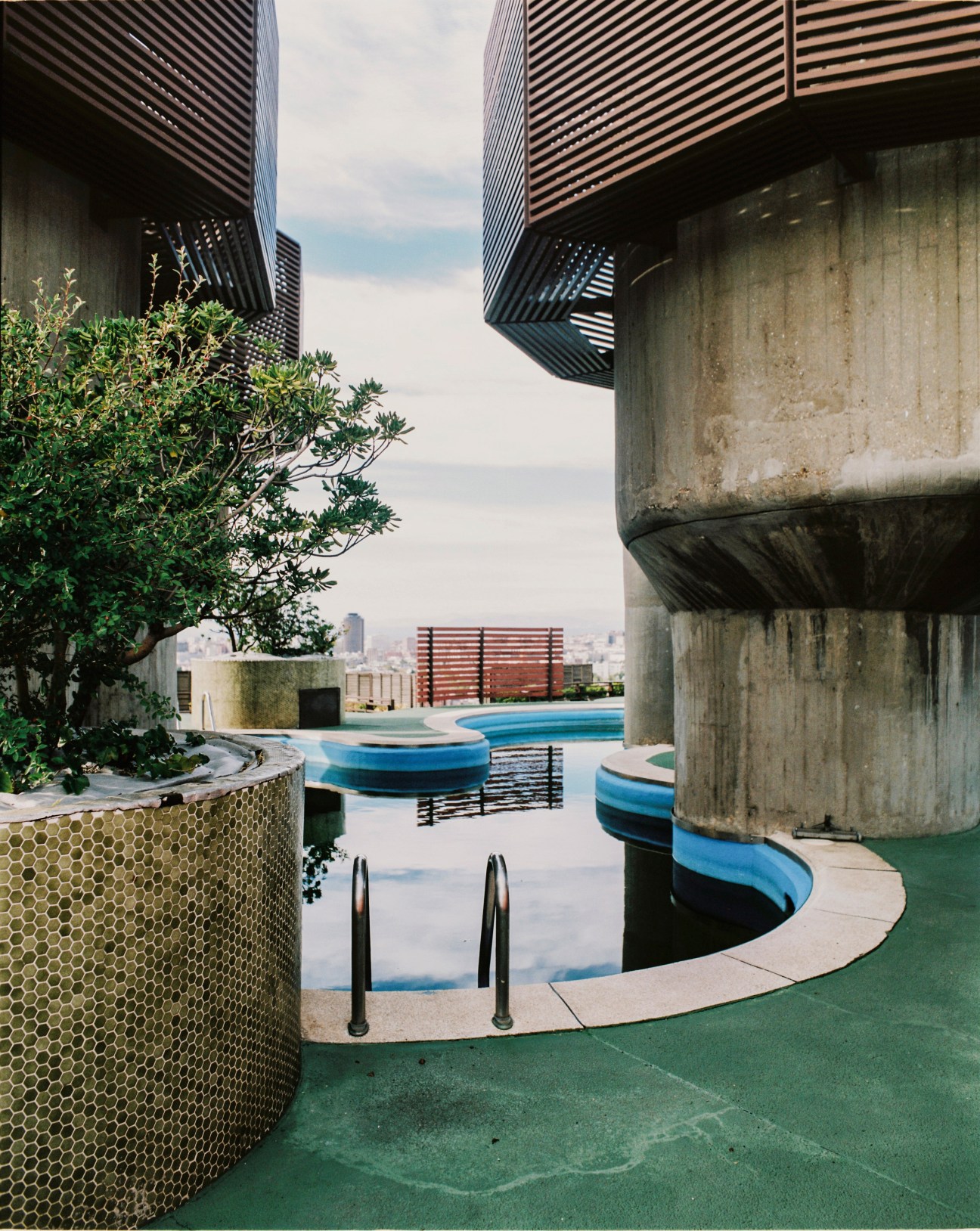
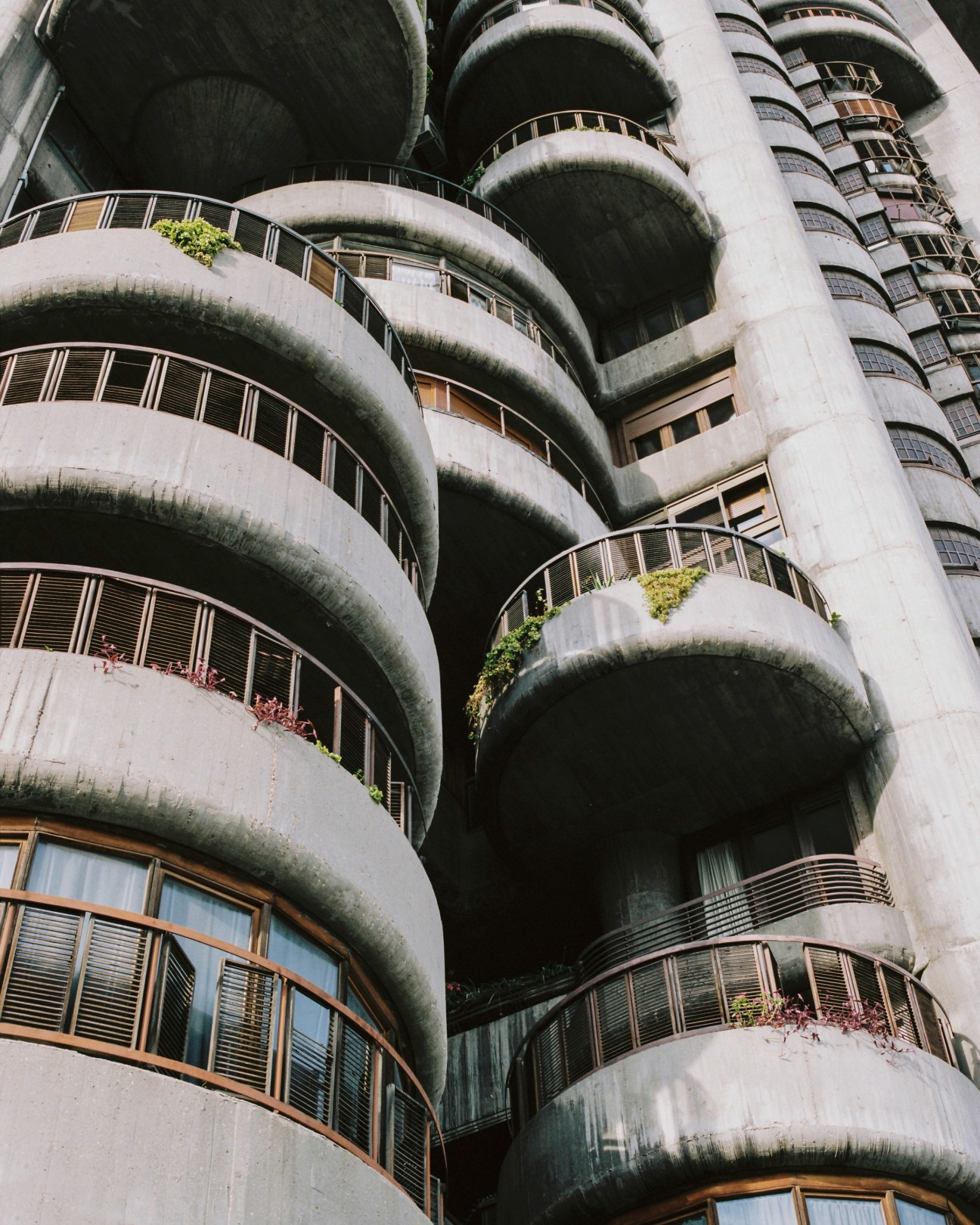
The striking structure, which sprouts alongside one of the principal highways and entry points to the city, was designed as a tall cylindrical trunk made up of unevenly stacked discs, the rotating curves serve as balconies that create the cumulative effect of a vertiginous garden. At the top these plates fan out like foliage, providing a comfortable platform for a rooftop terrace and pool – all with spectacular city views to boot.
The building’s futuristic form gives it a distinctively extraterrestrial tone but Sáenz de Oiza was looking much closer to Earth when he took to the drawing board. Inspired in part by Le Corbusier’s concept of “machines for living in” and combining the naturalness of rival architect Frank Lloyd Wright, the Spaniard went even further by applying his own style based on the natural growth patterns of trees. Today his creation is revered as one of the most extreme examples of Spanish organicism.
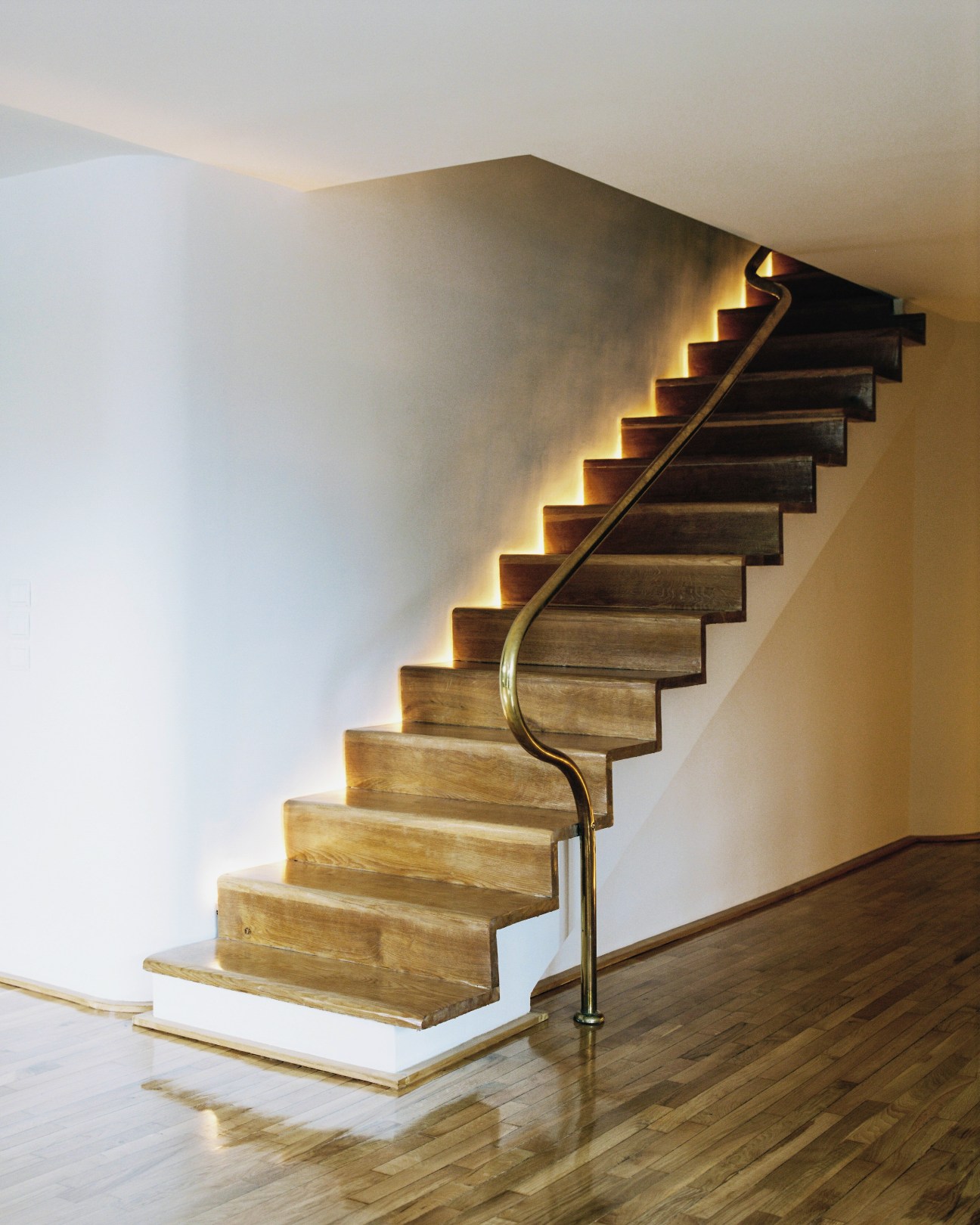
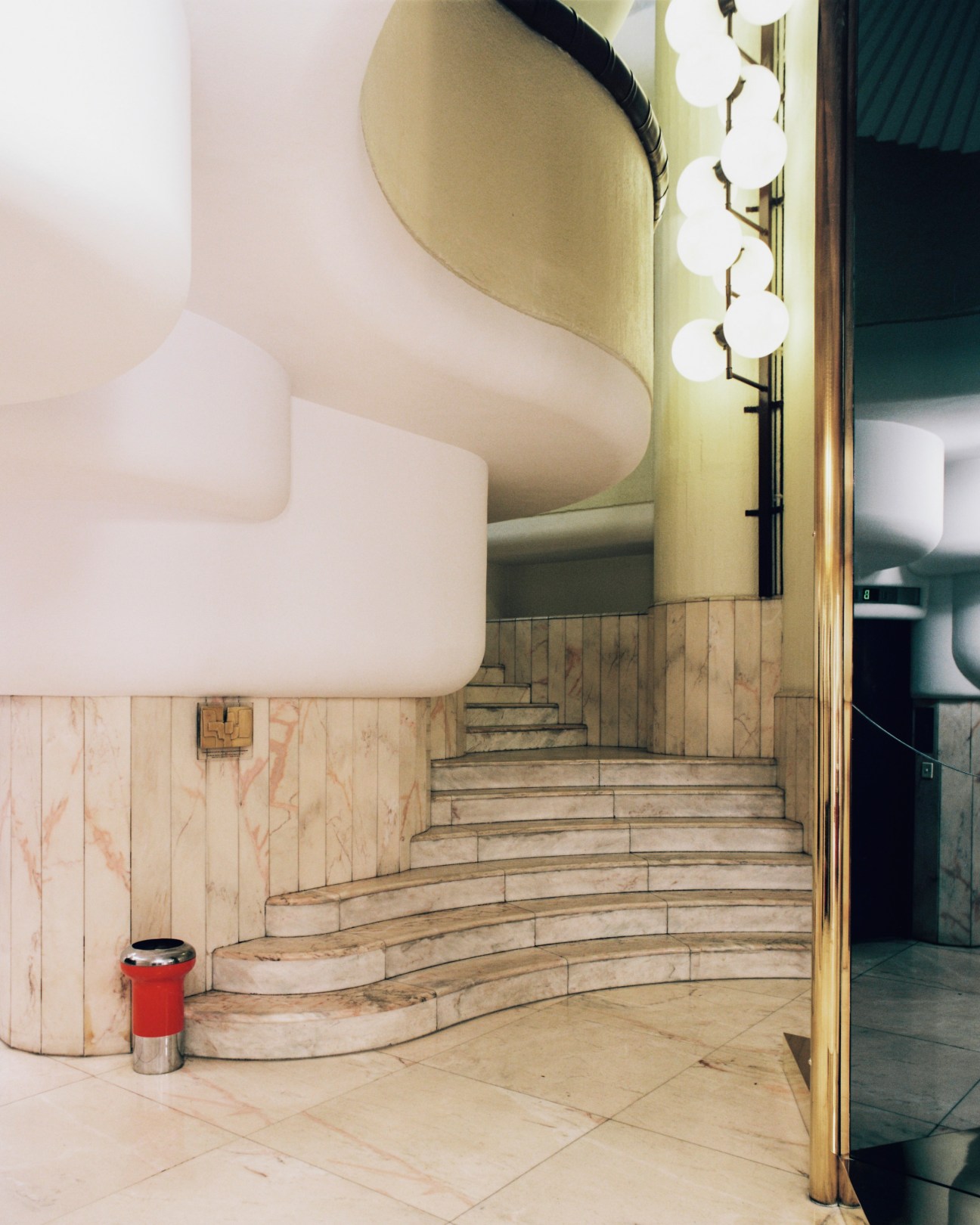
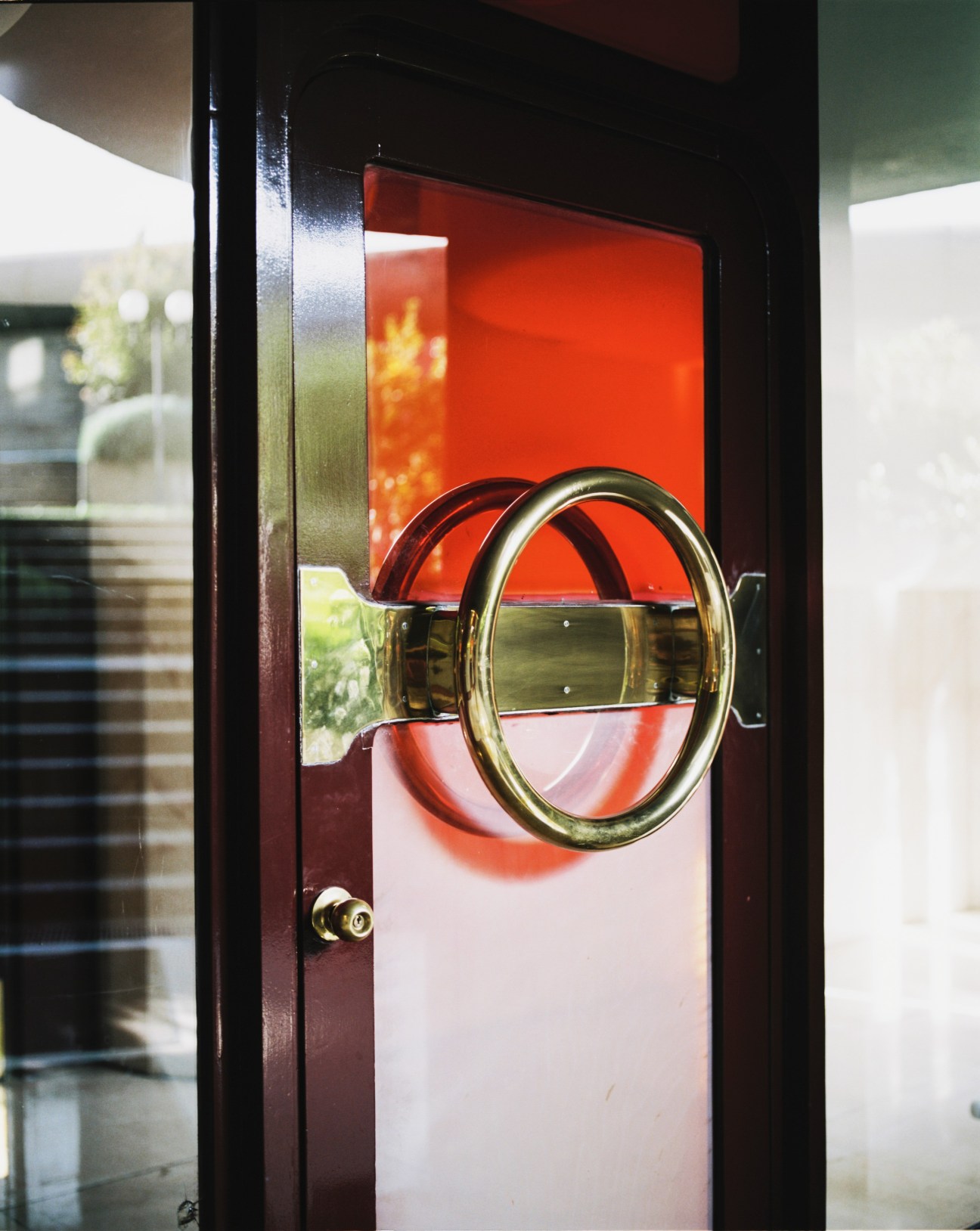
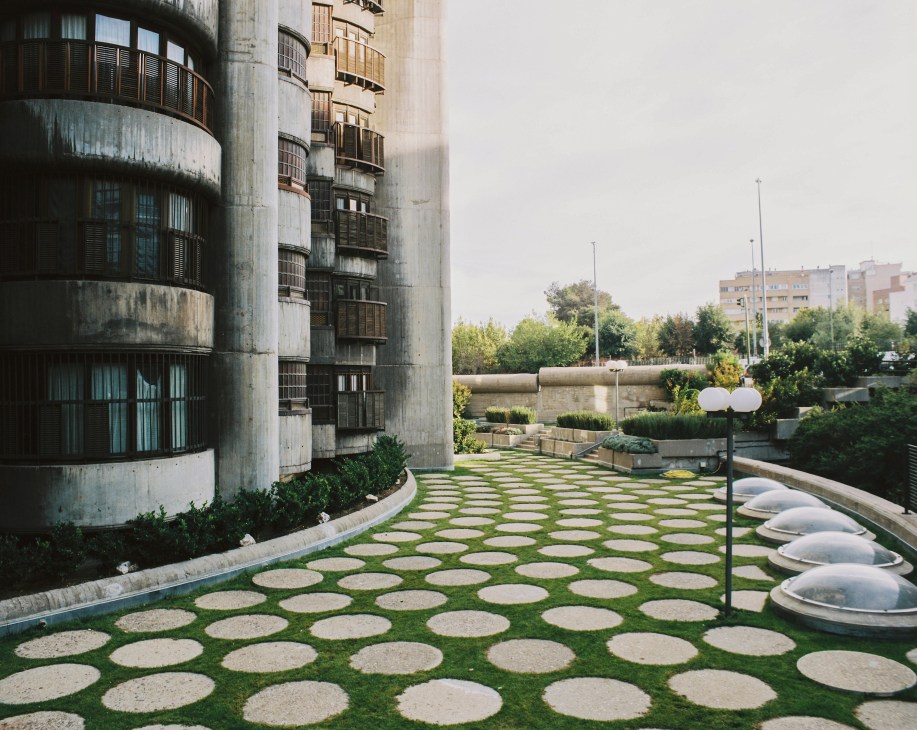
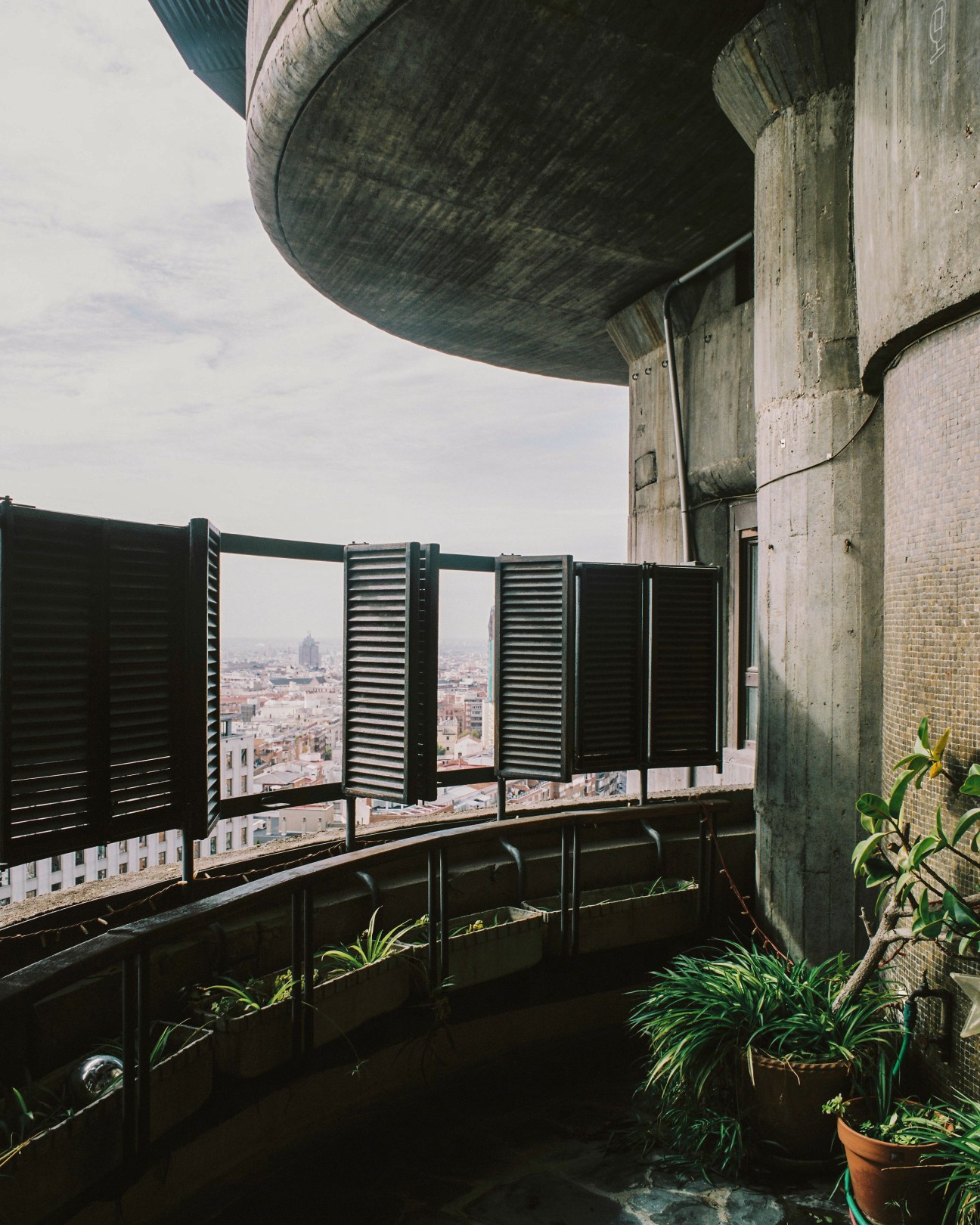
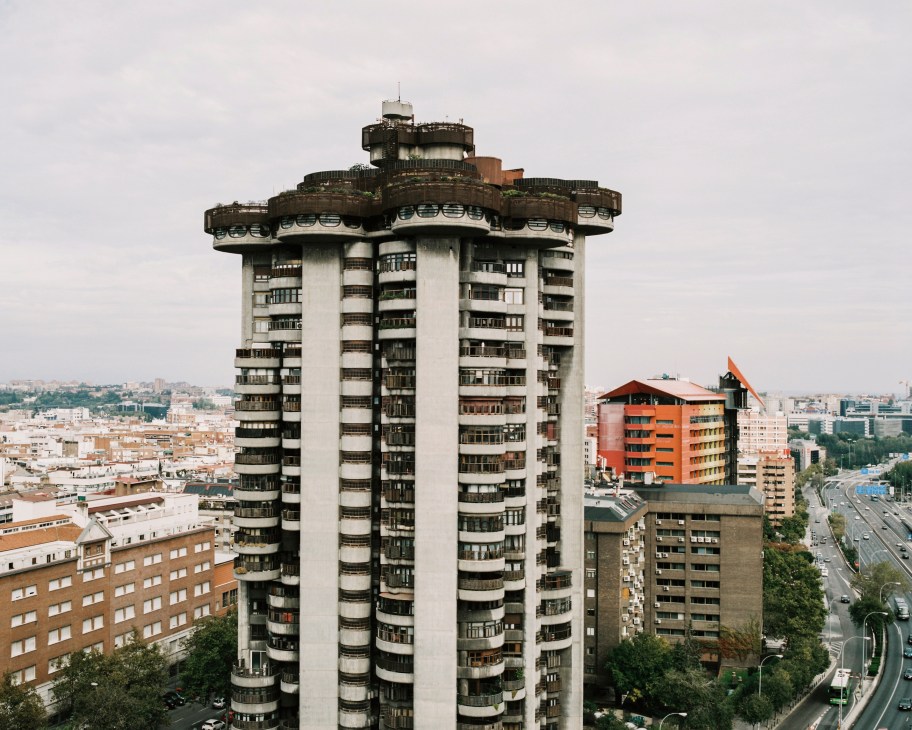
At the time the Spanish capital was confronting the familiar symptoms of rapid urban growth. Between 1950 and 1970 the population doubled to three million as industrial policies lured economic migrants from across the peninsula. As cheap high-density housing erupted across the city, the regime was eager to show off its economic credentials and reposition Madrid as a modern capital. As a result, a number of surprisingly standout structures were green-lighted. Fernando Higueras’ brutalist housing complex Edificio Princesa took hold in the Conde Duque district while Antonio Lamela’s Torres de Colón offices polarised audiences from the outset. Yet it was Sáenz de Oiza’s turret that garnered the most interest.
“It’s like a psychedelic fantasy that rose up during the greyest part of Madrid’s history,” says film producer Enrique López Lavigne, a resident of five years. “At the time the building was an absolute extravaganza,” he continues from a suitably retro Joe Colombo chair. “Remarkably, in the 21st century it is still modern; it remains both ambitious and fantastical. This transgressive quality is its most defining feature.” Curious visitors of every ilk seem to validate its pulling power. When American film-maker Jim Jarmusch came to town he incorporated the eccentric building into his 2009 film The Limits of Control.
However, a glance at the surrounding districts hints at the lingering paradox. While the Torres Blancas continues to be celebrated as a singular entity – even garnering the European Excellence Award back in 1974 – the banality of the buildings that have been built in its wake show that Sáenz de Oiza’s new paradigm never fully took root across the city. It is an unfortunate consequence of cost limitations but also a lack of will.
Yet from within the curvilinear confines of its interior, the prevalence of whimsical motifs and proud residents sets a much more optimistic tone. As the people who live here glide up and down the stunning spiral staircase, most seem mindful of their privileged place in local architectural – and cultural – history. Right from its inauguration during Spain’s (only partially) swinging Sixties, the building became a beacon for pop icons and legends of the Madrid underground. The properties had originally been marketed towards the city’s wealthy elite but initial sales were slow, particularly because the considerably smaller apartment sizes – some of them just 90 sq m – were snubbed by conservative buyers. John Huarte, the construction magnate behind the project and a renowned patron of the arts, targeted the city’s cool and cultured clique instead. In an effort to generate hype, two films were given permission to shoot inside the building during the first year. It seemed to work, with figures such as writer Camilo José Cela, sculptor Jorge Oteiza and the owners of chic discoteca Cerebro soon snapping up apartments. Fashionable fiestas became a staple of communal living, especially later during Madrid’s wild La Movida movement in the 1980s.
Such stories may be rapidly fading memories but the building seems to have been frozen in time. Fortunately the foresight to source only the finest materials, accompanied by decades of care and attention, has preserved a timeworn legacy. Filigree screens and window frames were fashioned from high-quality teak to weather the elements; white marble lines the walls and floors of the communal entrance; brass fittings adorn doors; and an impressive stream of bulbous light shades cascade down the building’s inner spine to illuminate the spiral staircase. Even the banister, which coils up 23 floors, has retained its original scarlet-coloured leather. “All we ever really need to do is clean,” says one of the doormen, almost triumphantly.
Durability has also been guaranteed by the ability to adapt. Early plans for an adjoining primary school and chapel were jettisoned due to lack of demand, while spaces for shops on the upper level were eventually converted into smaller apartments. The penthouse level was initially a restaurant (the apartments were even connected to the dining room via chutes and a futuristic electronic-waiter system) but eventually the upper floor was rented out as an office. Today it sits empty, awaiting a new buyer – and chapter.
High-density housing is an evolving recipe. The formula should strive to get the core ingredients right but shouldn’t be afraid to go off script, embracing the inevitable tide of change. Born of an imaginative experiment, the enduring allure of the Torres Blancas is underwritten by the architect’s audacity to imbue the concrete with a touch of fantasy. As urban planners scan the horizon, eager to find smarter solutions, it may help to glean a few lessons from these time-honoured towers of old.
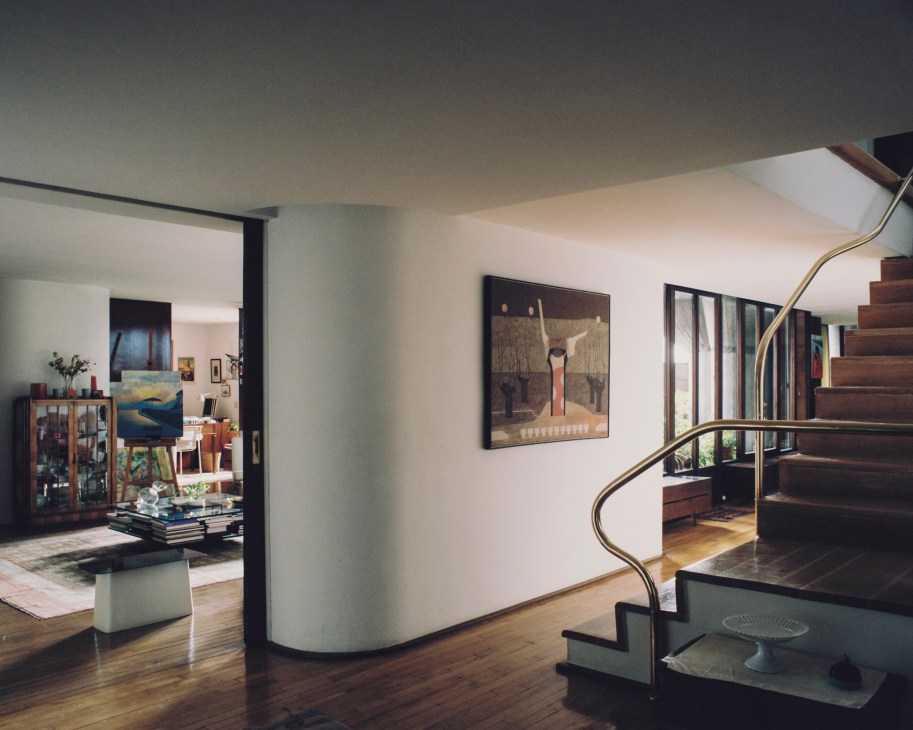
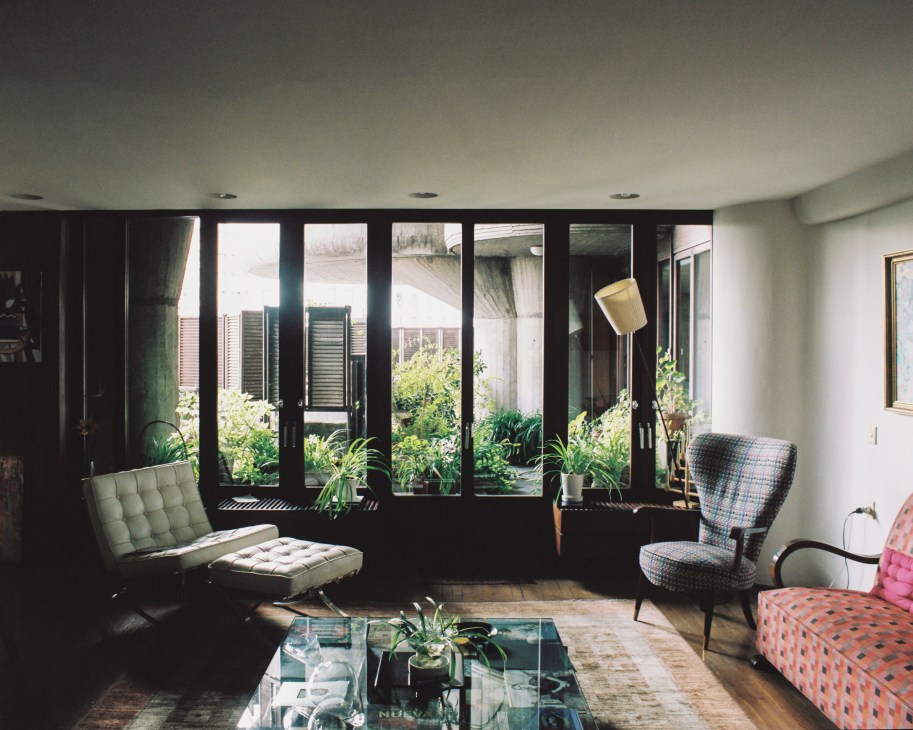
Residence 1: Sáenz de Oiza family home
Renowned for his humility and infamous dissatisfaction with his work, the architect’s decision to move his family into a two-floor apartment was a rare sign of contentment with his signature project. Raising seven children here with his wife, Francisco Javier Sáenz de Oiza lived in this apartment until his death in 2000 at the age of 82. The entire family has lived through the building’s colourful chronology but today the architect’s legacy is continued by his youngest daughter, who lives in the beautifully preserved residence with her two children.

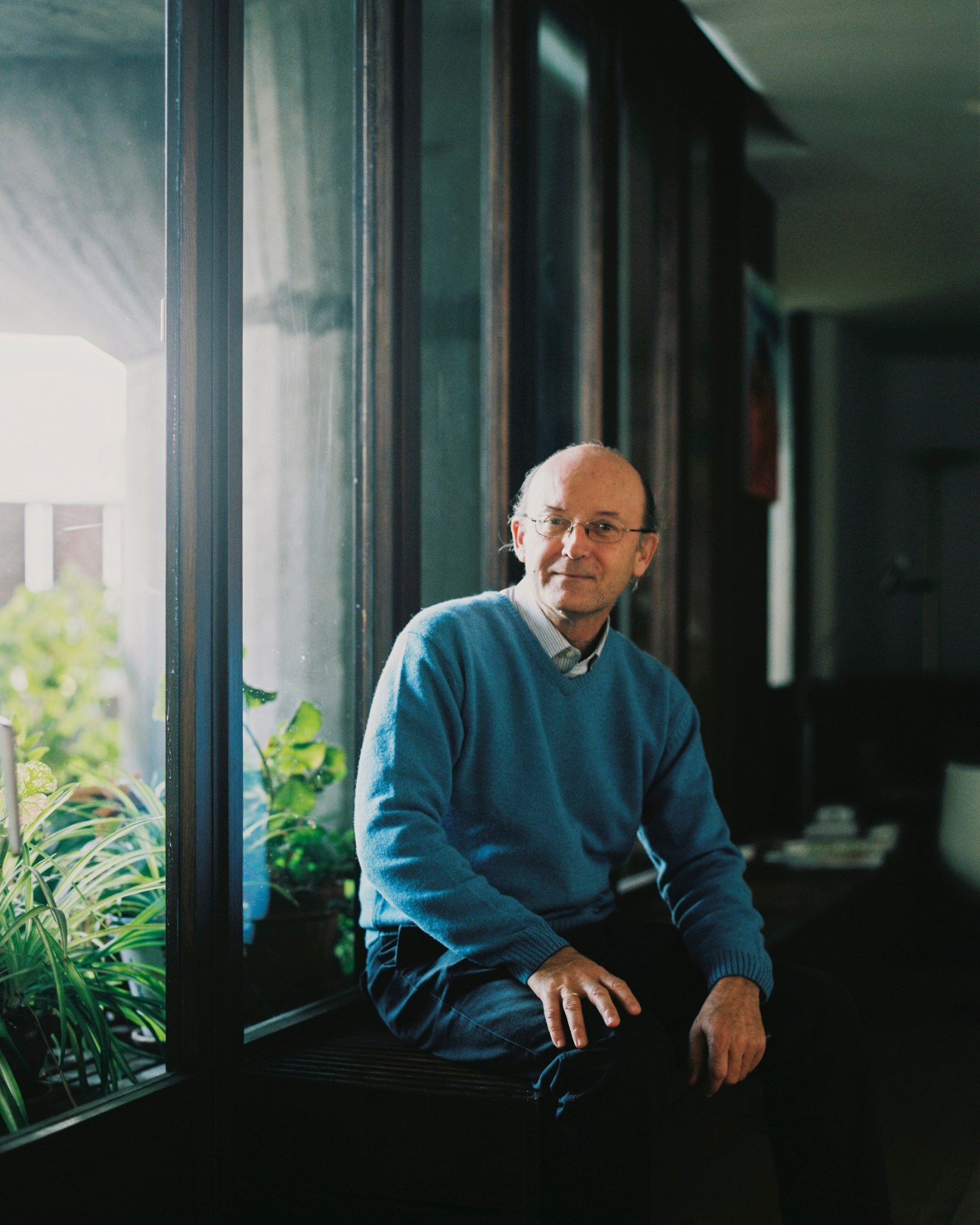
Residence 2: García-Escudero Gómez-Palacios family
Chemical engineer Angeles Gómez-Palacios and her financial-planner husband Diego García-Escudero have lived here for more than a year after buying a property on a lower floor from the estate of a late doctor. The couple took four months to completely reform the four-bedroom apartment with Madrid firm Zimenta, who peeled back the interior surfaces to expose the building’s trademark cement walls and pillars, as well as installing soundproof windows to buffer their home from the roar of traffic. Furniture has been custom-made to fit the curved walls and the couple have maintained an air of minimalism throughout.
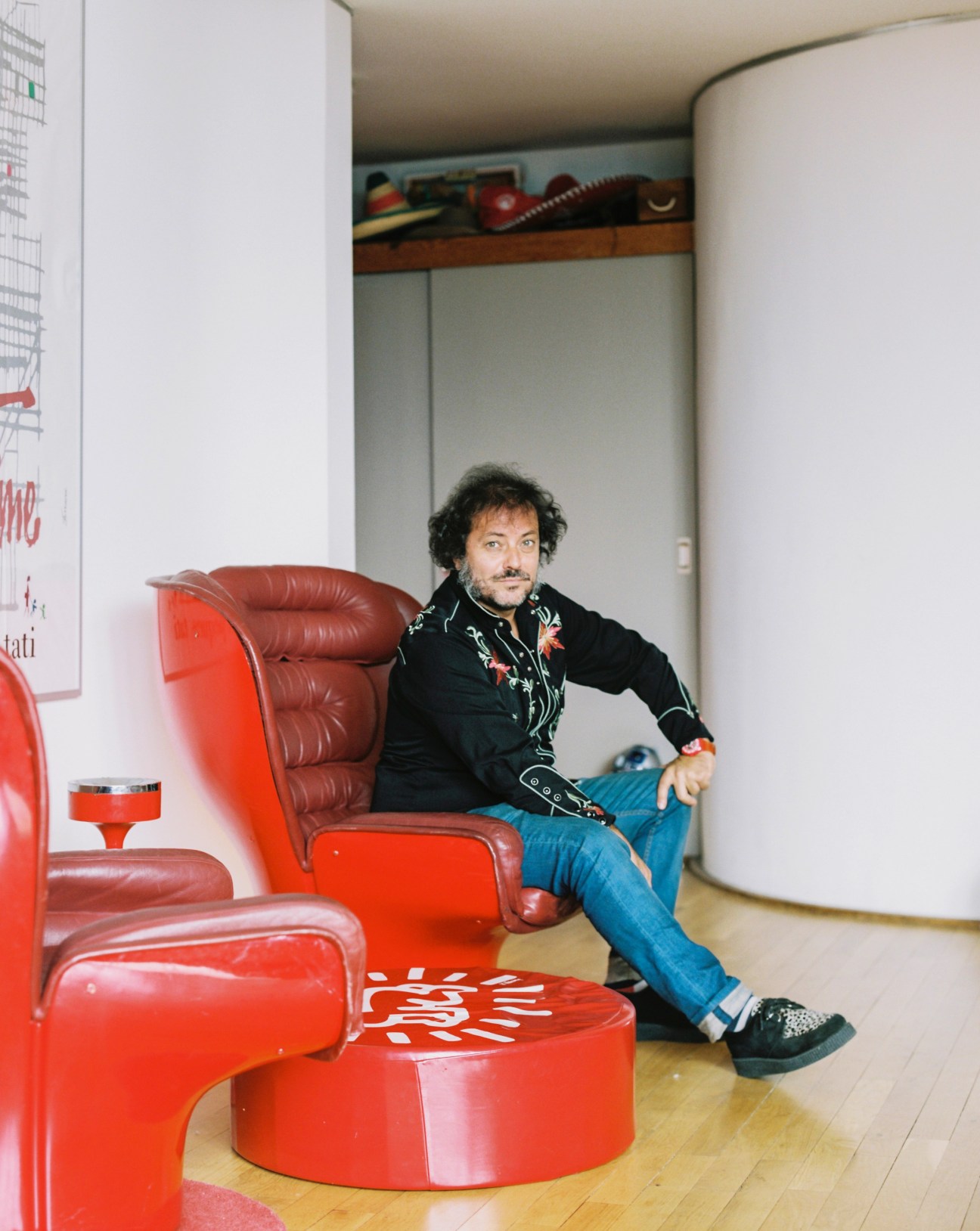
Residence 3: Enrique López Lavigne
After moving his film-production office Apaches into one of the lower floors five years ago, Enrique López Lavigne snapped up an apartment on the 21st floor two years later, which is brimming with movie paraphernalia and cinema kitsch. He likens his short daily commute up and down the capsule-like lift to travelling around HR Giger’s spacecraft, the Nostromo. “This building has always been a beacon of creativity,” says the producer, who has worked with the vanguard of Spanish directors such as Carlos Vermut and JA Bayona. “It still cultivates a love-hate relationship, separating the city’s progressives from the conservatives.”

Residence 4: Eduardo B Muñoz and Andrea Pimentel
Muñoz and Pimentel represent the new wave of young creatives moving into the tower. Fascinated by the building from an early age, Eduardo bought his modestly sized slice of Sáenz de Oiza’s complex a decade ago. “There’s a curious mix of residents living here but a new wave of people are snapping up apartments as soon as they’re put on the market,” he says. Together with his Mexican lingerie-designer partner, the Madrileño photographer continues to marvel at the structural quirks. “Even after 10 years of living here I’m discovering new niches and details.”
Calm oasis
It may be non-committal by name but Sydney’s under-the-radar Neutral Bay has plenty of devotees. Less than a 15-minute ferry ride from the city centre, a cluster of Victorian and arts-and-craft-style mansions and apartment blocks line the foreshore. The rolling green spaces are punctuated by palm trees, magnolias and Moreton Bay fig trees. It’s blissfully close to Sydney Harbour and ferries that pass the iconic bridge depart every 20 minutes.
Artists have long favoured the bay. Children’s author May Gibbs lived in Wallaringa Avenue in the 1920s while Grace Cossington Smith, Australia’s most important female painter, lived on Shellcove Road. But the area has taken a lively turn in recent years. Daniel North of Downie North Architects worked on the renovation of Cossington Smith’s home early in his career and decided to put down roots here. He now lives and works in the area with his business partner and wife Catherine Downie. The suburb’s unique vernacular and easy-going feel were the draw. “There are layers of history in the streetscape,” says Downie. “The detail in the older houses, Federation-era cottages and 1970s apartment blocks intermingle. I often spy something new: a nuance in a building or a façade that I’ve never previously noticed.”
The pair bought their property, close to the commercial centre, in 2010 before redesigning and renovating it. “My preference is living here, near the village,” says North. “We can finish drawings at the end of the day, drop them off at a print shop within a two-minute walk and pick them up in the morning. There aren’t many places where you can live, work and be commercially efficient.”
The suburb is increasingly popular with young professionals, families and a steady trickle of expats who enjoy its proximity to central Sydney and nearby beaches. The spurt in popularity has also spurred house prices which, according to Piers van Hamburg of McGrath Real Estate, have risen some 15 per cent in the past 12 months but remain affordable. Van Hamburg says the increase in value is one of the largest in the country. “With the drop in the Australian dollar, expats suddenly have greater buying power. There is interest from professionals wanting to migrate from Britain, Hong Kong and China, and from Australians keen to return home.”
Schools are another attraction. The local government school, Neutral Bay Public, has long been regarded as one of Sydney’s finest and many new arrivals jostle to be within its enrolment boundaries. Interior designer Sophie Schwarz lives across the road in a Victorian terrace house with her two children. “The kids walk to school, there are dog parks and a community garden down the hill as well as bush-walking tracks,” she says. “It’s safe and friendly; people actually say ‘Hello’ to each other.”
The area has long attracted creatives says co-president of the Neutral Bay Chamber of Commerce Rick Doran. “In the 1970s and 1980s, advertising agencies, architects and independent publishing houses moved in. They were attracted to the village-like atmosphere and their clients happily came here for meetings because it was just five minutes across the bridge in a taxi.”
Many smaller businesses are finding their feet here. In Laycock Street a stylist, a book publicist, a writer and a draftsman live side by side. South African-born Louise Beaton migrated here 10 years ago with husband Michael; she lives in and runs a textile business from their Federation-style cottage. “We chose Neutral Bay because of its location: close to the city and the beaches,” says Louise. “Over the years we have loved that it has become a real community. Residents go out at least three or four nights a week.”
According to Doran there are more than 20 cafés, nearly 50 restaurants and a clutch of decent wine bars. The suburb also has a long Nippon association and is now home to many of Sydney’s best Japanese restaurants, such as Tobikiri run by chef Shuhei Kodama, who moved here from Kobe 15 years ago.
Exercise and living well are also important to the residents of this thriving neighbourhood. Many can be spotted pounding the pretty tree-lined streets or leaving Neutral Bay Club on Westleigh Street. The pristine tennis courts are a wonderful place to work up a sweat before stepping out to see the sun setting over the crest of Sydney Harbour Bridge.
Plugged in
The Honda Super Cub is not a head-turner. It would never feature in a Hollywood film nor become an object of desire for nostalgia-drunk millennials. But that’s not what the Japanese company’s 50CC scooter was about: people wanted it for its utility, its familiarity. And there are many: 93 million in more than 160 countries since Honda’s founder, Soichiro Honda, dreamed it up in 1958. It’s now the bestselling powered vehicle in history.
The Super Cub’s design hasn’t changed much since: same low, step-over frame; one-cylinder engine; 17-inch (43cm) wheels and flaring leg guards. Imagine how Tokumaru Watanabe must have felt when Honda executives asked him to redesign it as a hi-tech electric vehicle. “It made me nervous,” says the 51-year-old designer at Honda’s R&D centre in Saitama, north of Tokyo. “The Super Cub has always seemed so complete. Its form comes from its function. There’s no unnecessary decoration.”
On display nearby is the electric-powered, metallic-white EV-Cub that Watanabe has spent the past seven years working on. The prototype in Honda’s booth at the Tokyo Motor Show is a glimpse of how the company sees the scooter adapting to a petrol-free future. But because of the Super Cub’s global popularity, its successor holds the promise of one day bringing cleaner skies and quieter streets to cities around the world.
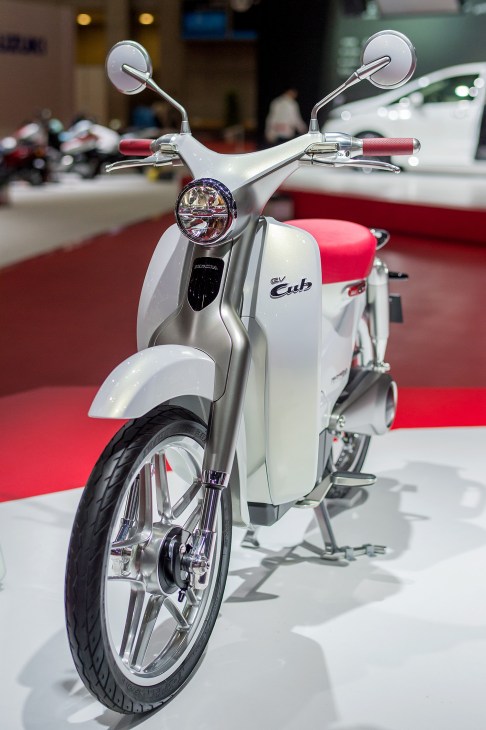
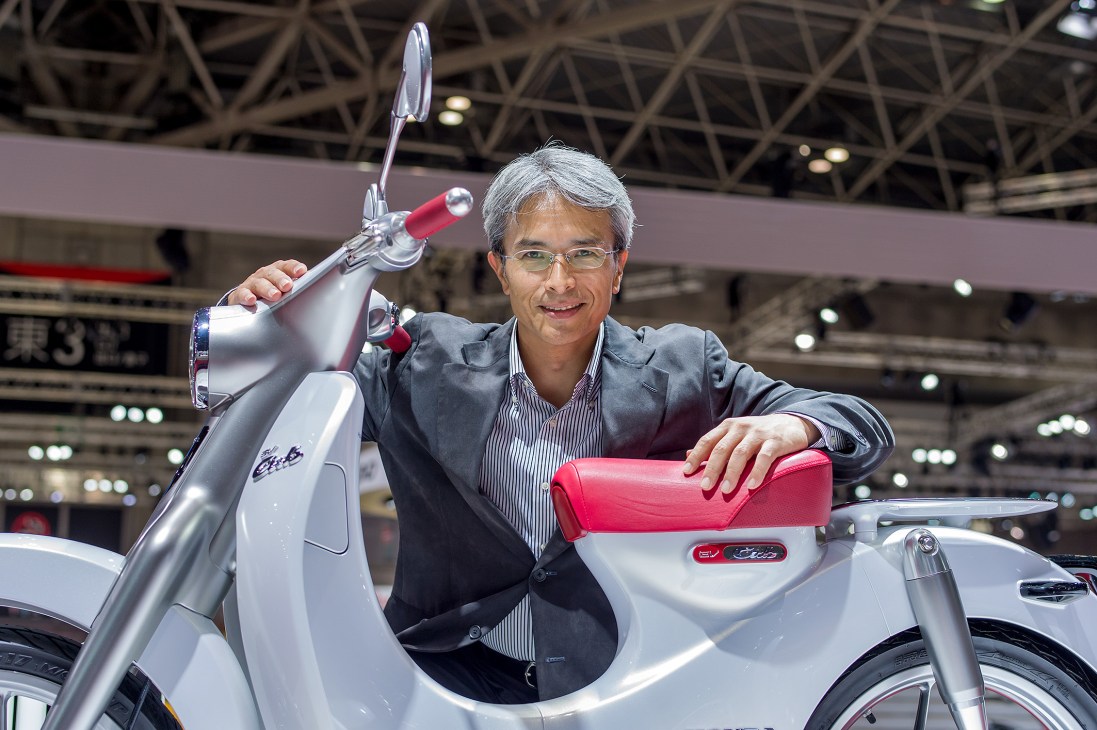

The new design is an homage to the 1958 Super Cub; from it Watanabe borrowed the round headlamp and smoothly curving S-frame. But where the engine and gear-shifting foot pedals should be there is now only a compartment for a removable battery and steel footrests. Despite the missing exhaust pipe, a digital speedometer readout and a hidden plug for an ordinary socket, from afar it’s still a Super Cub doppelganger.
“Designers usually want to put their own stamp on a product,” says Watanabe. “The team thought we should create something that looked completely fresh but our first industrial designer, Jozaburo Kimura, once said, ‘The Super Cub’s design is not showy and that’s why it’s universal.’ I decided to take it back to its origins.”
The Super Cub’s innovation was in combining the fuel-efficiency of a scooter with the handling of a lightweight motorcycle. It was designed for Japan’s unpaved roads to be operated by delivery boys carrying boxes of soba noodles. Mail and newspaper deliverers still ride the Super Cub despite a decline in sales. In Vietnam, Indonesia, Thailand and Brazil, where sales are strong, they’re loaded with just about anything: families, animals and mounds of hard-to-identify stuff. No other vehicle has contributed as much to the motorisation of the masses.
The EV-Cub has no set launch date yet, though Watanabe assures us that it’s not far off. But already it’s a beauty of engineering. Without gears or an engine, it accelerates noiselessly. Yet even when fully charged, the electric model doesn’t go as far as a Super Cub on a full tank. There are trade-offs to being green.
Whether Honda can convert the masses might depend on how practical the EV-Cub is. The Super Cub has already laid down the challenge, showing just how compelling something so functional can be.
Trade routes
The world is a mighty big place and there’s a lot to see. But when it comes to where you get your business ideas and inspiration from, there’s no need to be overwhelmed. Instead, follow our snappy guide around the globe and chart a course for the year ahead. These are the markets we’ll be looking at in 2016 for everything from fashion to forests, software to sustainable energy. Let’s hit the road.
Europe, Middle East and Africa
1.
Berlin, Germany
Aerospace
Schedule a stop in Berlin in June 2016 for the continent’s prestigious ILA air show. The 106-year-old biennial event will also be a shopfront for the German military as it competes with France for international arms exports.
2.
Bratislava, Slovakia
Technology
Slovakia’s capital is stepping out of the shadow of neighbouring Vienna. Relatively low office rents and labour costs are enticing tech companies to drift down the Danube. Worth considering for your next venture.
3.
Budapest, Hungary
Fashion
New workshops installed at the capital’s top fashion-design university are a show of state support for the industry. For fashion inspiration, spot the new brands being routinely unveiled in Budapest’s Districts vii and viii.
4.
Foynes, Ireland
Shipping
Ireland may not be known for its shipping but navigate a course here to discover a well-kept secret. Foynes’ deep-water estuary provides a natural advantage as European ports compete for the container ships traversing across the new Panama Canal.
5.
León, Spain
Transport
Take the new high-speed rail link from Madrid to León to view a region at a transport crossroads. Local automotive experience is supporting a push into aerospace, too.
6.
Imatra, Finland
Forestry
Money does grow on some trees. As an alternative asset class, investments in forests offer an impressive long-term return. Green-fingered investors would do well to head out of Helsinki and look at Finnish forests.
7.
Paris, France
Defence
Take a flight into Paris in June for the Eurosatory defence-and-security trade expo. France’s defence industry is proving a rare success in the troubled national economy.
8.
Vienna, Austria
Cities
Monocle’s annual Quality of Life conference moves inland this year, swapping Lisbon’s breezy Atlantic coast for a picturesque spot on the Danube. Austria’s capital jumped to second in our Quality of Life Survey in 2015; join us in April to find out why.
9.
Wroclaw, Poland
Publishing
Printed books are making a comeback. Snap up publishing rights in 2016’s World Book Capital City and ensure you’re able to ride the creative wave.
10.
Antalya, Turkey
Hotels
Large hotels put up the G20 caravan when the political tour group arrived in sun-soaked Antalya but the Roman-built town could do with some more intimate accommodation. Hoteliers, plan a summer visit to see the resort at its best.
11.
Isfahan, Iran
Retail
As international sanctions are lifted, investors are buying into Iran’s burgeoning luxury-retail market. Go beyond Tehran to Isfahan, a historic city ripe for new investment.
12.
Muscat, Oman
Hospitality & Retail
Cape Town’s V&A Waterfront is the inspiration for a PPP development of the city’s corniche. As the dust settles, head to the Gulf state’s capital where a hospitality and independent retail hub is rapidly emerging.
13.
Addis Ababa, Ethiopia
Breweries
Ethiopians put away half the amount of beer of the average sub-Saharan African but a swelling middle class means there’s plenty of room for growth. The likes of Diageo and Heineken have already entered the market but there’s room for more.
14.
Durban, South Africa
Retail
The renamed Rivertown district has been at the centre of Durban’s revitalisation with new retail and residential developments drawing in the crowds. Overseas visitors to the International Convention Centre should wander to Morrison Street to size up warehouse space.
15.
Windhoek, Namibia
Construction
Charming colonial-era German buildings make Windhoek a rewarding detour from Cape Town. Curious architects and developers should note the construction boom underway in this unlikely centre.
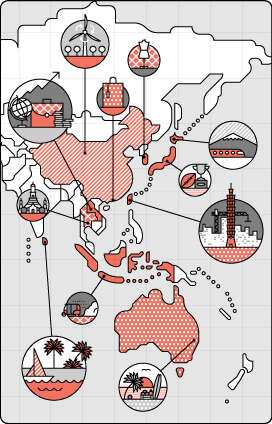
Asia and Australasia
1.
Bandung, Indonesia
Infrastructure
Disembark at Bandung if you’re keen to tap Indonesia’s highly mobile consumers while avoiding its heavily congested capital. A high-speed rail link with Jakarta is back on track while a monorail project in the pipeline will improve connectivity.
2.
Bangkok, Thailand
Cities
Bangkok’s city officials are planning a 7km-long promenade on each bank of the Chao Phraya River. A pilot project is slated to begin in 2016, although beware: national elections could slow the process.
3.
Colombo, Sri Lanka
Tourism
Extended peace has created a hotel boom, turning Colombo into one of the fastest-growing tourist destinations of the past five years. Factor in a stop here and look out for new opportunities in this key port on China’s 21st-century Maritime Silk Road project.
4.
Hong Kong
Property & Retail
Stratospheric rents have prompted some international brands to let leases lapse in prime central locations. Fly in and snap up one of the world’s best shop windows as landlords accept sale-time reductions.
5.
Lanzhou, China
Clean technology
As cleaner skies become a priority in smoggy Chinese cities, European businesses should send their expertise in green tech back along the new Silk Road. State investment has brought industrial success to this historic hub for Eurasian overland trade.
6.
Niseko, Japan
Transport
Hop on the new high-speed rail link between Tokyo and Hokkaido, which is bringing the ski fields of Niseko even closer to the capital. Summer-season businesses should receive another boost from a new Mountain Day public holiday in August.
7.
Tokyo, Japan
Sport
Hosting the Rugby World Cup in 2019 (after surprise success in 2015) will feed the game’s popularity here. Companies looking to break into the Japanese market should consider sponsoring the Sunwolves from Tokyo as they debut in Super Rugby 2016.
8.
Seoul, South Korea
Fashion
New York Fashion Week’s spring/summer 2016 event dedicated a whole segment to South Korea, so head to Seoul to discover even more cutting-edge designers.
9.
Taipei, Taiwan
Cities
Architects should cast their gaze towards the World Design Capital 2016. New buildings from international architects are reshaping the city, such as Rogers Stirk Harbour + Partners who recently won the commission for a new terminal at Taoyuan International Airport.
10.
Vientiane, Laos
Trade
Last time Laos chaired Asean it set out a vision for an EU-style single market. The return of Asean’s rotating chair to economically booming Vientiane should cheer regional businesses – and international investors.
11.
Gold Coast, Australia
F&B
Australian F&B entrepreneurs are warming to the Gold Coast over costly Sydney and saturated Melbourne. If the experience of those two cities is anything to go by, chefs and restaurateurs should pay heed and get in on the action now.
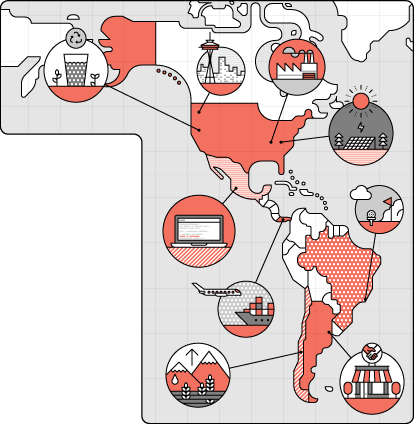
Americas
1.
Guadalajara, Mexico
Technology
Once renowned for hardware production based on the US’s outsourcing, Mexico’s second city is rewriting the codebook: come here for software talent.
2.
Nashville, USA
Manufacturing
Large manufacturing has returned to Tennessee as rising costs in China bring production home. Small-scale makers in the state capital should now look to take advantage and investors should keep a watchful eye.
3.
North Carolina, USA
Energy
The Tar Heel State has a sunny outlook as a solar-power hub owing to clean-energy policies and federal and state tax cuts. Big names such as Apple are already in on the game but there are still untapped niches.
4.
Sacramento, USA
Sustainability
If you’re developing technology to increase water efficiency, head to where it’s needed most. The ongoing drought in California is providing opportunities for businesses that have sparkling ideas.
5.
Seattle, USA
Property & Technology
A sign on Seattle’s front lawn reads: “Move here and leave Silicon Valley’s surging property prices behind you”. Job openings are booming as tech companies head north; consider this as the possible home of your next venture.
6.
Edmonton, Canada
Oil
New PM Justin Trudeau’s government is keen to improve access to the Alberta oil sands. Those involved in pipeline infrastructure should watch this space – and pray for a pick-up in oil prices.
7.
Buenos Aires, Argentina
Trade & Investment
Argentina’s economy has been faltering but a new president is expected to reform and rebuild trade ties. Now is the time to bet on a resurgence.
8.
Panama City, Panama
Shipping
Put your goods aboard a super-tanker from China to the US: the Panama Canal expansion is due to launch in April 2016 after a 10-year project. The world’s longest flight, from Dubai to Panama City, is slated to start operating in February.
9.
Rio de Janeiro, Brazil
Sport
Golf-lovers will be heading to Brazil: the sport is returning to the Olympics and the public can play the course when it’s all over. Whatever your pleasure, with the Brazilian real at record lows against the dollar it’s a good time to investigate.
10.
Santiago, Chile
Agriculture
El Niño is causing drought across Southeast Asia but brings welcome rain in other regions. Agriculture will benefit in drought-hit Chile and the ski industry should also enjoy a better run.
Built to last
“This was one of the last forgotten places in Zürich,” says Andreas Hofer as he sits in a café in the Hunziker Areal neighbourhood. Now home to 1,300 people, the area is frenetic with activity and peppered with playing children, dogs and strolling couples. Hofer leads the 13-building co-op Mehr als Wohnen – literally “more than living” – that created this new patch in Zürich’s northern reaches. The buildings are an experiment in city-making and their popularity suggests it’s a successful one.
The first residents arrived in autumn 2014 and the final commercial tenants will complete the mix throughout 2016. Bright flags, fairy lights and flourishes of foliage adorn the public spaces between the housing blocks. Bikes are neatly stacked in roomy storage spaces and asphalt paths crisscross lawns that lie between the residential buildings, with ground floors occupied by shops.
Mehr als Wohnen is a new approach to building for the mass market. “In 2007 there was the 100-year jubilee of housing co-operatives in Zürich. And we had an idea about how to look to the future,” says Hofer. These housing organisations are powerful in the city and many residents rely on them as an alternative to ownership or rental. To call Zürich’s property market overheated and short on options would be an understatement. Since 2000 it is estimated that housing prices have risen by 70 per cent. Skyrocketing rents and limited space are squeezing many, from new business owners to middle-income professionals.
Mehr als Wohnen charges stable market rates for its 395 units and it’s an experiment in building houses that up quality of life as well as offering a roof under which to reside. The challenge was to create a large-scale development on a former industrial site. So often a need for more houses yields homogeneous apartment blocks plonked on undesirable brownfield sites on a city’s outskirts. But there is something about the solidity, thoughtfulness and confidence of Mehr als Wohnen that takes it well beyond such limited ambitions.
“All the spaces in these areas can look the same; there is often no sense of place,” says architect Anne Kaestle of Duplex Architekten. She’s part of a team that created the complex along with fellow Zürich architecture firm Futurafrosch, which was responsible for the masterplan. Both were chosen in an international competition that was managed by the city.
Creating a social buzz and designing large buildings on a human scale was at the forefront of the architects’ considerations. The site was divided into 13 plots and allotted generous swathes of public space in order to promote social mixing. The paths widen to create informal courts or hug the buildings to leave room for playgrounds and a central square.
Futurafrosch wrote a short manifesto called Kodex early in the process. It outlined the desired urban qualities that the studios needed to weave into the fabric of the project, such as homely and green public areas, promenades and the communal layout of mailboxes, all of which encourage interaction and a shared sense of space. “We started with urbanism,” says Kornelia Gysel, co-founder of Futurafrosch. “We needed to establish a place, not only for the people living here but also for the people from the neighbourhood, to interact.”
Another victory is that the space doesn’t feel detached from the city. Zürich’s best-in-class public-transit system serves the residents; a necessary step as car ownership here is severely restricted to those with disabilities and those who need a vehicle for work. It’s a compromise for some but for others Mehr als Wohnen is about more than just deciding where to rest their head: it’s about an engaged existence that doesn’t necessarily include a car.
Despite the buildings’ unified theme, five architecture firms were behind the designs. Futurafrosch and Duplex were joined by architecture firms Pool, Miroslav Sik, Müller Sigrist and landscape specialist Müller Illien. Variations in the architecture of each building create a distinct relationship to their neighbours. Different window placements, balconies and floor heights result in subtle contrasts that mirror the varying styles and patina that you would expect to find in a place formed over decades rather than in one go.
Recurring features include sturdy steel railings and pale granite tiles that help to unify the designs and create a sense of permanence and solidity without gratuitous expense. The light fixtures are displayed in various configurations to add personality while maintaining a sense of unity. A single contractor, Steiner AG, supported the project in all its complexity and was responsible for building the Mehr als Wohnen ensemble.
The apartments vary from small one-beds to clustered living spaces. The latter has up to 12 ensuite bedrooms linked to a central living space, meant to address the rise in single-person households and create a situation akin to a houseshare. Like much of the project, there is a whiff of both the pragmatic and idealistic about it and the idea has gained in popularity. Consultancy firm Accenture has a cluster for its employees; parliament member for the Greens, Matthias Probst, lives in another. “We had sociologist Corinna Heye help us to measure the social mix,” says Hofer.
As applications far outstripped available spaces, the co-op attempted to create a diversity that would be impossible to ensure in open-market housing. On a late summer evening, groups of children play, teens congregate and adults can be seen gathering on lawns, balconies and the main square. Barbecues in the ground-floor common areas between the buildings spill onto the streets.
Fair rents for ground-floor ateliers are available to businesses that may otherwise struggle to find space. They’re offered to residents and non-residents alike and currently a graphic designer, a string-instrument workshop, a guesthouse and a daycare centre are among the tenants.
Swiss opera singer Christoph Homburg rents a space at Mehr als Wohnen, using it as a restaurant and salon. “I could have done this in the city centre but then it would have been very small, with only the Schickimicki crowd,” he says, throwing in a pejorative German term for snobs. Across the way is Ayverdi’s, a kebab café run by three brothers Ali, Hüseyin and Murti Ayverdi. The small-scale food outlets and workspaces blend harmoniously with residential and communal spots.
While cities press further into their peripheries to create new housing, developers often overlook the aspects of a city that go into making it a desirable place to be. But Mehr als Wohnen offers a thoughtful rebuttal to this tiresome trend.