The Forecast
Going up?
Ever since American inventor Elisha Graves Otis came up with a reliable safety brake in 1852, the technology that transports human beings up and down buildings has barely changed. To get 30 people to the 30th floor you still need four essential ingredients: ropes, brakes, a counterweight and a cab. The basics are still the same but that is set to change. A revolutionary moment for the humble lift is approaching. The engineers and researchers at ThyssenKrupp Elevator (one of the four big global lift manufacturers alongside Otis in the US, Finland’s Kone and Switzerland’s Schindler) have come up with a new design that could transform not just the lift industry but also the limits of construction.
“The one-mile-high building is close to becoming a reality,” says head of ThyssenKrupp Elevator’s research centre Markus Jetter, on the top floor (naturally) at the company’s headquarters in Essen. “There are many in planning now. But it’s the elevators that hold these projects back: they’re constrained by our inability to move people up to that height using traditional means.”
Many factors prevent conventional lifts from going higher but the ropes are the main culprit. “After a certain point, the cable becomes so thick and heavy that it can no longer hold its own weight,” says Jetter. “A ropeless elevator would be a gamechanger,” adds his boss, CEO Andreas Schierenbeck.
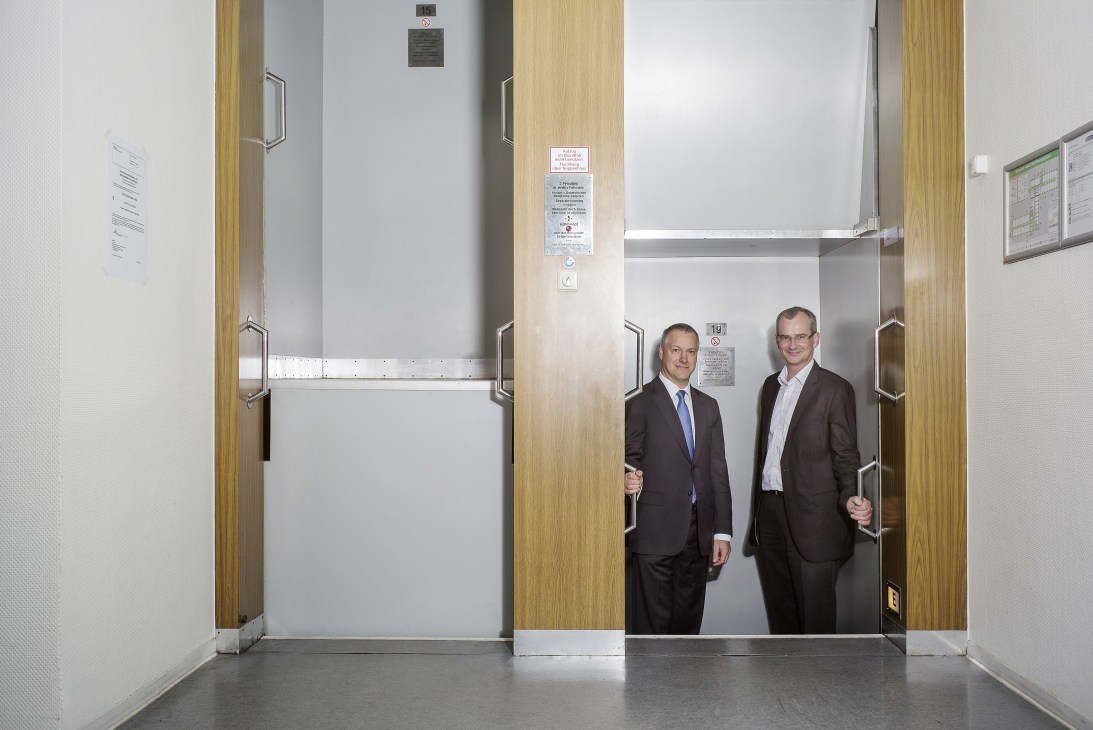
Their new design, called the Multi, will have no ropes at all and will instead be powered by “linear drive technology”, not dissimilar to the magnetic levitation technology behind some modern trains. This will enable multiple cabs within a single shaft, each able to travel vertically and horizontally, and will move in a circle as if on a huge conveyor belt.
Editors at the industry’s leading publication ElevatorWorld describe the removal of ropes from a lift as nothing short of “the Holy Grail”. But Schierenbeck believes the new design relies on old traditions. “I suppose we’re getting back to our roots in a way,” he says, as he rides up and down in ThyssenKrupp’s old-style paternoster in their HQ.
To really appreciate why the Multi could be so groundbreaking we need to unwrap the historical relationship that lifts have had with buildings. New York is a perfect case study, partly because this is where the lift was invented but also because it is here that it was most fervently adopted and left its most indelible mark. Up until the 1850s, buildings were only built up to about six storeys high: the point at which it was deemed that a person climbing the stairs would throw their shopping bags on the floor and have a tantrum. Otis’s invention made travel in lifts safe and therefore viable on a massive scale. Within decades, office buildings of up to 30 storeys became possible. The corner office of the top floor became the CEO’s domain, the most desirable piece of real estate in the city and a word was newly coined in apartment blocks: “penthouse”.
Arguably, no single invention has played a more decisive role in creating the modern metropolis than the humble lift. During the 20th and into the 21st century, buildings have been getting progressively larger and, as the world urbanises, “super-tall” buildings have become both a physical and financial possibility.
However, in the meantime the lift has fallen from grace. Not only do lifts currently limit the height of buildings but they also require valuable space in super-tall towers, losing developers revenue. In some buildings, up to 40 per cent of floor space is taken up by lift shafts. “It doesn’t feel good to know that you are not keeping pace with your customers,” says Jetter. “We are not ahead of the game at the moment but with the Multi we will be.”
The Multi won’t be properly put to the test until 2016 but Jetter insists that three years in R&D have already proved that the system is workable. If the ThyssenKrupp team do manage to build a system that can do the necessary – contain multiple lifts in one shaft, operate without ropes, maintain safety and provide developers with as many lifts per minute as they need – they will catapult the construction industry to new heights.
Just think: no longer will architects and developers have to factor in huge losses in earnings due to space-hungry lift shafts. Lifts won’t be a constraint on design ambition and the mile-high building won’t be just a fanciful vision of architects’ daydreams. Plus you might not be left in your company’s lobby for 20 minutes pressing the “Call lift” button in vain.
Sea change
The once-industrial quarter of Poblenou is only 5km from the tat-lined tourist haunt of Barcelona’s La Rambla but feels a world away from the ornate modernist buildings spread around the rest of the city.
The smokestacks here are relics of Poblenou’s past and a reminder of just how much the district has changed in recent years. For decades the trappings of a thriving textile industry barred visitors and residents from the sea. A railway line straddled the esplanade and thousands of workers filled the area’s many factories and warehouses but this industrial fabric began to fray in the 1970s. Now, after a long malaise, the beachside district is finally reawakening.
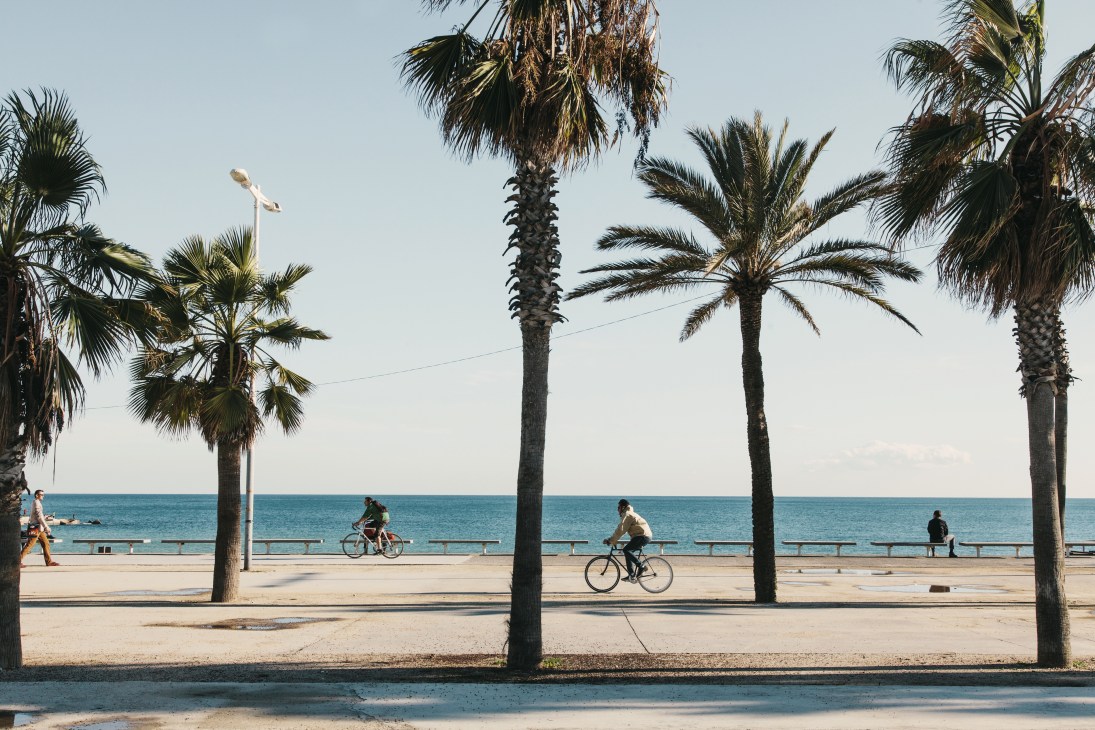
Poblenou, or “new town” in Catalan, has all the right urban elements: solid transport links, promising properties, green spaces, even a metropolitan beach. Yet it wasn’t until a range of small-scale businesses moved in and banded together to forge a sense of community that the area became truly liveable.
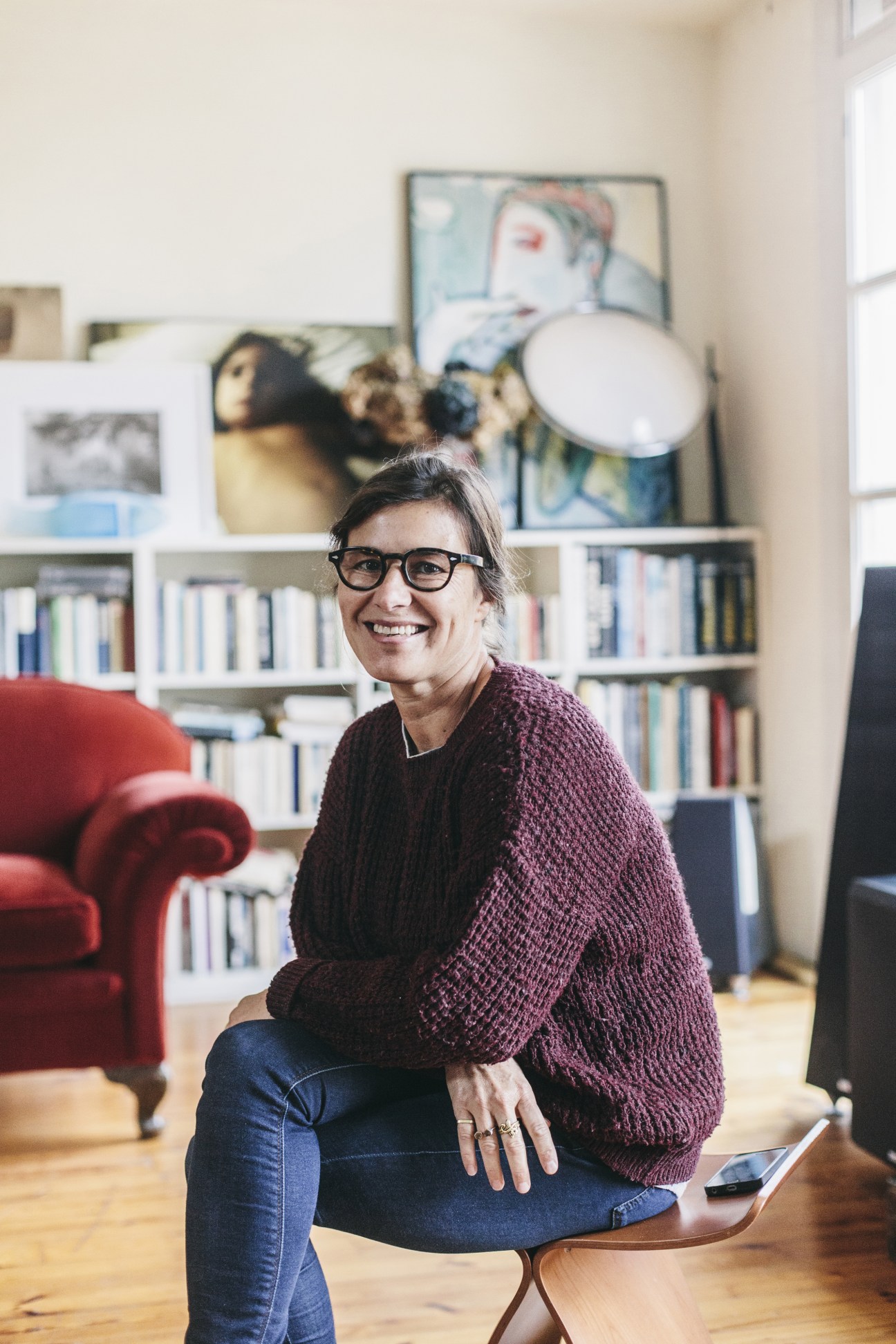
Residents Bèla Adler and Salva Fresneda moved here 15 years ago and took a year to convert the floor of an old school into a home and studio space. “It was like a ghost town back then, there weren’t even any shops,” says Adler. Today, the Rambla del Poblenou is a hotbed of commercial activity. Locals come here to buy their organic produce and then head to the nearby meat and fish market.
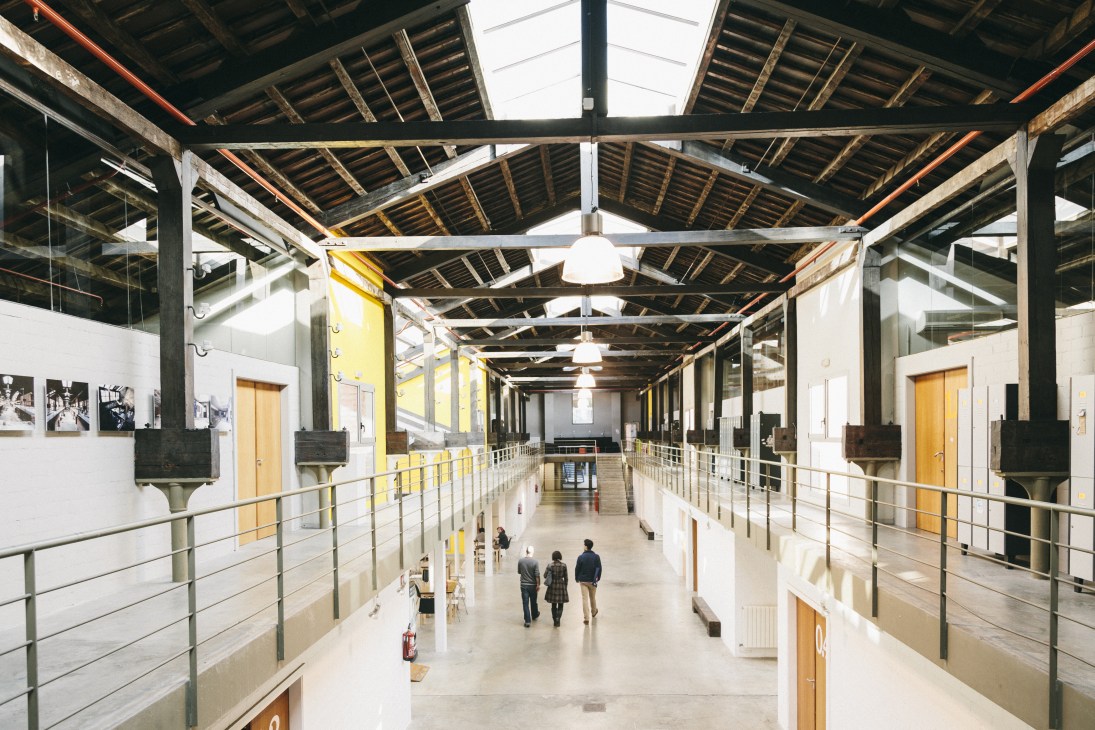
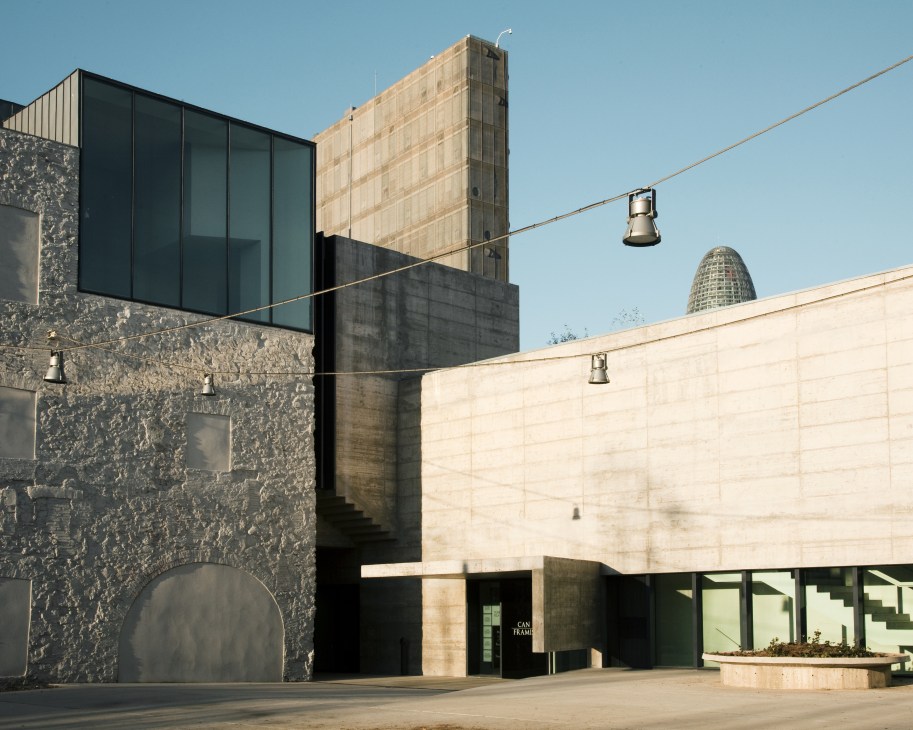
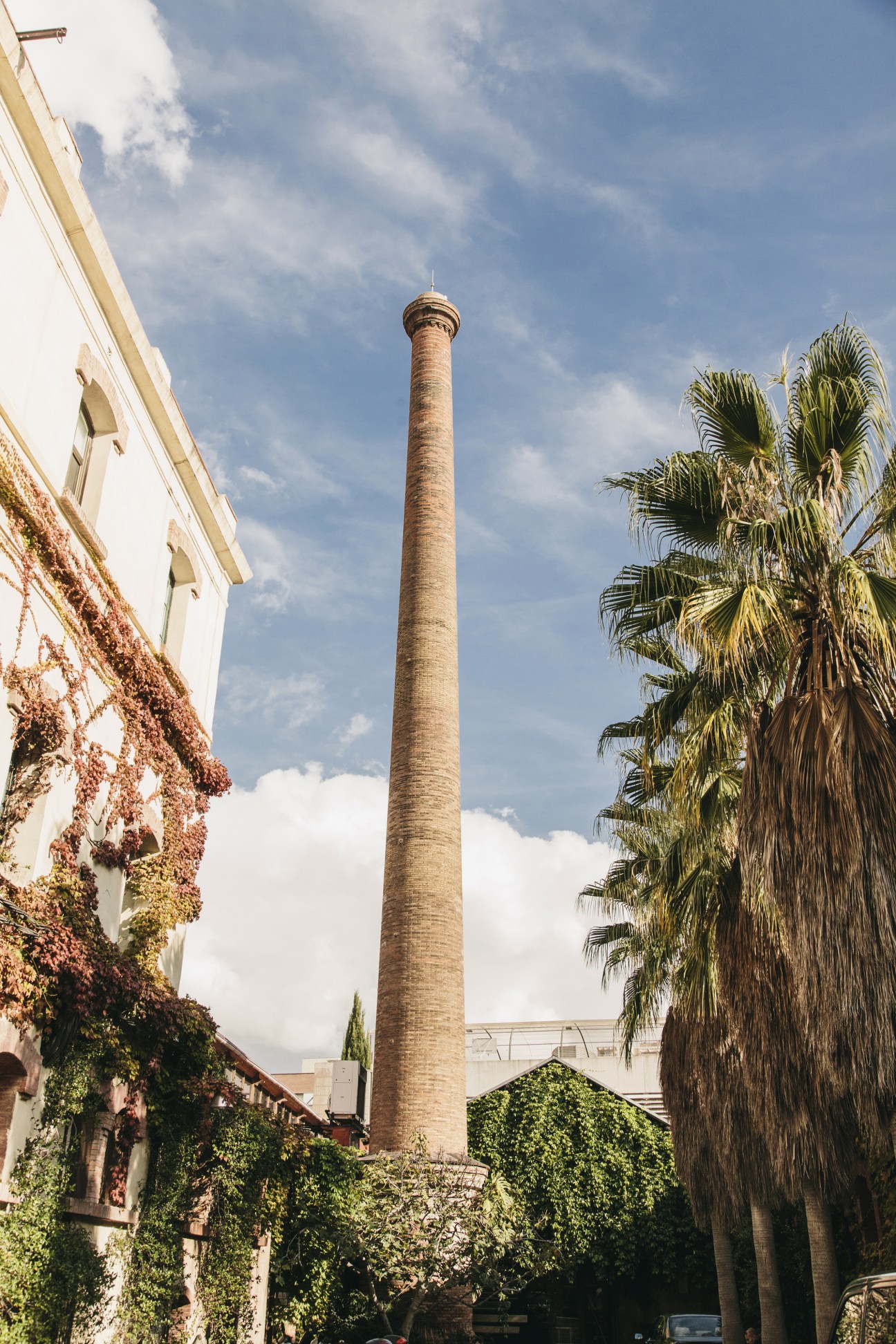
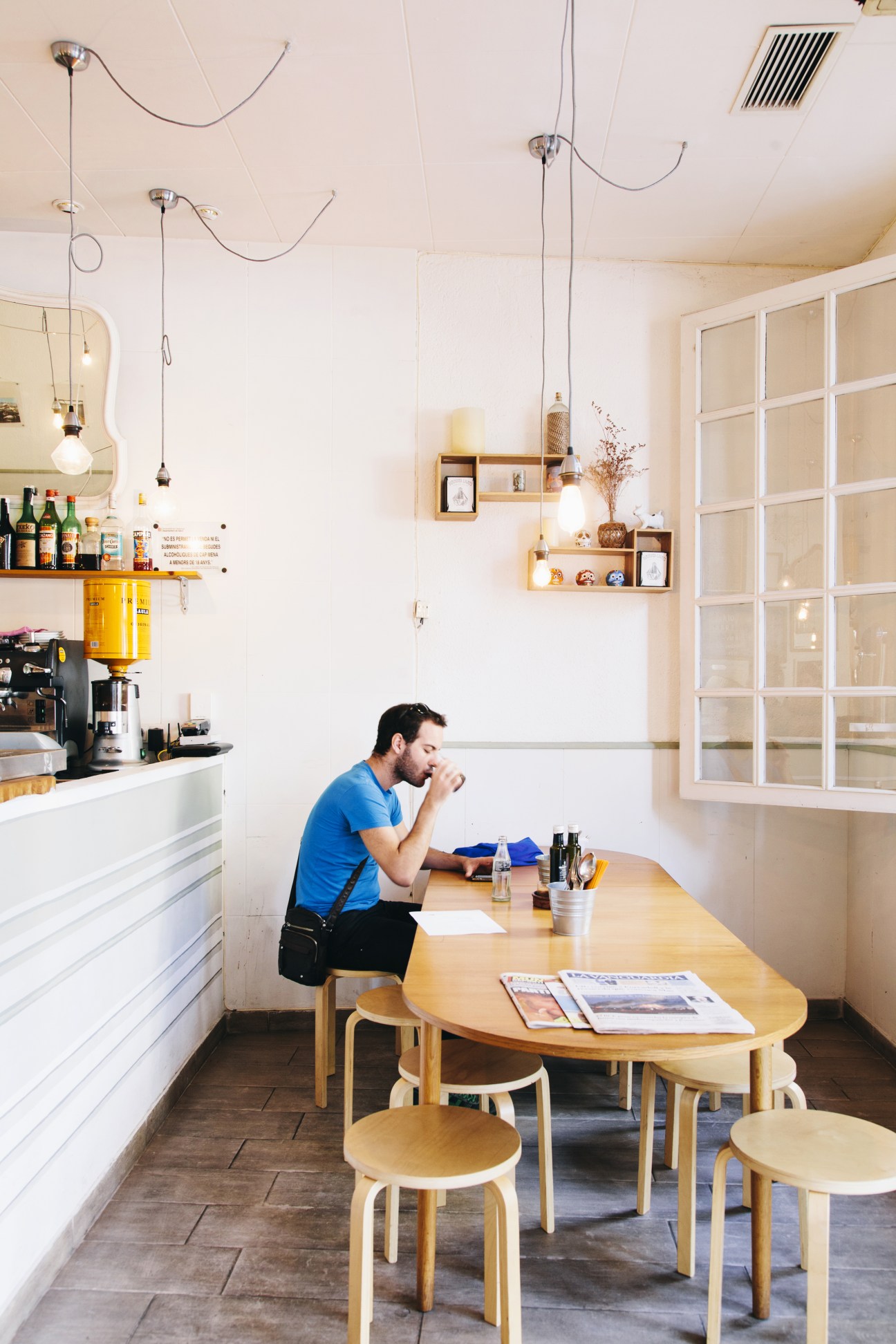
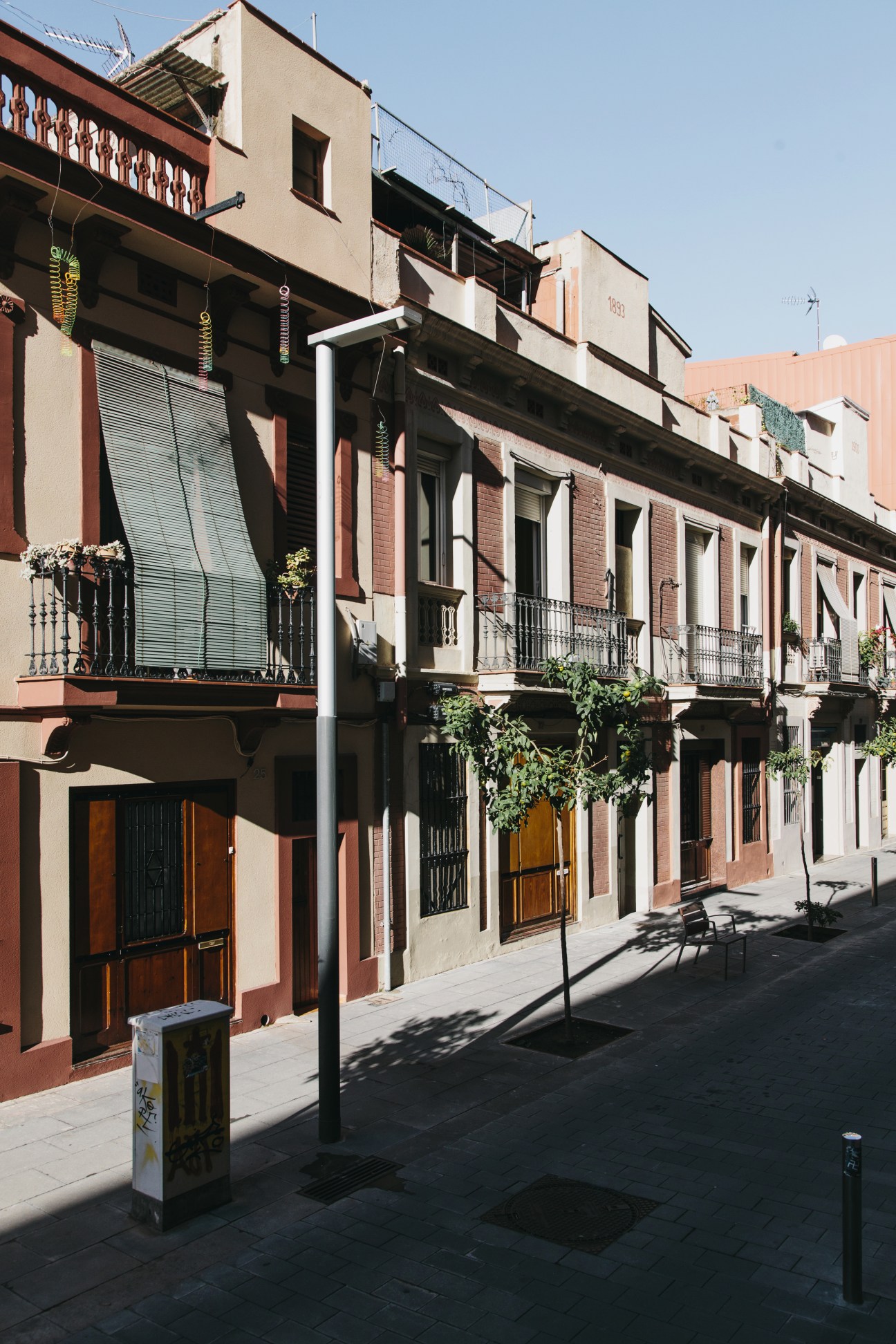
Meanwhile new tenants have arrived from across the globe, meaning you won’t need to be fluent in Catalan or Spanish in order to get settled in (although it’s obviously a plus). The practical language of choice is often English, particularly since a new wave of spirited creatives and entrepreneurs have reclaimed the crumbling factories. Lured by cheap rents, they are transforming interiors into vast studios, galleries, shops and even homes.
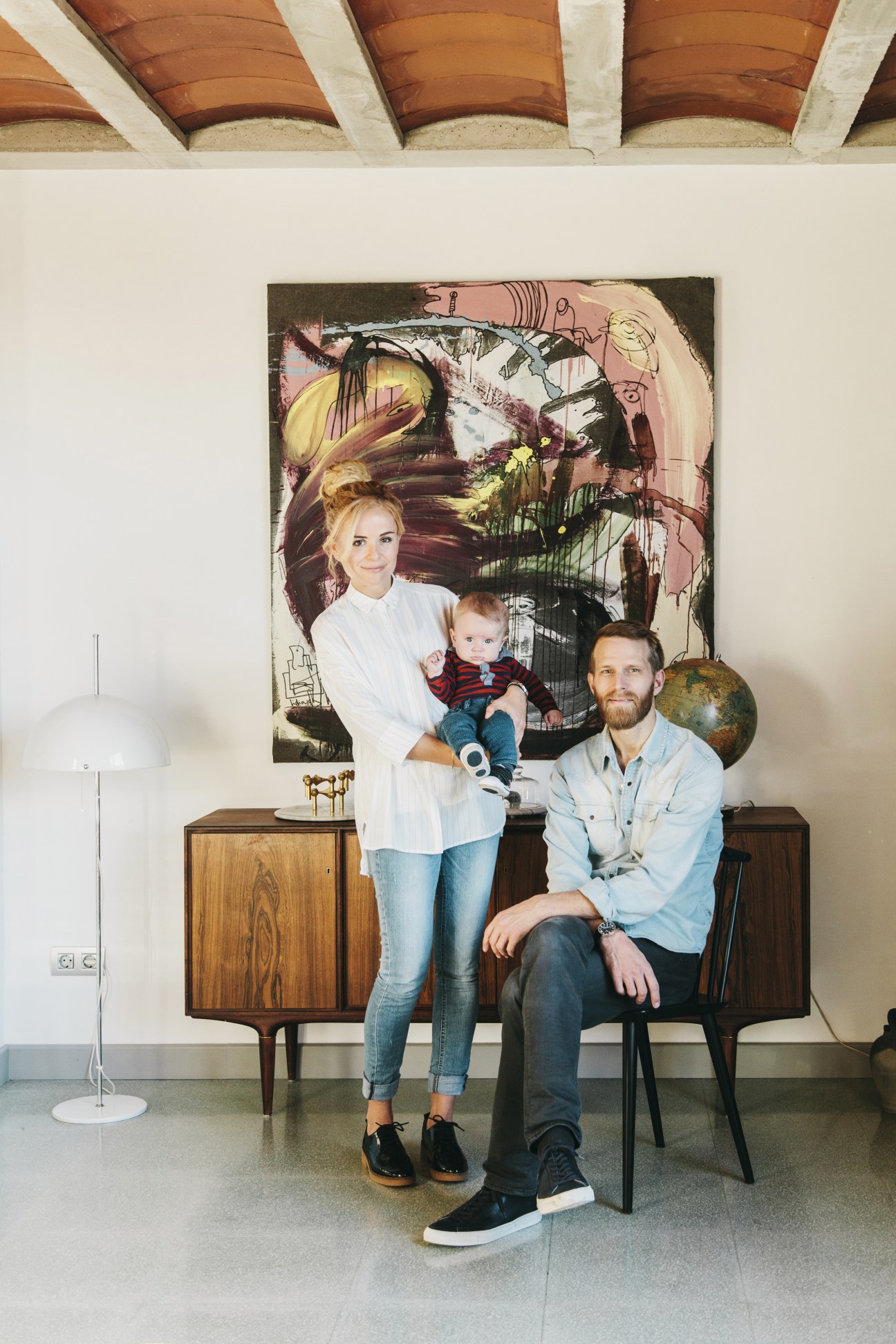
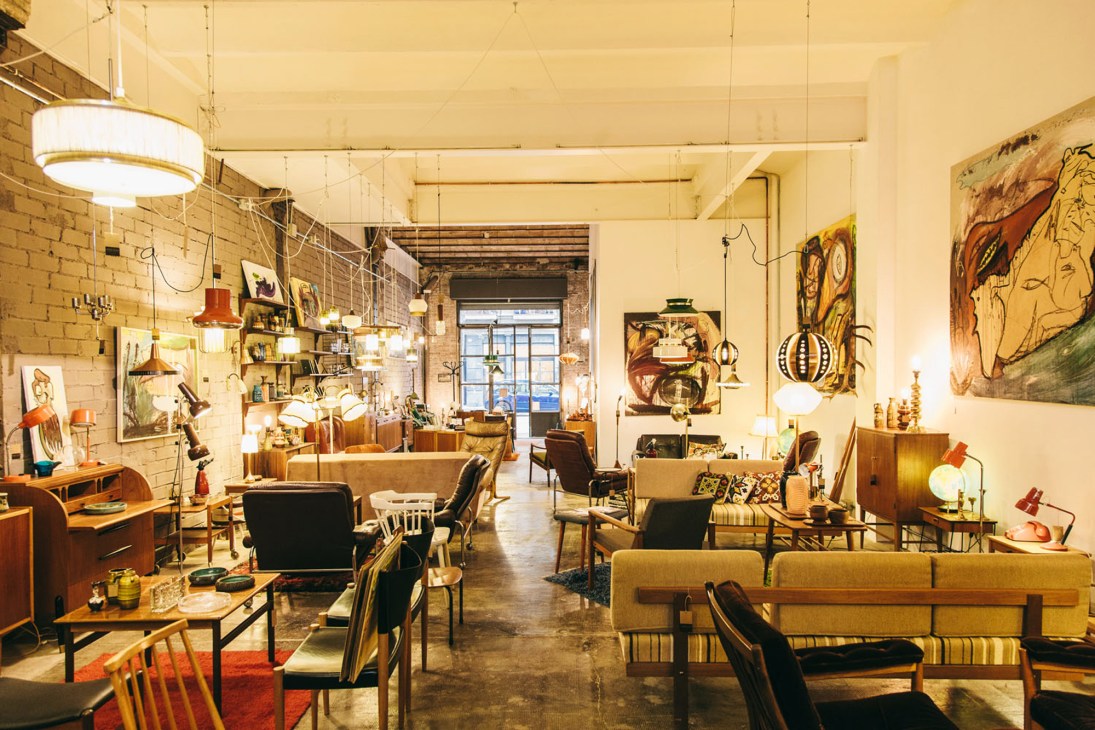
New arrivals include Swede Martin Noaksson and his Spanish wife Sara Salas, who opened their vintage furniture shop Noak Room in a former carpenter’s workshop in 2013 and live upstairs with their young son Olof. “We were attracted by the cosmopolitan atmosphere,” says Salas.
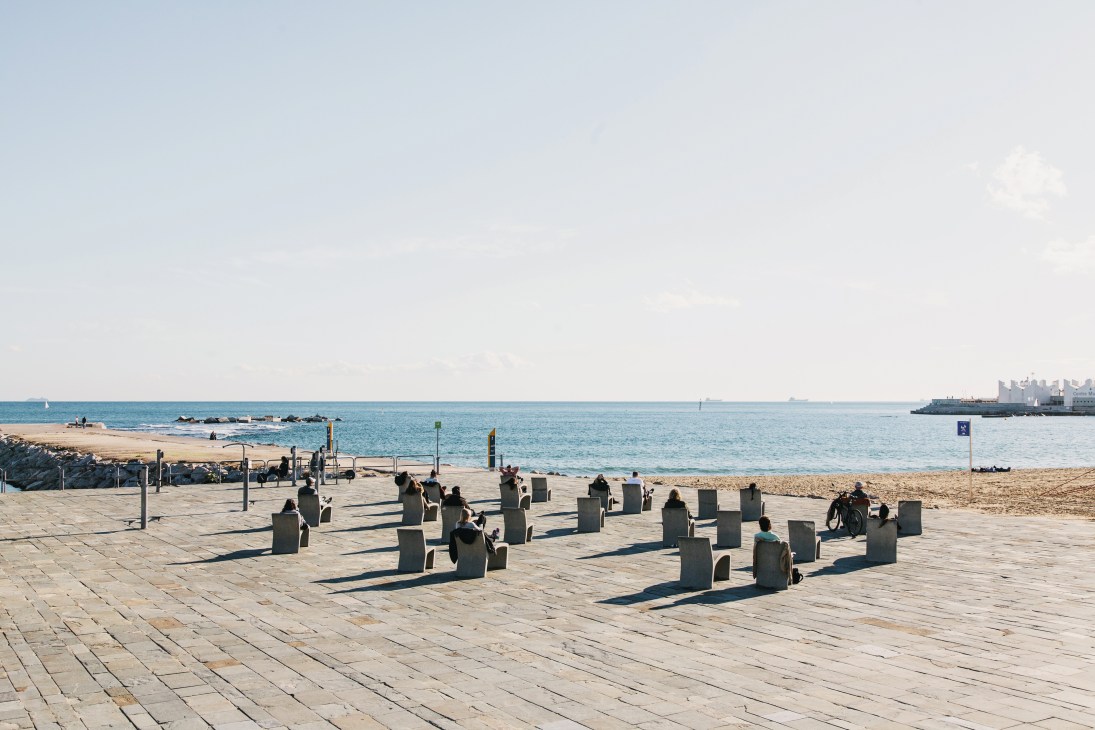
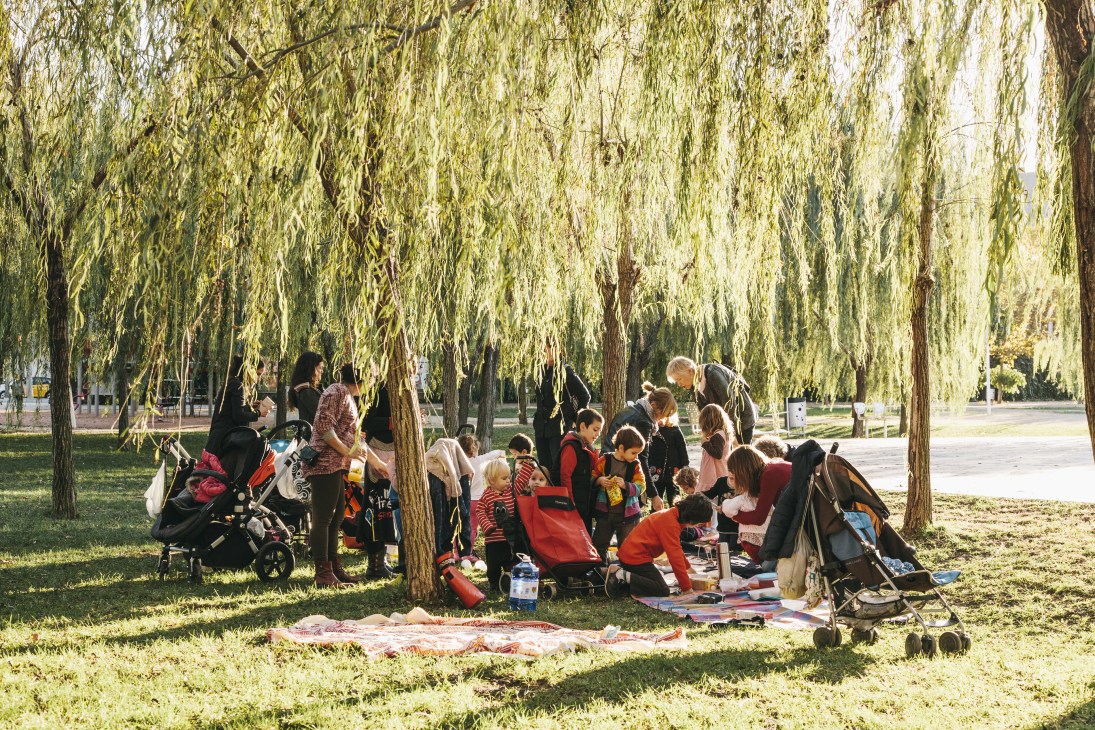
Once the weekend arrives the neighbourhood is noticeably quieter but with the beach and the eccentric Parc Central del Poblenou at their doorstep, locals relish the slower pace. Just a stone’s throw from the Mar Bella Beach, the traditional Spanish seafood dishes and terrace at restaurant Els Pescadors is a delightful way to acquaint yourself with local heritage.
The inauguration of the Mercat dels Encants flea market and the Disseny Hub design museum is part of the ambitious Plaça de les Glòries redevelopment. By 2018, several main roads will be redirected underground, replacing the congested roundabout with a circular park. It’s the new focal point for Barcelona’s transformative urbanism agenda. Meanwhile trams, a metro and regional trains traverse the district and the Bicing public cycle scheme also has several docking stations here.
Floridians Scott Vanover and Alan Sheppard opened Edge Brewing, which produces craft beer, in 2013. “It took around four months to process my visa,” says Vanover. “If you intend to invest here, they make it easier for you.”
Like many of this new wave of business owners the pair aren’t fazed by the Catalonian independence movement. Whether it’s the multicultural team binding books inside The Folio Club publishing house, the students at the prestigious bau design school or the architects, design firms and tech start-ups at Palo Alto (a former tannery turned vine-covered office precinct), there is a prevailing life-must-go-on attitude.
This burst of creative energy has added a new layer to the industrial bedrock, fuelling momentum for change. Anyone willing to further this cause can expect a warm reception: there’s still work to be done.
Politically switched on: The legacy
Meet the Press, which calls itself “the world’s longest-running television programme”, has always prized continuity over novelty. It first aired in 1947 on NBC and has appeared for an hour every weekend since, interrupted only for major sporting contests. For the US political class, Meet the Press has offered its own sense of occasion: John McCain has been a guest so often (69 times) that those around him snicker that the senator doesn’t have time for God because he already has a church to attend on Sunday mornings.
This autumn, just weeks before the midterm elections, nbc promised a modest overhaul of the show, replacing its ineffectual presenter David Gregory with the network’s White House correspondent Chuck Todd. With his Daily Rundown on the cable network MSNBC, Todd already hosted US television’s best hour of topical programming, pairing sharp political interviews with news analysis from top journalists. It was the Meet the Press mix but five days a week, stripping the weekend show of any discernible impact. Todd had liberated Sunday mornings; the political class could take up organised religion again – or at least a leisurely brunch. McCain will inevitably show up in Todd’s pews but why should any audience members do so?
This NBC palace history is something of a parable for the global crisis in political television. It may be hard to remember in the era of screens overcrowded with talking heads but there was once a golden era for the format. In the middle of the 20th century it was novel to observe a politician captive in a journalistic setting. What could be more refreshingly democratic than to unmoor a government official from the native environment of the campaign podium or parliamentary chamber? And what more thrillingly dramatic than to then subject him or her to a direct challenge in full, live view of the citizenry?
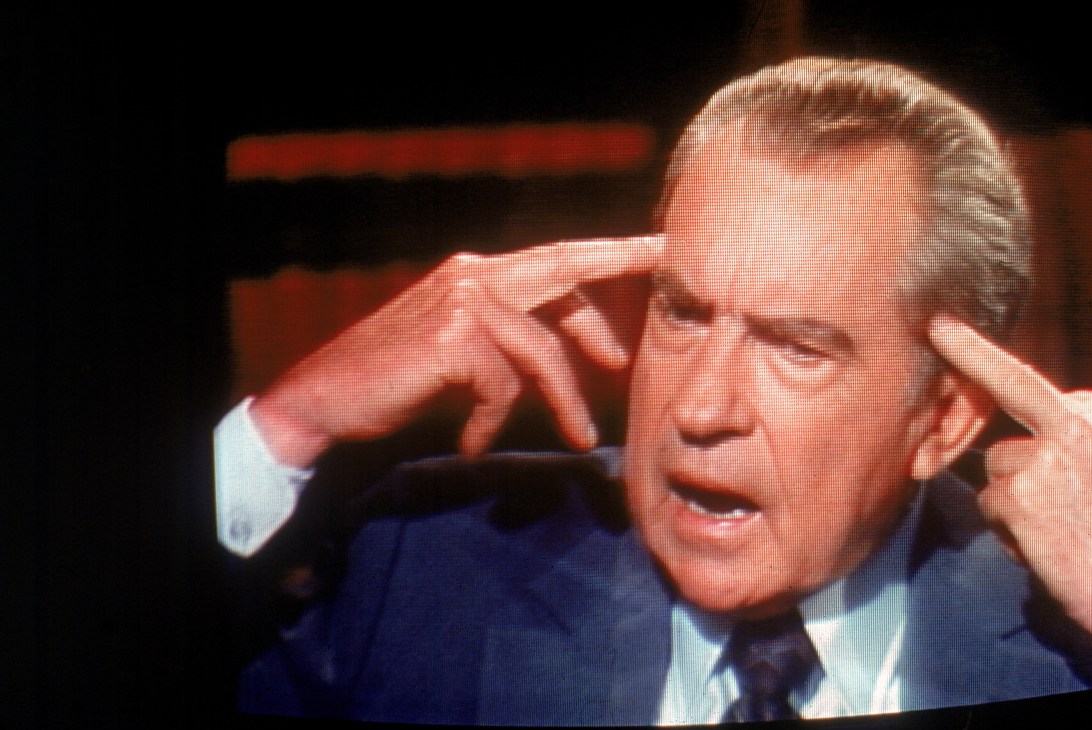
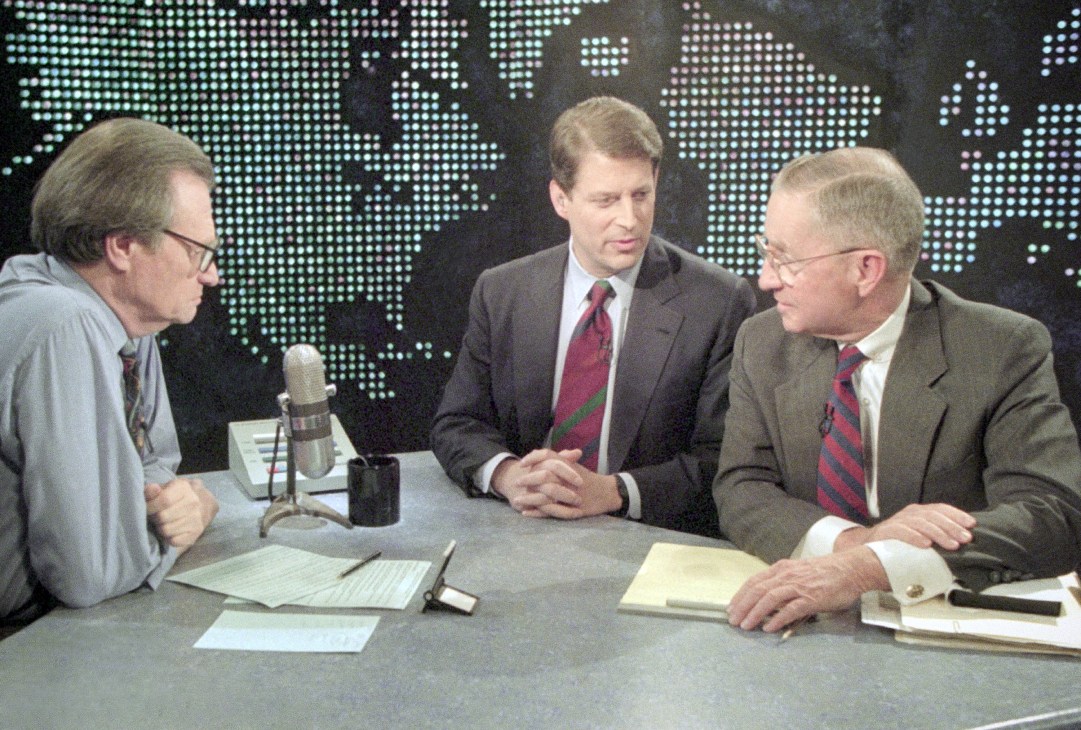
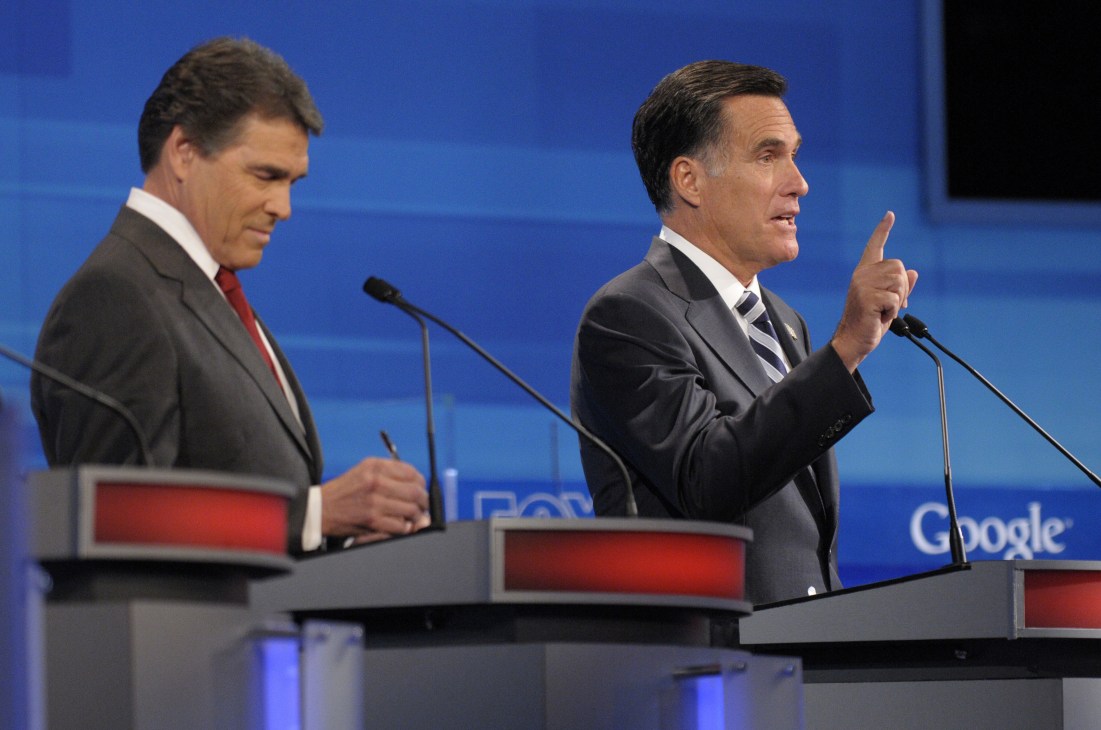

The on-camera encounters of the era are memorable both as television events and for their unique contributions to the historical record. Politicians who had spent decades managing their public images found themselves immediately undone on camera, forced by long-form conversations by well-prepared interviewers to concede weakness or inadvertent candour. It was over two sessions in 1979 for a one-hour CBS News profile that Ted Kennedy revealed himself unable to coherently answer Roger Mudd’s question, “Why do you want to be president?” It took 29 hours of tangling with Richard Nixon for David Frost to extract from the former president what prosecutors, subpoenas and the threat of impeachment had failed to: an apology for Watergate.
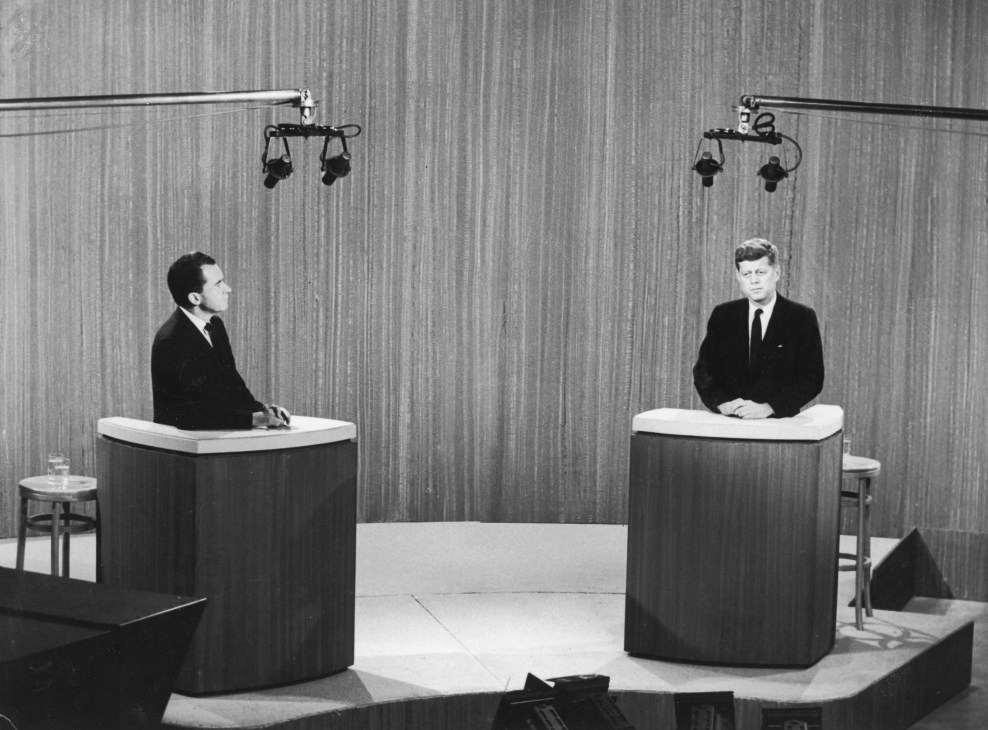
The electoral process quickly reimagined itself in the image of the talk show. In 1960, candidates John F Kennedy and Richard Nixon faced off in the first televised presidential debate; in effect it was an episode of Meet the Press produced from a Chicago soundstage for a much larger, prime-time audience. US voters had to wait until 1976 to see presidential candidates face off again (that year, vice-presidential running mates joined the practice, too) but by then overseas broadcasters had recognised the appeal of pitting candidates against one another for the benefit of viewer-voters.
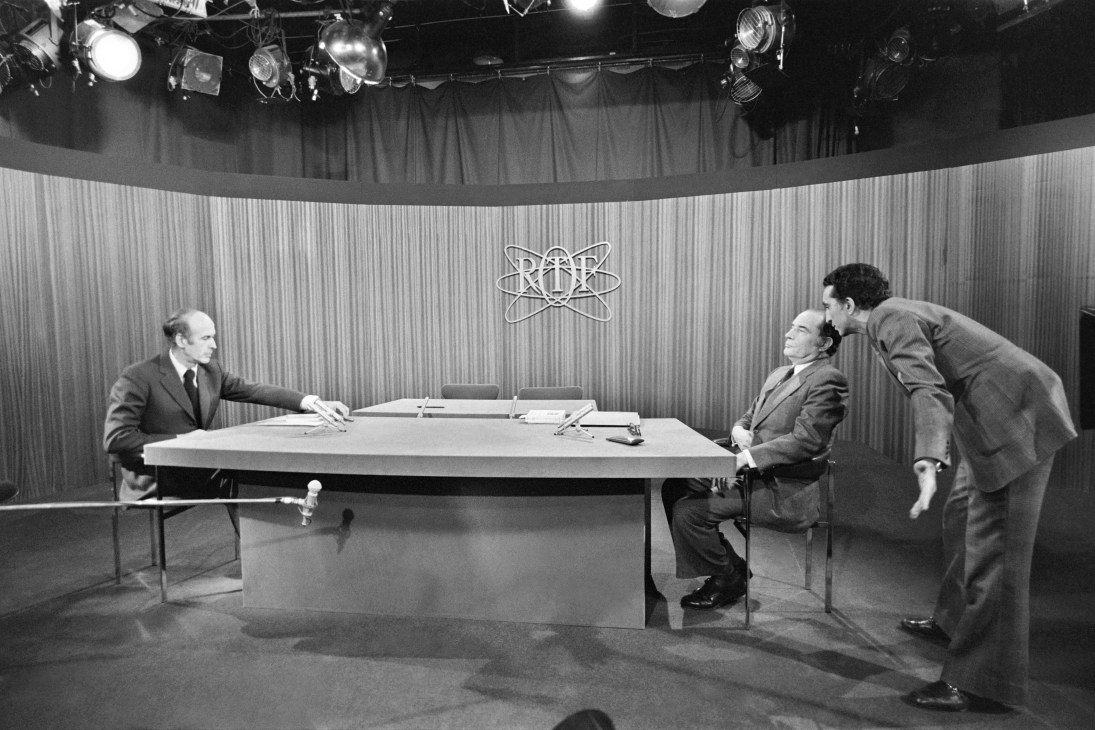
In 1974, French network RTF convinced presidential finalists François Mitterrand and Valéry Giscard d’Estaing to apply the 45 minutes of public airtime, to which each was entitled, to a joint appearance. Unlike in US debates, a pair of clocks hung over the Paris set to count down each candidate’s time. Debate director Roger Benamou’s next project may have been a French-language Othello but the ominous prop suggested a debt to Chekhov.
With time, other countries adopted presidential-style debates. German TV had party leaders face off for the first time in 1969 and the Dutch in 1977; Brazil, Kenya and New Zealand, among others, followed suit. In the US, televised debates have become an essential part of the campaign calendar for every office. During the 2012 presidential primaries, Republican candidates participated in 20 of them. Party leaders concluded that these ritualised on-air conflicts served the interests of network executives more than the candidates themselves. “I think a travelling circus of debates is insanity in this party,” said party chairman Reince Priebus.
By then there was so much political TV that candidate debates were distinctive only because they aired with the sanction of a party. Cable news is, in a sense, the debased Meet the Press format on 24-hour loop – punditry, interviews and argument in a perpetual wash-rinse-repeat cycle – with occasional digressions into true crime and missing planes. Across networks there are slight variations in tone and sensibility but rarely enough to make any one hour of politically minded talk more essential than the next.
This surfeit of political programming quickly upended the power dynamic between politicians and producers. Politicians who wanted airtime were no longer in thrall to a small cartel of shows that could set the terms of coverage. A one-hour interview on Meet the Press (or its competitors, ABC’s This Week or CBS’s Face the Nation) used to be seen as a crucial test for a prospective president but few agreed to such an encounter in 2012. Why risk an hour-long interrogation when one can opt for a 12-minute version on Fox News (for conservatives) or MSNBC (for liberals) where the questioner isn’t scheming to humiliate you?
What made great political television possible wasn’t great politicians so much as scarcity. Politicians weren’t perpetually available to the media and the journalists who confronted them had limited opportunities to reach an audience. Producers need to reimagine the format and create an hour of political programming for which it’s worth waiting until the weekend.
Images: Getty Images, PA Images, CBS, Reuters
Height of fashion
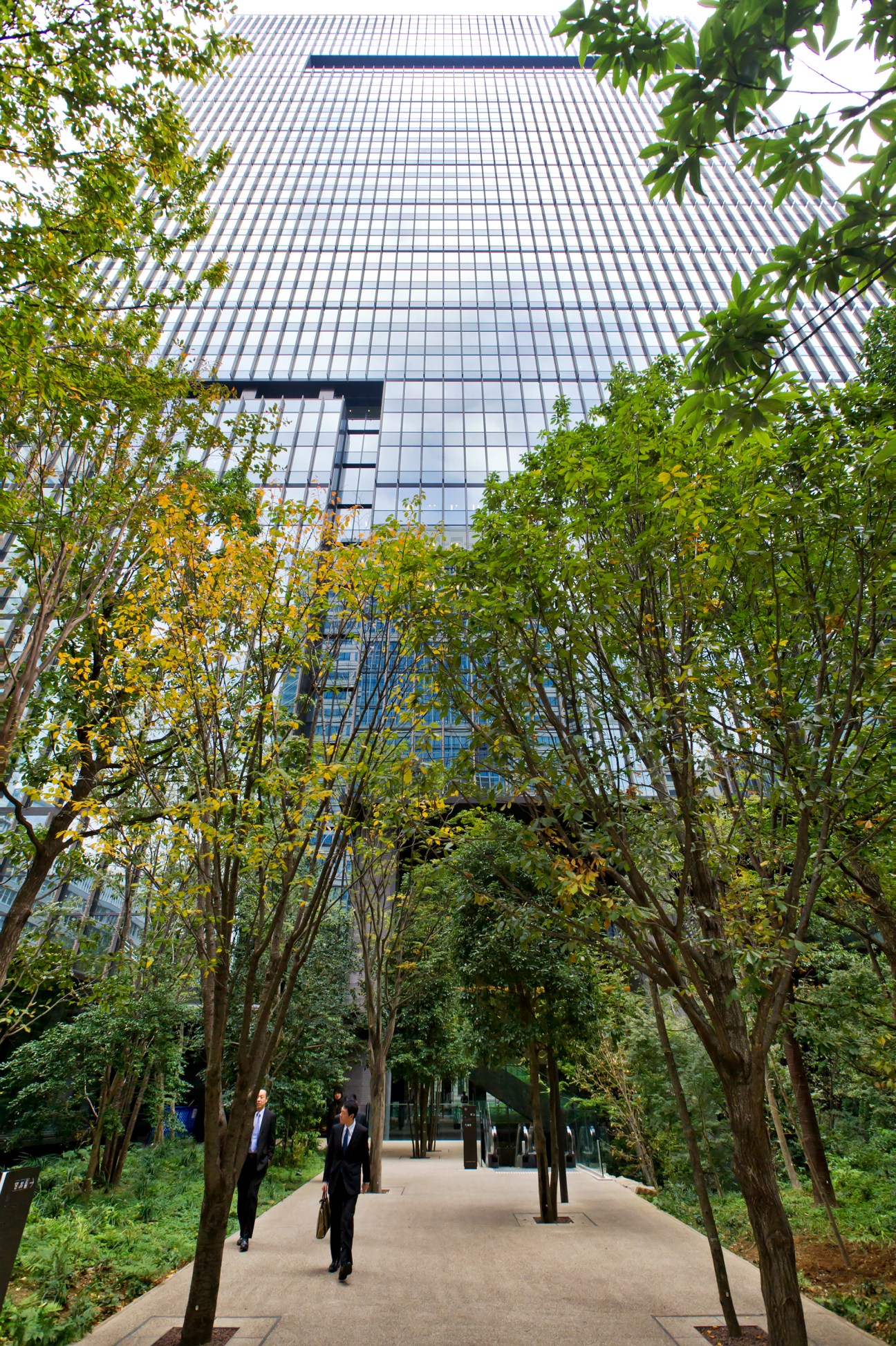
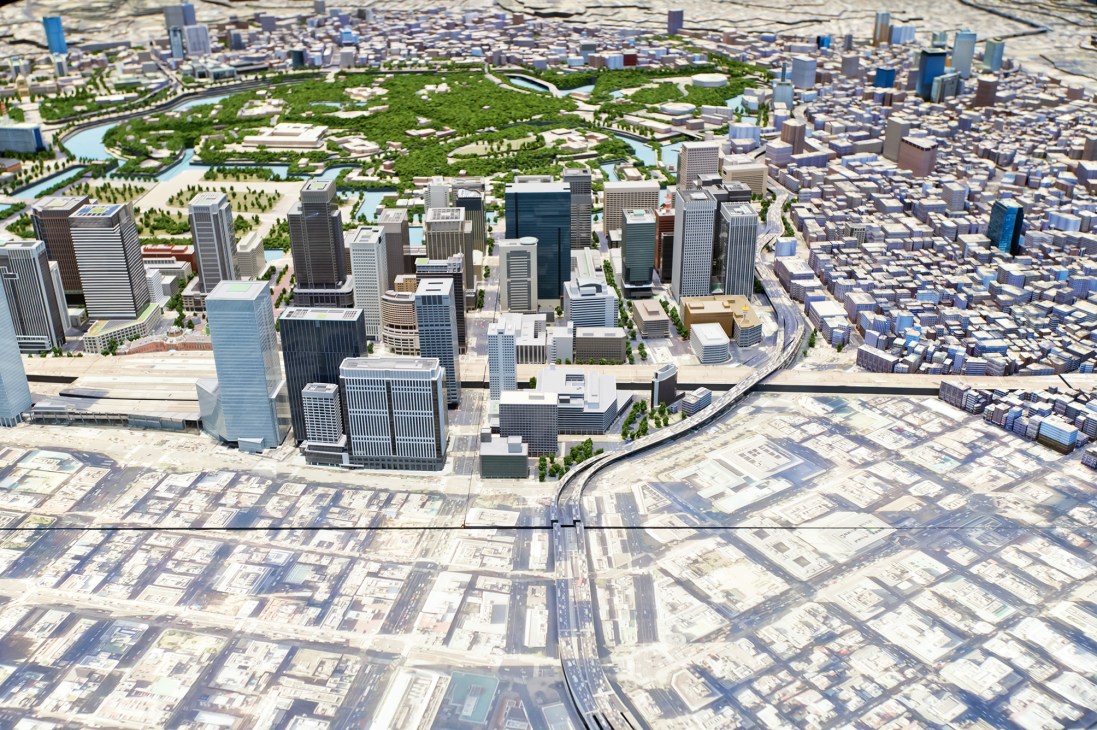
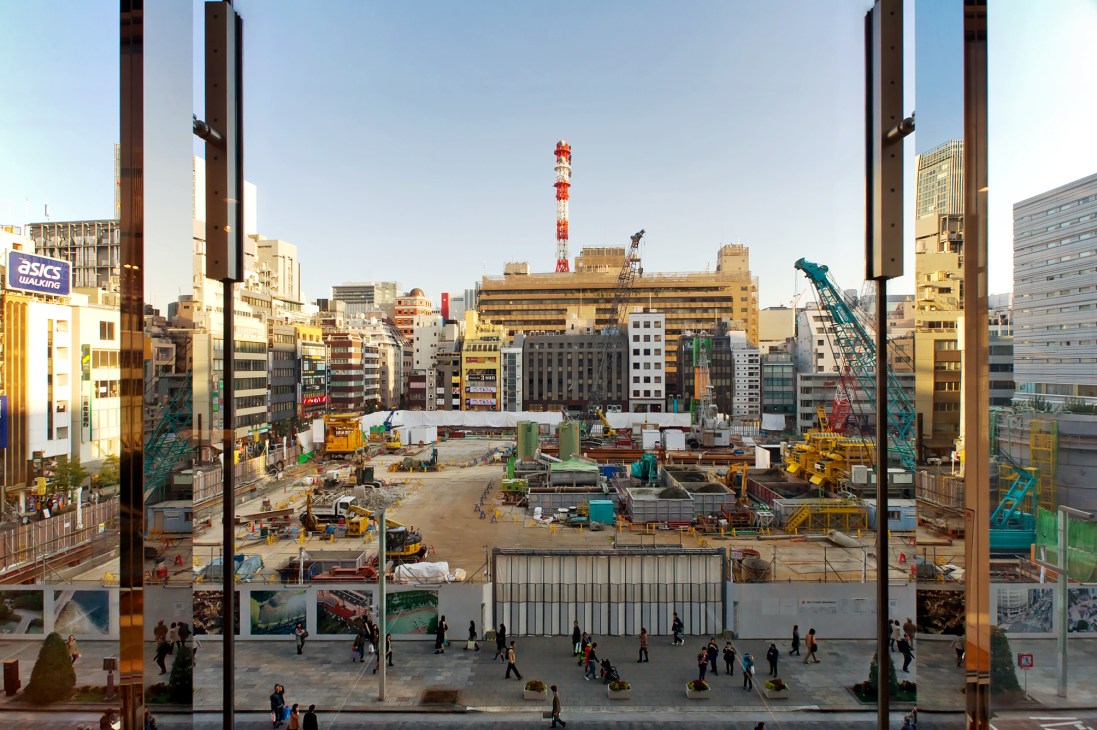
If you took a late-afternoon stroll around the financial district of Marunouchi in Tokyo 15 years ago you would likely have found the streets deserted, bank doors closed after 15.00 and barely a shop in sight. Today it is a different story: day trippers and office workers mingle, the pavements have been widened and trees planted; there are farmers’ markets, antique fairs and shops everywhere. You could spend an afternoon ricocheting from one tower block to the next, passing through some of the world’s finest fashion retailing.
The key to the utter transformation of this business quarter was an ambitious redevelopment programme that started in 1998 and has seen the character of the area morph from canyons of 1960s office blocks to state-of-the-art towers upwards of 150 metres, all filled with vertical retail of irresistible quality. The dominant force in this 120-hectare district is Mitsubishi Estate, which owns or manages 30 out of the area’s 100 buildings. Its trailblazing development was the Marunouchi Building, a tower that combined food, shops and offices and attracted 24 million visitors and sales of ¥31.5bn (€215m) in its opening year of 2002.
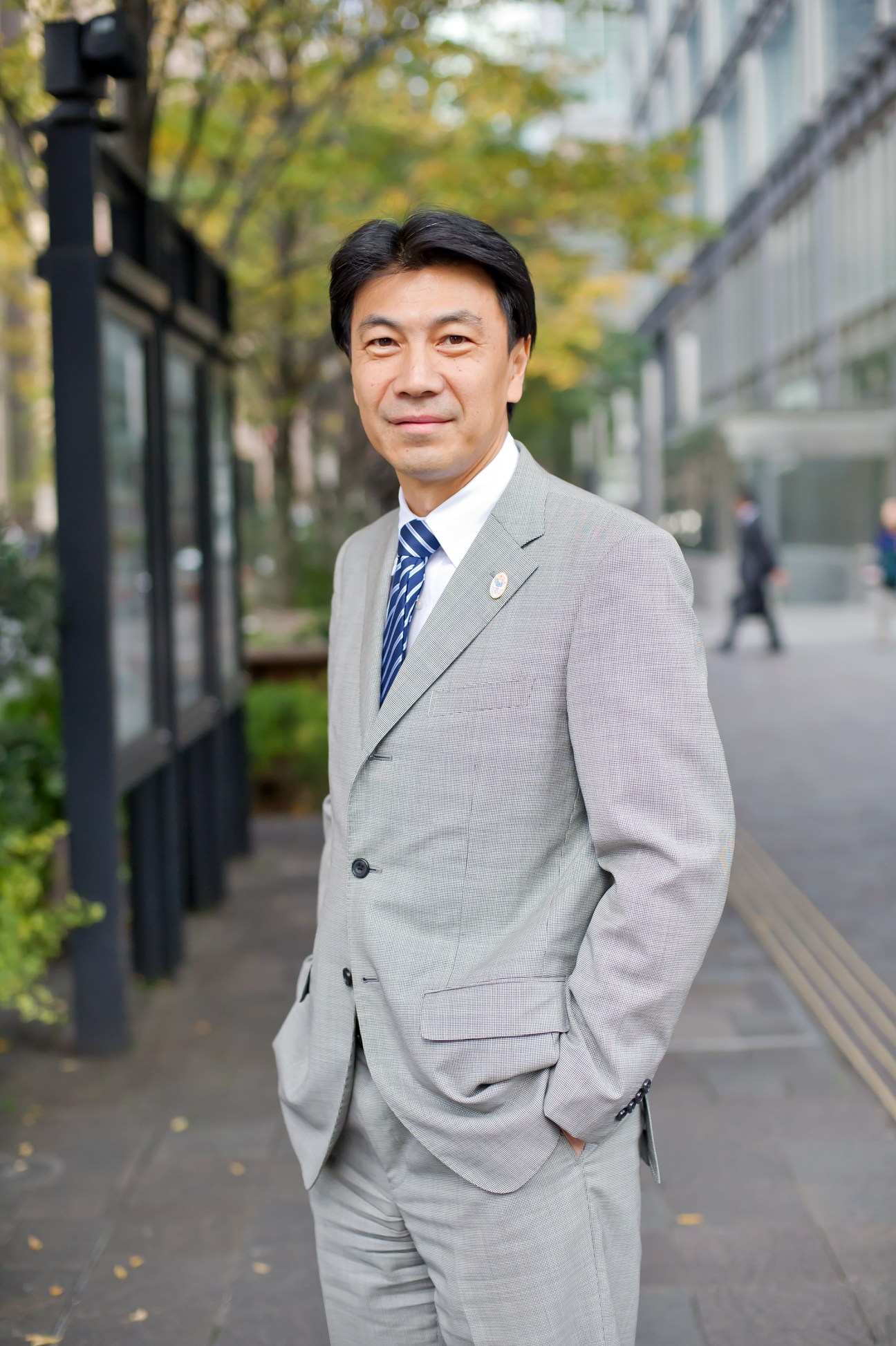
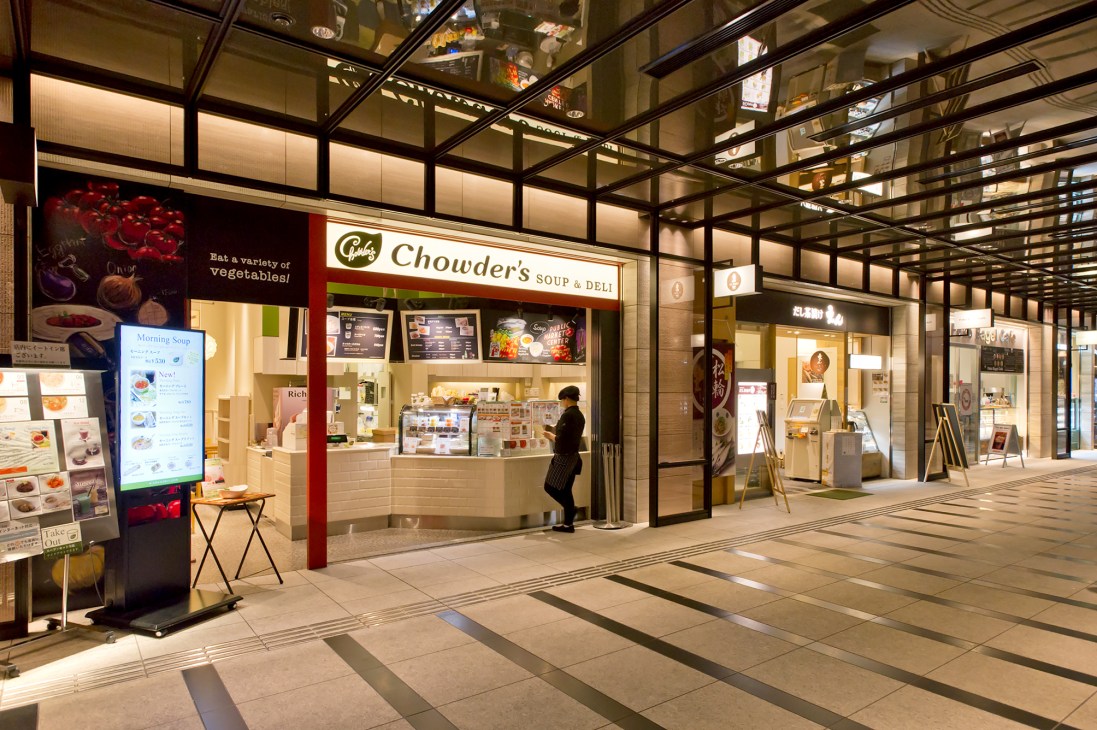
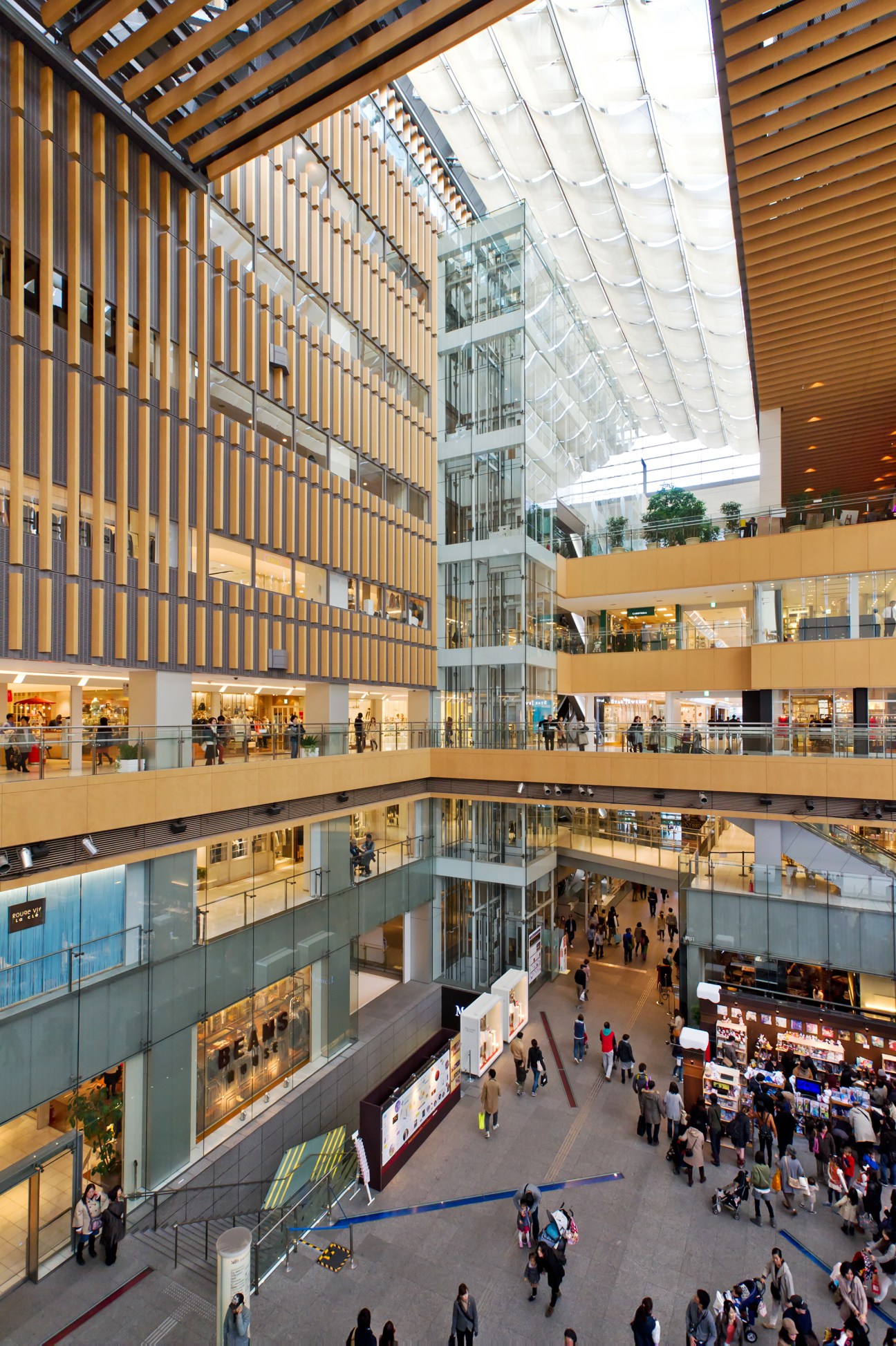
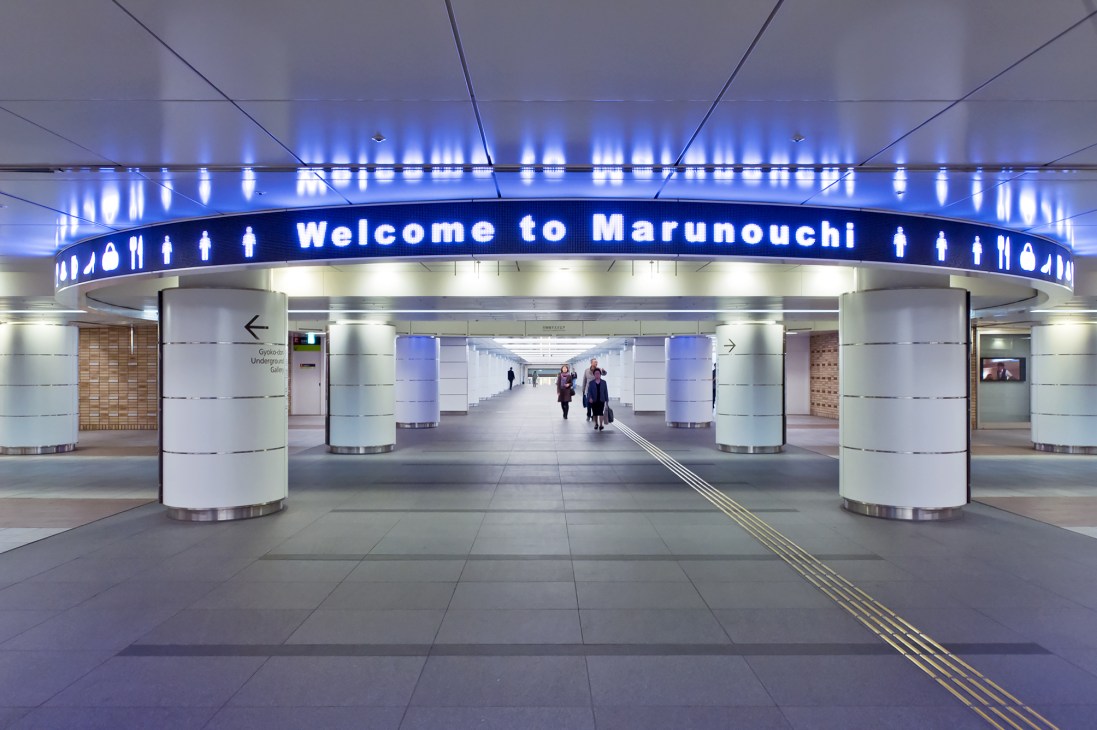
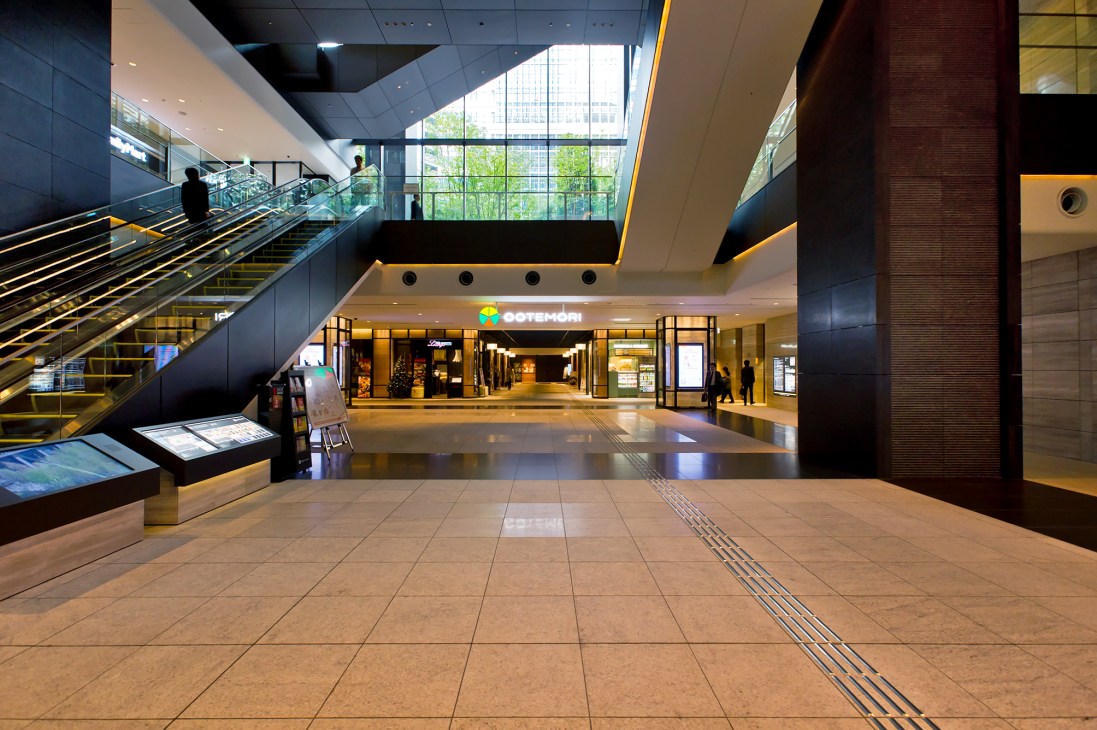
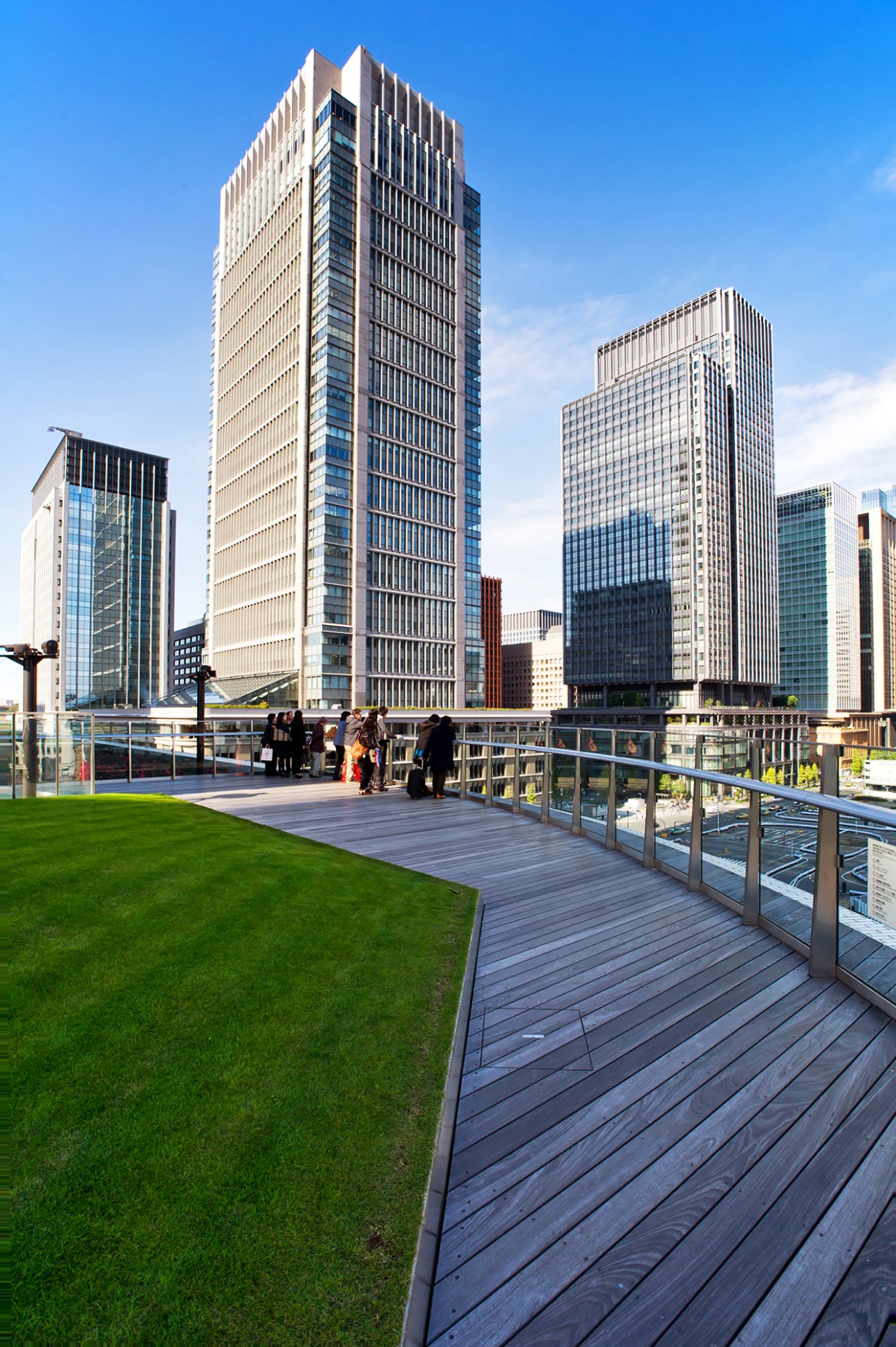
Mitsubishi has followed it up with a crowd of other towers, including the Shin Marunouchi Building and Marunouchi Park Building, each one stacked with carefully edited shopping. The retail is targeted squarely at an affluent audience of working men and particularly women in their thirties and forties. It’s a honed selection that shuns global high-street names in favour of Japanese brands such as Tomorrowland, Beams and United Arrows, with curveballs including an Échiré butter shop that had crowds queuing in the street. “The key is diversity, keeping up with trends and finding unique shops,” says Takashi Kobari, who runs Mitsubishi’s urban-development promotion department.
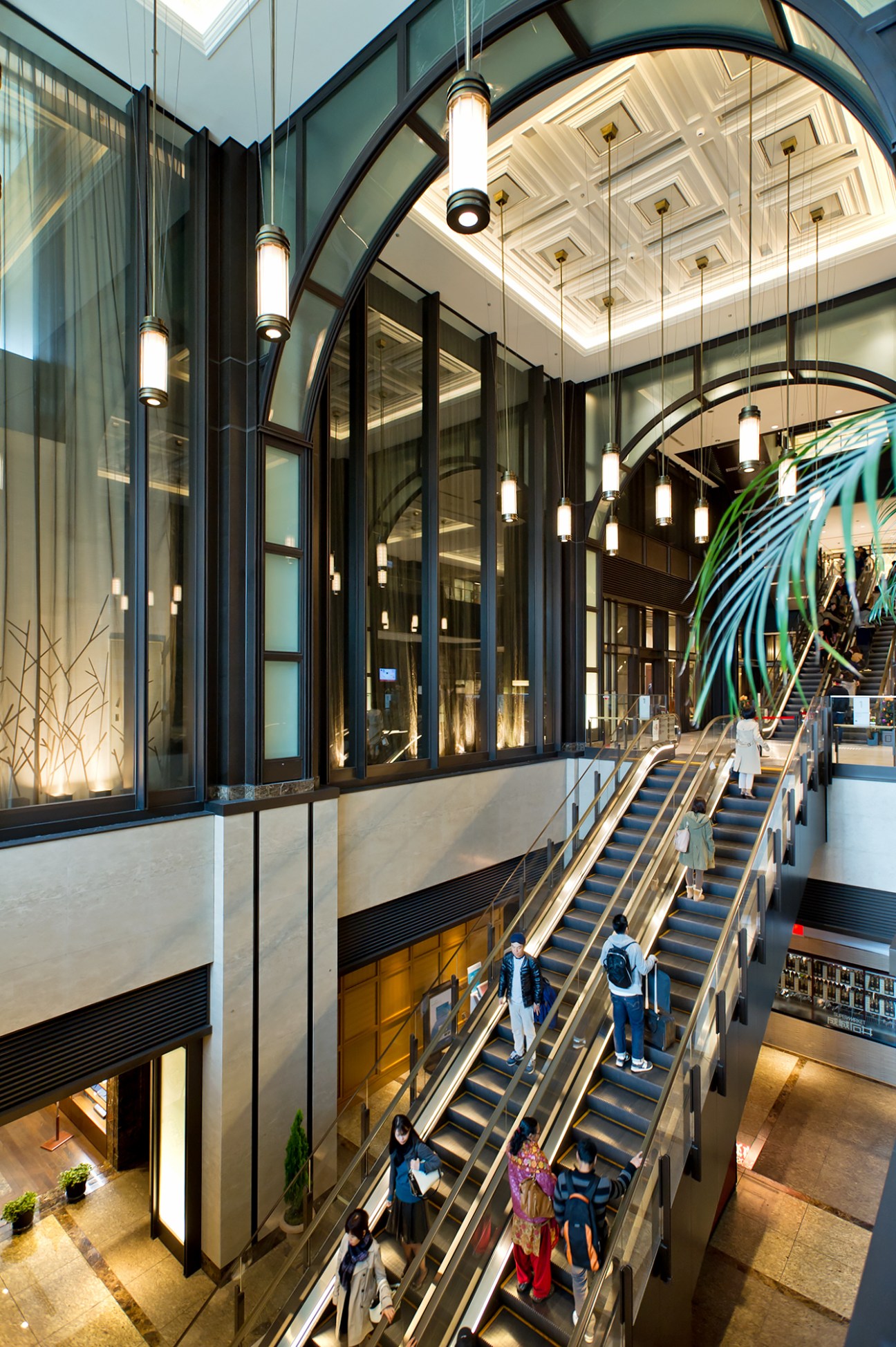
Persuading people to enter a tower block and head upstairs appears to be no problem in Tokyo. “It’s like mountain climbing,” says Kobari. “There has to be a purpose and somewhere to stop along the way.” Buildings are punctuated with restaurants, terraces and viewing decks and layered with spas and beauty salons. At Kitte, Japan Post’s seven-storey retail emporium, each floor is themed: one for “authentic clothing for adult females”; another grouping together shops with a Japanese aesthetic; and a basement devoted to local food.
Rather than building an enclosed box, the Japanese retail tower is thoughtfully connected to the street. “We tend to build skyscrapers but we need to have a horizontal as well as a vertical strategy,” he says. “We need ‘magnetic places’ like Naka Dori [now a smart shopping street] or Ichigokan [a perfect redbrick reconstruction of Mitsubishi’s first office in the area] that people can walk through and discover.”
Back in 1995, retail accounted for only 7 per cent of the Marunouchi area; today it’s heading towards 30 per cent. Weekdays are busy, weekends three times more so – and the developments keep rolling on. Next year the first of Mitsubishi’s two towers adjacent to the Imperial Palace moat is due to open, this one mixed use; another tower nearby – complete with a hot-spring hotel – is due the following year. And so it goes on.
In neighbouring Ginza, Mori Building is working with Sumitomo Corp, lvmh and J Front Retailing to create the area’s largest development – due to open in 2016 – on the site of the old Matsuzakaya department store. Among its 46,000 sq m of retail space will be up to 300 tenants. Luxury shopping and top restaurants are a given but this high-end project, with an interior by Tokyo-based designer Gwenael Nicholas, has got the balance of quality and diversity that Tokyo shoppers demand, mixing eclectic retail with, among other things, a classical Noh theatre and the biggest roof garden in the neighbourhood. With all this on offer, there would have to be a good reason not to venture inside.
Man of letters
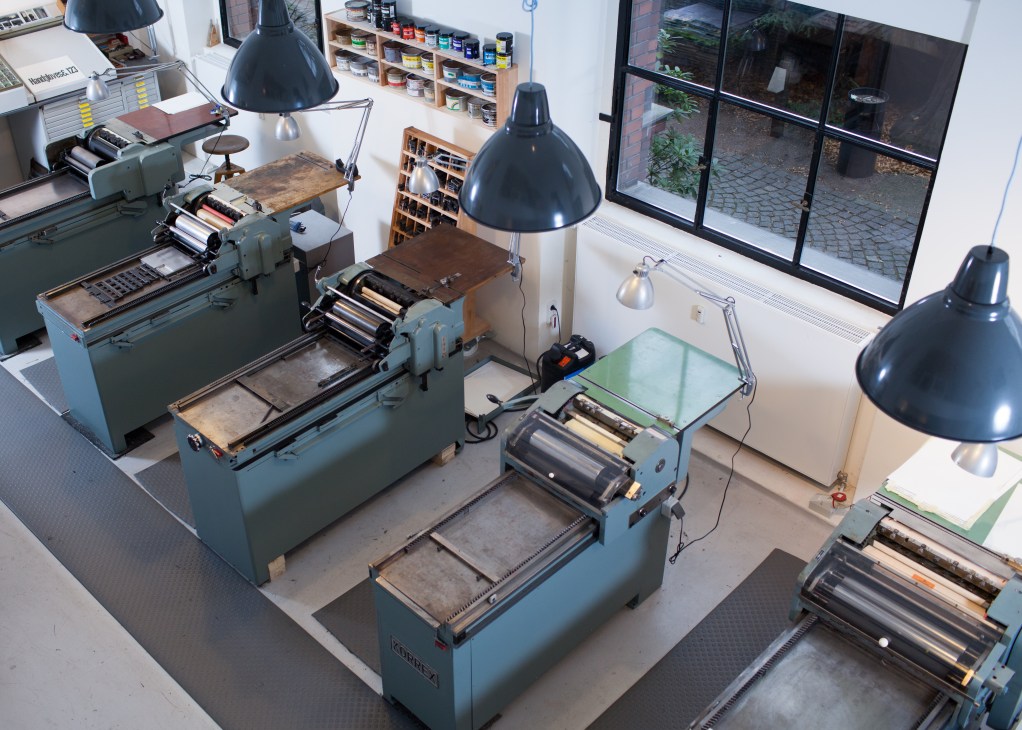
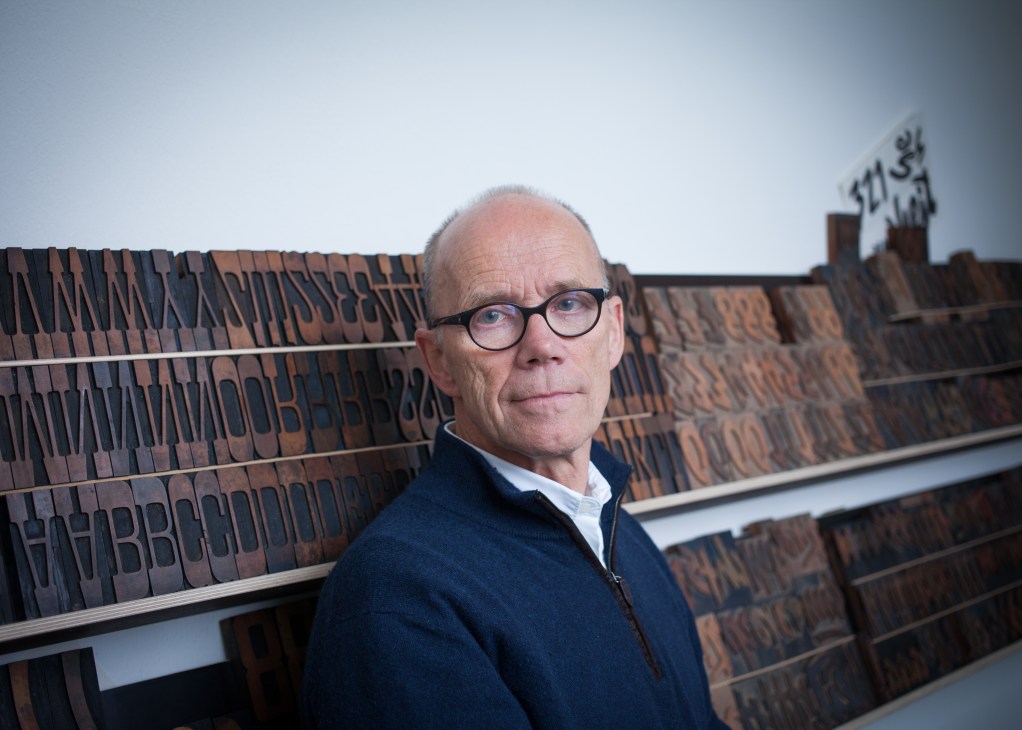
Tucked into a lush courtyard on Berlin’s Potsdamer Strasse is a gallery that is vastly different from the white cubes for which the artsy street is otherwise known. The first thing visible through its windows are not artworks but fantastic sets of wooden letters displayed on a long wall.
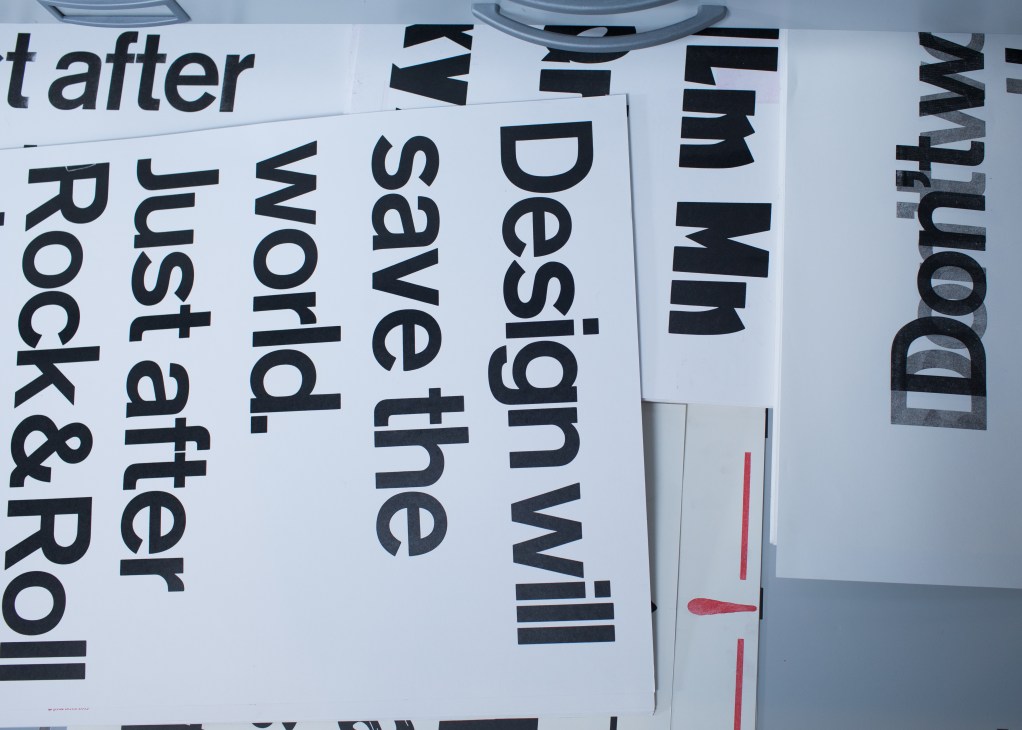
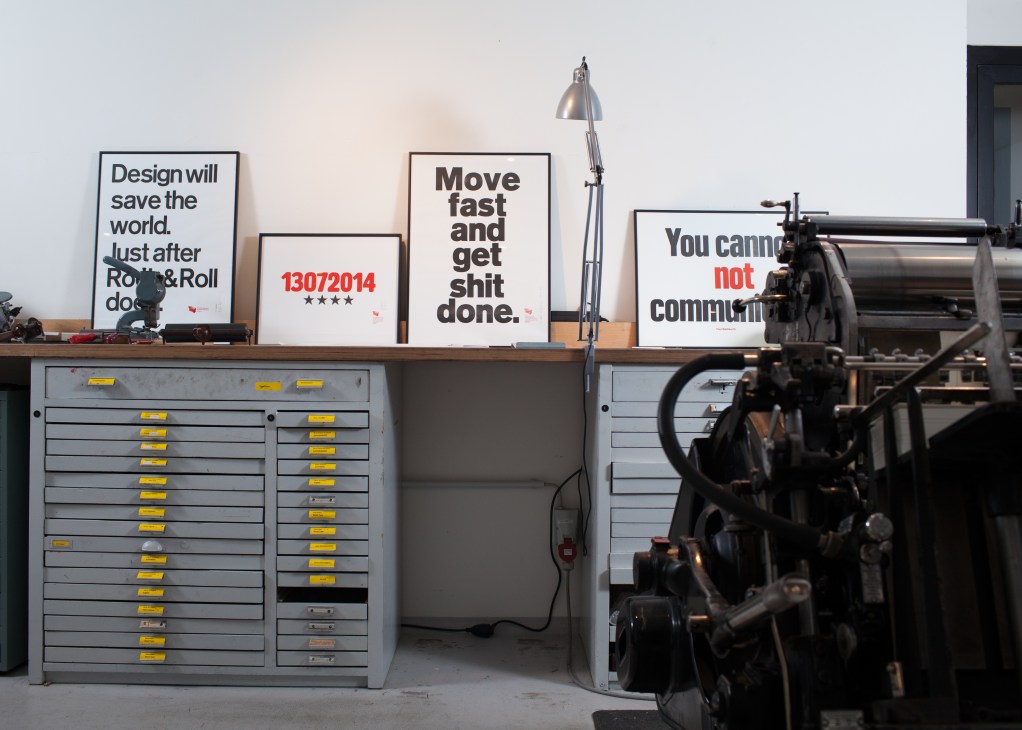
P98a is the name of acclaimed typeface designer (and self-professed “typomaniac”) Erik Spiekermann’s letterpress workshop. Opened in 2013, it’s not a public gallery per se but a meeting place for those interested in analogue typography and old-school printing methods, as well as a place for Spiekermann to tinker. Inside, heavy press machines wait for the designer – or on this occasion two young fellows from the Pasadena Art Center College of Design – to brush on some ink and print. Flat-file drawers teem with hundreds of smaller hot metal typesettings in Akzidenz or Bodoni; posters sport aphorisms such as “You Cannot Not Communicate”.
Spiekermann is famous for his hi-tech type – he’s designed a multitude of popular typefaces, created the look for The Economist and was the first to sell fonts online. But the energetic 67-year-old first learned typeface design, typesetting and printing the traditional way. His workshop uses methods dating back to Johannes Gutenberg: using moveable metal or wood Hochdruck (raised) letters inserted into German or Swiss-made handpresses. “My two missions are to preserve this old machinery, the product and abilities – being able to print, typeset, cut letters and bind books are dying crafts – and to bring people back to themselves again,” says Spiekermann.
Now is the perfect moment for the latter. Spiekermann sees the “maker” movement in full swing. In response to the world’s over-digitalisation (especially, he says, since smartphones were invented in the late 2000s) there is a yearning for handmade and bespoke things but also a drive to preserve centuries-old skills. The increasing popularity of letterpress printing is just one aspect of this. “The trend comes from the United States,” says Spiekermann, who has just returned from his design office in San Francisco. Demand there for handprinted products – as well as hands-on, physical work – has been growing since the turn of the decade, with graphic designers setting up small businesses making greeting and business cards, invitations, editioned books and more.
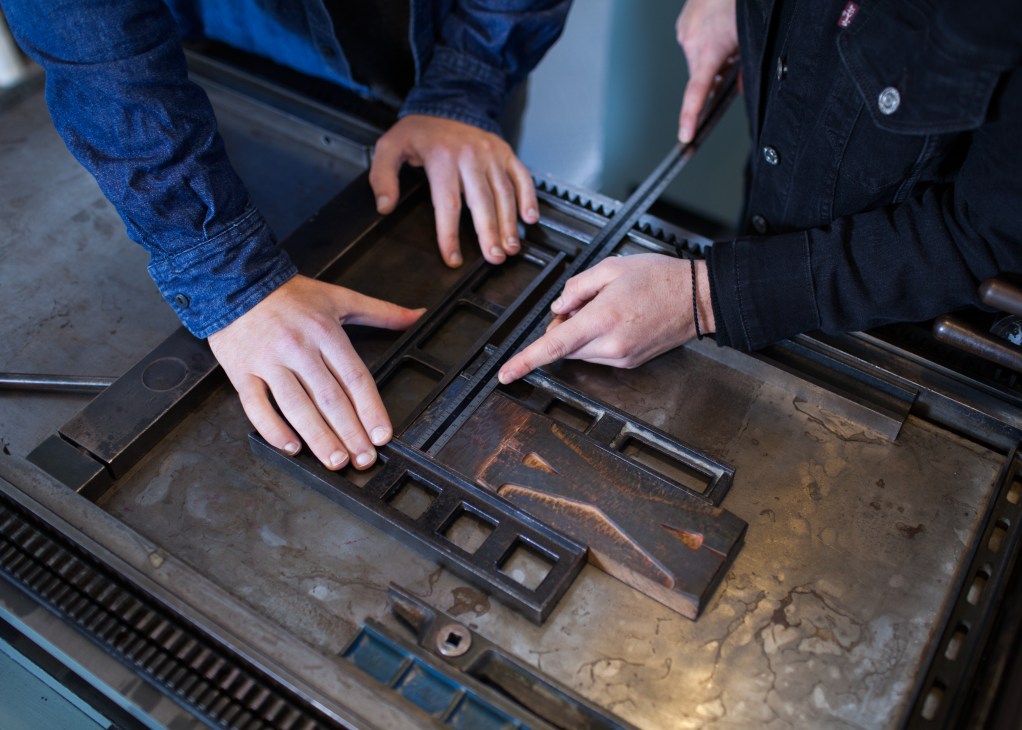
“They’re rescuing the old machines but not using the old type,” says Spiekermann. “They’re designing the letters on the computer then cutting them in polymer plastic, which lasts much longer than the older types of cliches,” he adds, dropping in a bit of jargon (a “cliche” is a printing plate).
On his trip, Spiekermann stopped in Wisconsin to have one of his own typefaces designed on screen and cut in wood. Spiekermann sees no problem in mixing technology and craft. “The typefaces I can get on screen are so beautiful and perfect. Why should I throw that away and pretend that computers don’t exist?”
The market for letterpress items and handbound books might be niche but, according to Spiekermann, it is deep. In cities from Seattle to Berlin the number of independent bookshops has been slowly increasing in the past two or three years. The nostalgia spills over into aesthetics: many small publishers (notably those in the art-world press such as Berlin-based Sternberg) have been switching from Helvetica to serifed “old fashioned” fonts, which are both easier to read and add, Spiekermann says, a “bit of noise” to a typeface. That ambient noise adds warmth like the atmospheric background in a musical recording and is a good thing.
And the future of typeface design itself? Spiekermann initially claims he can’t predict anything. “A lot of typefaces were defined in the 1470s in Venice. Garamond came in the 1560s. Bodoni made thin, fine, letters in 1800. It hasn’t changed,” he says. “All Helvetica did was leave the trimmings. Is there any place to go from that? No.” But after some thought (while talking rather animatedly throughout; he says he works ideas through while speaking), he crystal-balls the typography world after all. There is no end to the variations on typefaces, he decides, and designers from around the world will continue to create type to express themselves to best suit different languages, to communicate the messages of companies and clients.
Could there be a finite number of fonts? “Is there a finite number of books?” he asks. “There are just a few plots for books or movies – the western, the comedy, the drama – but that doesn’t stop people from writing stories. Even if the market doesn’t need any more typefaces – about 250,000 exist now – people would still make them.” The typeface market also has potential: only 25 to 30 per cent of websites worldwide use non-system fonts (an operating system’s primary typefaces).
In the end it’s about people. The nostalgia “trend” will likely even itself out soon (a trimming back of the hipster beard, perhaps) but Spiekermann is convinced that typography design, books and even text read on our multiple small devices will all return to considering very human constraints, needs and comfort levels. “I think we’re just going to where we were before,” he says. “Small screens are getting bigger, big screens are getting smaller and you know what? It’s going to end up looking like a book. We found out 500 years ago that the book is the optimal size for reading,” he says. “The best size for a page is the spread of my hand,” says Spiekermann, holding a spry example in the air. “You put 50 characters in a column and you have your point size, and each language has its own easiest fonts. That all defines it. The eye, the hand, the language. Not technology.”
That sees us return to Spiekermann’s broader mission of bringing us back to basics. Even though we are reading more than ever on a wider range of technologies using thousands of typefaces and fonts, we can’t and shouldn’t forget where we came from. And while a typomaniac can design a beautiful new typeface (a process Spiekermann likens to composing a symphony) he can’t reinvent the alphabet.
Little wonder
Sustainability is a very big idea and a term that is thrown around all too often in the world of architecture – generally with little authenticity. A home may be made of renewable materials, have a green roof and be kitted out with solar panels but is that sufficient if it is a 1,000 sq m mansion built on green-belt land? To push the envelope of sustainability, a new generation of architects is thinking small, embracing the compact home. They are entirely rethinking how we use space, aiming to leave a minimal footprint on the land: homes that are barely there.
The recently completed Brother & Sister compact houses are near-identical cedar-clad twins linked by a white picket fence and cantilevered over two tiny, sharply sloping lots in the leafy northeast Los Angeles neighbourhood of Mount Washington. Designed by Anonymous Architects for a developer, the project is the latest in a series of designs by founder Simon Storey to turn traditional architectural challenges – such as limited size or tricky lots – to their advantage. The architect is adept at stripping away elements of excess to create simple, liveable and well-lit spaces that feel larger than they are while retaining a formal beauty.
“When you’re building small – or building appropriately, as I like to say – it also winds up being naturally sustainable because you use fewer materials and there’s simply less waste with a small footprint,” says Storey. Each canyon-side site measures around 185 sq m. Once zoning and land-use regulations were taken into account, the sites left room for a maximum footprint of just 75 sq m per building. Only one concession was permitted: the local building code allows for bay windows that project outside the building envelope into the space between the house and plot boundary.
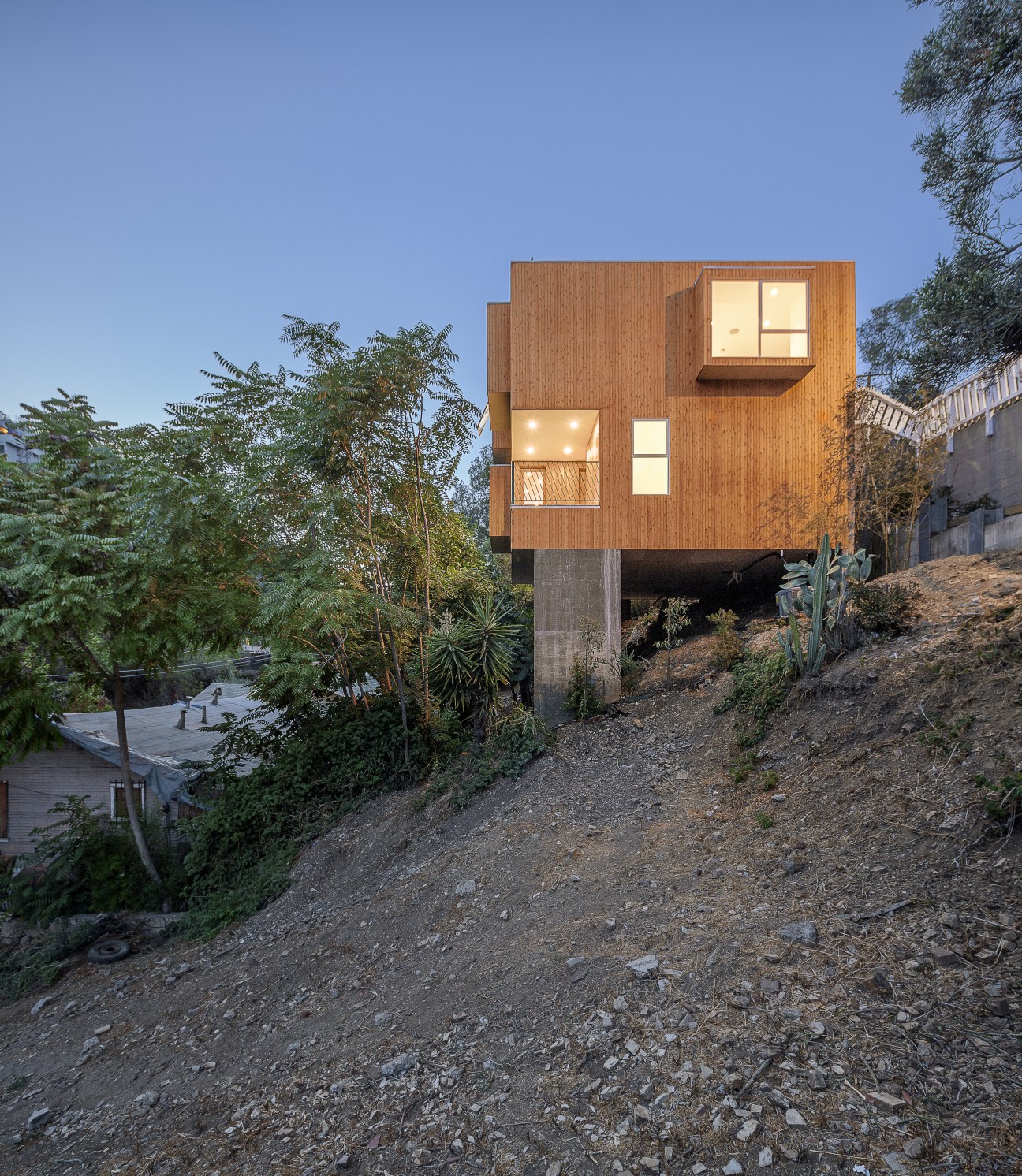
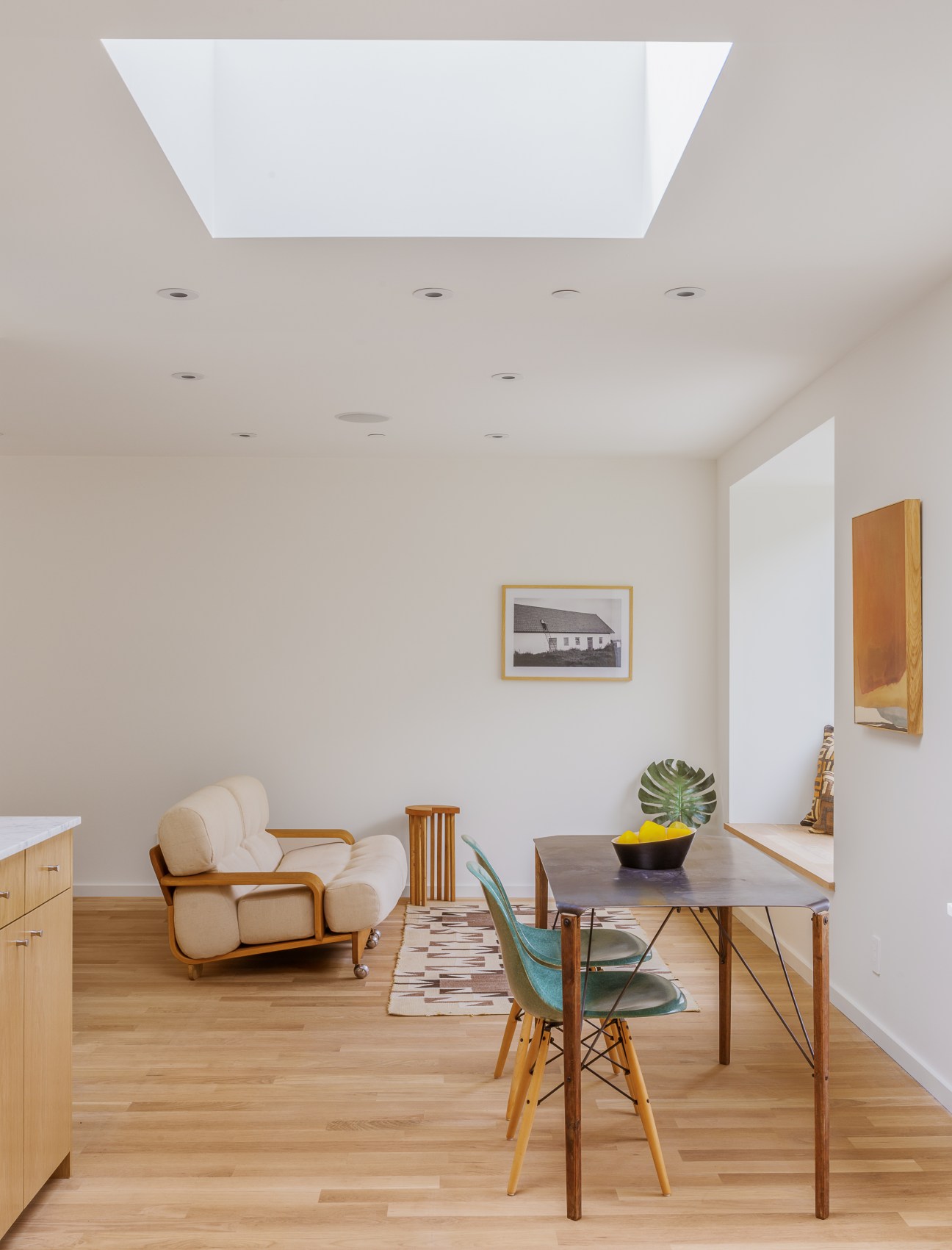

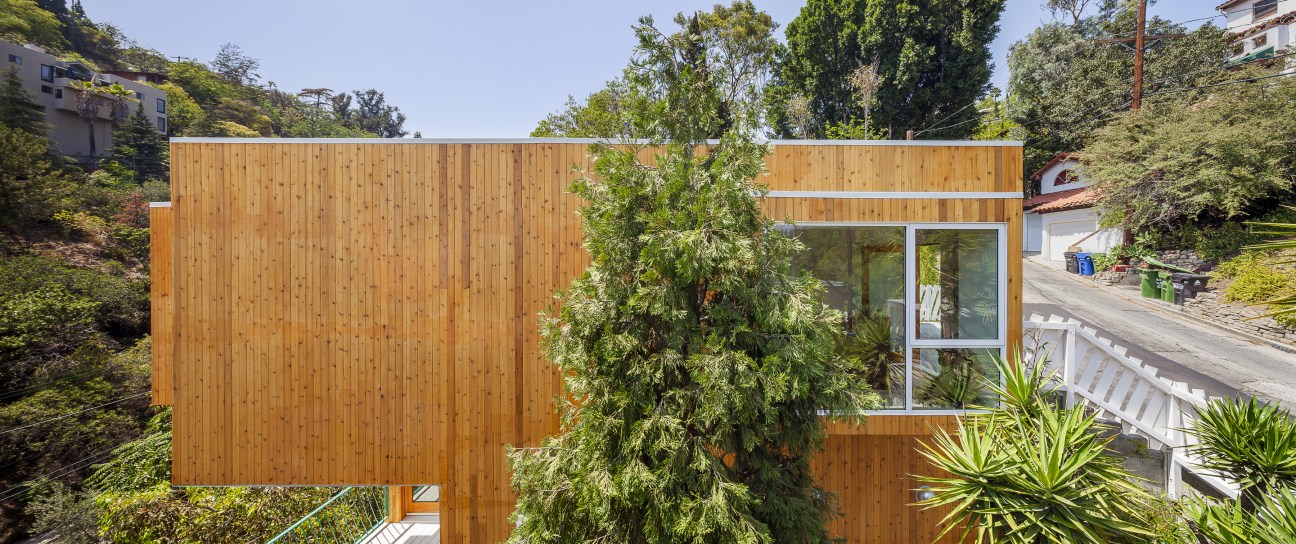
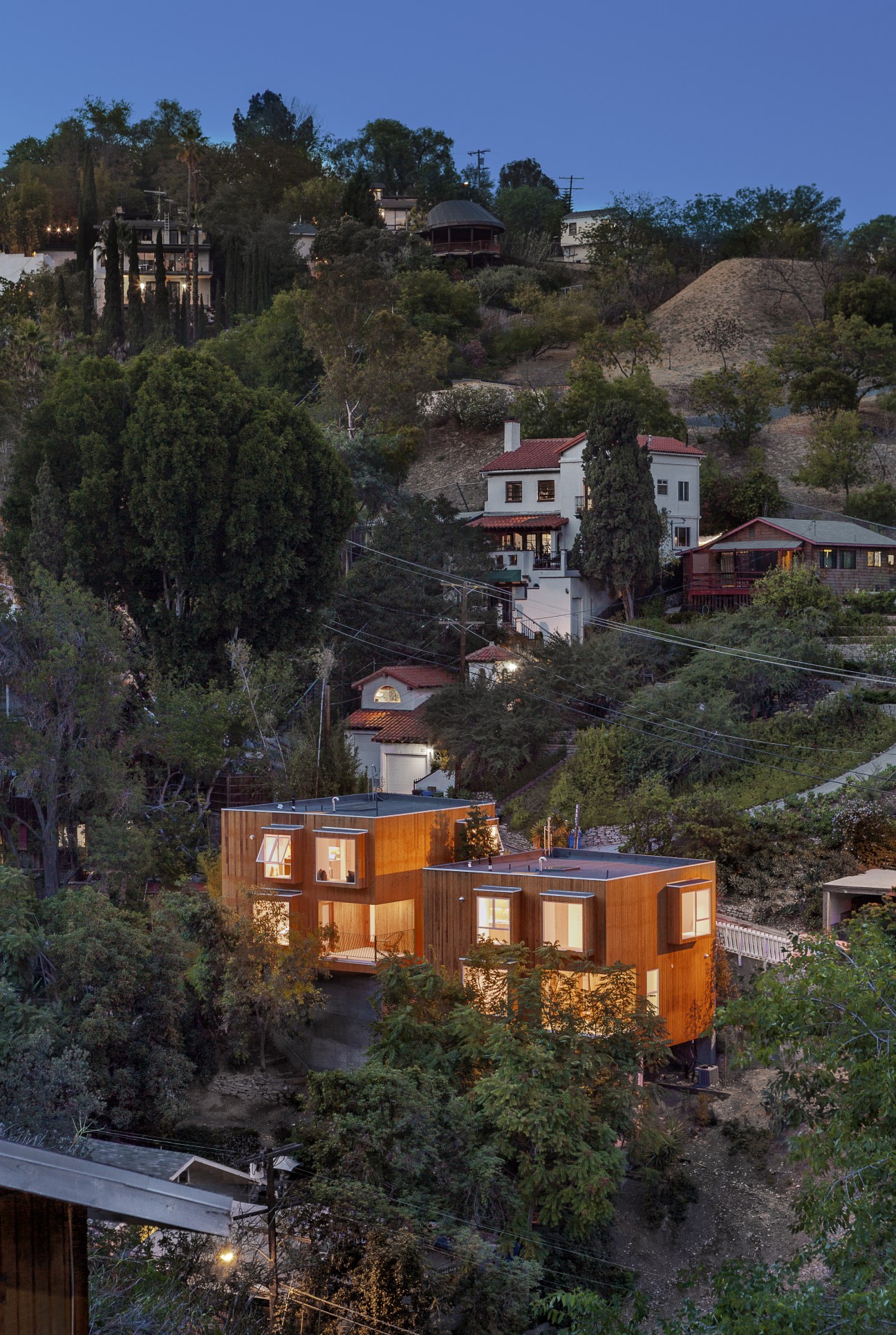
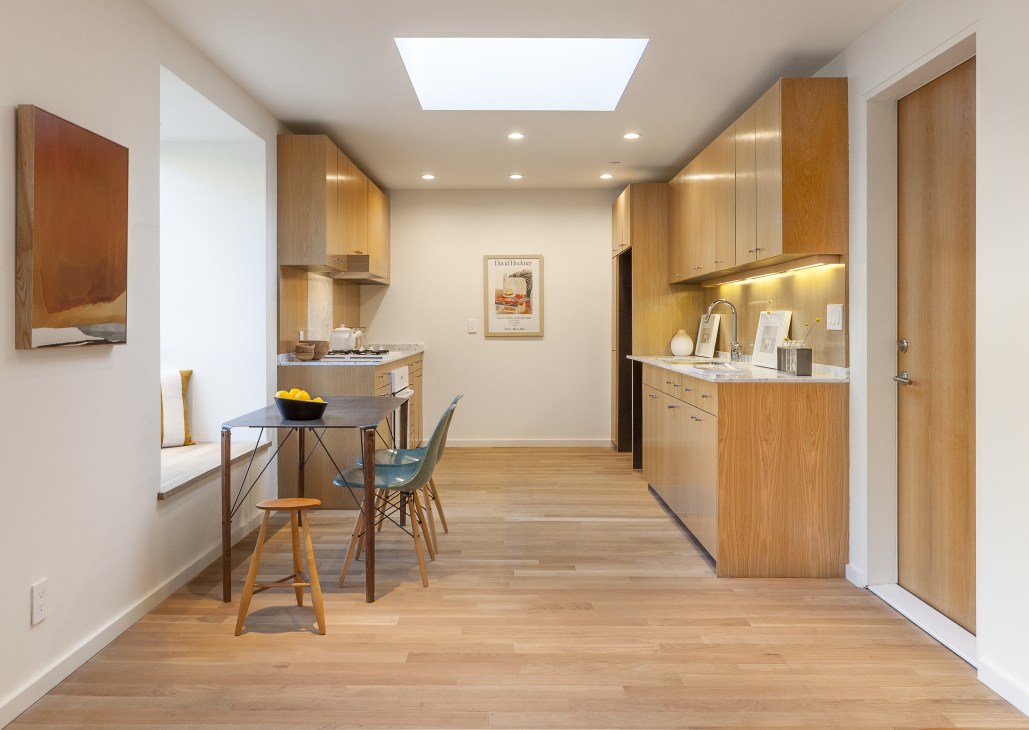
Storey “bumped out” five bay windows per house, which added an extra 9 sq m in the shape of window seats, recessed couches and sleeping space for overnight guests. “The bump-outs are designed to function as built-in furniture,” he says. “I loved the idea of turning the walls into miniature habitable spaces and making the house itself part of the furniture; it worked really well.” This gives the houses an even more distinctive look.
Although the floor plans are identical, the buildings are offset and have subtle differences in size and height that, along with frosting on some of the windows, enable the owners to retain privacy. Both the front door and garage are entered from street level, while the floor is cantilevered out over a concrete-pile foundation and handkerchief-sized garden far below.
Inside, materials were left unfinished and natural: matte ceramic bathroom tiles, exposed concrete structural walls and white-oak cabinetry, doors and floors, the latter treated simply with Danish floor oil.
“I left the concrete exposed to add texture – it’s a nice touch because it’s something you’d normally see in much more high-spec houses,” says Storey. Skylights, which regularly feature in Anonymous Architects projects, add to the apparent volume of the space, as well as performing the practical duty of providing light.
The point that the Brother & Sister compact houses make, in their own quiet way, is that architecture that challenges the status quo doesn’t have to be challenging to live in; instead, it makes a statement about simplicity and our need for a home to feel special, while treading lightly on the land. Says Storey, “Building small but sensibly is essentially more sustainable than anything else you can do.”
Awaiting take-off
In 2005, Boeing dispatched final orders for its 757, a jet that packs a punch when it comes to range and passenger capacity, occupying a spot between much smaller single-aisle jets and harder-to-fill widebodies. It has long been a favourite with airlines servicing routes across the North Atlantic. But as much of the 757 fleet is fast approaching retirement, operators are facing a dilemma: what can they order to replace this workhorse? Will Boeing be tempted to revive it?
In 2014, Boeing Commercial Airplanes spokesperson Doug Alder told us, “Although our product development strategy is set for the next decade, we have always been focused on making investments that keep us ahead of our competitors.” It sounds like he’s leaving himself some room to manoeuvre.
And why wouldn’t he? Since it took to the skies with British Airways and Eastern Airlines in 1983, the 757, with its long fuselage, unique cabin configuration and enviable range, has filled a special niche for carriers around the world. United and American’s 757s, for example, allow them to cross the Atlantic and serve markets that wouldn’t be able to sustain daily services that used a wide-body aircraft. For former US secretary of state Hillary Clinton, her special-mission 757 captured more airtime during her tenure than Air Force One.
Alder is perhaps wary that rival Airbus could see Boeing’s strategy of sticking with its current plans as an opportunity for it to steal some territory. A longer-range A321NEO would be Airbus’s chance at finding a place in the market of which Boeing might be jealous. The European maker is even a bit feisty when discussing the potential of a beefed-up A321NEO to take the place of the 757. “With the long-range version of the A321NEO currently under study, the rationale for continuing 757 operations has vanished,” says Patrick Baudis, VP of marketing at Airbus Americas. While passenger and range numbers don’t put the Airbus level with the 757, a modified version of the A321NEO could kill the idea of a new 757.
There’s a good reason why Airbus would consider simply modifying the A321NEO instead of designing a new jet: a lot of cash has already been spent on all-new aircraft programmes. “The A380 is horribly irrelevant and probably doomed,” says Teal Group’s VP of analysis Richard Aboulafia, in reference to its less than exemplary order numbers and the finite number of routes on which the jet makes financial sense. He adds, “The 787 is exceedingly popular but [programme] profitability is another story.” So naturally, at this point airframers are wary of anything built from scratch.
Boeing seems satisfied by its ability to capture demand for higher-capacity single-aisle jets with the tried and tested 737. It is the most-produced jet in the world. More than 8,000 have rolled off Boeing’s production line and by 2020 they will continue to do so with the 737 Max family, equipped with new engines and updated engineering.
Global demand for single-aisle jets is staggering: both makers predict total orders of over 20,000 during the next 20 years. the forecast expects that most of this demand will be met by the A320 and 737 families that have been updated for efficiency. We like the 757. While we wouldn’t choose it over a well-appointed and wider Boeing 777 on a flight across the Atlantic, we do think it has its place on flights up to seven hours.
When Boeing discontinued the 757 the industry wondered what carriers such as Icelandair might do. The Reykjavík brand relies on the 757 for its scheduled flights as the airline’s hub in Keflavík sits at the ideal halfway point for a jet like the 757 to be used to its potential: serving cities across North America and western Europe. Although the company has ordered the new 737 Max, are these smaller jets the right solution? We would even wager that a true 757 replacement from Airbus might tip the all-Boeing Icelandair into the Airbus camp. Executives at the two makers are surely aware of this.
The past decade is littered with attempts to launch premium, one-class services between cities on America’s East Coast and western Europe. The economics on these routes are tough but the key to those that have been successful is the 757. These operators will also be keen to see a true 757 replacement.
The hunch is that airlines will fly the 757 long into the future, with plenty of maintenance, unless Airbus finds a way to make the A321NEO fill the niche. Aboulafia thinks another whole new aeroplane would be a stretch: “Airbus and Boeing need to execute on their numerous new programmes without the kind of horrible cost overruns we’ve seen in the past.” But were another new programme to emerge from the aerospace giants, say an A360 or a 797, what might it look like?
In terms of design, a Boeing 757 replacement would be simple and mimic what airlines love about the jet: that ability to profitably fly routes that bigger jets can’t and its operational commonality with other planes from the company. In short, if it happens, don’t expect it to be radically different from its predecessors. In anything new we will likely see a focus on better materials, more efficient engines and enhanced passenger comfort.
Running Ahead
Though the temperature outside is well below zero, the athletes at the University of Calgary’s Human Performance Laboratory are working up enough sweat for their sensors to peel off. Two research assistants, Bill Wannop and Ryan Madden, are adjusting the settings on a machine stamped “Parallel Robotics Systems Corporation”. A running shoe tied to an artificial foot and connected to a shiny metal cylinder where the leg should be is being dragged along a slowly moving patch of artificial grass. They are looking for the shoe’s traction sweet spot where grip isn’t outdone by injury, Madden explains. Just a few months earlier, the lab’s nearly 200 staff had been watching on with glee as Kenyan athlete Dennis Kimetto blitzed the marathon world record by 26 seconds in Berlin. Kimetto, the runner-up and the top-two female finishers were all wearing a model of ultra-light, ultra-comfortable Adidas shoes that for years have been a focus of work in this building.
It will be a few years more before the products the lab is working on today hit the track. Alongside the manufacturers’ constant explorations of new materials, the university’s researchers point excitedly to innovations with wireless sensors and portable kits to monitor and measure movement and muscle activity, both on sporting fields and in shops. Their work is a constant quest to understand this data so that they can better reflect the human body’s inherent notion of “comfort”. It is this, they say, along with new possibilities for individual tech customisation, that will provide the foundation for world records in decades to come.
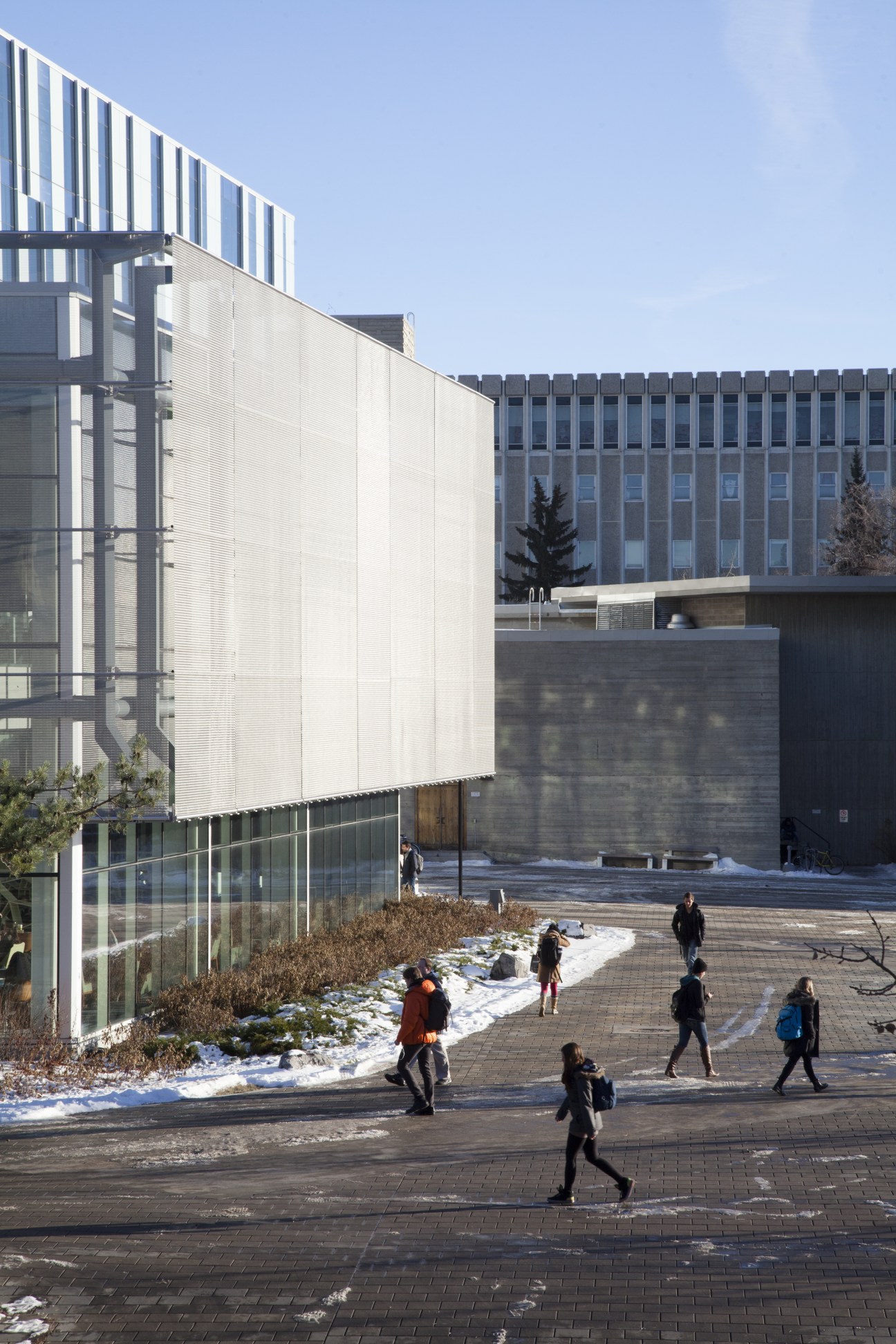
Since its beginnings in 1981, when Olympic rower Roger Jackson lured biomechanics pioneer Benno Nigg to Calgary from Zürich in the lead-up to the 1988 Winter Olympics, the Human Performance Laboratory has grown into one of the world’s most important research centres for human movement. As part of the university’s Faculty of Kinesiology, its focus is multidisciplinary and unashamedly commercial, embracing what professor Darren Stefanyshyn calls the university’s entrepreneurial approach to research and intellectual property.
The lab and its commercial offshoots, such as Biomechanigg (now owned by Benno’s son Sandro), have established long-term relationships with brands including Adidas, Reebok and Mizuno. The recently semi-retired Benno, recovering from hip surgery in Switzerland (and off his crutches in three weeks like a true master of biomechanics), estimates that as many as 50 per cent of people working in the field worldwide have passed through the lab. “If you look at labs that deal with human movement, exercise and sport, I don’t think that you will find many others in the world that are as good as ours,” he says. “As a matter of fact, I don’t think you will find any.” Indeed, on a recent trip through Nike’s lab facilities in Oregon it was claimed that most of the people performing tests had probably graduated from Calgary.
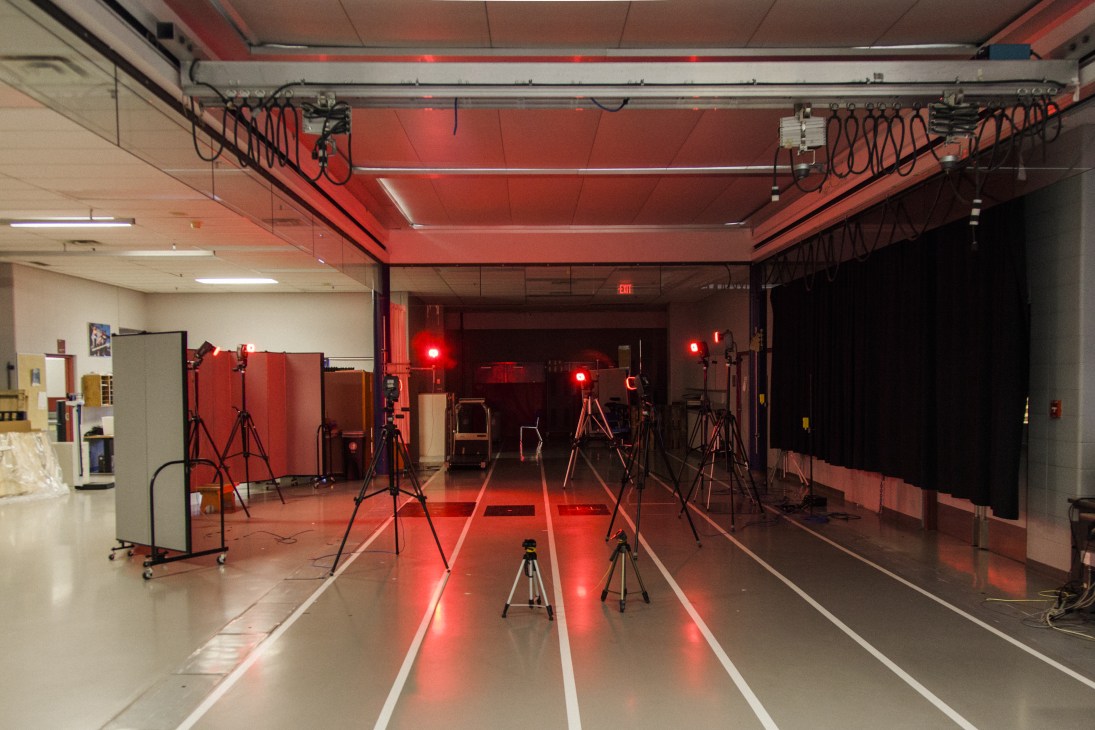
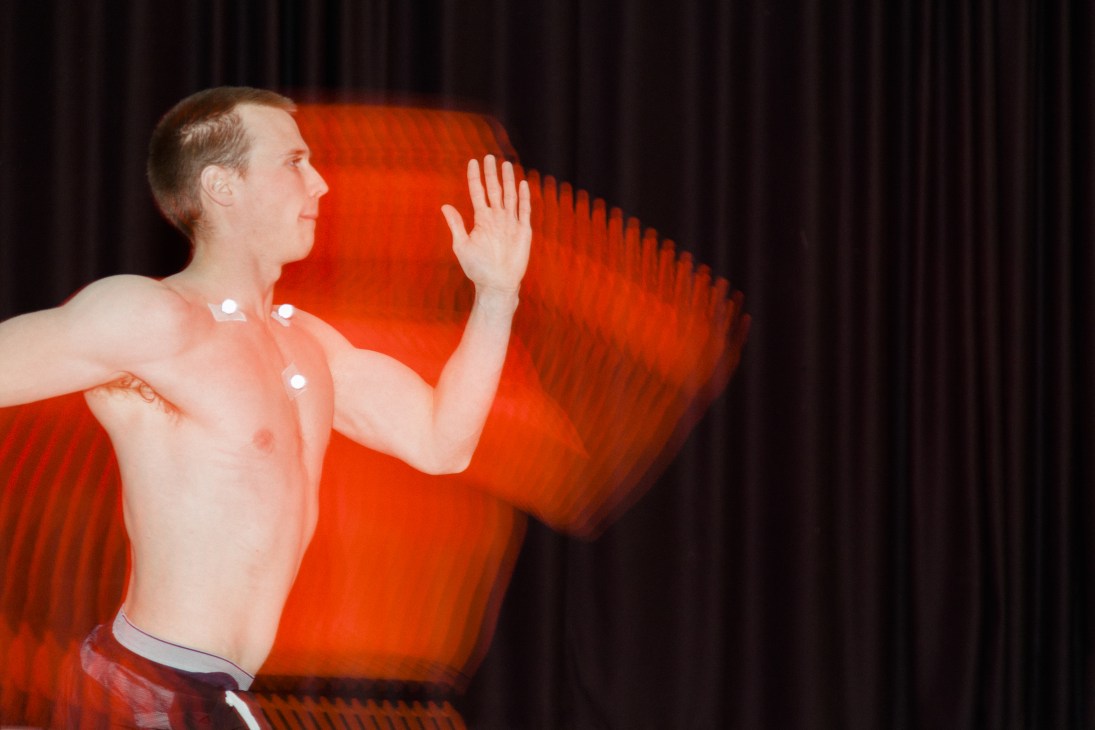
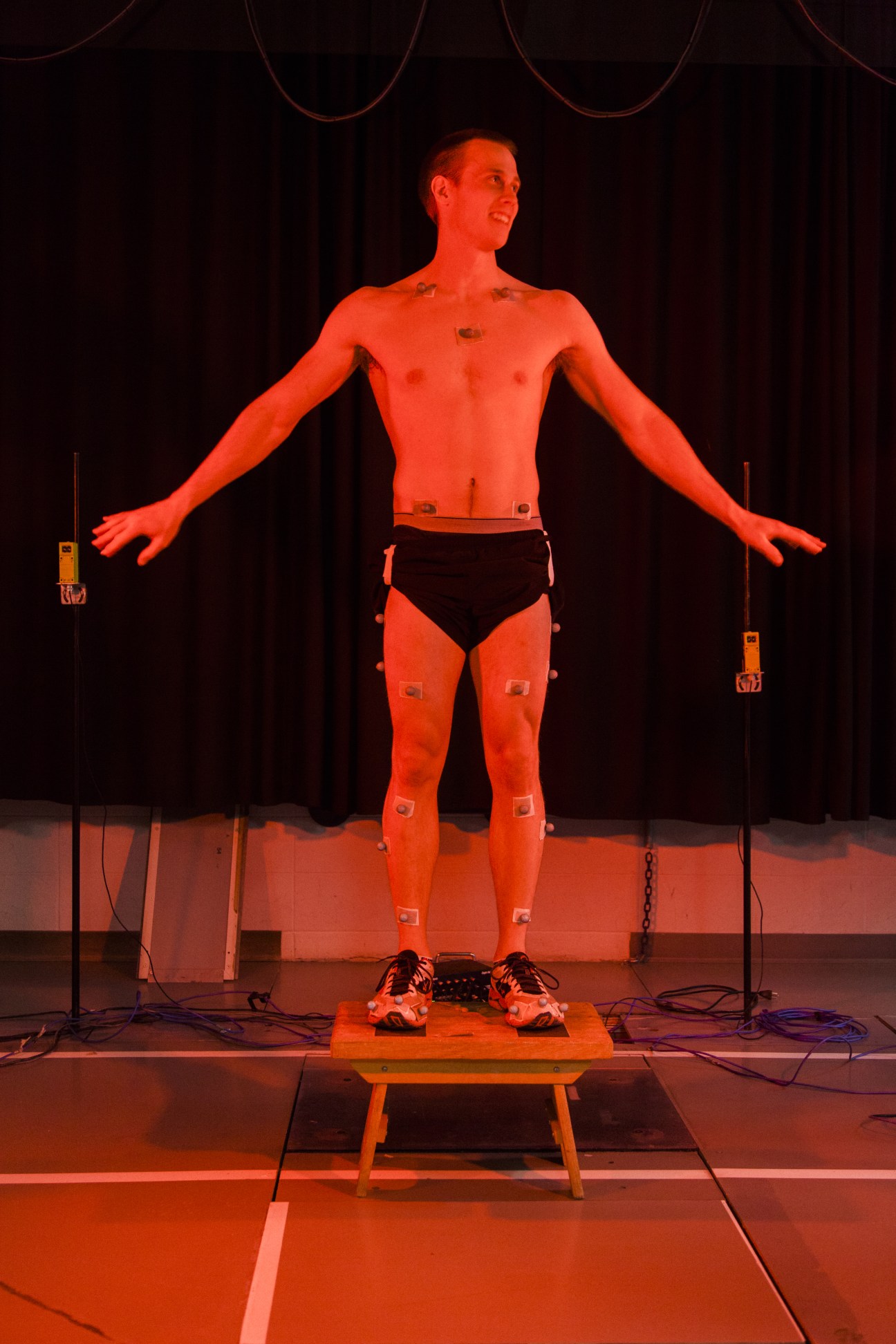
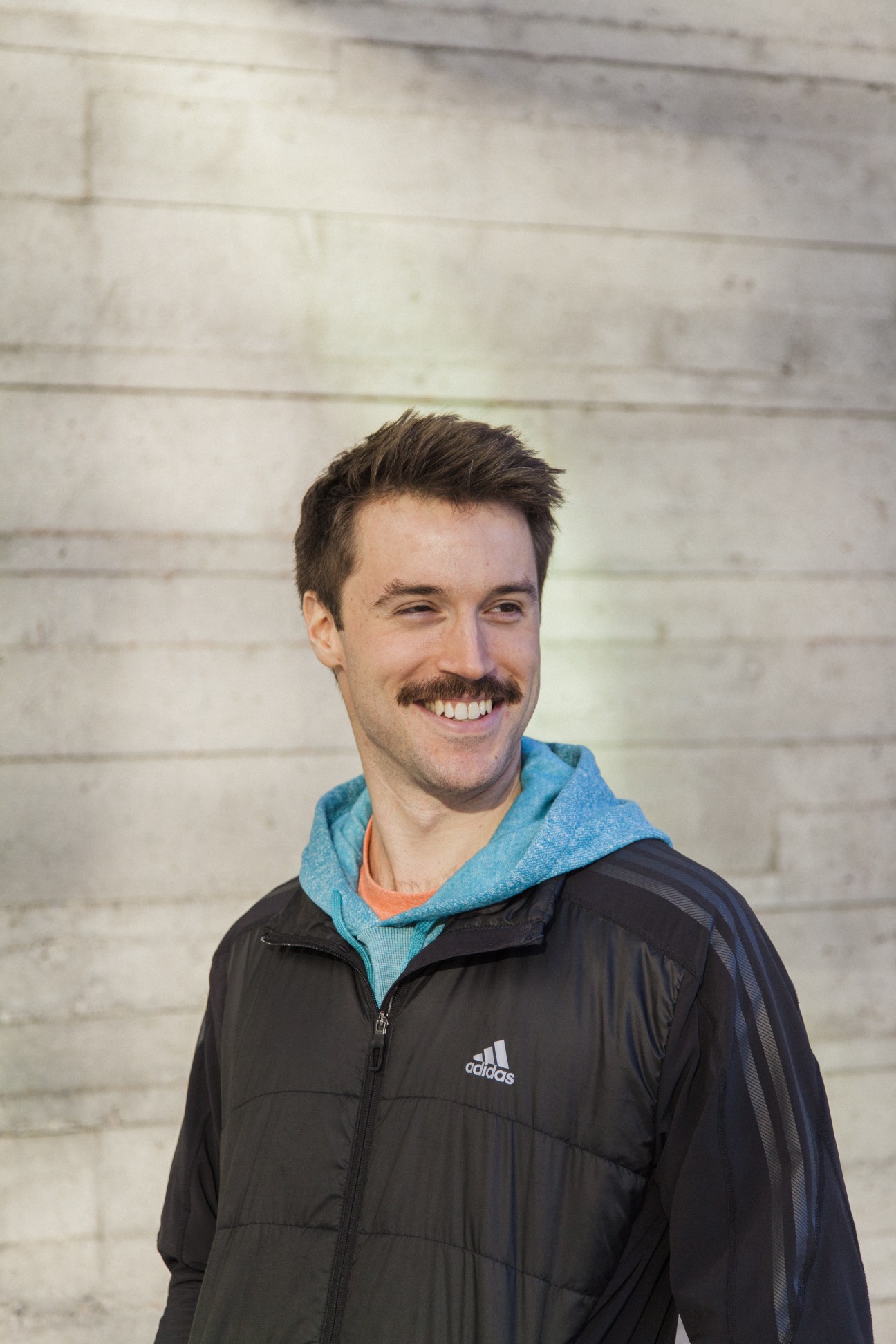
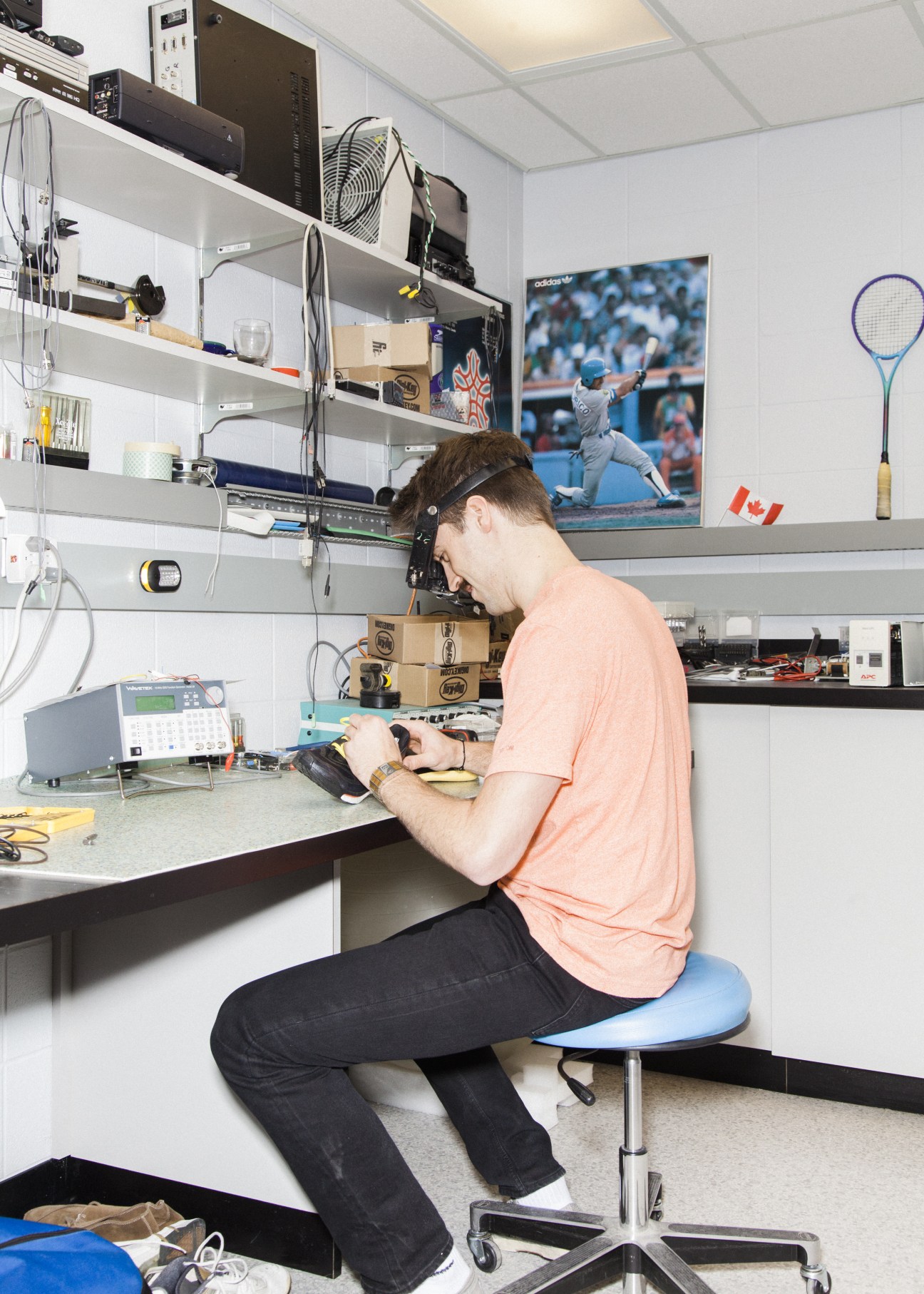
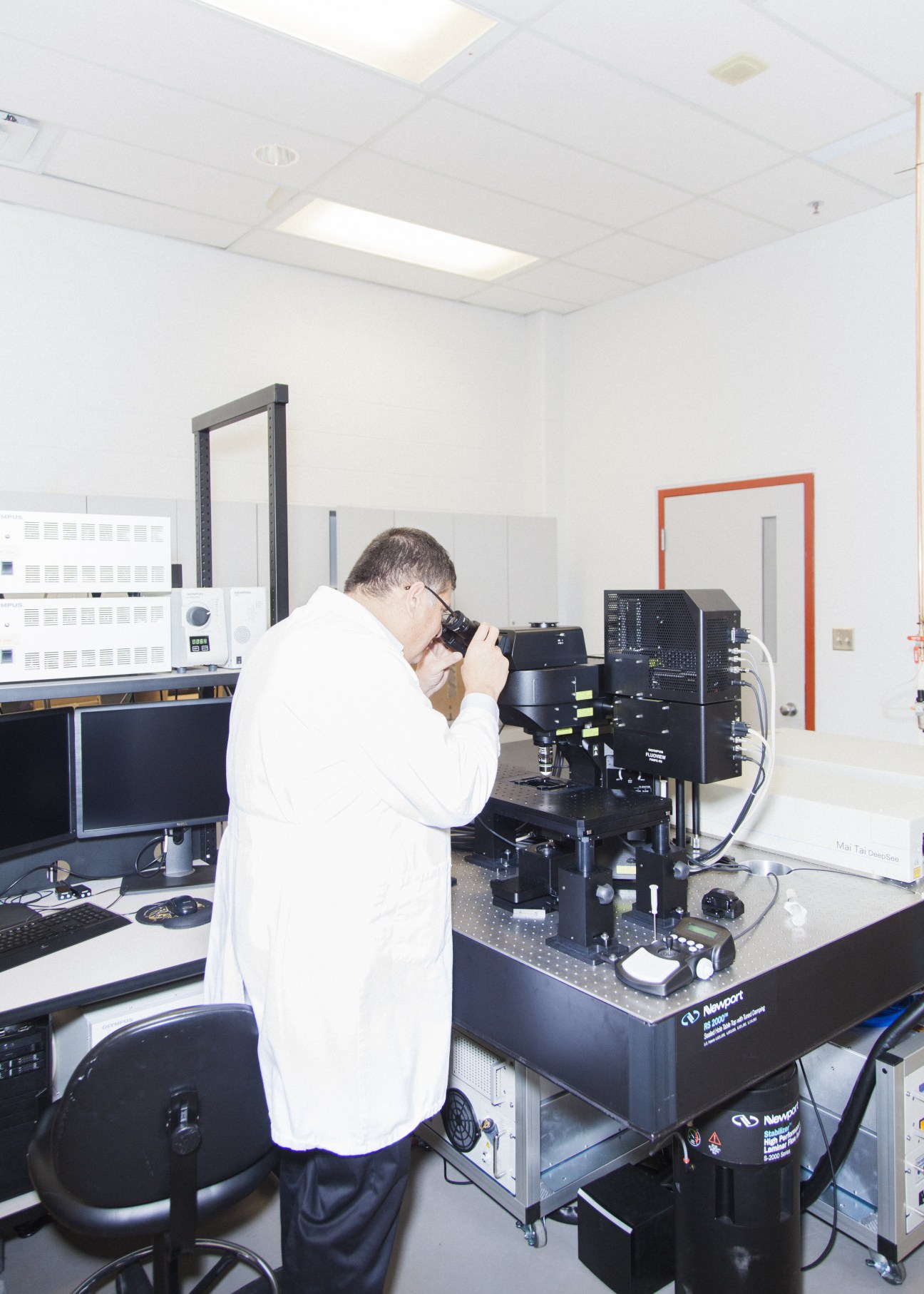
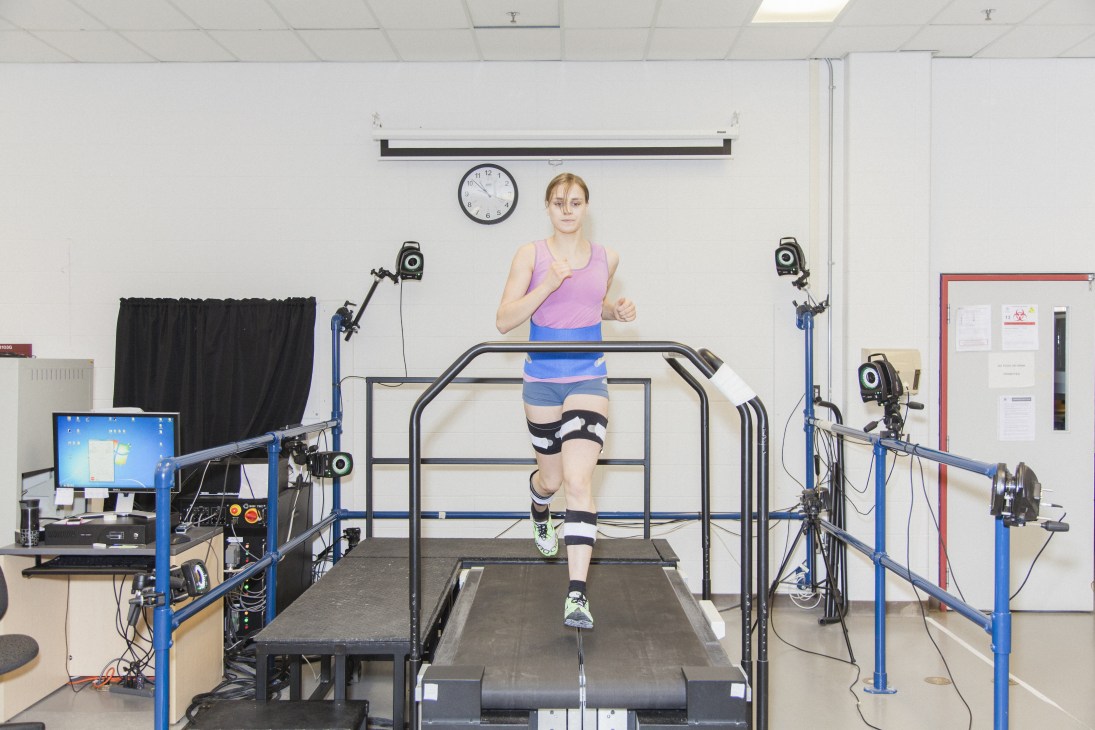
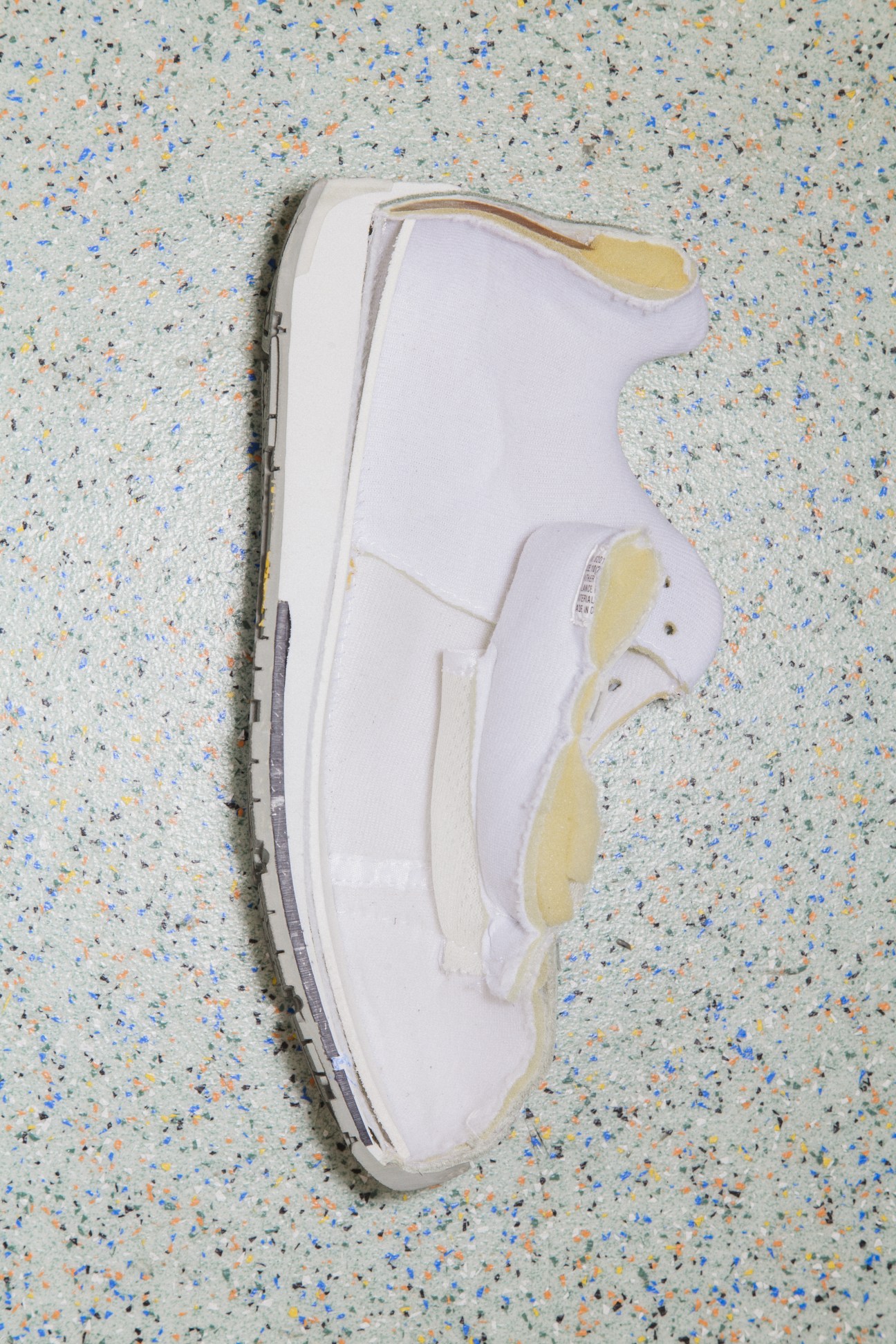
To hold some of the shoes in the Calgary lab in your hand can be an unsettling experience: they feel so light that you may as well be holding nothing at all. The Adidas project that was a success at the Berlin marathon was the fruit of a 20-year collaboration between the company and the lab – Stefanyshyn in particular – built around a few meetings every year in which broad ideas were kicked about.
The proliferation of new materials and designs brings about understandable concerns that sports are being led by the equipment. For Stefanyshyn the mission of the lab is not necessarily to allow the body to perform as close to natural as possible but to optimise it for particular uses. Increased understanding of human-performance data and new analytics tools helps to reframe this optimisation, making it more effective than it has ever been before.
“Our foot is not naturally optimised for sprinting,” he says. “It’s not even optimised for marathon running. It is developed to be sufficient to do a lot of things very well. People want a fair playing field and that is a nice objective. But to have a different shoe, for example, to someone else: that’s no different to someone growing up in one environment rather than another. I’m sorry but nothing is ever totally fair.”
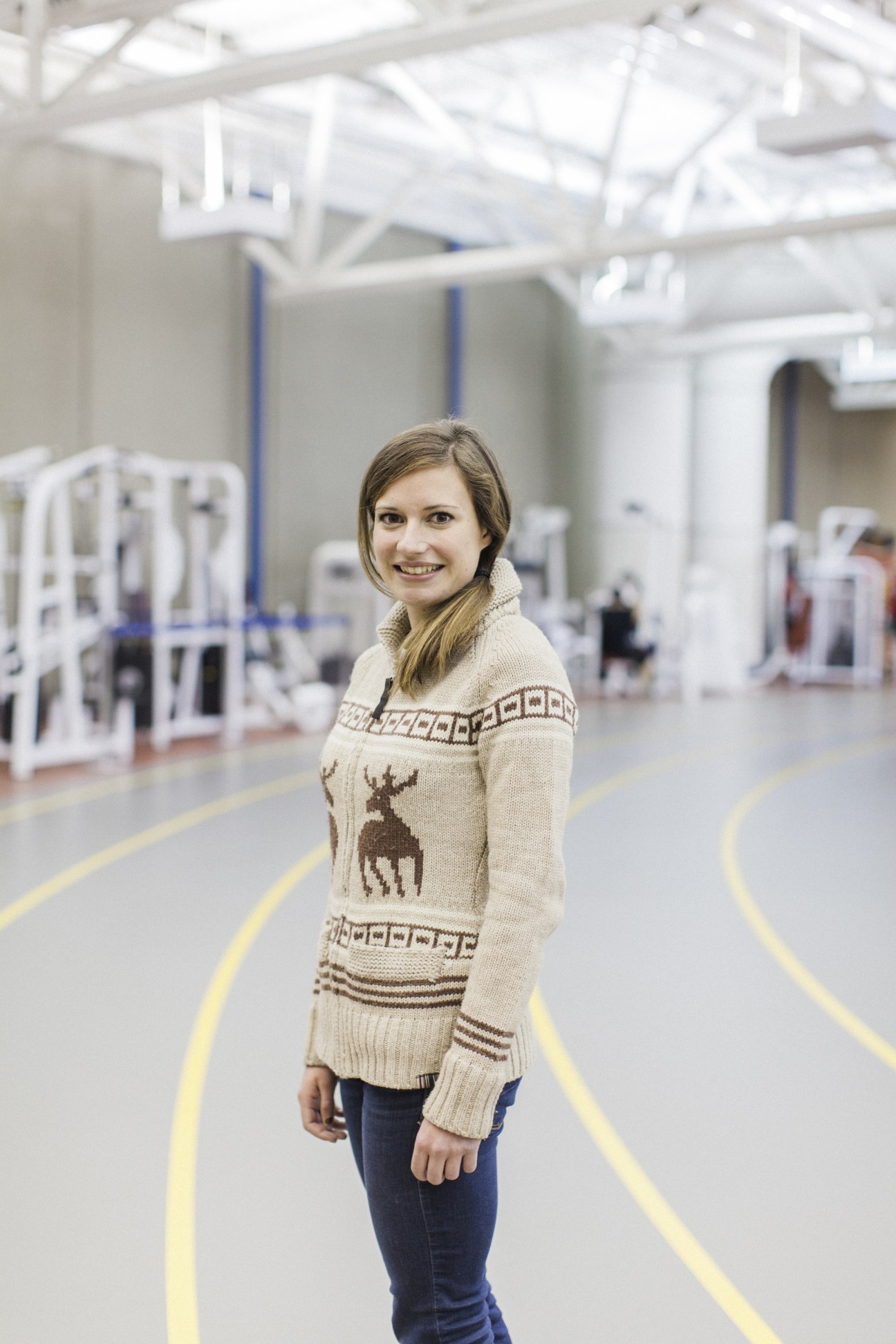
The lab’s reputation lures researchers from all over the world. Following a PhD in biodynamics at London’s Imperial College, Erica Buckeridge was eager to come to the snowy north for an opportunity to work with Benno, who she calls the “godfather of biomechanics”. She is now leading a project for Canadian workout empire Lululemon, researching the ever-elusive ideal of the functional sports bra. “That is one thing missing in the current sports market,” Buckeridge says. “You can’t combine comfort and function particularly well.”
Buckeridge’s research won’t lead to a new product on the market straight away; this is a long game and clients such as Lululemon are happy to invest in the process of understanding. “At the moment we are developing the analysis tools,” she says. “We need to be able to not just look at things in a traditional biomechanical way but push the envelope in terms of how we analyse our data.”
The future for the lab and its clients is digital. This has meant a shift in focus from footwear to a holistic understanding of data and its relationship to the human body, says Sandro. “If you looked at it 10 years ago, 75 per cent of the work being done would have been answering traditional footwear questions,” he says. “Today I would guess that this is at about 25 per cent. A lot of the dogma in footwear research is on the way out. Now you can monitor an athlete with respect to their health and readiness to play a game. You can put sensors on an individual and get them to perform a task, let’s say a soccer kick, and then compare their neuromuscular strategies with those of elite athletes.”
For Stefanyshyn, the most exciting developments in the near future are around the kinds of individualisation that these new sensors and approaches to data allow. “The big move forward over the next couple of years will be in the simplistic measurement techniques that can allow us to specifically fine-tune equipment to an individual,” he says. “You can do these things because we are getting all these wireless pieces of equipment that are very easy to use and can be individualised.”
For all of the Olympic medals and world records that the lab can lay claim to having had some part in, both Benno and Stefanyshyn point to the lab’s influence on performance and its shaping of thinking in the commercial world as its greatest achievements.
“We have populated companies such as Adidas, Nike and Li Ning in China with graduates and postgraduates,” says Stefanyshyn. “It isn’t just what we produce: it’s the people that we produce and the impact they have that continues on.”
Boat of confidence
1.
The new creators of the UK’s supply ships
South Korea
Daewoo’s construction of ships for the British military could signal South Korea’s coming of age as one of the world’s leading defence manufacturers. The company is due to deliver four new 37-tonne tankers to the Royal Fleet Auxiliary by the end of 2016. The ships will supply the Royal Navy’s fleet of warships with fuel, food, water and ammunition, increasing British strike capability.
The Tide-class tankers were designed by BMT Defence Services in England but the £452m (€564m) contract was awarded to the South Korean manufacturer in February 2012. It was seen as a snub for the British shipbuilding industry and widely criticised by trade unions. But the bottom line is that South Korea will deliver on time, on budget and without fuss, which is not the typical experience with British shipbuilders.
The UK government has been unrepentant, pointing out that British companies will benefit from up to £150m (€187m) of associated spending on key equipment, systems, design and support. It would still be some leap for the British government to build warships offshore but this will be a useful test exercise.
The double-hulled vessels will have flight decks capable of carrying Merlin or Chinook helicopters in keeping with the existing Royal Fleet Auxiliary fleet. At more than 200 metres in length, each ship is as long as 14 double-decker buses and can pump enough fuel to fill two Olympic-sized swimming pools in an hour.
Completion of the contract will mark the culmination of Britain’s first foray into the foreign military shipbuilding market for 70 years. The tankers will enter service shortly before the UK’s new aircraft carrier, HMS Queen Elizabeth, sets sail in 2018.
It was an endorsement of South Korea’s competitive reputation and a similar contract with the Norwegian navy followed for Daewoo, thanks to Royal Navy support. Separately, another South Korean shipbuilding company, Samsung Heavy Industries, will build three Arctic tankers for oil company Gazprom in a deal worth almost €360m.

2.
The ‘carrier killers’ aiming to take on China
Taiwan
Taiwan’s newest ship is a direct response to China’s growing navy. Dubbed a “carrier killer” by local media, the Tuo Jiang is expected to be deployed on its inaugural operations as the first of 12 new stealth ships built under the Hsun Hai (Swift Sea) programme.
More important than the vessel herself are the missiles it will carry: the supersonic Hsiung Feng iiis (HF-3S). A single missile would not be enough to sink an aircraft carrier but these corvettes are designed to operate in numbers, swarming a target at speed and exploiting a low-radar signature to get in close.
Taiwan tends to avoid referring to China as the enemy – president Ma Ying-jeou has spent the past few years easing cross-Strait tensions – but it was no coincidence that Taiwan revealed this weapon on the same day that China launched its first aircraft carrier, the Liaoning-Varyag.
The manner of the announcement was uncharacteristic, too: a billboard at a defence expo mocking up the Liaoning-Varyag under attack from HF-III missiles. Usual diplomatic subtleties were expended with; likewise with the “carrier killer” description used by Taiwan’s media. While the phrase is unlikely to find its way onto any official government literature it is a political message that the government is only too keen to promote.
Taiwan has always been wary of relying on US support. Though it has been a steadfast Taiwanese ally, Taipei knows there is no guarantee of that back-up if China ever attacks. The Tuo Jiang will sail in crowded Southeast Asian seas. China, India, Japan, Australia, Philippines, Indonesia, Vietnam and South Korea are all competing for faster, more potent navies. Central to this strategic positioning is the ongoing dispute over ownership of the Senkaku Islands, under Japanese control but barely 150km from Taiwan.
Far more than just an insurance option, HF-3 operates as a highly impressive demonstration of Taiwanese technology, too.
3.
The next generation of high-speed helicopters
USA
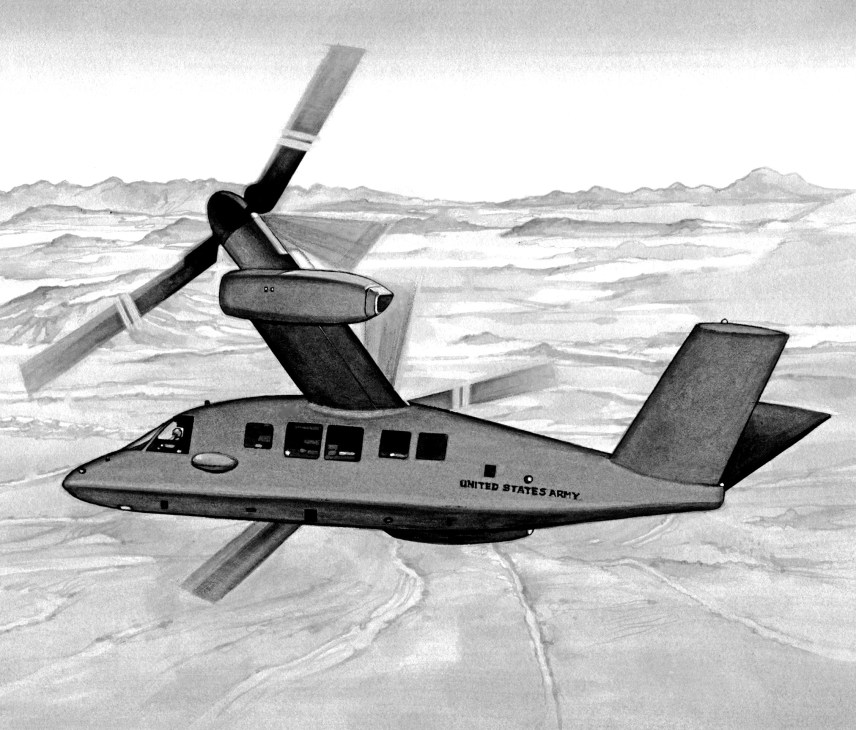
The race is on for the next generation of high-speed helicopters as manufacturers look at ways to go further and faster. Bell Helicopter-Textron and Sikorsky-Boeing are competing to build demonstration models for the US army by 2017. The winning design will be developed into a medium-lift helicopter to replace the Black Hawk in the mid-2030s. It must be able to reach speeds of 230 knots, fly at altitude and in hot temperatures, and carry at least 12 troops.
Bell is aiming to build on in-house technical know-how by developing a newer version on its tilt-rotor V22 Osprey, the V-280 Valor. With a focus of greater manoeuvrability, Bell claims this aircraft would have the range to cover the whole of Afghanistan without needing to refuel.
For its part, Sikorsky-Boeing has unveiled the X2. From an original lighter Sikorsky design – the Raider – they have jointly developed the Defiant. Common to both is a double rotor with blades moving in opposite directions, doing away with the need for a tail rotor. Instead there is a propeller at the back pushing it forward at high speeds and enabling rapid deceleration.
Airbus Eurocopter has also been looking for business in the US. Its X3 hybrid aircraft completed a summer tour, showing off to military chiefs and business leaders and finishing its parade where it matters: the Pentagon. It has reached speeds of more than 425km/h in testing, unofficially breaking the world record. Its climb rate is impressive, too: 1,680 metres per minute.
China, not one to be left out, is keeping pace. The Jueying-8 (Absolute Shadow) is an unmanned helicopter. Like Sikorsky’s X2 it has a co-axial rotor system and is designed to reach speeds of 450km/h. It is due to make its first test flight in 2015.
4.
The updated submarine fleet
Australia
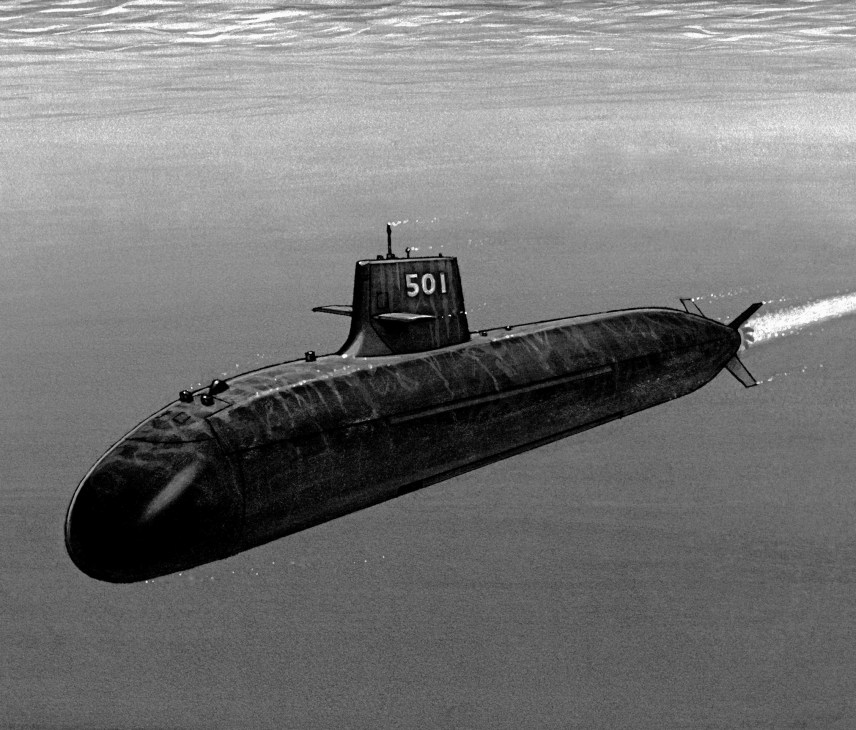
The Australian government has a decision to make that will have implications for the Asia-Pacific region. The Royal Australian Navy (RAN) plans to replace its six outdated Collins Class subs with 12 new submarines. While the new fleet won’t be as large as other South Pacific nations, it will be one of the most technically advanced.
The choice is between a far-reaching but expensive replacement, enabling the ran to project into northern Asia, or a cheaper alternative that protects interests closer to home.
One option is a next-generation version of the Japanese Soryu Class. The design is 20 per cent bigger than the Collins Class and can remain submerged for up to two weeks. A current production run for the Japanese navy is turning out one vessel every four years, built by Mitsubishi Heavy Industries and Kawasaki Shipbuilding on an alternating basis. An order from Australia would be the largest arms export from Japan since the Second World War and vindication of the relaxed arms-trade policy introduced by prime minister Shinzo Abe.
Competition comes from Europe. A delegation from German firm ThyssenKrupp Marine Systems (TKMS) recently flew to Canberra in a bid to steal the contract by promising the Abbott government the 12 submarines at a cost of AU$20bn (€14bn), the first to be delivered by 2026. TKMS’S Type 216 design would be faster than the Soryu Class and have a greater range.
TKMS has also presented the option of building the 4,000-tonne boat in Port Adelaide, securing jobs and delivering on a promise made by the coalition government during the last election campaign. This could also address a shortfall in local engineering experience that scarred the Collins Class experience, which eroded faith in the country’s ability to build a replacement. But a decade-long contract run by a foreign company in an Australian shipyard would do much to build maritime experience and attract bright graduates into the field.
The defence white paper announcing the decision will be released in 2015. At this stage, it looks like it could be Japan’s to lose.
5.
The mini satellites set to define the space race
USA
Space remains the domain of infinite defence possibilities. It also throws up an intriguing conundrum: with the modern defence technology so reliant on satellites, how can governments protect them from attack? Both China and the US have demonstrated their ability to shoot down satellites, which is a fairly pointless exercise beyond the obvious message it delivers. It’s also eye-wateringly expensive. The US’s destruction of a dying spy satellite in 2008 cost an estimated $60m (€40m).
But as an act of conflict it would have dramatic social and economic consequences. And so scientists at Darpa – the central research and development arm of the US Department of Defense – have been working on alternatives.
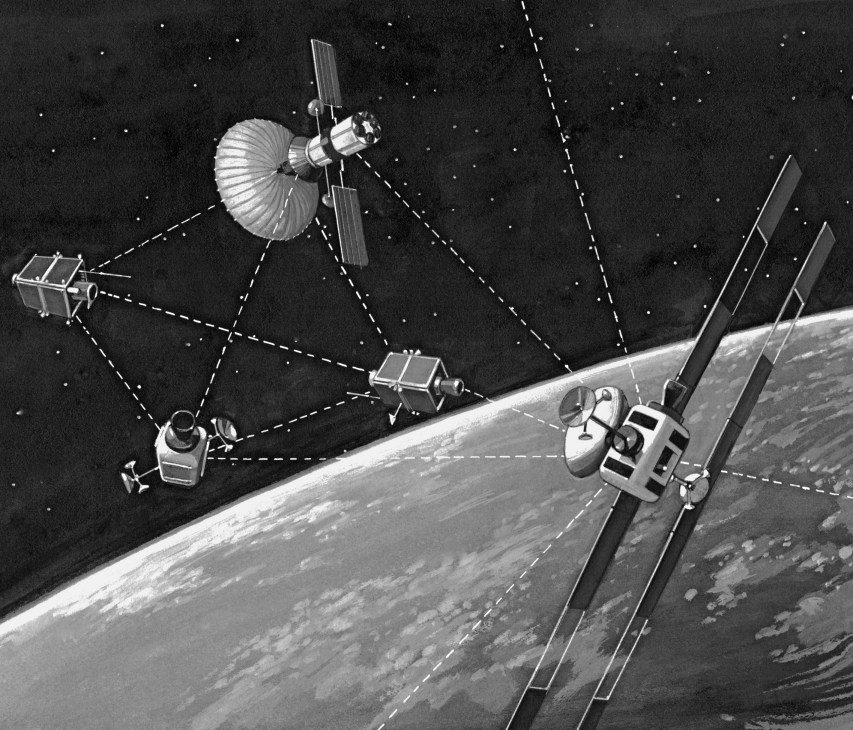
Their System F6 programme is developing a design that moves away from reliance on a single satellite. The idea is to deliver the same capability through a cluster of free-flying, wirelessly interconnected modules. This cluster could then scatter if attacked, regrouping elsewhere once the threat had passed. The programme is aiming to test an in-orbit prototype in late 2015 or early 2016.
Another project, still believed to be in the development stage, is the lightweight satellite. The idea is a relatively low-cost system that could be fired from an aircraft flying close to space. With a limited lifespan – six months at most – it would then provide surveillance or navigational capability above a specific theatre of operations or battlefield. With only a small team of operators, for the right task this would be an attractive alternative to drones.
The man who turned into a photocopier
Before Hong Seng became a photocopier he was very much an ordinary individual. When I say that he became a photocopier, it is important to note that he did not become just any entry-level model. Not even a mid-sized office workhorse capable of churning out a respectable 30-35 copies per minute (CPM). We’re talking a top-of-the-line multifunction device here: fax, scanner with OCR, network-enabled duplex feeds clocking in at a mind-blowing 60CPM. Hong Seng became the kind of machine that you can’t even find a buy-price for: a lease-only piece of industrial-quality equipment with a gold-plated lifetime guarantee. This was exactly the opposite of what Hong Seng was among human beings before his transformation. But I digress.
There was already a Kyocera photocopier in Hong Seng’s 32nd-floor office, a veteran campaigner who had left a formidable trail of shucked paper reams in his wake over his glorious career. From his point of view (the Kyocera, not Hong Seng) he played a key role in the production workflow of the company that he had served for all of his storied working history. Certainly not as flashy a role as the other machine down the hall, who converted the Kyocera’s printed paper sheets into the artisanally sliced shreds of woodpulp that were the chief product of the corporation. But, he reasoned, even the simplest cog had a part to play in the grand machine of Things. So he was happy with his lot. As long as maintenance continued to clear paper jams and reload fresh toner and paper, the Kyocera saw a long and fulfilling career for himself yet at Excelsior Co Pte Ltd, bespoke shredded-paper purveyor at large.
Lost in his thoughts, the Kyocera did not notice Hong Seng, humble administrative minion, feeding another stack into his tray. Hong Seng was significantly lower than the copier on the food chain at Excelsior. His chief function was to compile documents out of other documents fed to him by higher-ups and to send them to Kyocera, who would convert them into sheets of paper. Hong Seng would then compile those sheets into files, deposit them into offices presumably staffed by other faceless machines, who would pump them out decorated with various scrawly pencil markings. Various iterations of this process would continue until the well-marked pieces of paper were finally deemed ready for the shredder at the end of the hall to work his magic.
Though this would never be admitted in polite company and by no fault of his own (him being a product of his birth in the 2000s and all), the Kyocera was only a 30CPM model. As such, Hong Seng spent an awful lot of time standing in the central corridor of the office, watching the world go by as the Kyocera went to work.
The bygone world in question fell into three categories of individuals. First, other Hong Seng-equivalent minions, carrying stacks of paper to and fro. Second, Mr Leong, who was nominally just above the Kyocera on the office seniority list. And when the notoriously tetchy printer remained intractable on critical points of print, Mr Leong tended to defer any criticism of his most valuable and senior employee and vent his aggravations on Hong Seng instead. Third, Winnie.
In the eyes of the Kyocera, Winnie was a Hong Seng-equivalent minion who lacked Hong Seng’s core competency of standing in one spot for long periods of time. In the eyes of Hong Seng, Winnie was the only thing in the world worth copying, the reason for reproduction, the muse of mimeography. After years of tweaking line spacings and fine-tuning indents, Hong Seng knew how to appreciate perfection when he saw it – and Winnie was perfectly formatted.
In fact she was next to him right now, leaning casually over the vibrating Kyocera. Hong Seng swallowed, appreciating the perfect paragraph of her presence, the elegant indent of her waist, the full-justified fall of her rebonded hair.
“Hong Seng, ah, can you help me print something?”
“Har? Print what?”
“The annual report. This one very urgent. For Mr Leong.”
“Oh, for Mr Leong.”
“Can or not?”
“Can…”
“Thank you, you hor! Double-side, binded, 200 sets, OK?”
“Double-side, binded, 200 sets, OK!”
Winnie giggled. Conversations between them often went much like this. She sidled up even closer to him and whispered another thank-you-you in his ear. Hong Seng felt something small and hard slide into his pants pocket. A thumbdrive.
As she walked away, Hong Seng’s eyes traced her flouncing skirt down the corridor. The things one can do with margins, he thought. Wider margins let you make more of limited content. Shorter margins let you show a bit more on each page. The ultimate sin, of course, was to have non-uniform margins from leaf to leaf. But the way the margin of Winnie’s skirt bounced up and down from step to step drove his orderly mind into delightful red-and-green-squiggly-underlined chaos.
Mr Leong’s head periscoped around the corner of the corridor. In the course of his career, Mr Leong had come into possession of an extremely long, extensible neck that provided him with a decisive evolutionary advantage in a supervisory role. Craning over cubicle walls or around corridor corners, he was able to extend an unobtrusive form of organisational oversight that was only the mildest bit creepy. After all, he felt that the sight of his ever-present head enabled him to add a human touch to his managerial interactions rather than interacting with his Hong Seng-equivalent employees as a disembodied manager-voice. On this occasion his head hollered down the hallway to Hong Seng.
“Hong Seng! I didn’t hire you to stand around and stare at girls, OK?”
Transferring his attentions to Winnie, who had turned to watch the scene, he continued in a softer tone.
“Winnie, who is printing my annual report?”
“Hong Seng,” ventured Winnie helpfully, before slipping around the corner at the end of the hallway.
Mr Leong’s head pivoted back to Hong Seng.
“Is Winnie’s ass on the report?”
“N-no, Mr Leong.”
“Then stop gawking and print me my bloody report!”
The clock struck 22.00. Most of the Hong Seng-equivalents had left the office by now. The Kyocera was still plugging away at the massive print order like a trooper as Hong Seng slouched quietly in the corridor. In a cost-savings measure a few years ago, the company had installed motion-detector switches for all office lights. The lights in the corridor had all gone out. Hong Seng possessed a natural gift for standing still which had served him well his entire life, from assembly in school to parades in NS to his current occupation.
Winnie was still in her cubicle, working on some project or other for Mr Leong. She had been staying pretty late at work recently, Hong Seng noted. It was only right that he help her out every now and then. That Mr Leong worked her far too hard. Then again, she spent most of her day playing Candy Crush Saga, the Facebook-based productivity-killer of the year. Hong Seng knew that she had just reached level 279 after being stuck on 278 for nearly a week. He knew this because he kept receiving requests for extra Candy Crush lives from her during office hours, which he always obliged immediately. He often entertained the idea that she noticed this and would eventually grow to rely on him in more ways than one. As for why he was standing in a dark corridor hours after closing time doing her job for her while she was playing Candy Crush in the daytime – well, maybe she was just one of those people who work more efficiently after office hours, away from the distractions of talkative colleagues. Hong Seng felt that way too. He smiled at having yet another thing in common with Winnie.
The light in Mr Leong’s office was still on. While standing in the corridor, Hong Seng often wondered what it was like to be Mr Leong. Unlike the world of Candy Crush Saga, where one forged his way up the winding path of confectionery-littered levels with plodding inevitability, Mr Leong had been suddenly promoted to his position from a humble Hong Seng-equivalent post in less than a year. And now Leong “Emu” Yi-mu was known to his ex-colleagues (now-minions) purely on a Mister-Last-Name basis.
Muffled Candy Crush theme music floated over from Winnie’s corner as Hong Seng pondered Mr Leong’s meteoric rise. Was it skill that had got him there? The ability to identify patterns and see where the tastiest morsels would fall, the vaunted “helicopter vision” that made him ideally suited for management? Or dogged persistence knocking on the doors of power, again and again and again until they relented? Could it have been just a matter of luck, the striped candies and chocolates aligning perfectly for Mr Leong? Or had he, as was rumoured over the water-cooler, bought his way to the next level? No matter the means or circumstance, Mr Leong’s overnight promotion from the butt of office ostrich jokes to a senior rank was evidence of human mutability. Of metamorphosis. A caterpillar becoming a butterfly, a moth emerging from a chrysalis. No slow evolution playing out here but an immediate leap from ground to sky. As the Kyocera hummed a single-tone tune while he worked, Hong Seng closed his eyes and dreamed of transformation.
When he opened them he found that he had become a photocopier.
This was the first time Hong Seng had been a machine of any form so he was understandably confused. He tried to move but found himself firmly planted to the carpet by his own weight. Suddenly shorn of limbs, he attempted to rock his ponderous torso into motion. All he managed was the slightest tremble in his plastic frame. No arms, no legs – what was going on? Within him stirred a susurrus of whirring spindles and springs. He became aware of parts of him shifting that he didn’t know existed, let alone understand what they did. As if his innards had been pulled out and replaced with a collection of appendixes; unknown appendages with unknown functions. An array of lights flickered on across his surface display in time with his rising panic.
The Kyocera asked, Who are you and what are you doing here?
Hong Seng stuttered, I-I am Hong Seng. I think I have turned into a photocopier.
A silence from the Kyocera. This promotion of rank for Hong Seng after mere months on the job offended his hierarchical sensibilities. A new photocopier?
The Kyocera hesitated, and added, So soon?
Hong Seng asked, What?
But his companion was quiet.
The two copiers sat there in silence, contemplating their respective situations. Calming down in the silence of the corridor, Hong Seng forced himself to re-evaluate his situation. There were some plus points about being a photocopier. He felt more… solid somehow, blockier and more stable. No longer did his skin and subcutaneous fat droop off his slouched frame: his casing was erect, his bearing stiff and formal. He flexed himself and felt the thrill of electricity coursing through his electronic veins. Even though he had missed his human dinner earlier while working on Winnie’s print jobs he felt satiated, his trays brimming with fresh white paper, his vats full of toner.
Perhaps he would wake up in the morning and, like his favourite English composition ending, it would have all been a dream. Encouraged by this notion, Hong Seng decided that he would give the life of a photocopier a try. It was impossible for a human being to stay a machine forever, right?
This was probably just a phase that everyone went through. Dreaming of being a copy machine. What kind of machine would Winnie dream of becoming, he wondered?
On cue, Winnie sashayed down the corridor with a sheaf of paper in one hand and a swingline stapler in another. Hong Seng sighed as he saw the sheaf. An annex that needed to be appended to the annual report, probably. Conscientiousness was not one of Winnie’s many strengths. More copying, unbinding, and rebinding for over 200 files. This was a job for – oh, him. Pausing in front of the printers, Winnie peered at the towering stack of perfectly collated and bound reports that Hong Seng had left next to the Kyocera. Then she looked up and down the corridor. Irritation clouded her features.
Ah, thought Hong Seng. She misses me!
Heaving a sigh, Winnie looked at the two copiers. She chose the newer-looking one and carelessly dropped her stack of paper into the feed tray at the top.
Ow, ow, Winnie, Hong Seng protested. You have to follow the A4 paper guiderule, otherwise I might jam.
He was rewarded for his pains by Winnie jabbing his face repeatedly.
“Wah lau eh, this new printer damn lousy lah!” complained his not-so-tech-savvy muse.
Hong Seng’s inbuilt professionalism rankled. Somewhere, somehow, she had hit the correct button. The drive belts and ribbons deep within him spun into motion with a noise like a bodybuilder cracking and popping all the joints in his body. Sucking in the first sheet of the stack that Winnie had carelessly scattered over his in-tray, he shook it into proper alignment. Quickly scanning it, he committed the thought to memory then imprinted it onto a fresh sheet, which shot out of a compartment in his flank. Then again, and again, and again.
A smile crossed Winnie’s face for a rare moment as she tapped into that universal font of human experience: the joy of Making Things Work. Hong Seng saw the reflected glow on her face from his front LCD panel and swelled with pride. And he realised: this was easy, really. Just like passing messages, or taking notes, or texting. His former respect for the Kyocera’s unerring accuracy and devotion under pressure declined significantly.
It wasn’t so hard to be a photocopier after all, he thought. Firing up his vats and cartridges and settling into a steady rhythm, he shot sheet after sheet of fresh print into a growing stack, still warm from his exertions.
The Kyocera sulked. 60CPM, huh. Big fat deal.
As he continued to churn out documents, Hong Seng wondered how he would communicate his new identity to Winnie. It didn’t seem like much would have to change in their relationship. Hong Seng could still help Winnie print things and watch her bounce down the corridor from his spot next to the Kyocera. He would always be there for her, stable and reliable, whenever the shadow of Mr Leong darkened her evenings. Yet at the very least he wanted her to know who he was, if not how he felt.
He decided to concentrate on printing a message to Winnie. Help, he thought. I have become a photocopier. He willed his main logic board to realign its circuits to alter the images being faithfully reproduced in his system. But the piece of paper that sailed out of his feed was just the same as the last one. Gritting the teeth of his input feed he tried harder this time, his printhead mechanism wobbling with the exertion of doing a task it wasn’t designed for.
It doesn’t work like that, the Kyocera gloated. You can only print what they tell you to print. Hong Seng ignored him and focused his energy on attracting Winnie, whose initially impressed face was now increasingly shaded by boredom. Help, he thought. Something’s gone terribly wrong. I’m a photocopier. Help!
You’re going to make yourself breakdown if you try so hard, mocked the Kyocera.
That’s it, Hong Seng thought. He imagined sticking a finger down his throat to trigger his gag reflex. Twitching mechanisms within him he could barely sense, he reflexively arrested one of the sheets of paper rolling through his innards and crushed it between his rollers. Gleefully, he ground to a halt.
An automated error message scrolled across his LCD display. Paper Jam in Tray 2. Open Tray 2 and Clear Jam.
Yes! Hong Seng thought. Winnie will have to figure it out now. Or at least she will call a technician and someone will come and help me!
Winnie glared at the offending message. Looking for Tray 2, she goggled at the purportedly helpful diagrams tattooed on Hong Seng’s chest. She attempted to follow Step 1, tugging on what she thought was the indicated part. She only succeeded in lifting the scanner lid, revealing Hong Seng’s flatbed glass window. Hong Seng’s interior lights came on and a surge of colour rose to his face. That’s not the right bit, he thought abashedly. He really didn’t want Winnie to see him like this – not this way.
Meanwhile, Winnie was confounded. Looking into Hong Seng’s heart through the pane of glass, she could only see arcane machinery.
“If only Hong Seng was here,” she whined out loud.
Hong Seng blinked, unbelieving.
Deciding that she would need help, Winnie started to walk back towards her cubicle, forgetting to shut Hong Seng’s scanner lid.
OK, everything is going according to plan, thought Hong Seng. Call Maintenance! Then Winnie stopped, noticing the light in Mr Leong’s office. A smile. Adjusting her skirt, she walked towards the half-ajar door.
Hong Seng let out a disappointed gust of toner-flecked air. Mr Leong would never understand how to get him out of this situation. He was barely conversant with computers to begin with, relying on minions to deal with technically challenging tasks like changing a document to double-space. And if indeed by some twist of fate Mr Leong was able to resolve the situation, Hong Seng would definitely receive an epic dressing-down for the decidedly unprofessional act of turning into a photocopier during office hours. What would they say about him at the water-cooler? What would his parents think? If his toes were not rubberised wheels gripping the rayon carpet, they would be curling in shame at this point.
A peal of high-pitched giggling issued from Mr Leong’s office. On an earlier print-job-free afternoon, Hong Seng had tried to put pen to paper once to describe the phenomenon of Winnie’s laughter. To sketch her giggle. At first he drew a series of bubbles. Then he rubbed them out and changed them into billowing, fluffy clouds. In the end, he settled for a single cloud-bubble with “Heehee” written in the middle. After some thought he added a tilde and an asterisk at the end. Satisfied, he leaned back in his seat and contemplated a future career as a subtitler.
Now, thinking back on that day, he concluded that being a photocopier was not that far off from being a subtitler. Or an artist or a writer, even. Weren’t the earliest scribes artists in their own right? When they had to copy out ancient tomes by hand in flickering candlelight, before the advent of woodblock printing? Even the first woodblock sets were works of art, lovingly hand-carved by artisans. No less the fonts designed when movable type was invented, when to be a typesetter was to be a professional tradesman requiring a long apprenticeship. Or when Steve Jobs introduced fonts to the first Apple, influenced by his love of calligraphy as a youth, henceforth turning word-processing into an art form in its own right. Hong Seng knew that he was heir to a long heritage of copiers, a lineage of great artists. Perhaps it wasn’t that bad to have transformed into a photocopier after all.
His chain of thought was interrupted by the impact of a soft female form crashing into his side. Winnie’s well-formed bottom was pressed up against Hong Seng’s LCD screen and control panel, sending all sorts of delightful sensations beeping through his system. Hong Seng noticed that the skirt that had caused him so much distraction earlier in the day was hiked up around Winnie’s waist under the wandering fingers of a particularly long-necked gentleman.
“Oh no, Mr Leong, Mr LEONG!” panted Winnie. “What if there’s… somebody around?”
“Nobody will be around at this time, lah,” mumbled her preoccupied boss.
I am, protested Hong Seng silently. I am!
With Winnie’s legs wrapped around his torso,
Mr Leong lifted her up with a grunt and deposited her in a half-seated position on Hong Seng’s still-open glass scanner pane, then continued his ministrations. Winnie, being petite, had buried her face in Mr Leong’s chest to muffle her attack of the giggles, and as a result Hong Seng had the odd sense that Mr Leong was looking at him over her head. He could see his Adam’s apple bobbing robotically up and down in his elongated neck, glassy eye staring right through the glassy pane without recognition.
I’m here, whimpered Hong Seng. Can’t you see me?
As the oblivious couple continued humping, Winnie’s squirming thighs finally pushed all the right buttons.
A shifting of gears, a turning of wheels, a growl building somewhere deep, dark and warm.
Hong Seng lit up with white-hot rage. A searing panel of light passed across his face, reflected shame burning her cheeks. The image was branded into his mind, scorched white and black into his memory. He swallowed and the knot of pain travelled through his system, a baleful bolus distending his channels and twisting in his gut. He spat it out, again and again, a copy of Winnie’s heart-shaped ass, crushed flat against the glass of his screen.
Hong Seng did not remember what happened afterwards, not until long after the last light in the hallway had gone out.
In the darkness, the Kyocera gloated. That certainly never happened to me.
Hong Seng didn’t reply. To do a job with dignity and respect. Perhaps the tiniest sliver of recognition. Was it too much to ask? Was it?
He felt spent. Drained of toner, low on paper.
As if summoned, two shadowy figures in coveralls appeared in the hall.
“Eh, how come got two printers here, ah?”
“Yah, dunno who move the new one here already.
Must be that Leong ask the morning shift to bring first. Level 32 always damn kan cheong one.”
“Then the old one how?”
“Move to Level 12 lor. They request printer for dunno how long already. A bit spoil also can, lah.”
The two maintenance technicians approached the two copiers. As light after light in the corridor came on in time with their ominous advance, the Kyocera began to quake in terror.
No, he pleaded. I do not want to go to Level 12, where they wear polo tees on Casual Fridays! I want to stay here! It is not my time!
Heedless, a technician pressed a switch and the Kyocera’s silent cries were drowned by the tumult of his shutdown routine. Leads returned to their original position. Rails and racks retracted into themselves. The lights on his panels went out one by one as the life died in the doughty old veteran. Hong Seng watched in horror as without ceremony, a technician reached down and pulled the Kyocera’s plug. Mute, inert, they wheeled him away down the corridor.
Hong Seng realised he was completely alone. Level 12, he thought, and shivered. A glimpse into his future. He became increasingly aware that he didn’t know where photocopiers came from. Presumably some factory. But has anyone actually ever seen a photocopier factory? He wondered whether the Kyocera, too, was just like him. Another office worker who found himself transformed into a copier after standing too long in the same spot.
He wished someone would come and print something. Winnie. Even Mr Leong. Push my buttons, thought Hong Seng. Send me a message. Give me something to say.
He stood alone in the silent corridor, energy and warmth draining from him. He spun his roller, his drive belt, aimlessly heating his toner for a job that wouldn’t come till dawn.
I don’t want to go to sleep yet.
I don’t want to go to sleep.