Sponsored by

The Foreign Desk
Monocle’s global-affairs show with Andrew Mueller. Expert guests, in-depth analysis, and sharp commentary on major geopolitical issues.
Latest Episodes

Explainer 18: Do facts still matter?
We are living in an era where we have more information at our fingertips than ever before. And yet the quantity of information is not matched by the quality. Outright lies, genuine misunderstandings, quotes out of context – how do you separate the wheat from the chaff?
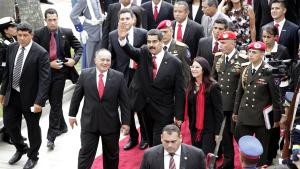
What’s next for Venezuela?
Everyone is queuing in Venezuela, inflation is soaring and the healthcare system is at breaking point. But president Nicholas Maduro doesn’t think it’s his fault. So where does Venezuela go from here?

Explainer 17: Capitals vs nations
Now more than ever, we need nations to tell a story that includes all their citizens: the rural and the urban, the liberal and the conservative.

After Dilma: can Brazil’s new government turn its economy around?
Brazil’s political crisis is far from over: the economy is still struggling and corruption investigations are ongoing. So is the all-male, all-white government of Michel Temer up to the task? We ask what all this means for Brazilian democracy.

Explainer 16: Will drug cheats win gold in Rio?
Barely a week goes by without new allegations of doping in sport. With cover-ups, blackmail, state-sponsored programmes and old results being annulled after fresh tests, is there any hope that this summer’s Olympics will be clean?

Austria’s far right
Is a major European nation about to elect a far-right president? Austria’s Freedom party topped the polls in the first round of elections; what chance do they have of winning outright in next week’s second round? And what does this tell us about modern-day Austria?

Explainer 15: Sending refugees home
Kenya wants to shut down its refugee camps, which means more than half a million people will be told to go home. But is it safe? Is it legal? And why is Europe so silent?

Eurovision and soft power
The Eurovision Song Contest, the final of which takes place in Stockholm next week, is one of the greatest expressions of European solidarity and soft power. But as the whole continent struggles, what can it tell us about the state of Europe today?

Explainer 14: Compromise
Elections are about taking sides, making a choice and deciding between left or right. A look at recent elections around the world, however, suggests these choices have become ever more polarised.

Colombia and the peace process
At some stage this year a peace deal is likely to be signed between the Colombian government and Farc guerrillas, ending a 50-year civil war. It’s not easy to balance peace and justice. We ask whether this agreement can teach us how to solve other wars.