Europe’s century of humiliation is just beginning. What will it take to reassert itself?
Following 12 months of buffeting and befuddlement, some commentators are now predicting a coming century of humiliation for Europe. In the interests of avoiding such a humbling, there are several things that the vieux continent can do to get itself back in fighting form. The most obvious, and often cited, is to improve its defences. In this regard, Europe has come a long way: last year, defence spending among EU member states rose to €381bn, up nearly 63 per cent since 2020; if you include the UK among them, that figure is about €450bn. This is much more than at-war Russia (about €250bn) and even above generous estimates of what China spent over the same period (approximately €400bn).
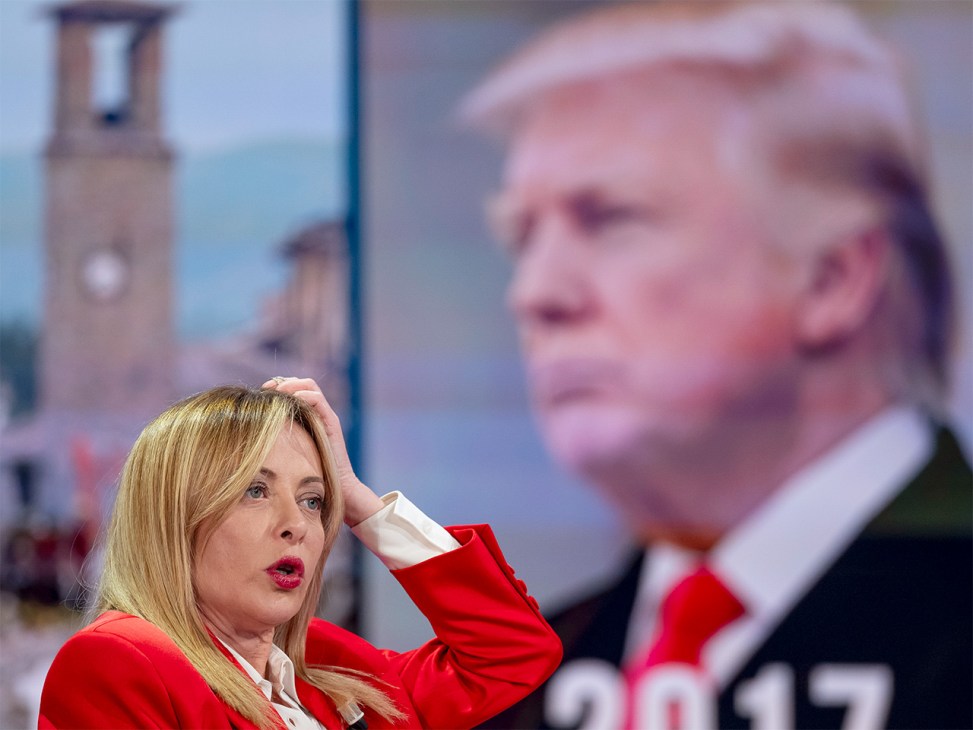
But still the prevailing mood among European leaders at a crisis meeting following Trump’s threats to annex Greenland was somewhere between jilted, battered and bruised. This is partly because they know that it will take time for their investment in defence to translate into proper hard power. But also because they are so unused to wielding their geopolitical influence in a robust manner. The continent has more leverage with the US, China and Russia than it seems to realise – leverage that will only increase with growing military might. Let’s start with trade, an issue that has dominated the past 12 months due to Donald Trump’s obsession with the deficit between the amount his country imports from and exports to Europe. But the EU’s trade imbalance with the US is not as great as Trump makes it out to be. If again one includes the UK, Europe imports nearly €500bn worth of goods from the US every year, making trade between the two almost equal. Were Brussels and London able to co-ordinate effectively enough to make it clear that they would be willing to take their custom elsewhere, US business might be worried enough to make it a problem for the White House.
While European countries have woken up to the need to wield more military influence in a volatile world, they still appear sheepish about flexing their economic muscle. Such blinkeredness is reflected in the bloc’s inability to see through structural weaknesses in order to rekindle its economic dynamism. As European living standards and GDP per capita continue to decline, a new co-ordinated industrial policy is needed in order to, for example, increase labour market flexibility across the continent. This might also tempt some of the international entrepreneurial talent that would have looked to the US as the natural place to start a business to think about Europe instead.
The continent should also take better advantage of its trustworthiness to form deeper bonds with those countries still committed to a rules-based order. In a world of sharks, in which a deal is worth no more than the paper it is written on, a commitment to process need not be a disadvantage. We recently saw with the signing of the massive EU-India trade deal that rising powers, who have staked their futures on better integration into the global economic system, are looking for dependable partners. China has recognised this and is busy selling itself as a squeaky-clean follower of trade rules but its opaque political and economic structure means that it can never be fully trusted when it comes to doing business. Obvious candidates for deeper ties are Canada, South Korea, Brazil, Japan and Australia. If you add India to the mix, you have a formidable bloc of the world’s largest economies and more than half of its population.
Then there’s the area in which Europe already does lead the world: its attractiveness as a place to visit and live. Taken as a whole, it is the continent with the best infrastructure, most stable politics and highest quality of life. Last year more than 40 million Americans visited Europe, more than 10 per cent of the US population, while annual international visitors constituted more than half of all global tourism. If the continent were to merely match the foreboding rhetoric and visa policies of the US or China by subjecting citizens of those countries to tit-for-tat restrictions and delays, it would immediately have more sway over their governments.
Finally, in an age of hubristic strongmen, Europe’s other superpower is that it can recognise and constructively debate its own faults. Any institution incapable of reforming itself is doomed to failure. Whatever JD Vance says, Europe is a bastion of free movement, free trade and free speech – eight of the top-10 countries in the Cato Institute’s Human Freedom Index of 2025 are in Europe (the US is 15th). This gives it authority with which to wage any war of words but also a point of pride that can rouse its restive citizenry. And herein, perhaps, lies the engine for Europe’s renewal. Polling produced last week by YouGov confirms that the continent’s population is overwhelmingly anti-Trump – with a majority of respondents taking an anti-American view and favouring increased European autonomy over the Transatlantic Alliance. Though many Europeans are also pretty disillusioned with their own leadership, a robust defence of their way of life and greater assertiveness on the world stage could be just the tonic for the ailing old continent.
Alexis Self is Monocle’s foreign editor. For more opinion, analysis and insight, subscribe to Monocle today.
Further reading?
– On the defensive: Europe must co-ordinate its defence procurement to avoid past mistakes
– Europe’s defence industry is stepping up to offer smart new solutions. Here are a few of the innovations currently on our radar.
– Irish neutrality is a weak spot for Europe that Putin could use to his advantage