How the world’s middle powers are adapting to a new era of weaponised interdependence
As geopolitics continue to shift in response to increasingly volatile great powers, regional players are rethinking self-agency.
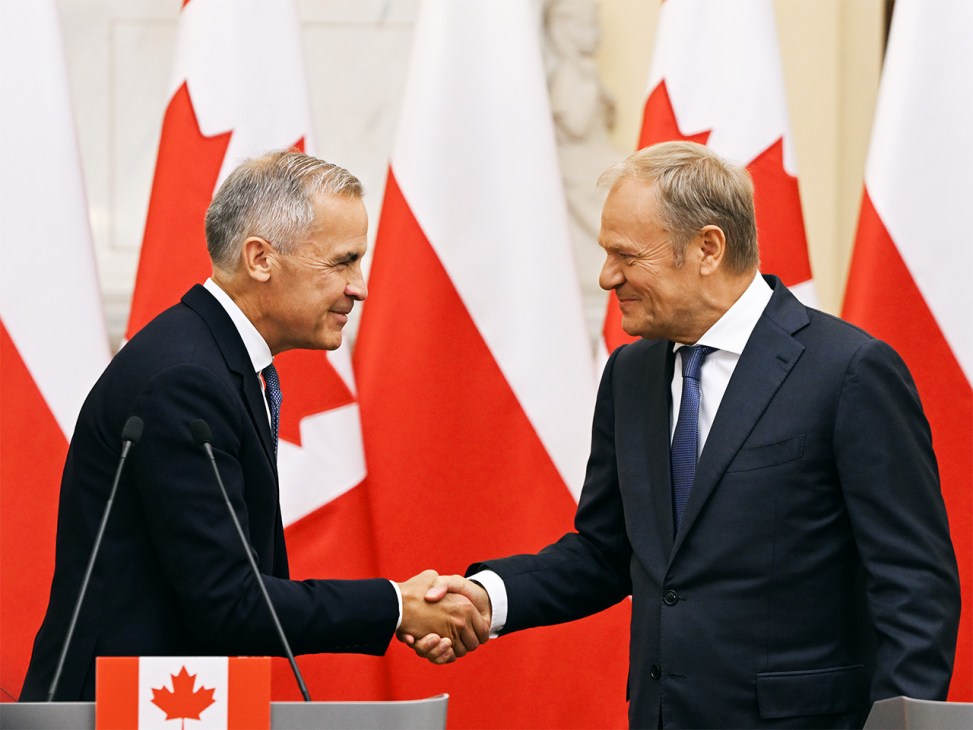
The speech that Canada’s prime minister, Mark Carney, delivered at the World Economic Forum in January continues to reverberate in policy and strategic debates. His diagnosis of a world defined by “rupture” was more than just a striking turn of phrase. It acknowledged that the comfort blanket of the rules-based order is fraying and middle powers can no longer assume geography and goodwill will insulate them from great-power rivalry.
Canada has accordingly deepened economic ties with the EU, advanced defence co-operation with countries such as the UK and is expanding trade and security links across the Indo-Pacific region. These are practical steps to build resilience through diversification and co-operation.
Financial systems and supply chains, once seen as the conduits of globalisation, are now routinely used for strategic leverage. In such a world, resilience is a governing principle: diversify trade, harden supply chains, invest in domestic industrial capacity and build multiple external partnerships to avoid overdependence. Carney’s language on the need for “coalitions that work” captures the shift well. From Aukus and the Quad to ad-hoc Ukraine support groups, the pattern is clear – smaller, purpose-built formats that deliver where larger institutions struggle.
Not all middle powers are playing the same game. Some remain invested in preserving the existing order, especially among US allies and partners. Australia is a case in point. Even as Canberra strengthens its ties with Tokyo, Seoul, Ottawa and Europe, it continues to anchor its strategy in its alliance with Washington. But among the same allies, there are diverging views on how central the US should remain, how much autonomy is realistic and how to manage an ally that can be as transactional and coercive as it is strategically useful.
Others are more revisionist. The expansion agenda of the Brics group reflects an effort by some to reshape parts of the global order, in areas from development finance to currency use. But even here the picture is mixed. Countries such as India and the UAE nurture close links with both status-quo-oriented powers and their rivals, keeping active ties with the US and Europe while engaging with China and Russia. The result is a dense, often untidy landscape of overlapping loyalties.
There is, however, a logic. A growing body of thinking points towards “negotiated pluralism”. Stability, in this view, rests on a system that looks more like a mosaic, with multiple coalitions doing different jobs. Recent policy moves bear this out and there are reasons for optimism. The coalitions assembled in support of Ukraine show that middle powers can lead efforts to act collectively when the stakes are clear. The EU’s push to strengthen economic security is increasingly paired with outreach to Indo-Pacific partners. Discussions around regulatory alignment hint at the emergence of cross-regional economic architectures.
European co-operation in defence is also expanding outward, with new partnerships extending as far as Japan, South Korea, India and Australia. Middle powers are not a substitute for great power consensus, nor should they pretend to be. But in a fractured world, they can still play a stabilising role.