
It has been a good year for democracy – but don’t celebrate its comeback just yet
Anti-autocrat electoral wins in Serbia, Hungary and Brazil are being celebrated as a democratic resurgence but a closer look at the ballot box reveals a far more complicated picture.
In Serbia’s recent elections, the odds were stacked in the incumbent’s favour. During his 14 years in power as prime minister and then as president, Aleksandar Vučić seized power over the media and state institutions. Now he has conceded defeat to a coalition of academics and political novices. On the same day in Brazil, president Luiz Inácio Lula da Silva fought back after his first-round loss to Flávio Bolsonaro and won an unprecedented fourth term. Along with former Hungary prime minister Viktor Orbán’s defeat in April, these wins are being framed as evidence of a global resurgence against the populist right but the reality is more complex. They are less about political ideologies than the residual strength of electoral processes, which have been under attack, though they’re not proof that autocrats elsewhere can be defeated at the ballot box.
Take Turkey, where president Recep Tayyip Erdoğan has also followed the populist playbook, eradicating critical media while filling government institutions and security forces with his loyalists. With 23 years in power under his belt, he has had far longer to do so than either Orbán or Vučić. Hungary’s opposition movement was still able to get some media coverage but Turkey’s cannot get any. And while Serbia’s opposition could coalesce around a protest movement, any demonstrations in Turkey are now simply shut down – often violently – by the police. Istanbul mayor Ekrem İmamoğlu, who posed the biggest electoral threat to Erdoğan, is currently in prison on spurious corruption charges. If Orbán and Vučić had each had another decade in power, they might have grown as illiberal as Erdoğan.
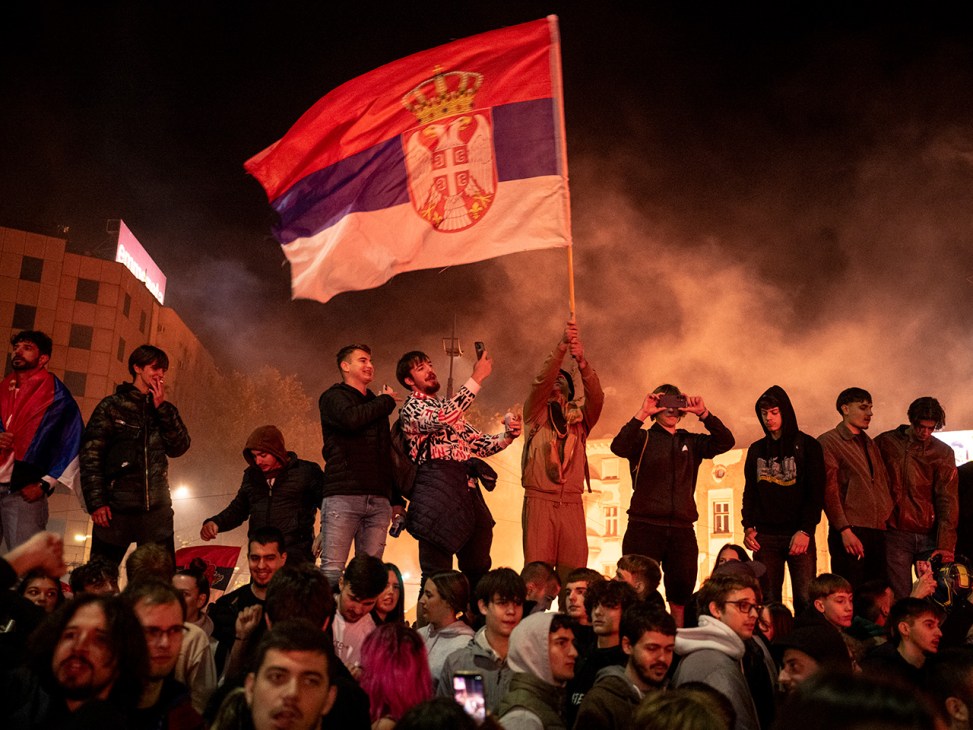
Autocrats often play on ambiguity: when election results are razor-thin, it doesn’t take much tinkering to swing them the way that they want while retaining a veneer of genuine democracy. In recent elections, Erdoğan has declared victory before votes were fully counted, sometimes stifling live results broadcasts or claiming irregularities in the election process to force a rerun. In Brazil, Lula’s margin was wide enough that Bolsonaro’s party was eventually forced to concede defeat. In Hungary and Serbia, the oppositions won by landslides, leaving little room for the incumbents to contest.
The most entrenched autocrats, such as Vladimir Putin and Azerbaijan president Ilham Aliyev, have crushed their opponents entirely and are able to fix election results as they please. Like Erdoğan, they lean heavily on jingoism, a potent electoral force. All three have launched attacks on neighbouring countries at moments when their support appeared to be waning. With independent media and opposition voices silenced, it is easy for these leaders to frame themselves as the bulwark against external threats and dissenters as enemies of the people.
Pro-democracy movements can take a few lessons from these recent election upsets. First, opposition movements must be united: fractured coalitions are easy for populists to pull apart. Second, mobilisation is important, particularly when margins are predicted to be slim. Third, opposition movements should take aim at populists’ weak spots. In Hungary and Serbia, for example, these groups did not oppose Orbán’s anti-migrant stance or Vučić’s revisionist nationalism. Instead they focused on corruption and domestic scandals.
Donald Trump’s opponents should take heart. While the president has made moves to capture institutions in the US – and though his supporters tried to upend his defeat in 2020 – the country’s democratic checks and balances are still intact enough to counter his slide into autocracy. And thanks to an independent media that is able to criticise his policies, Trump’s war on Iran has lost him support. Polls suggest that Republicans are set to suffer heavy losses in tomorrow’s midterms as a result. Elsewhere, however, the outlook is bleaker. Democracy is having a good year – but only in the places where it was never fully dismantled.