
Behind the hose at Tokyo Fire Department’s elite Hyper Rescue 8 unit
With 18,800 members, the Tokyo Fire Department is the world’s largest fire brigade. We spent three days with its elite fire rescue task force to watch its firefighters hone their life-saving skills.
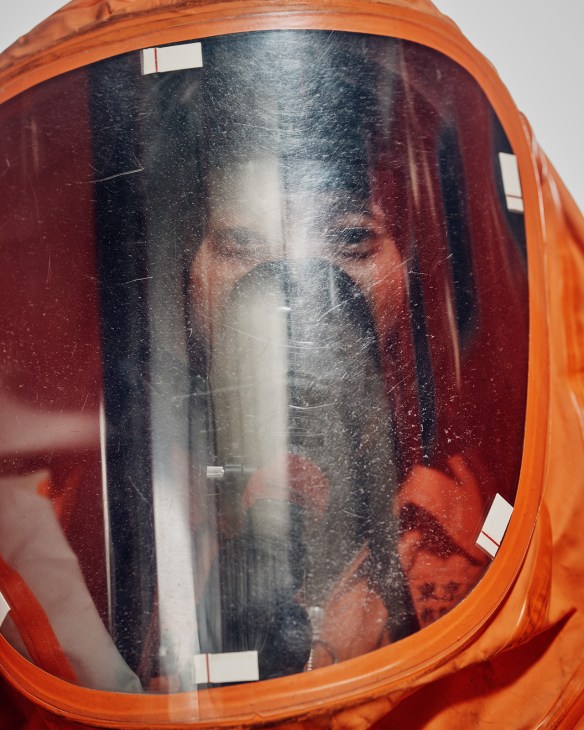
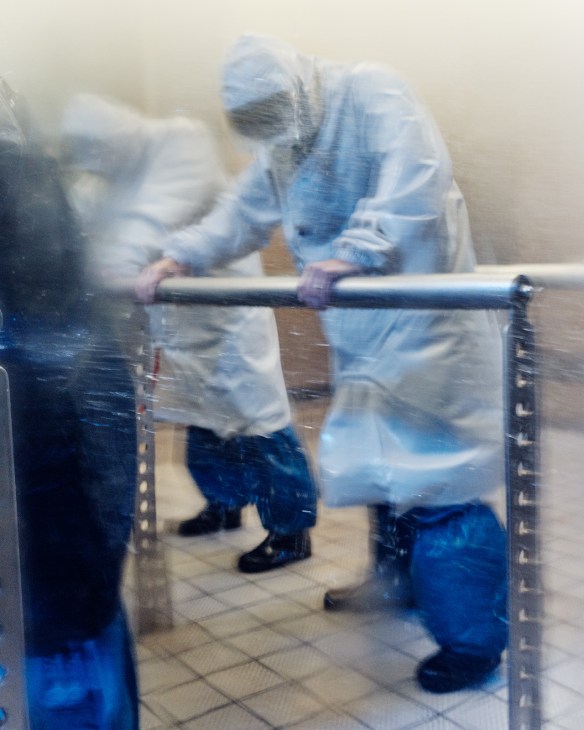
On a wet autumn morning in Tokyo, four firefighters in hazmat suits are trying to pull an unconscious person from a basement room that’s filled with poisonous gas. They only have 15 minutes before the oxygen tanks on their backs run out. Despite their ungainly attire, they move with precision. One firefighter patches the leaking pipe while the other three strap the slumped figure on the floor into a stretcher. Within 10 minutes, they have all climbed up two flights of stairs and are back outside. Thankfully, this is just a training exercise. But the next bit isn’t. An alert comes buzzing over the PA system and the firefighters freeze. A man has sprayed an unknown substance over teachers at a school in Higashiyamato city. At least two people are injured. “This is not a drill,” Tokyo Fire Department (TFD) official Yuto Azuma tells Monocle.


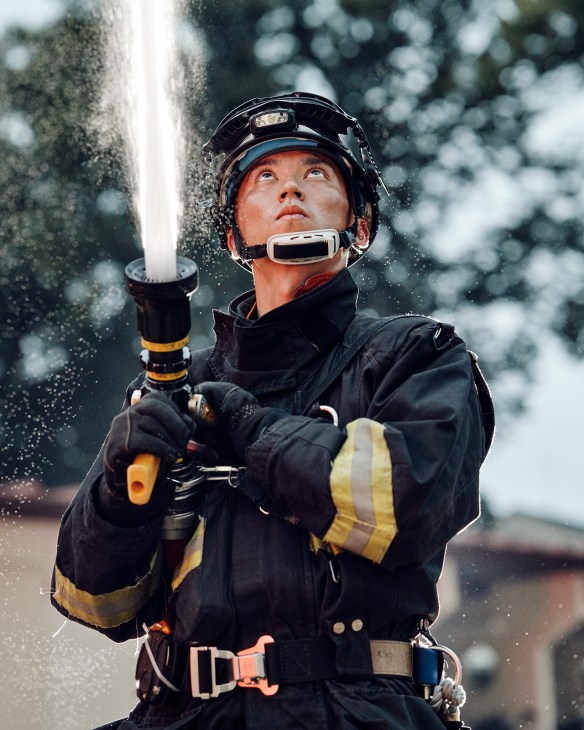
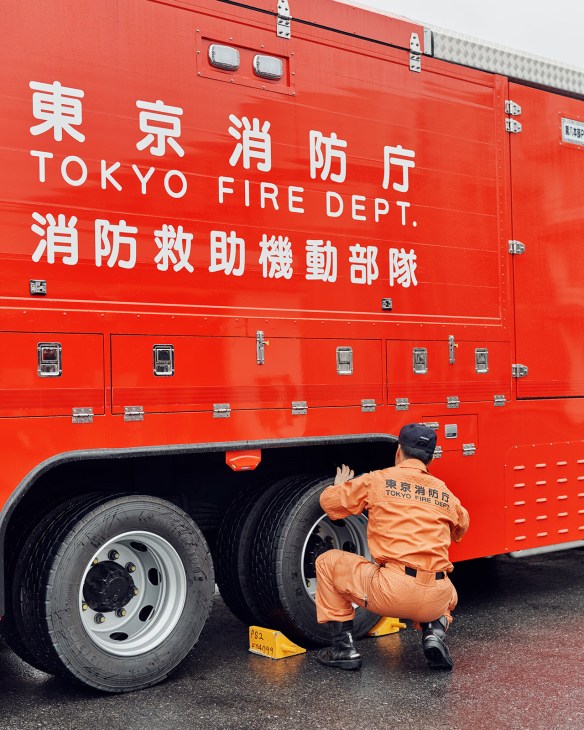
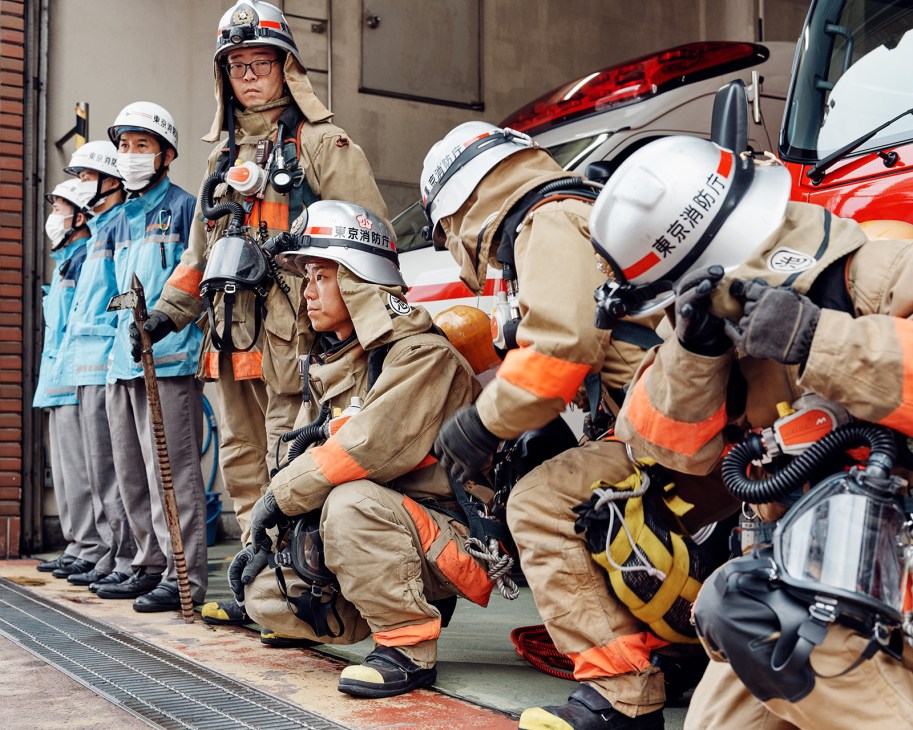
A dozen firefighters load up three vans with hazmat suits, oxygen masks and tanks, testing kits and gauges. Seconds later they speed away, sirens blaring. All are members of Hyper Rescue 8 (8HR), one of five TFD teams that are called upon in the most serious emergencies. The units were formed in 1996 after a 7.3-magnitude earthquake levelled Kobe, killing more than 6,400 people and injuring almost 43,800 others. Terrorist attacks, chemical fires, toxic spills, nuclear meltdowns, landslides and volcanic eruptions all fall within their purview. When Monocle meets 8HR at its base in Takichawa, on the outskirts of Tokyo, the team has just returned from weeks spent battling wildfires in Iwate prefecture on the northern tip of Honshu, Japan’s largest island.
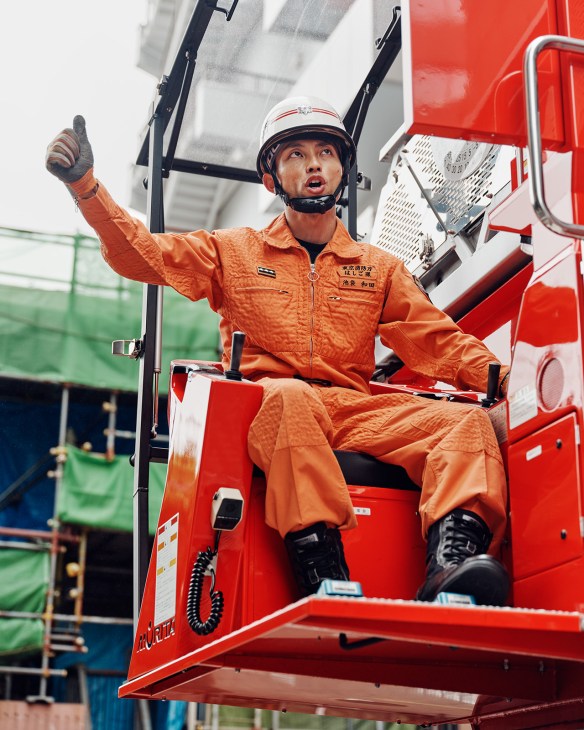
With 18,800 personnel, the TFD is the world’s largest fire brigade, responsible for safeguarding a megalopolis of 14 million residents and millions of daily visitors. Its ¥310bn (€1.7bn) annual budget helps to maintain a fleet of 2,000 special-purpose trucks, off-road vehicles, ambulances, boats, cranes, motorcycles, helicopters, amphibious vehicles, drones and robots. Though, in some respects, Japan’s capital has never been safer, climate change has increased the frequency of extreme-weather incidents including heatwaves, typhoons and torrential rain. In April the Japan Meteorological Agency (JMA) began to use the term kokushobi, which means “brutally hot day”, for when temperatures soar to 40C or higher. (For Tokyo, the all-time high was 40.8C in 2018.) Rising temperatures have resulted in more fires. In 2024 the TFD mobilised for more than 4,500 fires, the highest number in a decade. Paramedics were also the busiest that they had ever been, with ambulances dispatched 935,373 times – about once every 34 seconds. TFD’s ambulances have seen a surge of calls for heatstroke cases and have had to reassess their training guidelines since 2017, when a paramedic died of heatstroke following a summertime drill.


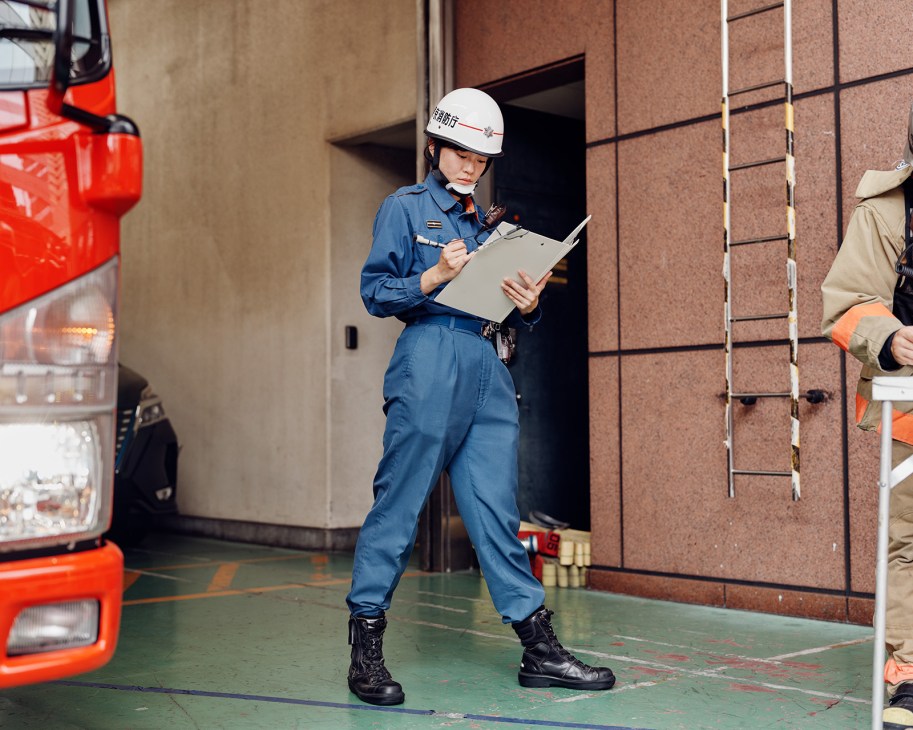
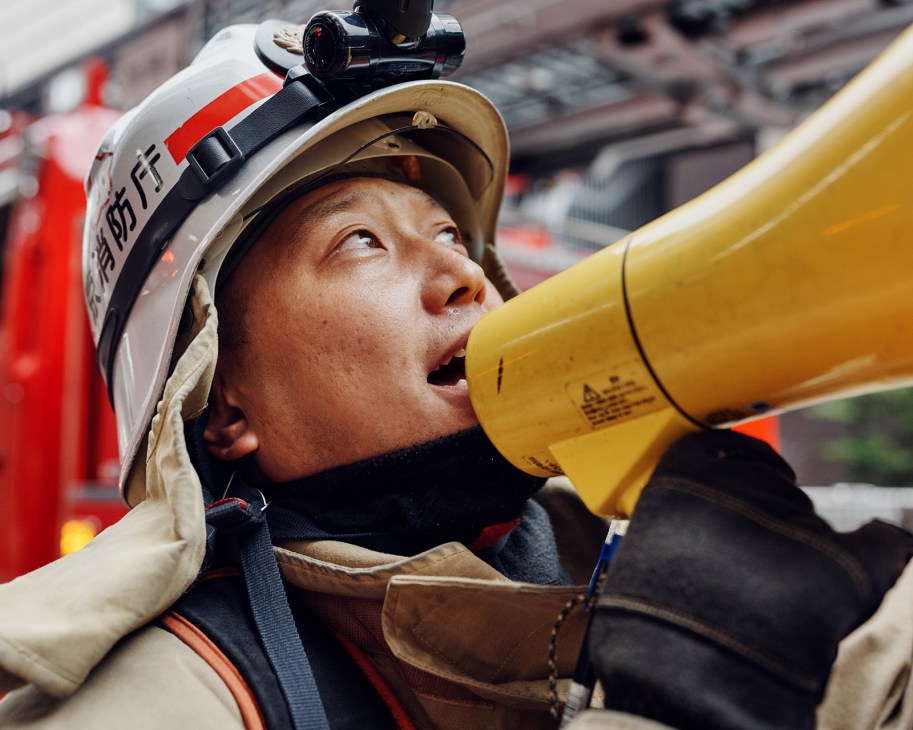
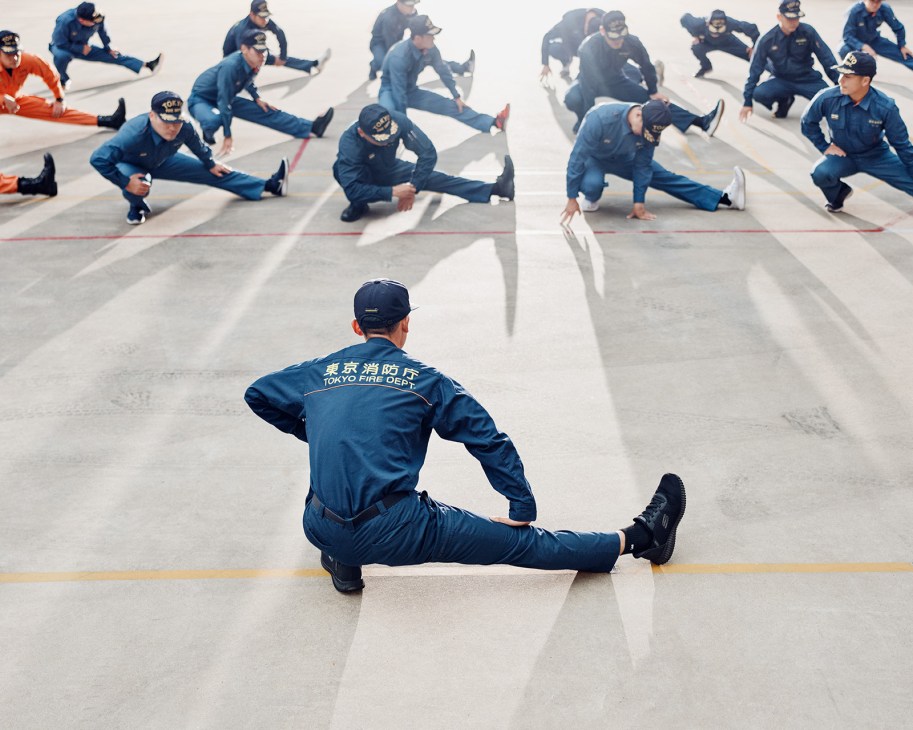
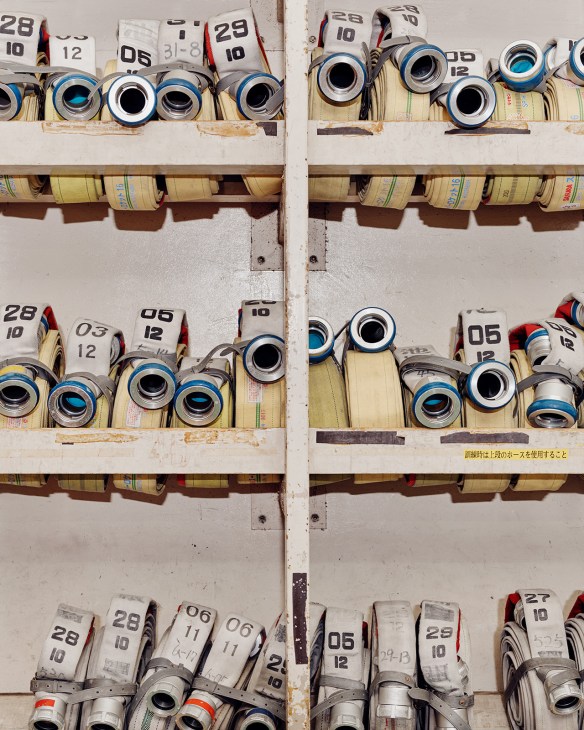
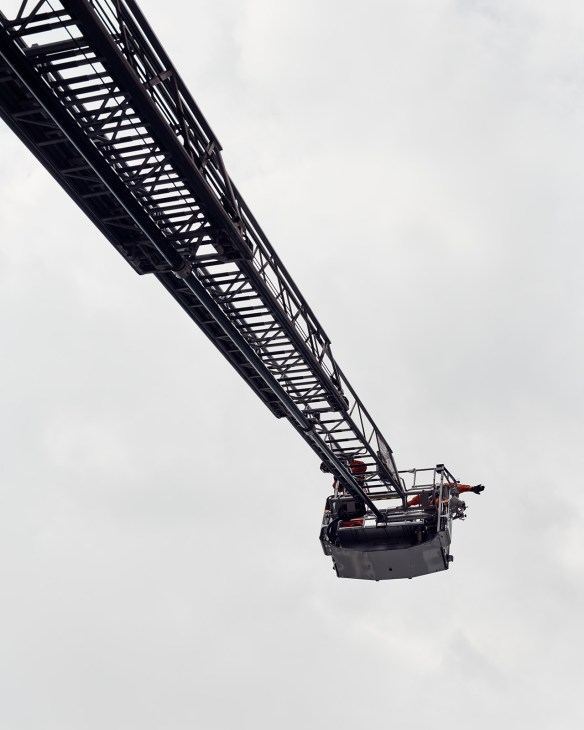
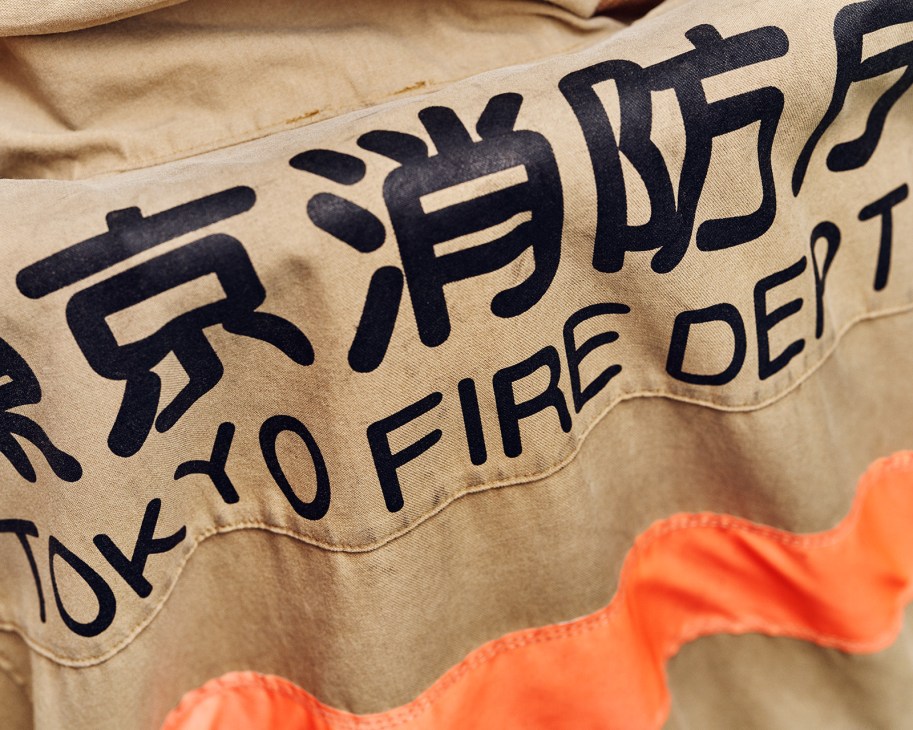
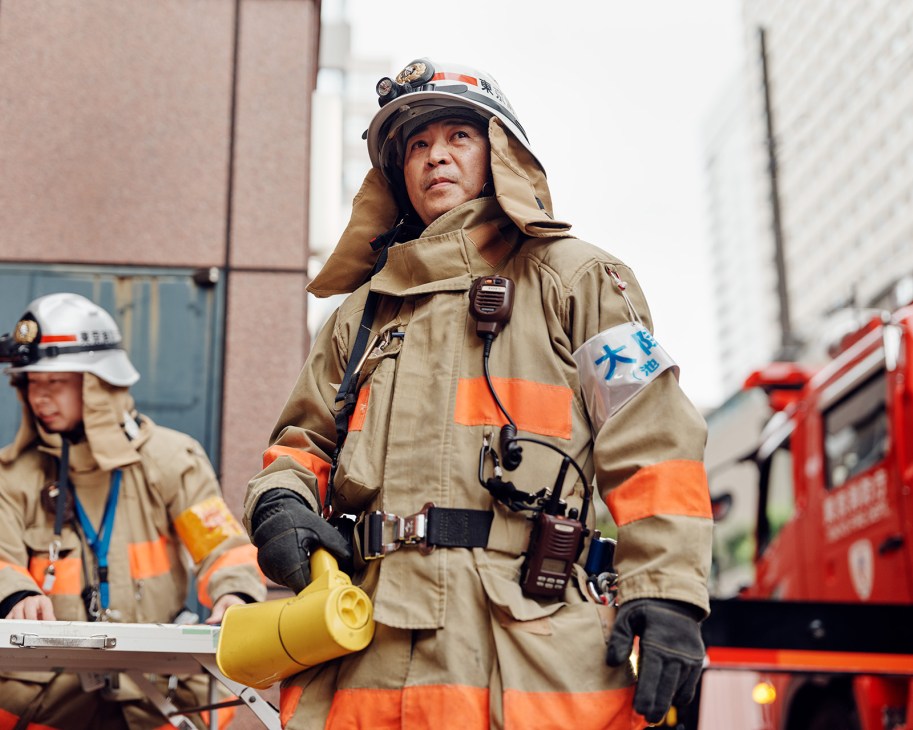
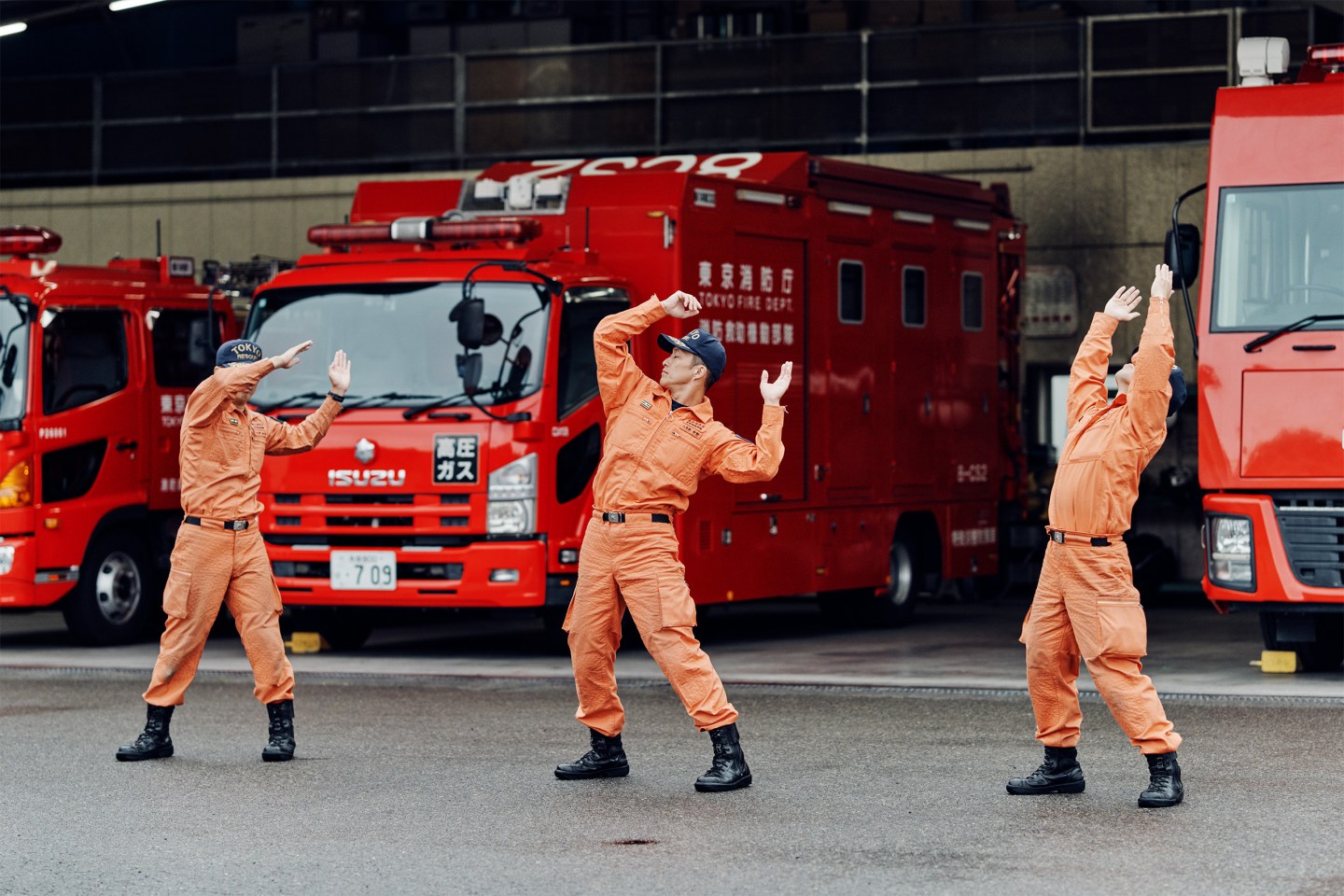
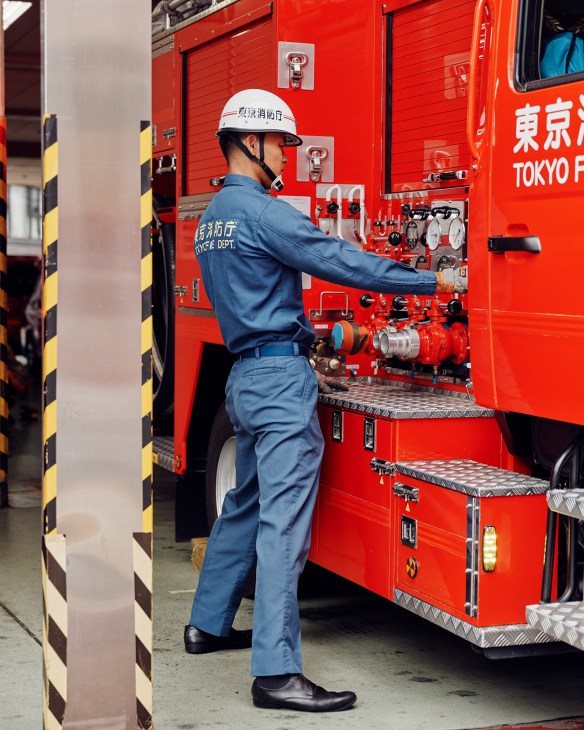
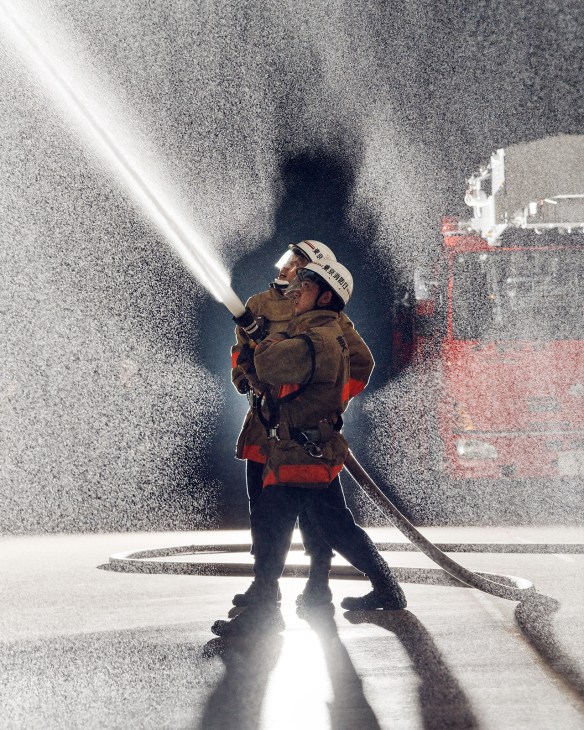
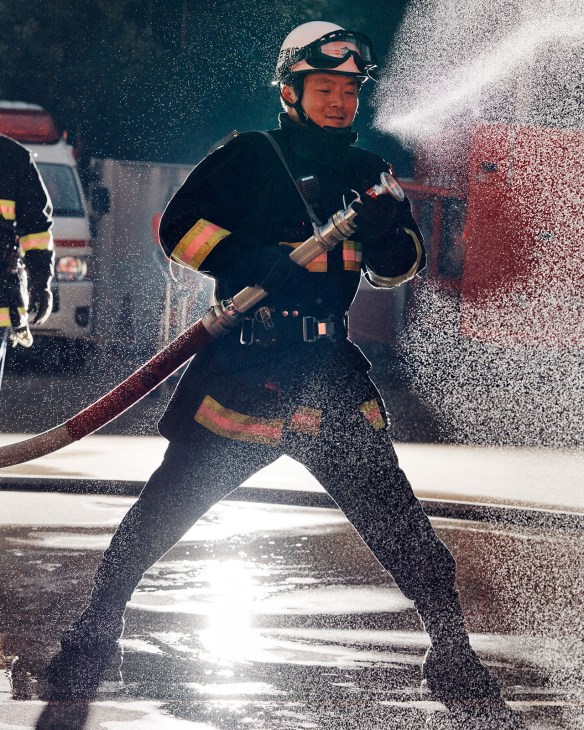
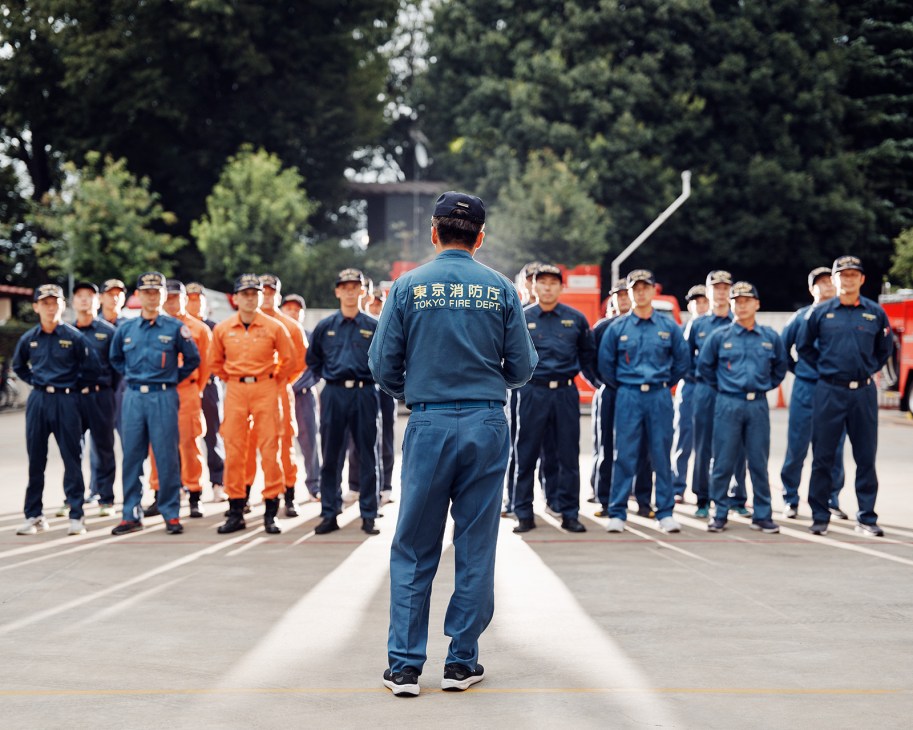
Firefighters and medics have just arrived for their shift at the Ikebukuro Fire Station, one of 81 stations and 200 substations in the metropolitan area. After daily calisthenics come vehicle inspections. Every working part of the gleaming machines is checked: engines are revved, brakes are slammed, sirens are sounded and water-pump switches are flipped. Next, all of the firefighters’ gear is laid out on the garage floor: coats, trousers, boots, gloves, helmets, oxygen masks, stretchers, hoses and defibrillators. At dusk, the whole process will be repeated. “We try to leave here within a minute of the alarm sounding,” says Toru Hishinuma, who heads Ikebukuro’s fire investigations. “Everything has to be ready to go because every second counts.”
From the rear of a water-pump truck, firefighters lower a two-wheeled cart laden with hoses. The Ikebukuro district has one of Tokyo’s busiest railway stations, which links the city centre and suburbs to the north and west. Around it, hotels, department stores, theatres and restaurants pack the labyrinthine streets, many of which are too narrow for fire engines. “If we can’t get the trucks close enough to a fire, we use the carts to move extra hoses,” says Hishinuma. Nearby, firefighters and a paramedic are huddling around several maps. These drivers keep binders of them to memorise the fastest routes to any address within 6 sq km of the station. “On our days off, we go out and wander the streets,” says Shoki Yamada, who drives one of the station’s two water-pump trucks. “I know which streets my truck can and can’t pass through, and which corners are too tight to get around.”
Tokyo has had fire brigades since the Tokugawa shogunate established the city (then called Edo) as its seat of power in the early 17th century. The modern TFD began as a single fire station with 12 firefighters and a Leyland fire engine in 1923, near what is now Tokyo Central Station. The capital has since been ravaged by fires twice: after the Great Kanto Earthquake in 1923 and during the Allied firebombing raids at the end of the Second World War, which destroyed almost 60 per cent of the city’s buildings. Tokyo’s wartime experience led to strict building codes and zoning regulations, which included street-widening initiatives and regular inspections for fire-safety violations. Around this time, the Shobodan – a volunteer corps of 26,600 civilian firefighters – was also formally established.
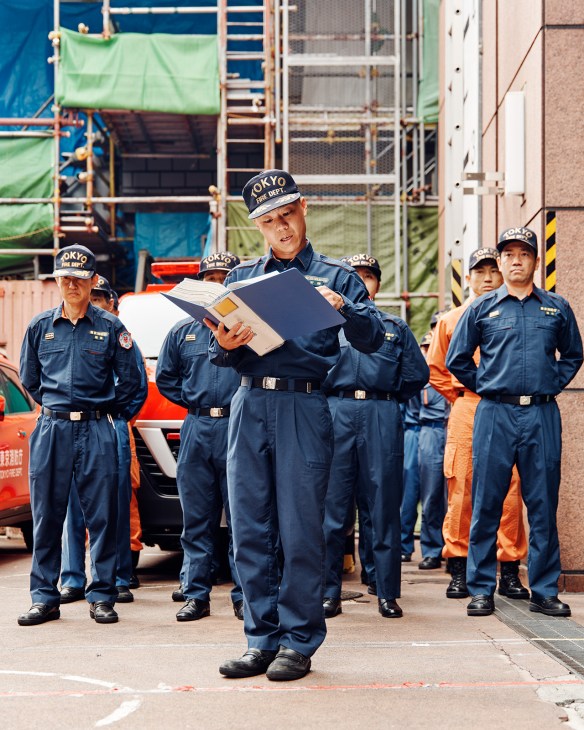
The TFD’s new recruits are young and hail from across the country. “Most people seem to recognise how demanding it is to be a firefighter, working 24-hour shifts and putting your life on the line to save others,” says Ryosuke Tomoguchi, a 37-year-old former Tokyo firefighter who runs Tosho Juku, a cram school for those studying to become one. After six months of training, recruits are assigned to a station. Here, they work one day on, two days off. At the Ikebukuro Fire Station in the city’s northwest, firefighters are on call from 08.30 until 08.40 the following morning and spend the night at the station. During the day, they drill in a half-completed structure behind the building – spraying from trucks, scaling walls with ladders and carrying dummies. Every few weeks, teams participate in night-time sessions that test their skills in the dark.
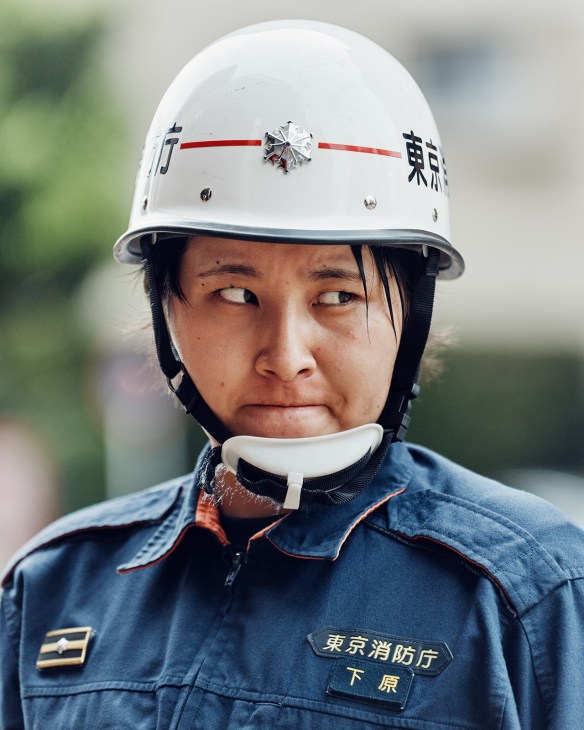
Ayuna Shimohara, who is one of Ikebukuro’s five female firefighters, is put through daily drills that are aimed at reinforcing the basics, such as putting on oxygen masks, connecting hoses and extending ladders. “The drills test your stamina and physical fitness,” says the 24-year-old. Both attributes are crucial, as is adamantine mettle.


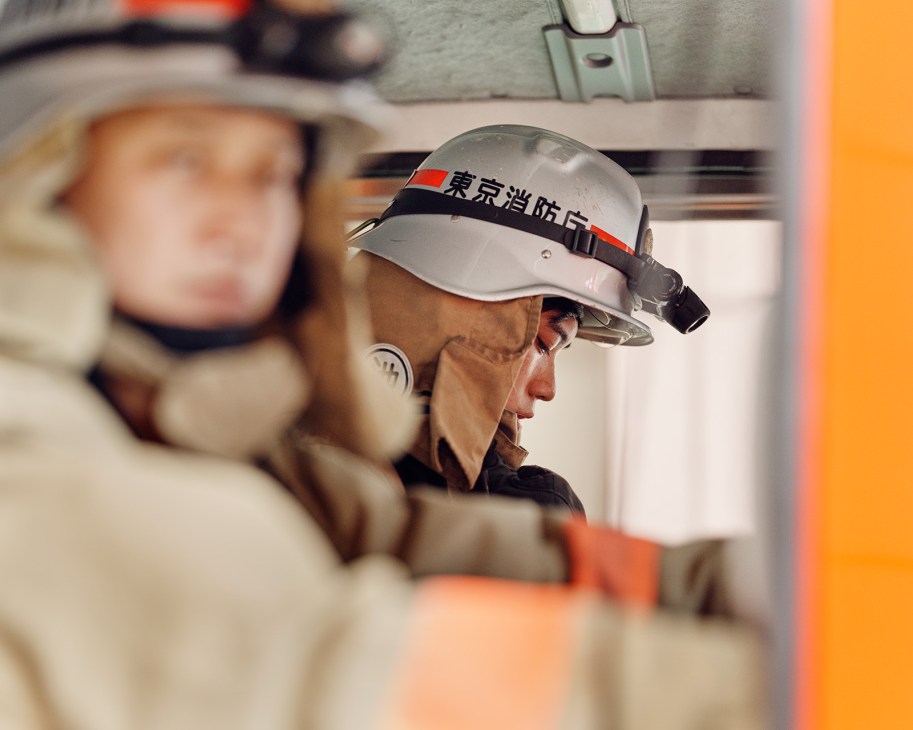
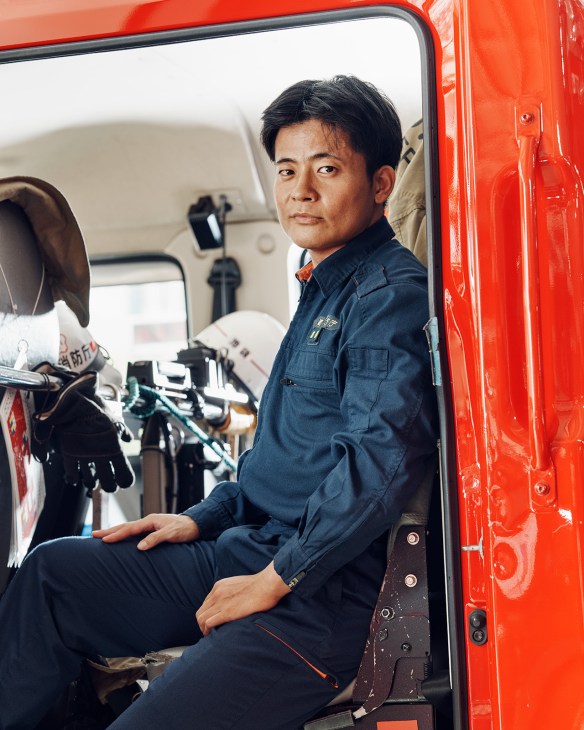
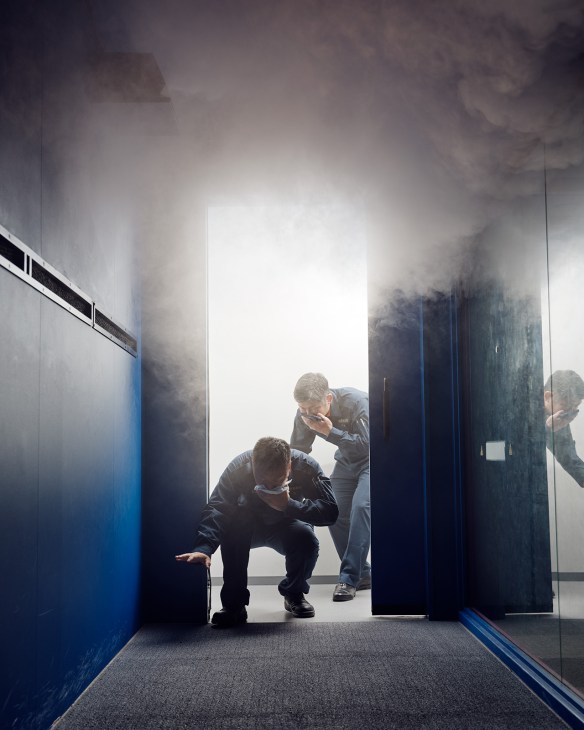
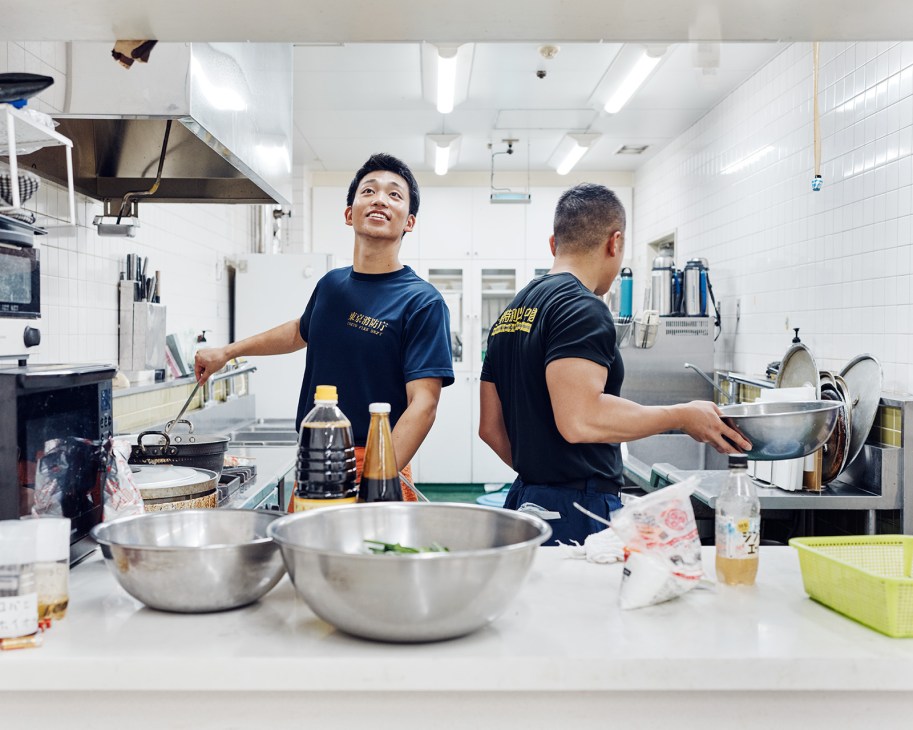
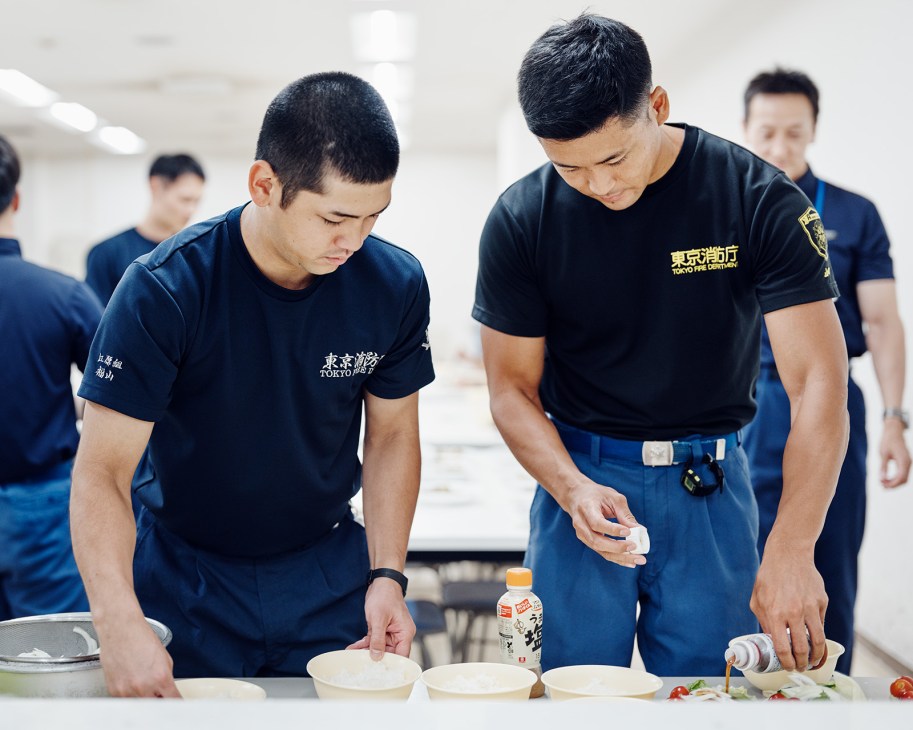
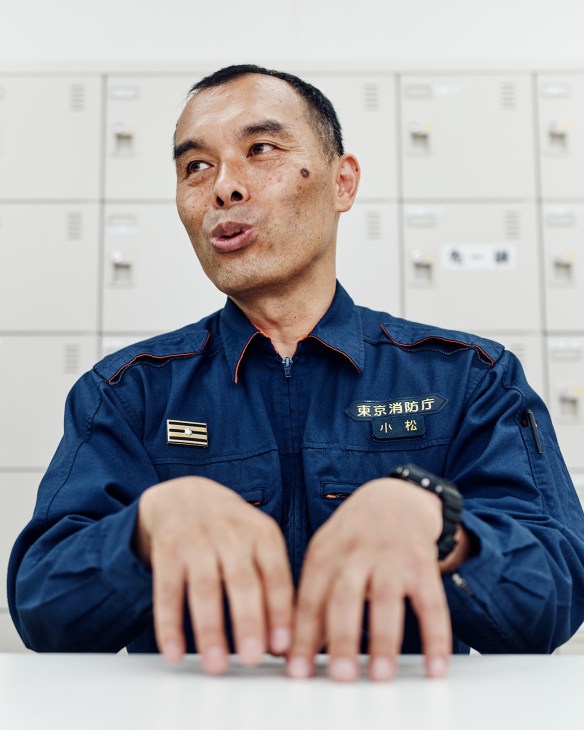
Shortly after Genta Saito joined in 2021, he was dispatched to the scene of a gas explosion at a restaurant. “Our team leader warned us that there might still be gas in the air and a chance of another explosion,” says the baby-faced 27-year-old. “I was so scared that I was shaking.” Masatoshi Komatsu’s most terrifying experience sounds like a firefighting cliché. “Years ago I had to save a kitten that a dog had chased into a tree,” says the 51-year-old driver. Komatsu stood fully outstretched on the top rung of a three-piece extension ladder. “I was so afraid that I would fall.”
The physical demands of training, long hours and lure of higher pay in the private sector lead many TFD firefighters to leave the job before retirement. The average length of service is 16 years and some who stay become instructors at the Honjo Life Safety Learning Centre, in Tokyo’s Sumida ward. One of three that the Tokyo Fire Department operates, the centre opened in 1995 as a free, interactive disaster-simulation theme park for the public to learn about fires, floods, storms and earthquakes. On a weekday, preschoolers push on a door that floodwater is pressing shut from the other side, while a dozen college students take turns duckwalking through a room filled with (harmless) smoke.
In the earthquake room, Monocle and three PR officials are curled up on the floor. A moment later, the ground is bucking violently. “When there’s a big earthquake, you can only think about protecting yourself,” shouts Shinji Kitamura, the centre’s deputy head and a retired firefighter. “You won’t be able to do anything else.” We put on coats and boots to enter a room where we get lashed by wind and rain. “If it’s pouring and you can’t see what’s in front of you, then you shouldn’t be outside,” he says. Kitamura once saw a police officer on a flooded street fall into an open manhole. From simulated disasters, he explains, people learn how to reduce the chances of injury and property damage.
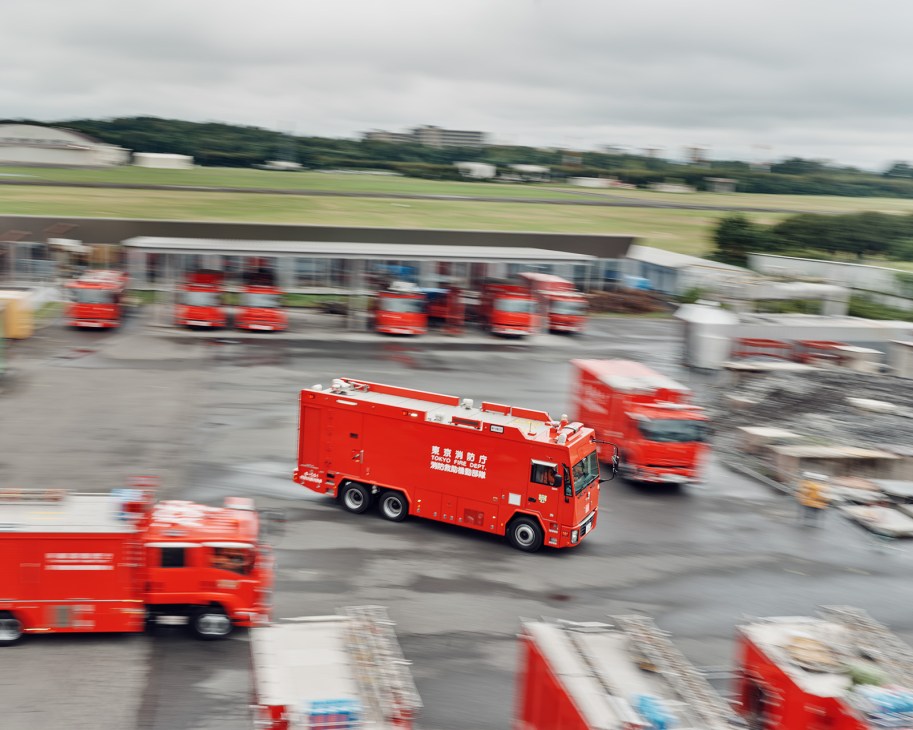
But there’s only so much that the public can prepare for and that an ordinary fire brigade can do. Which is why 8HR exists. It is the only elite squad that can deal with major earthquakes as well as nuclear, biological and chemical disasters. It has machinery capable of digging for survivors in a house buried in a landslide and souped-up trucks to shoot fire-retardant foam at, for example, a burning tyre factory. The unit led the emergency response to the nuclear-reactor meltdowns at Fukushima Daiichi power plant in 2011 (Japan’s worst nuclear accident) and the 2014 eruption of Mount Ontake on the border of Nagano and Gifu prefectures.
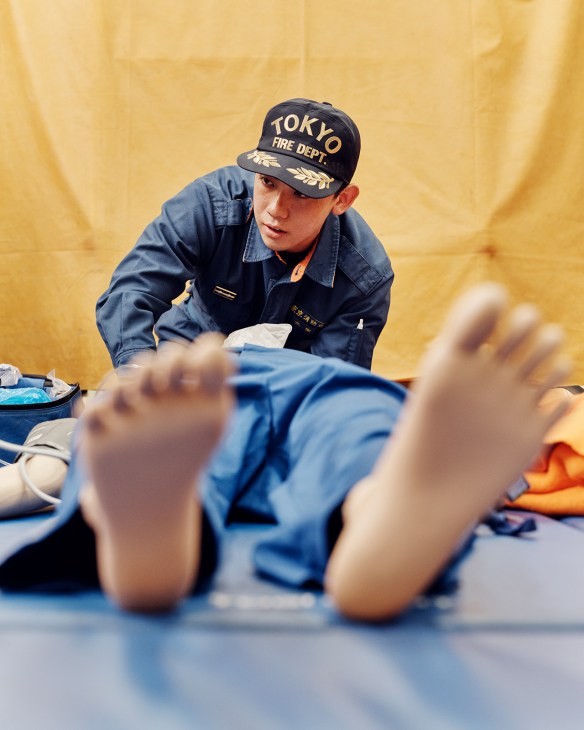
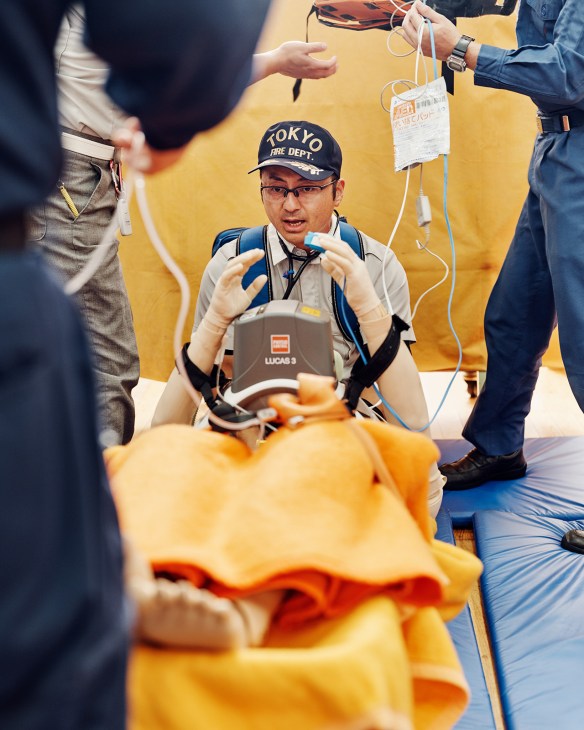
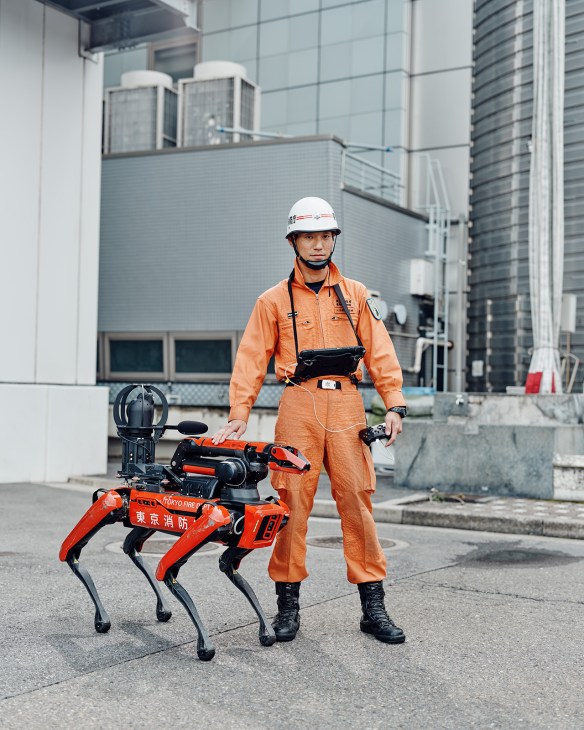
Today’s school attack in Higashiyamato turns out to be less severe than feared: the substance was just pepper spray. The reality is that 8HR rarely sees much serious action. Its members spend the time between drills and callouts testing new equipment. Ryo Yokota, a 36-year-old paramedic, is showing off a dog-like robot. He uses a monitor and video-game controller to get it to pick up objects with a claw. One day the robot could be the eyes and ears of rescuers searching through rubble for earthquake survivors. Across the yard, another team is lowering one of its members upside-down by rope from a balcony to a mat below. “Tokyo has a lot of narrow wells,” says Keita Morikawa, the team’s 41-year-old leader. “This is what we would do to save someone who had fallen into one.” As we watch, Captain Mitsuaki Kobayashi, 8HR’s second in command, leans over. “We must be prepared to deal with anything.”