
Keeping afloat: The world’s next generation of sailors are getting in ship shape at Philippine Transmarine Carriers
There’s a shortage of qualified seafarers across the globe and Filipino cadets are stepping forward to fill the gap. We visit Manila for an inside look at the training operation.
When war broke out between the US, Israel and Iran in February, a refrigerated cargo ship filled with thousands of tonnes of bananas was docking at its destination in the Gulf, Iranian port Bushehr. Explosions on the shore prompted a sudden change of plan. The Filipino crew of this 138-metre-long “reefer”, the Cala Piana, set sail for international waters, still laden with the perishable fruit, through the Strait of Hormuz. The ship’s orders, communicated via Whatsapp from Manila, were to “deep-sea drift” – cut engines, save fuel and await further instructions. With time ticking on the bananas’ shelf life, the Cala Piana managed to unload its cargo at Khor Fakkan, a major port in the UAE.
This operation was co-ordinated by Philippine Transmarine Carriers (PTC) from its 10-storey headquarters in First Maritime Place, Manila. PTC works for 120 ship owners across the globe, managing their vessels while they are at sea, supplying them with crew and training cadets. The group oversees one of the world’s largest pools of maritime professionals. Its growth is emblematic of the Philippines’ dominance of 21st-century seafaring: of the world’s 2.5 million seafarers, a fifth hail from the Southeast Asian archipelago. “Filipinos are moving the world,” Gerardo Borromeo, PTC’s CEO, tells Monocle.


These men and women tend to sail under the public’s radar – until tragedy strikes. Two Filipino seafarers died in August after an Iranian attack on a Saudi Arabian crude-oil tanker, Sidr, near the Strait of Hormuz – a key channel for global energy supply that has been a dangerous chokepoint for much of 2026. Ships risking the voyage face attack from Iran, the US or both.
The ongoing Iran war is the second major disruption to seafarers’ lives this decade following the coronavirus pandemic, which forced crews to remain at sea well past their 11-month contract cap. Spikes in petrol prices have underlined the cost of interrupting oil supplies at sea but the Cala Piana’s experience highlights shipping’s broader significance: transporting 80 per cent of the world’s goods, including food. Industry insiders talk about a shortage of seafarers – a threat to global trade that can’t be resolved in Washington.
Shipping has enjoyed a bumper year financially. Conflict in the Middle East is pushing up tanker rates and dockyards can’t build quickly enough. A very large crude carrier (VLCC) changed hands in September for a record $200m (€177m). But while the 2026 Seafarer Workforce Report, a key industry resource published every five years, documented double-digit fleet expansion since 2021 and a 35 per cent surge in demand for skilled seafarers, it also flagged a growing shortfall of officers.
“It takes under three years to build a ship but 12 to 15 years to train a captain or chief engineer,” says Borromeo, who also chairs the World Maritime University’s executive board. Given the legal and insurance implications, fully automated ships are not on the horizon – so much of that gap will be closed in the Philippines. “Manila is the seafaring capital of the world,” adds Borromeo. “Our job is to build the talent pipeline.”
Filipinos have been sailing silver, spices and other treasures around the world for centuries. The Museo del Galeón, a new maritime museum that opened in May near Manila Bay, highlights the country’s storied role in the success of Spanish trade routes. But the country’s current position tracks the growth of PTC into one of the world’s largest manning companies, with 50,000 seafarers deployed at any one time across cargo and cruise ships. PTC was established in 1979 when its founder, Carlos Salinas, partnered with Ugland, a Norwegian shipping firm, to supply crew. With high unemployment in the Philippines and trade union activity in Europe at the time, the outsourcing agreement proved so successful that it eventually led to most Norwegian ships being operated by crews at least one-third Filipino.
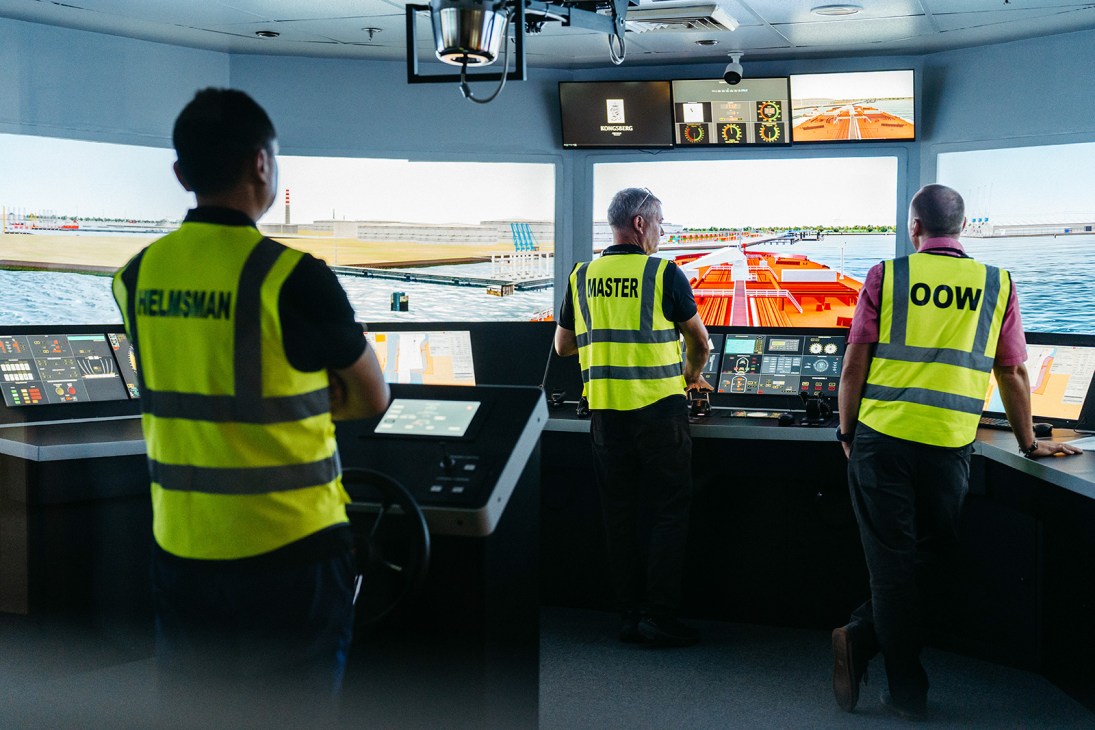
Most cargo ships rely on a skeleton crew of about 20 seafarers – fewer than an Airbus A380 – divided between the deck, engine room and galley. Extensive and continual certification is required and, as part of the industry’s decarbonisation goals, every seafarer must get to grips with the adoption of cleaner fuels, such as methanol and ammonia, replacing heavy “bunker” oil. Serving officers and ratings (the non-commissioned sailors) report to First Maritime Place for training and assessment. Monocle observes as a trio of deck officers guiding a tanker into a digitised Rotterdam under the eyes of veteran instructors – some of whom remember navigating by sextant, waiting for letters from home and receiving weather reports by fax. PTC established its training arm, the Philippine Center for Advanced Maritime Simulation and Training (Philcamsat), in 1992. Today it’s one of more than 100 maritime training centres across the Philippines. At the Mapúa-PTC College of Maritime Education and Training, undergraduates study a four-year bachelor’s degree. Third-year cadets report for basic training at the Mast campus in Cavite province. PTC’s tropical training campus sits where the river Maragondon flows into Manila Bay. Seafarers must be multitaskers and master skills that wouldn’t be classed as “basic” in any other workplace. There’s a controlled fire on deck and gas tanks are ablaze; the area is surrounded by blue shipping containers. Mariners in yellow firefighting suits approach the flames in choreographed groups, providing support to the leader, who holds a high-pressure hose. When it’s over, they head to the swimming pool to cool off.


Spending a year at sea is the final requirement for every cadet and an educational chokepoint. Only 30 to 40 of the shipowners that PTC works with offer cadet berths on their vessels. Chelzea Mortel is a 21-year-old cadet. While waiting to secure a berth, she is helping her mother cook at a school canteen. Her father worked at sea and now three of his five daughters are ocean-bound. Though Mortel has yet to leave the Philippines, like many of her classmates, her dream is to secure a lucrative contract on an oil tanker. Fifty years since the government encouraged Filipinos to seek their fortunes at sea, the economics remain little changed. While the average job in the country pays $4,000 (€3,520) a year, seafarers usually send home $15,000 (€13,200) tax-free. Captains, meanwhile, sometimes earn that sum every month. Pay can double when sailing through high-risk zones.
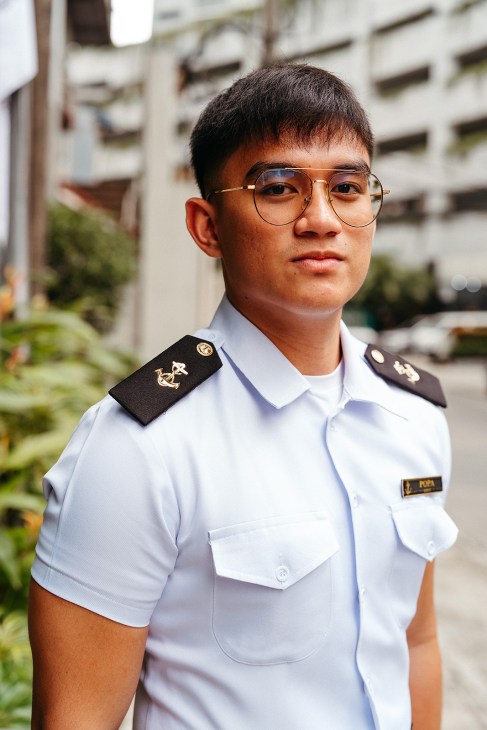
Gabriel Popa can’t wait to cast off. The 22-year-old cadet is driving a hotel shuttle bus in Manila while awaiting a berth. He talks of family sacrifice and believes that God will protect his boat from missiles and drones – though not, perhaps, from monotony and solitude.
Seafarer welfare has improved over the past few decades. Conditions on merchant vessels, where inspections and audits from myriad organisations are frequent, are worlds away from those of larger and less regulated deep-sea fishing fleets. Reverend Canon Stephen Miller, the head of East Asia at the Mission to Seafarers, a charity advocating for those in the industry, calls the 2006 Maritime Labour Convention a “game-changer”. This “Seafarers’ Bill of Rights” placed welfare on the same level of importance as seaworthiness and the environment, even though implementation varies between countries and ships.
Miller has spent 26 years supporting seafarers, first in Rotterdam, then in Dubai and now in Hong Kong. The Church of England minister identifies loneliness and isolation as their most common struggles. Small, multinational crews mean that officers often work shifts with little human interaction. Meanwhile, socialising in communal mess rooms has been replaced by alone time in cabins and Starlink connectivity. Family updates while away at sea can cause distress. Miller’s team in the Philippines educates seafarers and their loved ones about these modern pitfalls. “It is easy to be in contact with social media but it’s not easy to communicate,” he says. Even under the best conditions, working at sea for up to 11 months at a time is gruelling. Rates of suicide among seafarers are worryingly high, frequently surpassing the number of deaths caused by onboard injuries.
Engineer Marianne Camille Alpuerto is part of PTC’s plan to bridge this generational divide. At 31 she’s young for an education and training officer, and is a trusted and relatable mentor for young cadets “No matter how strong you think you are, the sea will wreck you emotionally, physically and mentally,” she says. “There are no days off and every day is a Monday.”
Beyond training, Alpuerto’s role extends to getting more women into the classroom and supporting the transition from school to sea. Female seafarers make up less than 1 per cent of the global workforce and continue to face sexism from male colleagues of all stripes. “There’s usually one rotten apple on board,” says Alpuerto.
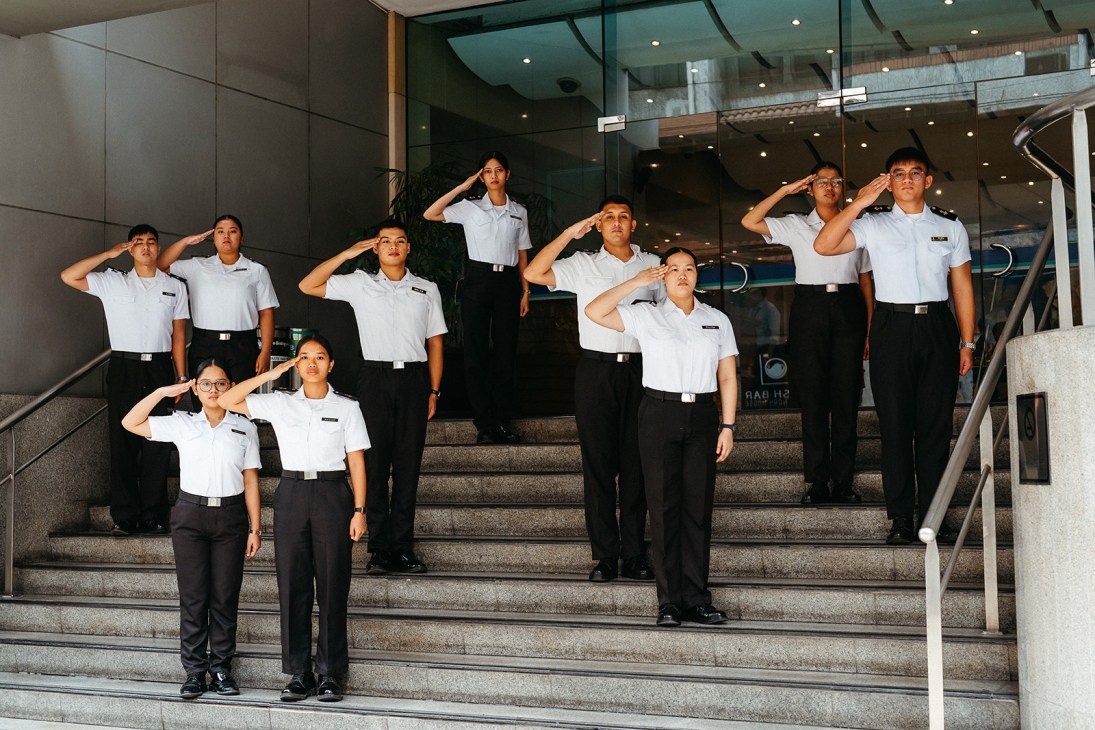
The current student body of 442 cadets at the Mapúa-PTC College of Maritime Education and Training includes 19 women. “More are discovering shipping,” she says proudly. As PTC cadets Mortel and Popa look forward to deploying in January, the shipping forecast for the rest of the decade is mixed. A conservative industry is rapidly modernising amid rougher seas, buffeted by climate change and a growing shadow fleet offering large sums to seafarers willing to ignore sanctions and sail without a beacon. Miller hopes that the increased competition for talent could result in the return of full-time jobs, ending the “tyranny” of temporary voyage contracts. That ship has probably sailed but officers should be in a stronger position to demand pensions, health care and other benefits. However, the current shortfall will also increase the pressure to spend longer at sea, where threats multiply and metastasise.
The Bab el-Mandeb Strait, the entry point to the Suez Canal for Europe-bound container ships, could become the next Strait of Hormuz. Meanwhile, the Cala Piana’s Filipino ship managers and crew have learnt to navigate a new challenge before docking in Sharjah. US warships enforcing an embargo on Iran clear all approaching ships and the inspection process can take up to 24 hours – precious time for perishable cargo and a tense wait for the 20 or so people on board.
Speaking at a Delhi summit in September, Ferdinand Marcos Jr, the president of the Philippines, called on all belligerents to avoid bombing ships with Filipino crews. It was a welcome recognition on the international stage of the risks that they face but firm action will be required to safeguard one of his country’s soft-power assets. India has jumped to number two in global seafarer rankings, with ambitious targets for 2030 – a shot across the bow for the manning crews of Manila. “The Philippines has become a talent powerhouse over the past 40 years,” says Borromeo. “But what do we do for the next 40? We can’t just rely on our past successes.” Have Filipino seafaring numbers peaked? “Not at all,” he says.
Abandon ship
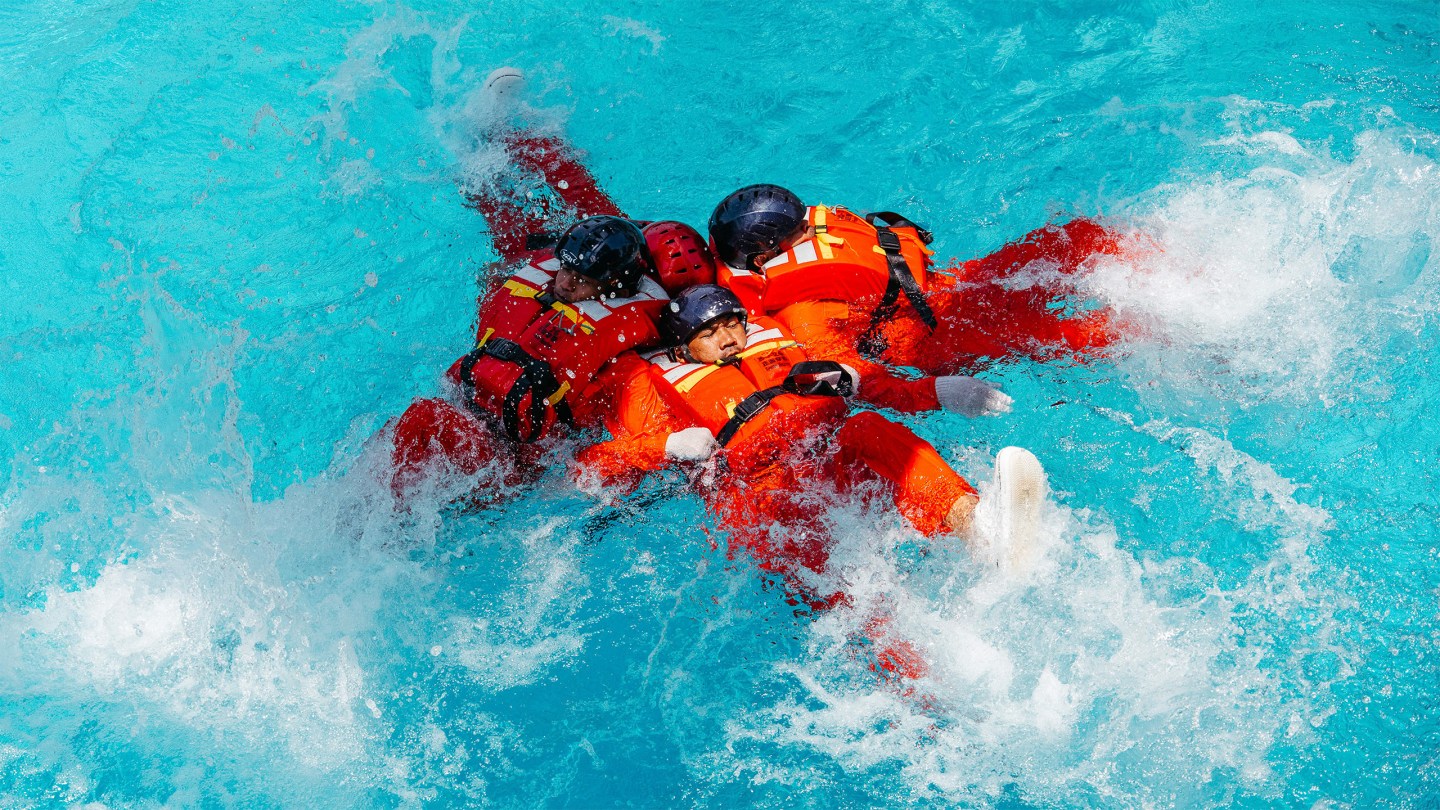
As the morning sun beats down on the Mast maritime training campus in Cavite, Monocle watches a group of cadets in life vests and orange boilersuits jump off a three-metre-tall platform into a swimming pool, then paddle to an inflatable raft. Plenty of sailors can’t swim but personal survival is a must. “I can float,” says engineer-turned-instructor Marianne Camille Alpuerto. “Aeroplane pilots can’t actually fly,” she adds. Next, they learn “circle of survival” techniques for preserving body heat, attracting attention and reaching a search-and-rescue line in a rough swell.
Abandoning a ship is not as easy as it sounds. To prepare for Arctic seas, trainees change into bright-red immersion suits, waddle back to the water and complete two lengths, swimming backstroke. Seafarers working on offshore supply rigs must learn how to exit a submerged helicopter that has crash-landed in the sea. “Prepare to ditch,” says instructor Alfredo Mercado, while he lowers the training chopper into the pool. “Brace, brace, brace.”
When conditions allow, “free-fall” orange lifeboats – standard on most modern cargo ships – are the safest bet. These fully enclosed, engine-powered and self-righting capsules are angled on the side of the deck at 45 degrees, ready to plunge 25 seafarers 15 or 20 metres into the water. Monocle is strapped into one of the anatomically shaped seats for a practice drill. Anxiety builds as soon as the door is closed and the captain starts the engine. The smell of oil makes it all feel very real but, seconds later, the raft thuds against the water and moves back to the riverbank. Land ahoy!


Global maritime trade in numbers
85,148: Number of ships in global fleet.
7,516: Number of Panama flagged ships – current world leader.
2,565,580: Estimated number of certified sesafarers.
20: Size of typical crew, led by the captain, chief officer and chief engineer.