Gulf states project an image of unity but a proxy media war tells a different story
Under normal circumstances, the Gulf monarchies are at pains to project an image of calm, cohesion and predictability. Disputes are managed quietly and disagreements smoothed over with summitry and ritual declarations of unity. But the latest escalation between the UAE and Saudi Arabia over Yemen suggests that those conventions are breaking down. Long-standing points of friction are now out in the open – and in an unprecedented way.
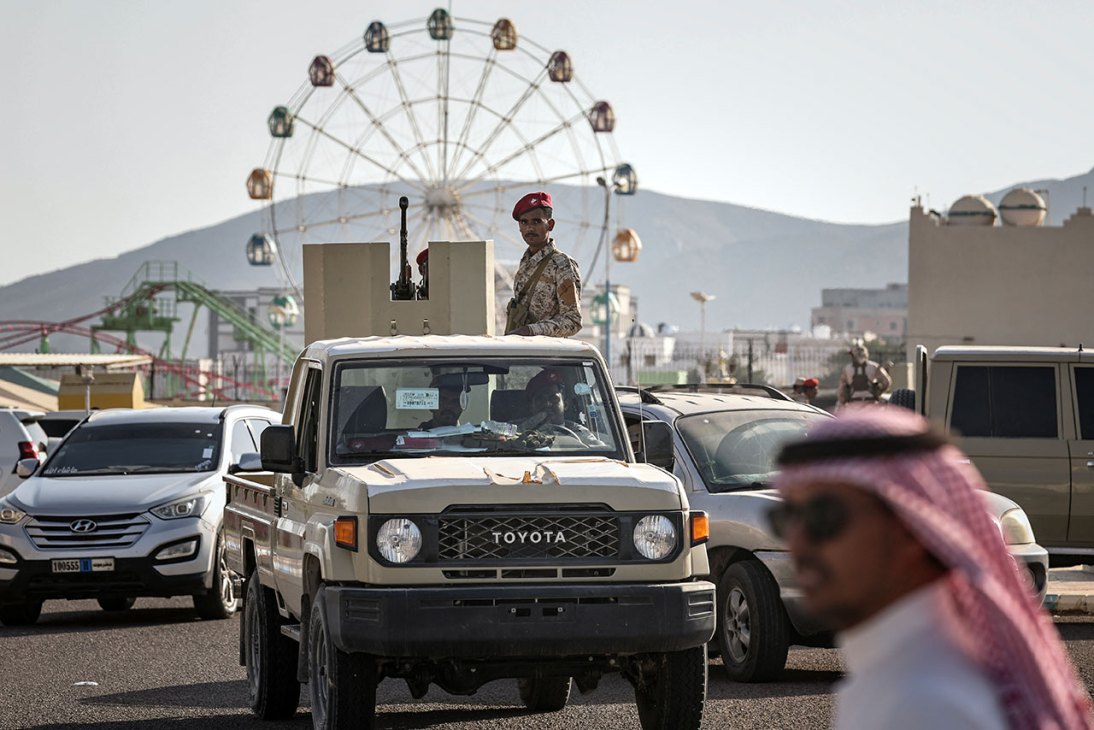
The immediate flashpoint was a burst of reporting by Saudi state media after journalists were granted access to detention facilities on former UAE military bases in Yemen. The access was facilitated by the Yemeni government, which is backed by a Saudi-led coalition. It brought renewed attention to allegations that Emirati forces ran a network of secret prisons during Yemen’s decade-long civil war. Abu Dhabi has categorically denied the claims. What mattered politically was not just the reporting but the decision to allow it.
It seems that Riyadh and Abu Dhabi are now prepared to use the media as leverage. The co-ordinated nature of the coverage marked a clear break from the Gulf’s traditional instinct to keep disagreements behind closed doors. It also deepened one of the region’s sharpest rifts, raising the prospect of a fallout with consequences well beyond Yemen.
This is not really about detention centres. It is about power, primacy and diverging visions for the Middle East. Saudi Arabia and the UAE are both engaged in ambitious national projects, each determined to set the pace for the region’s economic, political and security future. As their interests have become less parallel – in Yemen, Sudan, trade policy and influence – so too has their tolerance for quiet compromise.
Media has become the chosen battleground because it is effective and deniable. It allows pressure to be applied without the risks of economic retaliation or military escalation. Carefully curated access, selective amplification and strategic silence now sit alongside diplomacy as tools of the trade. The messaging is no longer subtle.
The rivalry is also being exported. Both countries are shoring up alliances outside the Gulf, pulling external powers into what increasingly resembles a broader strategic contest. Saudi Arabia has strengthened defence and security ties with Pakistan – a nuclear-armed state – as well as with Turkey, a regional power with its own ambitions. The UAE, meanwhile, has leaned into a growing axis with India and Israel, focusing on technology, intelligence-sharing and defence co-operation.
These partnerships are not virtue signalling – they are insurance policies. As the US recalibrates its role in the Middle East, Gulf states are seeking autonomy, leverage and deterrence. That these alliances now align so neatly along Gulf faultlines suggests that the rivalry between Riyadh and Abu Dhabi is no longer contained. It is shaping relationships from South Asia to the eastern Mediterranean.
There is a final irony. Even as the two Gulf heavyweights trade blows through media exposure and diplomatic manoeuvring, both are positioning themselves as responsible custodians of regional stability. Nowhere is this more striking than in Gaza, where Saudi Arabia and the UAE are expected to sit on international boards shaping postwar governance and reconstruction. The contrast is hard to ignore: advocates of peace abroad, while relations at home remain brittle and unresolved. This is a new phase in Gulf politics – one that is more exposed, more competitive and less carefully choreographed. The age of quiet co-ordination appears to be over.
Inzamam Rashid is Monocle’s Gulf correspondent. Read his take on how the year will shape up in the region here. For more opinion, analysis and insight, subscribe to Monocle today.