Five simple ways to seed change in your neighbourhood for greener cities
Though modest patches of urban greenery are often taken for granted, award-winning garden designer Lottie Delamain believes that they can bring together fractured cities and help to restore their resilience.
1.
Make the most of overlooked spaces
Have a balcony? Then create a bosco verticale (vertical forest). Cities are full of unlikely growing spots. In Paris, car parks have been turned into mushroom farms. In Tokyo, herbs and small crops grow inside repurposed office spaces; the main lobby of recruitment firm Pasona’s headquarters even contains a miniature rice paddy. Rethink where food can grow and forgotten corners of the city will bloom.
2.
Encourage biodiversity
“More habitats mean more species – and that means more biodiversity,” says Delamain. So make smart interventions, from building wet environments using diverted rainwater to creating mounds so that there are higher and lower areas. Complex soil structures, meanwhile, can improve water absorption and help to offset flooding.
3.
Plant an orchard
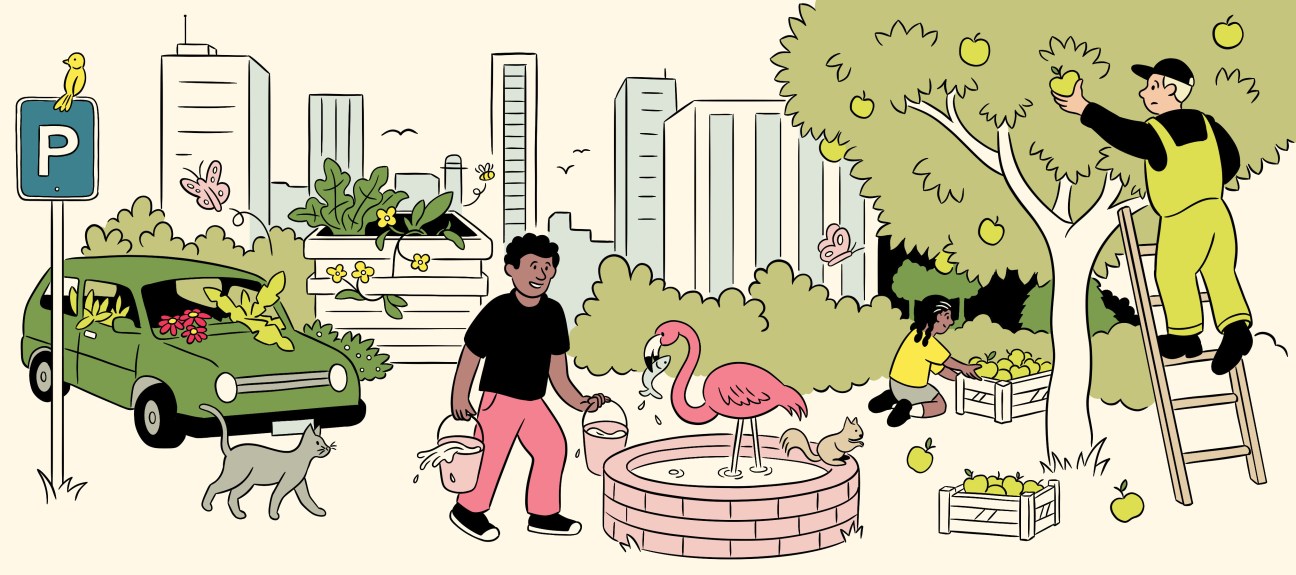
If your neighbourhood has a patch of land going spare, consider planting a community orchard. Fruit trees are generous; they provide baskets of apples, shade in the summer and a fun excuse for harvest gatherings. They’re also useful in terms of bolstering a nation’s food resilience and sovereignty. Bringing people together is also a good argument against automation. “If you can press a button and it all gets watered, you don’t really get to know and invest in your garden,” says Delamain.
4.
Think longer term
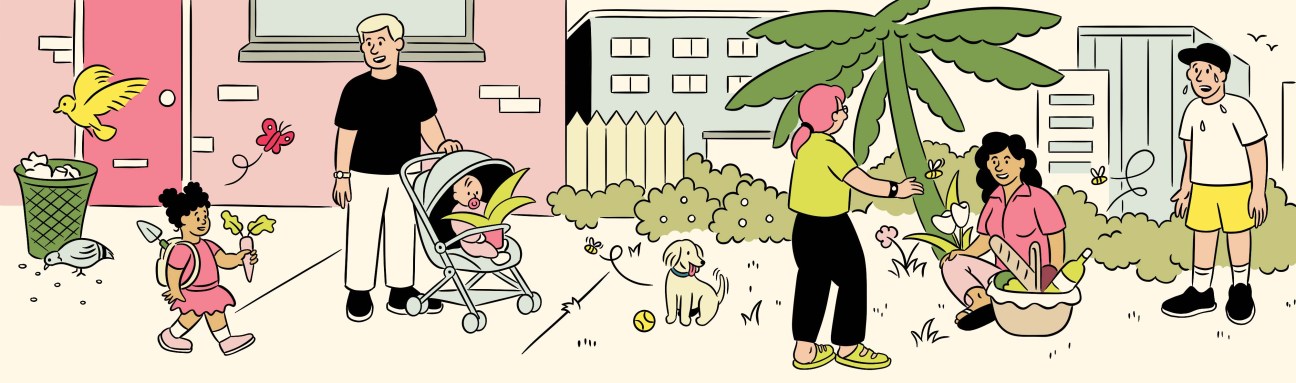
Children are naturally curious and surprisingly good gardeners. Every school should have a small jungle of pots and plants for them to explore. Give them a patch of soil and they’ll happily dig in. “Before you know it, you will have converted a whole generation,” says Delamain. The same goes for building community. A small act of gardening could have long-term effects. “I just don’t think anybody could leave a community gardening club without feeling a bit better about life,” says Delamain. Join a club, get your hands in the soil and trade a few tips over compost. It’s a heartwarming pastime – and, according to Delamain, “gardening clubs are full of the nicest people on the planet”.
5.
Create a microclimate
As our planet warms, consider planting trees in arid places to transform once inhospitable dry zones into lush oases. Even in subtropical megacities, you can still create the coolest place in town. Plus, it means you’ll have somewhere to lie down. “We’re designed to be in a natural environment, but now live in this very concrete world,” she says. It can be on the grass or on a bench, simply somewhere to properly immerse yourself. Sprawl in the middle of pots and planters, look at the canopy of trees, listen to the blackbird singing, sunbathe and enjoy your garden.
Read next:
Inside Paris’s secret gardens: How rooftop re-wilding projects are turning the city green