

At the Black Sea Security Forum in Odesa, Ukraine looks increasingly like the leader of the free world
Since Russia’s invasion of Ukraine in 2022, Kyiv has become a pioneer in drone warfare, diplomacy and security.
Among all the events on the calendar of diplomatic and security conferences, the Black Sea Security Forum (BSSF) in Odesa can claim that it is not discussing these matters in the abstract. The host city is still under frequent Russian air attack: in the days leading up to this year’s forum, at least one person was killed and several more injured by Russian strikes on various targets in the city, while three foreign ships were hit by Russian drones as they attempted to come and go from Odesa’s port. The night after the event, five people were injured in another Russian air raid.
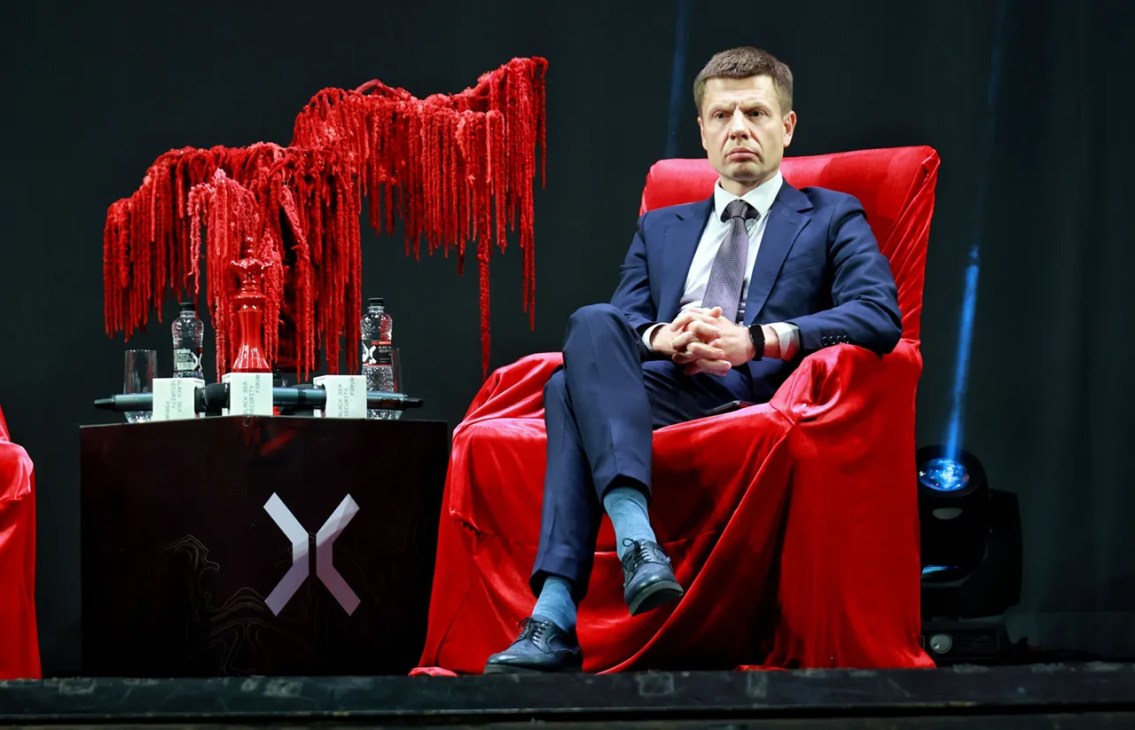
But the show – held largely inside Odesa’s magnificent opera house – went on. “We’ve already proved that such big events can happen in Odesa,” says Oleksiy Goncharenko, the Ukrainian MP who launched the BSSF with British peer Lord Michael Ashcroft in 2024. “We are ambitious. We want to make this a great tradition, and we want to show that Odesa is rethinking itself and becoming the second centre of Ukraine. Yes, Ukraine has one capital but a serious country should have several centres of gravity – and Odesa today is probably the most important.”
There are obvious logistical difficulties with convening the present an event in such circumstances. It is not currently possible to fly to Odesa, so guests arrive by road or rail from elsewhere in Ukraine or – like this reporter – by road from Chisinau, in neighbouring Moldova, about four or five hours away, depending on the queues at the border. The arguable upside of this is that everybody who attends the Black Sea Security Forum is someone who really wants to be there. This year’s headliners included several other Ukrainian MPs – mostly, like Goncharenko, from opposition parties – as well as former Ukrainian president Petro Poroshenko, Georgia’s fifth president, Salome Zourabichvili, a handful of US congresspeople, and Reza Pahlavi, son of the last Shah of Iran, who is currently pitching for the overthrow of the regime that overthrew his father.
“I believe in Ukraine’s sovereignty and freedom,” says US senator Ruben Gallego of Arizona, when asked why he finds himself waiting out an air-raid alert in a hotel shelter. “But it’s really symbolic of where the world is going to go. If Ukraine falls to the aggression of Russia, it’s going to give a lesson not just to Russia but to other countries about what they can and can’t get away with.”
This has been true for a little over four years. But what is different this year – certainly when measured against last year’s Black Sea Security Forum, which Monocle also attended – is a cautious but unmistakable optimism, not only that Ukraine is at the very least holding its own on the battlefield but also that it is beginning to project itself elsewhere as an increasingly serious global power. The lessons that Ukraine has been compelled to learn the hard way turn out to have exportable applications.
This is most obviously the case with battlefield technology. Saudi Arabia, Qatar and the UAE all hastened to conclude defence and security arrangements with Ukraine when they found themselves on the receiving end of modern drone warfare earlier this year. The BSSF is accordingly abuzz with representatives from domestic and foreign drone start-ups, for whom Ukraine’s armed forces are grateful test pilots. But to cite just one other – though grimly related – example, Ukraine also now finds itself a world leader in addressing the injuries, both physical and psychological, caused by 21st-century warfare.
“At the beginning we saw that limb reconstruction and prosthetics were going to be very needed,” says Olga Rudnieva, CEO of Superhumans, a Ukrainian NGO offering free rehabilitation services to severely wounded soldiers and civilians. “But what you couldn’t have predicted then was the need for facial reconstructions. We mostly see drone injuries, which are usually in the upper parts of the body. So the idea now is to create a full ecosystem where the patient gets everything: psychological support, prosthetics, surgical support and rehabilitation. We also added social reintegration, helping our patients to find new roles in life, because it’s a pity if they are sitting at home without having a reason to leave their apartment.”
It is difficult to think of a punishment to visit upon Vladimir Putin that might be remotely commensurate with the horrors that his absurd war has inflicted on Ukraine. It would be the merest karmic justice if the inadvertent legacy of his revanchist delusions proves to be turning Russia’s neighbour into something like the leader of the free world.
“For the first three years of the war, we were coming to other countries only with our problems,” says Hanna Shelest of foreign-policy think-tank Ukrainian Prism. “Today we’re coming with solutions. Maritime security, you’re welcome, food security, you’re welcome. Now it’s drone diplomacy. That’s our expertise, that’s our technology. It’s our time to help you.”