Don’t bury your head in the sand – here’s how to be on your best beach behaviour
Nations with strong beach-going traditions have their own strict sets of rules and rituals. So, pay close attention to the dos and don’ts of whichever stretch of sand you find yourself on this summer.
As soon as the water warms up, people from all corners of the Mediterranean and beyond make for the beach. Whether you’re in the windswept Aeolian islands, on Beirut’s Sporting Club Beach or sequestered in a calm corner of Cagliari, there are unspoken rules governing good and bad beach behaviour.
In my native Portugal, children come to understand these rules before they learn how to swim. I still remember the ritual of going to the beach on the first day of the summer holidays, which involved the careful selection by my family of the best spot for shade and sea access. Why such care? Because from that day on, this hallowed stretch of sand was ours for the season. Amazingly, everyone understood and respected the system. Wander along a Portuguese beach at the end of the day and you will spy hundreds of colourful parasols delineating spaces that local families will return to the next morning.
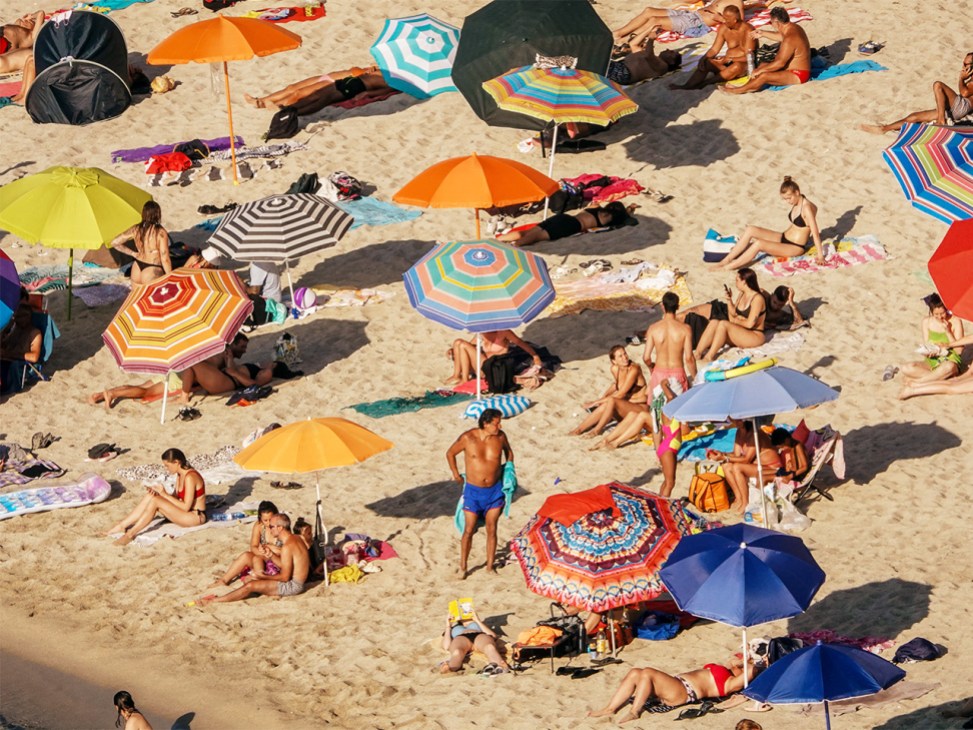
In Italy, personal space is more regulated. Here stabilimenti balneari (bathing establishments) or bagni dominate the beaches. Orderly rows of sunbeds and shades are arranged with military precision. But there’s still ritual here: many are booked by the same families year in, year out. This is a different form of beach etiquette to Portugal – an address, yes, but a fixed one that can sometimes last generations.
Another culturally specific question that bathers must ask themselves is one of comportment and apparel: how naked is too naked? In Spain, the answer is simple. Along the Costa Brava and across the Balearics, topless bathing draws no glances or whispers, as it might do in northern climes. The real faux pas isn’t taking your top off, it’s flinching when someone else does (take note, travelling Brits, Germans and Scandis). Further east, Greece has a different etiquette. It has little to do with what you wear, where you lay your towel or plant a parasol. Instead, it’s about what you’re willing to share. If a nearby family slices a watermelon and holds out a piece, you never say “no”. All Hellenic hospitality begins with sharing – and accepting – food.
In France, participation in rituals is more a matter of timing. On the Côte d’Azur, the beach empties not because the sun’s afternoon rays are too harsh but because lunch has rumbled around. By early afternoon, most towels are folded, espadrilles are re-donned and swaths of sand fall eerily quiet. Turning down an invitation to lunch, or worse – eating a sad sandwich on your towel – is a social mistake.
My advice? Don’t rock the boat. Whether you’re setting up camp on a Portuguese strand, bathing in the shifting tides of an Italian bagni or putting your towel down on one of the Côte d’Azur’s pebbled beaches, follow the lead of the locals. Oh, and don’t sit there – that spot is taken.
Joana Moser is Monocle’s radio researcher. For more opinion, analysis and insight, subscribe to Monocle today.