What lies beneath sea-loving Italians’ deep suspicion of lakes?
A dip in the water has always been an Italian summer ritual – as long as it’s salty. Here, we take a dive into the country’s curious phobia of inland bodies of water.
Summer in Italy unfurled in the usual fashion. People decamped en masse to the finest beaches across the land. In regions from Liguria to Puglia, they filled the pockets of those in the beach-concession racket in return for a chance to bronze on a lounger under an umbrella, perhaps with the week’s edition of crossword magazine La Settimana Enigmistica in hand. A spritz of some sort will have no doubt played a part too.
The beach holiday is an Italian ritual and residents of this country have no qualms about plunging into salty expanses. But when it comes to lakes, they are rather more reticent. True, the latter are a winner for cooler nights (thanks to their higher altitude), especially during infernally hot summers. They’re also good for dipping one’s toes in after a passeggiata along the shore. Italians, however, are more likely to get into the hotel pool. Plus, aren’t lakes for gauche tourists who are trying to spot George Clooney, anyway?
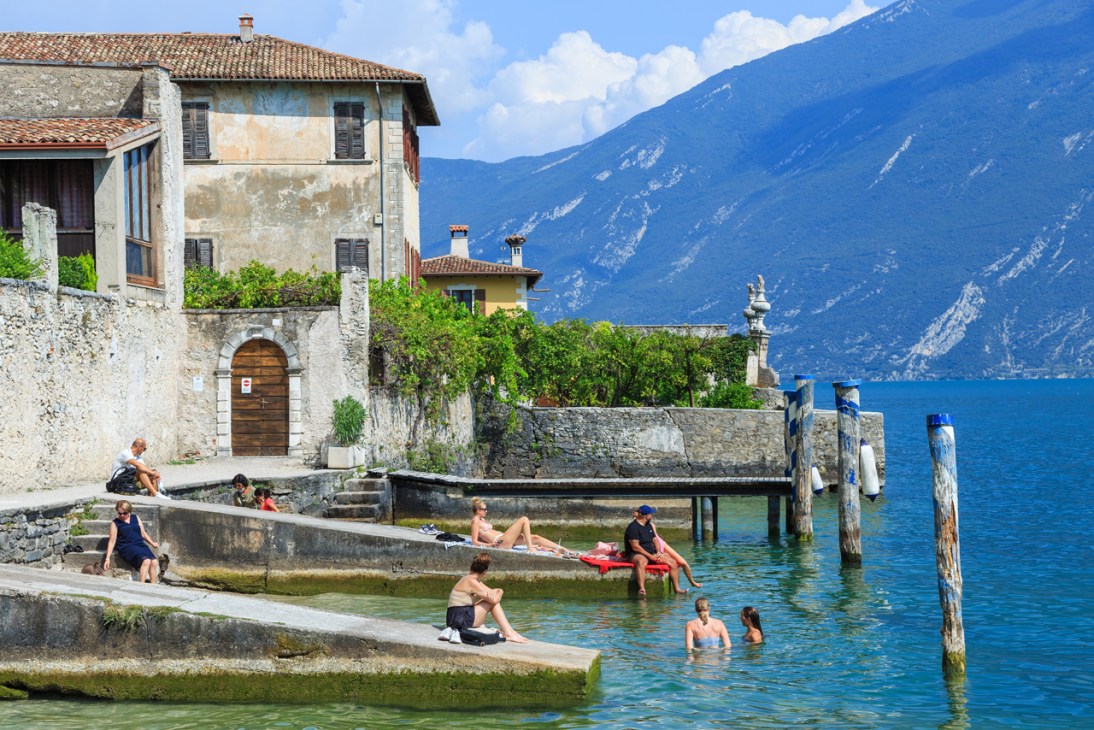
In my years of living in northern Italy I have had plenty of conversations with Italians about the more sinister side of lakes. While they don’t fear an Italian version of the Loch Ness monster lurking below, something doesn’t wash well. A few months ago I was chatting with a photographer friend, Alessandro, on a work trip in South Tyrol. He grew up just outside Milan but both of his parents are from the south. He’s happy to take summer holidays visiting family and baking in the southern Mediterranean sun. As for swimming in a lake? He can’t explain why but he wants nothing to do with them.
That might be related to media horror stories about people who have fallen victim to the mysterious powers of lakes. This summer there were headlines about a German tourist who, while visiting the village of Nesso, had waded into Lake Como and never got out again. There are many other terrible tales, stretching back years, often featuring the young and the infirm. But, according to the national broadcaster, Rai, the number of drowning deaths has been constant for the past two decades at about 350 deaths a year – and that includes the sea, lakes and swimming pools combined.
Earlier in the summer I was sitting at a garden table outside a small house that belongs to my brother-in-law’s family, overlooking a village with an ancient church spire and, beyond that, the vast expanse of Lake Garda. The house sits across from Salò on the other side of the lake, the home of Mussolini’s final holdout republic. As we sat around eating lunch, talk turned to the latest lake horror story. Playing my outsider card – and aided by a few glasses of white wine – I took it upon myself to rib the gathered Italians about their fear of lakes. I was quickly put in my place by someone who turned out to be an expert on the Alpine glacial formation of these geographical features. Without missing a beat, he explained that they get very deep, very quickly. He added, sniffing victory, that the combination of cold water from deep below combined with warm water on the surface causes unpredictable currents.
Had I failed to consider the currents? Quite possibly (though further research suggests that their main driver is wind, rather than a combination of water temperatures). So is the Italian phobia of lakes entirely justified? The jury is still out on that.
Ed Stocker is Monocle’s Milan-based Europe editor at large. For more opinion, analysis and insight, subscribe to Monocle today.