‘Different times’ are a poor excuse for bad behaviour
The kitchens that Anthony Bourdain depicts are often treated as a relic of the 1990s. But the rules of human decency are not as ephemeral – or new – as they sometimes seem.
I’m now old enough that, when people say, “Ah, but they were different times” – meaning that different moral codes applied – they’re often referring to a period that I can clearly recall. And I’m pretty sure that those times weren’t all that different. I have been thinking about this in the wake of the promotional brouhaha for Tony, the biopic of the chef and TV personality Anthony Bourdain. When he was a little-known chef, Bourdain wrote an article that found its way into The New Yorker about his experiences working in a professional kitchen. He depicted this as a kind of cross between a Navy Seal boot camp, an episode of Master Chef and a crack den. The restaurants in which he worked were awash with drugs and booze; shifts involved abusive language, physical violence and dirty dalliances in equally dirty places. Women were mostly treated as servants or sexual objects. The general consensus, it seemed, was that if they couldn’t take the abuse, they should stay out of the kitchen.
Bourdain showed us all of this and then, once he had left that world, built his brand around it. We were all expected to believe that this was how all kitchens had been during those “different times” and that everyone was fine with that way back in the 1990s.
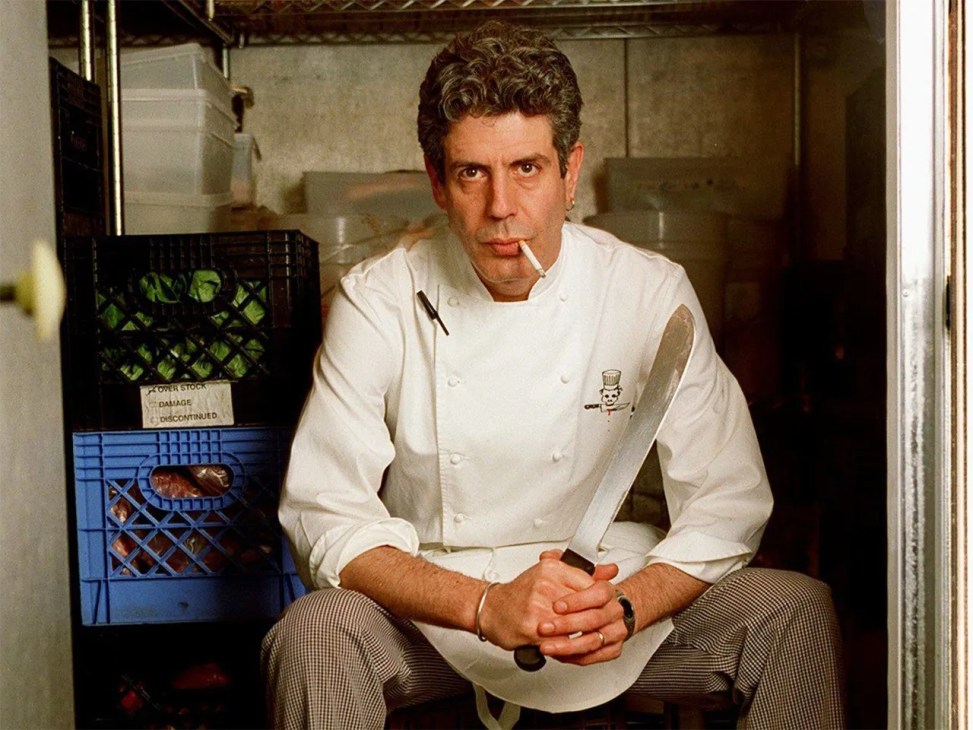
Bourdain’s reputation took off in the early 2000s – along with various other horrendously behaved chefs, such as Mario Batali, Gordon Ramsay and Marco Pierre White (note to any lawyers reading this: I realise that Batali is in a vastly different category). He helped to turn cooking into the new rock’n’roll and was a role model for young chefs. Male chefs, that is. Later on, Bourdain did try to row back on some of the attitudes and activities that he had glorified earlier in his career but, to me, he always seemed to be having his moral cake and eating it. In effect, he was saying, “I don’t endorse this behaviour now but it was actually kind of cool, lots of fun and there was nothing really wrong with it back then.”
I have a theory that a lot of this alpha-male posturing – the flaming pans, the shouting, the banal sexism – is compensation for working in a job that requires the wearing of aprons, the drizzling of jus and the tweezering of chervil but we can perhaps take that on another time. No matter how much he dressed it up in iconoclastic, leather-jacket-and-Marlboro nihilism, the masculine aggression, the ill-treatment of subordinates and violence were always destructive.
While I never met Bourdain, several of my friends and colleagues did and invariably described him as kind, polite and, surprisingly, quite shy. Perhaps his kitchen-pirate persona was a bit of an act. He was Billy Idol to Pierre White’s Johnny Rotten, if you like: affecting an outlaw swagger when, really, he was a relatively privileged young man whose mother worked at The New York Times.
It would be nice to think that the adolescent chef-bro behaviours that Bourdain once depicted are gone but his influence lingers, largely thanks to his undeniable charisma and talent as a writer and presenter. Meanwhile, Ramsay is edging towards national-treasure status in the UK and Pierre White continues to peddle his cod-mafioso schtick.
For all the greatness of his travel shows and his prose, Bourdain’s impact on the foodie world, for which I have so much love and respect, is regrettable. To me, restaurant kitchens, much like any workplace, should nurture creativity and excellence – not deliberately set out to push anyone to the brink. Claiming “different times” is a distraction: a smokescreen for behaviour that anyone could see was wrong, even at the time.
How long will it be, I wonder, before people start talking about the extremes of influencer culture, the Tate brothers, Donald Trump’s corruption or even Jeffrey Epstein’s crimes as “different times”? I would give it a couple of years. But here’s an idea: let’s keep this approach for people a little further back in the past, shall we? The Vikings. The Romans. Genghis Khan. Those were “different times”. Social and cultural norms evolve but fundamental principles, common to most of humanity, have applied for quite a while now.
At the very least, can we all agree that when we look back on the present day 20 years hence, we won’t use “different times” as an excuse for past behaviour – whether in kitchens, the media, politics or boardrooms?
Michael Booth is Monocle’s Copenhagen correspondent. For more opinion, analysis and insight, subscribe to Monocle today.