Tivoli Gardens debuts its new rollercoaster ride to Tokyo in the heart of Copenhagen
The historic Tivoli Gardens amusement park is bringing a slice of Japan to the Danish capital in the form of Hakari, an immersive area that includes Japanese-inspired design, food, art and rides.
A little piece of Shibuya has landed right in the heart of Copenhagen. Its name is Hikari and it is the new, Japanese-themed zone in Denmark’s historic amusement park, Tivoli Gardens.
“It was a part of the park underneath our Dæmon rollercoaster that really needed a refurbishment,” Tivoli’s CEO, Susanne Mørch Koch, tells Monocle during an exclusive pre-opening tour. “It had an Asian theme but was selling fish and chips, and coffee. The Japanese pagoda was already there but it all needed a narrative to bring it together.”
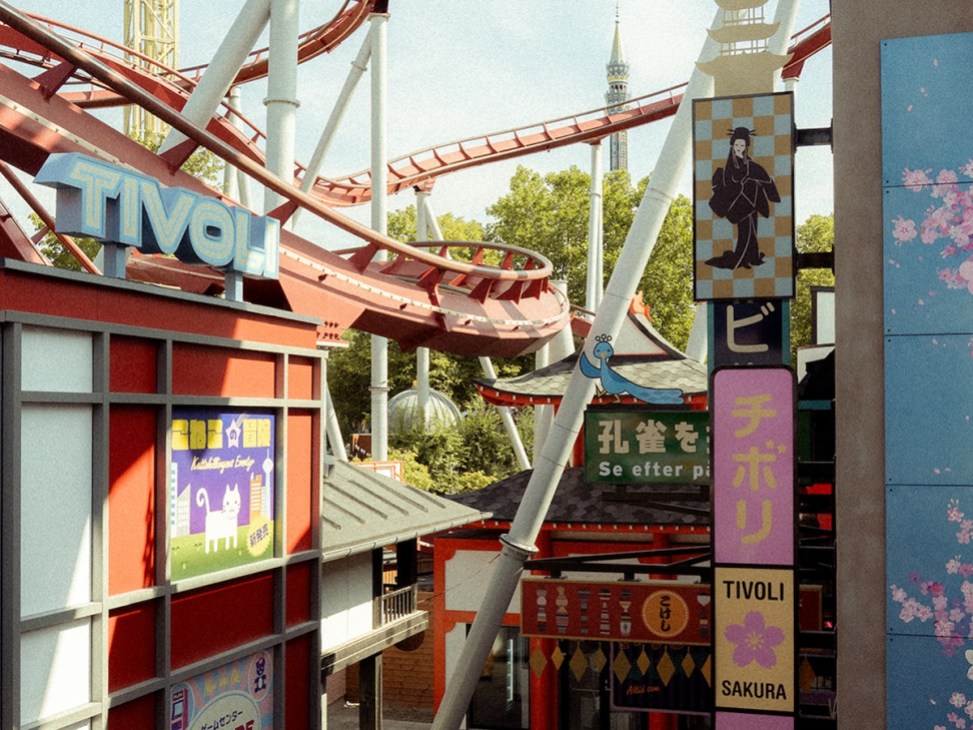
That narrative cannily focuses on Japan’s highly commodified contemporary culture, so Hikari features a konbini store selling mochi, banana Kitkats, Pocky chocolate and seaweed snacks; a branch of Copenhagen’s much-loved Comé Rice Kitchen onigiri shop; vending machines selling Pokémon figures; and a taiyaki stall. An accent of “high” culture, which Tivoli is also well known for in Denmark, comes by way of an original Takashi Murakami sculpture on the main “street”.
It is all quite brilliantly packaged within just 2,000 sq m, without feeling cramped. Tivoli is calling Hikari its “most ambitious architectural and spatial investment in nearly 200 years”. Sixty tonnes of ceramic tiles were imported from Japan to build it, along with reclaimed wooden doors and signage for that jolt of Shibuya-style visual energy. The zone also features two new visitor attractions: a wall-of-death-type experience, The Typhoon’s Eye, “inspired by the immense power of Japan’s typhoons” (hmm, wonder how Japanese people will feel about that?), and Hotel Hikari, a discombobulating (though not particularly Japanese) funhouse.
Though Copenhagen is experiencing an inbound-tourist boom, Hikari is designed primarily by Danes for Danes. “Around 65 per cent of our visitors are Danish and in recent years we’ve seen an increasing interest in Japanese food, culture and the number of Danes visiting Japan,” Mørch Koch tells Monocle. Danish travel to Japan increased by more than 23 per cent from 2024 to 2025. “But we aren’t jumping on any bandwagon. This will be here at least while I am alive,” he adds.
Tivoli, which first opened in 1843, does not take such redecoration lightly. Hikari, which was unveiled in mid-August (it means “light” in Japanese), has taken more than five years to develop and involved visits by designers, staff and gardeners to Japan, seeking inspiration for everything from the signage to the materials and plants.
Of the budget, CEO Susanne Mørch Koch would only say that it was “three-digit million kroner” (€10m-plus) but this is clearly her flagship initiative: she started as CEO six years ago and has led the park’s charge for tech-free fun with record-breaking visitor numbers.
The amusement park industry is characterised by the ever-expanding scale of the parks themselves and on rides based on existing IP such as Harry Potter, Star Wars, Marvel and the like. But Tivoli doesn’t have the budget to buy those rights and it can never grow beyond its original 80,000 sq m, hemmed in as it is on all four sides by roads and the Central Station, hence the ingenious IP-free, space-busting approach of Hikari.
But was the park worried about accusations of cultural appropriation in attempting to create its own interpretation of Japanese pop culture? When Tivoli opened its architects felt at liberty to design buildings vaguely inspired by “Arabian” or “Oriental” styles that would probably provoke an outcry today. “We are doing this with dedication, love and respect, and we have Japanese consultants involved and Japanese products on sale,” says Mørch Koch. “We have taken so much care with our selection.”
I visited with a Japanese friend who was actually quite touched by the efforts and commitment of Tivoli’s designers and gardeners. The signage was maybe a little busy, she said, but otherwise she pronounced it pretty authentic.
Further reading: Tivoli Gardens’ CEO on how Denmark’s most renowned theme park has stayed tech-free and relevant for 182 years