Can Greenland’s graphite help the EU stave off shortage?
Plus, other hard-to-get mineral resources from around the world.
Were it not for graphite, you would presently be staring at a blank screen. The naturally occurring carbon is a crucial component of the batteries and cooling systems of phones, computers and electric vehicles – and demand for it is expected to cause severe deficits by the end of the current decade. For Western countries, this might prove especially testing. As things stand, China enjoys a near-monopoly of battery-grade graphite, controlling 95 per cent of global supply – and Beijing has demonstrated during its ongoing trade war with the US that it is prepared to at least threaten to restrict exports.
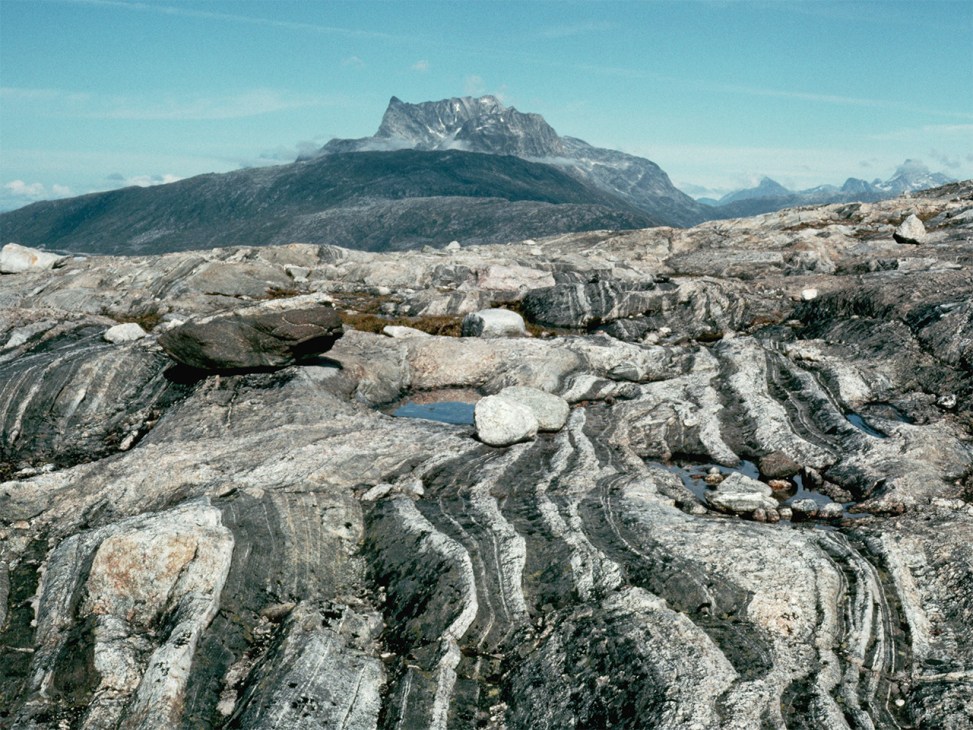
Graphite is therefore worth going a long way to get. Late last year, Greenland’s government granted UK-based mining company Greenroc Strategic Minerals a 30-year licence to extract graphite at Amitsoq, in the south of the vast island. The graphite deposit is not a new discovery – there was a mine there from 1914 to 1922, before demand tapered amid a general economic slump after the First World War. But it is known that the graphite at Amitsoq is the good stuff.
“It’s really rich,” says Stefan Bernstein, CEO of Greenroc Strategic Minerals. “And with graphite, it’s not just about how pure it is. It’s also about the physical properties of the flakes. The main market for graphite today is for anodes in lithium batteries and there you need to change the morphology – the shape of each grain. So it’s not just a question of how clean you get the graphite but also the shape and size of the grain.”
Greenroc hopes to begin extracting this treasure by 2030. “We are aiming for production of about 80,000 tonnes per year,” says Bernstein. “Who knows what Europe’s graphite demand will be in 2035 or so but the mine will provide between 10 and 15 per cent of it.” Bernstein adds that the new Amitsoq mine will also generate about 200 local jobs, with 50 people on site at any one time and most of the workforce commuting by boat from the small town of Nanortalik. “Most other mines in Greenland rely on a fly-in, fly-out workforce,” says Bernstein. “We’re hopeful that we can have a very strong local engagement in the mine, and have people working in it who will still be able to maintain a normal life, like in a mining town in the UK 50 or 60 years ago.”
The EU has granted the Amitsoq mine strategic project status under its Critical Raw Minerals Act – a designation that accelerates the issuing of necessary permissions. Greenland itself has served, this last year or so, as another reminder that Europe needs to look after itself. Indeed, for one bizarre week back in January, it looked like it might need to find a way to defend Greenland from the US. Donald Trump is not the only person taking a close interest in what might lie beneath the ice.
“There’s definitely a boom in interest and investments right now,” says Bernstein. “Mainly from the US and Australia. There’s a close connection between a lot of the investments that we see now and the growing importance of Greenland in a geopolitical context.”
Other hard-to-get mineral resources
Rare earths: Bayan Obo, China
The world’s largest deposits of rare earths lie beneath the desert of the Chinese province of Inner Mongolia. A recent survey suggested they might be even more immense than previously believed.
Copper: Escondida, Chile
The world’s largest copper mine is in its most arid non-polar landscape: Chile’s Atacama desert, in parts of which it has never rained.
Lithium: Salar de Uyuni, Bolivia
Bolivia’s Salar de Uyuni is the world’s largest salt flat – an expanse of parched whiteness about the size of Jamaica. The brine beneath the salt contains what might be the world’s largest source of lithium.
Cobalt: Katanga region, Democratic Republic of the Congo
By some estimates, nine of the world’s 10 biggest cobalt mines are located in the Democratic Republic of the Congo. The Chinese-owned KFM mine might be the biggest of them all.
Phosphate: Bou Craa, Western Sahara
The phosphates near Bou Craa are retrieved from beneath the disputed desert of Western Sahara and shipped to the coast on a 100-kilometre conveyor belt, the world’s longest.