How to keep the lights on in the new geopolitical age of energy security
A country’s future depends on the resilience of its electrical infrastructure to cyberattacks, extreme weather and sabotage. Keeping power flowing is now a matter of national security.
Geopolitics is all about resources. From imperial competition over coal and iron to Cold War rivalries shaped by oil fields and shipping lanes, power in international politics is inseparable from control over the material foundations of economic and military strength. The struggle over geography – resource-rich territories, trade routes, ports, pipelines and choke points – has long defined what states fear, what they protect and what they fight over. Energy isn’t just an economic input but also a strategic asset that underwrites national security and geopolitical influence.
For decades, it was a game of molecules. Energy security was measured in barrels of crude oil, cubic feet of natural gas and the physical steel of pipelines crisscrossing continents. If a tanker was delayed or a pipeline disrupted, strategic petroleum reserves and long-term supply contracts cushioned the blow. The pace of disruption was mostly gradual, the physics tangible and the threats visible on a map. Governments could count, store and redirect energy with a measure of confidence.
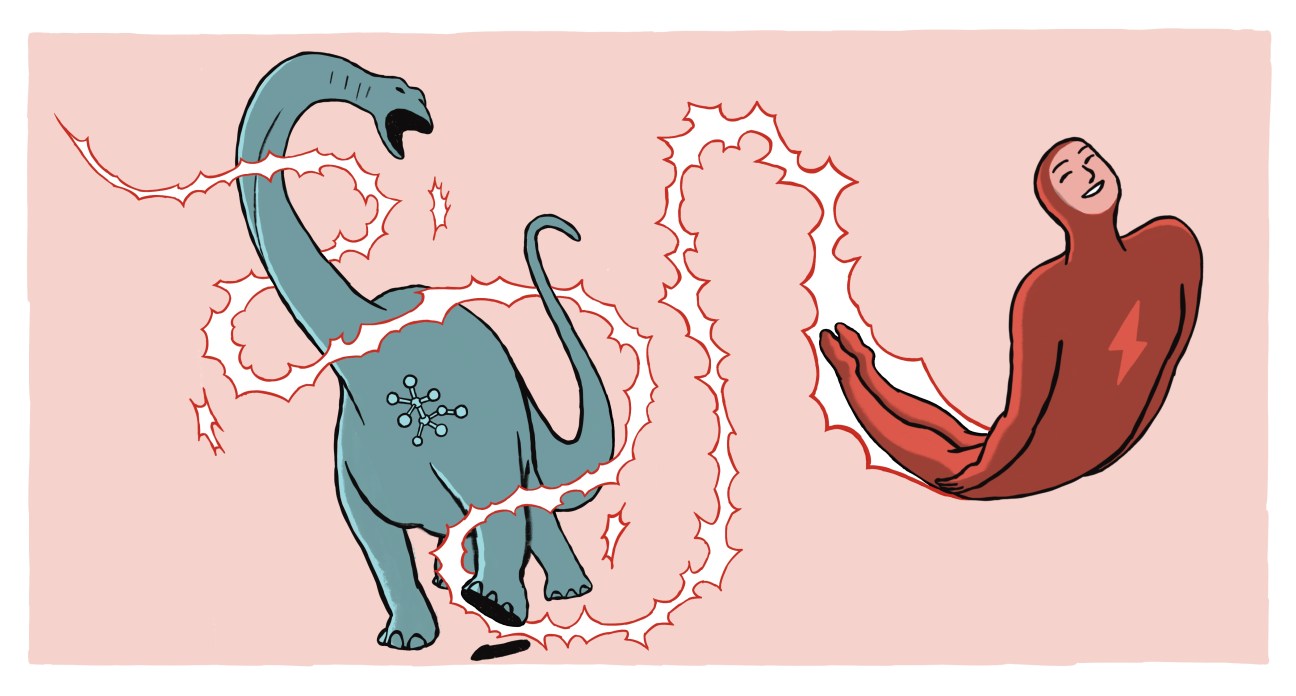
Fast-forward to today and we’re living through an invisible revolution. The world is pivoting from molecule security to electron security and the rules of the game have changed. Today our economic lifeline is not just a pipeline or a port but the electrical grid – a sprawling, synchronised machine that must balance supply and demand every millisecond. Unlike oil or gas, electricity cannot be stockpiled at scale without great cost. Nor can it tolerate delays. When electrons stop flowing, systems – and with them nations, cities, businesses and homes – fail and are instantly left powerless.
Living on grid
As transport, industry, data centres and even military platforms electrify, the grid – a mostly unseen and in parts rather old structure for conveying electricity – has become the new centre of gravity for national security. It’s a strategic shift as well as a technical one. Electric vehicles, heat pumps, automated factories and cloud computing all hinge on reliable power. A damaged transformer or severed undersea cable is no longer merely a local inconvenience; it can result in halted ports, stranded trains, disrupted financial markets and hospitals operating on emergency generators.
The grid underpins almost every critical function of modern societies, including communications, water treatment and emergency response. Where governments once worried about how many days of fuel they had in reserve, they must now ask a different question: how long can the system stay up when stressed by cyberattacks, extreme weather or geopolitical sabotage?
Real-time resilience
The shift from stocking up to dealing with outages marks a fundamental change in energy security. Hydrocarbon systems rewarded accumulation. If supply was interrupted, inventories could be drawn down while deals and diplomacy adjusted. Electricity systems operate on a different logic: supply and demand must be balanced and in real time. Frequency deviations of even a fraction can cause protective shutdowns, triggering domino effects across regions.
This reality forces policymakers to prioritise resilience over volume. Redundancy, rapid repair, spare capacity and cross-border interconnections matter far more than headline generation figures. Security is less about “owning” energy resources or how many barrels that you have in reserve and more about managing flows – not to mention recovering quickly if those flows are disrupted.
Pushed to the limit
The issue with the modern grid is that its very efficiency has bred vulnerability. To accommodate renewable energy, electric vehicles and variable demand, grids are now smarter. Sensors, automated substations, predictive software and remote controls now govern what was once managed manually. These digital layers allow grids to operate closer to their limits (a good thing for efficiency). However, they also expand the attack surface.
The convergence of information technology and operational technology means that cyber incidents have physical consequences. A ransomware attack that begins in a billing system or contractor network can pivot to operational systems. State-sponsored actors are no longer merely probing networks for weaknesses; they are now mapping responses and waiting for geopolitical triggers.
Even without malicious intent, complexity itself can be a risk. With millions of energy resources connected to the grid, a faulty software update or flawed algorithm could destabilise the frequency across wide areas. In the electricity era, failure doesn’t always come from an explosion or a missile. It could come from a sloppy line of code.
Plugging in
Different powers are responding to this new reality in distinct ways, reflecting their political systems, industrial bases and threat perceptions. Europe’s experience since Russia’s invasion of Ukraine has fundamentally reshaped its energy-security thinking. Forced to adapt quickly, EU member states diversified gas supplies, accelerated renewables and invested in interconnectors. The result has been a growing recognition that energy security is inseparable from infrastructure protection and collective action. The bloc’s resilience agenda reflects this lesson. By emphasising risk assessments, working across borders and public-private co-operation, it is attempting to move beyond crisis management toward structural preparedness.
Still, gaps remain. Europe needs faster investment in grids, better co-ordination on the procurement of critical components and a clearer division of labour between national authorities and Nato when dealing with hybrid threats. Resilience cannot be built country by country; it must be designed at the system level.
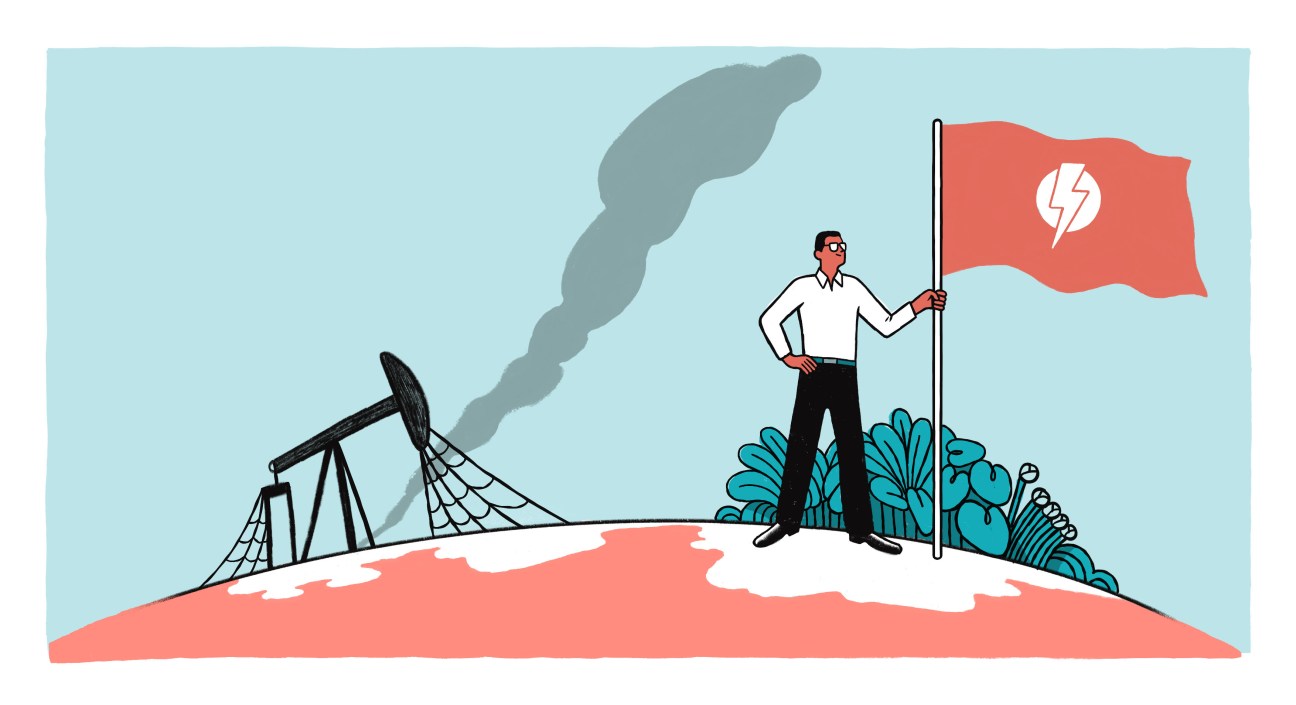
Meanwhile, the US has long framed energy security through the lens of abundance. The rhetoric of “energy dominance”, popularised under the current Trump administration, emphasises domestic production, exports and geopolitical leverage derived from hydrocarbons. That logic still shapes US politics, particularly through liquified natural gas exports and protectionist economic policies.
But abundance can’t secure an electricity-based system by itself. The country’s grid is ageing, fragmented and unevenly regulated. Extreme weather and cyber incidents have exposed vulnerabilities that production levels can’t fix. What the US needs is not just energy dominance but grid resilience too: faster permitting for transmission lines, strategic reserves of crucial equipment and mandatory cybersecurity standards for operators. In the electricity era, security comes not from exporting more fuel but from ensuring that the system at home can withstand shocks.
China’s priority is to reduce vulnerability to external pressure while sustaining economic growth. Huge investment in renewables, nuclear power and grid infrastructure has made it the world’s leading manufacturer of solar panels, batteries and many key components of electricity systems. This dominance brings strategic advantages. Control over supply chains can translate into political leverage, while domestic electrification reduces dependence on imported hydrocarbons. China is also seeking to diversify energy sources and routes, from renewables to nuclear to overseas investments.
For Western policymakers, this creates a dilemma. Co-operation with China is essential for climate goals but dependence on the country’s manufacturing for key grid components introduces fresh vulnerabilities. The challenge is to compete without decoupling entirely: diversify suppliers, invest in domestic and partner production and protect truly sensitive technologies without fragmenting the global energy transition.
Game changers
Across these approaches, certain assets have emerged as strategically decisive. High-voltage transformers, power electronics, control systems and software updates are now as critical as oil terminals once were. These are expensive, slow to produce and difficult to replace, making them attractive targets when it comes to conflict or coercion. Critical minerals are equally important. Lithium, cobalt, copper and rare earths are the building blocks of batteries, motors and transmission infrastructure. Control over their extraction, processing and manufacturing chains translates directly into strategic leverage. In this sense, supply chains have become the new choke points of energy security.
Resilience is no longer about preventing all disruptions. It is about surviving them. That means assuming that systems will fail and designing them to recover quickly. Physical hardening must be matched by cyber discipline. Stockpiling spare parts must go hand in hand with training a workforce capable of installing and operating them – under pressure if the situation called for it.
Human capital is an underappreciated vulnerability. Power engineers who understand both high-voltage physics and cybersecurity are in short supply. Training and retaining this workforce is a national-security imperative. At the same time, there’s a renewed appreciation for analogue safeguards such as manual controls and offline capabilities that can function if and when digital systems are compromised.
Stress tests
By the end of this decade, energy security will be judged less by who controls fuel reserves and more by who can sustain complex systems under stress. The most secure countries will be those that treat the grid as critical infrastructure in the fullest sense: physical, digital, human and geopolitical. The transition from molecules to electrons is the most consequential shift in energy security in a century. Cheeringly, it promises cleaner growth and greater efficiency. The downside is new fragilities. Whether it strengthens or undermines national power will depend on whether governments grasp a simple truth of the electricity era: energy security is about momentum and means keeping the electrons flowing – everywhere and at all times.
About the writer:
Gorana Grgic is Monocle’s security correspondent and regularly writes for our magazine and website. She is the head of the Global Security team at the eth Zürich Centre for Security Studies.