What multiple passports mean for identity, belonging and modern life
Securing a secondary citizenship can be a matter of making the right investments or donations. Marko Peck, an adviser in the sector, explains why business is booming.
During the first two decades of this century, many people in the West came to take easy mobility for granted. The 2020s have pulled the rug from under their feet. First, the coronavirus pandemic demonstrated how quickly nations can close their doors. In Europe, 17 countries that are party to the Schengen Agreement reintroduced internal border controls. Australian citizens were banned from leaving the country for 19 months unless they could demonstrate that they had strong ties to somewhere else. The following year, as a result of Brexit, UK citizens lost the right to live and work in 27 countries. Since then, the Ukraine war, the unpredictable actions of the second Trump administration and other destabilising developments have driven record numbers of Westerners to seek alternative papers.

Part of financial literacy is understanding the value of having a balanced portfolio: in other words, don’t put all of your eggs in one basket. If freedom of movement and asset protection are important to you, having only one citizenship is as reckless as storing your entire net worth in a single place. By holding multiple, you diversify your exposure to geopolitical risk. There are several ways of acquiring citizenship and about 75 per cent of countries now permit the holding of multiple passports (up from about 30 per cent in 1990).
Most people acquire their citizenship by descent and every country offers this pathway. However, this kind is often conditional – though there are generally provisions in place to prevent statelessness. About 17 per cent of countries, mainly in the Americas, also offer it through birth. A less common method, though one that is growing more popular across the globe, is citizenship by investment or donation, which falls under the umbrella term of “investment migration”.
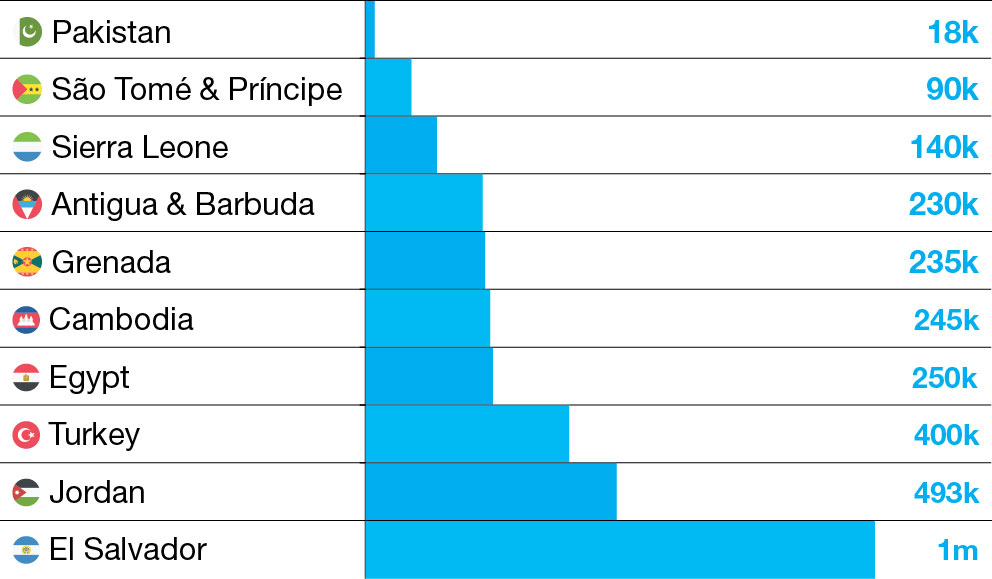
Currently, there are 15 countries operating official programmes that grant citizenship to foreigners in exchange for a set donation or investment: Turkey, Cambodia, El Salvador, São Tomé and Príncipe, Sierra Leone, Nauru, Vanuatu, Dominica, Antigua and Barbuda, Grenada, Saint Lucia, St Kitts and Nevis, Egypt, Jordan and Pakistan. The required amounts range from $18,000 (€15,500) for Pakistan to $1m (€850,000) for El Salvador. Processing times for such programmes range from a few months to a year.
Many more countries grant citizenship by “merit”: they don’t define a specific donation or investment amount for eligibility but instead evaluate applications individually, looking for what they deem to be exceptional contributions to the nation. Austria, for example, has a longstanding practice of granting this kind of citizenship to those who invest several million euros in its economy. Unlike with residency-based naturalisation, integration and physical presence largely don’t play a role; applicants, however, must undergo more extensive government background checks.
Citizenship by investment or donation is more popular than ever. Sierra Leone and São Tomé and Príncipe started programmes in 2025. Other countries have similar legislation in the works so expect to see more entering the market this year. Governments in the Global South are waking up to the tremendous potential of investment migration. The benefits are clear: selling citizenship drives foreign direct investment, costs a country very little, allows it to control what kind of development takes place via eligibility requirements and, perhaps most importantly, gains it lifetime goodwill ambassadors around the world.
There are more applicants than ever and the demographics of who is applying have changed significantly in recent years. Historically, citizenship by investment and donation appealed primarily to successful entrepreneurs from the Global South who wanted a Western passport to expand their visa-free travel options. Between 2020 and 2025, Western citizens went from being a tiny fraction of global citizenship applications to the majority, according to reports from several sources. Demand continues to grow rapidly. North Americans and Europeans are now the most common clients for international firms that advise on investment migration (including my own, Peck & Nascimben Global).
Two of the most popular programmes for these clients are those of Sierra Leone and São Tomé and Príncipe. Western interest in African citizenship might be surprising but citizens of wealthy countries aren’t looking for another passport for travel – instead, they’re seeking investment access and hoping to benefit from the rise of the Global South. The African Union, for example, is the fastest-growing economic bloc in the world.
Most of these passport applicants don’t plan to live in Africa, though they value having the option to do so if the need arises. Meanwhile, some would like to acquire residency in another nation using their neutral African passport to avoid being affected by any strained relations in the future between the country where they live and their Western country of citizenship.
São Tomé and Príncipe is also a member of the Community of Portuguese Language Countries. Treaties ratified by its member states grant Santomeans the ability to take up residency in other Lusophone countries, such as Brazil and Portugal, as well as the right to consular protection from Portuguese diplomatic missions abroad. Santomeans living in Brazil are also eligible for expedited naturalisation there. Sound appealing?
Investment migration will continue to grow as countries introduce programmes and more people seek to take advantage of them. Over the next few decades, having multiple citizenships will become commonplace – a huge societal shift that will fundamentally alter the notions of nationhood and citizenship.
Marko Peck is a managing partner at Peck & Nascimben Global, a Zürich-based firm that advises clients on how to procure investment citizenship.
Read next:
Migration beyond the headlines: Why people move
Spain’s open-border policies have helped its economy flourish – but there might be a catch