Edge Group, the defence conglomerate driving the UAE’s fast-growing arms industry
As the Iran war tests the Gulf nations, the UAE is shedding its reliance on Western defence systems. We visit the firm at the heart of this transformation.
The road to Abu Dhabi’s Zayed Military City is as unremarkable as its designers must have hoped. As the Emirati capital’s towers and boulevards recede in the rear-view mirror, the landscape flattens into a vast stretch of desert. Heat rises in ripples from the road. Tawazun Industrial Park (TIP) is a collection of industrial buildings and reinforced compounds scattered across the sand, punctuated by watchtowers and checkpoints, as well as the odd bunker-like shelter. Behind thick concrete walls and barbed wire sits one of the Gulf’s most strategically important sites – one that, over the past few months, has become increasingly central to the UAE’s ability to defend itself. This is the main manufacturing base of Edge Group, Abu Dhabi’s state-backed defence conglomerate that, in just six years, has become one of the world’s fastest-growing military-industrial groups.
The timing of Monocle’s visit is significant. The UAE is mired in a regional conflict that has brought the reality of modern warfare to the Gulf. After the US-Israeli strikes on Iran in February, Tehran sent thousands of drones and fired hundreds of missiles into Emirati airspace. At TIP, war has ceased to be an abstract idea. For decades, the UAE has seen itself as the region’s safe haven – a place of calm in an unstable neighbourhood, somewhere capital, talent and tourists could move freely, insulated from local conflicts. In recent months that perception has been challenged.
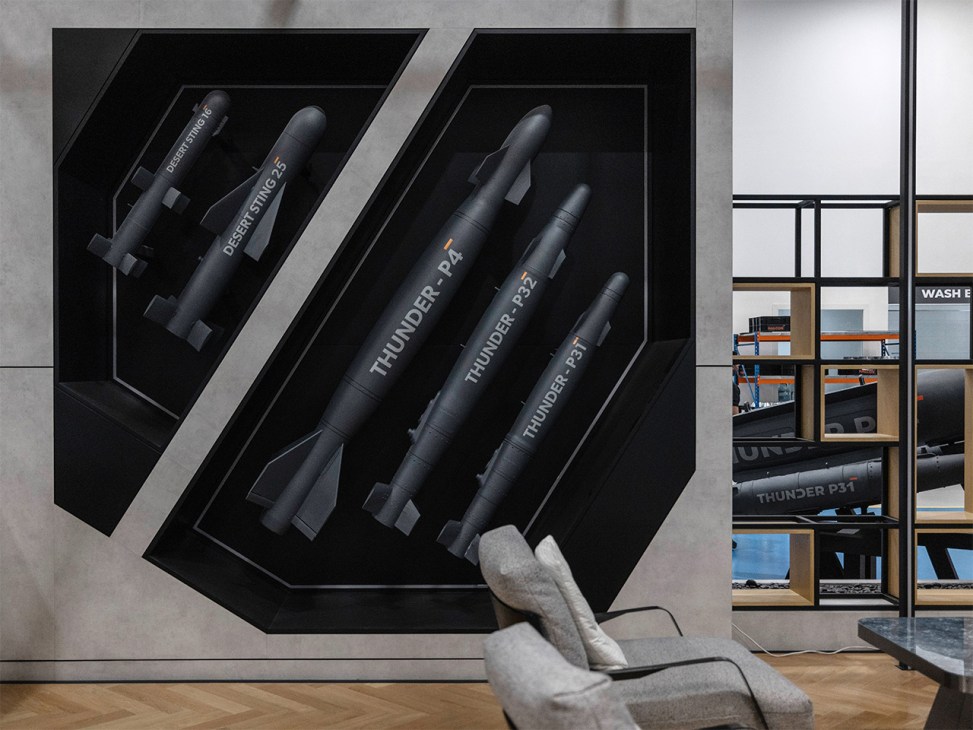
Edge’s role extends beyond manufacturing missiles and drones. It is helping to defend the UAE’s reputation as much as its airspace. But as the nation’s defence ambitions have grown, so too has scrutiny of how and where its systems are used, raising questions about whether a country that positions itself as a neutral hub can also be a major arms exporter. Inside the building containing EPI, one of Edge’s precision-engineering businesses, workers in protective goggles move between workstations. In one corner, teams are fabricating metal frames used in penetrator payloads and bomb casings. Staff who would ordinarily focus on work in the aerospace, oil or gas sectors have pivoted to support urgent wartime production. Across TIP, bomb shelters sit between buildings and thick concrete barriers line the entrances. Teams have moved to three-shift rotations. Some employees, we are told, have slept on factory floors to keep production lines moving uninterrupted.
Edge executives had long anticipated a conflict of this kind. Founded in November 2019 through the merger of more than 20 Emirati defence and technology companies, the group was designed to help secure the UAE’s military sovereignty and build a globally competitive defence export industry. The nature of the current war appear to have vindicated those aims.
“It was a do-or-die moment for us,” says Khaled Al Zaabi, Edge’s president of platforms and systems, of the initial Iranian drone and missile attacks. Monocle first speaks to him in the early weeks of the conflict. He is in his car between meetings, speaking quickly and candidly about the need to shift to a wartime footing. When we meet in person, he is standing in front of a Jeniah, Edge’s unmanned-combat aerial vehicle.


Al Zaabi says that Edge’s role has always stretched beyond manufacturing. “The primary objective is enabling the sovereignty of the UAE’s military-defence capabilities,” he says. That goal, he adds, underpins every acquisition, product-development strategy and investment decision. The second objective is economic: turning defence manufacturing into another engine of growth for the country. The two ambitions are intertwined. To build sovereign capability, Edge must create products that are effective enough to compete internationally. And to compete internationally, those products must be battle-proven. If they succeed abroad, the revenues generated will help to sustain the industry at home.
In 2019, Edge’s export sales were about $50m (€43m), according to Miles Chambers, the group’s senior vice-president of international business. By 2025, it was generating about $5bn (€4.3bn) in turnover, about 70 per cent of it from exports. “We were predominantly domestic,” says Chambers. “Now we’re predominantly export-based.” This has not come without controversy. In recent years, for example, concerns have been raised about the flow of Emirati weapons into Sudan, which plunged into civil war in 2023. Hamad Al Marar, Edge’s managing director and CEO, is unequivocal. “I can tell you clearly: we have never supplied Sudan,” he says. “We operate within international law, export-control regimes and end-user certification processes.” However, in contexts where alliances can shift quickly and weapons outlive politics, such assurances are rarely enough to silence critics. Investigations by the UN, Amnesty International and others have identified weapons manufactured in Europe, North America and the UAE – including by Edge – among those being used in the conflict.
Today, Edge employs about 19,000 people around the world and operates more than 35 entities across several clusters: missiles and weapons, autonomous systems, space, cyber security, naval systems, electronic warfare, land vehicles and advanced manufacturing. Chambers describes the international push in commercial terms but the geopolitical implications are obvious. Edge has secured a €1bn contract to deliver three corvette-class naval vessels to Angola. It has established offices and industrial operations in Brazil and is expanding in Southeast Asia and Europe through acquisitions, partnerships and joint ventures.
Recent deals with Italian firm Leonardo, French aerospace company Safran, and a European joint venture with Indra, suggest that the group has wider ambitions. There’s a strong focus on countries in the Global South that are seeking systems that are more adaptable and cost-effective than those offered by traditional Western suppliers, says Chambers. Edge executives insist that their products are faster, more agile and less burdened by legacy infrastructure than those of established defence companies based in Europe or the US. Plus, since they were built in direct response to current threats, Edge believes that its systems are more relevant to today’s conflicts.
At Edge’s HQ in Abu Dhabi, a missile-themed chess set sits on a coffee table in Al Marar’s office. “This is a new addition,” he says. “It was gifted to me by the Ukrainians.” Days before our visit, Volodymyr Zelensky was in the UAE for talks with the Emirati leadership, including discussions around regional security and defence co-operation. The chessboard is a reminder that in today’s world, geopolitics and commerce are never far apart.

Dressed in a white kandura robe, Al Marar talks less like a corporate executive than a military officer. When we ask him whether the war has been a test of Edge’s relevance, he says, “Two-hundred per cent.” For decades, the UAE invested heavily in missiles, radar technology and defence systems, drawing criticism from those who saw such spending as excessive. Today those systems are helping to intercept incoming threats and protecting infrastructure, airspace and civilians. “People might say that we have allies,” adds Al Marar, leaning forward. “And, of course, they’re there. But at times like this, you get to see whether your investments were in the right place.”
Those alliances are evolving too. In early April, Anwar Gargash, the Emirati president’s diplomatic adviser, said that Iran’s aggression would “solidify” the role of the US in the region. Meanwhile, following the Abraham Accords, signed by Israel and several Arab nations including the UAE in 2020, Abu Dhabi has been deepening its intelligence and defence ties with Jerusalem. The result is an increasingly layered security strategy: traditional US military backing, expanding regional intelligence partnerships and, now, a growing domestic defence-industrial base.
Al Marar points to the speed at which Edge and the wider Emirati defence ecosystem responded when the US-Israeli conflict with Iran began. “No country can deploy to hundreds of sites in two days unless you have things ready, unless you are on the ground and unless you don’t need to wait for permission,” he says. Asked how it feels to see systems developed by his teams used in active defence operations on Emirati soil, he pauses. “As a father,” he says, “I would say that it has made all of the birthdays missed and the school events missed go away.” Al Marar has four children and says that he began working on the day that he got married. “You can’t run it like a business in times like these,” he says. “You open your stores. You supply. You work 24/7. You continue the fight.”
On a remote island about 100km from Abu Dhabi is a secure area known as X-Range. The island is one of Edge’s lesser-known but increasingly important assets: a vast, multi-domain testing and evaluation site where the group, the UAE military and international clients can trial systems across land, air and sea. Reached by boat, aircraft or a narrow causeway, the site spans some 350 sq km, with clear airspace above and open waters around, allowing everything from missile firings and drone swarm exercises to maritime autonomy tests and electronic warfare simulations.


In the past, much of the UAE’s military equipment had to be sent to Europe, the US or Turkey for testing, slowing development and creating dependence on foreign ranges. No longer. “The UAE has historically been a net importer of military capabilities,” says Harry Rose, the international business development and sales manager at Remaya, the Edge-owned operator of the site. “Now the UAE is moving into a much higher-fidelity defence manufacturing environment and naturally there’s a bigger demand for testing space to support the development of those products.” On any given day, says Rose, the island can host up to five test events: engineers subject missile components to extreme heat and vibration; drones are trialled in flight zones; video pilots are trained in mock villages. Along the shoreline, surface vessels conduct manned-unmanned teaming exercises, while on the live-fire ranges missiles are launched towards static and moving targets.
What makes X-Range particularly valuable is the efficiency that it allows. Rose says that simple test events can be booked within five days; at many Western facilities, it can take six to 12 months. This allows Edge and its clients to “test earlier, fail earlier and test more often”, adds Rose – shortening the journey from concept to deployment.
As the conflict with Tehran has continued, technologies have had to adapt in real time. Threats are changing, drone tactics are evolving and electronic warfare is intensifying. One of the systems being put through its paces when we visit is Edge’s Shadow fleet of loitering munitions and strike drones – systems that executives say have been used extensively to help intercept and eliminate incoming Iranian projectiles before they reach Emirati territory. According to government sources, the UAE military’s interception rate throughout the war has remained above 95 per cent, a figure that officials attribute to a layered defence network of radars, electro-optics, missiles and autonomous systems. On the runway, the aircraft are launched in quick succession, before climbing sharply into the Gulf sky and banking out over the water towards their targets. Designed to lurk over an area before striking, the Shadow systems are emblematic of the kind of low-cost, fast-deploying weapons reshaping modern warfare.
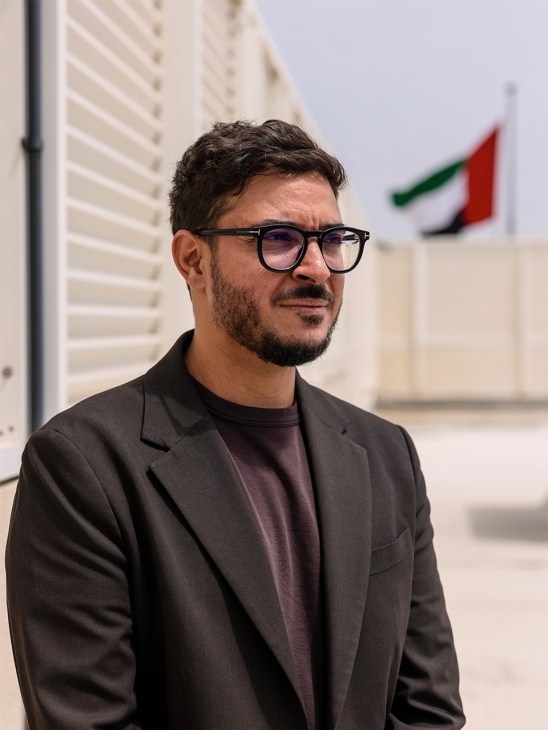
If missiles are the visible side, sensors represent the invisible. At Edge’s Electro-Optic Centre of Excellence (EOCE) labs in Abu Dhabi, Chaouki Kasmi, the group’s CTO and president of technologies and industrialisation, offers Monocle a look inside the systems that have become the first line of defence in this war. Dressed in an oversized brown suit, platform loafers and a baseball cap, he looks more like a creative director than a defence scientist. Kasmi oversees systems and technologies embedded in Edge’s products, from radars and radios to electro-optics and AI-enabled battlefield innovations. “This is your eyes,” he says, gesturing towards a radar system. “You can have the best weapons system but if you can’t see, there’s no point.” Radar handles long-range detection, while electro-optical systems confirm the target. Then the UAE’s Ministry of Defence can decide whether or not to engage.
The next step might be the creation of an Iron Dome-style layered defence architecture tailored to the Gulf, one that combines long-range radar, electro-optics, interceptor missiles, electronic warfare and autonomous strike systems into a network that’s capable of neutralising incoming threats at multiple stages of flight. In recent weeks, that vision has moved closer to reality. According to reports, Israel has supplied elements of its Iron Dome system, a remarkable development given how sensitive and vital the technology is. The move underscores the growing depth of the Emirati-Israeli relationship.
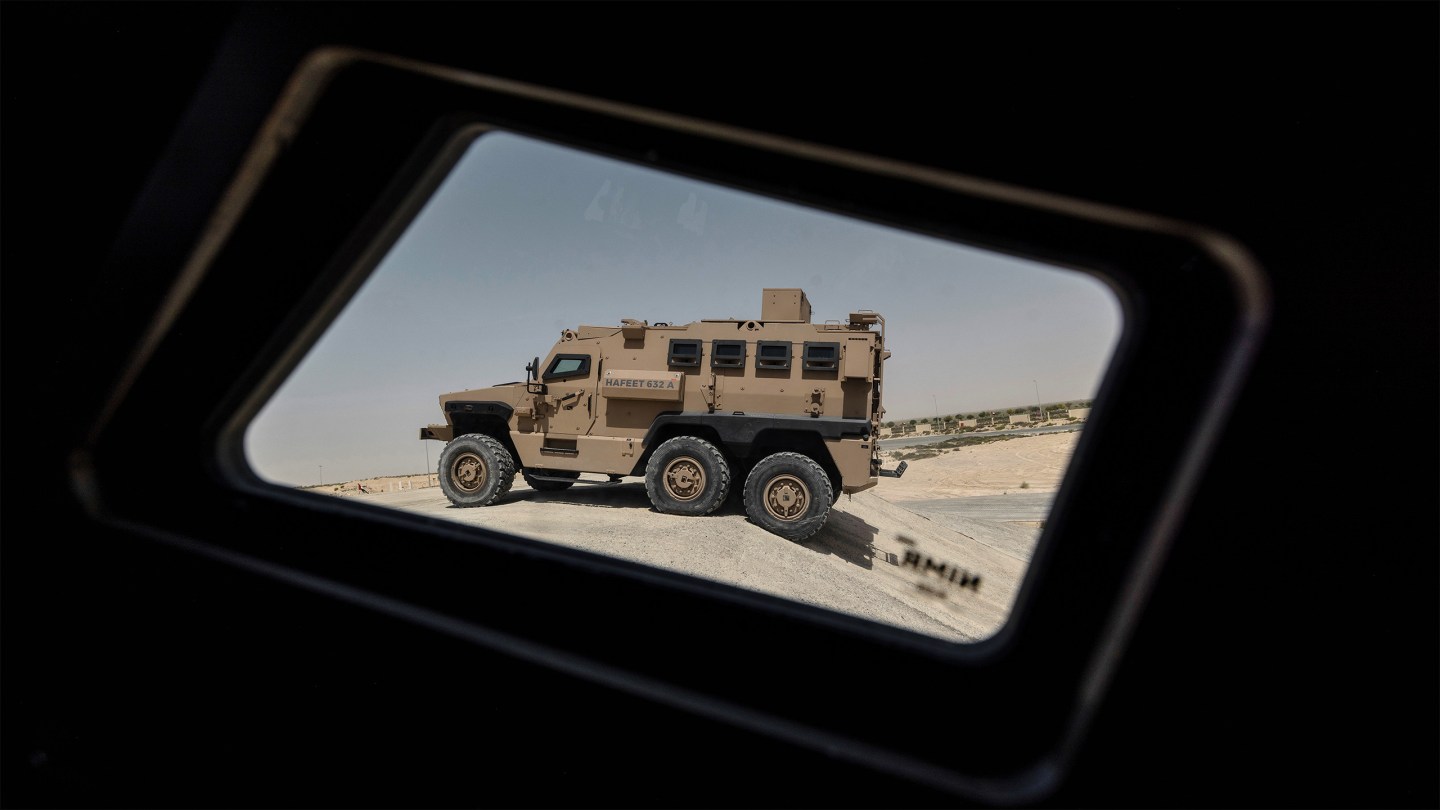
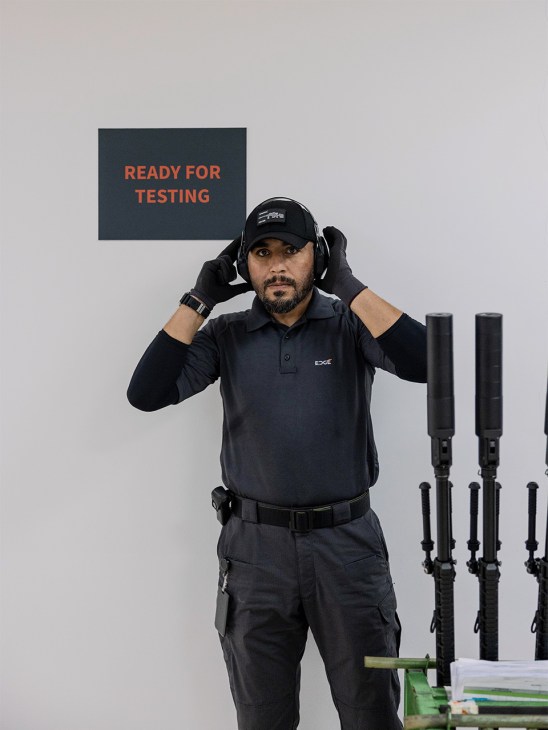
Edge-owned Caracal, the UAE’s only small-arms manufacturer, is where steel meets shoulder. Former special-forces operators test rifles in live-fire bays before dispatch. Firearms made and tested here are used by German and Indian special forces, among others. These are what the company calls “mission-proven” products. At nearby Nimr, the UAE’s leading maker of armoured military vehicles, production lines have reportedly been adapted to prioritise urgent wartime requirements. “The UAE as an end user is very demanding,” says one manager. “It makes us step up our game.” A few kilometres away, at Abu Dhabi’s national shipyard, giant naval vessels sit at various stages of completion. Some are destined for export, others for Emirati forces.


For years, the UAE was a consumer of Western technology, whether in defence, aviation or infrastructure. Now it wants to be seen as a producer and exporter in its own right. The conflict has exposed another side of the country – one built less on glamour and more on infrastructure, energy and defence. “People saw the superficial side,” says Al Zaabi. “The big buildings, the nice economy. But what has become abundantly clear is that all of that is built on a very strong foundation.”
Edge in numbers
$5.06bn (€4.3bn): Edge’s revenue in fiscal year 2025.
70 per cent: Proportion of annual booked orders that are exported.
$20.4bn (€17.3bn): Current order backlog across Edge’s defence, aerospace and technology businesses.
170: Manufacturing and R&D facilities operated by Edge.
19,0001: Number of Edge employees worldwide, up from 2,600 at launch in 2019.
25: Edge’s joint ventures and strategic partnerships, including deals with Anduril Industries, Indra Sistemas and Fincantieri.