Kristen Michal, the Estonian leader at the sharp edge of Nato
A hawkish voice on Russia, Estonia’s 50-year-old prime minister has ramped up his nation’s defence spending, hoping to lead by example as Europe adjusts to a more hostile age.
From his office on Tallinn’s Toompea Hill, Estonia’s prime minister, Kristen Michal, can see the city’s picturesque Old Town. A millennium ago, a fortress was established on this hill to protect the city from invaders. In this respect, not much has changed for today’s occupants of the neoclassical Stenbock House, the official seat of the Estonian government.
Wearing a blue suit with a sinilill-flower lapel pin to mark his support for his country’s veterans, the 50-year-old Michal greets Monocle in one of the 18th-century building’s stately rooms. Like most of his predecessors since independence, the prime minister is one of Europe’s most hawkish voices on Russia. From his country’s perspective, this stance has been successful, so much so that some speak of the “Estonification” of European foreign and security policy. Michal assumed office in 2024, succeeding Kaja Kallas, who went to Brussels to serve as the EU’s chief diplomat. He leads a country of just 1.3 million people that spends 5.4 per cent of its GDP on defence, the highest proportion in Nato.
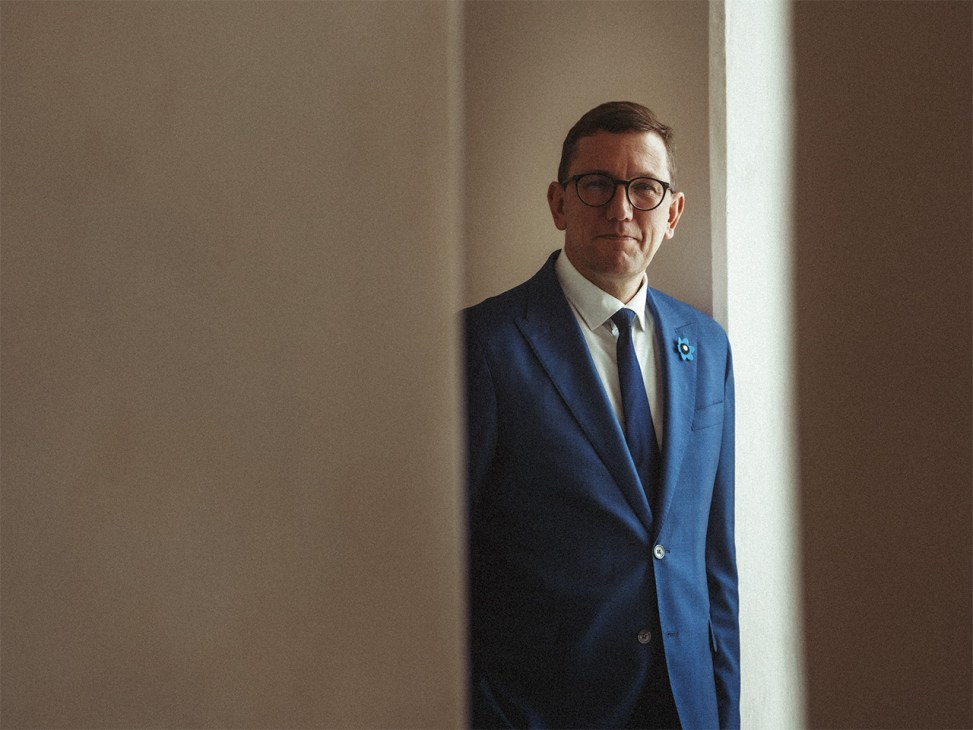
For all of its rhetorical strength, however, Tallinn cannot defend itself alone. It relies heavily on Nato and the US security umbrella. But the weather in Washington is changing. In Estonia, uncertainty about a diminished US role in Europe’s defence is taken seriously but without pessimism. “Politically, messages from Washington vary,” says Michal. “But the core message is clear: Europe should contribute more to its own security.”
In Tallinn, this sentiment has been hurriedly translated into policy. At Nato’s summit in The Hague last year, the alliance set a new defence-spending benchmark of 5 per cent of GDP by 2035. Estonia and Lithuania are currently the only member states on course to exceed that, a decade early, with Michal’s government directing additional funds towards ammunition stockpiles, air defence and infrastructure.
Meanwhile, the US announced in April that it would halt arms exports to a handful of European countries, including Estonia, as a result of the Iran war, which has severely depleted its missile and interceptor stockpiles. “The reasons are understandable, given US involvement in other conflicts,” says Michal. Despite that measured tone, the US decision is a significant setback, especially given Estonia’s recent $4.7bn (€4bn) commitment to buy American arms – a deal that was largely viewed as an attempt to win over Donald Trump’s White House. Critics point out that understanding the US position does little to fill the gaps in Estonia’s battery lines. It would be difficult to raise similar levels of funding for a replacement deal and it’s unclear what could succeed certain American-made systems such as the HIMARS launchers and Javelin anti-tank weapons that have been so effective at halting Russia’s advance in Ukraine – or whether Washington would take kindly to the Baltic nation taking its business elsewhere.
When it comes to the US’s evolving relationship with Europe, Michal is cautious. “In the future – whether it’s in 10, 20 or 50 years’ time – there will be a realignment of forces and Europe will do more of the burden bearing,” he says. He adds that Nato remains steadfast in its commitment to Baltic defence. “During my time in office, we have seen multiple security incidents involving Russia,” he adds. “We co-ordinated with Nato leadership and Nato ships now protect vital Estonian infrastructure. We have also experienced Russian aircraft entering our airspace and Nato jets have responded. On the operational side, the alliance’s military reaction has been prompt and effective.” Amid these uncertainties, Estonia’s advocacy within the alliance continues. Tallinn has long called for more Nato boots on Baltic ground. At the alliance’s 2022 Madrid summit, a few months after Russia’s full-scale invasion of Ukraine, leaders agreed to move from “deterrence by tripwire” to “deterrence by denial”, an approach that aims to defend territory immediately rather than retake it later. There are now about 10,000 foreign Nato troops stationed in the three Baltic states (though the number varies as deployments are rotational). Michal is keen for more concrete pledges from allies. “We require investments to match the defence plans,” he says. “Looking ahead, we need more protection against new risks: radars, anti-drone systems and capabilities to counter low-altitude threats.”
The prime minister insists that Europe must also plug a gap in defence manufacturing. “With an economy the size of Italy’s, Russia can outproduce Europe militarily,” he says. “That is not acceptable.” The EU’s defence production still lags behind Russia’s in key areas such as artillery and drones, despite its vastly larger economic base. Still, Michal is optimistic that European nations will scale up, with Ukraine playing a role in shaping that effort and the recent launch of the €800bn Rearm Europe Plan/Readiness 2030 providing the capital. Nonetheless, European production remains hamstrung by peacetime regulations and a focus on building a small number of hi-tech, expensive platforms, rather than simpler, high-volume weapons, such as drones, that have come to define 21st-century conflict.
Michal meets Monocle a day after an EU leaders’ summit in Cyprus, during which he called for the bloc to tax Russian imports to fund Ukraine’s reconstruction. Having lived through Soviet occupation, he is hard-nosed about what he calls Moscow’s “imperial aspirations”. The same, he adds, cannot be said for some of his European counterparts. “There are still people who romanticise Russia and think that you can have dialogue with criminals.” Geography, says Michal, still clouds the judgement of many in western and southern Europe.
Cyberattacks are a key concern. Estonia is one of the world’s most digitally advanced societies, where more than 99 per cent of public services are available online. But this technological strength is also a weakness, providing a centralised target for Russian “grey zone” operations. In 2024 there were 10,185 cyber incidents – a record number – that were countered by the authorities. “Estonia has been dealing with sustained digital attacks from Russia for almost two decades,” says Michal. “The proximity to the threat should no longer be measured in kilometres.”
Security debates in Estonia often circle back to Narva, a border city in which about 85 per cent of residents are Russian speakers. Michal pushes back against the notion that they pose a risk. “More than 80 per cent of Russian speakers living in Estonia identify themselves with Estonia,” he says. “In fact, support for Nato and Ukraine among the Russian-speaking community has increased since 2022.” Recent surveys support this, though integration remains uneven, particularly among older residents. “The most important elements [for keeping this group on side] are educational reform and support for independent Russian-language media,” says the prime minister.
As with Kallas, despite his prominence abroad, Michal faces a more complicated picture at home. His personal approval ratings hover at about 10 per cent and support for his Estonian Reform Party has fallen sharply, from 31 per cent at the last general election to about 13 per cent in recent polls. Discontent is focused on the country’s economy. Defence spending at current levels leaves less room for social spending, while austerity measures introduced by his government have hit public services and disposable incomes. Inflation, which peaked at more than 20 per cent in 2022, has eased but economic growth has been almost non-existent in recent years.
Michal acknowledges the pressure. He has scrapped plans for an income-tax hike and introduced tax breaks for wage earners. This is having some effect, with a modest economic recovery predicted for 2026. “After difficult years, growth is returning,” he says.
The longer-term challenges, however, are harder to resolve. As with much of Europe, Estonia faces an ageing population and declining birth rates. “Young people need housing and a sense of security,” says Michal. “This is something that we must work on.” He speaks with the sober restraint that is characteristic of the country’s political class. “In Estonia, it is not customary to be optimistic,” he adds. Toompea Hill stands as a monument to such realism.
Key moments in Estonian history
1987: In the “Singing Revolution”, concerts featuring folk and national songs became a key form of protest against Soviet rule.
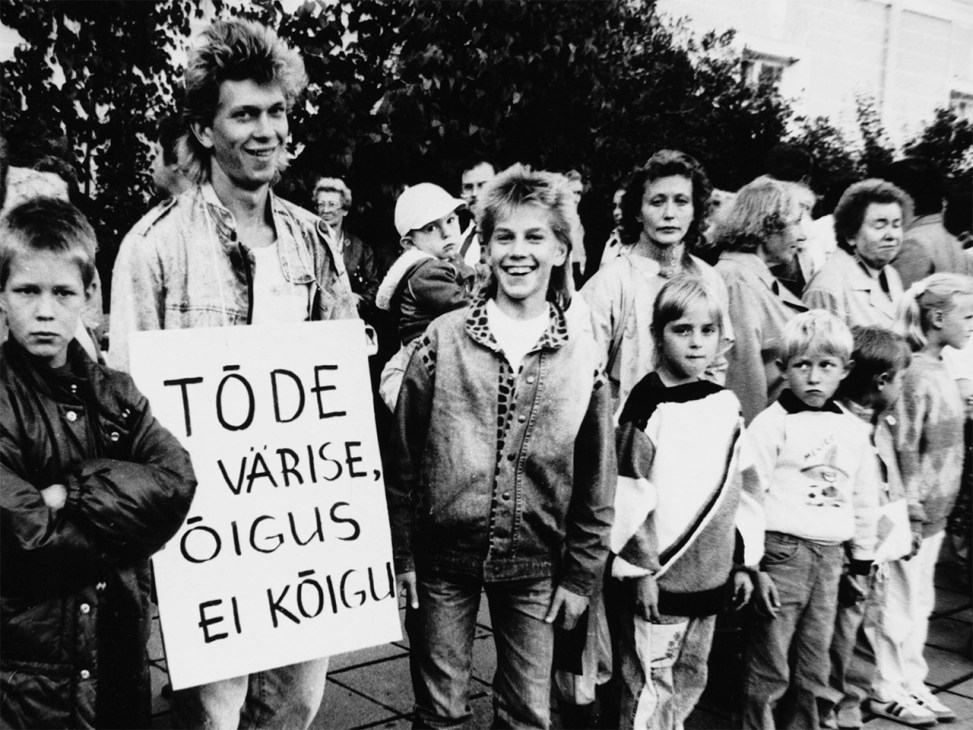
1991: Some 78 per cent of Estonians voted to exit the Soviet Union in a referendum.
1994: On 31 August, the last Russian troops left Estonia.
2004: On 29 March, Estonia joined Nato alongside the other Baltic nations, as well as former Eastern Bloc countries such as Romania and Bulgaria. In May that year, it also joined the EU.
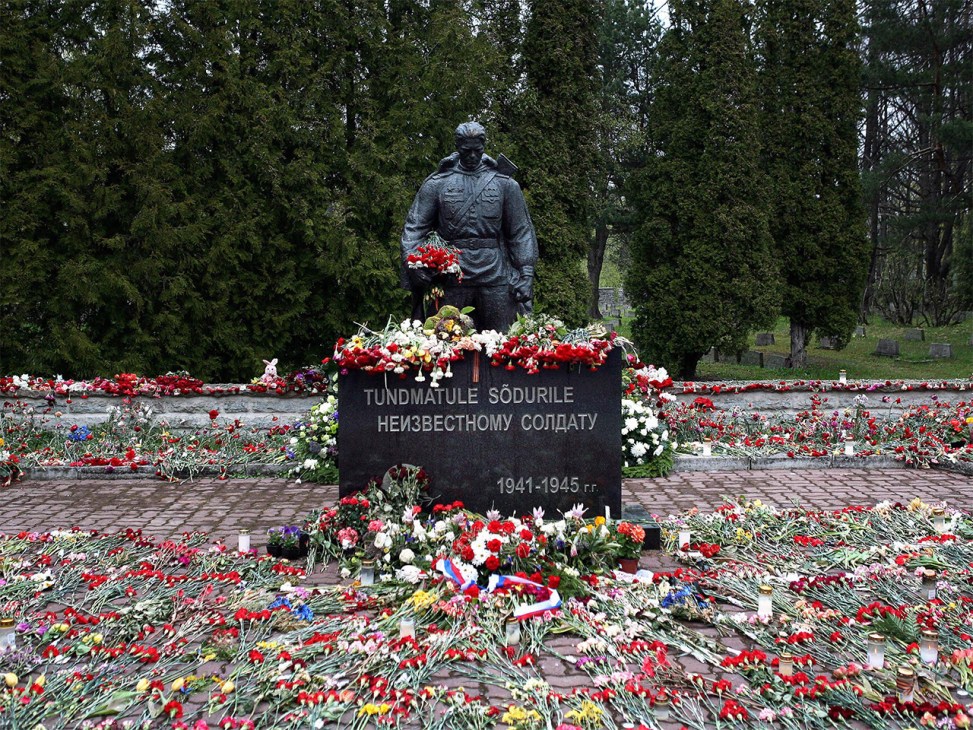
2007: Riots broke out in the Estonian capital and other cities following the decision to remove a statue honouring Soviet soldiers from central Tallinn. This was followed by a series of cyberattacks on Estonia’s digital infrastructure.
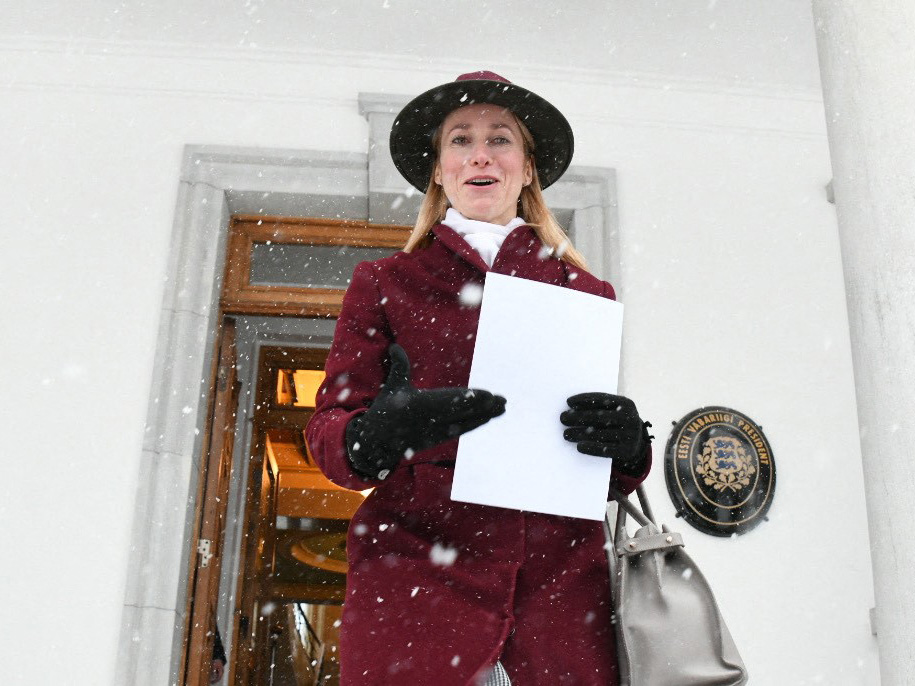
2021: Kaja Kallas became Estonia’s first female prime minister. In 2024, she stepped down to serve as the EU’s high representative for foreign affairs.
Kristen Michal’s CV
1975: Born in Tallinn
1996: Joins the Estonian Reform Party
2002: Appointed as adviser to the then prime minister, Siim Kallas
2003: Becomes the secretary general of the Estonian Reform Party
2011: Appointed as minister of justice
2015: Chosen as minister of economic affairs and infrastructure
2023: Becomes the country’s minister of climate
2024: Takes office as prime minister of Estonia