How Iranians have been coping with the US-Israel conflict through limited internet access
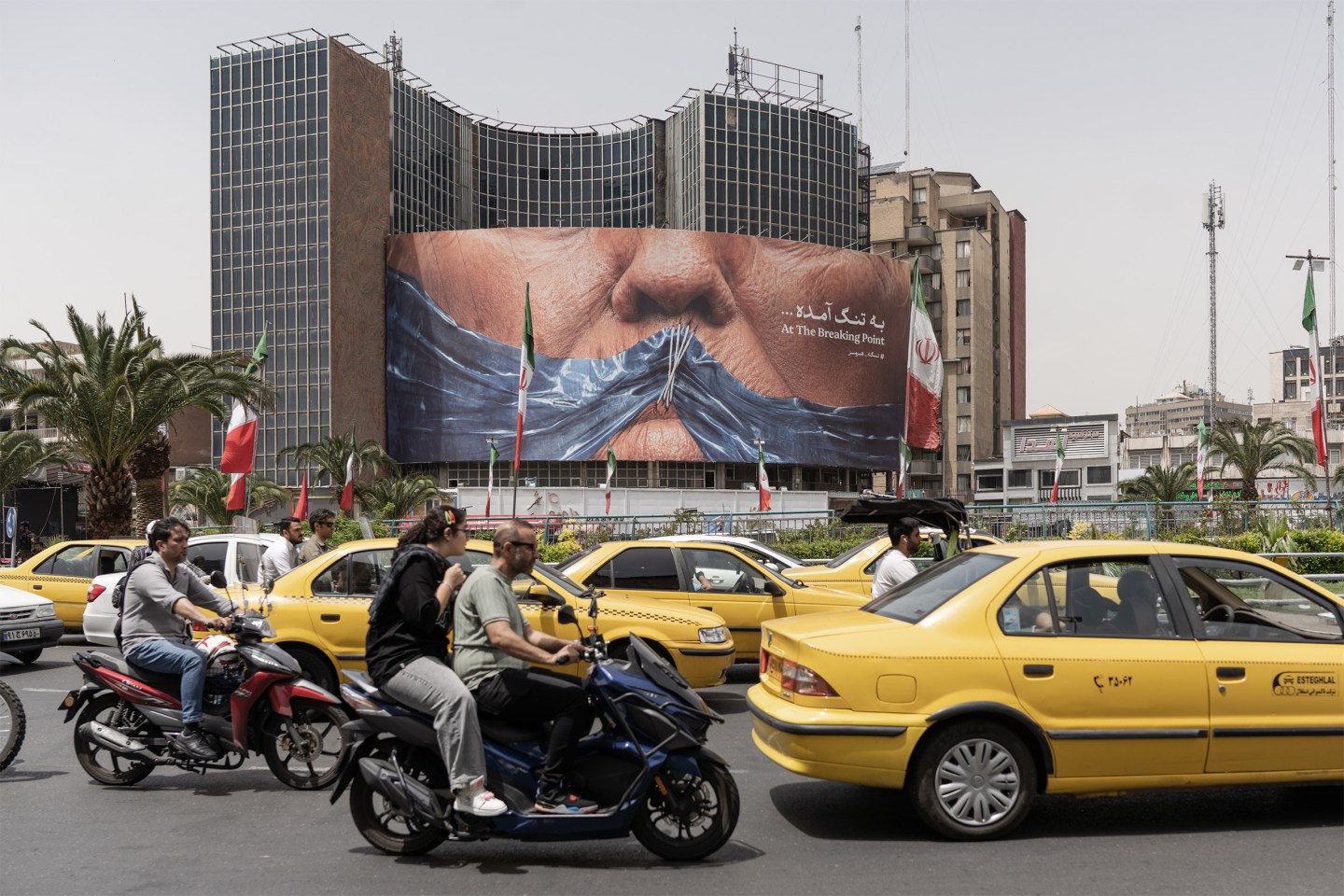
In February, Iranian authorities began restricting internet access for its citizens, which became the world’s longest national blackout. Here’s how Iranians found new ways to connect during the crisis.
For Iranian Sajjad Javanmardi, learning how to live amid war was a slow and difficult process. In the early days of the US-Israel conflict with Iran, he wanted to find ways to make himself useful to his community. He tried photography to “document history.” He joined relief efforts, clearing rubble after airstrikes and distributing meals. He visited graveyards to mourn with those who lost loved ones. He learned the names of shopkeepers on his street in Tehran and bought food from them instead of ordering from delivery apps.
Javanmardi’s struggle to adjust to wartime life is not a unique one. And while physical destruction tends to represent the most immediate consequence of international conflict, its secondary effects also take a serious toll on society. In Iran’s case, foreign intervention is but one of several factors causing instability – the regime’s response to the war has drastically changed life for the nation’s people.


When the war began on 28 February, Iranian authorities imposed a near-total nationwide internet blackout, cutting off access to messaging apps, social media and other major global platforms. While some top officials, businesses and journalists regained limited access through a pay-to-access two-tiered system or black-market VPNs, these services are prohibitively expensive for most citizens.
Though a state-controlled version of the internet is available, the shutdown has had dire effects on the country, both on its economy as well as its ability to communicate with the rest of the world. For Iran’s online businesses, the impact of the blackout has been detrimental: small e-commerce companies and start-ups have been crippled, while freelancers working with international clients have lost their income. Some experts estimate that it has cost the Iranian economy upwards of $1bn (€858.7m).
Internet connection was partially restored on 26 May after 88 days of outage. To understand what life has been like since the conflict began – and without online connectivity – Monocle spoke with four Iranians about how they have adjusted in the wake of war.
Sajjad Javanmardi
A few weeks into the war, Javanmardi was sitting at his favourite café in a leafy neighbourhood in central Tehran when he realised that his experience running start-ups could be a boon, even without reliable internet. The 27-year-old entrepreneur established Place-less, an offline initiative designed to support struggling online artists and businesses. “I’ve helped to set up so many start-ups but I realised that it was time to help sustain them,” he says.


Place-less organises in-person events in Tehran and other areas, bringing artists, designers, poets, jewellers and other independent creators together for pop-up marketplaces. With limited access to the internet, the events are marketed by word of mouth. “When airstrikes were still hitting Tehran, many people were trying to figure out how to get back to their routines and recover lost income,” says Javanmardi. “At our last event, we had about 20 businesses and 17 artists, selling everything from artwork and photography to jewellery. Place-less has turned into a support network for many.”
Darya Nazeri
As negotiations between the US and Iran have stalled, with only a fragile ceasefire remaining in place, coming together in physical spaces has helped people to cope with and navigate everyday realities. While social meet-ups – such as run clubs, park picnics and mountain hikes – were common before the war, they have since taken on a deeper meaning for many Iranians. From the early days of the conflict, people began attending community gatherings, which then transformed into informal support networks.
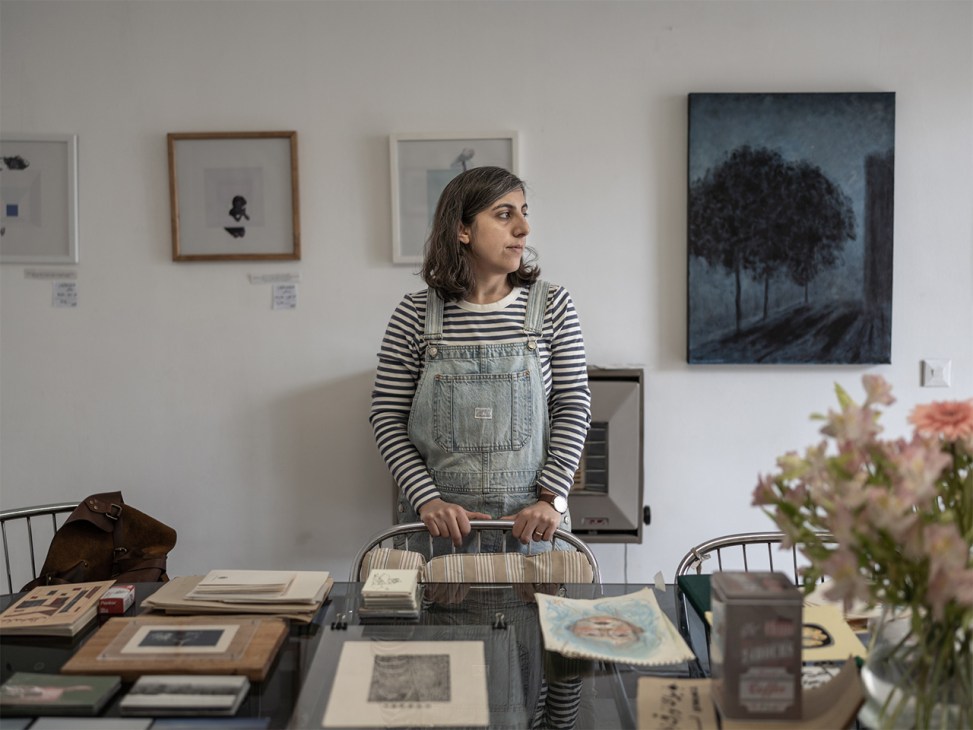
The war altered Darya Nazeri’s routine completely. A biomedical-engineer-turned-artist and street photographer, she sells her work through an online shop. When the war began, she started spending more time painting and taking photos with friends. The 33-year-old artist lives with her husband, Milad, in central Tehran. When an airstrike hit her neighbourhood, shattering their flat’s windows, the couple decided to leave the city temporarily. They traversed the country by train and bus, selling their art and inviting people to draw with them in cities as far away as Mashad, near the Afghan border. “In a way, we transformed my online art shop into something physical,” she says. “The direct connection with people across the country had a very positive impact on me. It reminded me that we are all in this together and it has somehow made me feel proud to be Iranian.”
Marjan Rabiee
When an airstrike destroyed her printing house, Marjan Rabiee lost her entire source of income. At a loss of what to do, the 40-year-old turned a long-term passion into a new career. An avid motorbike rider, she won a national championship several years ago. In the wake of losing her business, she began teaching “women how to ride motorbikes and scooters,” she says, “even though women can’t officially hold a motorbike licence in Iran.”


While street riding is prohibited, racing is different – Rabiee explains that women are allowed to participate in official competitions. “Here motorbike racing [is] still a sport that is mostly practised by men,” she says. “While I race other women, it’s a very limited space. Racing is mostly funded by brand sponsorships and there’s little financial support from companies for women, as few of us [practice it].” By teaching them how to ride, Rabiee hopes that it will open the door for more women to try the sport.
With constrained access to the global internet, Iranians looked for ways to get outside. “Since the ceasefire, my client base has been increasing,” she adds. Rabiee believes that the sport provides a good reason to get out of the city – she often takes her 19-year-old son on rides to the mountains “to breathe”.
Reza Talebzade
Reza Talebzade left Tehran in the early days of the war. His cousin was killed in a US-Israeli strike in Iran last June, devastating his family. When the airstrikes began again in February, he didn’t want to take any risks.
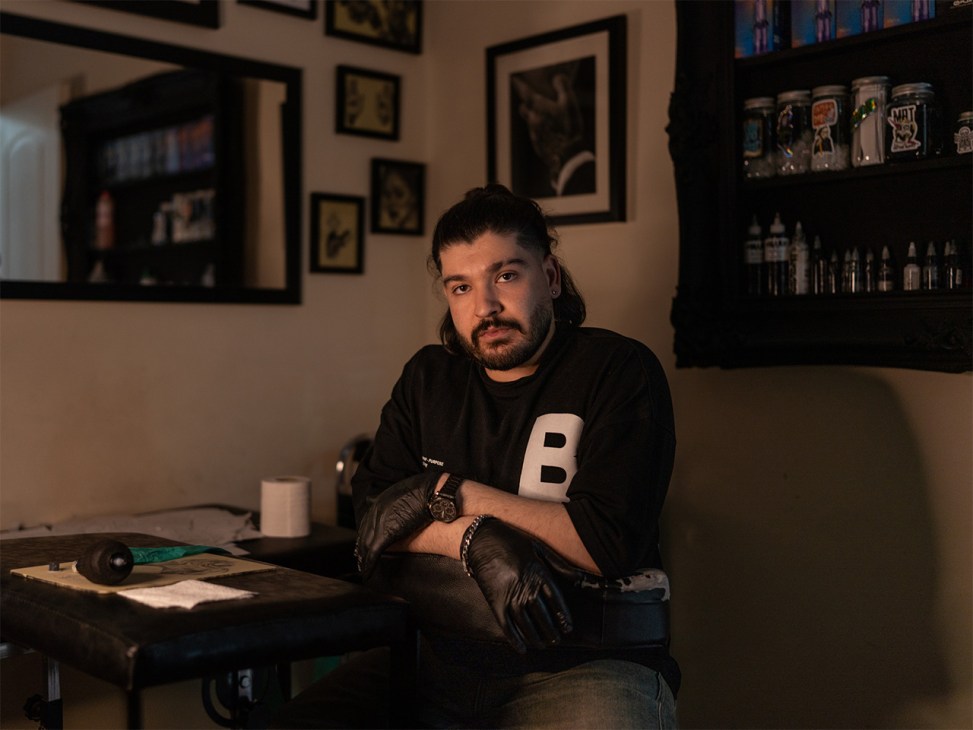
Since returning to Tehran, the 25-year-old tattoo artist has thrown himself back into his work, operating out of a small basement studio. Business was hard even before the war, as sanctions made it difficult to source equipment, causing long delays and rising costs. Since the conflict began and internet access was restricted, Talebzade’s appointment list has shrunk. “A lot of my clients look for tattoo designs online,” he says. “Without that access, many cancelled their appointments.” But the lack of internet connection hasn’t stopped people from getting memorial tattoos, with requests coming in for names and pictures of loved ones who were killed. “I’ve had a growing number of clients asking for tattoos related to the war,” he says. “People who have lost loved ones want a permanent reminder and a way to cope with the loss.”