In defence of Andy Burnham’s £80 T-shirt
Critics say Andy Burnham is out of touch but our editor in chief, Andrew Tuck, and the CEO of Private White VC, James Eden, think leaders should look the part and back British business.
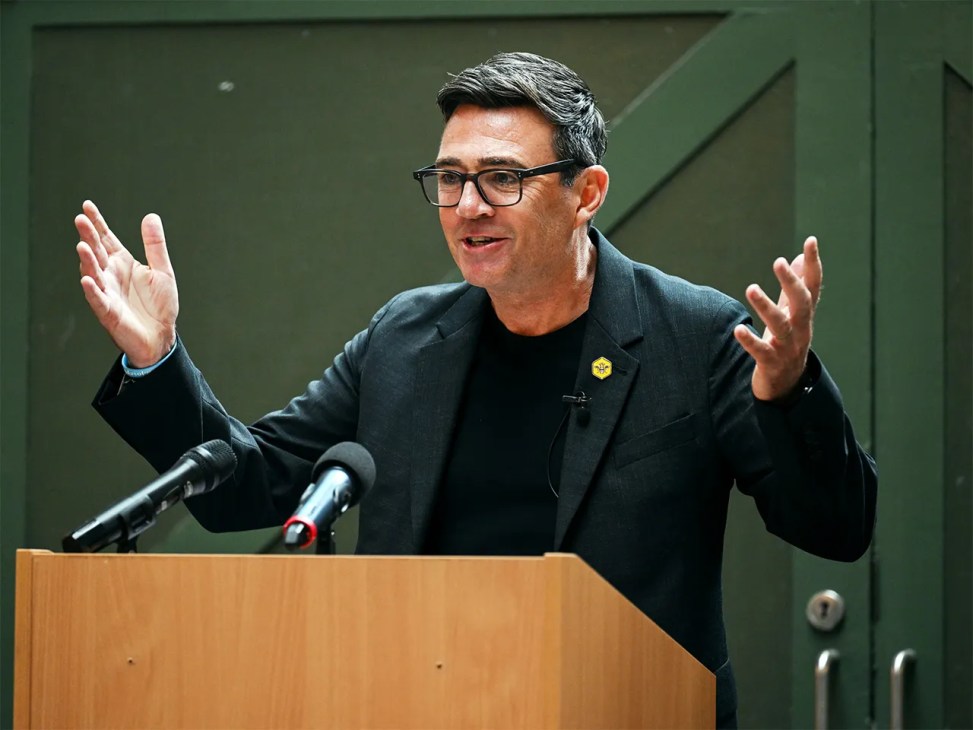
The sartorial choices of British prime ministers have always filled a surprisingly large number of newspaper column inches. So it was no surprise this past weekend when the T-shirt choice of the newly appointed Labour leader, Andy Burnham, was held up as an example of his lack of understanding of the needs of cash-strapped Britons.
The right-wing press saw in this modest garment proof that we are led by a man with secretly lavish tendencies, an immoral desire to look, well, a bit fancy pants.
The supposed problem? The T-shirt cost some £80 (€93). Before we unravel this badly tailored tale, a quick reminder of how we got here.
In 2007 the then-prime minister Gordon Brown was lambasted for spending an alleged £3,000 (€3,500) on a Savile Row suit.
The next incumbent of Number 10, the Conservative David Cameron, also found his reputation caught in his fly zip when he splashed out on a Richard James suit with an estimated price tag of £3,500 (€4,090).
Theresa May was next and guess what? She dared to wear a pair of £995 (€1,160) trousers by Amanda Wakeley. The sin!
Prime minister Liz Truss was criticised for greater sins than her tailoring choice.
Boris Johnson was castigated for sporting clothing that looked like he dressed from a skip.
And then there was prime minister Rishi Sunak and his £450 (€525) Prada shoes – and more £3,500 suits.
So let’s go back to Burnham.
His T-shirt, as well as his jeans and Harrington jacket, come from Private White VC, the last stand-alone clothing factory in Manchester. It makes every garment by hand and sources 90 per cent of its materials within 20 miles – 32km – of the factory, which helps to support British mills.
And guess what? Paying people a good factory wage, not outsourcing to Vietnam or Peru, costs.
That £80 T-shirt should be a point of pride for left and right.
And so too should be any British prime minister of any political persuasion, who buys a Savile Row suit or sports made-in-Northampton shoes.
It’s about time that we praise leaders who part with a chunk of their pay cheque to put their best foot forward and lead in style.
If you won’t take it from me, take it from James Eden, founder and CEO of Private White VC.
The following conversation has been edited for length and clarity. Listen to the full interview on ‘The Globalist’ from Monocle Radio.
Why does your T-shirt need to retail at £80 (€93)?
To buy something for £40 (€47) and later throw it away, I would say, is extremely costly. But to buy a T-shirt or a coat that you’re going to be able to wear every single day, for literally years and years, with a view to one day handing it down to a loved one, offers tremendous value. The conversation about price, while not irrelevant, needs to be considered a bit more holistically.
With regards to the economic activity that goes into producing a garment domestically, it’s huge. It’s deeply profound for the country. And I would argue that if there were more public figures, more politicians, more celebrities, championing and supporting British industry, craft and businesses, then the UK would be in a far better position economically, logistically and operationally than it is today.
It’s glorious that Prime Minister Burnham is actively considering this. Being able to wear and enjoy a UK-made T-shirt or jacket that supports local jobs is a brilliant thing. I really struggle to see how anyone can find anything remotely negative to say about a British leader supporting and wearing British-made garments.
Your company sits in a historic Manchester factory. How difficult is it to preserve tradition when you’re competing with global fast fashion?
Well, first of all, doing anything badly is very, very easy. And doing things on the cheap is very, very easy. Doing things properly, with real craftsmanship, is complicated and costly. We can’t compete on price. I’m not interested in competing on price.
We compete on authenticity, provenance and, ultimately, quality. Because if the product isn’t as good or indeed better than everything else, then people won’t buy it. We’re not selling tea towels or ceramics with the royal family emblazoned on them for a fiver.
We’re selling jackets for hundreds or thousands of pounds. Everything has to stack up. If it’s not perfect or as close to perfection as our customers expect, then I would suggest that you’re going to have a difficult time building profitability and sustainability over the medium and long term.
Doing business in the UK is Darwinism in its most extreme, especially when it comes to competitiveness of fashion and menswear. If you’re still making clothes in the UK, and we’ve been doing it for a long time now, the chances are that you deserve to be.
When we look back at ‘T-shirt gate’ in a decade, will we see this as a row about one expensive item of clothing or a much bigger conversation about British industry and identity?
Well, I’m not sure who’s having the argument about price. Eighty pounds to people who know what they’re talking about, or know what they’re looking at, is a well-priced garment that’s going to last a lifetime. We’ve all bought bad T-shirts before. You wear it once and you’re anxious when you go to put it in the wash because you’re concerned whether it’s going to endure. So, to have a garment with full transparency – to know exactly where the cotton has been picked, spun, knitted and cut – is reassuring and you get a garment that is beautifully finished. The construction is immaculate.
It has been developed and perfected over years by people that you can come meet. To me, that offers great value and I’m pleased to say that there is a burgeoning market all over the globe for that kind of product. I’m also delighted to say that the majority of our sales are now outside the UK.
Should leaders embrace being a soft-power figure for national clothing manufacture?
Well, of course. Looks, perception, aesthetics are absolutely everything when it comes to public figures. Burnham needs to feel great but he has also got to be confident that he looks great, too.
Your coat is the last thing that you put on but the first thing that people see. For many, it’s like armour – it must look the part but also have substance behind it. You know, someone like our prime minister, who champions himself as being authentic, must take comfort in the fact that he is wearing the best jacket in the world and that’s proudly made in Manchester, from a cloth that was developed in Manchester at the direct request of Winston Churchill during the Second World War. There are so many layers, quirks and nuances to what we do here. Those sorts of stories really resonate and charm.
privatewhitevc.com