Exclusive: Albania’s prime minister on the tourism backlash in the face of Trump resort plans
Albania has caught the eye of Donald Trump’s son-in-law, Jared Kushner. We meet prime minister Edi Rama as he attempts to head off protests against plans for a new kind of luxury tourism.
Edi Rama doesn’t seem thrilled when Monocle visits his office but that could have something to do with the protests outside his window in central Tirana. The lack of bonhomie contrasts with the long-serving Albanian prime minister’s image as the statesman-slash-showman of the Western Balkans. Rama is renowned for his irreverence at international summits: one minute serenading his Italian counterpart, Giorgia Meloni; the next, cracking jokes with Emmanuel Macron about Donald Trump’s propensity for mixing up Albania with Armenia. Media profiles gush about the artworks that decorate his office and his tendency to doodle. They marvel at how close he has brought Albania to EU membership during his 13 years in office, transforming Tirana’s skyline and presiding over a tourism boom.
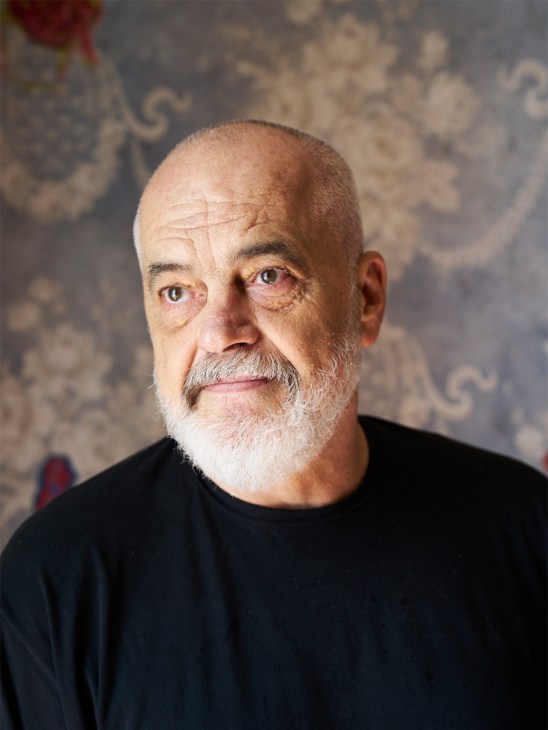
Those journalists evidently didn’t encounter the version of Rama that we see. Monocle’s photographer gets short shrift when he asks the prime minister to doodle as he poses, then earns another ticking off when he changes position during the interview. A question about compromising with the protesters is swatted aside. “Why do I have to reach an accommodation?” he says. “They have the right to protest. It’s a great achievement for this country to have peaceful protests. But we’ve been elected with a landslide and have a clear vision. We have a contract with the majority of Albanians. A few thousand people insisting that we should go are good for the democratic health of the country but they aren’t in a position to impose anything.”
But, in this case, they’re in a position to gain plenty of international attention, largely because of the Trump factor. The US president’s son-in-law, Jared Kushner, is behind proposals for two resort projects on the Albanian coast – at Zvernec, near the city of Vlora, and on the island of Sazan. The government has granted Kushner “strategic investor” status, allowing him to develop luxury accommodation in an area that’s supposed to be under environmental protection. Those plans have stirred up local concerns since they went public two years ago. Then, in May, the protests gained traction when security guards at one of the sites assaulted a local man as police stood by. The video of the incident went viral and triggered an outpouring of anger that spread from the coast to the capital.


Rama is exasperated by this turn of events. He characterises Kushner as an investor who is “respectful to our country” and wants to do “everything by the book”. He also describes the assault on the protester as an “unacceptable episode”, for which officials are already being held to account. Above all, he rejects the protesters’ main complaint – that Albanian land is being sold to wealthy foreigners, with little benefit to the locals in what remains one of Europe’s poorest countries.
Tourism accounts for about a quarter of Albania’s GDP but the prime minister insists that the country needs to move beyond the current model. “Mass tourism has been an incredible force to spread the word about this country but it’s not sustainable for nature, the air, the water,” he says. “The stress that it brings to the country isn’t worth it. I’m not saying that we have to stop but need balance. We need high-end: fewer tourists but more money.”
Looking at the Albanian Riviera, Rama’s point seems plausible. A busy single carriageway separates the beach, with rows of parasols and sunbeds belonging to the hotels and holiday apartments opposite. Some of them have only been built recently, in response to growing tourist numbers after the pandemic. Others are still under construction. Even before the start of peak tourism season, it’s starting to feel uncomfortably busy.
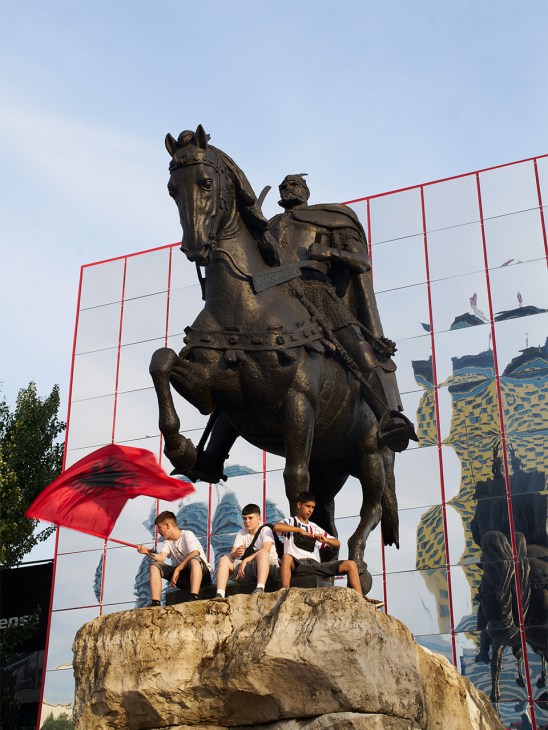
In the bar of the Regina Palm Resort is Vasil Bedinaj. His Regina Group owns four hotels in and around Vlora and he wants to expand. But he’s pondering the wisdom of doing so if Albanian tourism doesn’t evolve. He believes that Kushner’s projects might provide an example for others to follow. “We don’t have the experience for this kind of business yet and, to learn, you have to have the best ones around you,” he says. “And you have to have brands. They’ll bring professional workers. And when they do, I can learn from them.”
Others are less optimistic. In Galeria e Bregdetit, an exhibition by artist Driton Selmani explores Albania’s relationship with tourism through a series of works involving everything from mosaics to bird droppings. Founder and curator Elian Stefa describes this as “a cheeky way of reflecting on these transformations that are happening here”. He has run the gallery since 2018 and isn’t convinced that bigmoney developments will bring meaningful benefits to locals. “The question is about access and accountability. Who will be able to enjoy them and profit from them?”
Vlora resident Baki Goxhaj wants the stretch of coast around the Narta lagoon to remain a sanctuary for flamingos and other birds. He has been protesting in both Vlora and Tirana. “Public beaches are protected by law and can’t be privatised but they basically fenced off 7km to make a private beach,” he says. “We also have the protected areas law. They amended it to allow only luxury investments. So this is only for special people.”
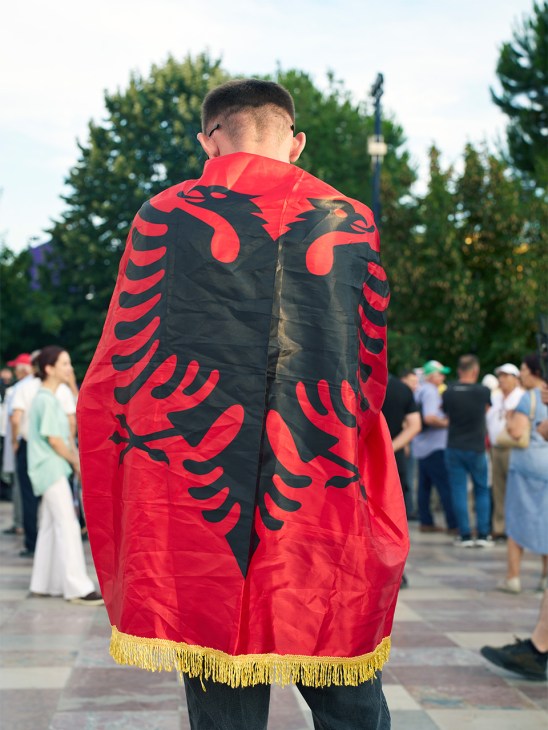
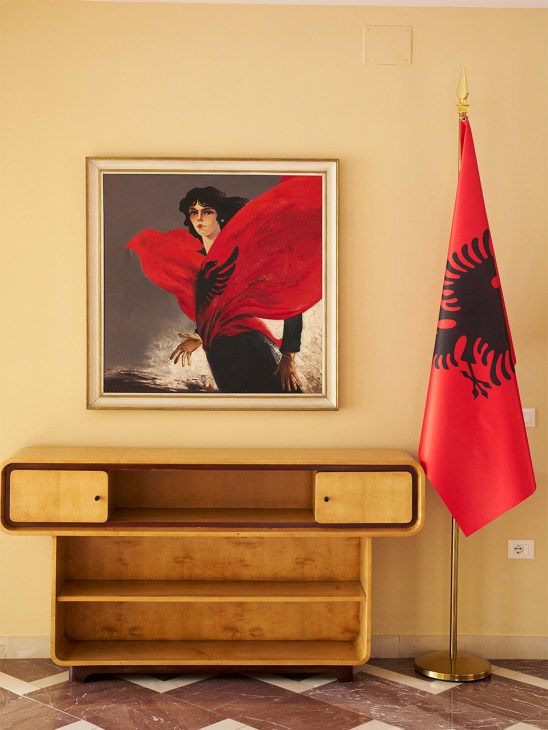
Similar sentiments are common in Tirana, where people have seen luxury tower blocks sprouting across the city but haven’t felt the benefits. Keit Zaloshnja is an executive assistant at Vila 31, an artists’ residence where dictator Enver Hoxha once lived in the kind of luxury that would have boggled the minds of Albanian citizens during his rule. She sees a different kind of wealth gap emerging. “Investors make out that Albania is a hidden gem, so they want to make it beautiful and use all the resources,” she says. “That seems a bit colonial. There needs to be more transparency and dialogue with the public.”
The protesters outside the prime minister’s office aren’t just calling for the Zvernec project to be scrapped. They also shout about the need to improve schools, hospitals and living standards. “I’m taking notes,” says Rama. “Your enemies can tell you things that are more useful than what your friends tell you.” With that, he instructs Monocle’s photographer to “get out” and turns to the doodle-festooned papers on his desk. Rama has claimed that sketching helps him to focus. This long, hot summer shows no sign of cooling. He might need to order some extra pens.

This article is from Monocle’s Med, Mountains & More newspaper, on sale from 31 July. Subscribers will receive a printed edition including a magazine supplement as part of their subscription. Not a subscriber yet? Purchase a copy of the newspaper here.