Reversing the brain drain: How Poland succeeded in luring young talent back home
Ambitious Poles are increasingly banking on staying local, as their nation continues to thrive culturally and economically.
For decades, mass emigration drained Poland of its brightest and best. In the first 10 years of the country’s membership of the EU, from 2004, about 5 per cent of citizens left the country – the majority of them settling in Germany, Ireland, the Netherlands and the UK. Most were young people. A 2013 survey showed that as many as 69 per cent of Poles had either a family member or close friend living and working permanently abroad.
Those days are passing. Poland’s economy has grown 4 per cent on average every year since 2004. Salaries have tripled, disposable income has skyrocketed and Warsaw has one of the fastest-growing economies of Europe’s capitals. Poland is the continent’s land of opportunity – and its brain drain has reversed: between 2017 and 2024 at least 300,000 Poles who were residing abroad moved back home. Here, we meet four young Poles who have returned or turned down opportunities to leave.


1.
Agnieszka Homanska
The political adviser
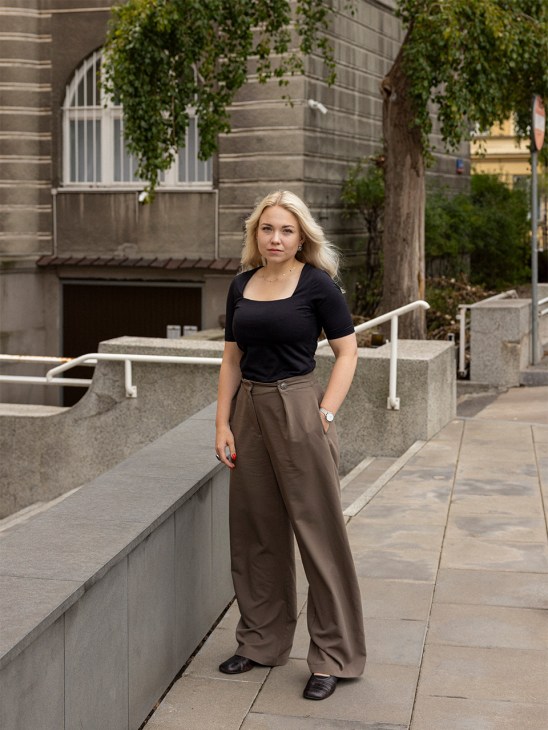
Agnieszka Homanska is rarely seen without her wheeled suitcase. The 27-year-old runs the political cabinet of Poland’s foreign minister, Radosław Sikorski – so does a lot of travelling. Taking up the job three years ago meant not pursuing a master’s degree in political science at McGill University in Montréal. “I had already booked the flights,” she tells Monocle outside the Ministry of Foreign Affairs building in Warsaw. A graduate of the University of Warsaw, where she read applied linguistics and international relations, Homanska made a name for herself during the 2023 parliamentary election, running the campaign of Aleksandra Uznanska-Wisniewska, one of Poland’s youngest MPs. On the campaign trail, she bonded with Sikorski, who then offered her a job.
“I always wanted to be a diplomat,” she says. “I wanted to stay and strengthen Poland’s position in Europe.” In 2023, Homanska co-founded Zryw, a nonpartisan initiative that aims to convince students and graduates to become involved in public life. “Poland is recognised as a key European geopolitical player and our economic success story is well-known,” she says. “Yet we are having trouble telling that story internationally. My generation wants to change that.” This year, Zryw held six events to persuade graduates to work for the state. And those flights to Canada? “I went skiing there for two weeks,” Homanska says.
2.
Michal Tarnowski
The civil servant
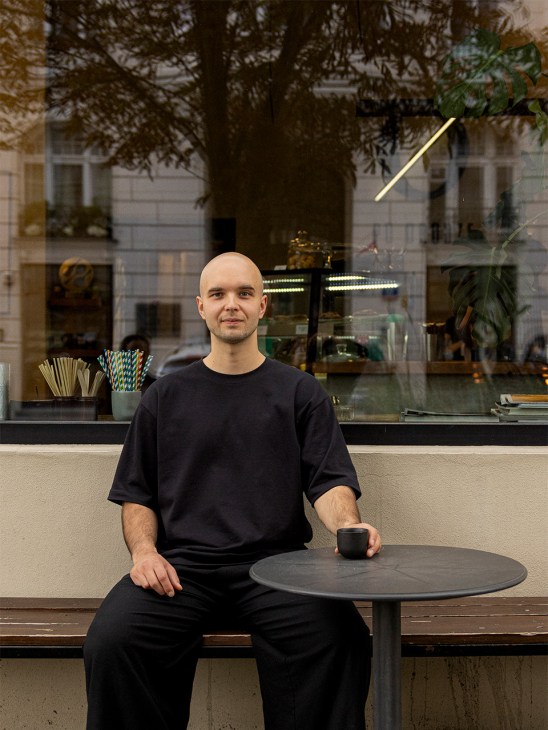
Michal Tarnowski considers himself a social entrepreneur. The 30-year-old returned to his homeland from the UK seven years ago to work as a social entrepreneur, during which time he developed a civil service fast-track scheme for young candidates. In 2025 he joined the Ministry of Digital Affairs to work on Poland’s digital services tax. “I always saw myself in a career with high public impact,” he says. “In Poland, which has stunning macroeconomic indicators but very low civic activity, that is a readily achievable goal.”
Tarnowski calls Poland a “partially mature country” in terms of public involvement. “With the civil service, the system often does not know how to make good use of your talent, especially if you studied abroad,” says Tarnowski, who has a PPE degree from the University of Oxford. “So you need to create space for yourself, which is not easy.” Still, Tarnowski would never dream of leaving Warsaw. “Over the past five years, this place has changed beyond recognition,” he says. “You can find employment, education and public service but also a great lifestyle.”
3.
Marcin Szala
The educator
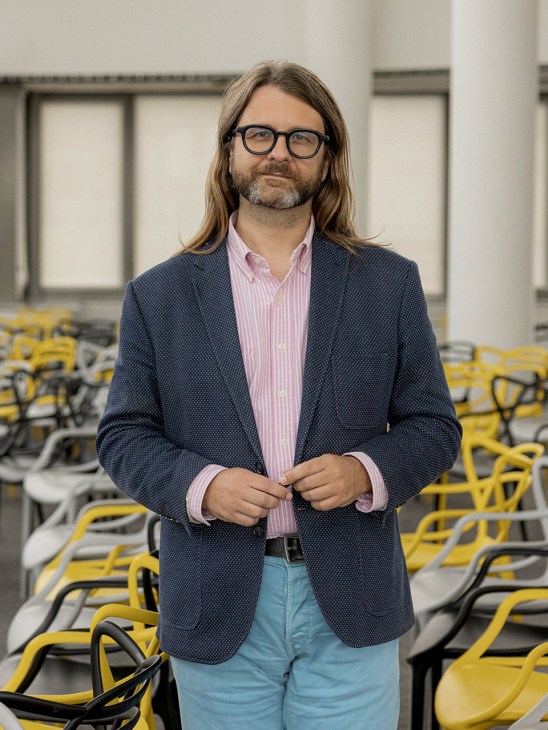
“We would often hear from students and parents that any foreign education was better than staying in Poland,” says Marcin Szala. “That is no longer the case.”
In 2022, Szala co-founded Liceum Artes Liberales (LAL), a private high school whose aim is to prepare students for 21st-century life. Spanning two floors of a vast office building in Warsaw’s Wola district, the space features relatively few doors or walls. This is supposed to instil in students a feeling of freedom. Unlike in the majority of schools, the teachers’ room is accessible to all – and the curriculum is similarly expansive. “Nowadays, students and their parents think differently about education,” says the 46-year-old, leaning against a whiteboard filled with ancient Greek and Latin words. He aims to introduce a sense of multidisciplinary curiosity into students’ minds by moving the conversation away from vocation and instead towards free thinking.
Students are required to take the responsibility of organising trips for themselves and their classmates to businesses, museums and educational institutions. They also run a programme called Current Affairs, inviting guest speakers to the school once a week to discuss the state of the world. Recent subjects have included the gig economy and the US government’s trade policy.
“It is an entirely reactive project,” says Szala. “Even with that in their schedule, our students still find time for extracurricular societies.” These include Latin, chess and philosophy clubs, which are treated as intrinsic to, rather than separate from, subjects such as chemistry and economics. Szala believes that the Polish education system now teaches STEM subjects at a similar level to those of its European peers. “This summer we had cases where students turned down offers from prestigious UK universities to enrol at the University of Warsaw.” Still, Szala laments a gap in business studies, as well as in the humanities and social sciences, which he says are still underfunded and underappreciated in Poland. With LAL, he aims to change that.
4.
Aleksandra Pedraszewska
The fund manager
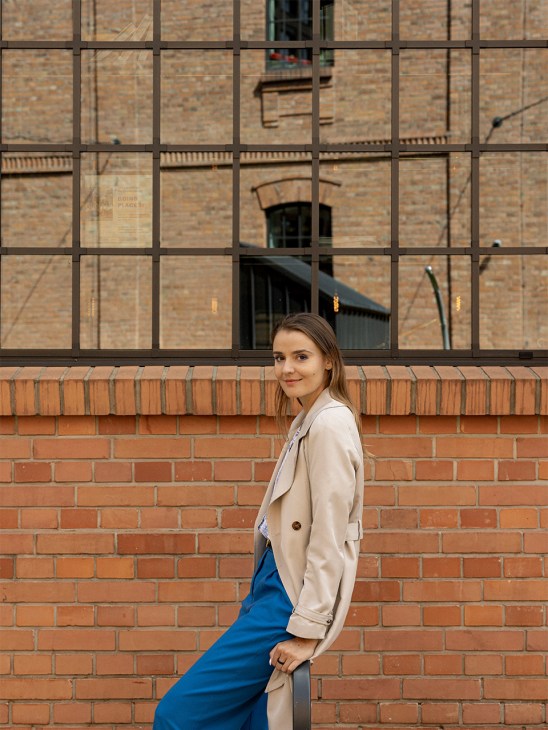
“Every major investor in Europe wants to be up to date with news from Poland,” says 32-year-old Aleksandra Pedraszewska, who left a career in tech in London to set up Vastpoint, a venture-capital fund that focuses on Polish start-ups. Monocle meets Pedraszewska at the Google Campus in Warsaw’s post-industrial Praga District, where she’s speaking at a conference held by a tech company in which she and her two co-founders have invested. “We have three decades of experience spanning London, Berlin and New York,” she says. Pedraszewska takes daily phone calls from curious overseas fund managers. “We aim to bring international investors here and show them the inside story of our economic miracle.”
ElevenLabs, valued at $11bn (€9.5bn) and a global market leader in AI-powered voice-to-text tech, often comes up in such conversations. Founded in Warsaw in 2022 by Mati Staniszewski and Piotr Dabkowski, it was largely shunned by Silicon Valley but has become synonymous with Poland’s economic miracle. Pedraszewska helps foreign investors avoid such oversights. “We have grown big enough as a market to attract international investors and give people opportunities to make a lot of money,” she says. “It’s hard to think of a situation more apt for an emerging manager like me.”
Still, challenges remain. “We have very good schools but we lack opportunities and capital for the very best ones to scale their talent up globally,” she says. “There is still not enough private capital for young companies to grow, so we keep losing people who move overseas, mostly to Silicon Valley. But that is a pan-European problem – Poland will not solve it alone.”
How Poland reversed its brain drain
- Steady growth in wages combined with lowering the cost of living have made the country a beacon for young people.
- A wide range of public services remain well-funded and easy to access – something that is no longer a given in many European countries.
- Poland has attracted significant foreign direct investment, including from Silicon Valley giants, often through tax breaks and financial incentives. These companies have reciprocated by developing joint projects with local universities, especially in STEM subjects.
- As a relatively young democracy with painful memories of totalitarianism, Poland has managed to avoid drags on growth from nimbyism or bureaucracy that blocks investment.
- The country is at the cutting edge of European defence spending and R&D – attracting major investment and giving a push to innovation and public-private partnerships.