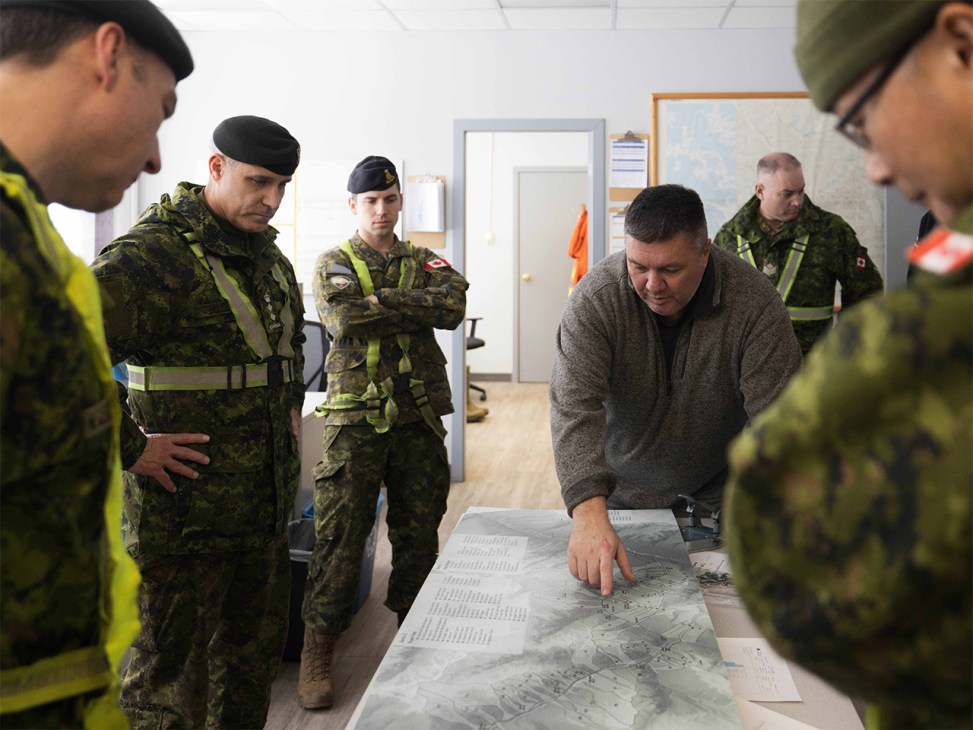
Ploughing ahead: How Helsinki Airport keeps its runways open through long winters
The Finnish take snow seriously. At the capital’s airport, fleets of hi-tech snow-clearing machines take to the runways as early as September, ploughing, sweeping, blowing and spreading their way towards safer conditions.
Snowed-in runways aren’t just a problem for the world’s northernmost climes. Texas’s Dallas Fort Worth (DFW) International Airport, for example, has a fleet of snow-clearing machines made by companies such as Oshkosh and Trecan, many of which are housed in a large €10m hangar. DFW even has a snowplough simulator so that crews can practise throughout the year for precipitation events that, while rare, can have a devastating effect on airport operations.
At Helsinki Airport, de-icing operations begin in September but the final snowfall of the year is anyone’s guess. In the winter of 2023-24, 30cm of snow blanketed the city on 22 April, more than a month after the spring equinox. “All summer we prepared for winter,” says Pyry Pennanen, former head of airfield maintenance at the Finnish aviation authority, Finavia. Among other things, Finavia’s team at Helsinki Airport must repaint the portions of the airfield scraped up by all the ploughing and sweeping of the previous winter.
In Finnish, a language with at least 40 words for different kinds of snow and frozen precipitation, pyry means “snowfall”. Whether Pennanen was destined for his former role is unclear but he clearly came to inhabit it. In a country with famously enduring winters, Pennanen’s task took on the tenor of a long military campaign.
€40m
Helsinki Airport’s annual snow clearing budget
3.5 million sq m
The airport’s total paved area that must be kept clear of snow
1,000 tonnes
Amount of traction enhancing road grit that the airport uses every year
Helsinki Airport has not been closed due to snow since 2003. Even then, it was “due to heavy snow on the antennas”, says Jani Elasmaa, vice-president of Finavia. Maintaining the airport’s 98.9 punctuality rate in the face of inclement weather requires 200 vehicles and some 60 permanent staff, plus an on-call network of more than 100. Then there are the annual orders, which include 1,000 tonnes of traction-enhancing grit and 1,500 tonnes of potassium formate (a granulated de-icing agent) – all paid for with an annual €40m budget.
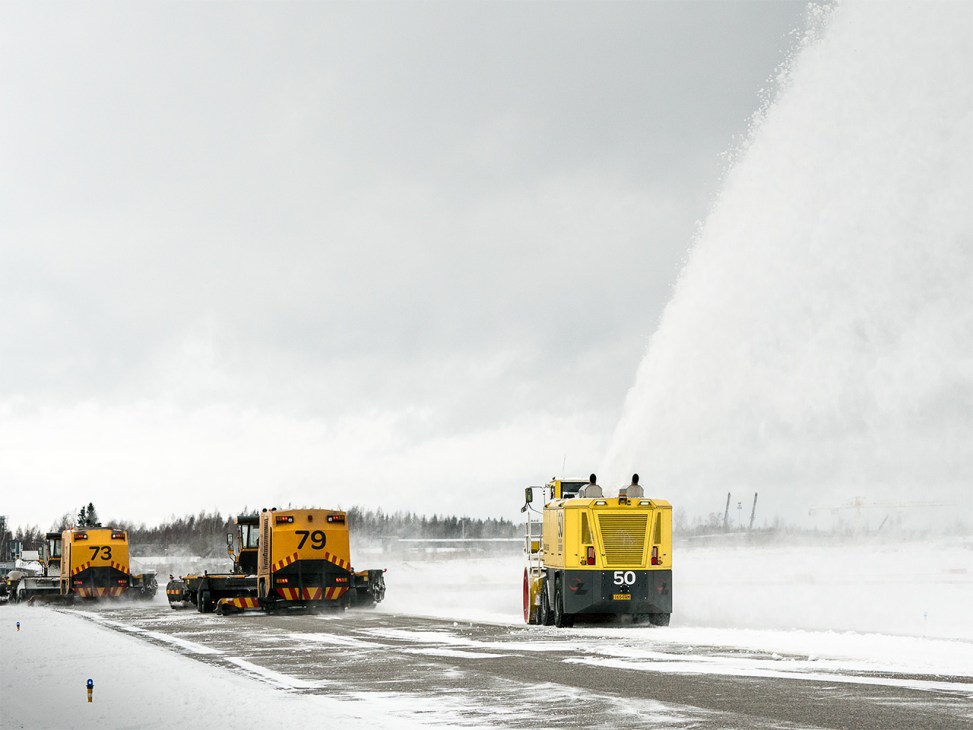
When it comes to clearing the white stuff, it’s not all about the money. It’s also about the “snowhow” (see box, below), Finnish nous honed over the centuries and perfected by Finavia using state-of-the-art equipment. As snow begins to accumulate, a fleet of PSB (plough, sweep, blow) machines is dispatched to one of the airport’s three runways. Moving in an echelon pattern, with every machine ploughing a 5.5-metre swath, they can clear a runway in just 11 minutes.
With the flakes intensifying, the team takes Monocle on a runway tour in one of the 31-tonne, 21.1-metre-long Vammas PSB machines. These vehicles are designed to perform multiple tasks: first, they push through the snow with a plastic-edged plough, then a wheeled set of street-cleaner-style metal bristles brushes it up, before the trailing blower, which blasts out air at 430km/h, whooshes away any remaining flakes. The snow that the PSB machines leave on the side of the runways can be an obstruction for other vehicles, so the crew also deploys self-propelled snowblowers from Norwegian manufacturer Øveraasen, whose engines can shift up to 12,000 tonnes per hour.
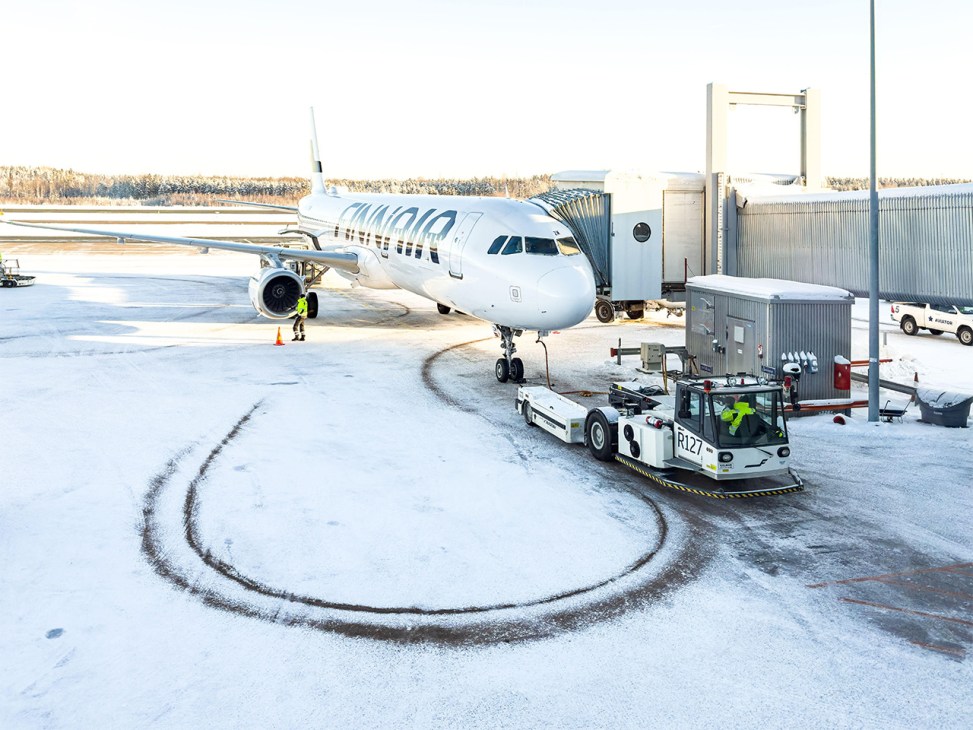
While long-term weather patterns indicate less snowfall in Finland, the past few years have seen both dips and upswings. Recent winters have brought with them a new menace. “I don’t know if it’s climate change but freezing rain has become more frequent here in Helsinki,” says Elasmaa. Indeed, the last time the airport closed, in 2021, was because of super-cooled water hitting the tarmac. “We immediately had 3cm of ice on the runway,” he says. One way to combat this, says Elasmaa, is to leave the snow until the last possible moment to act as a sort of “shield” against ice build-up.
With snowflakes beginning to fall again, Monocle is directed towards a platoon of snow-removal machinery: a PSB machine, wheel loaders, a belt tractor with a snowblower, two highpowered snowblowers, one chemical spreader and a tractor. In a scene reminiscent of Mad Max – only with tundra instead of desert – an array of whirring and churning vehicles begins to send white jets and crystalline clouds into the dark winter sky.
How Finnish ‘snow-how’ keeps the slopes ski-ready
With a season that lasts almost seven months, Levi Ski Resort in Finnish Lapland has some of Europe’s most reliably snowy slopes. It achieves this feat by manufacturing its own snow and storing the previous season’s flakes with the help of the latest technology. Here are five tips that other resorts would do well to follow.
1.
Build for the long term
“You can’t buy reliability in one season,” says Marko Mustonen, Levi Ski Resort’s commercial director. “It’s something that you construct slowly.” Ski resorts that take the long view by focusing on snow-making and storage systems – planning 20 years ahead, rather than chasing annual snowfall – are those most likely to stay on the map.
2.
Let technology do the thinking for you
Manufacturing snow by crystallising water in cold conditions requires precision rather than guesswork. Levi’s network of more than 300 snow cannons is connected to a digital control system. This lets the resort track temperature, humidity and wind direction, then adjust the output for efficiency.
3.
Treat energy as a design problem
Making snow is resource intensive and costs money so figure out how much you need by aligning water consumption, power and weather data. “Every kilowatt saved is snow that we can make tomorrow,” says Mustonen.
4.
Keep some in reserve
Recycle snow. It doesn’t have to vanish after the winter. Every year, Levi stores snow beneath a layer of insulation mats. About 70 per cent of its stored snow survives the summer, which allows Levi to open its slopes and welcome back skiers well before any new snow can be made. Yesterday’s snowfall becomes tomorrow’s base.
5.
Let it snow
Artificial snow builds a strong foundation but only natural snow delivers the smooth glide that skiers love. By using snow fences to capture drifts and then layering them over man-made foundations, resorts can achieve the perfect balance of rugged durability and silky texture.
Avalanche control in North America requires bringing out the big guns
Winter might be cherished for its peace and quiet but in terrain prone to avalanches, a concussive boom can be a regular soundtrack. In ski resorts and along high-altitude highways, professionals have used explosives to trigger slides for decades. In North America, vintage military hardware has long been used for this purpose, from M101 howitzers used in the Second World War to Cold War-era M60 tanks.
But as ammunition supplies dwindle, armies recall artillery and transportation departments install remote detonation systems, these relics’ days appear to be numbered. This winter, for the first time, rather than load a shell, aim and fire as though they’re in the Battle of the Bulge, the highway crews responsible for Interstate 70 through the Colorado Rockies and Interstate 90 through Washington’s Cascade Mountains will use a modern, Swiss-designed Wyssen Avalanche Control system.
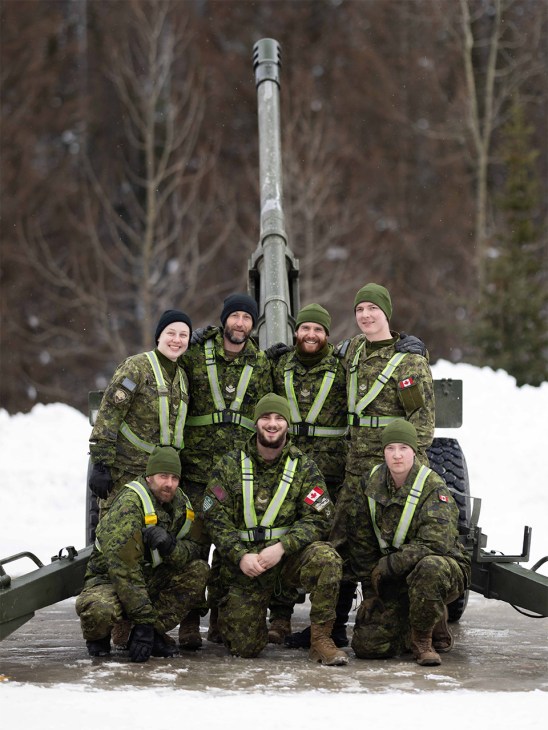
There is one holdout, however. Rogers Pass, where the Trans-Canada Highway cuts through the Selkirk Mountains in Glacier National Park, has the highest avalanche rating of any highway in North America, with 135 known slide paths. Parks Canada’s avalanche forecasters make the calls, while the Canadian Armed Forces still fire the shots with C3 howitzers. Operation Palaci employs 15 to 20 artillery specialists from November to April. Unofficially, the annual deployment is known as Canada’s longest-running hostilities: the Snow War.