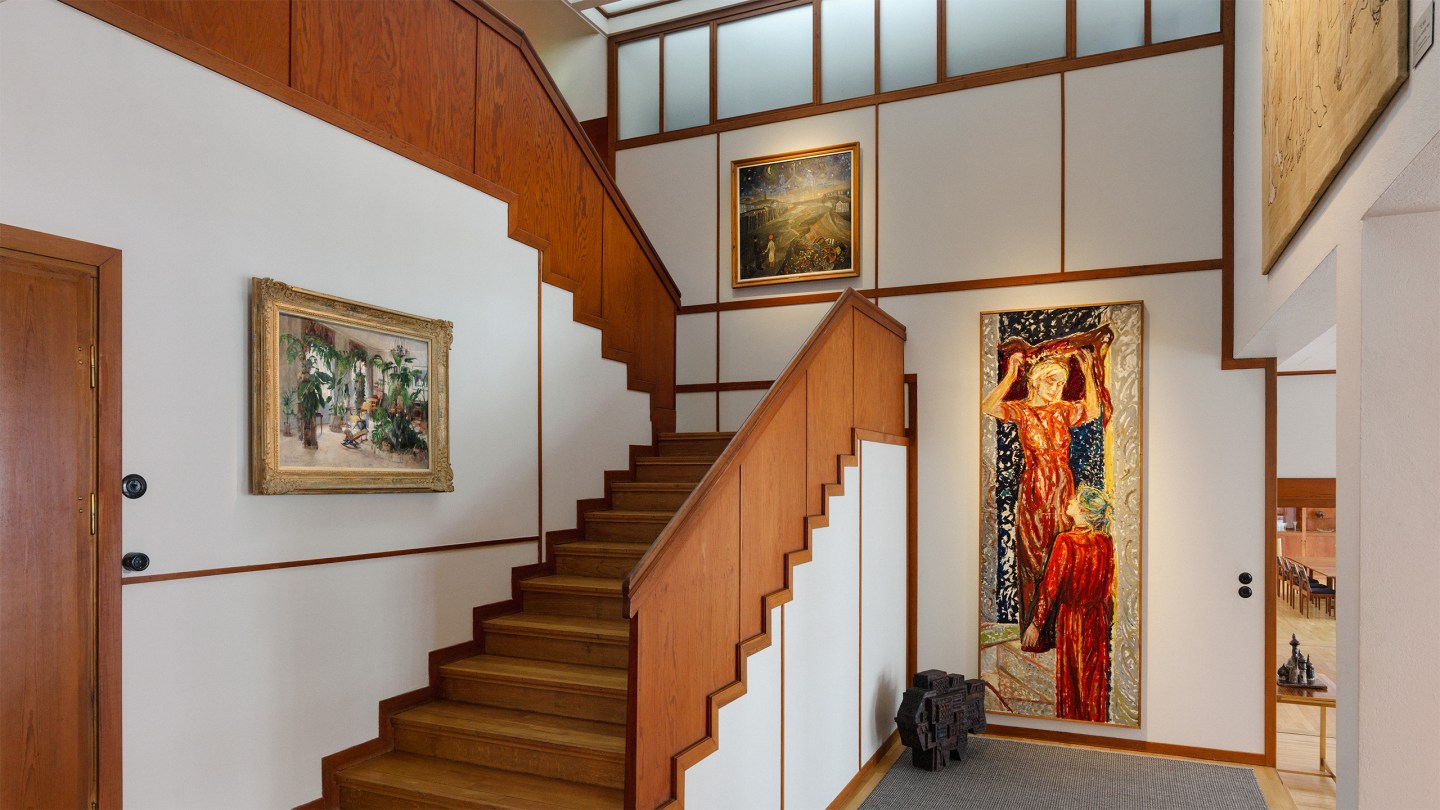
At Norway’s chic Stockholm Embassy, modernist design meets Nordic diplomacy
The warm, considered interiors of Norway’s embassy in Stockholm is a reflection of the nation’s character and its culture of craft and unity.
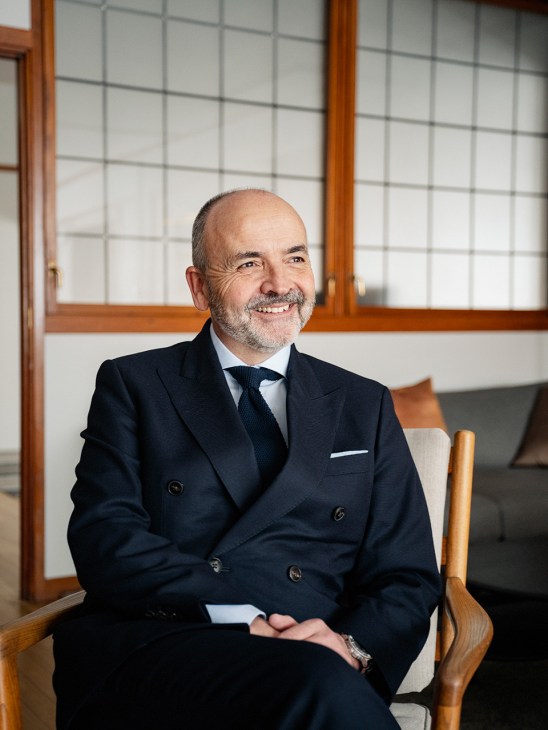
The Norwegian embassy stands apart from the grand façades that characterise Stockholm’s diplomatic quarter. Its red-brick walls and long, horizontal windows hug the landscape, while its lush garden slopes gently towards Djurgårdsbrunnsviken bay. It looks as much like a chic lakeside home as a government building. Completed in 1952 by architect Knut Knutsen, the embassy is one of the finest examples of postwar Norwegian modernism. “Compared with many other embassies, this feels almost domestic in how unassuming it is,” ambassador Niels Engelschiøn tells Monocle in his residence in the embassy. “In many ways, this is the image that Norway wants to project internationally: approachable, trustworthy and functional.”
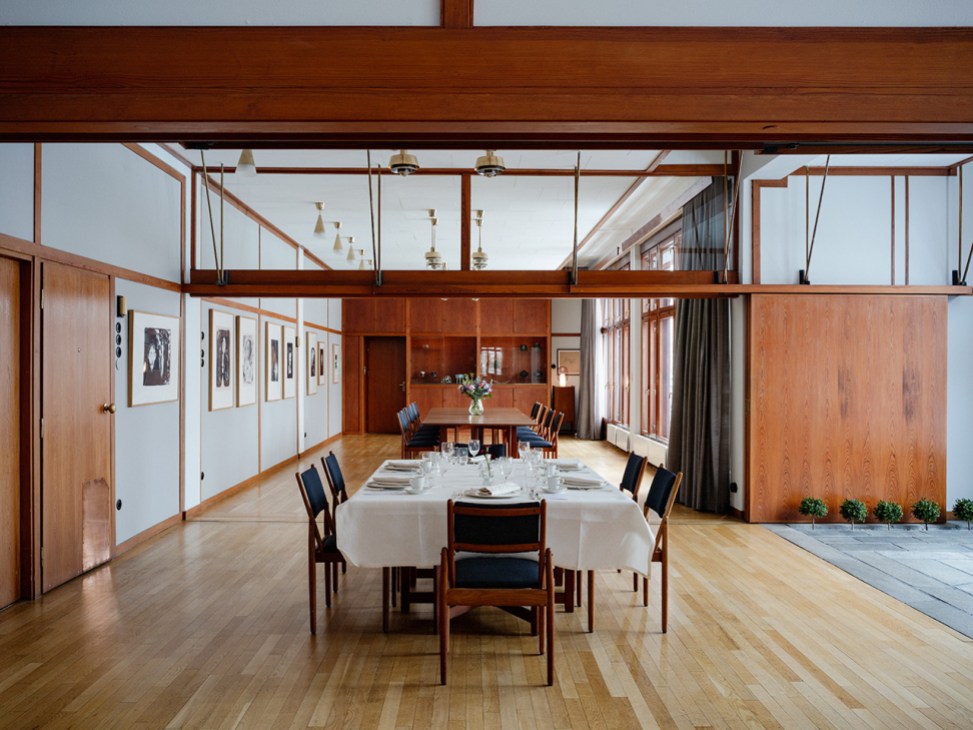
The building took shape just as Norway was emerging from wartime hardship and wanted to build a modern, democratic identity – a vision shared by Knutsen, an avowed internationalist and social democrat. Many of the artists involved moved in the same circles, helping to give this idea a sense of unity. The embassy’s interiors are resplendent with natural materials, such as wood, brass and fabrics. Handwoven woollen rugs designed by the architect’s wife, textile artist Hjørdis Knutsen, mute visitors’ footsteps, while her soft curtains adorn the tall windows. Modernist elements such as the fireplace, bare pine floors and panelled walls add warmth and accentuate the domestic feel.
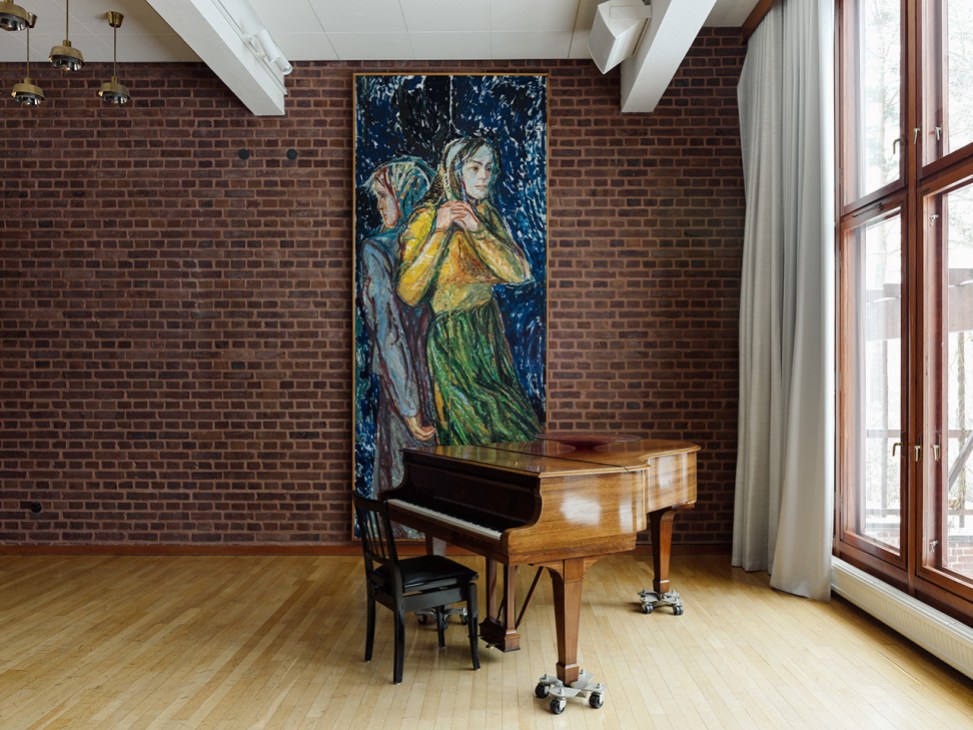
Much of the furniture was designed by Knutsen, while built-in cabinets display Norwegian glass art and ceramics, fulfilling the architect’s wish to make the embassy a stage for national craft. Yet it is the Norwegian art collection that steals the show. Monumental paintings by Henrik Sørensen fill key rooms, while Jean Heiberg’s “Regatta” catches the fleeting brightness of a Nordic summer. In the dining room, a series of images by Edvard Munch is on display. The whole collection forms a layered portrait of Norwegian cultural life. “Art is a great diplomatic tool,” says Engelschiøn. “Not a visit goes by without someone asking me about the collection here.”
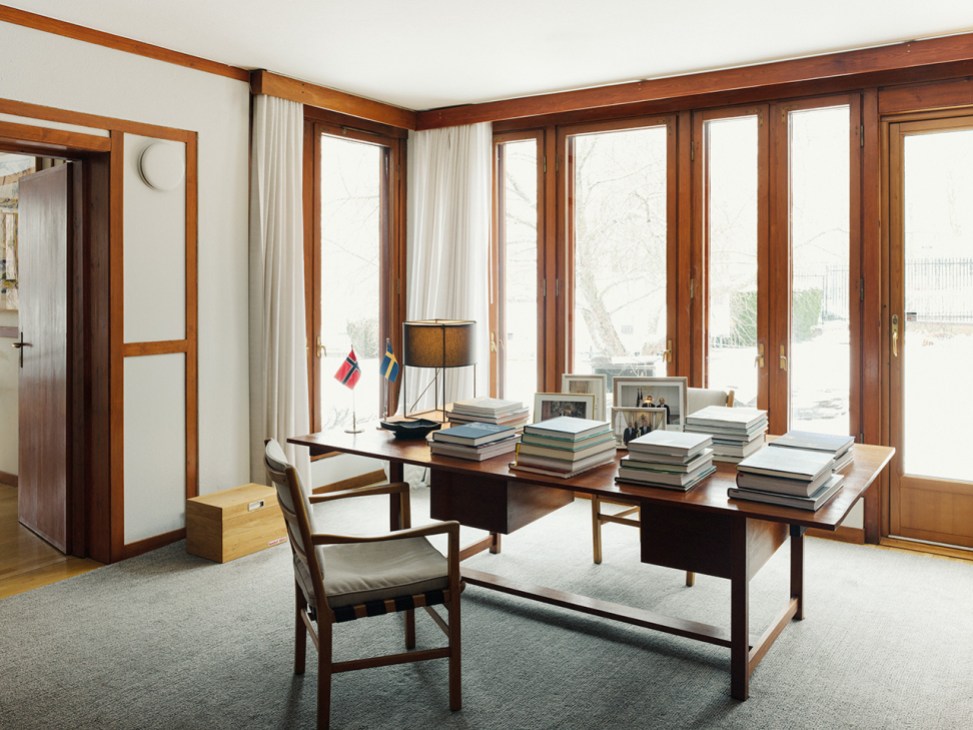
These interiors hold lessons that reach beyond diplomacy. Well-designed spaces wordlessly communicate institutional character. Design influences actions, clarifies values and fosters credibility. Engelschiøn describes the embassy as both “a working tool for diplomatic work” and “a window into Norway”. This diplomatic space, built with natural materials, creates an approachable arena that invites genuine interaction and acts as a stellar advertisement for Norway in a key bilateral outpost.
Three design picks from the Norwegian embassy in Stockholm
Henrik Sørensen’s paintings
Commissioned for the embassy, Sørensen’s three large-scale canvases command its most prominent rooms. Known for his expressive brushwork and socially engaged themes, Sørensen, a student of Henri Matisse in Paris, was central to Norway’s postwar artistic boom. He was also a friend of the embassy’s architect, Knut Knutsen. Installed in close dialogue with the architecture, the paintings were scaled to match the building’s size. Sørensen had to enlarge the figures to correspond with Knutsen’s vision.


Jonas Hidle’s brass lamps
Norway’s foremost lighting designer of the 20th century, Hidle worked with Knutsen to create the unique lamps inside and outside the embassy building. Suspended above dining tables and seating areas, they diffuse a soft, even light. The lamps were removed and replaced by more modern Danish ones for a period but were reinstated during a refurbishment that restored the original interiors.


Knut Knutsen’s pine chairs
As well as the dining-room chairs, Knutsen designed two types of larger seating, both with armrests. All are still used daily. Knutsen didn’t want to imitate expensive types of wood by staining the pine furniture; instead, he ensured that it looked simple and natural. Originally conceived to be moved and recombined as rooms were reconfigured, they reflect the embassy’s protean nature.


Ambassador: Niels Engelschiøn
Number of diplomats: 5
Year formal relations began: 1905, after the Swedish-Norwegian union was dissolved
Key bilateral issues: Defence and security, economic and trade relations, border co-operation and mobility
In Monocle’s April issue, we profile our selection of the best foreign embassies in the world — this is just one of the establishments featured. See the rest of our favourites here.