Who rescues you when your gondola fails? Inside Italy’s Mountain Rescue Corps
In the Brenta Dolomites, volunteer alpinists rehearse for year-round scenarios to rescue stranded climbers and save the lives of avalanche victims. Clubbing together offers members support and companionship in dangerous surroundings.
More than 30 rescuers from the Corpo Nazionale Soccorso Alpino e Speleologico (National Alpine and Speleological Rescue Corps or CNSAS) are huddled around their 434s donning helmets, carabiners and reflective sunglasses in the bright November sun. On this particular Saturday morning, the first official day of the Italian ski season, snow cannons are pumping out white mist above the pristine Alpine slopes of Madonna di Campiglio. For now, at 08.00, the scene is one of ethereal calm, as the group forms a semicircle around instructor Luca Bertolla with the peaks of the Brenta range behind them. The mountaineers are here to rehearse the evacuation of a malfunctioning gondola and chairlift, which can lead to hypothermia for anyone who is stuck on one.

“We’re here to revise the manoeuvre and refresh our memory,” Bertolla tells the assembled team, standing in front of a pile of brightly coloured ropes. “It’s hard to explain it ‘dry’ – but it’s important to clarify what you’ll need.” He goes on to describe the rescue procedure in detail. To the lay listener, it’s hard to believe that all of these safety precautions can be recalled when suspended from a cable 30 metres above the frozen ground. For those who are gathered here, though, ropes, heights and snow are a fact of life. The vast majority of CNSAS members are volunteers and almost all of them have grown up among the mountains. Valleys, alpinism and climbing are much more than a weekend passion.
The CNSAS was officially founded as a nation-wide rescue corps in 1954, after Italy’s first Alpine rescue group was born in 1952 in Pinzolo, 13km downslope from here. The non-profit organisation operates in 21 regions across the Alps, Apennines and the Italian islands. In Trentino alone, it can count on about 700 local volunteers should anybody need help at altitude. “Volunteering is rooted in Trentino: mountain life is based on helping each other,” says 28-year-old Gianluca Scuri from under the brim of his yellow helmet. “My father used to be an alpine rescuer, so I always wanted to do this.”
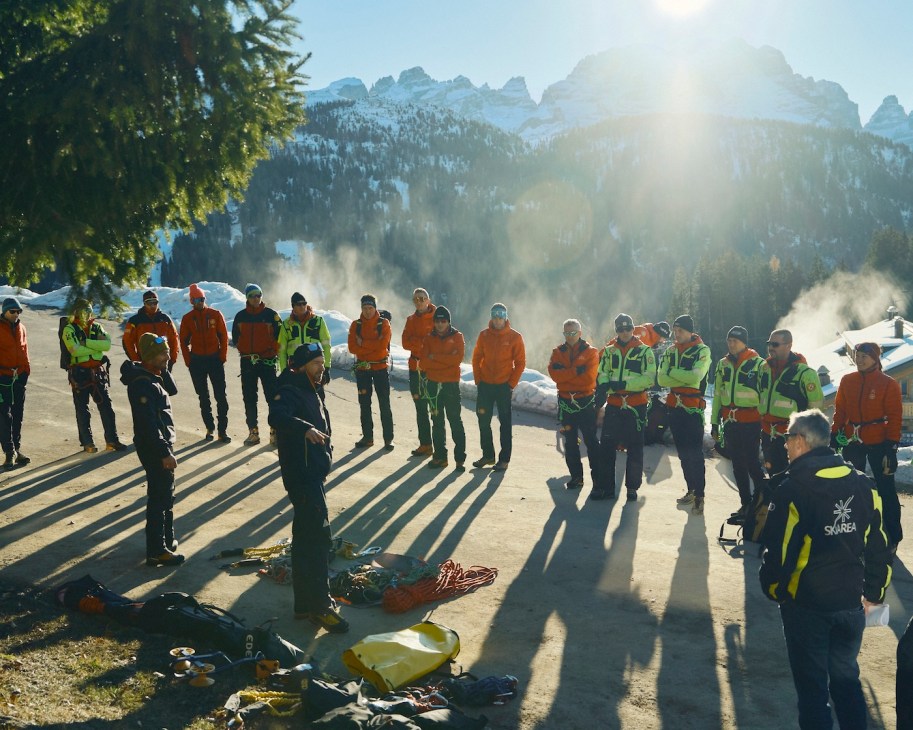
The briefing wraps up and the group heads to the gondola pylons. The atmosphere is jovial and relaxed. Friendship and community spirit are huge factors when it comes to attracting new members to the corps. Many also mention a forward-looking spirit of reciprocity. “When you go to the mountains, you know that accidents could happen to you as well: I lost a friend under an avalanche,” says Linda Grossi, who has been a rescuer for ten years. “I realised that I could help. Not everywhere in the world – or even in Europe – can you count on a service as organised as this.”
Those who have been volunteers for more than 30 years remember a time when rescuers would be alerted by a call for help at their window. These days, if somebody phones the emergency number, all the area’s volunteers receive a text and respond with their availability: a local law permits them to leave their day jobs and run to the rescue. The calls are often minor incidents – sprained ankles or ski falls – but the group need to be ready for avalanches as well as searches for missing people across a huge area.
“Depending on the location, there are specific issues: in the Dolomites, we deal with climbers flying off rock faces. In the summer, on the eastern Brenta, we have lots of injuries from sports such as mountain biking,” says Piergiorgio Vidi, the director of the local CNSAS training school. Vidi helps to organise hundreds of different exercise days for members – with age ranges from 18 to 70. “People dedicate time to this voluntary service so that they know how to tackle snow, rock and ice,” he says. As climate change makes the region’s weather more unpredictable (in 2022, part of the Marmolada glacier collapsed unexpectedly, killing 11 climbers), this expertise will become ever more valuable.
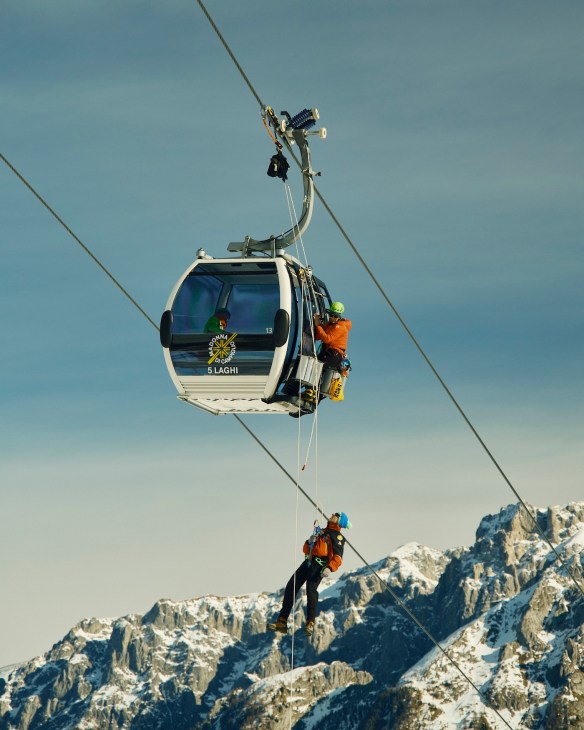
Situations such as chairlift evacuation are rare but they happen (about 10 occur in Italy each year, according to the instructors) and rescuers need to act quickly. The group head up the lofty pylon, latch themselves with a safety rope, then fling themselves towards the gondolas, mounting the roof and forcing the doors open. Pretend “stuck” volunteers are hoisted down from the vehicles in a harness called “the nappy”. After the mock rescue, Bertolla is bouyant. “In our activities there is always danger but with experience and preparation, we manage the risk,” he says. “We work on our physical preparedness. In a tough situation, if you feel physically confident, your mind can concentrate on what you’re doing. Fear is an alarm bell. If you feel it, it means something isn’t right.”
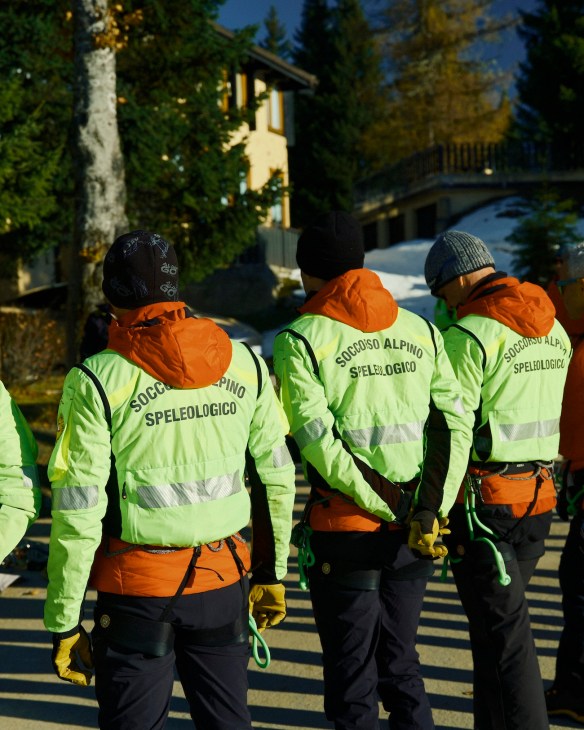
The emotional challenges of this service also extend to dealing with people who are severely injured – or even lose their life on the mountain. There’s a high-altitude stoicism to the way that many volunteers talk about facing death but companionship is their most precious resource and support strategy. “If you are going to a call, you know that your teammates need to be able to trust you and you need to trust each other,” says 67-year-old Carmelo Genetin, a CNSAS member for 21 years. “You need not only experience but fellowship.” Bertolla agrees. “I go climbing with lots of these people. Other than keeping us fit, it creates empathy. Without it, rescue interventions become more sterile – and less safe.”
Read next: Is Austria losing its status as a top ski nation?