As Trump’s threats bring war closer with Venezuela, what is the mood on the ground in its cities?
For struggling Venezuelans, the idea of a US invasion looms large. But for many, US boots on the ground are the least of their worries.
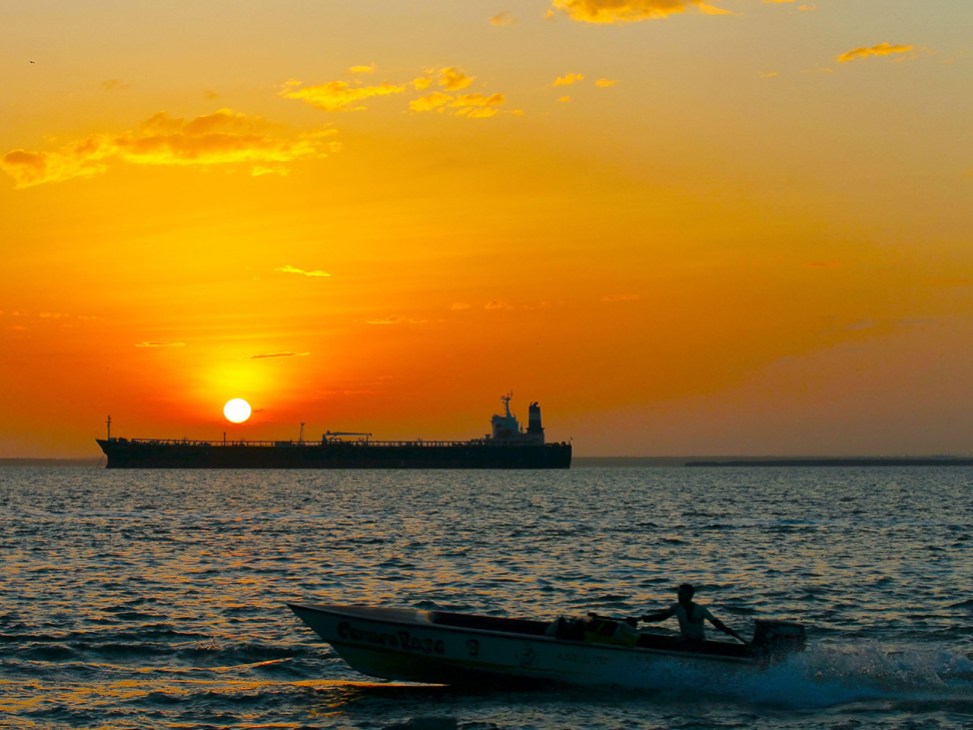
My window frames a view of Venezuela’s Lake Maracaibo, one of the largest lakes in the Americas and the cradle for some 19 billion barrels’ worth of oil. Last night, US president Donald Trump ordered a “total and complete” blockade of all sanctioned oil tankers entering and leaving the country. If any noise runs through the city, I look north to figure out whether the bombing – threatened by Trump against alleged drug lords in Venezuela – has begun. There are still no bombings but it cannot be long before they start.
Maracaibo, 700 kilometres from the capital city of Caracas, is considered Venezuela’s second-most important city and a possible target of attacks. Capital of the Zulia region and bordering Colombia, it is nicknamed the “Land of the Beloved Sun” for its balmy 30-degree temperatures. It has been a key gateway to the country’s oil business for the past century, providing more than 80 per cent of Venezuelan crude production.
Venezuela’s economy has experienced one of the most severe economic collapses in modern history, with its GDP shrinking by more than 70 per cent in the years between 2014 and 2021. Some eight million Venezuelans have left the country in recent years and nowhere has that exodus been more clearly felt than in Maracaibo. People here are concerned about low incomes, the volatile exchange rate of the US dollar and the amount of products in supermarkets. An imminent offensive by the most powerful army in the world seems far from front of mind.
“There is expectation and uncertainty but I am more concerned about how the prices of everything, especially food, are rising,” Juan, a young resident of a neighbourhood in northern Maracaibo, told Monocle. “The fear of authorities is also spreading among the locals.”
People are right to be wary. Maduro’s government has arrested hundreds of political activists, human-rights defenders, journalists and citizens critical of his administration. There are more than 900 political prisoners in Venezuela, according to the NGO Foro Penal. Last year alone, authorities arrested 2,500 dissidents following the presidential election. There are checkpoints and patrols, including by military and agents of the political police, SEBIN, who look through mobile phones and computers without court orders in search of private conversations that might reveal support for Trump’s warfare campaign. But no one wants to join an armed conflict to fight for Maduro or Trump. The idea of taking to the streets for any political leader after decades of crisis, repression and censorship is farcical to most.
“Neither the opposition nor the Maduro government have people willing to give their lives for their country,” said José, a restaurant owner in Maracaibo. Maduro, who has been in power since 2013, says that he has at least eight million troops and civilians ready to defend their homeland. A spurious augury in a country that hasn’t been involved in a formal war in the past two centuries.
“We’re overwhelmed,” said Sara, a domestic worker who cleans homes six days a week. “Our public services, healthcare and economy have been experiencing trauma for a long time. If we add a war, well…” Frustrated, she shrugs her shoulders. Her reaction sums up the mood in this city.
In 2019 a wave of looting – during an electrical failure that left most of the country in the dark – changed the city’s complexion for good. It has never regained its spark. Maracaibo stopped publishing its main newspaper due to lack of newsprint; Maduro’s government controls the supply chain of paper and ink.
A fellow journalist compared the situation then to a “war zone”. I never thought that description could be so literal a few years on. From my window next to the lake, the waters might be gentle but the mood among my neighbours, local businesses and community is palpably nervous. “When and how?” Well, nobody seems to know – perhaps not even Donald Trump – but for those who have lived without any stability for years, it’s a question that we are all used to asking.