Military retaliation ‘definitely’ on the table: Diplomatic adviser to the UAE president Anwar Gargash on the Middle East conflict
Four days into a confrontation between Iran, Israel and the US, the Gulf has been caught up in a conflict that it sought to avoid. Civilian infrastructure across the region has been damaged, including in the UAE, jolting a country better known for its stability than sirens and air defences.
At the centre of the nation’s response is Anwar Gargash, diplomatic adviser to the UAE president and a veteran of the country’s foreign-policy establishment. As regional leaders field dozens of calls from capitals around the world, Gargash is helping to shape the Emirates’ posture: defensive but resolute, wary of escalation yet clear about its right to act.
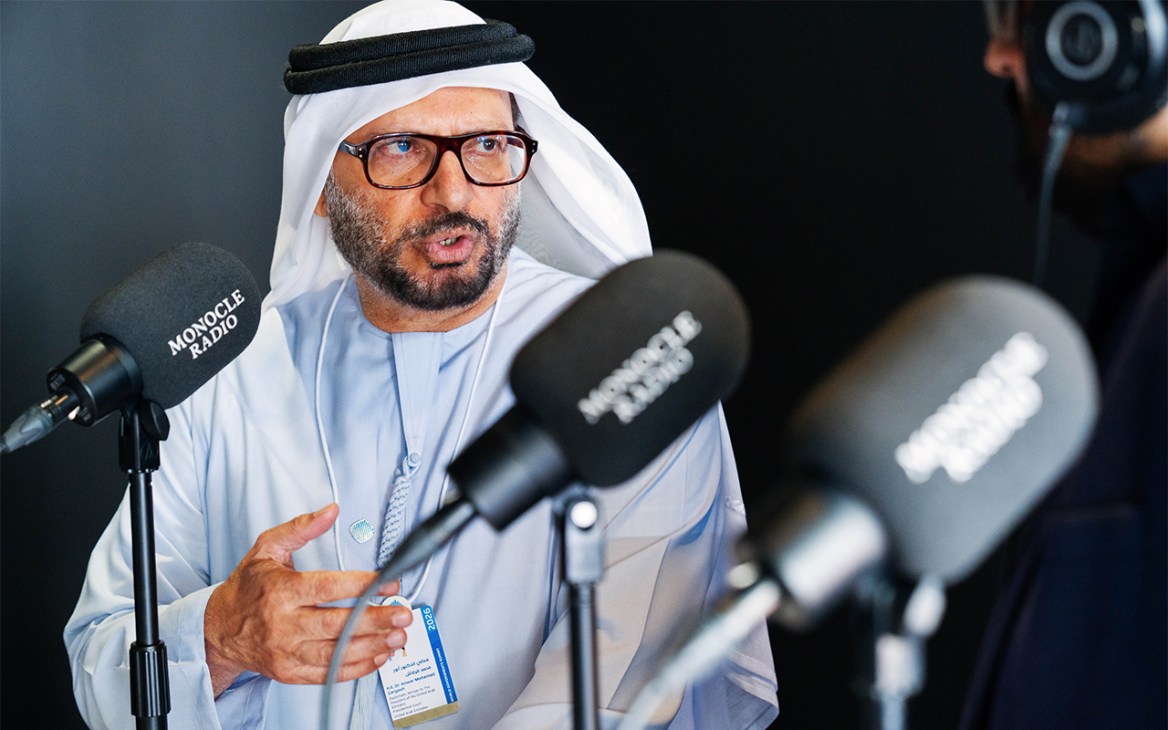
Monocle’s Gulf correspondent, Inzamam Rashid, spoke to Gargash as airports began partially reopening on Monday evening and Gulf governments weighed their next steps.
The following conversation has been edited for length and clarity.
How would you describe the mood within the UAE government after several days of Iranian bombardment across the Gulf, including here in the Emirates?
The mood operates on three levels. First, there is the larger conflict – the US-Israel-Iran confrontation – which will determine the geostrategic shape of the region for years to come. It is still early and the picture is unclear. The Iranians appear to want a longer, protracted conflict; the Americans and Israelis prefer something shorter and sharper. Whatever the outcome, the repercussions will be significant.
Second, there is a sense of shock at Iran’s decision to target its Gulf neighbours. These are countries that have consistently called for negotiated settlements and an off-ramp to conflict. Yet we have seen drones aimed at civilians and public infrastructure. Iran has moved from what it once described as a “good neighbourly” policy to outright aggression.
Third, there is the domestic front. The UAE is not a society used to war, so there has been a psychological impact. But our institutions are functioning. Our air defences have performed remarkably in protecting lives and property. Airports and ports are partially reopening. There is resilience and a determination not to panic.
Before Israel and the US struck Iran, how much warning did the UAE receive?
In these situations, there are rarely formal warnings. When the Geneva talks failed in late February, it was clear that a confrontation was likely within 24 to 72 hours. But we did not expect this level of intensive Iranian aggression against the Gulf collectively. If we had not had capable air defences in place, the consequences could have been catastrophic. Iran has antagonised precisely those neighbours that were calling for political solutions.
Why do you think Iran has retaliated so strongly against the Gulf states?
Frankly, there is no rational justification. Over the past few years, Iran pursued reconciliation with Gulf countries, including a Chinese-brokered agreement with Saudi Arabia. Contacts improved across the board.
My analysis is that it is more difficult for Iran to target the US and Israel directly. It might have viewed the Gulf as a softer underbelly. But this has backfired. By targeting its neighbours, Iran is sowing long-term enmity among Gulf populations.
The UAE in particular appears to have been heavily targeted. Do you see a political motive in that?
Kuwait and others have also been targeted. Oman, which facilitated negotiations for more than a decade, has been targeted. Qatar has been targeted. It is irrational. This is, in my view, a failed Iranian policy rather than a calibrated political message.
What conversations are taking place among Gulf states? Is military retaliation on the table?
Definitely. The Gulf has a history of coalescing in the face of common threats. We are co-ordinating closely. We want a political solution and good neighbourly relations with Iran, however strained trust might now be. At present, we are in a defensive posture, intercepting missiles and drones. But I can envisage a shift to a more active self-defence stance, independent of the US-Israel campaign, if required. Geography does not change; Iran will remain our neighbour. These are decisions that require deep calculation.
How much more can the UAE absorb before retaliating militarily?
Our president has received close to 50 calls in three days from leaders around the world. There is broad solidarity and recognition of our right to self-defence. Our objective is to contain the war and seek an off-ramp, not expand it. But if necessary, we will do everything required to protect the UAE and everyone who lives here.
Has this conflict damaged the UAE’s reputation as a safe haven for residents and investors?
There will always be an initial reaction. But I believe that the UAE will emerge stronger. I draw an analogy with the pandemic: a severe crisis that ultimately demonstrated the strength of our institutions. You can already see daily life returning, albeit cautiously. The resilience of our leadership and systems will, I believe, reinforce the UAE’s attractiveness.
As flights gradually resume, what confidence do you have that there will not be further attacks?
We cannot rely on Iranian restraint. The decision to target neighbours has been, in my view, foolish and callous. What we can rely on is our preparedness. We assess the situation day by day, maintain normal life where possible and refuse to be cowed by threats.
Finally, what is the UAE’s position on reports of civilian casualties inside Iran following US and Israeli strikes?
We have opposed this war from the outset – for geostrategic reasons and because wars in this region have repeatedly failed to resolve conflicts. The loss of civilian life and the targeting of infrastructure only reinforce our position that political solutions are urgently needed.