To shore up Western security, Latin American leaders need to show force. Start by hitting the cartels
“The last straw was when gangs started holding up ambulances.” That’s what a Venezuelan ambulance driver told me eight years ago, while queuing with his family in front of a church in Port of Spain, Trinidad and Tobago, waiting to process an asylum claim. Hijackers put a gun to his head and made him an unwitting chauffeur. He fled soon after.
His story – and those of several other Venezuelans I met on that 2018 reporting trip – have been at the front of my mind as Latin American heads of state have condemned the US operation to extract Nicolás Maduro. Brazil, Chile, Colombia, Mexico, Spain and Uruguay issued a joint statement insisting that the region remains a “zone of peace” and appealed to the United Nations Charter. Their top diplomats made forceful speeches denouncing the White House’s unilateral action at hastily convened meetings of the Organization of American States and the UN Security Council, citing the principles of territorial sovereignty, non-intervention and international law.
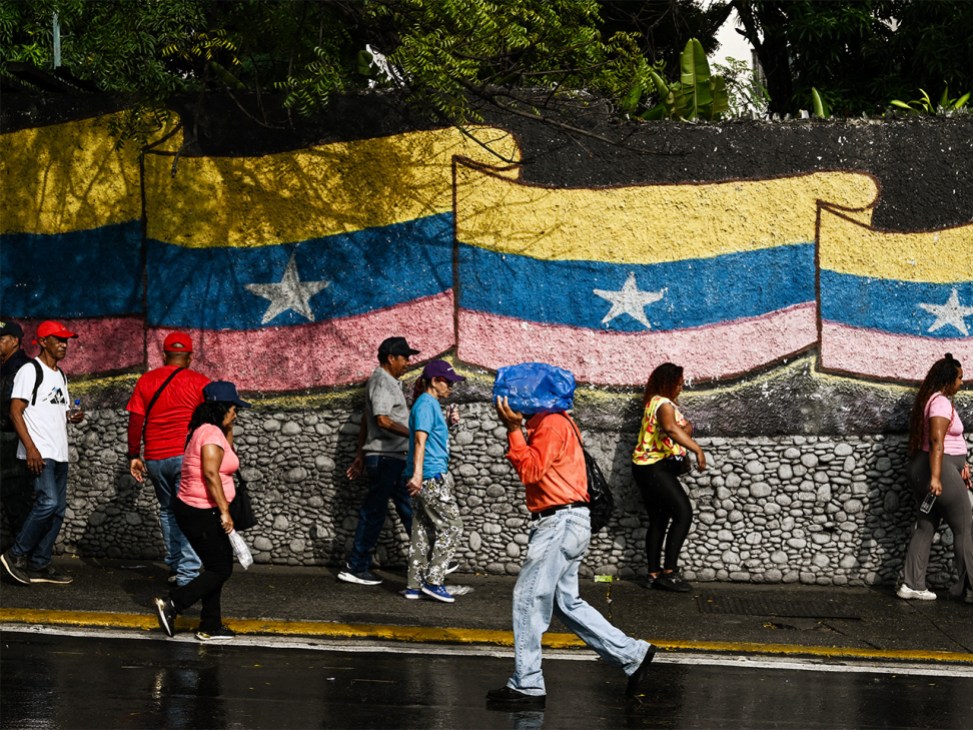
I put this rhetoric to one of the Venezuelans I met in Trinidad and Tobago, who fled after participation in opposition protests put a target on his back. “The ends justify the means,” he said, countering that none of Washington’s critics succeeded in ousting Maduro after his 2013 rise turned dictatorial. Every peaceful means had been exhausted, he added, from street protests to sanctions.
Thus, the Trump administration’s deployment of the Monroe Doctrine’s Theodore Roosevelt Corollary. As Roosevelt put it in 1904, “Chronic wrongdoing… may in America, as elsewhere, ultimately require intervention by some civilized nation.” There’s a strong case that Maduro is guilty of chronic wrongdoing, presiding over an economy in shambles ravaged by hyperinflation and stealing the 2024 election. Though whether the US is capable of – or even wants to – restore a prosperous democracy buoyed by oil wealth is entirely opaque.
What’s clear is that diplomacy has failed in a region that prides itself on a nearly impeccable track record of avoiding armed conflict between states. But what could we have done differently and what can we do now instead?
Brazil’s Luiz Inácio Lula da Silva thought that he was playing tough in 2024 by vetoing Venezuela’s Brics ascension after Maduro refused to release election records. A reasonable diplomatic censure but hardly one that would evict Maduro from Caracas. Even Bolsonaro didn’t exceed the Biden administration’s tepid pressure campaign. As the US amassed an armada in the Caribbean, Latin America’s most powerful military could have mustered a larger force on its 2,200km shared border with Venezuela and tipped the scales for Maduro to have accepted a comfortable exile in Turkey or Qatar.
But hypotheticals make for easy punditry, so here’s a next step that puts a novel spin on Mexican president Claudia Sheinbaum’s mantra “co-operation yes, subordination and intervention no.” She should reverse course and invite the US military to conduct air strikes on fentanyl factories, provided that the Mexican armed forces can join in and learn from their northern counterparts on how to wage a more effective war against the cartels. Invite other countries struggling with narco violence, such as Colombia, Ecuador and Peru, and you have the makings of a reconstituted Inter-American Peace Force, the multilateral unit deployed to quell the Dominican Republic’s 1965 civil war.
The prospect would be a hard pill to swallow for the region’s diplomats but it will win hearts and minds among beleaguered citizens craving action over abstraction.
Gregory Scruggs is Monocle’s Seattle correspondent. For more opinion, analysis and insight, subscribe to Monocle today.