Why ancient wisdom is the ultimate shield against modern noise
The modern Stoic Tom Hodgkinson on training our minds to transcend anxiety.
Tom Hodgkinson is the founding editor of ‘The Idler’ magazine and the author of ‘How to Live Like a Stoic: A Handbook for Happiness’. Here, he explains how the ancient philosophical tradition inspired by Socrates could hold the key to a better life.
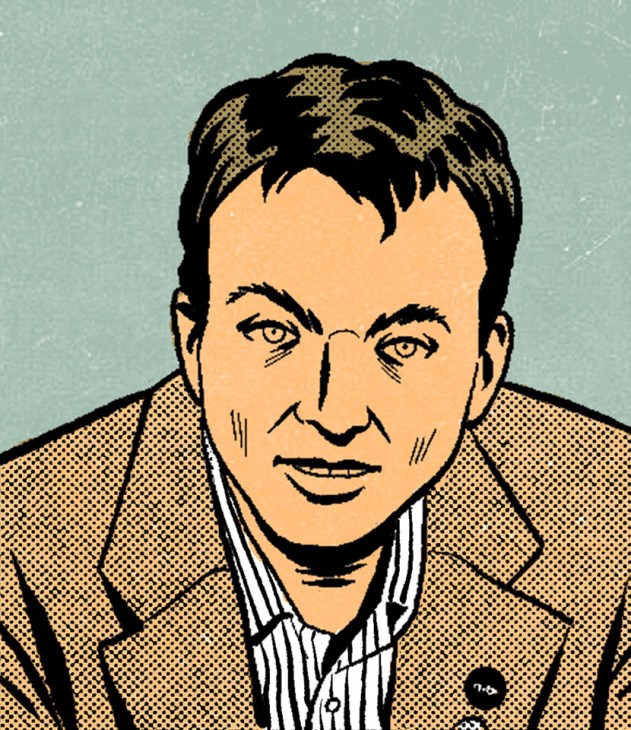
For all its undoubted attractions – excellent theatre, participative democracy, a free and easy attitude to sex – ancient Athens was a dangerous place to live in if you spoke out. Socrates found this out the hard way. After a lifetime of trying to convince Athenians to stop chasing money and status and to spend more time caring for their own souls, he was accused of corrupting the morals of the young and worshipping false gods. He was tried in front of a jury of 501, found guilty and sentenced to death by hemlock. The year was 399 BCE and Socrates was 70.
Around 300 BCE, a new philosophical school appeared. Called Stoicism, it was inspired by Socrates and the life that he had led. Its founder, Zeno, developed the notion that we should be indifferent to the slings and arrows of outrageous fortune and remain impassive, calm and happy whatever goes on in the outside world – or whatever happens to us. Socrates, the Stoics pointed out, had walked cheerfully to his death. His friends offered to spring him out of jail and set him up with a comfortable life on a distant island but he chose to submit to his fate.
Being Stoic today is no easy task. You can’t help but encounter so many things designed to unsettle you. Foremost among these is the advertising-sales business known as social media. The way that the likes of X and Facebook work is a bit like newspapers but taken to a new level. Newspapers peddle bad news in their main sections, with the good news of the adverts in between. In a similar way, social media makes you anxious with depressing news, then ads promise ways to relieve that anxiety (invariably by spending money). As everyone surely knows by now, people click on negative stories. More money is generally made from posts about murder, strife and war than from happy ones. As a result, companies have an incentive to pump horrible stuff into the world.
You can do practical things to resist this anxiety culture. In my case, I threw away my smartphone 10 years ago. This cut off one stream of rubbish. Another trick is to take a day off from the news. Every now and then, I switch on BBC Radio 3 and float around in a blissful state of ignorance. One friend avoids all news. Another has taken things to an extreme: he lives on a smallholding in Ireland with no internet or phone.
But instead of trying to escape the noise, which is extremely difficult, the Stoics would advise you to improve your mental resilience so that you can live with it. Socrates and the Stoics didn’t believe that your personality was fixed. They reckoned that just as the body can be honed through training, you can condition your mind and your soul to become strong and beautiful too. The Stoics thought that you could use the power of your mind to be happy. You could start with small things. Say a beloved cup gets broken. Can you react with equanimity? Yes, you can. “It’s up to you,” as the Stoic Epictetus put it. You can choose how you respond. Can you remain indifferent if a driver shouts at you while you’re on your bicycle? Yes. Socrates used to annoy people so much that they kicked him in the street. He would just walk on. When asked how he could stay calm in the face of such attacks, he said, “Would I get angry if a donkey kicked me?”
Being indifferent like the Stoics doesn’t mean giving up. Socrates spoke out against tyrants all his life and philosophy is anti-tyrannical by nature. Tyrants don’t like philosophers because they think. Socrates believed that being philosophical was a great service to his fellow Athenians. And he did more for the state by avoiding conventional politics than by entering the fray. We can be both Stoic and fight the powers that be.
This article is from Monocle’s March issue, The Monocle 100, which features our editors’ favourite 100 figures, destinations, objects and ideas.
Read the rest of the issue here.