Ever wondered what goes into a live Olympics broadcast? Here’s how the event makes it to your screen
The Olympic Broadcasting Services produce all the coverage of the sporting event, while syndicating it to media partners all over the world.
By the time the torch is extinguished at this year’s Olympic Winter Games, more than 6,500 hours of video will have been recorded. That’s nearly nine months of footage. Only about 1,000 hours of that coverage will air but it will be broadcast around the world on TV, streaming and social-media platforms. For the Olympic Broadcasting Services (OBS), producing the world’s biggest sporting and cultural event is no small task but it’s one that it was set up to do.
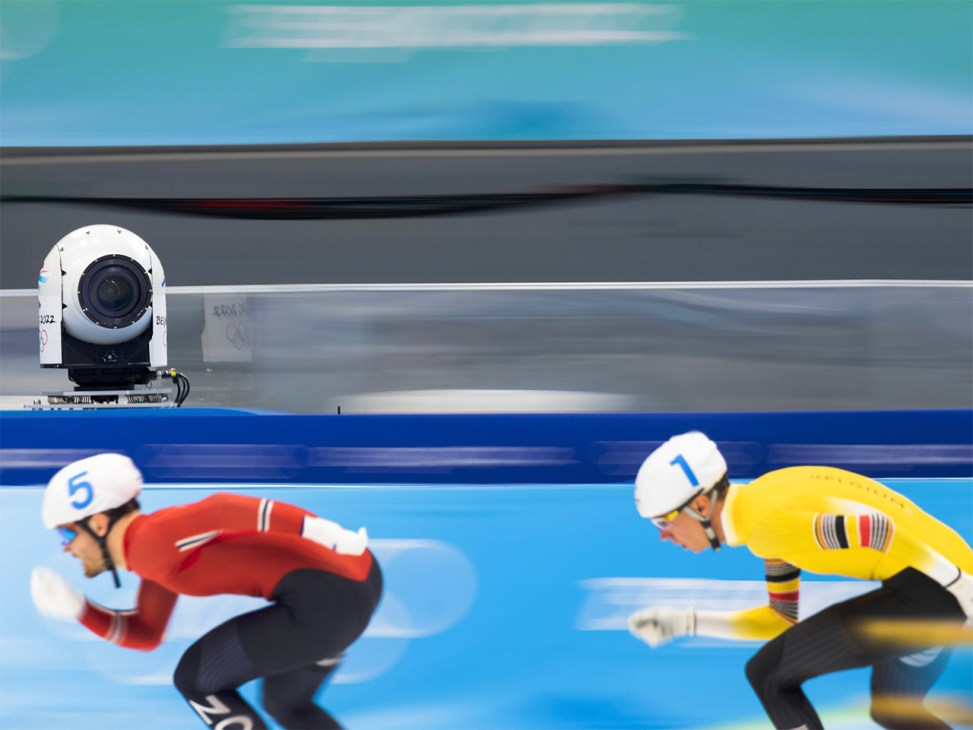
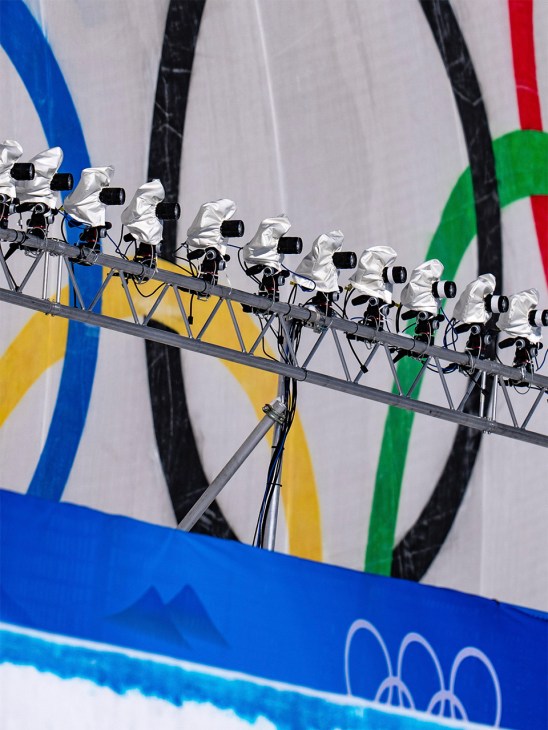
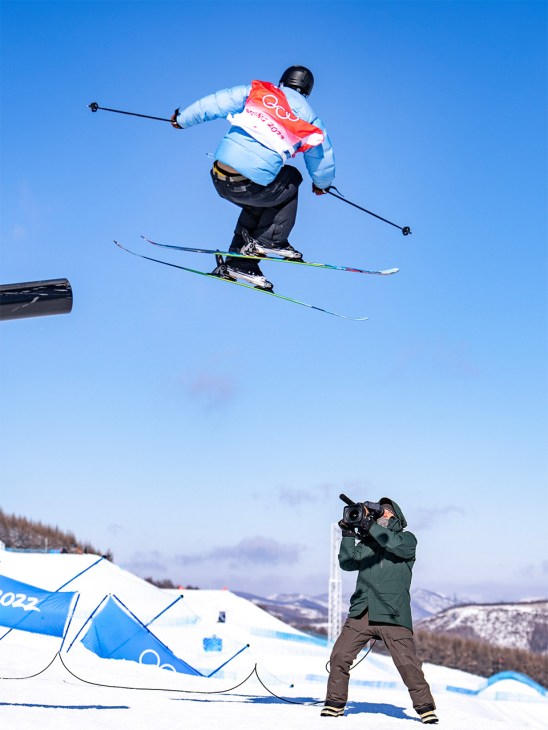
Established by the International Olympic Committee, the OBS is the host broadcaster for all Olympic, Paralympic and Youth Olympic Games. This means that it is responsible for setting up temporary media centres for the event, producing images and audio of the Games and personalising broadcasts for media partners, all while innovating with video-capture techniques, including stroboscopic effects that make fast-moving action appear frozen.
As the CEO of the broadcaster since 2012, Yiannis Exarchos has overseen 14 Olympics. While the job is tough, “you get inspired by having to cover the greatest athletes in the world”, he said. Exarchos joined Monocle in Milan to talk about how OBS has evolved its production to ensure that both casual and experienced fans can follow the Games, no matter where or how they watch.
This interview has been edited for clarity and length.

The OBS is responsible for all of the pictures, video and sound that come out of the Games. You’re distributing content to rights holders all over the world. It sounds like a difficult task with a lot of people involved.
[It is a challenging job] but you get inspired by having to cover the greatest athletes in the world and there is no incentive like that. We do what’s called host broadcasting, which essentially means two things: to do comprehensive coverage of all competition and ceremonies for the Olympic Games and provide these images to all media-rights holders around the world. The second important task is to help all these media-rights holders – there are more than 100 – to customise this coverage for the sake of their own audiences. We help them put in their own commentators and do their own interviews with athletes.
The scope of it, as you said, is quite large. Here we will produce about 6,500 hours of broadcast, even though the total duration of competition is around 1,000 hours. The reason why we shoot so much is because in today’s world, you have to provide all different types of content. It’s not just traditional television: it’s social, it’s digital and it’s streaming, and we produce for all these different formats. It’s very important that we do so because the Olympics remains one of the large, great audience aggregators. It’s a meeting place for all audiences. We do not have the luxury to say that we want to focus more on Generation Z or a specific country. We need them all. This is what makes the Olympics special. It’s a unifying force.
And no pressure with several billion people watching around the world, right?
We hope that [this year] it’s going to be about three billion. But just to give you an idea, in Paris 18 months ago we had five billion people following the Olympics. What does it mean that 89 per cent of the human population – people from the age of five with access to television or an internet connection – followed the Games? On traditional television, people watched nine hours of coverage on average during the two weeks [of the Summer Games]. People with access to social media checked their accounts for Olympic content 100 times on average during these two weeks. It was a massive following.
You’ve been CEO since 2012 but you’ve been doing this much longer. How have the viewing audience and demands for content changed over the years?
In a sense, it has become harder because there is not a single way of producing that is sufficient for all audiences. Today we have different demographics that consume in different ways: you wake up in the morning and check your mobile phone. Then you go to your office and pretend to be working while on your laptop, where you also watch a little bit of the Games. Then you go back home and watch on a bigger screen with friends. The viewing habits have become more diverse. This puts more pressure on us but it also provides us with more opportunities to make the Olympics a more intense and immersive experience for people throughout their lives.
It’s important to note that more than half of the audience is not sports fans. It’s what we call ‘casual fans’ or people who tune in every two or four years. I feel that this is an important contribution of sports to the world [at large]. I hope that many people will agree with me: we live at a time when unifying forces are few and the Olympics is an event that brings people together. If sport has this capacity, we need to do whatever it takes to enforce this message.
There has been an increase in drones footage, as well as split angles and stroboscopic effects that render replays in seconds. It has been amazing to watch. How do you balance all this technology with making sure that the event still feels human?
This question guides everything that we do. We are people who look into innovation to see what we can find from technology. We have many brilliant engineers in our company but we need to constantly remind ourselves that this is not about technology. The Olympics is about telling the stories of the greatest athletes in the world. So we look at three filters [when judging whether to use new technology]. Whether it allows us to do something that was not possible before, whether it allows us to produce more compelling content and whether it allows us to do our job more efficiently. We focus on the ones that we believe will bring something special to the coverage.
As I said before, half of the audience is not sports fans. And those who are sports fans usually follow two to three. But at the Olympics, you have dozens of different events. That means that for the vast majority of people, it’s going to be the first time in their lives that they will be exposed to a sport. So they need to understand it very fast and get familiar with the major personalities and the heroes of the sport.
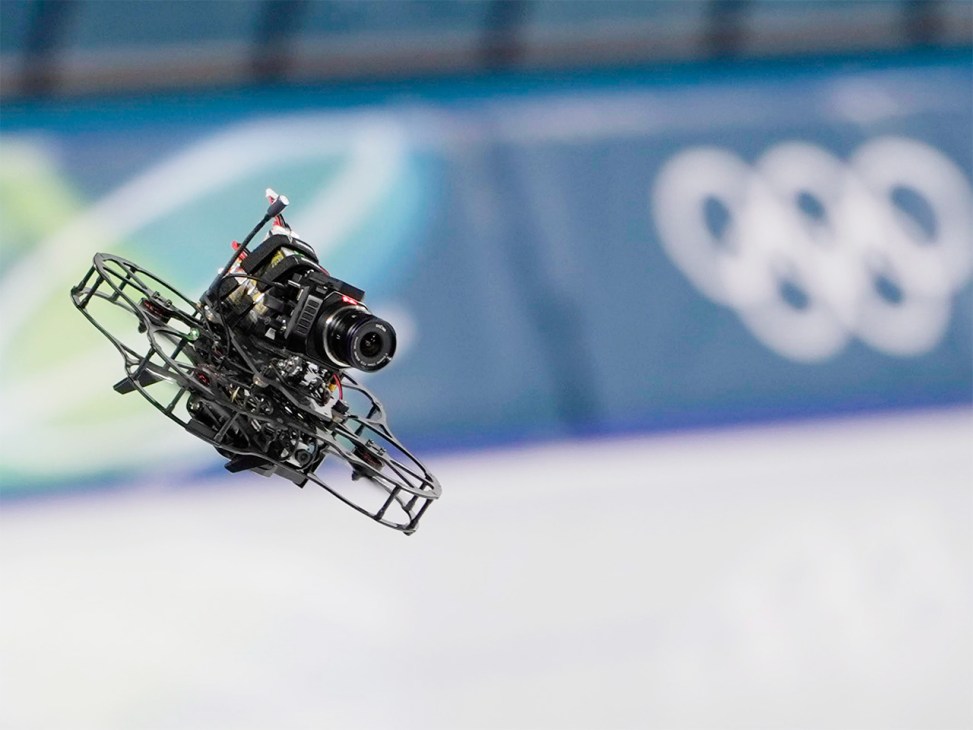
We have been experimenting with drones since 2014 but it’s only now that some have reached a point where we can use them to show people what it feels like to be skiing downhill or driving the bobsleigh. These first-person-view drones, as we call them, allow that with very high quality cameras and with an extreme level of safety and security. Using this technology allows viewers to see the immense technique and beauty that goes into Olympic sports.
More coverage of the Games:
– Ski mountaineering is the Winter Olympics’ newest sport. It is also its noblest
– Skating’s solo act: Donovan Carrillo is the only Latino on the ice at the 2026 Winter Olympics
– Three unlikely Winter Olympians to watch at Milano Cortina 2026