‘Figure skating is art’: Italy’s Valentina Marchei on the Olympic spirit and taking life lessons from the ice
The figure skater discusses the demands of a long career on the ice and the ‘compromise with yourself’ that comes with switching from singles to pairs skating.
The Olympic spirit runs deep in some families. This is especially true for Marco and Valentina Marchei, an Italian father and daughter who count four Games between them. The elder Marchei ran the marathon in the 1980 and 1984 Summer Games while the younger Marchei took to the ice in the 2014 and 2018 Winter Games. “You could breathe Olympic spirit in the house”, she tells Monocle. But the family’s focus was on how sport opens doors to the world rather than achieving Olympic success at all costs.
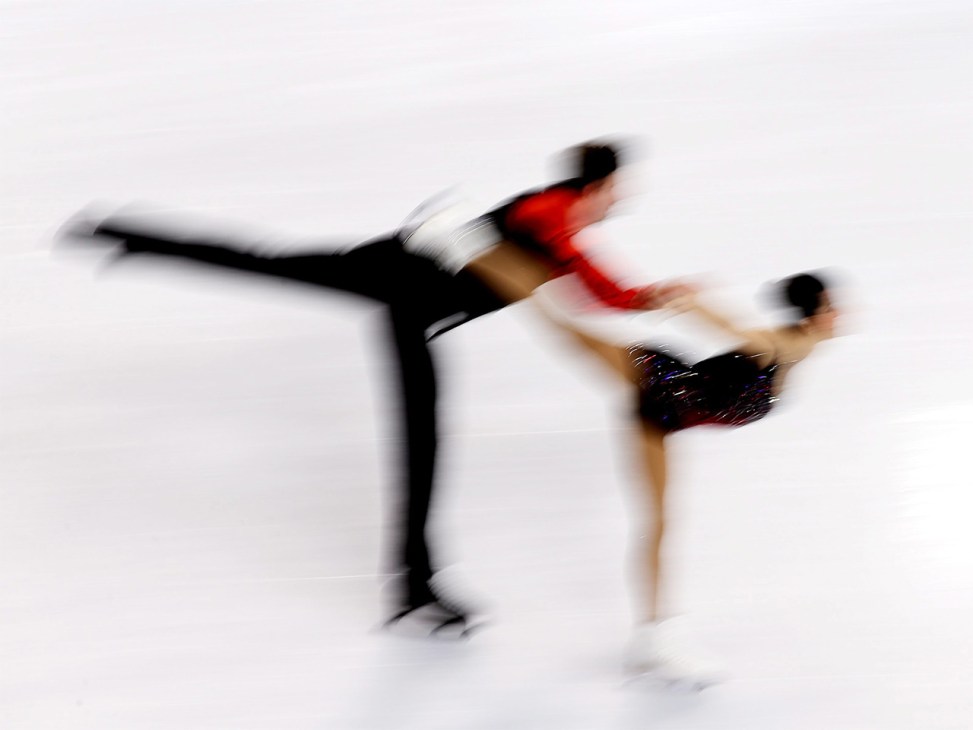
In Marchei’s long skating career, those doors opened to opportunities of training around the globe, from Latvia to France and the US. She competed in numerous world and national competitions in singles skating before jumping to the Sochi Olympics. After those Games ended, she spun to a new discipline within the sport: pairs figure skating, which took her to the Pyeongchang Games. The shift gave her a new appreciation for teamwork. “People think of it as a compromise with the other person but it’s [actually] a compromise with yourself,” she says. It’s about “how much you let go” and trust the other person.
Marchei joined Monocle in Milan to discuss her skating career, what it was like to switch from singles to pairs skating and where she sees the sport heading. This interview has been edited for clarity and length.
You competed in the 2014 and 2018 Olympic Games. What was it like to represent your country at the highest level?
It wasn’t easy for me to get to the Olympics. It took me eight years to qualify, so when I walked into the Olympic Village in Sochi I was like a kid in a candy shop. I dreamt about it many times. But [I also wanted to compete] because I come from an Olympic family. My dad [marathoner Marco Marchei] did two Olympics in Moscow and Los Angeles, so I always respected the Games.
After the 2014 Olympics, you changed from singles to pairs figure skating. How was switching disciplines?
It’s extremely different but it’s not much harder. After 20 years of singles and four years of pairs, I consider myself a pairs skater. As a single [skater], you get used to motivating yourself and holding onto your dreams alone. You have a team but in that rink, you are alone.
In pairs you share everything. People think of it as a compromise with the other person but it’s [actually] a compromise with yourself: how much you let go and how much you can [put the] team spirit into the performance. [Being a part of a pair has given me] the best lesson: you share emotions and the hard work. You know that when you put your hand out, you will always find a hand that holds yours and carries you towards your goal.
You mentioned your father was also a competitor. Did you think you were destined to become a top athlete?
You could breathe Olympic spirit in the house. But my dad wasn’t one of those dads that wanted me to be on top. He always taught me that sport is a school of life because you’re going to travel, meet other people and learn different languages. I travelled a lot. I have lived in Latvia, France and the US, and it allowed me to experience a different type of skating as well as different identities. I have lived many different lives. Without those experiences, I wouldn’t be the person that I am now. I had the opportunity to portray different characters on the ice and tell different stories with my movements – with my jumps, my spins and with everything that goes with skating.
With skaters like the ‘Quad God’ – the American Ilia Malinin – pushing the athleticism of the sport, how do you see figure skating evolving?
It’s evolving in a way that is very technical, but at the same time, you’re seeing a lot of great performances; ice dance proved that. There are not just the jumps – of course, it’s crazy to see all these young men doing incredible [jumps] – but let’s not forget that figure skating is art and everything that goes into it is part of the performance. It’s not just about jumps and spins, it’s also the story you portray on the ice that makes a great performance.
Read more coverage from the Milano Cortina Games
– The Winter Olympics are a hit. Not even climate change can stop them
– Not ready for the Games to end? Here are the films to keep your Olympic flame burning
– Ski mountaineering is the Winter Olympics’ newest sport. It is also its noblest