From doctors to plumbers: Ten human jobs that will survive the AI onslaught
AI could – and probably will – change the way that many of us work. But some sectors will be insulated more than others. We ponder the careers that will survive (or even thrive).
1.
Doctors, nurses and paramedics
Though many of the more utopian AI-related predictions concern medicine, few expect the technology to put professionals in that sector on the breadline. This is partly because demand for their services is constant. It is also because lateral thinking, nuanced judgement and spontaneous inspiration might be the difference between life and death. And if something does go wrong, someone has to be accountable. It also matters that medical professionals of all kinds are also the people we interact with at our most vulnerable and worried. It’s annoying enough when we’re expected to check in for our doctor’s appointment on a screen smeared with who knows what. Hearing the worst from R2-D2 would feel like insult added to injury.
2.
Hospitality workers
Frequent hotel guests are burdened more than most with dolorous insights into the annoying and tedious tech dystopia that might await us – QR codes instead of room-service menus; receptionists who will only interact with you on WhatsApp and might not even be in the same building; touchscreen check-ins; controls for lights, the TV and bathroom that would baffle a submarine navigator. Nobody asked for any of this and it’s difficult to imagine the kind of weirdo who prefers this sort of thing to picking up the phone and having your enquiry answered by a human. It seems a reasonable bet that higher-end hotels – as well as bars and restaurants – will eventually realise that their guests are paying a premium not just for a room or a table but for things to be made easier, rather than more complicated. And that they’ll hire accordingly.
3.
Plumbers
Even the most pessimistic assessments of the post-AI jobs market – those portents of a world of shoeless data analysts plodding door to door, offering to track key performance indicators for spare change – acknowledge that people who can fix and build stuff should be OK. Plumbers are especially emblematic of the forthcoming aristocracy of the practical. These are people we usually call in an emergency and the kind of emergency that we would rather have dealt with now. Plumbers have specialised, expert knowledge about mechanisms that most of us would not and should not trifle with for fear of making matters even worse. Building a robot capable of replacing a shower mixer is probably more trouble than it is worth. Plumbers have only two things to fear from AI. One: a stampede of financial advisers retraining as plumbers. Two: the increasing dominance of electronic payments reducing opportunities to ask, with a nudge and a wink, to have the bill settled in cash.
4.
Gardeners
It is already possible to get a robot to mow your lawn. In 2023 an AI-powered robot developed at the University of California held its own in a vegetable-growing trial against six human horticulturalists. At this year’s Chelsea Flower Show in London, some green-fingered hands were raised in horror at the inclusion of three gardens designed by an AI app. All of which might sound discouraging but human gardeners still have a place. There will always be sentimental sorts who maintain a garden precisely because it reconnects them to nature and the illusion of the bucolic idyll is hardly reconcilable with sleek machines zooming about the place making beeping noises. Nor will any android be able to furnish the kind of folk who hire gardeners because they seek authentic interactions with the muddy-kneed peasant classes that they can boast of later to burnish their person-of-the-people credentials.
5.
Air-traffic controllers and airline pilots
Air travel is likely to prove a special case. On purely technological grounds, it will probably be possible to outsource control towers and cockpits to computers: Embraer, for one, has floated a concept for a fully autonomous business jet. It might even make sense from a safety perspective: studies consistently identify human error as the most common cause of plane crashes. Airlines would certainly prefer not to pay pilots. However, people don’t think rationally about flying. Safe though it is – and automation might make it safer still – getting on an aeroplane still feels different from getting in a car, on a train or on a boat. Polling so far detects little enthusiasm for being 11km up in the sky without a calm voice from the flight deck reassuring us that we are in good – and human – hands.
6.
Police officers
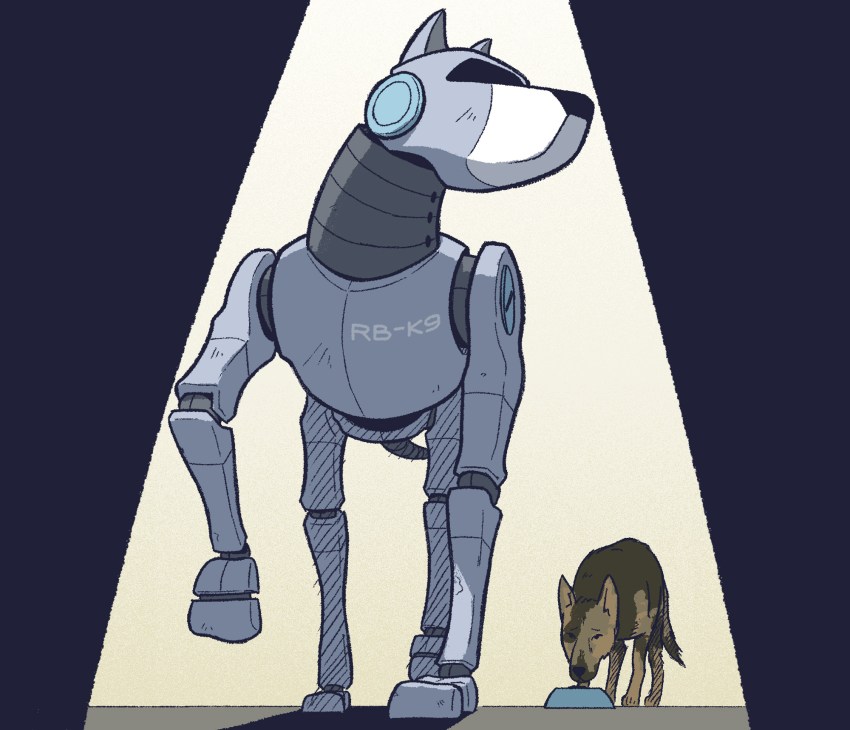
Several cities in China already have their traffic directed by androids in hi-vis uniforms. Police forces around the world have trialled robot dogs – tireless in rescue work and building searches, and no need for biscuits. Surveillance drones are becoming commonplace. All of which might actually make the human component of policing more important. AI and robots can pick up the dull stuff – removing the need, for example, to endure long shifts shivering in an unmarked vehicle outside a suspect’s house while doughnut wrappers gather in the footwell – freeing human officers to do the work most valued by the citizenry, such as catching criminals. Human officers will also remain necessary for the more pastoral aspects of policing. No one would appreciate being told of a death in the family by RoboCop. It also seems likely that AI-powered android officers, if deployed in societies less deferential than China, will end up with traffic cones on their heads and/or heaved into a canal.
7.
Politicians
Politicians might appear ripe for being superseded by an entity that is efficient, logical, incorruptible and sober. At least one country – Albania – has unleashed what it claims is an AI cabinet minister: Diella, a hallucination of a woman wearing traditional costume, nominally responsible for improving access to public services. But even if turning AI loose on our bureaucracies does result in more effective governance, voters will still expect human leadership. We would not rally, during a crisis, to even the most Churchillian of holograms. We would feel weird standing on our doorsteps discussing bin collections with a cyborg. We will not beat an eager path to the polling station to vote for a party whose slogan is, essentially, “Your call is important to us.” An increasingly automated world might even prove more susceptible to office seekers blessed with an ability to radiate warmth, empathy and sincerity – or, at least, convincingly simulate them.
8.
Athletes
In 2025 the first World Humanoid Robot Games took place in Beijing. It’s meant to be an annual occurrence but it’s hard to imagine any such event displacing the Olympic Games or World Cup in our affections, however faster, stronger or more skilful than us the robots become. We watch sport to marvel at people endowed with broadly the same physical equipment as ourselves do things that we cannot. We watch it to relish vicarious risk, to thrill to the spectacle of someone putting everything on the line. It’s probably possible to race Formula 1 cars remotely in total safety. It’s tough to imagine anything less interesting. Obviously, elite sport is not accessible to most – that’s what makes it elite. But jobs in elite sport are: coaches, trainers and everybody else involved in getting someone to the starting line or a team on the field. Though there might well be football fans reading who believe that the most rudimentary chatbot could do a better job than the bozo managing their mob presently.
9.
Journalists
One of the more depressing consequences of the advent of AI is a further corrosion of trust in the media. There is already a canon of scandals pertaining to hacks sneaking AI-generated copy past their editors and a depressing quantity of outlets knowingly serving up AI slop to their readers. Most of us will already have found ourselves wondering about some succession of plodding paragraphs whether we are consuming something merely written by a dullard or something written by nobody at all. There is a case, however, that this makes proper, diligent, informed journalists more valuable than ever. Any AI-generated news article is assembled, if often haphazardly, from facts gathered by an actual reporter. All AI-generated journalism is therefore a demonstration of the truth of the acronym GIGO: garbage in, garbage out. AI cannot and will not pack a notepad and hit the road.
10.
Comedians
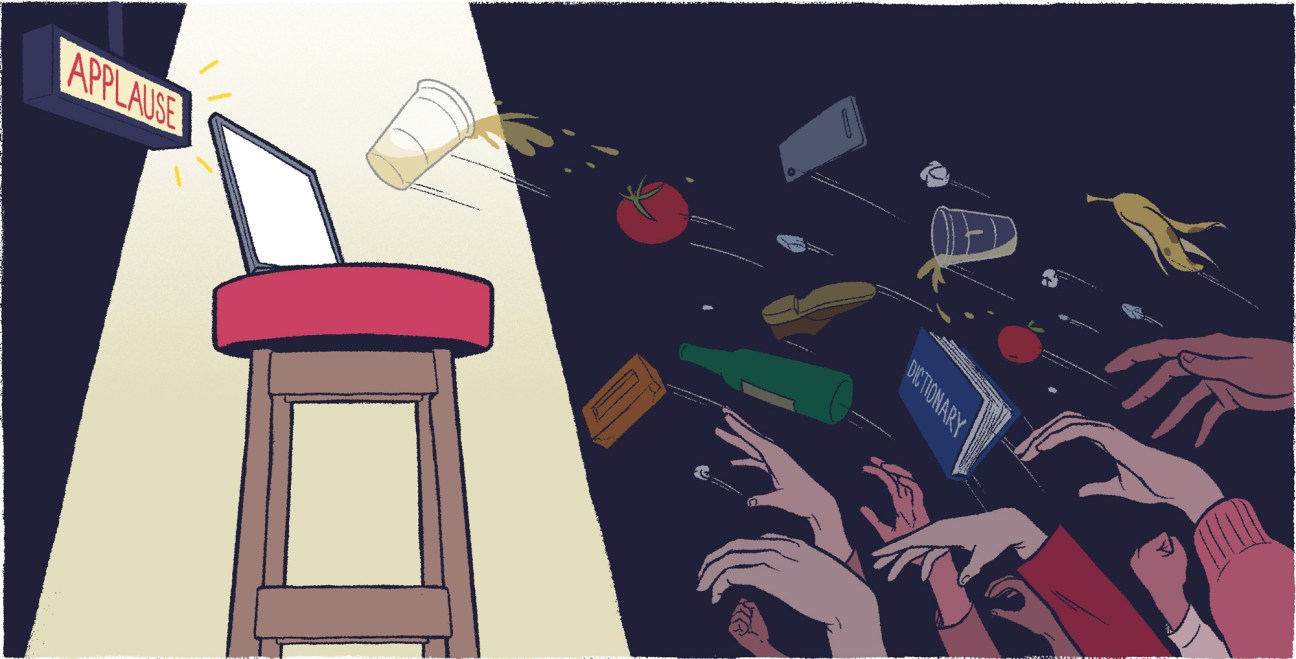
This is genuinely what you get back if you ask ChatGPT to tell you an original joke about an elephant. “Question: Why don’t elephants use smartphones? Answer: Because they’re afraid of forgetting their trunks… and ending up with too many ‘undelephant-ed’ files.” Wouldn’t open with it, and so forth. It is already the case that AI can cough up to order words, pictures and music, and that – depressingly – a non-zero number of people are content to consume all of this, cultural junk food though it is. But AI can’t make us laugh and it won’t. There will never be a queue outside your local comedy club for an evening with the ChuckleBot 3000. Henri Bergson called it back in 1900, in “An Essay on the Meaning of the Comic”. He wrote, “The comic does not exist outside the pale of what is strictly human.” Bergson won the Nobel Prize in Literature in 1927 – another accolade likely to elude AI.
About the writer: Andrew Mueller is the host of Monocle Radio’s The Monocle Daily and The Foreign Desk, as well as a Monocle contributing editor – and he would like to see AI try to do any of those.