The UAE is walking a tightrope between self-defence and wider deterrence
The UAE is projecting calm under fire but its military leadership is leaving little doubt that restraint has its limits. Five weeks into sustained Iranian attacks, the country’s official position remains defensive. Yet in a detailed interview with Monocle, Major General Abdul Nasser al-Humaidi of the country’s Ministry of Defence offered a more layered message: one of preparedness, endurance and conditional escalation. “Since the inception of this tragic aggression from the Iranian side, the armed forces continuously monitor, detect threats and counter them,” he says, pointing to what he described as a “very high success rate” in intercepting more than 2,500 missiles and drones.
Those interception rates – above 99 per cent for missiles and more than 95 per cent for drones – have allowed the country to maintain an image of stability. “People are living normally. They function. Trade is flowing. The economy is thriving,” says al-Humaidi. Yet that sense of normality sits alongside a far more disruptive reality. Iranian strikes have targeted civilian infrastructure across the country – including airports, ports, oil facilities and even luxury hotels – with debris and direct impacts causing fires and damage in urban areas. At least 12 people have been killed and many more injured since the conflict began, underscoring the human cost beneath the headline interception rates.
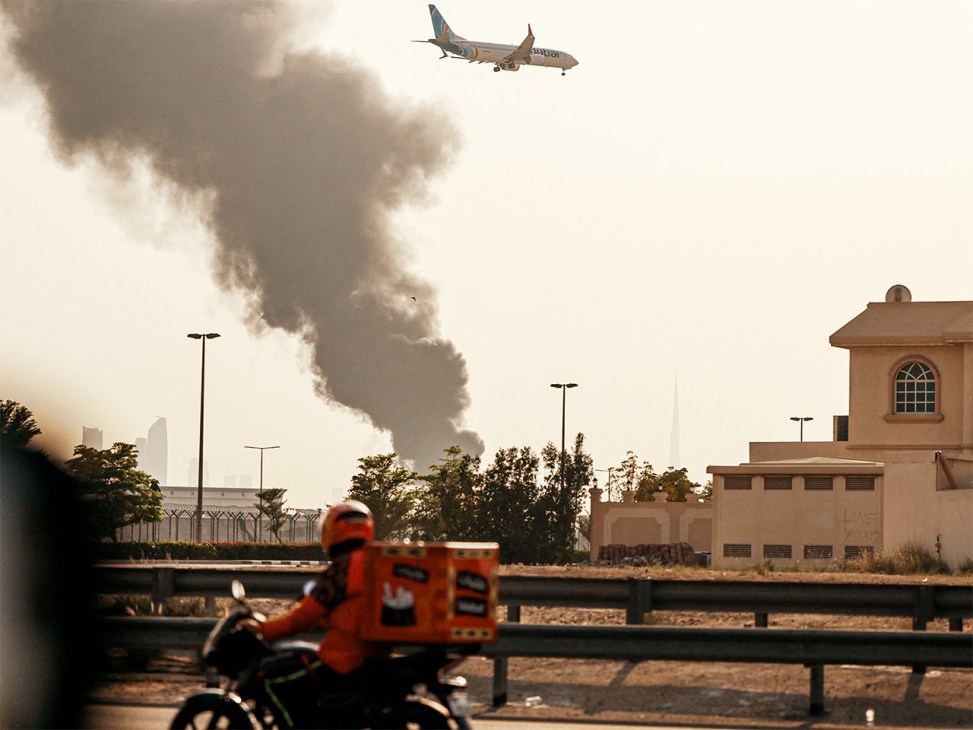
The scale of the assault is striking. By the UAE’s own account, it has been targeted more heavily than any other Gulf state during this conflict, a sustained campaign that has tested both its air-defence systems and its strategic patience. The response has been disciplined so far. “We’re not part of this conflict,” Al Humaidi insists. “So we will continue that posture in defending our territory.”
That line repeats consistently across Emirati messaging and underscores a deliberate positioning – the UAE as a reactive, not proactive, military actor. Yet there might be a subtle but important shift. Pressed on whether joining offensive operations alongside allies is entirely off the table, al-Humaidi was keeping options open. “The UAE preserves its right to self-defence upon any aggression that aims at the UAE and that’s the primary role of the military,” he answers. It is a carefully calibrated response, one that stops short of signalling imminent escalation but clearly avoids ruling it out.
There are also firm red lines. The Iranian foreign minister, Abbas Araghchi, has justified their aggression by claiming that US strikes are being launched from bases inside the UAE. Al-Humaidi was categorical in his denial of this. “UAE territory will not be used for any attacks against Iran” he says. “So from a military standpoint, that’s not correct and it’s not happening.” The message is twofold: the UAE is not a staging ground for offensive operations but it will defend itself if drawn further in.
This ambiguity reflects a broader recalibration taking place across the Gulf. While early rhetoric in some quarters focused on regime change in Iran, officials now appear to be converging around a more immediate priority: securing the Strait of Hormuz and restoring maritime stability. The UAE has aligned itself publicly with that objective, stressing the importance of keeping the waterway, a critical artery for global trade, open and secure. Behind the scenes, however, there are indications that contingency planning is under way should international efforts require a more active contribution.
That dual track of public restraint and private preparedness is consistent with the tone of al-Humaidi’s remarks. “The armed forces retains its readiness and preparedness for any type of aggression,” he says. “We have the capacity, we have the capability and we will continue to do that.” At the same time he repeatedly returned to the UAE’s broader identity as a “peace-seeking nation”, positioning military action as a last resort. But balancing deterrence and diplomacy is becoming an increasingly difficult task.
Inzamam Rashid is Monocle’s Gulf correspondent. For more opinion, analysis and insight, subscribe to Monocle today.