Iran’s attacks on the UAE have revealed a nation whose resilience is built on diversity
On the morning of 7 March, as the debris from intercepted Iranian attacks was being cleared from streets in Abu Dhabi and Dubai, a colleague sent me a photograph. It showed the terrace of a café outside his home in the Jumeirah neighbourhood – tables occupied, the morning going about its business, faces from most of the world’s continents. Someone had drawn a large heart on the glass in marker pen. The caption read: “Still here.”
I have been thinking about that photograph ever since. The UAE is home to more than 200 nationalities. It is, by any measure, the most cosmopolitan place on Earth, with nine in ten residents born elsewhere. The country has spent five decades constructing something genuinely singular: a federation of city-states that thrives on openness. Remove the millions who came from elsewhere, the foreign companies, the cross-border trade – and there is no UAE as we know it. The country’s founders understood this. So did everyone who followed.
Iran’s missiles and drones have hit airports and ports, apartment buildings and hotels, and data centres that power artificial-intelligence projects across three continents. Tehran claims that its targets are US military assets. The geography of the damage tells a different story. What is being attacked is not only infrastructure, it is also a proposition – that a place built on authentic inclusion can survive and prosper in one of the world’s most contested regions.
The interesting thing is not that the UAE has been attacked. Plenty of successful places have been attacked. The interesting thing is what has happened since.
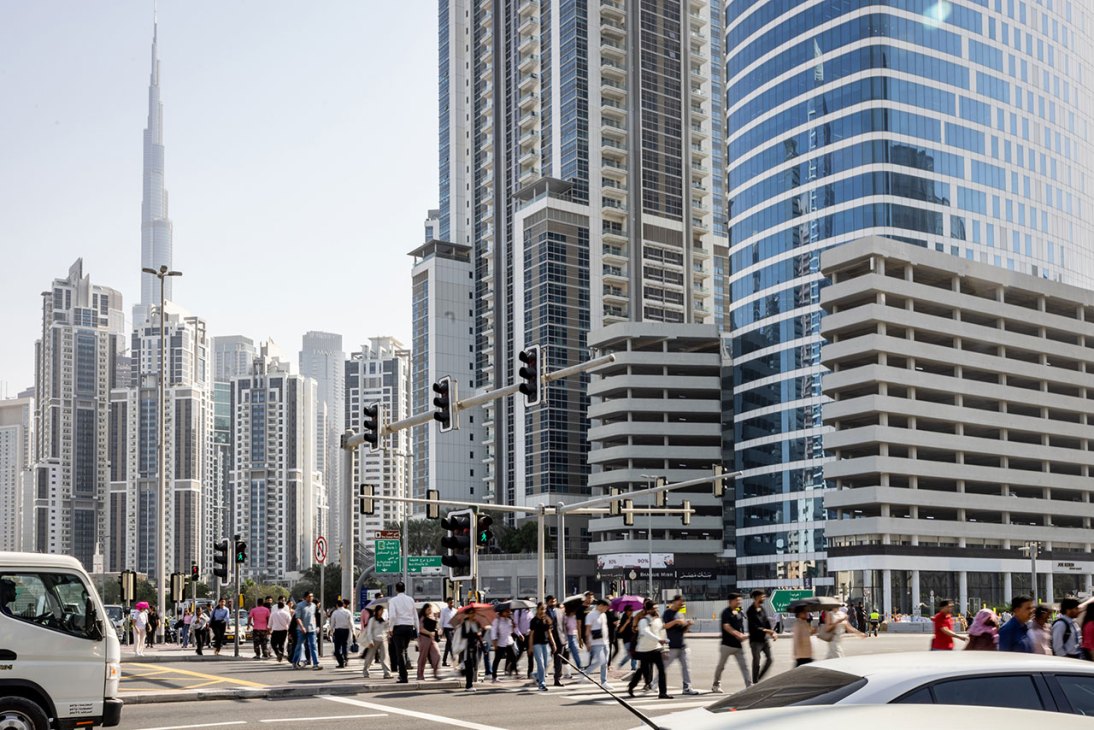
The people who chose to come here, by and large, have stayed. Not all – some left following guidance from their embassies; no one should pretend that the fear was not real. Seven people have died and dozens more have been injured; families are shaken. But the extraordinary social fabric that holds the country together has not torn. There is a difference between living in a country and belonging to one. In the UAE, for most of the 89 per cent who came from elsewhere, the two have quietly become the same thing.
This is not nothing. It is, in fact, everything.
An economic argument is there to be made, and it is a strong one. Non-oil activity now accounts for more than 77 per cent of the UAE’s GDP. You can model an economy. You cannot model belonging. The first can be stress-tested and quantified; the second can only be lived. What is being lived here, by the millions who chose to stay, is more durable than any balance sheet.
The Gulf has long been caricatured in certain quarters as a transient place – a collection of sojourners passing through, owing nothing and expecting nothing, ready to disappear at the first sign of difficulty. That caricature has never done justice to the reality of what has been built here. Mureeb Zaman, the Pakistani driver who was killed by falling debris on 7 March, had lived in and raised a family in the UAE for more than a decade. He was not passing through. He was home.
What Iran’s regime has stumbled upon, perhaps without fully understanding it, is the central paradox of the model it is attacking. The UAE’s openness is not a vulnerability. It is its greatest source of strength. A country where the bonds of community are forged not by ethnicity or religion or language but by shared investment in a place – its institutions, its ambitions, its particular way of being in the world – turns out to be remarkably difficult to destabilise. People do not abandon what they have helped to build together.
There is a lesson here that extends well beyond the Arabian Gulf. The world is full of leaders who promise cohesion through homogeneity, security through exclusion, identity through the definition of enemies. The UAE has spent 50 years building a different case: that the most stable societies and economies are those with the most to lose from instability; that openness and security are not opposites; that a country of some 200 nationalities can be, in an age of fracture, the most consequential experiment of our time.
That experiment has already returned its verdict.
The photograph from the café confirms it.
Badr Jafar is the special envoy of the UAE minister of foreign affairs for business and philanthropy. For more on the conflict in Iran, read John Bolton’s thoughts on what should happen next here.