We can’t keep building houses to solve the housing crisis, say two leading architects
Is architecture broken? It will be until the architects become activists.
Jeremy Till and Tatjana Schneider are architects and educators who believe that their trade is broken. They argue that too many architects are building too many fancy homes, failing to challenge the system and making themselves complicit in the climate crisis. They want to see a revolution in everything from training to what gets built. Oh, and architectural prizes? They are the worst – and the UK’s most prestigious award is no exception.
“Taking a recent example, there were two private houses with excess square meterage on the Stirling Prize shortlist,” says Till. “Their sustainability credentials are almost certainly not published. And yet, on the longlist was a community housing trust with a proper sustainable agenda. It was all there but the architects at the top of the award system decided to privilege a certain set of values, which mainly results in prioritising well-designed private houses over a more social agenda.”
This has all come to a head now that Till and Schneider’s architectural research collective, Mould, has published a new book titled Architecture is Climate, positing a wholesale rethink for the field of architecture by acknowledging that the practice is entangled with climate, politics, history and social justice. Till and Schneider are two of its co-authors and are out to take a stand. (They strongly believe that architects should be activists.)

“The book is both provocative and necessary because architecture is locked into certain ways of doing and certain value systems that mainly consider aesthetics and refinement. Architects have bypassed their relationship to climate breakdown,” says Till. “They attempt to deal with it at arm’s length through so-called sustainable buildings, which we see just as Band-Aids – temporary plasters over a much deeper wound. They don’t acknowledge architecture’s complicity within climate breakdown.”
Another concern is that architects focus too much on building things. Schneider says that this limits practitioners. “Architecture tends to be understood as a building, as an object. But we need to look at it as so much more,” she says. “Imagine the practice as a mushroom or an iceberg: the building is what we see on the surface and everything else is underneath. Architects, together with other disciplines, must see architecture as a wider project of spatial production and bring others on board.” And those other partners, she suggests, could include fewer developers and more co-operatives, such as you see in Switzerland, for example.”
Can architecture really change while we all have grand expectations?
For the vision that Architecture is Climate presents to succeed, the public – meaning ordinary folk rather than those commissioning grand design mansions – must make what could be seen as sacrifices. People would need to adjust to smaller units, worry less about aesthetics and perhaps live in existing buildings ripe for retrofit, away from their desired neighbourhood; they might have to give up the dream of owning their own home entirely. “The idea that we can only be happy if we own our own house, which [in the UK] is something that Thatcher particularly promulgated, is a kind of myth,” says Till. “There is no real evidence of that in many European countries where there are more people renting than owning and I don’t see that they’re unhappy because of that.” Perhaps not but in the UK, where much of the rental stock is low-grade and poorly maintained, that feels like a big ask.
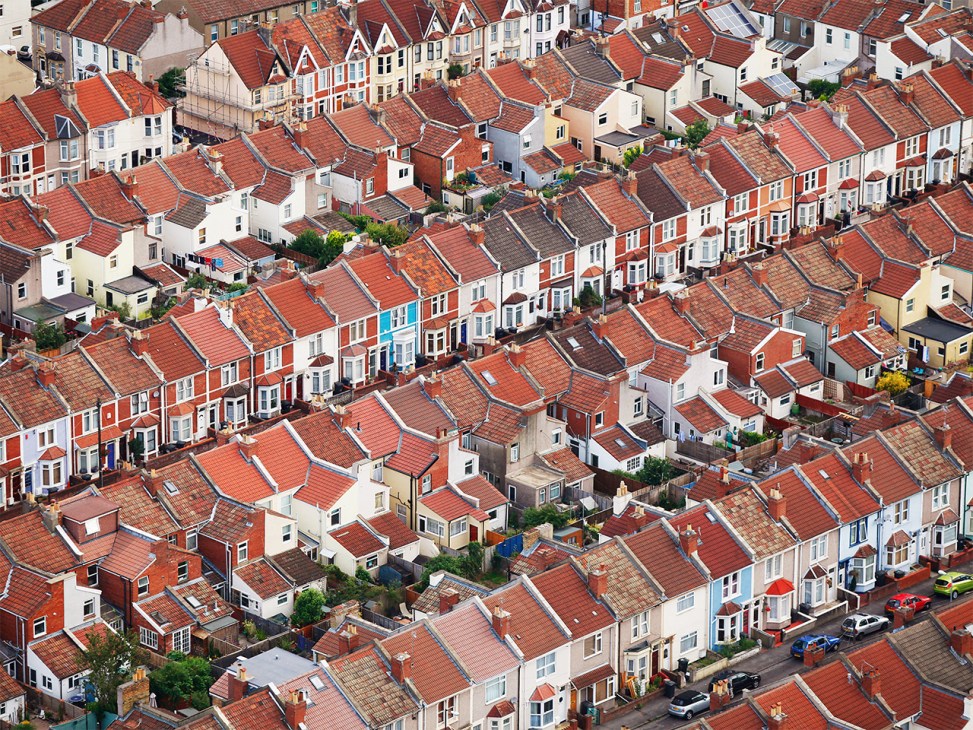
Similarly, Schneider’s take on the market is a hard sell for many. “Governments are making up the numbers of units that ‘society needs’. Where do these figures come from? When we look at built space, we see that we have enough to house everyone adequately. But sometimes the space might be in a not-so-adequate location. And when we talk about people living on a lot of square metres, we should also think about how we could live on fewer.” Perhaps, but families across the developed world don’t dream of moving into a co-op with shared living spaces. Why should they?
Taking architectural thinking beyond buildings
This is a theme that Till doubles down on when it comes to the UK, where the current government has promised to build 1.5 million homes during its term in office. It’s a target that seems likely to be missed. “They are tearing up planning regulations to allow developers to march over nature. They are tearing up ways of procuring housing through different economic systems, such as community land trusts or community housing, to try and make the point that the only way that we can achieve this goal is through a market-led approach.” It is a “dumb” plan, says Till, and an irresponsible one too.
Yet Architecture is Climate, while a deep critique of the architecture trade, is as much about putting the spotlight on interesting projects and professionals successfully working outside the usual developer-architect relationship. “The book shows that a lot of people are already doing interesting work around the globe. They’re doing so in education, in practice and in multi-disciplinary organisations,” says Schneider. Till points to the work of Atelier Bow-Wow in Tokyo and how they helped revive a series of villages. Schneider references the Grand Parc social housing project in Bordeaux.
While both have concerns about architecture as a trade, as a discipline and as a way of interpreting the world, they also see many strengths in the practice as well – even if you never build a single thing. “How do you use an education in architecture to address systemic issues? It offers a unique set of capabilities. It looks at the past as experience in the present. It projects into the future and it’s always relational,” says Till. “So what we argue is to use these ways of thinking in a much broader field than just within the design of a building. Though the book might start as a strident critique of the current system, it ends with [a sense of] possibility, potential and hope.”
‘Architecture is Climate’ is published by dpr-barcelona. The Mould collective also includes Sarah Bovelett, Anthony Powis, Tatjana Schneider, Christina Serifi, Jeremy Till and Becca Voelcker. The book is available for free download. To hear more from Schneider and Till, listen to their episode of ‘The Urbanist’. New episodes are released every Thursday.