The artistic ‘wall dogs’ giving luxury street advertising a personal touch
Despite the rise of digital billboards, a New York-based company is increasingly in demand for its hand-painted mural advertising.
Nick Metz is six storeys off the ground, paintbrush in hand, hanging from the side of a building on the corner of New York’s Canal and Lafayette Streets with a fellow “wall dog”. They are there because, even in an age of digital billboards, a mural company from New York has found itself in demand from the biggest names in luxury. Today its artists can be spotted dangling from walls in many of the US’s largest cities.
“We’ll be up here every day for a week,” says Metz, who has been working for Overall Murals, the country’s largest independent hand-painted-advertising company, for four years. “Every day, people stop and stare. That’s what I did too when I first saw someone doing this.” Wall dogs – so named because they’re leashed to buildings with safety lines – are the public face of the business, which was founded in 2010 by media planner Angel Saemai and artist Dmitry Pankov. Their first office was the size of a walk-in closet. Now, Overall Murals has a client list that includes Chanel, Google, Coach, Porsche and Häagen-Dazs, with a team of 60 painters who travel across the country. Key to its success is that, as well as the creative and engineering sides of the enterprise, it also leases locations. There are currently more than 80 across the US. Once a wall is leased, the hard work begins.
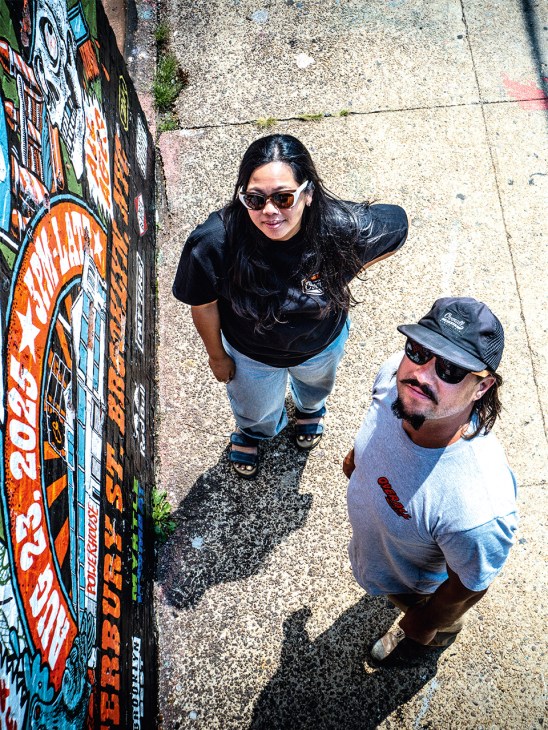
“If a surface has never been painted, it’ll be porous, so you have to build up primer and paint,” says Pankov. “In the US, creatives and advertising agencies often like to have squares and rectangles [in their imagery], and they want them to be seamless.” Working outdoors has its challenges. “We seldom miss a deadline,” adds Pankov. “We work in the heat and when it’s below zero. Oil paints don’t freeze. The viscosity changes but that doesn’t stop us.”
The scale of each project varies. “It can take between one and 10 people,” says Saemai. The walls range from a few meters square to as high as 18 meters and as long as 30 meters. The company is keen to innovate; one Ray-Ban ad featured 3-D panels allowing viewers to see a different version of the art depending on where they stood. A rain-activated project in Seattle for Ore-Ida French fries involved hydrochromic paint that displayed a message only when wet.


By the end of the week that we visit, a mural for retail giant Target will dominate an entire wall in Soho. It will stay there for two months but some advertisers purchase campaigns that last for years. These cost between $30,000 and $200,000 (€25,700 and €172,500) – about 200 to 360 per cent more than an ordinary digital billboard. “There’s something people connect with when they see a person on a wall, painting an image over several days,” says Metz. “People stop, watch, take photos and share them. The making of the advertisement becomes part of it.”
While hand-painting might seem unusual to many, heritage clients such as Chanel were around when all adverts were done this way. “This approach has been part of advertising for generations,” says Saemai. “There’s nostalgia in it. In a world where so much is instant, something made slowly stands out.” The break’s over and the wall dogs return to the job. There’s no time to waste.
overallmurals.com