Here’s how we compiled our 2026 Quality of Life Survey
Keen to know the questions that we ask Monocle correspondents and the data we used to compile this year’s results? Read on.
Monocle’s Quality of Life Survey, now in its 19th year, grew out of a debate about what makes certain cities good places to live. When we started, there was a proliferation of indices using data sets to rank cities on liveability. Many of these are useful resources but we believed then, and still do, that liveability is about more than hard data points such as GDP per capita and ambulance response times. What makes a place great hinges on unquantifiable factors, such as the beauty of its architecture, the excitement of its nightlife and the quality of its retail offering. We drew up a questionnaire and sent it to our global correspondents.
Nineteen years later, we still send our survey to people whose opinions we trust. Using their answers – and a list of metrics that cover areas such as governance, security, the cost of living, transportation, culture and nightlife – a team of Monocle editors decides the final top-20 ranking. Every year we tweak the questions and data points to reflect the times. For our 2026 survey, we placed an emphasis on excitement and ambition: how pleasurable it is to live somewhere and whether a place feels optimistic about its future.
This year we also sought specific data points from property specialist Knight Frank and EIT Edition’s Copenhagenize Index 2025, which has its own ranking based on how favourable cities are to cyclists – its bicycle modal share measures the proportion of total journeys on bikes each day, while its protected bicycle infrastructure records a city’s discrete and safe cycle lanes. You might notice that no cities in the Americas (except Vancouver) or Africa made the cut this year, largely because of issues around safety and inequality. We do not claim that our survey is the final word on liveability; indeed we hope that it will be the beginning of a friendly and lively debate. For the first time, we’re sharing excerpts of our correspondents’ answers and the data we used to decide which cities made the cut.
The Monocle Quality of Life Survey
The basics
1.
What is the population (both in the city proper and the metropolitan area)?
2.
What are the average hours of sunshine per year?
Getting around and away
3.
Is public transport clean, affordable and efficient?
– What is the cost of monthly travelcard?
– What per cent of journeys are taken by public transport?
4.
Does the city have a good cycling culture?
– What is the cycle share per cent of all journeys?
– How many kilometres of safe cycling infrastructure are in the city?
– Is there a public bike-share scheme?
5.
What number of international destinations are served by the city’s airports?
Urban life and vibrancy
6.
Can you get a decent meal after 22.00?
7.
Are the streets safe, busy and lively at night?
– What is the usual time that bars close on a Saturday night?
– What is the city’s murder rate?
8.
Is the city welcoming to newcomers?
– What has been the per cent of population change in the past year?
9.
Are people integrated well?
10.
What are the levels of trust in police?
Housing
11.
Is housing attractive, abundant and well-made?
– How many homes were built in the last year?
– How many social housing units are there?
12.
What is the average rent for a three-bedroom property in city centre?
13.
What is the average cost to buy a three-bedroom property?
Education
14.
Is the public school system a success?
15.
What is the per cent of people with a university education?
16.
What is the number of universities in the top 1,000?
Business
17.
What is the average time it takes to register a business?
18.
What is the tax regime like?
– What is the average salary in the city?
– What taxes are set at the city level?
Media, culture and sport
19.
Is there a good city newspaper?
20.
How many cinemas are in the city?
21.
How many public swimming pools does the city have?
Retail
22.
Are shops open on a Sunday?
23.
Is there a good retail scene?
– How many independent bookshops are there?
– How many vape shops are in the city centre?
24.
How much does a flat white cost?
Health
25.
What is the average life expectancy?
26.
Is it a supermarket or a fresh food city?
Environment
27.
How much green space is in the city?
28.
What’s the park culture like?
Infrastructure and planning
29.
Does the city have ambition? How does it talk about itself?
Notable responses
Tokyo
Fiona Wilson, Tokyo bureau chief
Tokyo’s 23 special districts are served by one of the world’s most extensive and punctual public-transportation networks. Trains, buses and stations are meticulously cleaned every day. Graffiti and litter are virtually non-existent. Fares are distance-based, starting at 170 yen (€0.91). Eighty-four per cent of the area inside Loop Road No 7 (encompassing central Tokyo) is within a 10-minute walk of a train station, while an efficient bus network connects the rest of the city proper.
Lisbon
Carlota Rebelo, senior foreign correspondent
Public transport in Lisbon has a great cost-benefit ratio. It’s cheap for a European capital (single tickets range from €1.50 and €1.90 depending on whether you top up a travel card or use contactless payment) and has a good network comprising metro, trams, bus, urban trains and the boats across the Tejo. However, in recent years waiting times have increased, driven by a rise in demand as more people have moved to Lisbon.
Vancouver
Tomos Lewis, Monocle’s Toronto correspondent
Vancouver is a cycling city. It has spent years building hundreds of kilometres of protected bike lanes, many of which connect to other parts of the network, such as train stations, bus stops and park-and-ride locations. City Hall says that 13 per cent of commuters cycle at least part of their daily commute. The network also makes use of Vancouver’s stunning natural setting – the 22km route along the city’s sea wall is frequently used and a big draw.
Vienna
Alexei Korolyov, Vienna correspondent
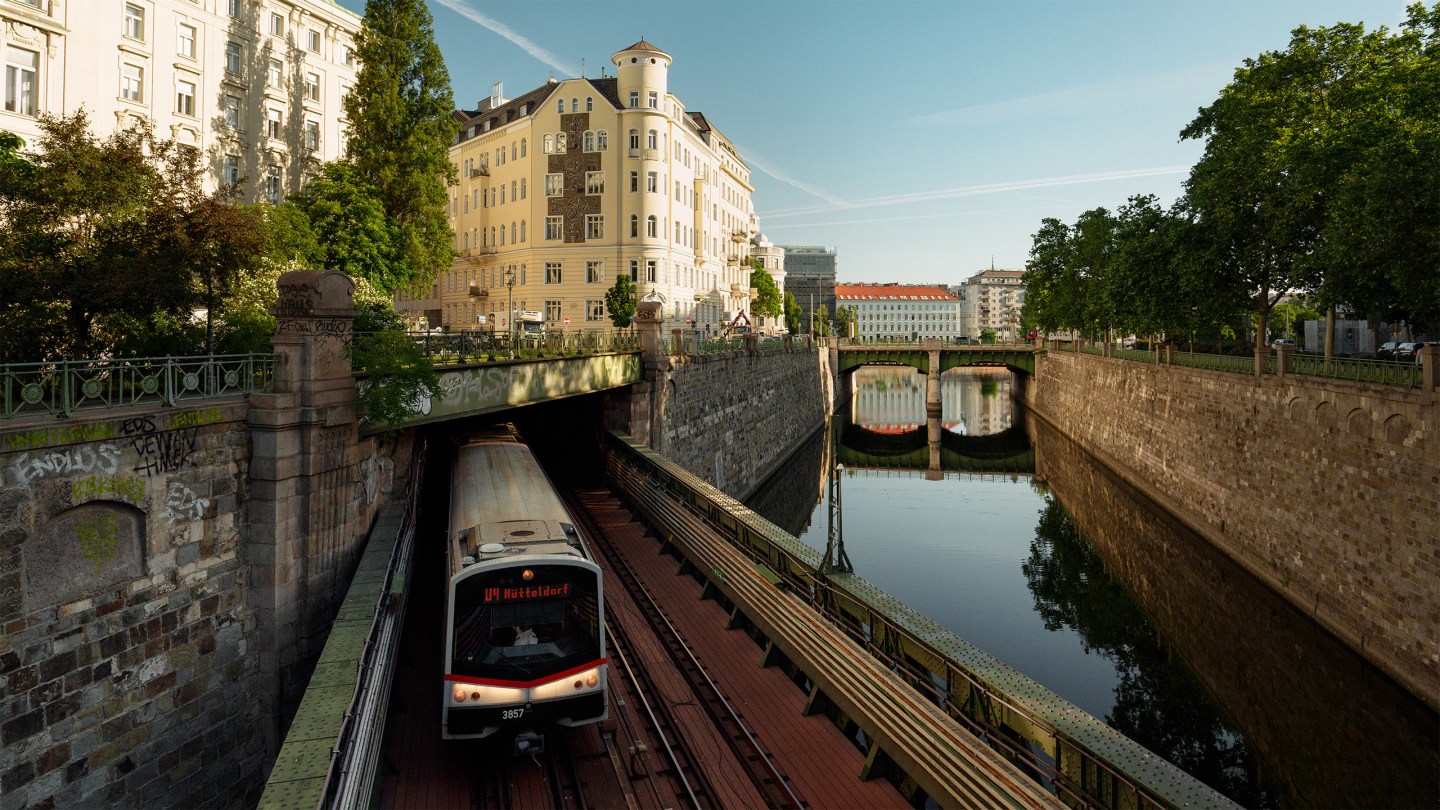
Vienna is still fairly conservative when it comes to late dining (and drinking): strict noise rules kick in from 23.00 for establishments on the ground floor of residential buildings and kitchens tend to close towards 22.00, though many places in the tourist-heavy first district continue serving later.
Seoul
David Lee, Seoul-based Monocle contributor
South Koreans have a word for late-night eating: ya-sik. Ordering fried chicken, jokbal or ramen after 22.00 is a civic ritual. Most neighbourhoods still have 24-hour restaurants with dishes such as sundae-gukbap and kongnamul-gukbap. Local chain Kimbap Heaven also remains a staple.
Sydney
Callum McDermott, Sydney-based Monocle journalist
Even though Sydney’s beaches get all the headlines, residents take most advantage of the parks. They’re evenly distributed across the city, from Centennial Parklands, a sprawling network of large parks in the east, to Sydney Olympic Park and Western Sydney Parklands, Australia’s largest urban park, in the west.
Kyoto
Luke Tamada, editorial intern at Monocle’s Tokyo bureau
Seasonal events such as hanami (cherry-blossom viewing) and koyo (fall foliage) bring a lot of people to the parks. Spanning 31km, the Kamogawa river cuts through the heart of Kyoto and its banks are a popular hangout spot for all ages. Drinking in public is legal, which means that parks can feel quite lively.