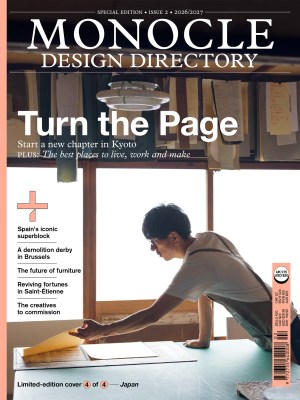
Monocle’s Quality of Life Survey 2026: The 20 most liveable cities in the world
Welcome to Monocle’s 2026 Quality of Life Survey. What started 19 years ago as an antidote to bloodless, data-heavy city rankings has become central to the debate on what it means to live well.
At Monocle we have always been curious about what makes cities tick and how they can be improved. We also thought that it was odd when rankings were driven by factors such as tax rates, GDP and living costs alone. Surely urban life should be judged on culture, retail, hospitality and architecture too? The result was a survey of 30 questions sent out to correspondents in 40 cities worldwide.
Nineteen years on, we continue to ask trusted correspondents whose judgement we value for their take. The survey still comprises questions that assess safety, connectivity, governance, green space and more. But we also check whether you can get a decent meal and a drink after 22.00. Every year, there are small tweaks to reflect how the world is changing. For 2026, we have paid special attention to excitement, urban ambition and security. For this survey, we also sought additional data from property specialist Knight Frank and EIT Edition’s Copenhagenize Index 2025 to build up better pictures of the cities that we scrutinised. The latter’s “bicycle modal share” figure measures the proportion of all daily trips taken on two wheels.
After poring over the numbers and reading correspondents’ views, our editors drafted a final line-up. North American cities have struggled (despite plucky Vancouver) due to stubbornly high rates of crime, inequality and poor housing. And in spite of a wealth of ambition – Cape Town’s public pools and Kigali’s spotless streets among them – Africa and the Middle East don’t offer the security of certain mature markets in Europe and Asia. Likewise, London and Los Angeles have failed to make it on to the list. So consider this the beginning of a debate rather than the end of one. According to the UN, four-fifths of the world’s population lives in urban areas (and more are coming). Cities are the engines of progress and an ongoing experiment – even the best ones aren’t perfect. The aim of this survey is to nudge the discussion around liveability away from stuffy policy towards a genuine conversation about what moves our hearts, minds and feet towards certain places. Does your city make the cut?
20. Perth
tied with Kyoto
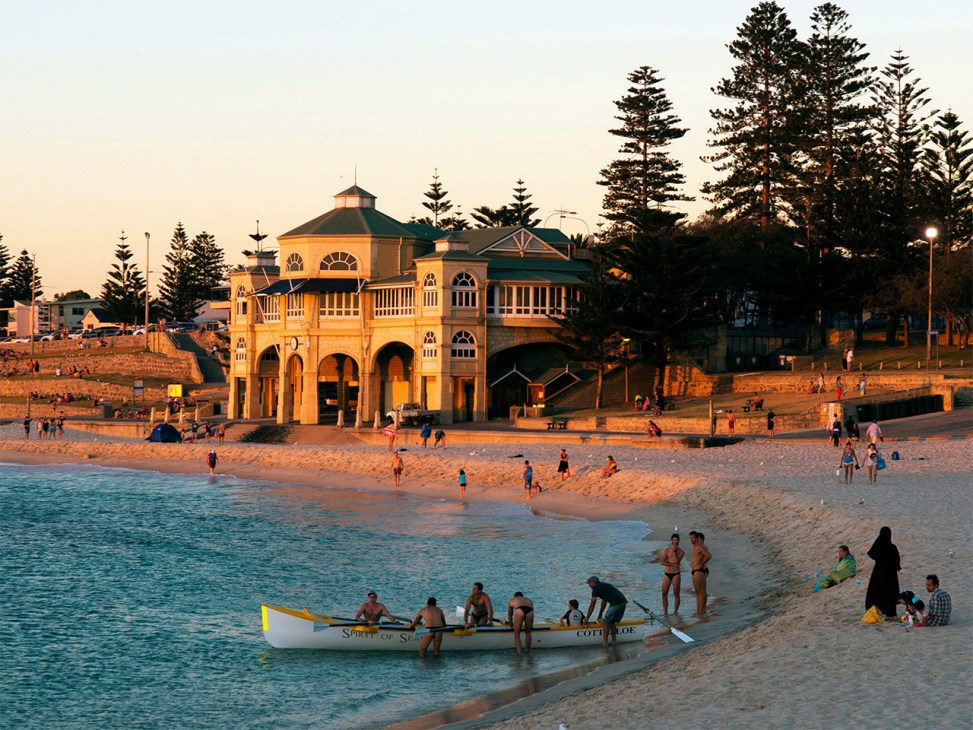
With a population hovering at about two million, Perth is the most isolated large city in the world. It’s five hours from Sydney by plane but the joke has always been that it’s also two decades behind it. Perhaps it’s a reflection of the laidback lifestyle associated with a place that has the most sunshine hours per year of any city in Australia – and one built around work-life balance and outdoor activity on its beaches, riverfronts and bushland escarpments.
Read more
▼
Despite its relaxed attitude, the metropolis has been supercharged in recent years by multiple major infrastructure projects – decades-long endeavours, many of which are now finally coming to fruition. Among these is the expansion of its rail network, making transit accessible to more of its leafy suburbs and linking its centre to an airport that includes the only direct connections between Australia and Europe. Perth’s urban centre and the abundant natural beauty of the Swan river come together at Elizabeth Quay, a newly complete central waterfront neighbourhood with office towers, luxury hotels and riverside dining, retail and recreation. The Perth City Link project has provided a point of reconnection too: the sinking of a railway line here has physically linked the central business district with Northbridge, a neighbourhood that’s home to several popular cultural institutions. The link’s crown jewel, Edith Cowan University’s city campus, opened earlier this year in a move that has injected youth and learning into a district that has long been crowded with engineers and mining executives (natural-resource extraction still drives the economy here).
These developments have made Perth a more attractive place to live, with residents enjoying the infrastructural benefits associated with global cities alongside the outdoor pursuits that have always made it special. Kings Park remains one of the world’s largest urban green spaces, combining botanical gardens and lawns with bushland walks. Meanwhile, the city’s riverine foreshores are popular for fishing, kayaking and stand-up paddleboarding, and its abundant beaches allow residents easy access to places to swim and surf – or barbecue, picnic, skate and ride along the waterfront. The outlook remains sunny.
Adopt: Daylight saving time. It would extend evening sunlight, reducing energy costs and boosting local economic spending.
Drop: Mandatory helmet laws that are a barrier to cycling because they put off casual riders.
Population: 2 million (2.5 million in the metropolitan area)
Change in population over the past year: +1.9 per cent
Proportion of commutes by public transport: 12 per cent
Number of international destinations served by the city’s airports: 22
Average hours of sunshine per year: 3,230
Number of public swimming pools: 118 (metro area)
20.
Kyoto
tied with Perth
More than 50 million visitors arrive in Kyoto every year, crowding neighbourhoods and public transport not designed for such numbers. Nine in 10 residents report frustration with packed buses and trains. The city’s temples and shrines have survived centuries of earthquakes, fires and war but their tranquillity has not fared so well in recent years. Kyoto’s mayor, Koji Matsui, was elected in 2024 on a pledge to protect residents’ quality of life, in part by curbing visitor numbers. This March the city raised its accommodation tax, with guests at luxury hotels now paying up to ¥10,000 (€54) a person per night – a move set to generate ¥12.6bn (€68m) annually for transport improvements, cultural preservation and congestion relief. From 2027, tourists could pay up to double the bus fare charged to residents on key routes, subject to government approval. Japan has never seen measures quite like these.
Read more
▼
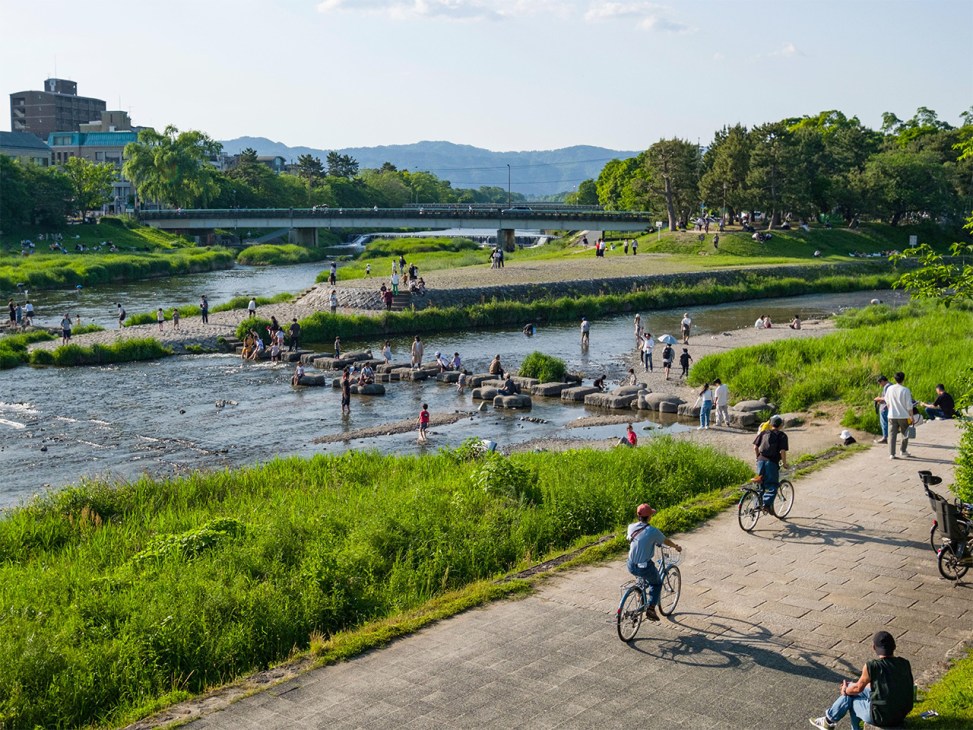
But perhaps Kyoto’s problem isn’t the number of visitors but attracting too many to too few places. The crowds that overwhelm Gion, Arashiyama and Fushimi Inari are packed into a tiny corner of the city that is home to more than 1,600 Buddhist temples and 400 Shinto shrines. On a warm evening at the Kamogawa Delta, for instance, the pressures of overtourism can feel a world away. Students from nearby Kyoto and Doshisha universities gather along the riverbanks, office workers unwind and children hop across the stepping stones. Residents even have a name for this shared serenity: kamo-chill. For now, at least, this gentler lifestyle endures.
After more than half a century defending its low-rise skyline, Kyoto is now considering 60-metre towers – nearly double the current limit – around its central station, all in the name of “revitalisation”. But this is hardly a city in need of revitalising. It remains one of the world’s safest and most visited urban centres. The city lost some 32,000 residents between 2020 and 2025, partly due to suburbanisation and demographic decline, and taller buildings in the centre are unlikely to win them back. Kyoto’s future depends not on skyscrapers but on whether it can manage its success without eroding the qualities that made it so appealing in the first place.
Adopt: Kyoto should be branded as Japan’s premier student city. There’s more to it than cherry blossoms and temples.
Drop: The Kyoto station area is already one of Japan’s most charmless urban stretches. The last thing that it needs is 60-metre-tall towers.
Population: 1.4 million (16.6 million in the metropolitan area)
Average hours of sunshine per year: 2,141
Bicycle modal share: 21.5 per cent
Proportion of commutes by public transport: 61 per cent
Average rent for a three-bedroom apartment in city centre: ¥275,000 (€1,480)
View Monocle’s complete city guide to Kyoto
19.
Vancouver
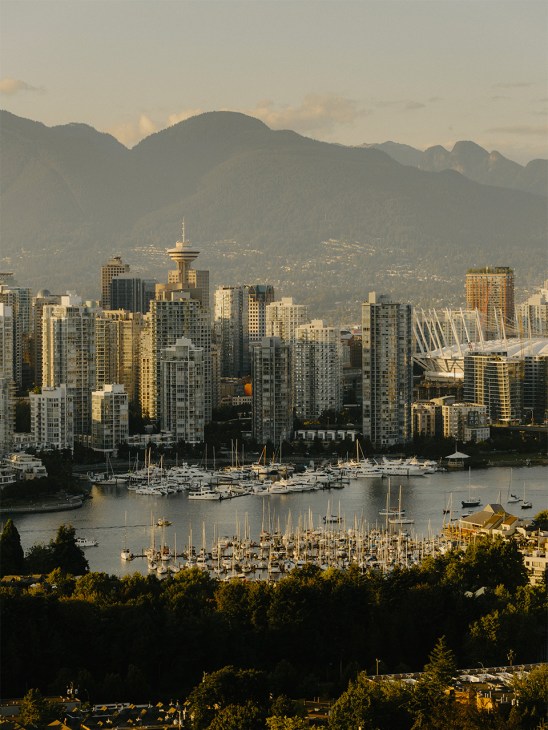
Following its absence in recent editions of our survey, Vancouver makes a welcome return as the only North American city to be included this year. Canada’s Pacific outpost continues to set continent-wide benchmarks in urban life, from transformative public-transport projects that are currently underway to an extensive cycling network. Despite rancour ahead of a municipal election in October (in which the incumbent mayor, Ken Sim, is seeking a second term), Vancouver’s appeal is undimmed and its population is growing. (Incomers include those choosing to leave an increasingly unwelcoming US.)
Read more
▼
Few cities boast a natural setting as breathtaking as Vancouver’s and its denizens take full advantage of the great outdoors. The 10 public beaches and 250 public parks range in scope from 37 off-leash dog parks to one of the jewels of North America’s green spaces in the wooded peninsula of Stanley Park. This focus on more wholesome pursuits has given it an early-to-bed, early-to-rise reputation but an after-hours meal or drink is now far easier to find, particularly in Chinatown and on Main Street.
High public engagement in civic life is enhanced by one of Canada’s best local newsrooms, The Tyee, an independent site launched in 2003 and rebranded in 2022 by Vancouver studio Rethink. A city well-informed about itself can broaden its gaze and welcome the world in. Vancouver does this with gusto: 40 per cent of the population was born overseas, according to Canada’s 2021 census, and its hosting of major international events, from this summer’s Fifa World Cup to the annual North American edition of Web Summit, demonstrates its appetite for looking outwards.
But recent moves by city hall have put progress at risk – particularly the pause on a rapid-housing initiative for those experiencing homelessness. Additional levies on foreign property buyers have done little to open up its housing stock, meaning that this remains one of Canada’s most expensive markets. Vancouver’s population is set to double by 2051. To prepare for this, major public-transport projects are taking shape, from an extension to the SkyTrain to a new metro line. Both display Vancouver’s ambitions about the kind of city that it is and wants to remain.
Adopt: A nimbler approach to development, both private and public. The process is too slow.
Drop: Opposition to the Burnaby Mountain Gondola, a proposed cable car connecting the SkyTrain to the nature park.
Population: 2.4 million (3.1 million in the metropolitan area)
Urban green space: 37 per cent
Bicycle modal share: 9 per cent
Proportion of commutes by public transport: 20 per cent
Number of international destinations served by the city’s airport: 77
Average time it takes to register a business: 1.5 days
18.
Melbourne
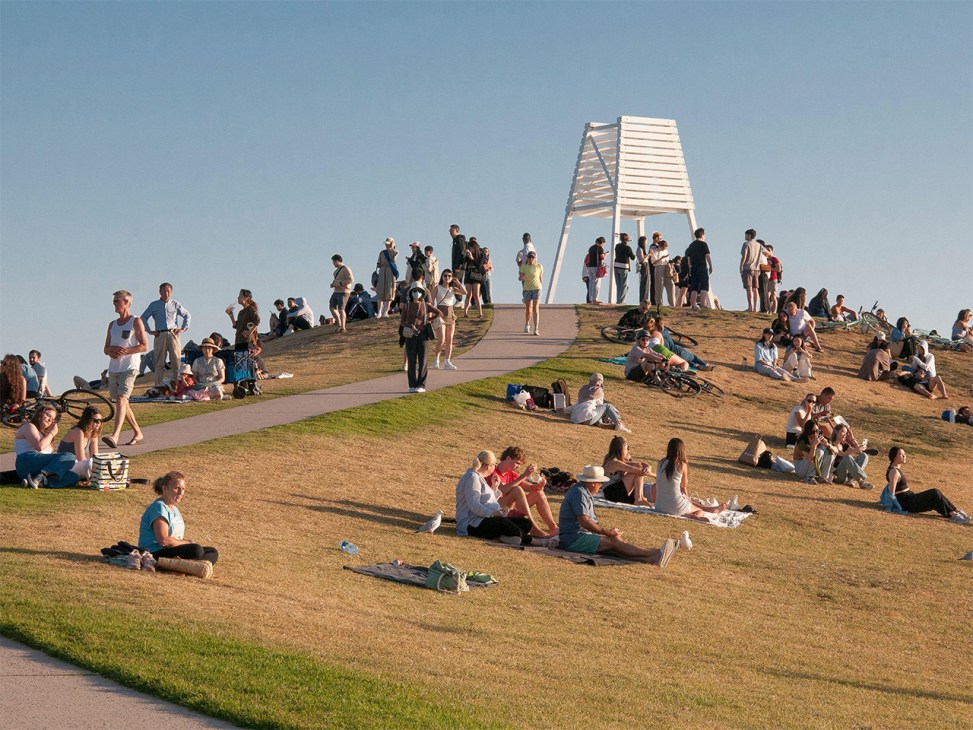
At the opening of this year’s Melbourne Writers Festival, the city’s lord mayor, Nick Reece, read a poem that he had written. It began, “Melbourne’s had a big advantage ever since our early years,/’cause we weren’t an English prison – we were people with ideas./People of all cultures flocked and lifted Melbourne’s mood./They worked economic wonders – and they sure improved the food.” Melburnians never miss an opportunity to assert their home as Australia’s centre of culture, coffee and sport. This perhaps stems in part from status anxiety in the eternal competition with Sydney over which is the more important place. Newspapers in both cities know that belittling the other will harvest rage-induced clicks.
Read more
▼
While its northern rival has finished higher up our ranking this year, Melbourne has reason to shed this inferiority complex. It has excellent universities, hospitals, public transport and access to nature. A long-awaited expansion of its rail network, unveiled recently, has added five new underground stations in the inner city and centre. Construction has already begun on the AU$1.7bn (€1bn) Melbourne Arts Precinct Transformation, which will include a new contemporary-art museum. The city’s housing strategy mandates 70 per cent of new homes must be built in established areas to reduce sprawl. Then there’s Melbourne’s culinary heft, with world-class restaurants and cafés – on coffee, it can safely claim to top the charts. Sport is a huge draw, with a F1 Grand Prix here since 1996 that has gained new popularity, particularly among young women.
Melbourne suffers from the cost-of-living and housing pressures that also plague other parts of Australia. Crime has risen in recent years, particularly theft and burglary, and, in recent months, fire-bombings on hospitality venues. At the same time, trust in the police has declined. Can Melbourne claw its way back up the index? Certainly. Authorities have addressed cost-of-living concerns by making public transport free from March to May, and afterwards half-price for a year. It is continuing to invest in expanding the rail network. But building an airport rail link is vital. As the city’s population grows, its lack of one is impossible to countenance.
Adopt: An airport rail link. Every year this becomes more urgent.
Drop: Melburnians’ dependence on driving. The city remains car-centric, despite having great public transport.
Population: 5.3 million (five million in the metropolitan area)
Average hours of sunshine per year: 2,363
Bicycle modal share: 1.9 per cent
Proportion of commutes by public transport: 19 per cent
Number of international destinations served by the city’s airports: 38
Urban green space: 37 per cent
Number of public swimming pools (metro area): 258
View Monocle’s complete city guide to Melbourne
17.
Seoul
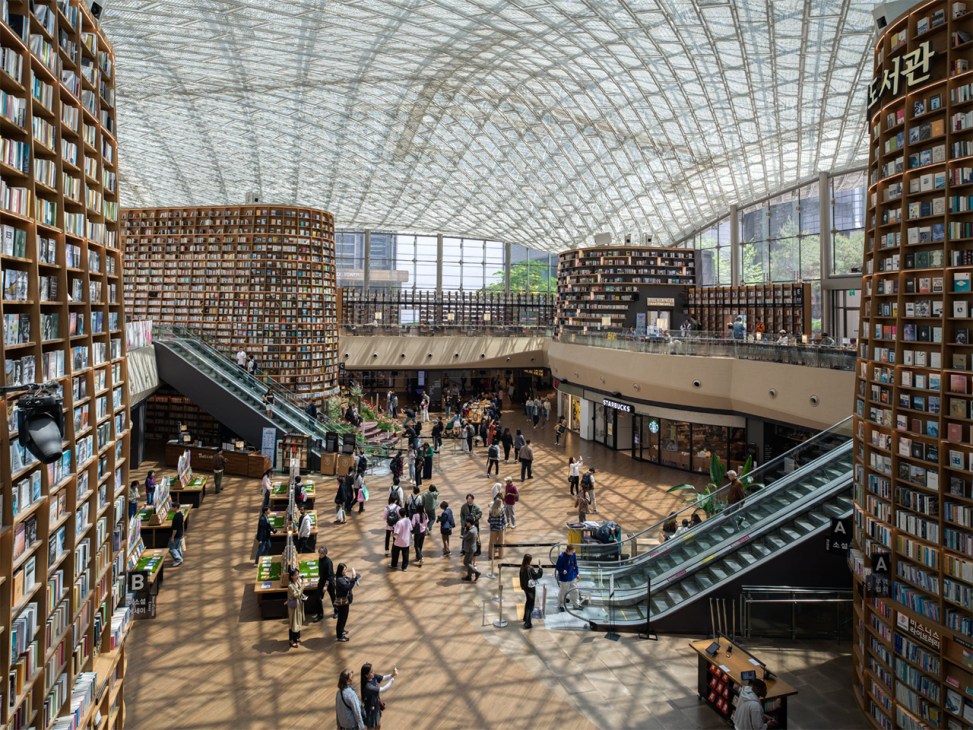
Earlier this year, South Korea’s now ousted president, Yoon Suk Yeol, was sentenced to life imprisonment over his brief declaration of martial law in late 2024. For months, central Seoul became a stage for rival rallies, with supporters and opponents of the disgraced leader marching through downtown avenues almost daily. Yet the speed with which the capital regained its composure says much about the resilience of one of Asia’s most sophisticated democracies. A year on, there are few visible traces of political upheaval.
Read more
▼
Today much is going Seoul’s way. Few cities exert as much influence on global popular culture, whether through the worldwide success of K-pop icons BTS, the rise of K-beauty or the international appetite for Korean food and television. The National Museum of Korea recently became the world’s third-most-visited museum, behind the Louvre and the Vatican. If culture is what first draws attention, then safety, convenience and efficiency are what underpin the city’s enduring allure. Its already formidable public-transport system has expanded, with additions such as the eco-friendly Hangang Bus, which offers commuters and tourists traffic-free journeys along the Han River, and the GTX high-speed rail network that reaches speeds of up to 180km/h.
Despite its neighbour to the north, a feeling of personal security shapes daily life. Lost phones and wallets are often returned untouched. This sense of public trust helps to sustain Seoul’s 24-hour culture, with saunas, cafés and restaurants remaining open past midnight, while night buses operate until dawn. In addition to green spaces expanding within the city, the mountains surrounding Seoul are central to its rhythm. On weekends, trails quickly fill with residents in hiking gear, reflecting an outdoor culture that is unusually embedded in everyday urban life. Air quality is a concern but fine-dust levels have dropped by more than 40 per cent in the past two decades.
Seoul’s relentless energy is double-edged. Long working hours continue to define office culture, while students shuttle between academies late into the evening. The capital excels at efficiency and doesn’t lack ambition but continues to wrestle with whether its residents have enough time to enjoy the quality of life that it offers.
Adopt: Stronger legal protections and easier-to-use bureaucratic systems for foreign residents.
Drop: Redevelopment projects that place high-rise towers around historic sites such as Jongmyo Shrine.
Population: 9.6 million (26.3 million in the metropolitan area)
Average hours of sunshine per year: 2,066
Bicycle modal share: 1.8 per cent
Urban green space: 31 per cent
Proportion of commutes by public transport: 66 per cent
Number of international destinations served by the city’s airports: 161
16.
Helsinki
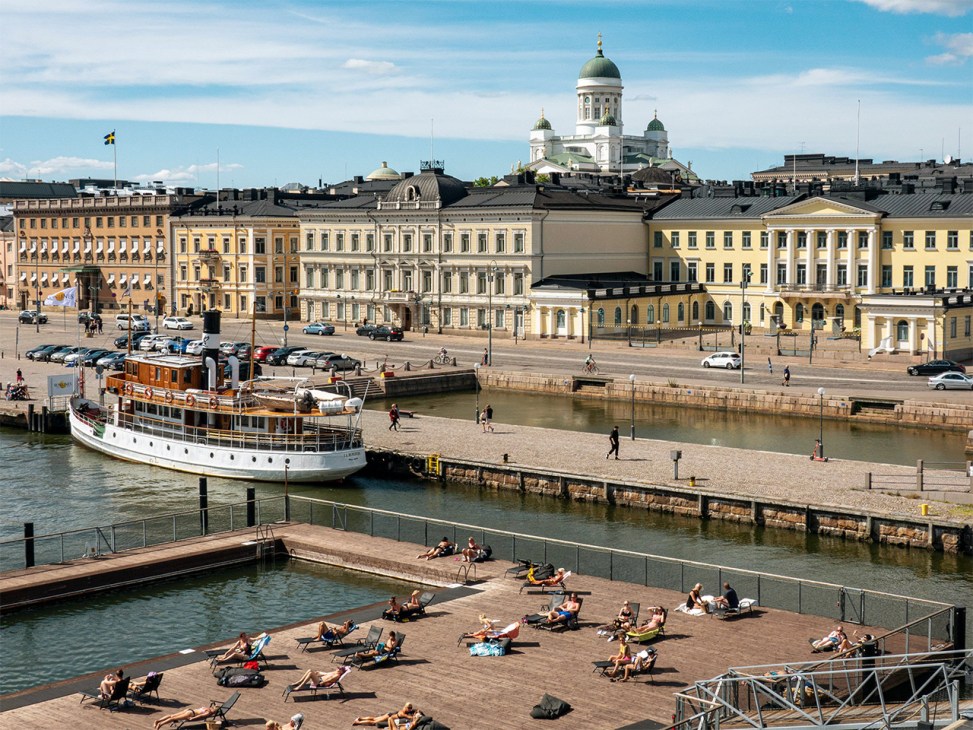
Though the Finnish capital has recovered after a few recent setbacks, it has nevertheless fallen in our rankings. The sharp decline in high-spending Asian and Russian tourists – combined with a shift towards remote work in the wake of the coronavirus pandemic – has been felt in the commercial districts and in the broader urban atmosphere. In terms of vibrancy, downtown Helsinki occasionally feels quieter and more restrained than the confident and cool Nordic capital that topped this list in 2011. While a landmark Architecture and Design Museum is slated to open in 2030, the city currently lacks some of the ingredients needed to create a stronger sense of occasion: more world-class restaurants, a vibrant club and nightlife scene, architecturally ambitious buildings and a denser concentration of cultural destinations that encourage people to linger in the centre.
Read more
▼
Still, Helsinki’s core offer remains exceptionally appealing. The city is blessed with a world-class education system, efficient public services and a highly functional city hall that is led by a dynamic new millennial mayor, Daniel Sazonov. Public trust in the police stands at 92 per cent, the streets are safe and clean, and there are more than 1,500km of top-quality cycle lanes. Its cultural assets are significant too, from the waterfront setting and Finland’s celebrated saunas to growing creative and start-up scenes.
But Helsinki so often undersells itself internationally. There can be a lack of the kind of confidence and bold storytelling displayed by rival Nordic capitals Copenhagen, Stockholm and Oslo. For too long, functionality has been the cornerstone of the city’s identity. However, safety, efficiency and good governance do not automatically translate into excitement or emotional attachment. Geography undoubtedly plays a role in this. For much of the year, Helsinki is cold and dark, an environment that naturally encourages many of its residents to stay indoors. But climate alone cannot explain the current relative lack of dynamism. To strengthen its international standing, Helsinki must embrace a bolder, more ambitious identity that balances functionality with culture, ambition and a stronger sense of occasion.
Adopt: More pedestrian zones, more life on the islands – and more international ambition.
Drop: Excessive demolition of old buildings. New constructions don’t have the same atmosphere as more historic areas.
Population: 690,000 (1.6 million in the metropolitan area)
Bicycle modal share: 11 per cent
Protected bicycle infrastructure: 600km
Urban green space: 44 per cent
Proportion of commutes by public transport: 52 per cent
Cost of monthly travelcard: €73.90
View Monocle’s complete city guide to Helsinki
15.
Amsterdam
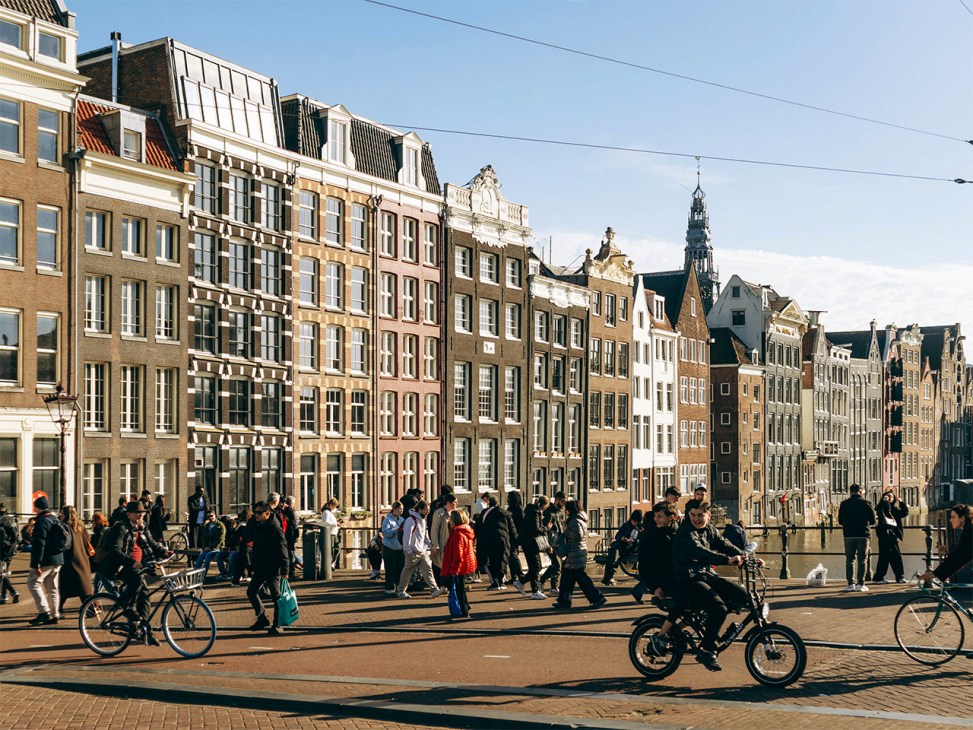
How many cities can claim to be simultaneously a cycling utopia, a hedonist’s playground and a technology hub? Amsterdam does all three with characteristic Dutch nonchalance – and that’s precisely where both its genius and its drawbacks lie.
The fundamentals remain enviable. Unemployment is very low, working weeks are short and Schiphol, which offers more intercontinental connections than almost any other airport in the world, anchors the city at the centre of global mobility. A flat hierarchy and relaxed attitude to work-life balance make the place feel like a social experiment that has succeeded.
Read more
▼
This culture is most visible when you’re on two wheels. Amsterdam is one of the world’s cycling capitals. The bicycle is not merely convenient here; it’s the default, an unspoken part of the social contract. Equally, taking a dip in the quieter canals beyond the central ring is a civic ritual rather than a dare. In terms of culture, Amsterdam continues to punch above its weight, with the likes of photography museum Foam and contemporary-art spaces such as Galerie Fons Welters and Akinci. The restaurant scene accumulates new jewels weekly and the retail offer – diverse, independent, international – rewards the curious.
Yet success has its price. Sustained growth since the early 2000s has driven the housing market into uncomfortable territory. Even with almost 40 per cent of stock held as social rentals, affordability is increasingly a privilege of the wealthy. The city builds too slowly and accommodates too many tourists without a coherent strategy for either.
Street-level quality of life has slipped. Bin bags often litter the pavements and the proliferation of fast-moving fat-tyre bikes has made cycling more hazardous. Beyond these everyday frustrations, Amsterdam is positioning itself as a European technology centre and AI hub, leveraging the fact that a substantial share of global internet traffic already passes through the region. The new coalition of greens and social liberals has pledged to keep the city liveable for everyone, not merely an increasingly affluent minority. The instinct is right but whether the governance matches the ambition is another matter.
Adopt: Tidier streets, which can be achieved by increasing clean-up operations or enforcing harsher punishments for those who litter and pollute.
Drop: Stroopwafel shops in the city centre. Why so many?
Population: 945,000 (3 million in the metropolitan area)
Bicycle modal share: 37 per cent
Urban green space: 28 per cent
Protected bicycle infrastructure: 634km
Proportion of commutes by public transport: 29 per cent
Number of international destinations served by the city’s airport: 274
14.
Singapore
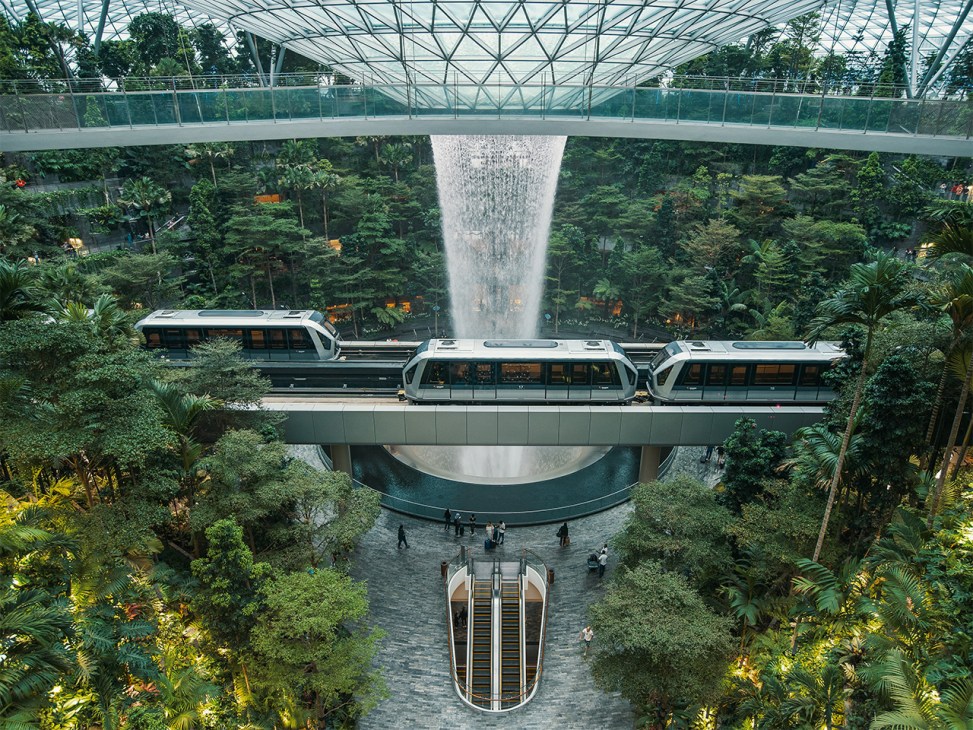
At a time of instability, Singapore has gone all in on its message of political calm and predictability for commerce. The city-state’s Economic Development Board has launched a campaign in which it describes Singapore as “a place where everything is the right side up”.
This safe-haven status is largely attributable to stable leadership (helped by a lack of democratic scrutiny) and citizens’ high trust in the police – 97 per cent of respondents in a survey expressed confidence in the force. And the ease of doing business remains a constant: it takes little more than a day to register a new venture, while low corporation- and income-tax rates make Singapore an attractive place to set up shop. For firms based here, government support has provided a bulwark in uncertain times, even if it impinges on free-market dynamism. Singapore’s location means easy trips for work or pleasure in the region, bolstered by Changi Airport’s passport-free clearance system – one reason why it has been crowned the world’s best airport two years in a row.
Read more
▼
Singapore draws criticism for its sterility and it is true that high costs hamper the opening of bricks-and-mortar shops and restaurants. But Singaporeans are enthusiastic about local ventures – look at New Bahru, a thriving lifestyle complex for Singaporean brands – and the F&B scene is still one of the best in the world. Recent openings include Taiwanese chef Andre Chiang’s 1887 by Andre at the Raffles Hotel, Damian D’Silva’s Eurasian restaurant Gilmore and South Korean barman Uno Jang’s bop. Singapore’s art ecosystem is growing – a number of transnational names, such as the Yenn and Alan Lo Foundation and the Tanoto Art Foundation, have coloured in the empty spaces with galleries, exhibitions and events.
Perhaps Singapore’s greatest asset is its multiculturalism, which is refreshing in a divided world. Its leaders display ambition when it comes to increasing connectivity: a new rapid-transit link to Johor Bahru in Malaysia will launch this year; the groundbreaking Tuas megaport is opening in phases; and, as part of the Singapore Green Plan 2030, this already lush location will become greener still with a swath of new nature parks.
Adopt: Thoughtful policies or guardrails that prevent shopping malls from becoming identical.
Drop: Rigid nightlife regulations. Alcohol trading hours are too restricted and night-time licences hard to obtain.
Population: 6.1 million
Average hours of sunshine per year: 2,022
Bicycle modal share: 9 per cent
Protected bicycle infrastructure: 730km
Proportion of commutes by public transport: 44 per cent
Number of social-housing units: 1.1 million (almost 80 per cent of Singapore’s residents live in public housing)
View Monocle’s complete city guide to Singapore
13.
Barcelona
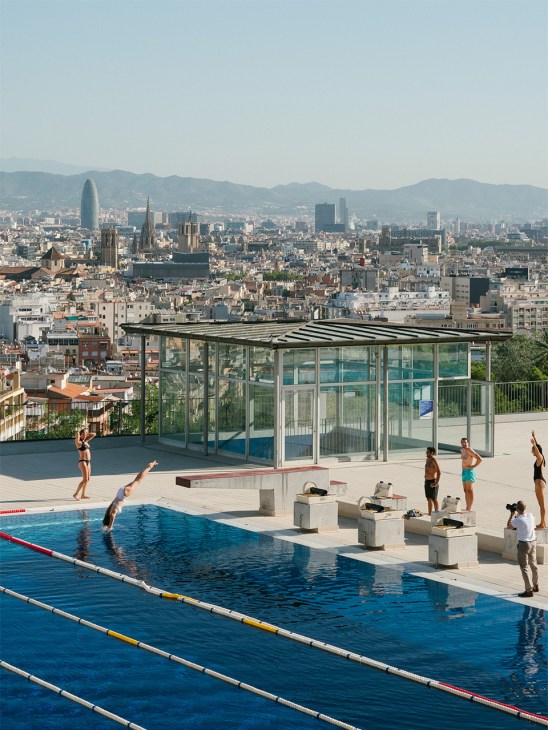
Barcelona’s status as this year’s World Capital of Architecture is well deserved. The city is a global leader when it comes to building design and urban planning. Its affordable and efficient transport system is expanding, with a project to join up two main tram routes and an extension of the metro line connecting to the airport. Meanwhile, Parc de la Ciutadella is getting a much-needed revamp. With streets becoming greener and residents still benefiting from the gold-standard 19th-century urban layout, it’s no wonder that 40 per cent of the workforce does its daily commute on foot. Unfortunately, the mayor, Jaume Collboni, has decided not to continue the celebrated Superblocks plan started by his predecessor Ada Colau, which limited through traffic in the city centre.
Read more
▼
Improving life for locals while managing the 26 million visitors who come here every year – some of whom decide to stay – is a fine line to walk. Barcelona’s once-vibrant cultural offering has been chipped away, with young people priced out of a nightlife scene tailored to tourists. That said, authorities appear unafraid to tackle these issues head-on. The newly appointed commissioner for sustainable tourism, José Antonio Donaire, says that the city has reached its maximum number of visitors and the tourist agency’s official slogan has been changed from “Visit Barcelona” to “This is Barcelona” – marking a clear shift in messaging. A ban on tourist apartments that is expected to come into effect in 2028 is designed to take some of the pressure off the housing market, where rent currently accounts for 74 per cent of the average salary. Meanwhile, the purchase of entire buildings by speculative funds has already fallen by 31 per cent in the past year, thanks to Spain’s first housing law, which was passed in 2023.
Not everyone comes here to lie in the sun. Barcelona hosts more conference delegates than any other city and is particularly competitive when it comes to medical, science-related and technology events. As it marks the 100th anniversary of Antoni Gaudí’s death in June, the still unfinished Sagrada Família stands as a fitting emblem of a place that’s unafraid to innovate but fiercely committed to preserving its heritage, traditions and identity.
Adopt: A more effective cycling strategy – and more bicycle lanes – to move away from an overreliance on cars and motorcycles.
Drop: Brunch spots aimed at tourists have proliferated to the point where the slogan “Stop brunch” is starting to catch on.
Population: 1.7 million (5.4 million in the metropolitan area)
Average hours of sunshine per year: 2,591
Bicycle modal share: 2.7 per cent
Number of homes built last year: 1,200
Proportion of commutes by public transport: 37 per cent
Number of international destinations served by the city’s airport: 197
View Monocle’s complete city guide to Barcelona
12.
Milan
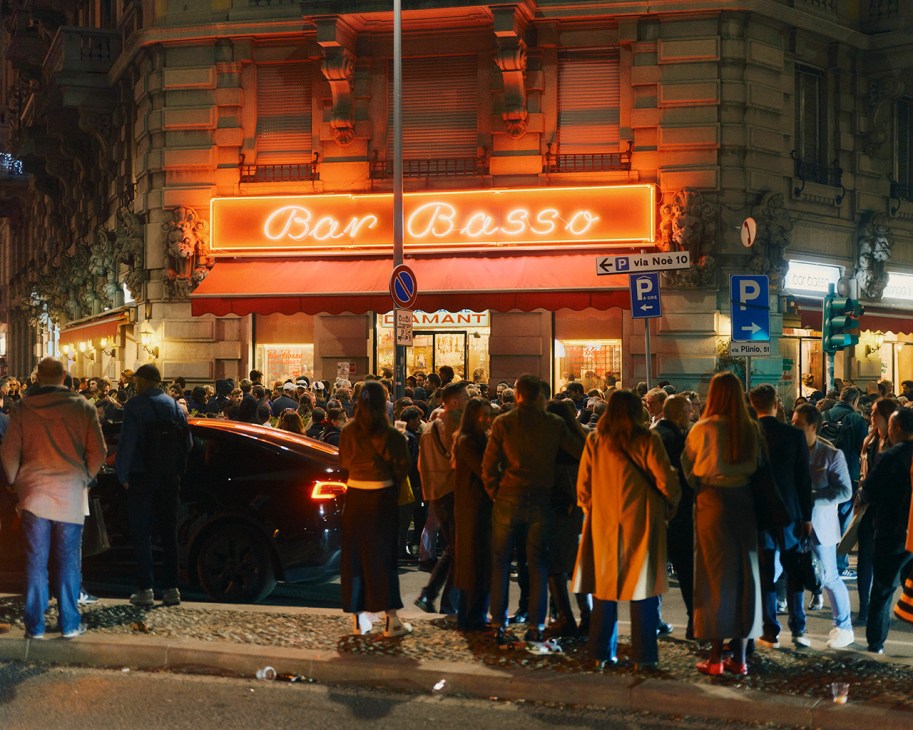
We are only about halfway through the year but Milan has enjoyed an excellent 2026. While the Winter Olympics might not have reached the fever pitch of the Summer Games, having images of your city’s cathedral beamed to a couple of billion viewers around the world will do wonders for both your soft power and quality-of-life credentials (reminding people, among other things, of Milan’s proximity to the Alps).
Read more
▼
February’s Milano-Cortina shindig wasn’t the only thing that has worked in the Lombard capital’s favour this year. What started off as a pitter-patter of column inches about Milan’s desirability turned into a deluge of publications clamouring to discuss how you can be in Liguria for lunch or pop to the mountains for a pre-breakfast ski (we exaggerate but only slightly). Certainly, Italy’s favourable fiscal rules – including a flat tax of €300,000 on foreign income that favours the wealthy – has seen people flocking to Milan from cities such as London and Paris.
While there have been some negative effects – including rising property prices in an already squeezed market – Milan has also become an increasingly international place. That effect has been felt on the city’s dining scene, which was already excellent but strongest for offerings that were classic and Italian. No longer. Stainless steel and mood lighting are the new order of the day, with excellent new spots covering everything from Indonesian to Brazilian and Korean cuisine. Natural wine, small plates and speciality coffee are becoming ubiquitous.
All of which is good news for a city that aspires to top the leadership boards – and one that can boast among the highest proportions of commutes done by public transport in southern Europe. That’s not to say that there aren’t plenty of problems still to overcome. Some are easy to resolve (cycle lanes that end abruptly, pushing you onto a busy artery; a proliferation of graffiti); others less so (dangerous levels of air pollution in the Po Valley). Somehow, however, Milan’s imperfections are part of its charm. Its proximity to great escapes and its smart, creative denizens leading the business, fashion and design scenes make it hard to ignore.
Adopt: A tougher stance on graffiti. Authorities have long been too laissez-faire.
Drop: Heading out of town at weekends. Milan needs residents to stick around and help to make their city more fun.
Population: 1.3 million (5 million in the metropolitan area)
Average hours of sunshine per year: 1,915
Bicycle modal share: 7 per cent
Price of an espresso: €1.30
Proportion of commutes by public transport: 42 per cent
Number of international destinations served by the city’s airports: 194
View Monocle’s complete city guide to Milan
11.
Stockholm
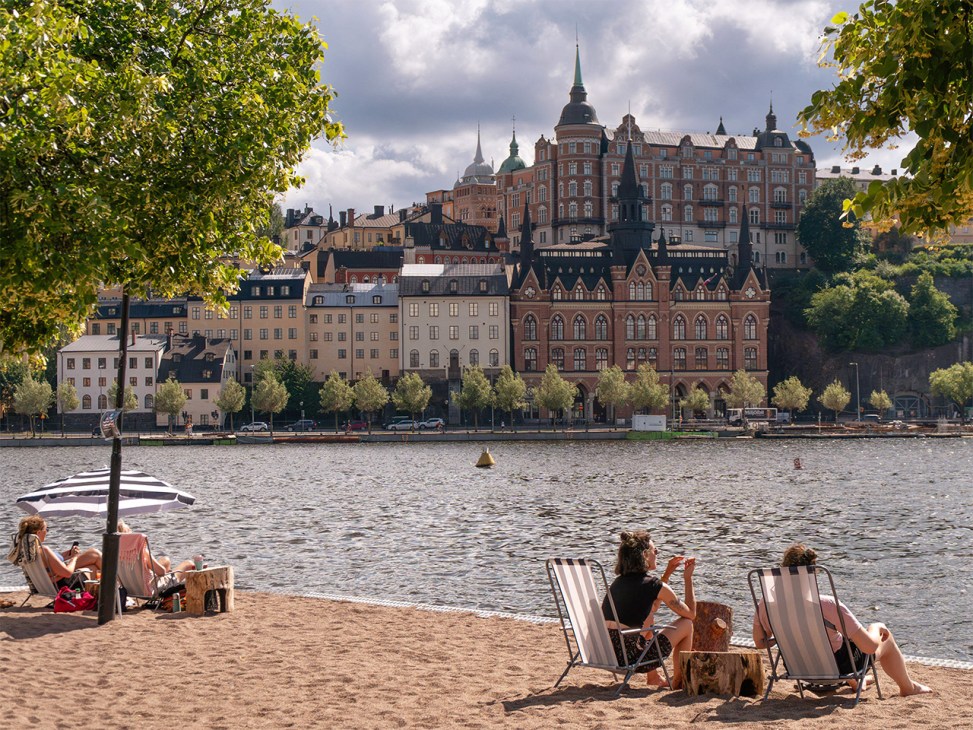
Stockholm is in one of its fits of reinvention. After years of development, the SEK12bn (€1.1bn) New Slussen project, a gleaming urban quarter that connects Södermalm to the old town, is complete and teeming with people. The traffic is gone and in its place is a kind of Scandinavian corniche filled with pedestrians and cyclists, with striking views of Lake Mälaren to the west and the island of Djurgården to the east. Summer always brings a wave of optimism to the Swedish capital and this year is no different. A swimming area at Pålsundet, a narrow water passage filled with green nooks and old wooden boats, is already proving a hit with residents.
Read more
▼
Stockholm’s trump card is its natural beauty. Wherever you are in the city, a park, forest or swimming spot is never far away. Access to nature is enshrined in the Swedish law of allemansrätte (“the right to roam”). This is a place where you can come as you are – whether fully clothed or not – and where a strong social contract endures.
Nonetheless, there has recently been much criticism from both inside and outside the city about the fact that the Swedish model of high taxes in return for free health care, childcare and education has not protected the country from economic and racial segregation. Gang violence has plagued Stockholm but thanks to a country-wide programme that helps the police to co-ordinate more closely with central government, deadly shootings have fallen in the past year. As of this writing, no one had died in a shooting in Stockholm in 2026 (down from four in 2025 and eight in 2024).
The Swedish capital seems to be turning a corner. Huge investments are upgrading its metro and overground lines and there are plans to densify the city in an attempt to make it even an even more attractive place to live and work. The redevelopment of the Central Station area will bring with it hundreds of new homes, while in Sickla, a new neighbourhood built almost entirely from wood is taking shape. Both point to a streamlining of planning laws and a removal of bureaucracy that have led the Confederation of Swedish Enterprise to give the capital its best grade in 25 years when it comes to ease of doing business.
Adopt: More changing-rooms, showers and saunas at the city’s many excellent swimming spots.
Drop: Strict enforcement of noise controls at late-night bars. Many beloved establishments have closed down in recent years.
Population: 999,000 (2.5 million in the metropolitan area)
Average hours of sunshine per year: 1,803
Bicycle modal share: 14 per cent
Urban green space: 46 per cent
Average time taken to register a new business: 7.5 days
Number of international destinations served by the city’s airports: 153
View Monocle’s complete city guide to Stockholm
10.
Oslo
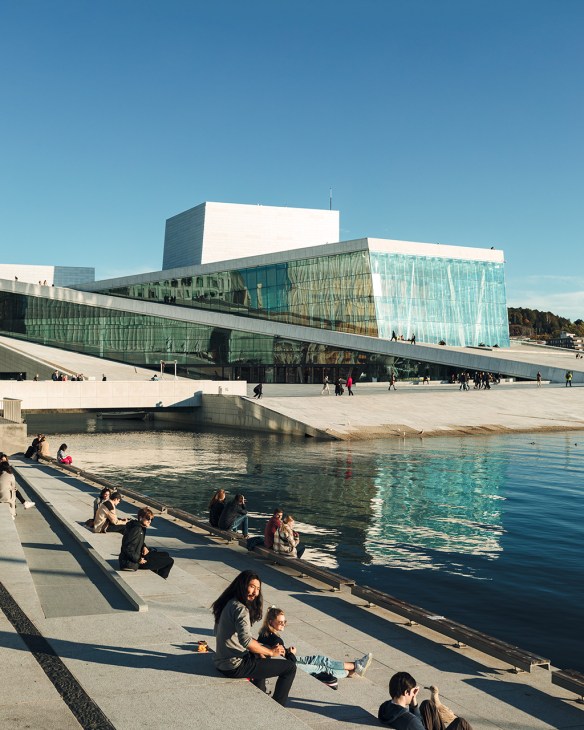
Oslo sits at ease with both its heritage and new role as a hyper-modern green capital – a self-assuredness that sees it finish above Stockholm this year (förlåt!). Decades of ambitious harbour-side developments are now complete. Known collectively as Fjord City, they have fully opened up the waterfront and transformed the Norwegian capital into an outward-facing city. The centrepiece is Bjørvika and the twin architectural gems of the Opera House and the Munch Museum. Fornebubanen, a major expansion of the metro system, will soon link the city centre with the rapidly expanding Fornebu peninsula in the west, once home to Oslo airport – another example of city hall furthering growth through electric public transport rather than roads.
Read more
▼
The electrification of public transport now includes quiet ferries to islands in the Oslo fjord. Thanks to other green-infrastructure initiatives such as carbon capture and storage from the city’s waste-incineration plant, Norway’s capital could even achieve its highly ambitious goal of cutting emissions by 95 per cent by 2030.
Here, it’s not uncommon to see children travelling alone on trams, the metro or buses – a result of the city’s enviably low crime rates, which are below the European average and among the lowest in this survey. There are signs too that stories of Oslo’s impressive regeneration and safe, comfortable living are finally reaching more people beyond Norway’s borders. Visitor numbers are up – helped, perhaps, by the films of Joachim Trier, including the Oscar-winning Sentimental Value, which paint an appealing and intriguing picture of Oslo. So is the number of start-ups, though the city still lags behind the other Scandinavian capitals in scale and ambition.
Almost all of those who call Oslo home live less than 300 metres from a green space. Commuters increasingly choose to walk or cycle to work, where they typically spend 37 hours a week (when they’re not enjoying some of their five-week annual holiday allowance). Oslo’s small size is both attractive and a drawback: it will never be a global capital magnet. But it has proven to be big enough to produce unicorns and to finish 10th in our survey.
Adopt: A push to attract more international companies and secure better funding avenues for promising start-ups.
Drop: The flyover casting a shadow over the vibrant Grønland area – a remnant of a long-gone ring road.
Population: 730,000 (1.5 million in the metropolitan area)
Average hours of sunshine per year: 1,668
Bicycle modal share: 7 per cent
Urban green space: 48 per cent
Cost of monthly travel card: NOK2,198 (€202)
Number of international destinations served by the city’s airports: 122
9.
Munich
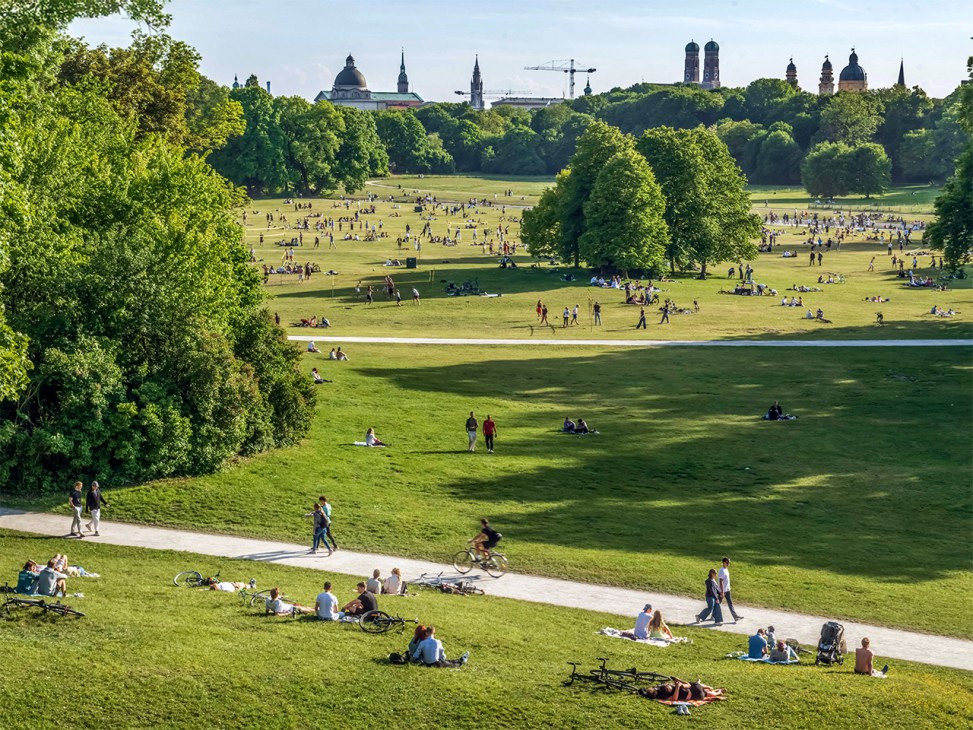
In 2026, Munich seems to be oscillating between confidence and concern – a mood that’s exemplified by its new mayor, Dominik Krause. The 35-year-old is the first Green leader of a German city with more than a million inhabitants and was the surprise winner of May’s municipal elections. According to a report by Gisma University of Applied Sciences, he is almost 20 years younger than the average Oberbürgermeister – the title given to mayors of large German municipalities.
One of Krause’s first moves was to reject his grace-and-favour chauffeured limousine, in favour of a daily metro commute. He also worked out a safety compromise to allow for the reopening of the surfing wave on the river Isar, which has closed after a deadly accident involving a female surfer last year.
Read more
▼
Krause’s two main priorities are a reminder of the major challenges facing Munich. The first is housing: his new ruling coalition aims to create 50,000 new apartments. To do so, it plans to develop new sites in the north of the city, convert vacant offices into flats and use so-called infill development, adding extra floors to existing housing stock, or erecting high-rises (such as the two spectacular 155-metre-tall towers planned by Swiss architects Herzog & de Meuron). This is controversial in a city that cherishes its views of the Alps.
The second and more recent of Munich’s woes concerns its finances. City hall’s budget for 2026 stands at a record €2.9bn – a source of anxiety, given that it is contending with a steeper-than-expected decline in trade tax revenue because of the struggles of usually dependable corporate behemoths such as BMW.
As a result of this uncertain financial landscape, Krause made one of his most controversial announcements so far in May: in a video posted on social media he explained his plan to raise fees in a wide range of areas, from parking and dog ownership to nursery schools.
That video was filmed in one of Munich’s many lush parks. It was a reminder that this is a city whose historic economic success has strong civic foundations rooted in green space, low crime and a high quality of life.
Adopt: The Ludwigstrasse project, which aims to pedestrianise a traffic-heavy central boulevard and fill it with trees.
Drop: Lengthy planning and approval procedures, bureaucratic delays and hesitation about large-scale development projects.
Population: 1.6 million (6.2 million in the metropolitan area)
Average hours of sunshine per year: 1,756
Bicycle modal share: 21 per cent
Protected bicycle infrastructure: 725km
Urban green space: 51 per cent
Number of international destinations served by the city’s airport: 215
8.
Paris
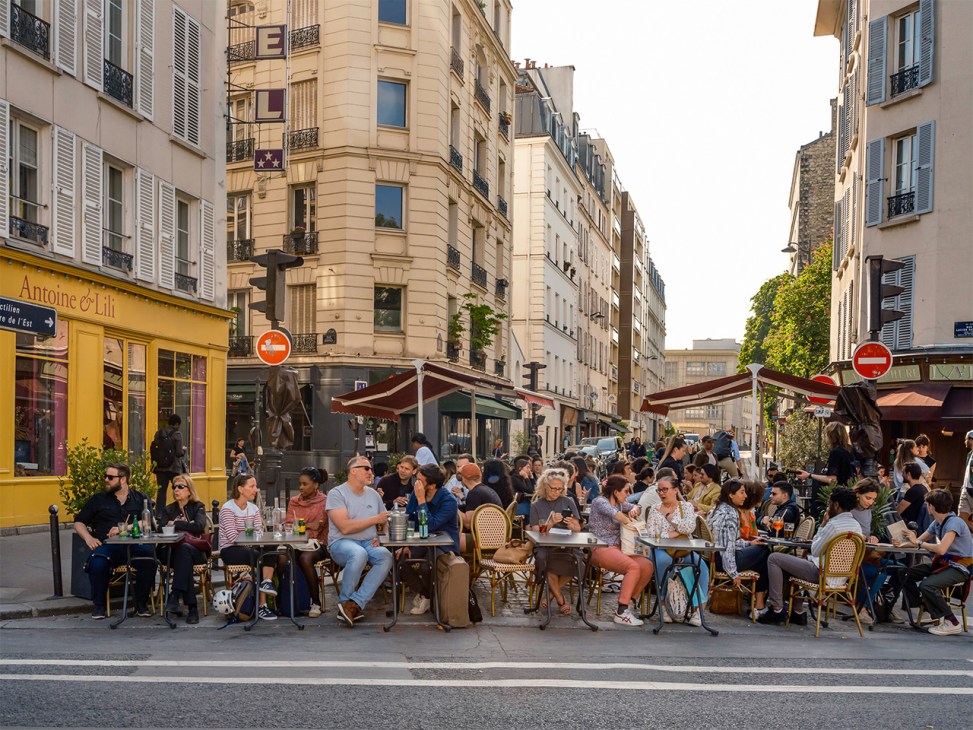
Paris is a city steeped in the past but one that is nonetheless looking resolutely forward. Its third consecutive socialist mayor, Emmanuel Grégoire, was elected in March with a mandate to extend the sweeping green transition pioneered by his predecessor, Anne Hidalgo. With temperatures nudging towards 35C at the time of writing, it’s too early for some of her most apposite innovations to be enjoyed. The reopening of the Seine and parts of the Canal St Martin to bathers was celebrated as a historic milestone when it was green-lit in 2024 but Parisians will have to wait until later this summer to dive in and cool off.
Read more
▼
Still, with 155,000 trees planted during Hidalgo’s tenure in office and hundreds of kilometres of additional cycle lanes, the streets inherited by Grégoire are cooler, greener and arguably more beautiful than ever. In the latter regard, one of Grégoire’s first appointments was a general delegate for design and aesthetics, tasked with maintaining what the new mayor has defined as Parisians’ “right to beauty”. The French capital doesn’t have the spectacular parks of some of its European counterparts and limitations on green space become clearer when the sun shines. Grégoire’s mandate rests in no small part on his commitment to transform a further 10 boulevards into gardens.
In line with trends across the West, Paris seems set to become a liberal, metropolitan island in an increasingly illiberal country. However, the city isn’t complacent: a recently revamped visa system requires newcomers to participate in civic training before passing an exam as a condition of their stay. It reflects a sensible approach to culture and values that is at odds with the culture-war conflicts seen in many of France’s European counterparts.
With the highest number of cinemas per capita, about 400 independent bookshops doing a roaring trade and a thriving print media, Paris is still Europe’s cultural juggernaut. And, as 2024’s Olympics proved, the City of Light now remains undimmed throughout the summer. Still, security is an ongoing concern. Paris Saint-Germain, the capital’s all-beating football team, should inspire joy but their Champions League victory in May led to the kind of disorder that too often mars this city’s reputation.
Adopt: More green space. Continuing the development of the Petite Ceinture railway into a green walkway would be a good start.
Drop: The camera phone. The photogenic nature of the city’s streets, bars and food has attracted too many influencers.
Population: 2.1 million (13.3 million in the metropolitan area)
Bicycle modal share: 11.2 per cent
Number of cinemas: 610 (most in the world)
Proportion of commutes by public transport: 50 per cent
Number of international destinations served by the city’s airports: 308
Urban green space: 15 per cent
View Monocle’s complete city guide to Paris
7.
Madrid


The word castizo is used by Madrileños to describe those things that best embody their city’s identity. It’s a spirit that eschews the modern for the traditional. But, in recent years, the Spanish capital has evolved from bastion of the past to trailblazer, propelled by an economy that has seen GDP per capita surge 78 per cent higher than the national average. The city’s population is at a historic high, spurred by the almost one in three of its inhabitants who are foreign-born. In Madrid province, 42.4 per cent of newcomers have advanced degrees. Spain’s pull factor on Latin America’s brightest and best shows with close to half of Venezuelans and Argentinians arriving with higher education. The buzz of being an emerging business hub can be felt in Madrid’s vibrant retail and hospitality spaces. Sun-soaked terraces are filled with people enjoying the slow pleasures of a high quality of life that draws heavily on the city’s access to fresh food and a culture of late-night socialising. These are said to contribute to the fact that its residents have the highest life expectancy of any city in Europe.
Read more
▼
By reducing red tape, Madrid hopes to become more agile in responding to urgent issues such as the housing crisis that it is now facing. While the local government works to increase stock, it’s imperative that it continues to press developers to provide affordable housing in meaningful numbers. Last summer was one of the hottest on record, with municipal pools providing a lifeline. However, there aren’t enough of these oases, with 20.4 per cent of residents living in districts with no public pools and 30 per cent of Madrileños unable to holiday outside of the sizzling capital during summer. By early next year, the city centre will have a newly pedestrianised connection between Puerta de Alcalá and Cibeles, and will also debut Parque Ventas, a green space linking the Salamanca and Ciudad Lineal neighbourhoods across the M-30 ring road.
Cycling is on the up, with journeys on Bicimad public electric bikes quadrupling between 2022 and 2025 to 13.7 million. The metro’s 7B line has reopened, though, and the soon-to-be-completed Line 6 will debut driverless trains in 2027. Any mention of castizo must now include an acceptance of the city’s forward thinking.
Adopt: Subsidies for rooftop solar panels that would provide residents with some energy autonomy in a sun-rich environment.
Drop: A politics of fear whipped up against immigrants by far-right politicians and sometimes exacerbated by the police.
Population: 3.5 million (7.5 million in the metropolitan area)
Average hours of sunshine per year: 2,769
Bicycle modal share: 0.5 per cent
Urban green space: 30 per cent
Cost of monthly travel card: €49.20
Number of international destinations served by the city’s airports: 197
View Monocle’s complete city guide to Madrid
6.
Zürich
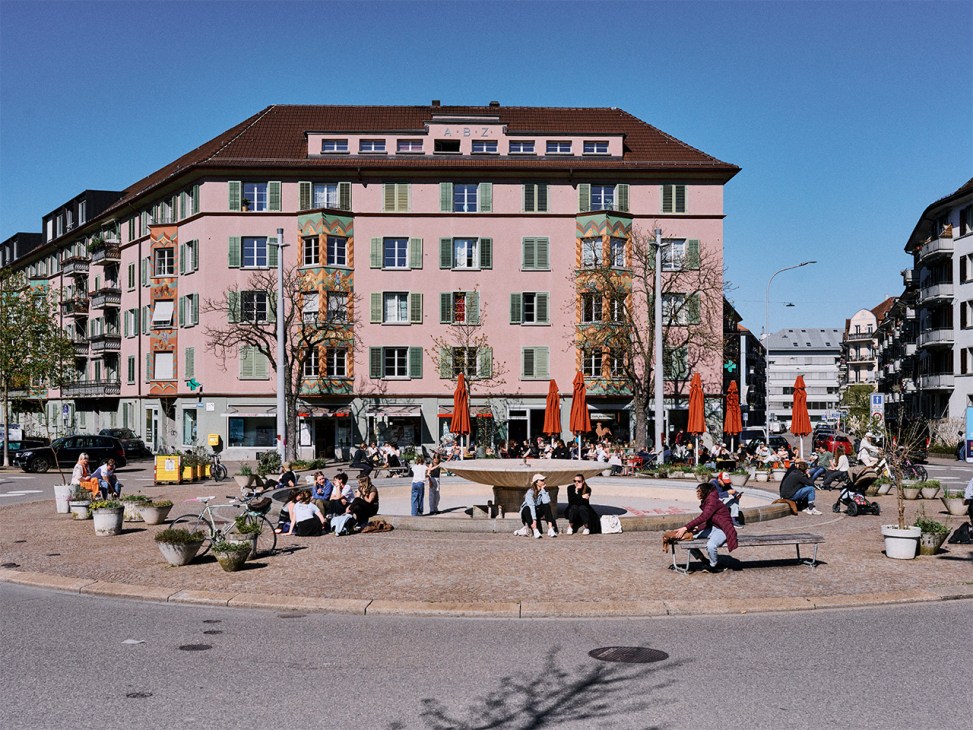
For the first time in almost two decades, Zürich has a new mayor. After 17 years, Corine Mauch, the first woman to hold the role, has stepped down. Her successor, Raphael Golta, also comes from the Social Democratic Party. The city has moved even further to the left politically, with seven members of the municipal government now coming from left-wing parties. Golta faces several challenges, from a cycling network that’s causing headaches for everyone (including cyclists) to the ongoing problem of creating more affordable housing.
Read more
▼
The latter is the issue that continues to dominate. In 2025, however, there was a little progress: 2,977 apartments were completed in new developments, 347 more than in 2024. Yet the vacancy rate remains exceptionally low at 0.1 per cent, amounting to just 235 empty flats across the entire city.
If housing is Zürich’s biggest weakness, public transport is undoubtedly its world-beating strength. In March the city said auf Wiedersehen to the last high-floor trams of the Tram 2000 generation. Since then, every tram has been low-floor – a significant step forward when it comes to accessibility. Meanwhile, the largest timetable overhaul in history was introduced to better reflect current travel patterns. The changes involved the renumbering of well-known routes and passengers required a considerable adjustment period. Replacing about 2,500 signs almost overnight was also a reminder of something that Zürich does exceptionally well: make complex changes look effortless.
Voters approved measures to make public transport more affordable too. In the future, they will pay just CHF365 (€399) a year for a travel pass, compared with the current price of CHF813 (€889). All of this for a network that’s so beloved that some 60 per cent of commuters use it to get to work. And Zürich remains remarkably safe. Crime fell by 8 per cent in 2025.
As its population continues to grow, the city’s two major newspapers (Tages Anzeiger and NZZ) provide world-class journalism, while the lake offers one of the best ways to relax during the warmer months.
Adopt: Sunday shopping. Zürich allows only four shopping Sundays a year, making each feel like a major event.
Drop: Early closing hours. Finding a meal after 22.00 remains surprisingly difficult in Switzerland’s largest city.
Population: 450,000 (1.7 million in the metropolitan area)
Bicycle modal share: 11 per cent
Proportion of commutes by public transport: 56 per cent
Number of social-housing units: 60,539
Average monthly net salary: CHF6,790 (€7,413)
Number of international destinations served by the city’s airport: 212
View Monocle’s complete city guide to Zürich
5.
Sydney
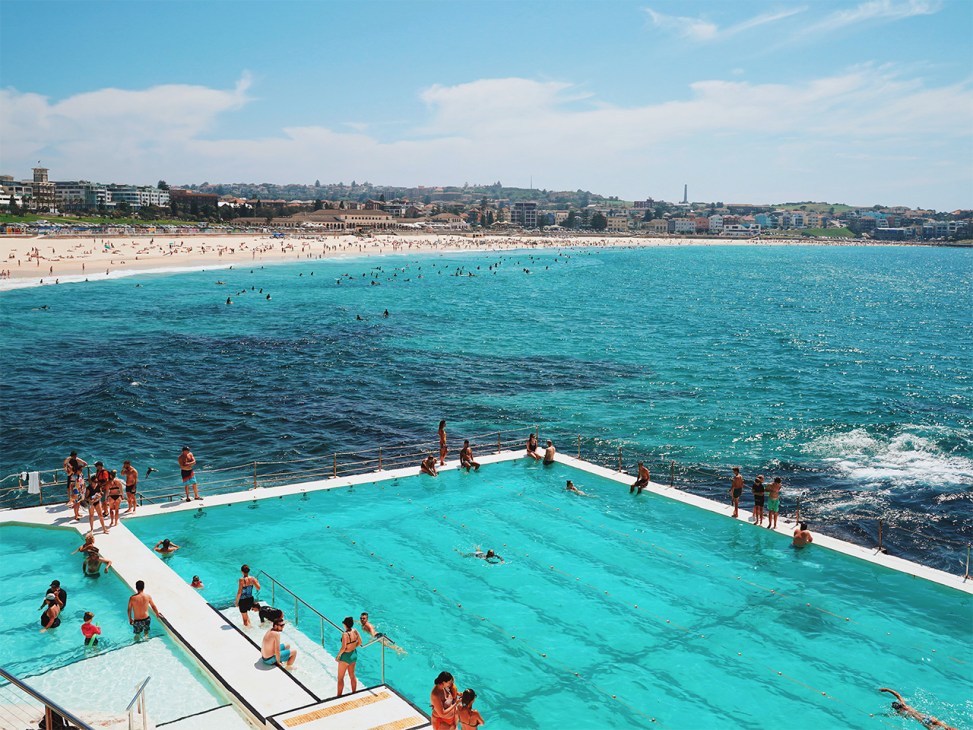
Sydney’s comeback has been 20 years in the making. Though its natural assets – from its vast harbour to its more than 100 beaches – have always assured Australia’s largest city a high baseline lifestyle, for decades there has been the pervading sense that it was past its prime, had lost the global spotlight and was squandering its enormous potential. However, successive state governments have found the courage to commit to ambitious infrastructure projects with big budgets. Sydney has felt like a construction site for years but the makeover is almost complete.
Read more
▼
George Street, the city’s main artery, has been pedestrianised, pumping energy into the surrounding environment, boosting safety and giving the city centre a fresh vibrancy. The street is also the nexus of the new light rail lines, which have brought trams back into Sydney’s public-transport mix. The metro – Australia’s only mass rapid-transit rail – is also reshaping the city and the way that Sydneysiders traverse it. The network will also link up with Western Sydney International Airport when it opens next year.
Innovation abounds, from the state gallery’s gleaming Sanaa-designed wing to Kengo Kuma’s tornadic tower in Chinatown. But Sydney’s most striking new building is the New Sydney Fish Market, the southern hemisphere’s largest market of its kind, which opened in January this year. It’s also the linchpin of the Bays Precinct urban-renewal project.
Novelty can’t solve all of Sydney’s issues. Rocketing land prices are driving up rents and causing cultural collateral damage. The city’s formerly glorious live-music scene is one casualty of many. And the New South Wales government’s zeal for fun-stifling over-regulation means that it sometimes feels as though you’re having a great night out despite, not because of, the city. If it continues to polish off its rough edges, Sydney risks losing its laid-back charm.
Still, Australia’s sleeping beauty has reawakened from its self-imposed slumber and has never looked or felt better. But cities are shaped by people, not projects. The final piece of the puzzle is Sydneysiders themselves. It’s up to them to get back out there and ensure that their home finally lives up to its reputation.
Adopt: More positivity. Sydneysiders love to play down their own city – it often feels like they are trying to pre-empt criticism.
Drop: Vacant tenancies. Commercial landlords have kept increasing rents, leading to an exodus of beloved businesses.
Population: 5.7 million in the metropolitan area
Average hours of sunshine per year: 2,468
Average monthly net salary: AU$5,930 (€3,630)
Bicycle modal share: 1 per cent
Number of public swimming pools: 350
Price of a flat white: AU$4.50 (€2.75)
Urban green space: 41 per cent
View Monocle’s complete city guide to Sydney
4.
Vienna


Vienna is used to welcoming the world but this year the city has outdone itself. In May it staged the Eurovision Song Contest for the third time. The contest remains one of the largest globally televised events with about 200 million people tuning in every year and the 2026 iteration showcased once again why the Austrian capital is the consummate host. The past year also saw the inaugural World Tramdriver Championship, Vienna Design Week and countless UN, Opec and International Atomic Energy Agency meetings. Meanwhile, people are beginning to take notice of the city’s vineyards and excellent municipal swimming pools too.
Read more
▼
Vienna continues to adapt its architectural heritage, with work beginning on the transformation of the Funkhaus, the former radio headquarters of national broadcaster ORF, into a mixed-use residential and hospitality development. Meanwhile, in March, Villa Beer by modernist architect-designer Josef Frank opened its doors to the public for the first time after an extensive restoration.
Repairs and refurbishment have also been at the heart of the city’s celebrated social-housing programme, initially begun in the 1920s when the collapse of empire precipitated an acute housing shortage. Construction has continued ever since. Not only have the authorities built five new schemes comprising some 400 flats over the past 12 months, they also renovated 11 complexes in 2025 alone. And that’s despite cuts of about €200m in social welfare, including minimum-income support and pension benefits.
At the same time, officials have stepped up their efforts to overhaul the city’s heating infrastructure and move residents towards district heating – which is more efficient than other solutions and central to a pledge to make Vienna carbon neutral by 2040, a decade ahead of the EU’s target. The challenge remains to decommission some 500,000 gas boilers still in use across half of the city’s households. Elsewhere, city hall has launched a new funding scheme for food businesses even as more culinary projects and festivals – such as Popchop, which stages events everywhere from the Museum of Applied Arts to the Funkhaus – continue to multiply.
Adopt: Longer Sunday opening hours. Parts of the city are catatonic on the Sabbath. We would like to be out and about.
Drop: Restriction of voting rights for mayoral elections to Austrian citizens. Over a third of Vienna’s population are non-Austrians.
Population: 2 million (3.2 million in the metropolitan area)
Average hours of sunshine per year: 2,048
Bicycle modal share: 11 per cent
Number of social housing units: 220,000
Proportion of commutes by public transport: 34 per cent
Number of international destinations served by the city’s airport: 198
View Monocle’s complete city guide to Vienna
3.
Lisbon


While some of Lisbon’s recent success is down to its natural advantages – its many hours of sunshine, vibrant food scene and stunning architecture – much of it is the culmination of a decade or so of good governance and hard work. Consistent investment in public transport has resulted in an expansive system that incorporates the metro, trams and river boats. City hall recently announced the first new tram line to be built in almost 70 years. The arrival of electric bikes has begun to change local habits and defy the challenges imposed by the city’s hilly terrain, with the number of regular journeys by bicycle increasing by 500 per cent between 2011 and 2021. Meanwhile, Lisbon airport continues to act as a key hub for those crossing the Atlantic or travelling to Africa, aided by long-standing relations with the Portuguese-speaking world.
Walking through Lisbon, it quickly becomes obvious how a healthy independent retail scene can help to make a city great. Lisboetas adore local farmers’ markets, buying a newspaper at a kiosk or visiting one of the many historic independent shops that are protected under municipality-led programme Lojas Com História. The city’s cultural offering continues to grow, with museums such as the new Centre de Arte Moderna (CAM) at the Gulbenkian Foundation and international fairs such as Arco drawing a cool, creative set from across the globe.
Lisbon has long ranked as one of the safest cities in the world, enhancing its allure as a place to visit or relocate to. However, there is work to be done to ensure that it doesn’t become a victim of its own success. A rise in new arrivals has put pressure on services and last year’s deadly funicular crash and nationwide blackout tested Lisbon’s resilience and social fabric.
As with many European capitals, housing remains a pinch point, with the pace of construction lagging in relation to demand, meaning that choice is often linked to your tax bracket. The challenge ahead is to bridge the gap between the interests of locals and those of expats when it comes to the cost of living, before Lisbon becomes two cities in one.
Adopt: Proper crossings over the Tejo, with ferries and boats that are efficient, electric and frequent.
Drop: Tuk-tuks, which disrupt traffic and block trams full of commuters, while adding visual clutter and noise pollution.
Population: 550,000 (3 million in the metropolitan area)
Average hours of sunshine per year: 2,806
Urban green space: 25 per cent
Bicycle modal share: 1.9 per cent
Cost of monthly travel card: €40.50
Number of international destinations served by the city’s airport: 144
View Monocle’s complete city guide to Lisbon
2.
Copenhagen
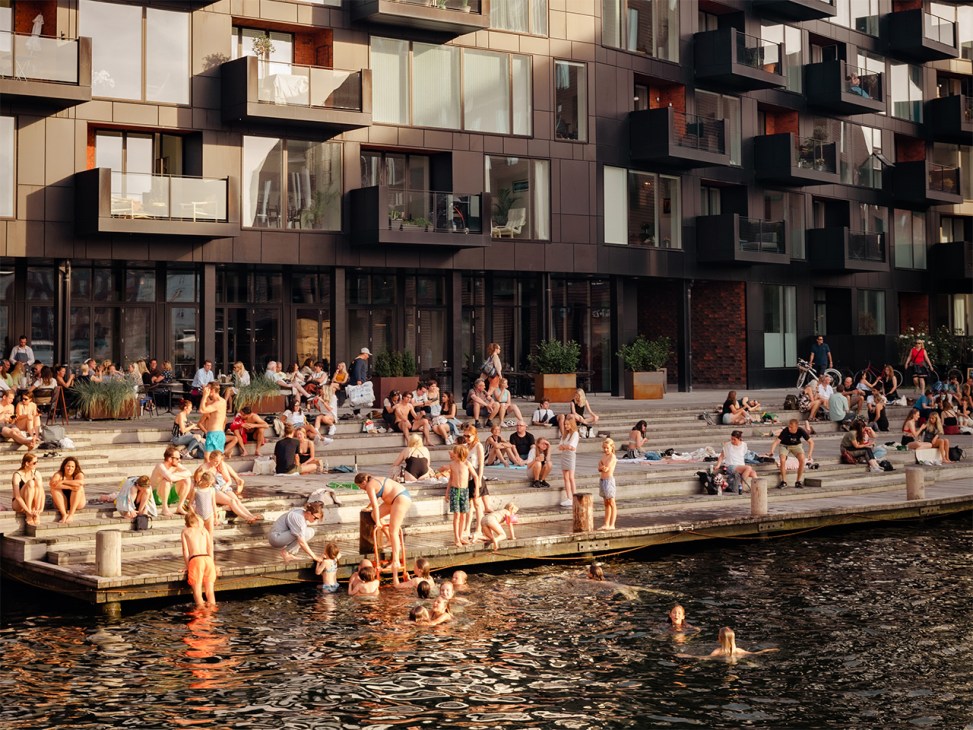
In November 2025 there was an earthquake in Copenhagen – a political one, in which the Social Democrats lost control of the city for the first time in more than 100 years. The Socialist People’s Party and the Red-Green Alliance, both on the far left of the political spectrum, were the major winners of the municipal election. On the new council’s agenda are the cost and availability of housing, climate change and a push to rid the centre of pesky cars.
Copenhageners should have faith in such initiatives. After all, this is the place that revolutionised urban cycling before exporting its ideas worldwide. It’s also a city with high social capital and trust, as well as the all-important desire not to rest on its laurels.
Though voters punished the Social Democrats for the high cost of living in March’s general election, in which they lost 12 seats, you wouldn’t know that it’s a problem judging by Copenhagen’s booming restaurant scene and the many retail options in the city centre and the Bridge Quarters. This remains an amazing city in which to shop and eat (before 22.00, at least). Copenhageners look and feel affluent, and are far more comfortable displaying their wealth than they used to be.
One thing that the new council has done is restrict hotel development in the city – in response to the housing shortage but also to the feeling that tourism has become overwhelming. Getting around has never been easier, especially since the recent extension to the 24/7 Metro (with more to come). Copenhagen continues to have very low crime rates, while the ongoing developments in Nordhavn, Sydhavn and Refshaleøen show that it still wants to grow, while pursuing better ways of living for its inhabitants.
Two lifestyle trends are of note. First, communal living is on the up. Increasing numbers of Copenhageners are putting their names down for housing with shared spaces, formalised communities and social dining. Second, the Danes have a seemingly insatiable lust for winter bathing and saunas. Copenhagen has experienced a sauna boom over the past couple of years and waiting lists for winter bathing clubs are ever growing. As ever, leisure time is well spent in the Danish capital.
Adopt: Better theatre and music offerings. Copenhagen has the talent and population to support a more flourishing scene.
Drop: The restricted housing market. Ensuring a wider variety and cost of homes should be part of future urban planning.
Population: 1.4 million (2.2 million in the metropolitan area)
Protected bicycle infrastructure: 398km
Proportion of commutes by public transport: 20 per cent
Average monthly net salary: DKK32,425 (€4,355)
International destinations served by the city’s airports: 191
Urban green space: 30 per cent
Bicycle modal share: 29 per cent
View Monocle’s complete city guide to Copenhagen
1.
Tokyo


In fractious times, Tokyo is an outlier for its stability, calm and security. Young children walk to school unaccompanied by their parents, huge events take place every week without major disorder, and crime rates are consistently low. Despite its size, the Japanese capital retains an old-fashioned sense of community. Young people are taught to be considerate. Individual excellence is celebrated but even sporting megastars are expected to stay humble. It would be hard to replicate Tokyo’s modus operandi but we can certainly admire it. So much of this lies in patterns of behaviour that are internalised from birth: quiet voices on public transport; the patient queues on the subway platform; the glass of water and oshibori hand towel at the start of a meal.
Yuriko Koike, Tokyo’s 73-year-old governor, is one of the most powerful figures in Japanese politics. Now deep into her third four-year term, she has steered Tokyo through the pandemic, its troubled Olympic Games and several typhoons. From her office in Nishi Shinjuku, she oversees a city with a $2.5trn (€2.1trn) GDP, a population of 14 million and a dizzying transport network.
The city plays the long game when it comes to transport and construction projects. The complex reconfiguration of busy Shinjuku station won’t be completed until the 2040s. JR East has reinvented an overlooked pocket of Shinagawa to create a new neighbourhood called Takanawa Gateway City. Architect Kengo Kuma has contributed the swirly Museum of Narratives.
The sharp increase in tourism has, however, had an impact on life in Tokyo, with visitors now popping up in the quietest corners of the city. While Tokyo’s population has become noticeably more diverse, there have been attendant challenges for residents. The rise in the cost of living has hit Japan’s citizens and, with the yen at historic lows, fewer are travelling overseas.
Kindness abounds in daily interactions and in a hospitality culture that tugs at the heartstrings. Tokyo should celebrate being such a well-mannered metropolis but its exemplary conduct is never taken for granted. Three (quiet) cheers for this exhilarating city.
Adopt: More support for Tokyo’s shotengai shopping streets, which are at the heart of so many city neighbourhoods.
Drop: The proliferation of QR-code menus. It might help with communication but doesn’t enhance the restaurant experience.
Population: 9.95 million (37 million in the metropolitan area)
Proportion of commutes by public transport: 57 per cent
Murder rate: 0.23 per 100,000 people
Number of cinemas: 167 (in the metropolitan area)
International destinations served by the city’s airports: 120
Urban green space: 20 per cent
Bicycle modal share: 13 per cent
View Monocle’s complete city guide to Tokyo
*Airport schedules updated June 2026