View from Lebanon: Beirut’s dire déjà vu as reckoning with Hezbollah beckons
Residents of Beirut were jolted awake in the early hours of Monday morning to the bone-shaking thuds. Lebanon has now become a new front in the war between the US, Israel and Iran.
For days, Lebanon had watched from the sidelines as the Middle East burned. News alerts from Tehran, Tel Aviv and Dubai were met with a mix of dread and denial. In smoky late-night cafés across the capital, one question kept resurfacing: “Would Hezbollah join the fight?” Some clung to the fragile ceasefire between the Iran-backed militant group and Israel, which had held for more than a year and brought an end to Lebanon’s deadliest war in decades. Others persuaded themselves that Hezbollah, battered by the conflict, lacked both the capacity and the appetite for another confrontation.
That illusion collapsed overnight on Monday, when Hezbollah announced that it had fired rockets into northern Israel, in retaliation for the assassination of Ayatollah Khamenei. Within hours, the skies above Beirut were once again punctuated by Israeli fighter jets.
In the southern suburbs of the Lebanese capital – a dense sprawl of apartment blocks where Hezbollah has long held sway – many families were sitting down to suhoor (the pre-dawn meal during Ramadan), when the bombs began to fall. Plates of warm flatbread and bowls of stewed fava beans were abandoned mid-bite as parents scooped up children and hurried from their homes in the dead of night.
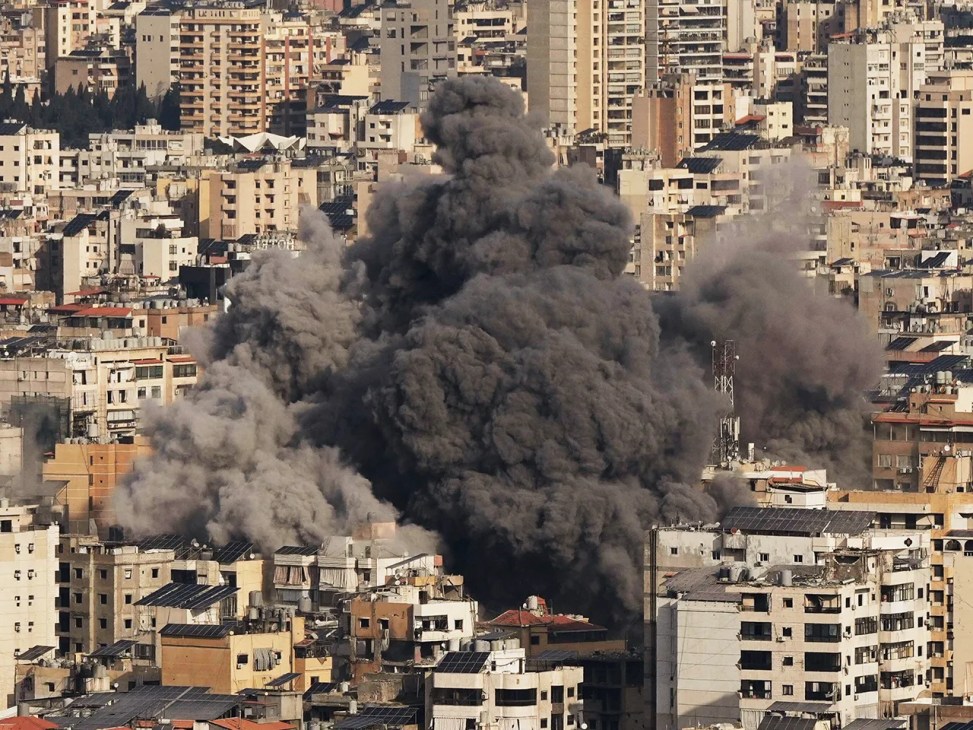
Further south along the border, Israel ordered towns and villages to evacuate. Many residents were already on the road, having hurriedly packed their cars at the first sound of outgoing rockets. The coastal highway north soon clogged with miles of bumper-to-bumper traffic. A journey that normally took less than two hours now stretched beyond a day.
As Israel and Hezbollah continue to trade fire with no clear off-ramp for de-escalation, the former has begun to invade and seize parts of southern Lebanon, expanding its evacuation orders to dozens more towns and villages. According to the country’s health ministry, the escalation has already killed more than 100 people and forced tens of thousands from their homes. Many have sought shelter in schools and mosques. Along Beirut’s seaside promenade, usually filled with joggers and sunbathers, children wrapped in blankets sleep beneath palm trees – just as they did 18 months ago when the previous conflict ignited.
It is a grim kind of déjà vu.
Even among some of Hezbollah’s own supporters there is palpable anger over the group’s decision to drag the country into another unwinnable war. Large swaths of Lebanon remain in ruins from the previous conflict, leaving it with a multibillion-dollar reconstruction bill. Despite receiving assurances from the militant group over the weekend that it would not join the fray, Lebanon’s leaders, including Hezbollah’s political allies, were caught off guard.
That rupture put Hezbollah on a collision course with the state, deepening fears of domestic instability as the country settles into the wretched rhythm of daily bombardment. Under the ceasefire agreement signed with Israel in November 2024, Beirut committed to disarming Hezbollah. But Israel and the US have repeatedly accused the group of moving to rearm, something that Israel has cited as justification for its near-daily strikes since the truce deal.
Lebanon’s prime minister, Nawaf Salam, made the unprecedented move on Monday of calling for an “immediate ban” on all Hezbollah’s military activities and demanding that the group surrender its weapons to the state. He instructed the military to take “immediate measures” to prevent further rocket launches from Lebanese territory, including arresting those responsible.
The move marks a seismic moment but it remains unclear how much political will exists within Beirut’s fragile institutions to enforce it. Memories of the bloody 1975–1990 Lebanese Civil War, when the army fractured along sectarian lines, still loom large for many. Whether the nation’s leadership can assert authority over Hezbollah might now prove the decisive test in determining whether the country can avoid a far wider conflict.
Euan Ward is a Beirut-based journalist. For more opinion, analysis and insight, subscribe to Monocle today.