Why does Iran target the UAE more than the rest of the Gulf states?
About 58 per cent of Iran’s attacks on its Gulf neighbours have been directed at the UAE. We find out why.
The UAE has long lived with an uneasy proximity to Iran. Just 55km of water separates the two coastlines – a narrow stretch known as the Strait of Hormuz that has always carried strategic weight. But in the current conflict, that geography seems more acute.
In the first 11 days of hostilities alone, more than 1,700 Iranian missiles and drones were launched toward the UAE: far more than at any other Gulf state and several times the number fired at Qatar. By some estimates, about 58 per cent of Iran’s attacks on Gulf Cooperation Council countries have been directed at the Emirates.
The scale raises an obvious question: why the UAE?
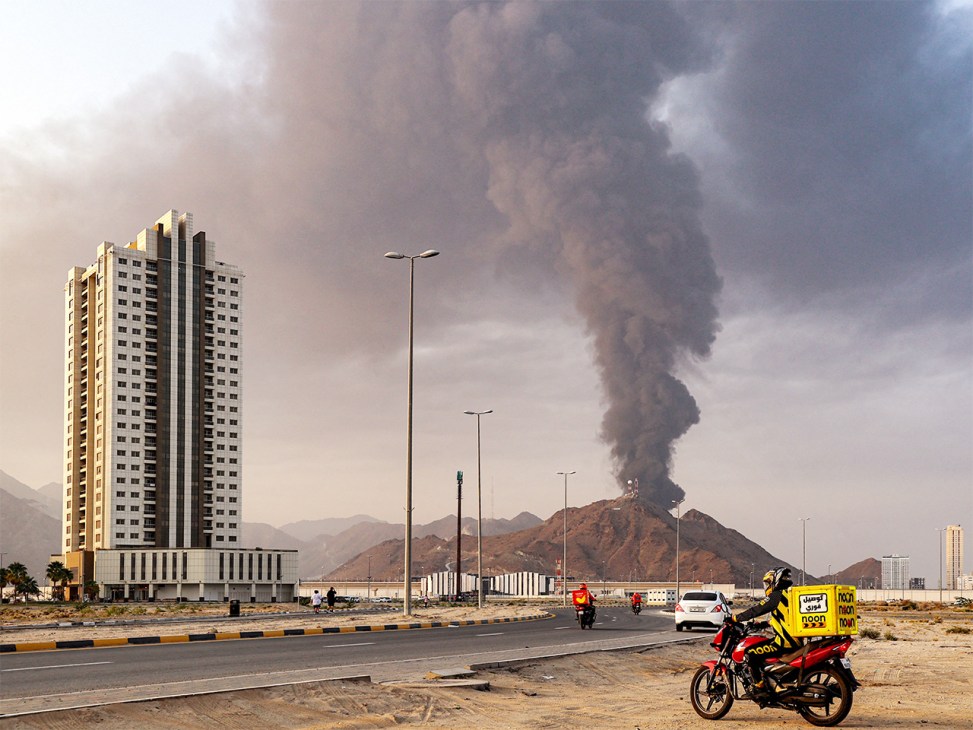
Part of the answer lies in geopolitics. The Emirates sits at the intersection of several alliances that Tehran distrusts, namely its deep security ties with the US and the diplomatic opening with Israel through the Abraham Accords. “From Tehran’s perspective, the UAE is enemy number one in terms of Arab states in the Gulf,” says Brendon J Cannon, a fellow at the Balsillie School of International Affairs in Abu Dhabi. “It’s also, frankly, a victim of its own success.”
Success in this case means visibility. Over the past two decades the UAE – and Dubai in particular – has positioned itself as a crossroads for global business, finance and travel. Its airports are among the busiest on earth, its airlines connect continents and its ports move goods throughout the world economy. For Iran, hitting the UAE carries symbolic and practical weight. “Everybody around the world knows about Dubai,” says Cannon. “So there is an effect of attempting to cut the UAE down to size, and to shake that ironclad view for investors and tourists around the world that the UAE is this oasis of calm.”
That calculation helps explain why Iranian strikes have not been limited to military targets. While US bases in the Emirates have been hit, so too have major civilian sites, including Abu Dhabi and Dubai airports and infrastructure around Jebel Ali port. Debris from one intercepted drone even struck a luxury hotel on The Palm. In other words the objective appears to go beyond battlefield retaliation. It is also about creating disruption in one of the world’s most visible economic hubs.
Proximity matters too. The UAE lies well within range of Iran’s large arsenal of less costly short-range missiles and drones. Unlike Israel or more distant Gulf states, the Emirates can be reached quickly and cheaply by weapons that Tehran already has in abundance. That logistical advantage makes it an obvious pressure point.
At the same time, Iran appears intent on demonstrating that its retaliation can ripple beyond the immediate theatre of war. If Tehran sees the conflict as existential – a struggle for the survival of the regime itself – the logic is to widen the impact as much as possible. “This is an all-or-nothing struggle for the Iranian regime right now,” Cannon says. “The strikes by the US and Israel have led the Iranians to take the gloves off.” Yet there might be another reason that the UAE has remained a central target: it refuses to shut down.
Despite repeated alerts and missile interceptions, life in the Emirates has continued with surprising normality. Offices remain open and the country’s commercial machine has largely kept running. The message from Abu Dhabi and Dubai has been one of resilience rather than retreat. For Tehran that normality might be provocative in and of itself. These continued attacks test whether the UAE’s reputation as a safe haven can withstand sustained pressure. “Part of the aim is to shake that perception,” Cannon adds. But the real disruption is not entirely visible. Flight schedules have faced periodic interruptions as airspace warnings trigger temporary diversions, and some hotels have closed entire floors while quietly trimming prices as bookings soften. Oil markets have also reacted to the region’s instability. The UAE’s economic cogs continue to turn but the conflict proves that insulation from geopolitical turbulence is impossible.
So far the country’s defence systems have limited the damage. Officials say that the UAE has intercepted roughly 93 per cent of incoming missiles and drones, with fighter jets and air-defence batteries knocking down projectiles before they reach urban areas. Footage released by authorities shows air-to-air interceptions followed by the blunt confirmation: “Target destroyed.” The display is both a military and a political message – reassurance to residents, investors and visitors that the country can defend itself.
Privately, however, Emirati officials are angry. The UAE had made clear that it would not allow its territory or airspace to be used by the US to launch attacks on Iran. The hope was that this stance might limit retaliation. It did not. “They’re justifiably furious,” Cannon says. “Iran is a problem – it’s an existential threat to the UAE.”
That displeasure is unlikely to alter the Emirates’ strategic direction. If anything, the conflict might reinforce it. Closer defence ties with technologically advanced partners – including Israel – and greater investment in domestic military capability are likely outcomes. At the same time, geography ensures that the UAE and Iran cannot simply disengage. Trade links, shared waterways and economic realities mean that the two neighbours will eventually have to return to some form of pragmatic coexistence. But the trust deficit has widened dramatically.
For Tehran, striking the UAE might serve multiple strategic goals at once: retaliation against the US and Israel, pressure on a key Gulf adversary and disruption of a global economic hub. For the Emirates the lesson is stark: success, visibility and openness make a country influential – but they can also make it a target.