

Why mobility became the new battleground of geopolitics
In our interconnected world, the ability to keep goods flowing is paramount. A truly secure state is one with comprehensive and adaptive safeguards against disruptions across all transportation corridors.
We are seeing the systemic weaponisation of global mobility – a paradigm shift in which controlling, re-routing or severing vital transit arteries yields as much geopolitical leverage as capturing physical territory. Today’s international order relies on the uninterrupted flow of goods, services, people and information. Controlling access to the corridors that they pass through has become statecraft’s primary battleground.
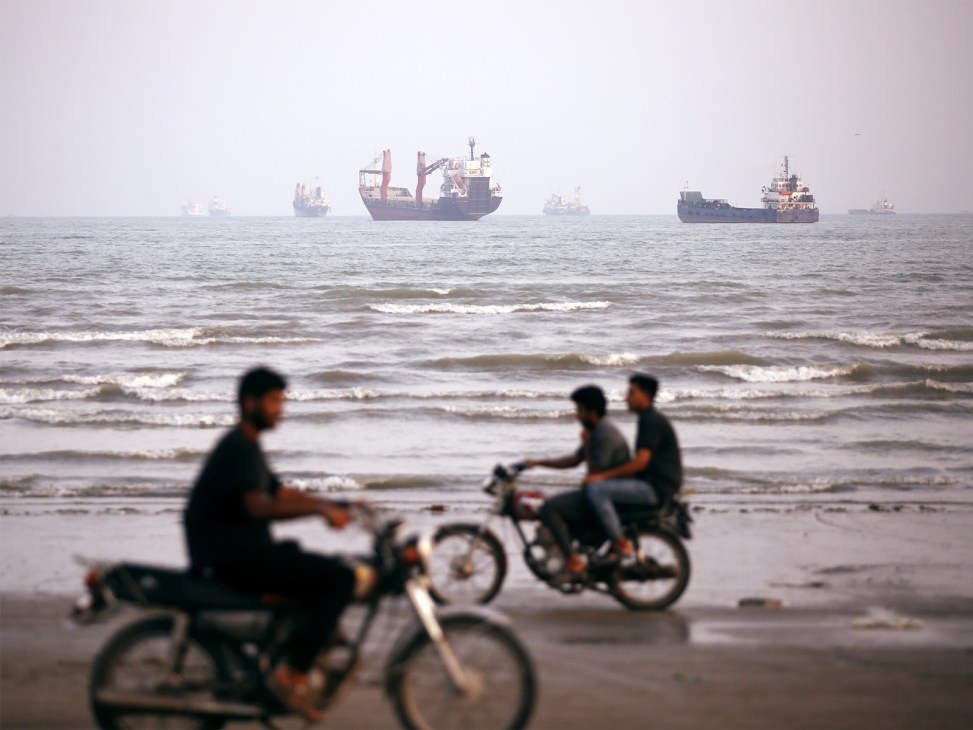
Nowhere is this more acute than at the world’s critical maritime chokepoints. The past year has shown why the Strait of Hormuz remains a perpetual flashpoint. This 34km passage handles almost a fifth of daily global petroleum consumption and illustrates a stark reality: that a drone worth a few thousand dollars can temporarily erase billions of dollars in naval and commercial power. On the Bab el-Mandeb Strait, at the mouth of the Red Sea, low-cost anti-ship missiles and drones operated by the Houthis have repeatedly hijacked global supply chains, forcing container ships to take a 10-day detour around Africa’s Cape of Good Hope.
But reducing the mobility crisis to a matter of narrow maritime corridors misses the broader nature of the threat. Strategic chokepoints are increasingly digital, aerial and terrestrial. In the Baltic Sea, the sabotage of subsea fibre-optic cables and energy pipelines demonstrates that the movement of data and energy is just as vulnerable as that of cargo. Meanwhile, restricted airspace has severed transcontinental flight paths, forcing carriers onto routes that require more fuel, raising costs and emissions. On land, bottlenecks such as the Suwalki Gap demonstrate how narrow corridors can paralyse military deployment during a crisis. Compounding this, the changing climate has caused water shortages that, in places such as the Panama Canal, can throttle transit as effectively as a full naval blockade.
In response to this, states are redrawing trade maps. Rapid global heating has transformed the High North into a vital new mobility frontier; the Northern Sea Route offers a geographic short cut that slashes transit times for journeys from East Asia to Europe by as much as 40 per cent. But this has also introduced fresh tensions, as Russia asserts military control while China steadily expands its “Polar Silk Road” footprint across the Arctic theatre.
Forward-thinking states are investing heavily to mitigate the effects of weaponised mobility and, where they can, bypass chokepoints. Major initiatives, such as the Trans-Caspian Middle Corridor and the India-Middle East-Europe Economic Corridor, combine complex rail, port and road networks to create flexible overland-maritime hedges. Rather than relying on a single passage, these integrated logistical networks distribute risk across multiple transcontinental nodes, ensuring that a physical or geopolitical disruption won’t trigger economic paralysis.
For decades, Western defence strategy relied heavily on static naval point-defence – parking expensive warships at hot spots. That is no longer sufficient against modern asymmetric threats. What is needed is an integration of comprehensive seabed-to-space surveillance to protect subsea energy and data infrastructure, while building and safeguarding alternative transport corridors. States that master transit adaptability will define the future of international trade and security. Those anchored to single-point transit hubs will remain exposed to geopolitical coercion and severe economic disruption.