Top 25 entrepreneurs to watch
Want to start a new business? Be inspired by 25 of the world's brightest entrepreneurs. These leaders, from publishing to design, show the way for others who want to enrich the world.
- Ben Quinton
- Alex Crétey-Systermans
- Ivar Kvaal
- Ben Clement
- David Vaaknin
- Ben Roberts
- Lasse Bech Martinussen
- Stephanie Füssenich
- Kyle Johnson
- Kohei Take
- Jack Orton
- Dan Wilton
- Victor Garrido
- Tali Kimelman
- Luigi Fiano
- Jake Dockins
- Benjamin Rasmussen
- Sean Marc Lee
- Laurel Golio
- Benjamin McMahon
- Jonas Opperskalski
Small, medium and large. Third-generation and fresh starters. Technology players and fashion rethinkers. But all with one thing in common – they are proud entrepreneurs.
Below we introduce you to 25 businesses driven by people who, at some point, decided to be their own boss and plot their own path through business. Sure, there might have been stumbles, the equivalent of scraped knees, but in the end they knew that had to tap into Frank Sinatra’s useful entrepreneurial rallying cry and do it “my way”.
We have chosen to highlight people we admire and who we think have some lessons worth sharing. They are also people who might encourage you to take the leap – to become an entrepreneur. Read on and, who knows, perhaps next year you could find your face staring out from these pages.
1.
Adriana Domínguez
Adolfo Domínguez
The artist who’s brought a painter’s eye to her family’s 45-year-old company.
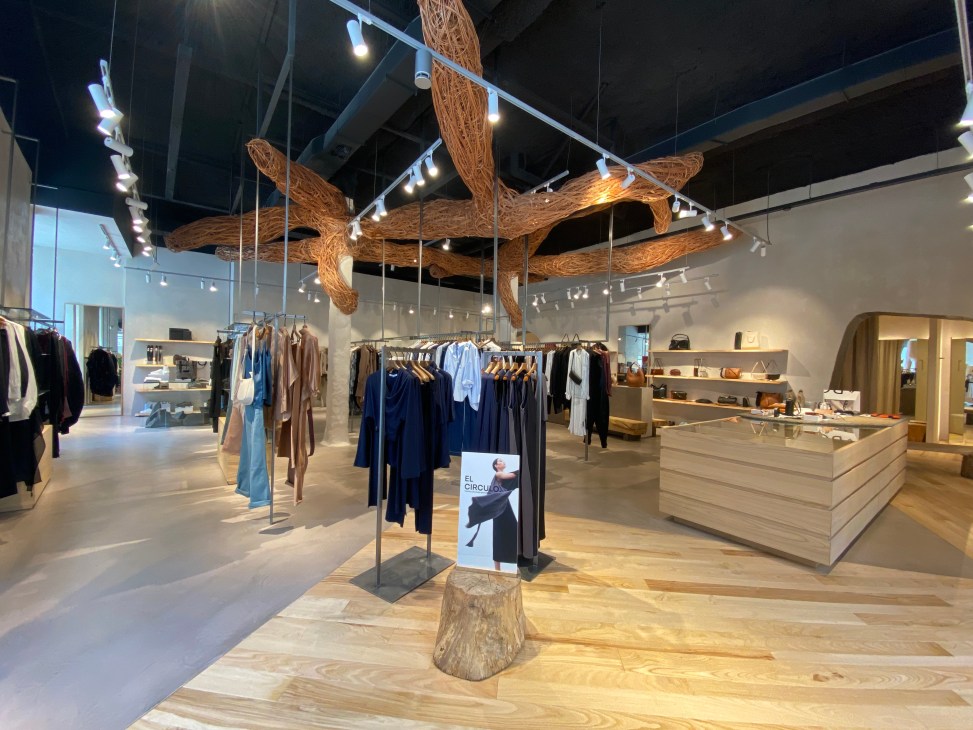
Even for the fashion sector, naming an artist as CEO is a bold move. But Adriana Domínguez’s sensitive and sanguine approach arrived at just the right time for Spanish fashion house Adolfo Domínguez. She was tapped to help her father’s financially flailing firm in 2017 and her swift decision-making, financial trimming and captivating marketing campaigns have helped to bring the company back from the brink. In 2020, the 45-year-old was named chief executive, continuing the brand’s bold restructure during the pandemic, while shoring up the house’s identity as both idiosyncratic and pioneering.
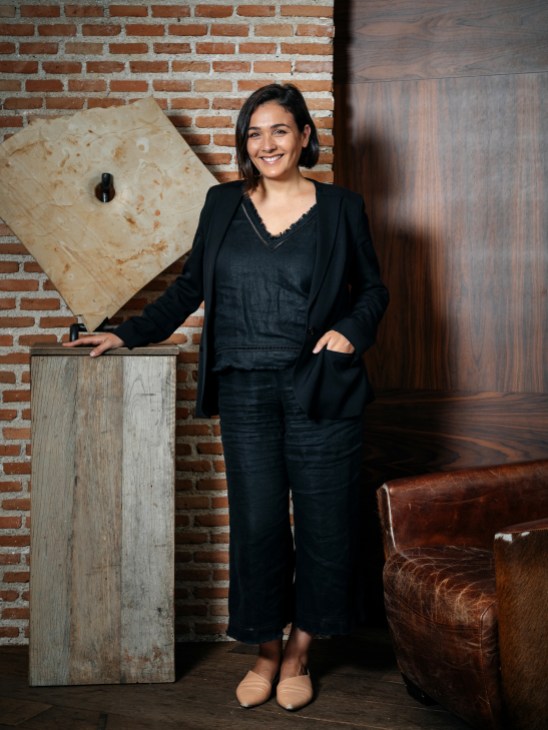
“In such a commoditised fashion landscape, differentiation is a key asset,” says Domínguez. “I often find myself in strange company at the top,” she adds, referencing the lack of women and younger faces in the upper echelons of Spanish business. “But my ‘quirkiness’ is a source of strength.”
Founded by her father in 1976, the brand became part of Spain’s cultural vanguard by embracing modernity with free-flowing forms that excited a country emerging from a dictatorship. Early success led to international expansion and today there are 343 shops in 17 countries.
Star recruits from the automotive and the technology sectors have reflected a push to innovate beyond the fashion industry status quo. A recently launched personal-shopper service, for example, combines algorithms with human specialists, while a focus on near-shoring has increased production in Galicia and Portugal from nothing to 23 per cent. Notably, more than half the company’s board are female.
“As a family we share resilience, a capacity for change and courage,” says the CEO, whose sister, Tiziana, is creative director. “Seeing how the previous generation dealt with stumbling blocks is a source of guidance to confront future crises.”
adolfodominguez.com
Lesson learnt: Creativity is currency in a crisis. Domínguez brings her deep-veined brand knowledge to the board table – but her artist’s mind is also inspiring the entire company to think outside the box.
2.
Barnabé Fillion
Arpa
The perfumer combining scents with electronic music and original sculpture.
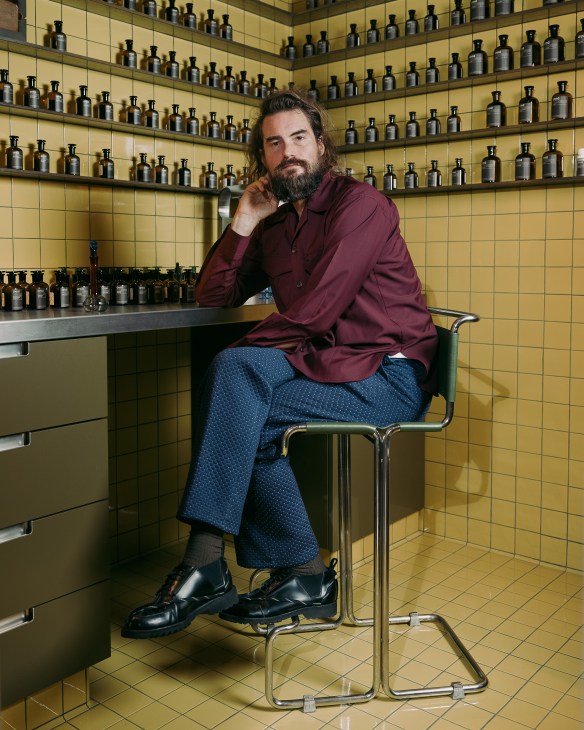
Paris-based independent perfumer Barnabé Fillion tries not to think too much about the giant fragrance businesses that his small company Arpa will compete against. Having established his business creating scents for brands such as Aesop and a major show at New York’s Guggenheim Museum, he’s made the brave decision to launch a “cultural brand” this season. After 10 years learning about the industry and building connections, Fillion looks to follow in the steps of niche labels, such as France’s Serge Lutens and London’s Perfumer H, with Arpa. He says that the company’s aim is to stimulate all of a customer’s senses. As such, its initial three fragrances come with a vinyl LP featuring electronic music inspired by each scent.
How will Arpa separate itself from competitors in the fragrance industry?
I always try to work with collaborators that I share a mutual respect with. Of course, the financial success of the company is important but this will be a very curated brand that doesn’t make compromises on quality. In many ways I actually have to protect myself. You can almost compare the modern perfume industry to the pharmaceutical industry, where the creation of new ingredients can lead to more profit. There are a lot of elements in this industry that I want to veer away from.
And how will you do this?
We’re not talking about building a niche perfume brand but a multi-sensorial project. We’re trying to curate a coherence around the fragrances, music production and the commissioning of sculptural work.
How do you plan to build a global community around your brand?
I’m excited to see how it can live online. We’ll have a part of the project where people are engaging with us digitally and the other part where they come together. This physical side will manifest as events and exhibitions in Paris, Mexico and Kyoto. In combining the digital and the physical, we’ll create an offering where people are comfortable buying our fragrances online. But if they’re not convinced, we can send a sample first.
arpastudios.com

Lesson learnt: Finding your place in any industry often begins with establishing a community of like-minded people. Arpa’s commitment to multi-sensory experiences has helped the small fragrance company carve out a distinctive identity.
3.
Cindy Spiegel and Julie Grau
Spiegel & Grau
The publishers defining the cultural moment with their independent imprint.
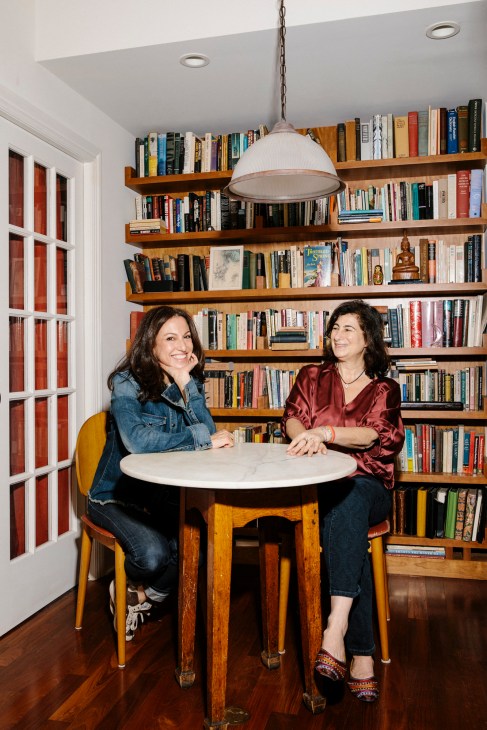
Cindy Spiegel and Julie Grau (pictured, on left, with Spiegel) have been working together for more than 25 years. As editorial directors of Spiegel & Grau, which was originally part of Penguin Random House, they oversaw titles by writers such as Ta-Nehisi Coates, Trevor Noah and Suze Orman. When the publishing giant was restructured in 2019 and closed their imprint, Spiegel & Grau decided to resurrect it independently.
“We built our careers on discovering new voices,” says Spiegel. “We realise what books can do; that’s what drives us.” This innovative spirit also led Spiegel & Grau to become a multi-platform publisher; though books remain at the heart of what it does, it works across audio, video and print. It is now co-producing podcasts with Lemonada Media and there’s a deal with Amazon Studios to develop projects from its roster.
Still, the success of the new venture depends largely on the duo’s reputation as exceptional talent spotters. Colleagues followed them from Penguin Random House because they believed in the mission. Big investors such as William R Hearst iii and the Emerson Foundation bought into the project; the enthusiasm was such that the pair found themselves with far more money than they initially hoped to raise.
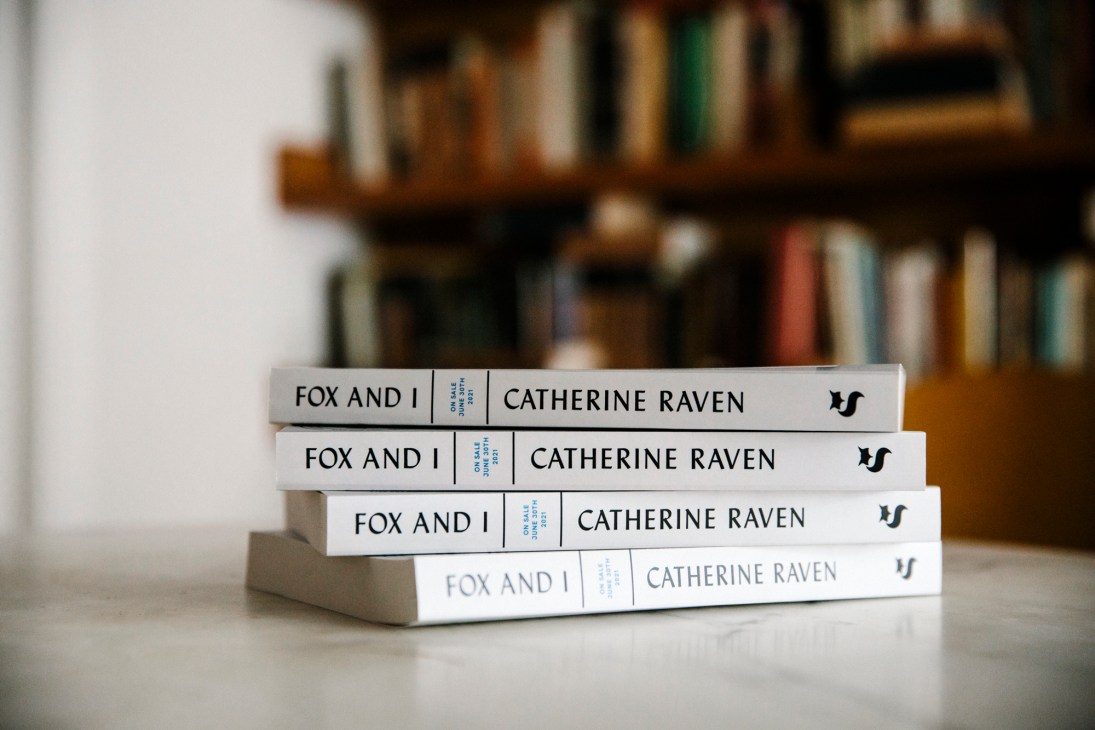
This backing has let them be selective. “We’re excited about giving resources to our books and we can do this by keeping the list small,” says Spiegel. “Fifteen to 20 books at a time is our sweet spot. That’s the number we feel confident we can publish with our full attention.” The imprint’s first release, published in July, was Fox and I, a memoir by Catherine Raven, a debut author whom Spiegel met at a conference in late 2019. It was this encounter that gave the duo the idea of having a platform “to get an amazing project out into the world”, she says.
Their greatest skill is finding titles that speak to the cultural moment. “We’ve seen our books change the conversation: The Kite Runner changed it about Afghanistan; Orange Is the New Black made incarceration very personal,” says Spiegel. “We want to make money and we have been very profitable. But we also want to publish with integrity.”
spiegelandgrau.com
Lesson learnt: Don’t let external structures determine your professional destiny. If you’re confident in your abilities, disruptions can provide the impetus you need to go your own way.
4.
Manfredi Catella
Coima
The developer investing in the long-term health of Milan’s communities.
“Normally with real estate, you think that someone will want a house or office so you build it, you sell it – next,” says Manfredi Catella. Over lunch at Ratanà restaurant, the CEO of Milan-based developer Coima explains how his experience has been the opposite. “By developing a larger-scale part of the city and operating it, we learned a lot about people. So that makes you have a different approach when you develop next.”
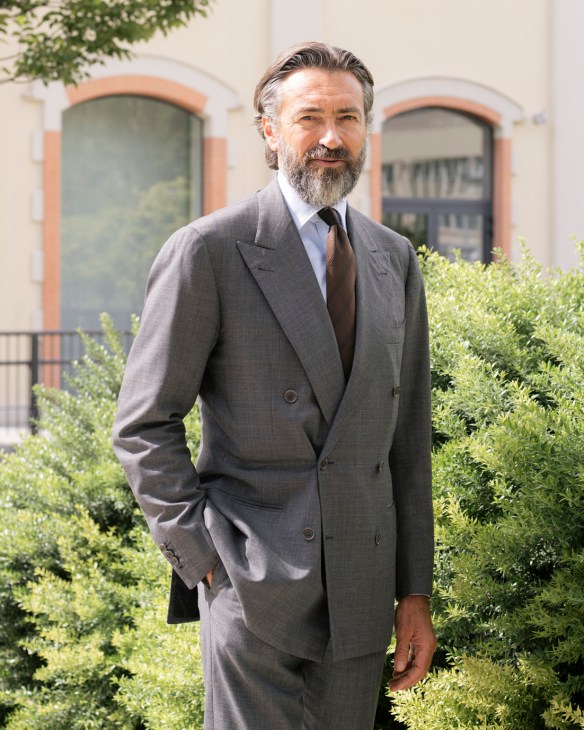

Catella is referring to the vast Porta Nuova development beside Ratanà. A decade in the making, it includes a landscaped park and accompanying cultural calendar, retail space and sparkling office blocks. Crucially, Coima also manages the site and organises events through its foundation. But while the regeneration of this former wasteland near Garibaldi train station might be well known, Coima isn’t stopping in its bid to transform Milan. Over the next few years, it is set to develop two new chunks of the city – railway depots in Porta Romana and Farini – which will continue to make the city a benchmark for urban reuse. The Porta Romana project near Fondazione Prada includes a park and housing, part of which will initially serve as the Olympic Village during the 2026 Winter Games. “At Porta Romana, the fundamental layer is at ground level,” says Catella. Thinking about how people move is an integral part of development, while the firm takes sustainability “very seriously”, according to Catella’s US-born wife Kelly Russell, who has worked alongside him for 20 years.
As well as further ambitious building around Porta Nuova with architects including Stefano Boeri, Diller Scofidio 1 Renfro and Norway’s Snøhetta, Coima is also eyeing Rome. Catella says it would be a “lost opportunity” if the Italian capital didn’t open up to smart redevelopment. “We will move forward in doing what we love where we are loved.”
coima.com
Lesson learnt: Being invested in what happens after a project is finished – and how its users react to it – makes you a smarter, more sensitive developer for the future.
5.
Johanna Stein
Gato Sem Rabo
The bookseller shining a spotlight on women’s literature in Brazil.
As an art student, Johanna Stein was carrying out research for her degree when she realised that finding books written by women was frustratingly difficult in São Paulo. No physical space that gathered their voices existed in Brazil. So, after graduation, she started a bookshop devoted exclusively to literature by female authors. Gato Sem Rabo opened in May 2021 in one of São Paulo’s oldest districts. Stein says she hopes that it will help to broaden people’s understanding of female perspectives, “especially those from the global south, like me”.
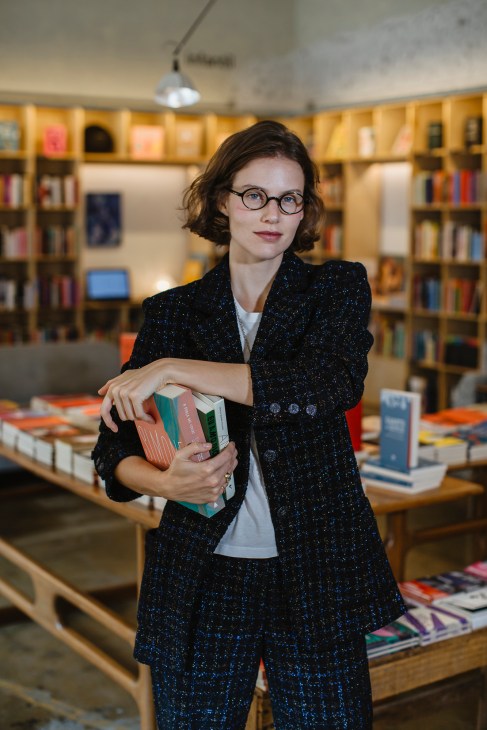
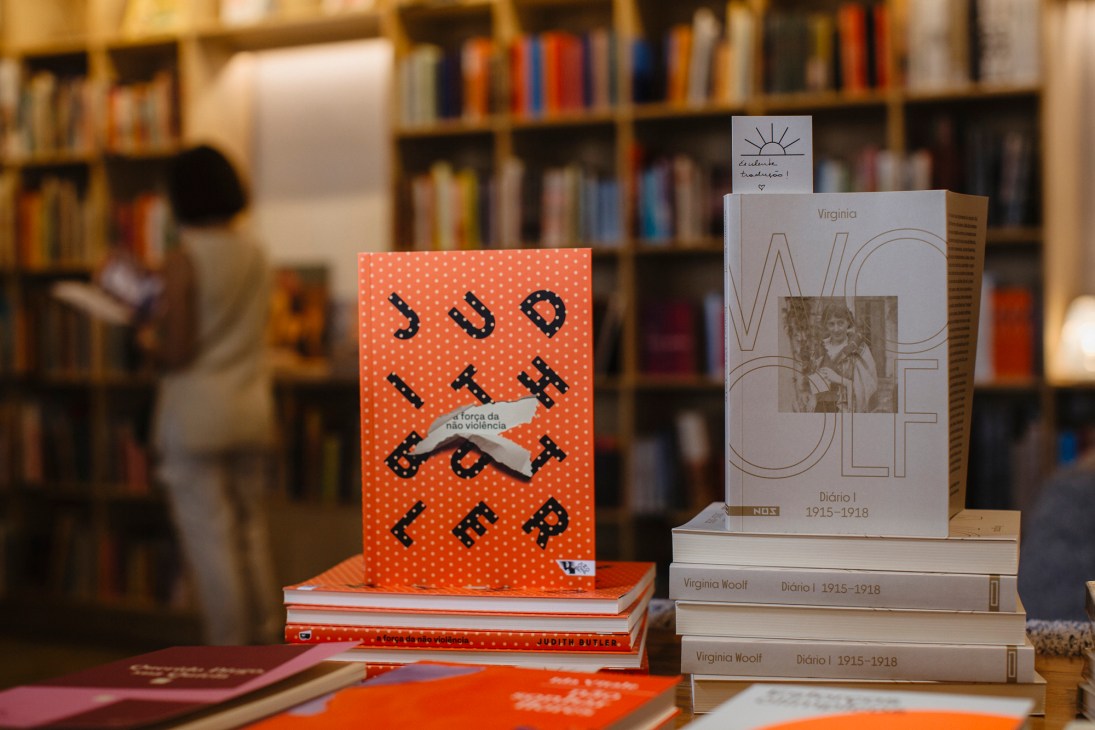
Women struggle for equal billing in South America. More than 70 per cent of Brazilian books printed between 2005 and 2014 had male bylines, according to a University of Brasília study. But at Gato Sem Rabo, minimalist wooden shelves showcase about 2,800 titles by more than 1,400 women, ranging from non-fiction and poetry to illustrated books. Demand is high; lines of shoppers formed around the block when the shop opened. “It’s been a huge surprise [to see] what sells,” says Stein.
This early success is testament to Stein’s good entrepreneurial instincts. Though a dedicated reader, she had never worked in bookselling before. She called in the services of publishing consultants Marcelo Zanon and Maria Borin but her freshness to the sector allowed her to take risks with her choices at a time when the high street was struggling.
“People trust our curation. We’ve tried to reintroduce classics that echo themes shared by younger Latin American authors,” says Stein. She is proud that her hunch about the importance of opening a physical space in São Paulo turned out to be correct. “The more things become digital, the more readers and authors will demand a proper meeting place,” she says.
That’s why she has organised book-themed debates and has also opened a café in the shop, with further seating outside. A 1970s structure that had been abandoned for years, it sits beside a busy overpass and was redeveloped to host Gato Sem Rabo and other businesses, including an art gallery and a rooftop restaurant. Their arrival is allowing the whole neighbourhood to turn over a new page.
Lesson learnt:
Projects with a specific focus needn’t be niche in their appeal. There is plenty to be gained by championing new or marginalised perspectives.
6.
Greg Lundgren
Museum of Museums
The curator breathing new life into Seattle’s homegrown cultural scene.
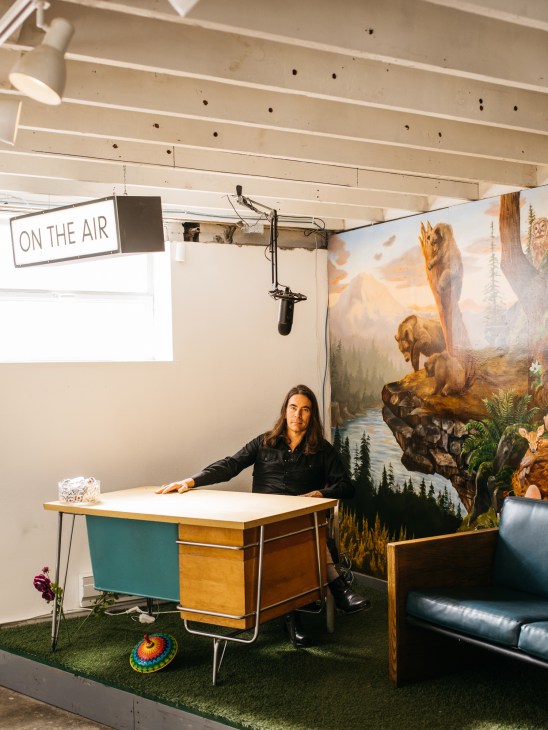
Looking out of a second-floor window of his Seattle art space, the Museum of Museums (MOM), Greg Lundgren notices that someone has tossed a rag onto an installation on the roof of the extension below. The 51-year-old curator makes a mental note to scamper down there himself and remove it before opening to the public for the day.
Such tasks aren’t beneath Lundgren, who spent much of the past two years transforming a derelict medical office into a prototype of what is possible for art in a city with as much wealth, technology and creativity as Seattle. “mom is a low-budget example of what an art centre can look like,” he says. “It was largely self-financed because I wasn’t willing to hold my breath for a billionaire to call me up [and help].”
Lundgren secured the three-storey building for the nominal sum of $1 (€0.80) a year from its owners, who were eager to see improvements to what had become a graffiti-covered eyesore. He invested $400,000 (€340,000) of his own money into its refitting and cleared 50 tonnes of rubbish and rubble with his small team.
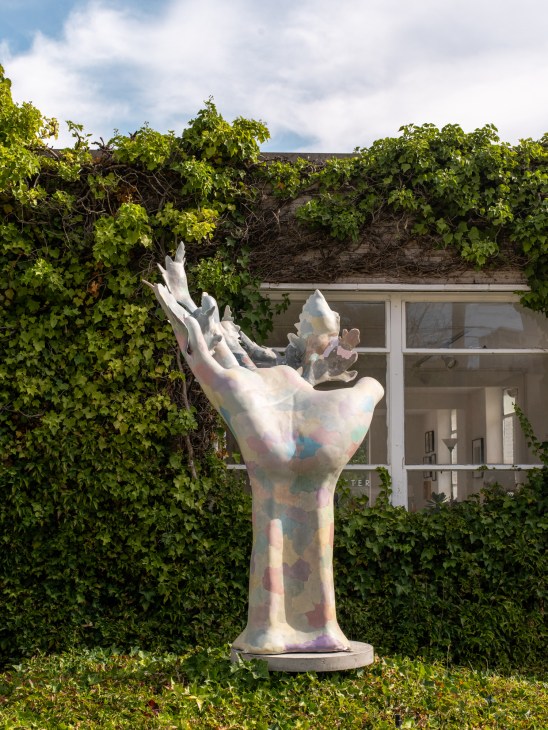
The building now features large-scale installations as well as smaller pieces. “Our mission is to increase the artist population of Seattle,” says Lundgren, who wants to encourage young people to see art as a career rather than just a hobby. He also recognises the importance of keeping artists in the state. “If we want to fix the art ecosystem in a city, we need to have a conversation about collecting,” he says. “Not only collecting the work of blue-chip artists from New York but also the artwork from your region. That’s how you get them to stay: by supporting them financially.”
Lundgren hopes one day to transform the block into a creative campus, offering cheap housing for artists, studio spaces and a sculpture garden. “I put out ideas that I can’t afford to act on but that are important to the city,” he says. If a billionaire philanthropist walked through mom’s door, Lundgren would be ready with a pitch. “My hope is that mom seduces our wealthy community to engage in a more significant, longer-term way,” he says. “This building is designed to inspire [people to believe] that we can be a great art town.”
museumofmuseums.com
Lesson learnt: Supporting an art scene outside a cultural capital takes a lot of work. Having a mission that goes beyond an investment return will help you put in the work when things get tough.
7.
Stephen Burks
Stephen Burks Man Made
The designer and gallerist championing real representation in design.
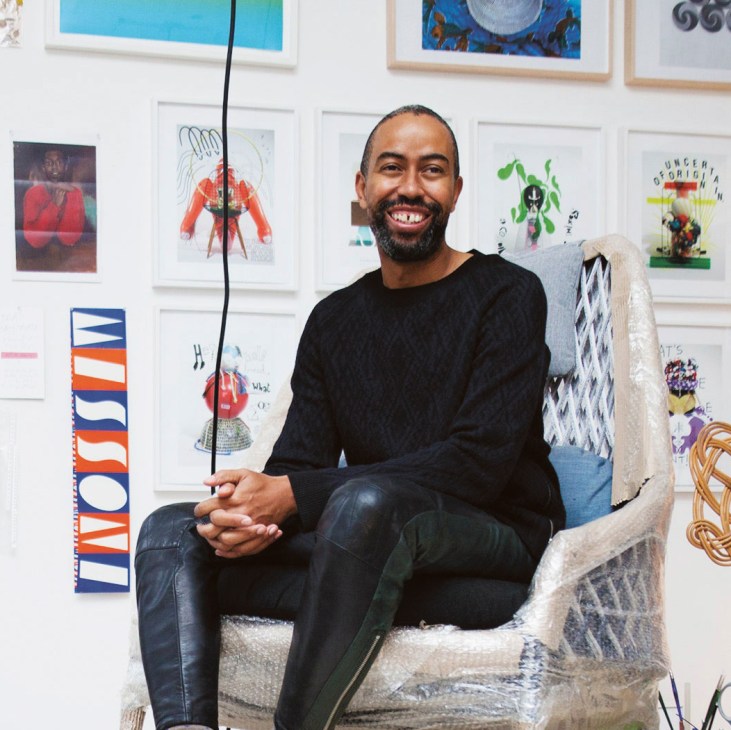
Stephen Burks Man Made is the studio of New York-based designer Stephen Burks. Its aim is to produce work connecting tribal and artisanal craft techniques with contemporary aesthetics.
Tell us about your work championing diversity in the design industry.
For us, it is not a topic: it’s our life. I use the studio as a vehicle to create a more pluralistic vision of design. I talk to my clients about the lack of diversity as I tend to be the first and only African American with whom they’ve ever worked. It’s important that we not only lead by example but that we also educate and find new ways to communicate and accept one another.
How do you use design to communicate ideas about sustainability?
We want to make objects that people want to keep. In terms of sustainability, we like to work with noble materials and think about how we’re always in the service of the customers buying our work.
stephenburksmanmade.com
Lesson learnt:
Burks finds motivation in causes that he passionately believes in. Use your position within your industry to change it for the better.
8.
Spandana Gopal
Tiipoi
The designer dispelling stereotypes surrounding traditional Indian craft.
Spandana Gopal’s design brand Tiipoi was born of a frustration with stereotypes about Indian craftsmanship. After leaving her native Bangalore to study in London, Gopal became aware that consumers often romanticised traditional craft techniques. “I wanted to create handcrafted products that were more functional and less like souvenirs,” she says of the company that she started in 2013 and now has 16 employees.

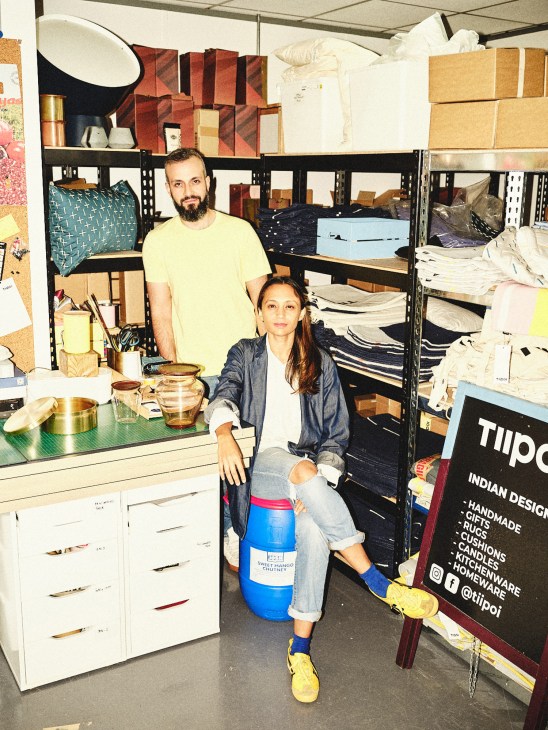
She enlisted designer Andre Pereira to develop a range of products including brass candleholders, glass jars and stainless-steel teapots, all made by the brand’s craftspeople in Bangalore. “We try to keep as much as possible in-house because it gives us a lot of control over the quality and the working conditions,” says Pereira. “We have two master craftsmen, a metal-spinner and a ceramicist, each of whom has a team.” Tiipoi has expanded its offering to include colourful home textiles, vases modelled on Bangalore’s brutalist structures and traditional Longpi ceramic cookware.
“I kept thinking, ‘Why isn’t there an Indian version of Muji?’” says Gopal. “There are lots of stereotypes around Indian craft and much of it is based around nostalgia.”
It wasn’t always smooth sailing when it came to making the products, explains Pereira. “There’s a big ‘yes’ culture when it comes to manufacturing in India,” he says. “People will tell you that they can make something without having the know-how so you really have to explain what you want. At the start we had to push to visit manufacturers’ facilities to see what they could actually do.”
tiipoi.com
Lesson learnt: While Indian craftsmanship may not have the best reputation, Tiipoi used its techniques to develop high-quality products, supporting the craft system in the process.
9.
Nick Shelton
Broadsheet
The founder of an independent media company that’s taking on the big guns.
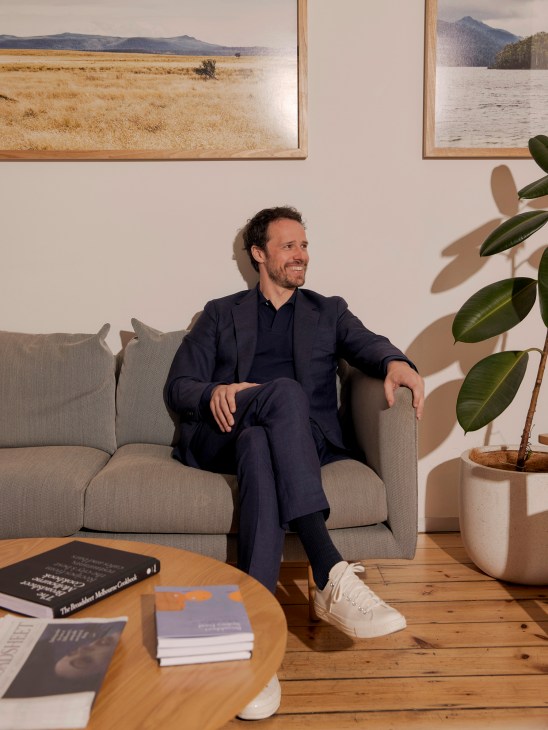
Of the many threats facing independent media, one of the most dangerous is social media’s advertising landgrab. In most countries big players such as Facebook have gobbled up marketing budgets and other people’s content without anyone trying to control them. Australia has made headlines by forcing the social media company to make deals with the country’s main news organisations but smaller titles have been left out. Some aren’t willing to sit in silence.
Melbourne-based lifestyle-focused company Broadsheet has decided to pick up the fight. “There’s still a swath of independent publishers that need to be supported,” says its founder, Nick Shelton. “We’re talking with government, making sure we’re getting through to the right people. We’re pushing.” If he succeeds in this David-versus-Goliath fight, it could have global consequences. “Australia is a test case,” he says. “It’s going to be used as a precedent around the world. It’s important to us as a business but I think it’s important beyond that too.”
Fortunately, Broadsheet has a business model that makes it a solid venture. Started in 2009 as a one-man operation, it launched as an online guide to the best spots to eat in Melbourne. Its remit and team soon grew bigger; it now has editions in Sydney, Brisbane, Adelaide and Perth, with stories covering everything from culture and sport to music and retail. “Our role is to inform our readers about all the wonderful things we do as a city,” explains Shelton. “We see ourselves as news journalists. The rigour behind everything we publish is top tier.”
Over the years, Shelton has experimented with quarterly newspapers, a book-publishing imprint, pop-up restaurant collaborations, a branded content studio and framed editions of photographs; a forthcoming membership service offers early access to events, openings and shows. This might seem like a mixed bag but Shelton says that these offshoots are simply different expressions of the same brand. “You have to have a clear vision so you can adjust, change and evolve,” he says. “It’s about not accepting conventional wisdom. The world changes so we need to challenge our ideas. We need to experiment.”
broadsheet.com.au
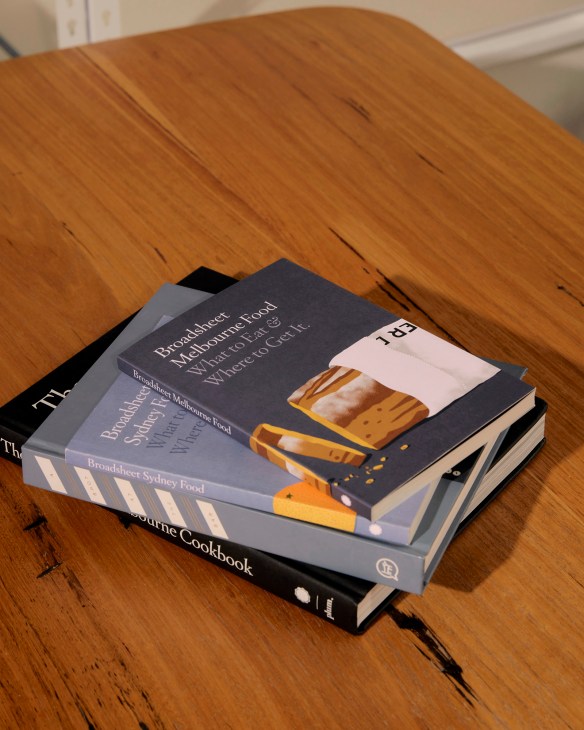
Lesson learnt: A solid brand is made by the consistency between its many different products but also by its core values. Don’t be afraid to stand up for yourself when the time comes.
10.
David Neeleman
Breeze Airways
The airline entrepreneur helping smaller cities to take off.
Aviation hasn’t had a good 18 months, with the industry nursing losses of more than €250bn in 2020. That might make the idea of launching a new airline sound like commercial suicide – but not for David Neeleman. “When coronavirus hit, I could have just said, ‘No I’m not going to do this,’” says the serial entrepreneur. “But I had already hired 55 people at the airline. Those people were dependent on me so I said, ‘What the heck; we’ll make it work.’”
Neeleman, a Brazilian-American based in Salt Lake City, is referring to his latest venture, Breeze Airways, which started flying in May with 39 routes to 16 US cities. Yet it’s his track record that speaks volumes. He has launched four other successful airlines, including New York-based JetBlue and Brazil’s Azul. And that explains the current investor interest: in August, Breeze raised a further $200m (€170m), adding to a pot of more than $100m (€85m).
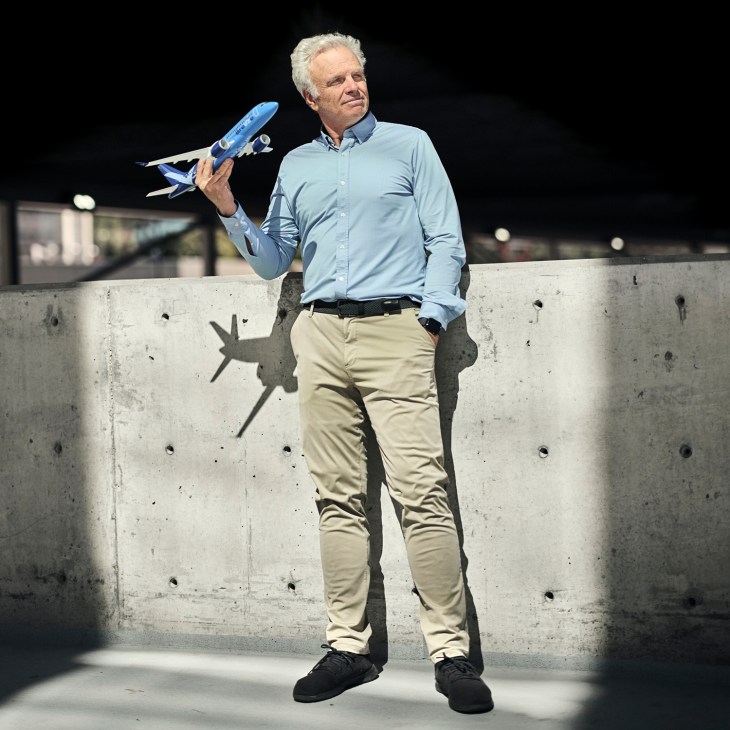

Breeze’s model is based on low-cost airfares but it’s usp is that it runs what the airlines calls “under-served routes” that link smaller cities and towns without having to route via a hub. “Say you live in Hartford, Connecticut, and you want to get down to Charleston, South Carolina,” says Neeleman. “You can do it with us for half the price – and twice as fast.”
The airline head says that – alongside smaller planes that cost less to run – he is banking on technology and app-based customer service as the keys to success. Currently flying Embraers, Breeze has ordered a fleet of fuel-efficient Airbus a220s, which it hopes to start rolling out from the second quarter of 2021.
Breeze plans to stay nimble too, being flexible on routes and partially pivoting to charter in the winter when demand is lower. “I don’t think size matters,” says Neeleman. “It’s just creativity and structuring it.”
flybreeze.com
Lesson learnt: Do something that others aren’t. Breeze’s Neeleman has succeeded with five airlines by finding gaps in the aviation industry where competition is low or non-existent.
11.
Hao Tran
Vietcetera
The media company celebrating a richness of views in a single-party system.
Every successful start-up eventually finds an office to match its ambition, allowing the team to draw a line under a restless first few years of rapid growth and frequent relocations. That was the case for Vietcetera earlier this year when the Vietnamese media company moved into a new address, its fourth since it was founded in 2016, on a quiet street in the centre of Ho Chi Minh City. The four-storey building in District 3 marks an important moment for CEO Hao Tran (pictured, on left) and his team of 80 employees.
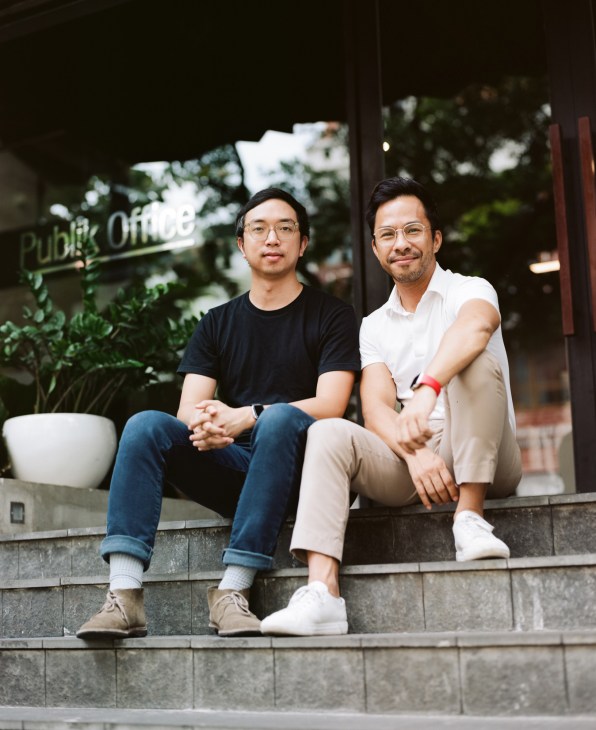

Vietcetera’s main source of income is turning popular articles on its flagship Vietnamese-language website into audio content that is then sold to sponsors. Tran cites The New York Times’ “Modern Love” newspaper column about relationships, which was turned into a TV series, as inspiration. Mastercard, Nestlé, drinks producer Diageo and insurance firm aia are some of the top advertisers using Vietcetera to tap into consumers from Vietnam’s emerging middle class. But governments of countries, from the US to Australia and Italy, are keen to get involved too. Even Vietnam’s communist government is spending marketing money on Vietcetera.
The publisher, which only received its official media licence earlier this year, occupies a rare position as a private media company in a single-party system in which almost all of the news is state-controlled. Journalists have to stay away from political coverage and they choose to avoid covering celebrities and entertainment. Vietcetera does, however, tackle socially taboo topics, which makes it a valued source of information in a conservative country. Sex education has been an early hit, both editorially and commercially. Also attracting plenty of interest is its coverage of personal finance, higher education and mental health.
Later this year, Vietcetera’s visual and audio content will be created in new studios: soundproofed recording rooms with green screens are currently being built on the same road as the new headquarters. It might sound as if the company is already running out of space but it’s most definitely not short of ideas.
vietcetera.com
Lesson learnt: A new, bigger office can also be a statement about your commitment to the city that you’re based in – and the role that your business plays in it.
12.
Saeed Abu-Jaber and Mothanna Hussein
Turbo
The hometown heroes putting Amman on the map by hosting events at its adaptable city-centre office.
In a refurbished split-level studio in downtown Amman you’ll find two designers refashioning the Jordanian design scene. Small but ambitious branding agency Turbo was founded in 2015 by Saeed Abu-Jaber and Mothanna Hussein (pictured, Hussein on left) after their paths crossed in Beirut. “We were both big fans of posters and we liked each other’s work, so we decided to partner up,” says Abu-Jaber. “Small design studios are quite scarce in Amman so we knew there was a gap in the market here.”
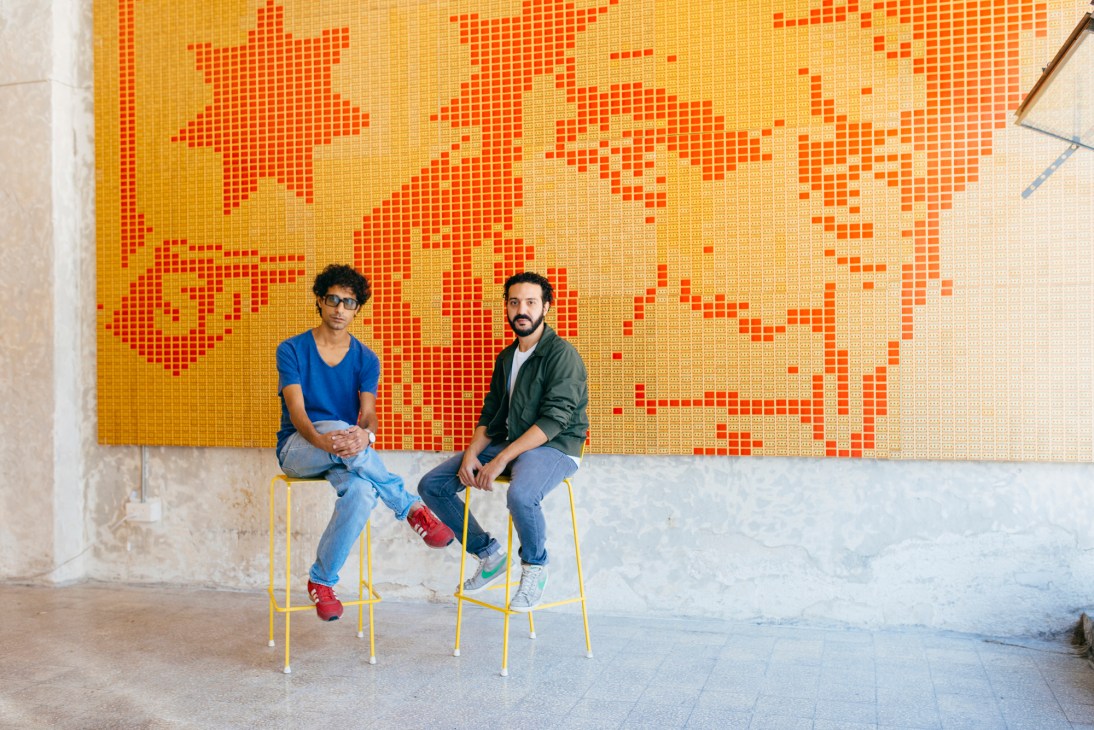
The brand’s office is imprinted with Turbo’s logo but its offering goes beyond branding: while the mezzanine is used for the agency’s design work, it hosts events including exhibitions, print sales, workshops and lectures on its ground floor. The pair also values its freedom to run projects as they see fit. “We like the flexibility to choose how to deal with certain situations,” says Abu-Jaber. “The office has given us the opportunity to expand on what a design studio can be. We wanted it to play a part in the cultural scene of the city.”
turrrbo.com
Lesson learnt: Hussein and Abu-Jaber saw a niche and filled it – but kept things small despite their success. Remaining nimble and being a duo has kept them agile.
13.
Matt Alexander
Neighborhood Goods
The London-born CEO who reinvented the American department store.
There was a time when department stores were inspiring places to be, where thoughtful lighting and smartly presented wares made them the perfect places to browse rows of pressed shirts or buy a new pair of shoes with the help of a willing attendant. But over the past few decades, these shopping meccas have lost their sheen: formulaic business strategies, compounded by lazy salesmanship, the rise of online shopping and, more recently, the effects of the pandemic, have left many conventional department stores reeling and their selections looking decidedly drab.

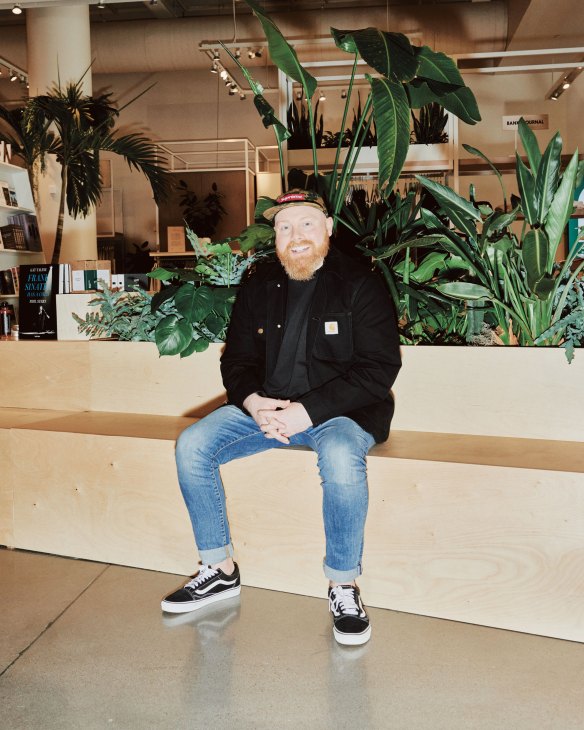
For London-born Matt Alexander, who is now based in Dallas, Texas, it was clear that it was time for a different approach. “I wanted to create relevant, community-driven retail that would offer something vibrant,” he says. So Alexander launched Neighborhood Goods in 2018. “When my co-founder [Mark Masinter] approached me, he wanted to see if we could create a more permanent version of my previous project Unbranded [a pop-up market for small brands].” It opened its first department store in Plano, Texas, with the aim of providing a physical space for independent designers who wouldn’t otherwise have a base from which to sell their wares. The spaces also host events.“We care about community,” says Alexander.
This initial store worked so well that two more spaces followed, first in New York City and then in Austin, Texas; more are planned. While bricks-and-mortar stores struggled during the pandemic, Neighborhood Goods continued to thrive by expanding into groceries, opening a new sales section. Its food and drink aisles, much like those for clothing and homeware, are stocked with brands that would never have made it onto the shelves of conventional supermarkets.
Neighborhood Goods is a reminder that success doesn’t always require reinventing the wheel. Sometimes all an entrepreneur needs is the simple realisation that an established business model, like that of the department store, needs a slight correction to get things back on track.
neighborhoodgoods.com
Lesson learnt: Alexander brought modern, community-minded ideals to the department store. A new approach to an established idea can be a rewarding strategy.
14.
Pedro and Agustín Otegui
Lanas Trinidad
The father and son proving that some old methods can be timeless ones.
In the countryside just north of Uruguay’s capital, Montevideo, is a family-run wool-processing factory where old and new techniques are blended in a closed-loop production process. The fourth generation at Lanas Trinidad, founded in 1916, uses rainwater to clean wool and traps methane gas to power its facilities. It is keeping old traditions alive while turning raw materials, sourced from the region’s flocks managed by gauchos, into the highest-quality wool top, a semi-processed fibre for spinning into yarns and fabric.
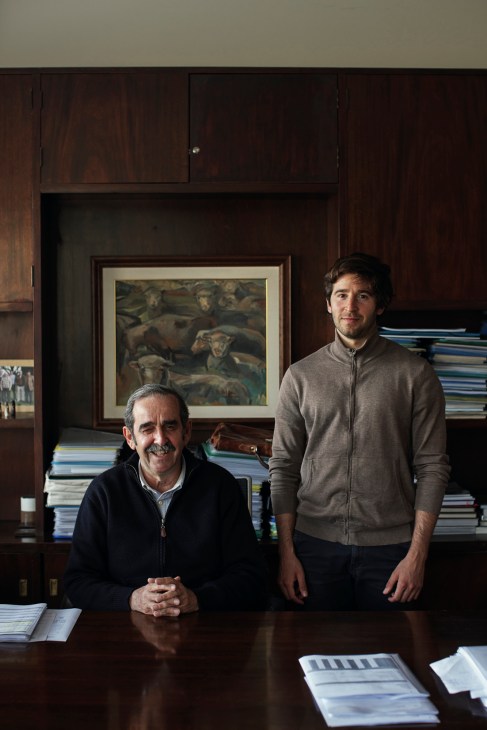
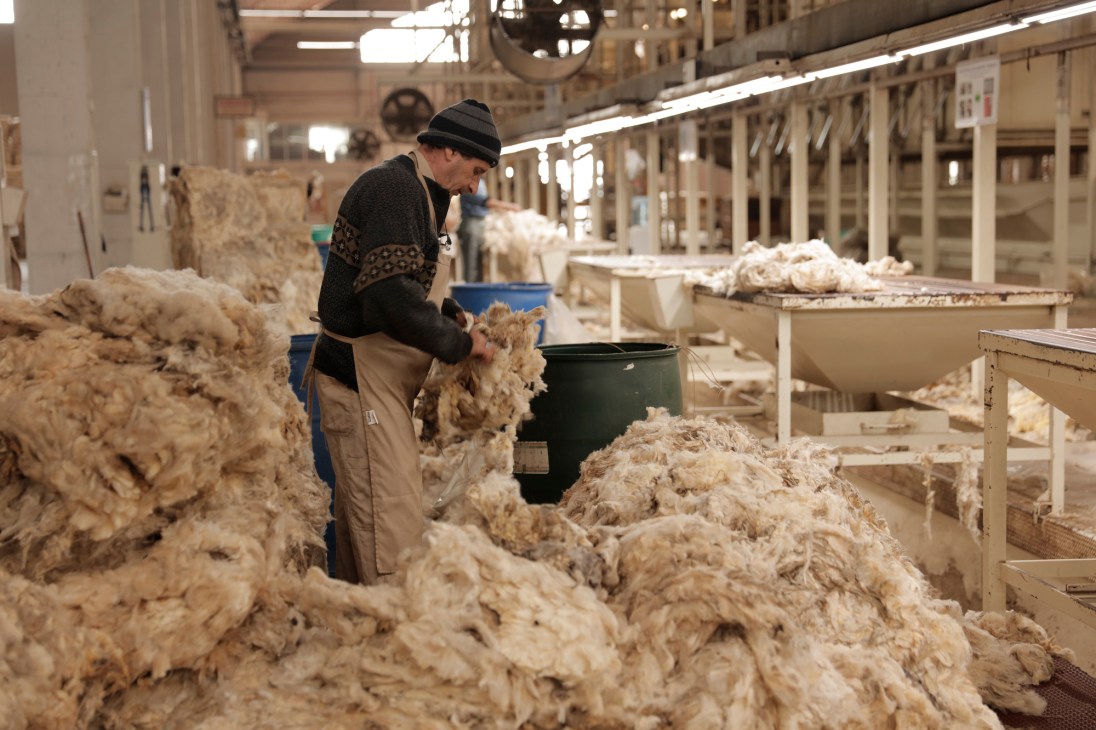
Following this strategy, the company is picking up new clients in the form of mills and weavers that are looking for sustainable suppliers. “There is a different attitude among my generation,” says account manager Agustín Otegui, great-grandson of the founder. “More people now support the original concept behind Lanas Trinidad.” Otegui works alongside his father, Pedro, who runs the company and has built a reservoir on its land in which rainwater is collected to wash the wool. This water is then kept, treated and used for irrigation.
In the early 2000s, the family spotted an opportunity to capture greenhouse gases released during the manufacturing process and convert them into heat and light for the factory. Natural by-products such as lanolin, a refined wool that can be used in cosmetics, are also collected and sold on. These innovations have helped Lanas Trinidad secure some standout environmental certifications in recent years, turning the company into the biggest and most sustainable supplier of wool top in Uruguay.
But being socially responsible is nothing new to the Otegui family. “There was always an understanding that we had to do things well: be competitive but do it well,” says Pedro. What is changing is that manufacturers and mills are placing more value on fabrics that are environmentally friendly than in the past.
Lanas Trinidad’s work, then, is a reminder that in a fashion industry that is often preoccupied with newness, there is still room for established players with skills honed over more than 100 years to set the pace for change.
lanastrinidad.com
Lesson learnt: Heritage and progress are not mutually exclusive. Combining experience with new expertise can be a winning combination. Lanas Trinidad shows that you can teach an old (sheep) dog new tricks – and when you do, it’s mighty impressive.
15.
Ia Adlercreutz
Co-founders
The Finnish consultancy bringing new creativity into the art of business.
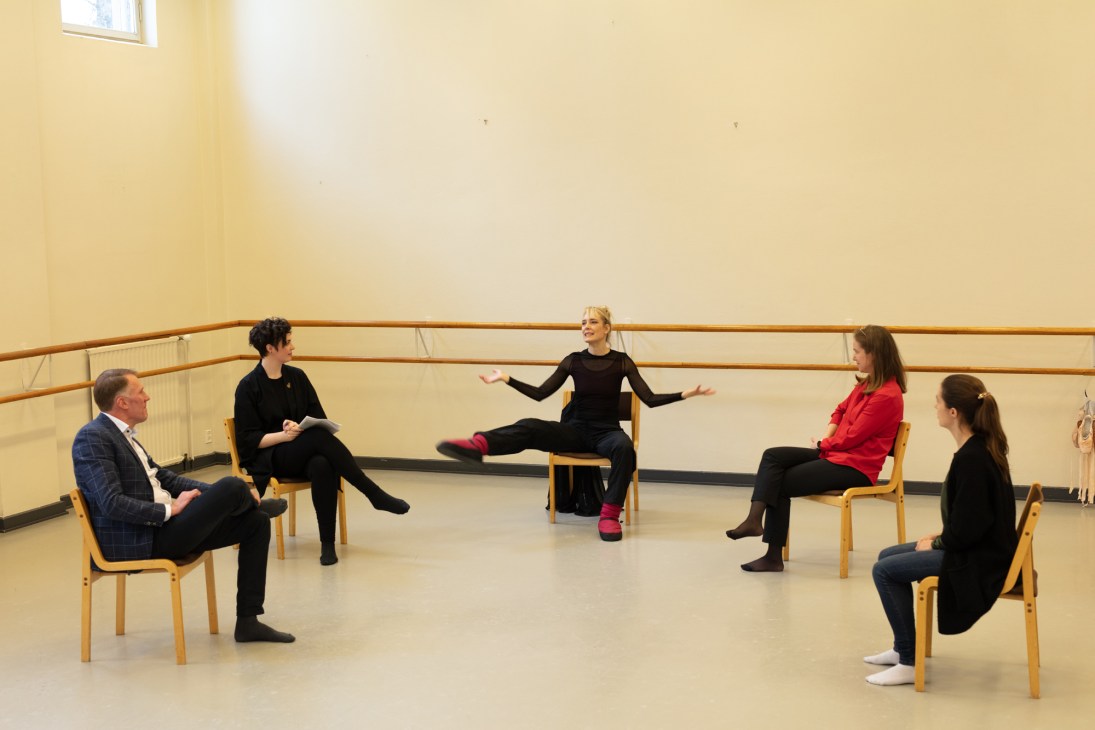
The notion of hiring a company to help you use culture to improve your business’s operations might conjure up the image of a team-building salsa class but that couldn’t be further from what Helsinki-based consultants Co-founders offers. The firm uses art forms such as creative writing, acting, dance and photography in a more expressive and abstract manner as it provides its services to some of Finland’s leading brands. “As a strategy consultancy we work with companies’ top management and help them develop their businesses in a very holistic way,” says the firm’s founder and CEO, Ia Adlercreutz.
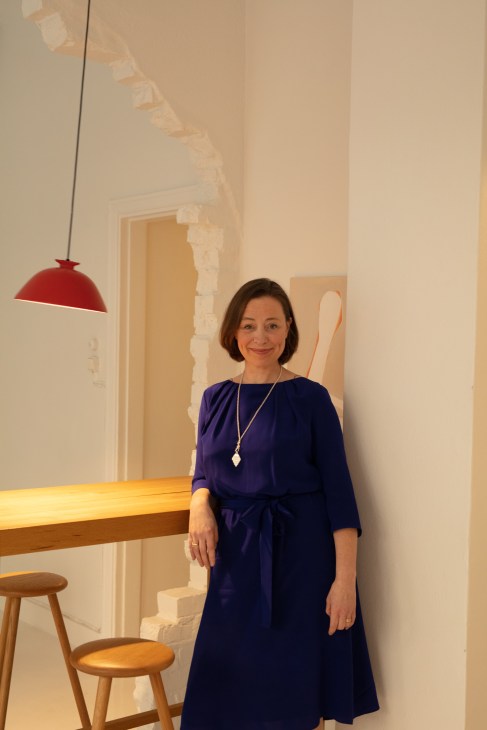
“[Art] can reveal a company’s internal culture to management in a way that no questionnaire can,” she says. “It can help to unify different ways of working when two companies merge; it can also help staff to internalise a new brand promise.” In practice, that means workshop attendees, both leaders and employees, either creating artworks or observing artistic performances. “A piece of music or soundscape has been proven to bring up feelings that reveal people’s sense of purpose and set of values, which show whether they connect with the purpose and values of the company as a whole,” says Adlercreutz. It may sound a little complicated but it seems to work, judging by the number of clients that Co-founders has.
The company was launched in 2018 and consists of Adlercreutz and a small team. It works with a network of advisers and professionals on a case-by-case basis, keeping its core staff minimal. It has enjoyed steady growth since its launch and is aiming to reach a turnover of €500,000 this year. Most members of the team have extensive business experience: Adlercreutz has managed renowned brands such as Kekkilä and Fiskars, while strategist Max Mickelsson has worked in top leadership positions for most of his career. This has helped the company to reach the right audience for their services. Often, however, what attracts new clients is that Co-founders’ methods have their basis in science. “This helps us convince some of the more engineer-driven companies that art works,” says research and insight manager Sonja Lahtinen. “Companies tend to view the world in objective terms but both consumers and other companies are made up of subjective human beings. Art can change and reveal the narratives that they use to frame their reality.”
co-founders.com
Lesson learnt: Don’t be afraid to bring some flair and creativity into your business. Not everything can be neatly explained with hard numbers.
16.
Eva Chen
Qdy magazine
The editor bringing print media to young Taiwanese in the digital era.
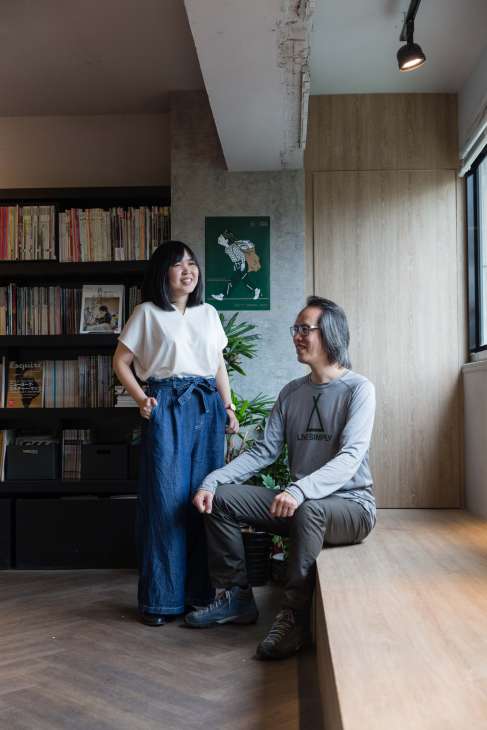
Qdy magazine (or Qiudaoyu) is an award-winning lifestyle magazine that covers Japan and Japanese culture from a Taiwanese perspective. The colourful quarterly is produced by a small team in Taipei and is written in Chinese. Each issue whisks its young Taiwanese readership through the latest in Japanese fashion, music, design, cuisine and travel. Most of its readers are aged between 20 and 35 and share a fascination with Japan.
Editor in chief Eva Chen is one of Qdy’s founders. She jumped into the magazine business straight out of university at an interesting time for publishing – especially for those who were enterprising in terms of securing funding. “We were recent graduates and we secured funds through online crowdfunding, advertising sponsorships and a youth entrepreneurship grant,” says Chen of the modest €6,000 that she and her team secured for Qdy’s first issue.
By the early 2010s, digital technology had begun to disrupt traditional media business models in earnest but was creating new opportunities for plucky independent publishers that were entering the market.
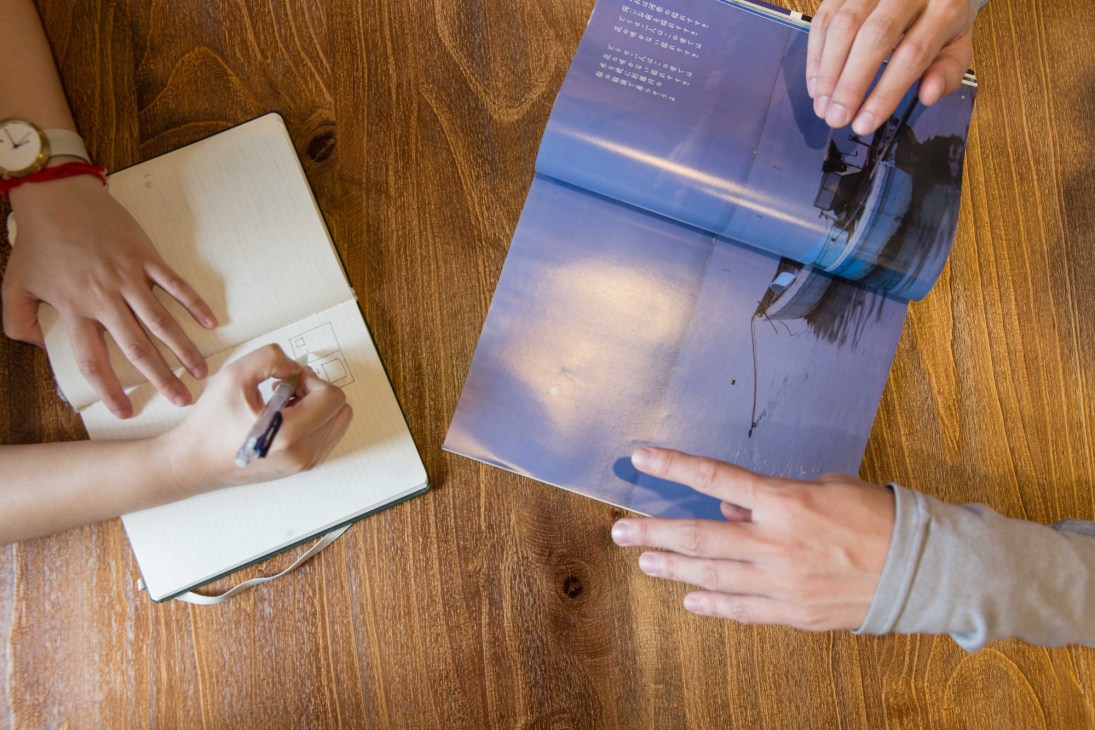
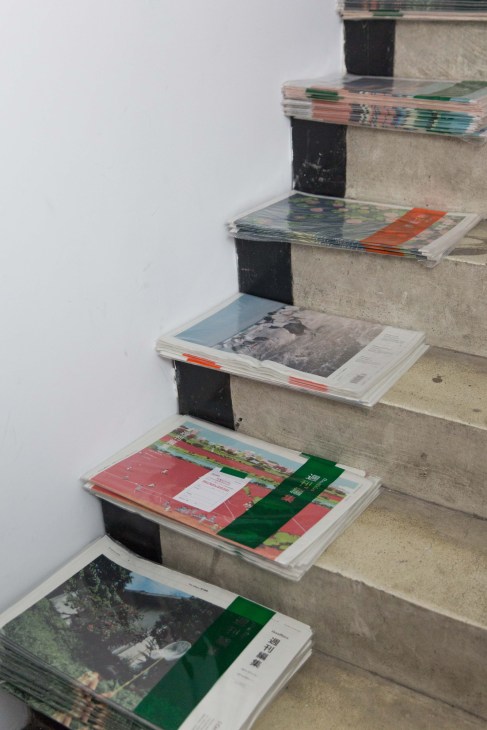
After experimenting with a few ideas, Chen and her colleagues settled on Japan as their editorial focus. Within four years Qdy magazine was turning a profit and being lauded at Taiwan’s annual media awards.
“When we established Qdy the publishing industry was at a turning point,” says Chen. “Consumers were looking for even more rapid and interactive information. In the face of this we try to emphasise the virtues of printed matter.”
qdymag.com
Lesson learnt:
Going against the grain can work. Even if everyone is telling you to go online, there might still be space in the market for an opinionated print-based magazine. (That said, we might be a little biased in this regard.)
17.
Laura Pujol and Zineb Britel
Zyne
The two Moroccan co-founders using footwear to keep ancient traditions alive.
Sustainability is now perhaps the biggest buzzword in fashion. It is bandied about in reference to everything from material choices to production methods. While this is ultimately a good thing, there is also something to be said about using fashion to sustain and reinvent traditional manufacturing cultures.
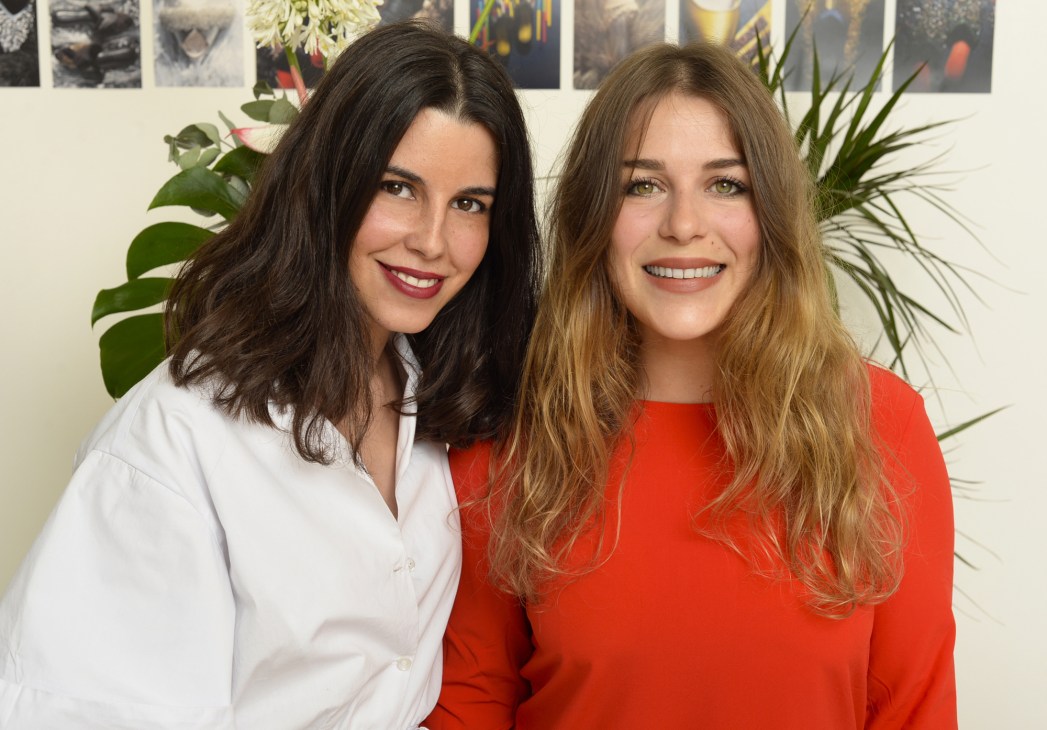
This is what Moroccans Laura Pujol and Zineb Britel have achieved with their footwear brand Zyne. After stints at Louboutin and Dior in Paris, the duo founded the brand in 2016. Zyne preserves traditional Moroccan manufacturing methods and footwear styles by using a neglected female workforce to craft contemporary versions of the traditional babouche slipper.
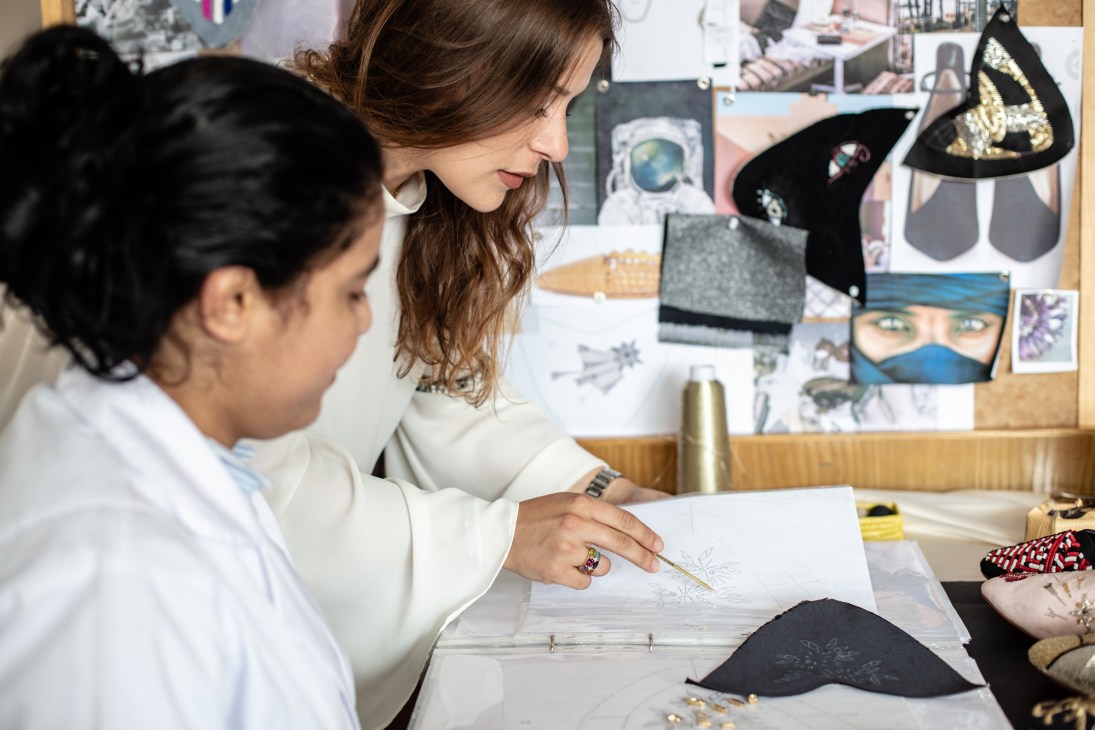
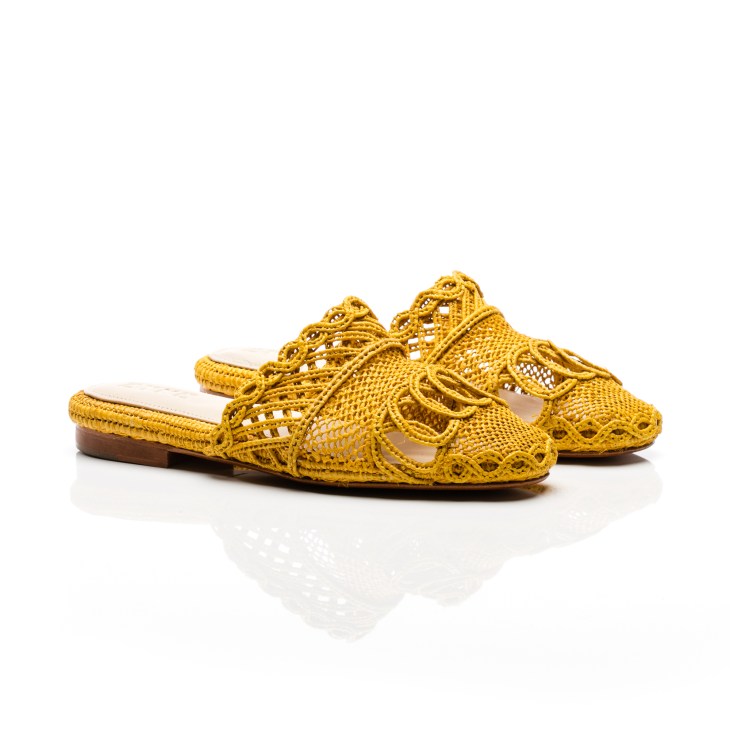
“Most artisans in footwear in Morocco are male,” says Britel. When she founded Zyne with Pujol, the sophistication in finishing and attention to quality needed to make their designs didn’t exist in the region’s labour market. Recognising an opportunity to start afresh by training women in Moroccan weaving and shoe-detailing methods, they built up a team of female petites mains, artisans with the dexterity required for elegant craftsmanship. These women now use ancient techniques to knit raffia, tinted using dyes made from vegetable scraps and spices, into modern versions of traditional shoes. “It can take between 13 and 26 hours to make a pair of our raffia slippers,” says Pujol. It’s time-intensive work that seems to have paid off.
Over the past five years, the pair have seen their atelier in Casablanca become self-sufficient and have a client list that ranges from fashion-savvy locals to royalty. Despite wholesale trade being put on hold during the pandemic, sales have continued to increase, thanks to e-commerce partners such as Matchesfashion.
“The brand appeals to a conscious buyer,” says Pujol. “That means people who are inspired by the convergence of cultures, who have a taste for handcrafted and comfortable luxury and who want to help Moroccan women thrive.” On top of this, wearers of Zyne’s shoes can walk easily in the knowledge that they’ve played a part in sustaining a traditional craft.
zyneofficial.com
Lesson learnt: Turning to their Moroccan origins helped Pujol and Britel appreciate still-valuable traditions. The duo realised that there is no need to invent a new product: a clear vision, new hands and a modern touch will do the job.
18.
Mark Richards
Grand Banks
The boat-maker who steered his firm against the headwinds of a pandemic.
Many businesses have found themselves on choppy waters during the pandemic but not Grand Banks. The boat-maker, which has offices in Singapore, Australia, New Zealand, the UK, the Netherlands and the US, recorded an increase in net profits of more than 300 per cent in June, largely as a result of a spike in demand for luxury yachts from US customers.
Much of the brand’s success can be attributed to its CEO, Mark Richards, a boat-builder and a skilled competitive yachtsman who took the helm when Grand Banks acquired his boutique brand Palm Beach Motor Yachts in 2014. The past 18 months have been the busiest of his life: Grand Banks launched a new sales division in Australia and took on three years’ worth of custom yacht orders.
The coronavirus pandemic isn’t the first crisis that Richards has steered the 64-year-old company through. When he joined as CEO, the Singapore-listed firm was beset with production inefficiencies and had a stagnant workplace culture. It was also losing money. In his first week Richards took the bold decision to cut ties with yacht dealers and bring sales in-house, eliminating the 25 per cent commission that the firm was shelling out to contractors. He overhauled the management team and revamped the product line.
He spent most of the next six years overseeing production on the factory floor in Johor, Malaysia, and working to expand the firm’s US presence in Florida. He is now eyeing European expansion and a new facility in Malaysia. “I’m CEO but I’m still very hands-on,” says Richards, who designs the yachts himself “from the keel up”.
Aside from running a company, Richards skippers a maxi yacht called Wild Oats XI. “It’s very similar to running a business,” he says. “You can’t sail a boat like Wild Oats without a fantastic team and you can’t run a business like Grand Banks without the same.”
grandbanks.com
Lesson learnt: Don’t seal yourself in the C-suite. Seven years after becoming CEO of Grand Banks, Richards remains involved in every stage of its operations, from designing its yachts to finding buyers.
19.
Shiho Umemori
Ume
The innkeeper offering urbanites a chance to reconnect with nature.
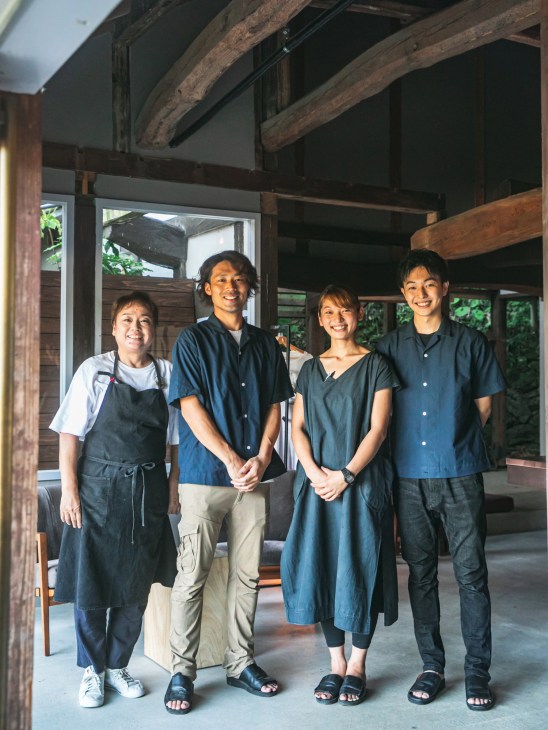
“I used to think that working in a skyscraper and wearing high heels were cool,” says 33-year-old Shiho Umemori, laughing. Lured by country life, Umemori left her job at an IT company in Osaka to help her parents run their sushi business in Nara city. Soon, however, she saw an opportunity in the rural community of Yamazoe, a village of about 3,330 residents in the northeastern corner of Nara prefecture. She started a small but beautiful inn, where she supports the area’s farmers by paying higher than the market price for their fresh produce to serve to her guests. “There are Yamato-cha green tea and forestry industries here,” Umemori says. “That’s about it.”

Things began when Umemori’s parents introduced her to farmers in the village, from whom they were buying wasabi leaves. When she moved to Yamazoe and got to know its people, she discovered that its way of life – from homemade pickle recipes to the traditional skills practised by its elders – was at risk of disappearing. “I thought that these precious things could be lost if nobody sheds light on them.”
So Umemori started tea-picking classes and inviting people to the village, which turned into the idea of opening a three-room inn. It has been a long journey of planning and earning the support of neighbours. For her, it was essential that the business was accepted by the community of seven houses right below the inn.
A stay at Ume inn, which was renovated by Kyoto-based architect Satoshi Takijiri, is about getting back to nature and a slower pace of life, from chopping firewood in the front yard to planting herbs in the garden before a trip to the sauna. “I want to create harmony,” says Umemori. “I want to create a circle to give back to the people in the village. And I want to do it working with nature.” And luckily for Umemori, there’s not a high heel in sight.
ume-yamazoe.com
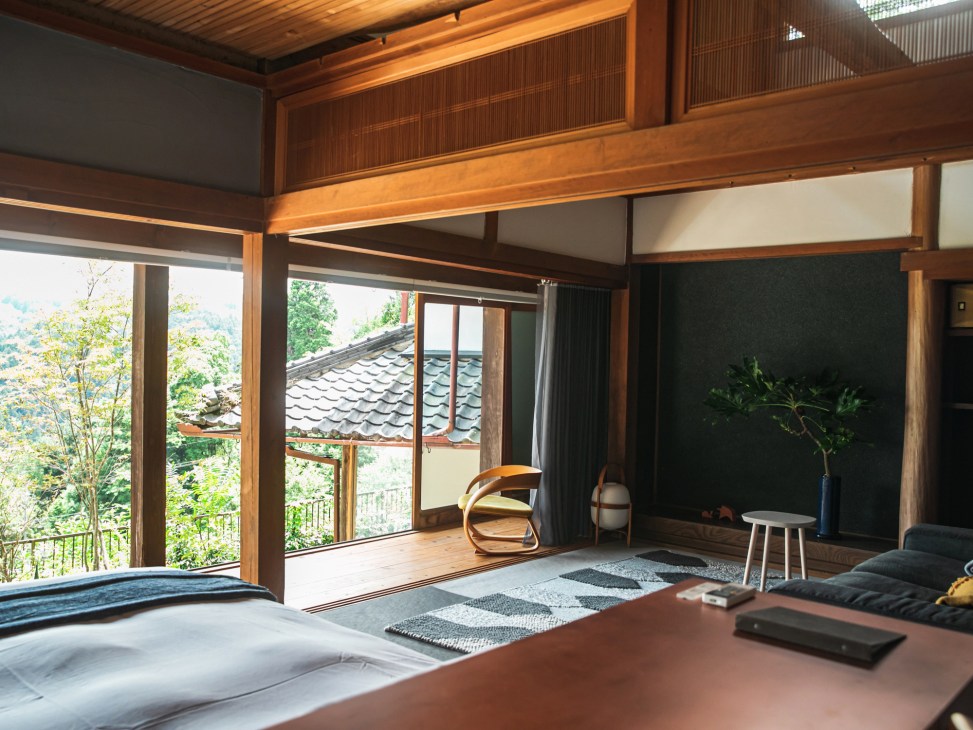
Lesson learnt: Relocating to a new place can bring fresh opportunities. Umemori’s decision to start afresh in a small village resulted in a more enjoyable pace of life.
20.
Joshua Millard
Joshua Millard
The womenswear designer whose farm-to-fashion label doesn’t follow the flock.
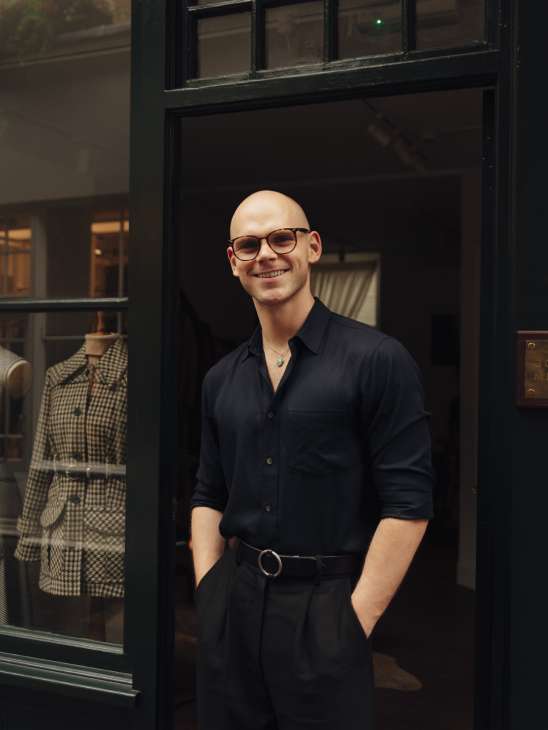
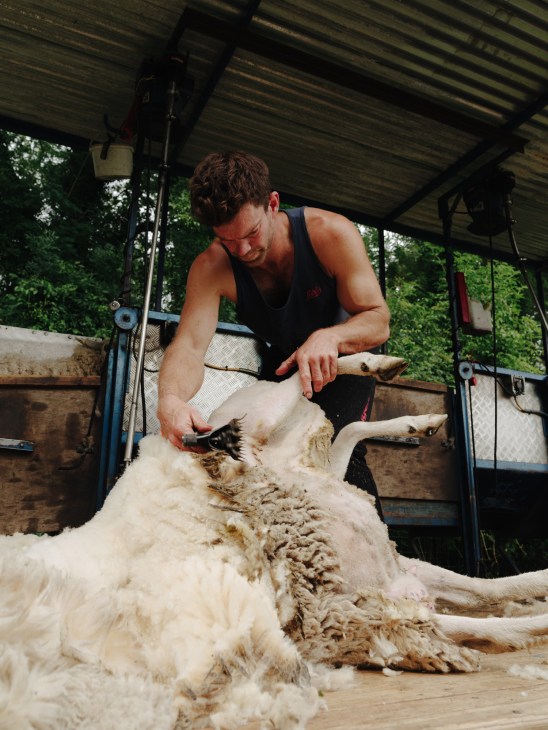
A sheep farm in Dorset in the UK is perhaps an unlikely place to find a high-end womenswear designer but Joshua Millard, who founded his eponymous label in 2016, is a regular visitor to these 1,000 lush acres that are home to his very own flock. It’s the fleeces from these sheep that will be spun into the wool used for his label’s tailoring. Millard has recently opened a studio-shop in London.
Where did the idea for your own farm-to-fashion supply chain come from?
My family are tenant sheep farmers, so I grew up in and around flocks. I wanted to get back to a more honest way of production; to connect with the product, including the cloth. We have become so lost in our habits of over-consumption.

How difficult was this idea to implement as a business?
My supply chain for the shearing, spinning, dyeing and weaving is done in the UK. It’s slow: the process of making the cloth can take four to six months. It was hard when I was starting out as there is no contacts database [for British manufacturers]. I spent a lot of time on Google.
Tell us about the business benefits?
This is a transparent supply chain, which cuts out middlemen and reduces transportation air miles. It supports British industry and skilled artisans of dying crafts. We know that our animals are treated fairly. And we’re also utilising a biodegradable material which today usually goes to waste because shearling is worth so little in the UK. My customers really appreciate our backstory. We have a unique offering and a homegrown British product. It adds to the brand’s ethos.
Why did you decide to open a shop?
It was a natural progression. I moved away from the relentless cycle of ready-to-wear and shifted my focus to bespoke tailoring. Having the atelier below the shop helps carry that message of transparency; it means I can work directly with the seamstresses on customisation.
Having a garment made to measure is a luxury that requires face-to-face fittings, which also allow clients to touch the cloth. I’m not trying to be a Savile Row tailor; that doesn’t interest me. What I’m offering instead is a fresh approach to English tailoring for women.
joshua-millard.com
Lesson learnt: Ethical fashion brands might be preoccupied with the ethics of their supply chains but few have invested in creating their own, as Millard has. Taking a good idea to its limits can make your business a unique proposition.
21.
Yarden Gross
Orca AI
The CEO using machine learning to make the seas safer.
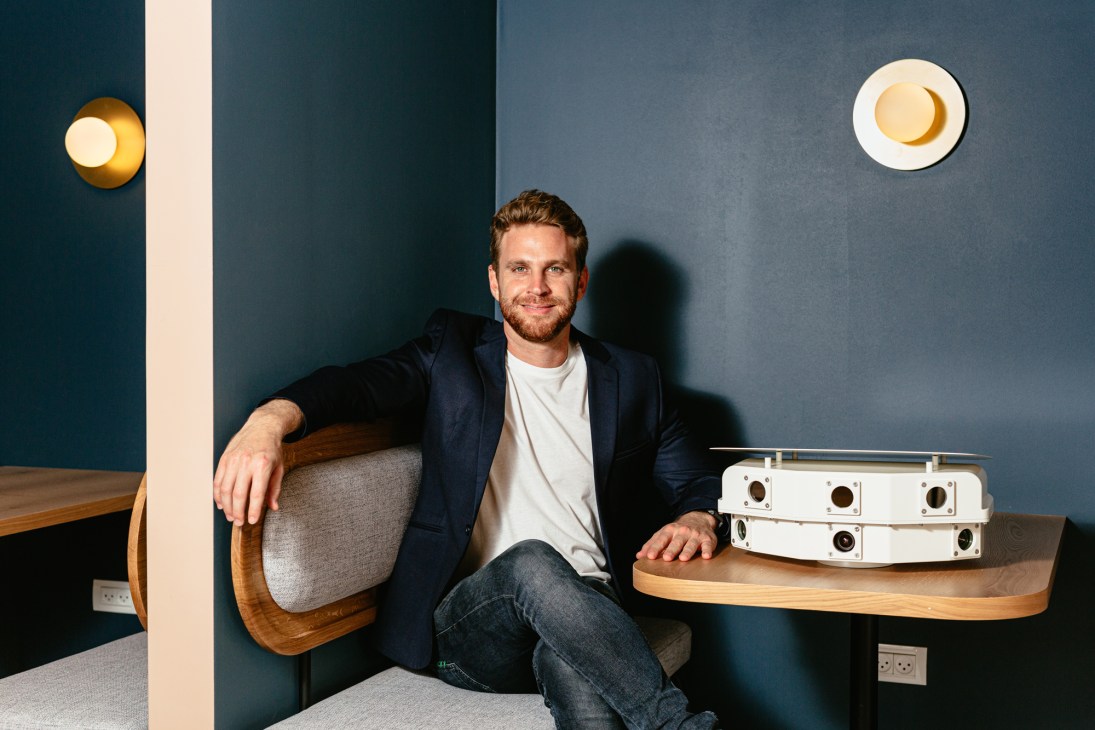
Water has always been a big part of life for Yarden Gross, who grew up by the Sea of Galilee. In 2018 he and Dor Raviv co-founded Orca AI, a software company that works with shipping operators to reduce accidents caused by human error. Costs associated with shipping mishaps are high: “One blockage can disrupt the entire global trade system,” says Gross.
Orca’s system, which automatically spots dangerous obstacles with smart sensors, helps captains to recognise problems earlier. “Our product lowers the overload of information and enables fleet managers to have a more comprehensive picture,” he says. Its AI-powered algorithms also continuously analyse a vessel’s environment, becoming smarter as it gathers more data. The company has been trialling an autonomous vessel with shipping company nyk.
Pulling in $13m (€11m) in funding in April alone, Orca is growing. “We’re building a team of talents in deep learning, AI and system engineering,” says Gross, who hopes that Orca’s system will one day be on “every vessel in the world”.
orca-ai.io
Lesson learnt:
Gross figured out a way to modernise an old yet enormously lucrative industry, which resulted in waves of investment. Sometimes it pays to make another business easy sailing.
22.
Marly Manku
La Clinique du Jean
The French tailor bringing Savile Row precision to vintage denim repair.
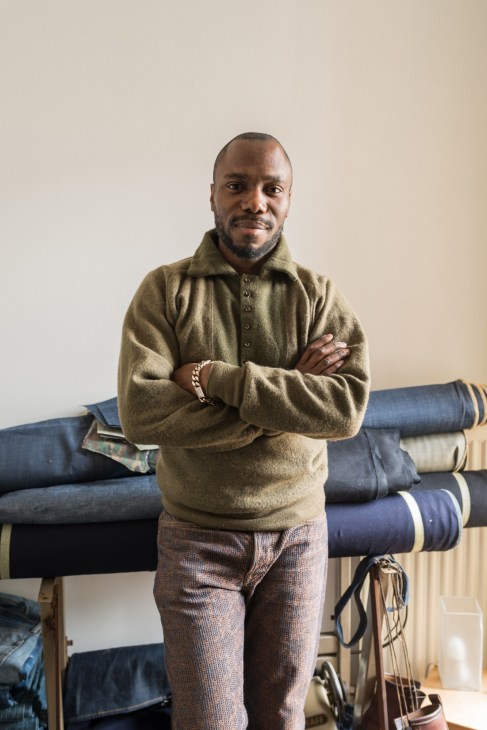
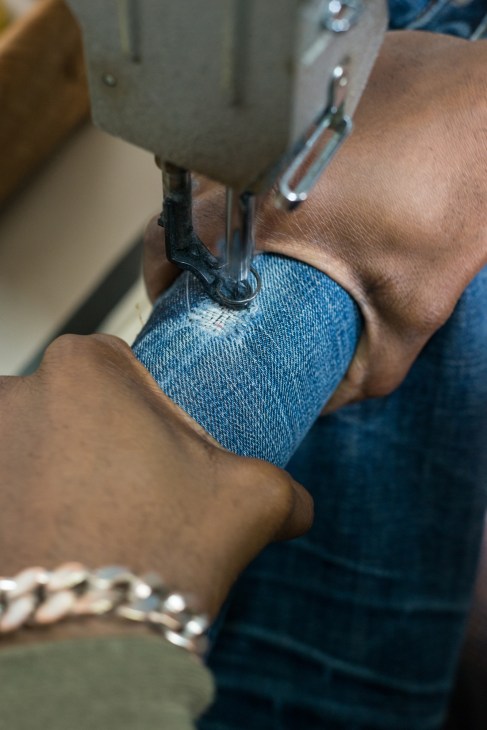
Unable to find a repair shop that could maintain the distressed effect of his beloved jeans while fixing their malfunctions, French tailor Marly Manku took matters into his own hands. “When I found that a service that could do this didn’t exist, I decided to launch it,” he says. So he started La Clinique du Jean in 2012. Today it provides a lifeline for all kinds of vintage and much-loved jeans with which his clients – collectors as well as passionate denim-wearers – cannot bear to part.
Following his training with a Savile Row tailor, Manku cut his cloth at Levi’s before settling in his studio just outside of Paris in Ivry. With his Union Special sewing machine he stitches tears and enlarges or shrinks jeans for a bespoke fit. An expert at reviving clothing from military gear to workwear, he offers tailored customer service too: he will not only collect a garment but also deliver it a week later looking almost as good as new. Though a hard worker, his advice to entrepreneurs is: “Take a break – you’ll be more effective.” When he started his business, Manku explains, he “barely stopped for several years. Even when I wasn’t working I was thinking about the business. I thought that kind of dedication was good but I ended up making mistakes because I was exhausted.”
He is also proud to have kept the company manageably small. “[I like] the ability to make quick decisions,” he says of being his own boss. “You don’t have to get approval from lots of different people before you do something.”
lacliniquedujean.com
Lesson learnt: Not every business needs to completely change the world but if every fashion firm or new venture had Manku’s sustainable credentials, then that world would be a better place.
22.
Nada Debs
Nada Debs
The furniture-designer with a positive vision of modern Arab identity.
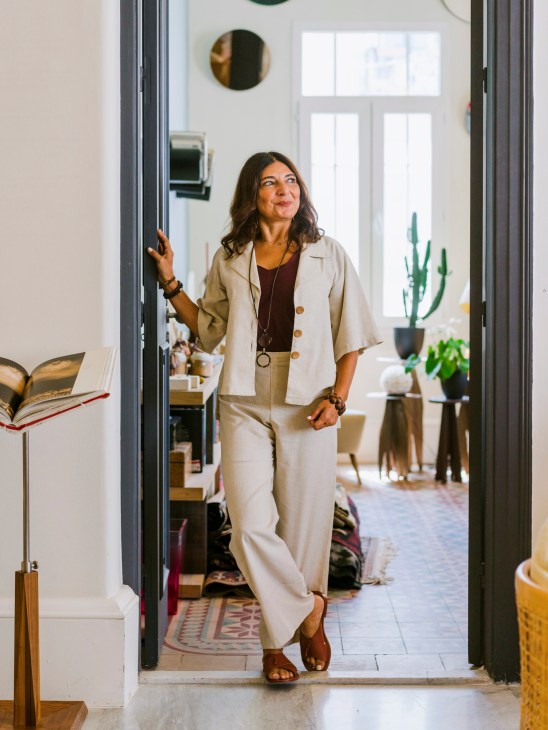
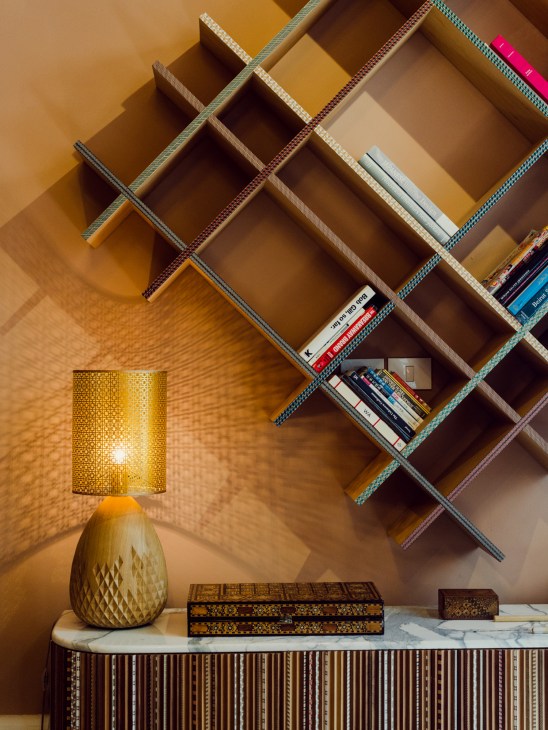
When Nada Debs moved to Beirut in 2000, she discovered that there was a lack of furniture made there that honoured the area’s rich craft heritage. The Lebanese designer, who grew up in Japan, where her family runs a textiles business, filled this gap with a new aesthetic in which clean lines and extravagant patterns collide. “I look at the region’s beautiful craftwork and apply it to contemporary forms,” says Debs. “My furniture gave me the answer to my identity crisis, which was torn between Japanese and Arab cultures.”
Debs’s studio in a large 1930s mansion block had to be completely overhauled after the 2020 port explosion. The building, with its Carrara-marble flooring and terrazzo tiles, is now back in a shape that’s empathetic to her work’s character. “Designing furniture has shown me that you can apply opposing elements and the hybrid will work,” she says. “I want to push the boundaries of craft in my region.”
What was the idea behind your studio?
By the time I had moved to Beirut, my work was instilled with the importance of heritage in design. I was curious about Middle Eastern craft and experimented with it, ultimately creating a new identity in Arab design that I call “neo-Arabian”.
Who are your customers?
We have many different types of customers. My clientele tends to be cosmopolitan: I sell to expats and foreigners who love the idea behind the brand. I also work with embassies, government offices and institutions, because for them this represents the idea of the modern Arab identity.
Why has it been important for you to continue to produce in Lebanon?
The skills involved in Lebanese furniture- making are a dying craft, so we must bring the craftspeople work to keep it going.
nadadebs.com
Lesson learnt: Pursuing her own aesthetic inclinations that were forged by her cosmopolitan upbringing, Debs has come up with a new style that captures modern Arab culture. You don’t need to be a purist to create something authentic.
24.
Kristin Hjellegjerde
Kristin Hjellegjerde
The gallerist who made a splash by taking the path less travelled.
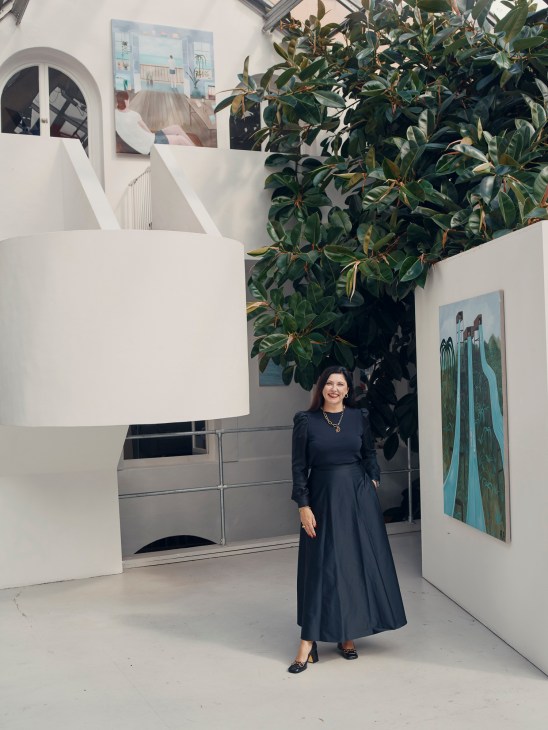
Stories of industry outsiders who go on to run internationally renowned galleries aren’t frequent in the art world. But ever since she opened her first outpost in Wandsworth, south London, in 2012, Norwegian-born Kristin Hjellegjerde has gone against expectations. “People were, like, ‘Good luck down there,’ but it was all I could afford,” she says from her airy space in London Bridge, her second outpost in the city, which opened in 2019.
Hjellegjerde studied literature, criminology and history and worked jobs ranging from modelling to property sales in New York, Los Angeles, Singapore and Bangkok before moving to London. It was here that she finally decided to pursue her passion for art. “If I worked for somebody else I would have had to start at the bottom so I decided to open my own gallery,” she says. “I had worked in real estate in New York so I knew I was good at selling.”
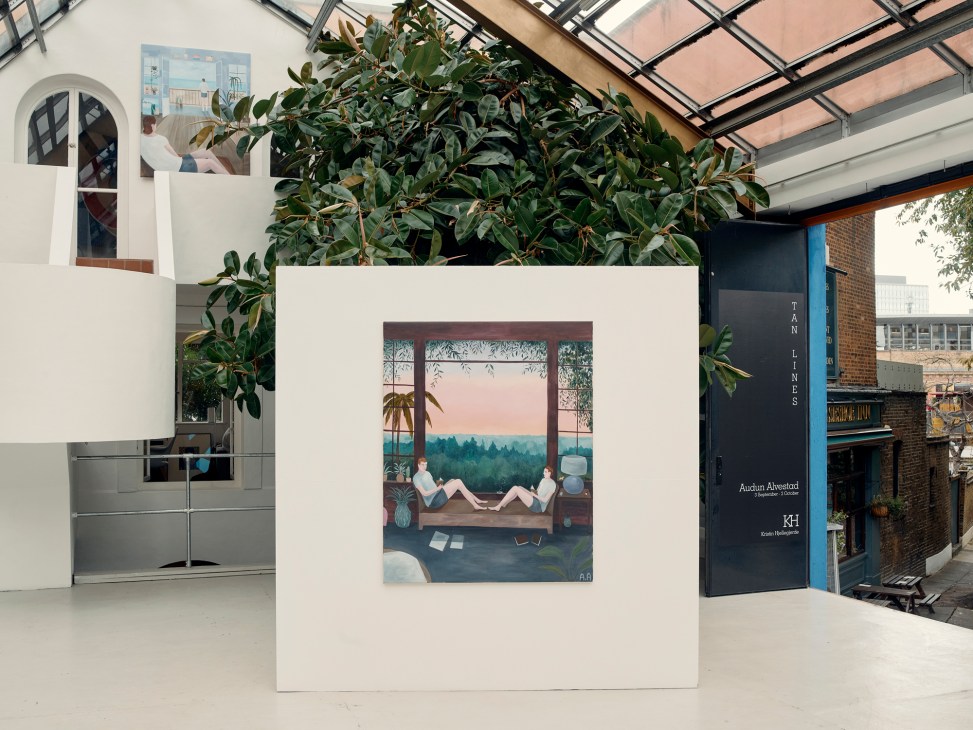
This no-nonsense approach has helped her to amass 41 artists, many of whom have stayed with her since day one. Hjellegjerde specialises in up-and-coming creatives and her shows now frequently sell out within days. But money was initially tight; it took about six years for the business to become profitable. “Nobody knew who I was,” she says. But her perseverance paid off. “If I had allowed myself to have a plan B, I would never have succeeded.”
While many of her competitors are experimenting with pop-ups in locations close to holiday destinations for the wealthy, Hjellegjerde has decided to invest in two new ventures that are not on the art map. First, she has taken over a derelict German castle. “The whole place was run down. But it was a win-win situation because the owner needed us and we needed him,” she says. Then, last summer, she transformed a former shrimp factory in Norway into another new space; the opening show sold out before she could even hang it and the gallery now receives about 100 visitors a day. “I just want to build great connections: it’s about having a great life and my artists having a lot of joy when they present their work,” she says. “Be nice and generous and something good will come out of it.”
kristinhjellegjerde.com
Lesson learnt: Don’t let a seemingly tough-to-crack industry scare you off. If you are determined and brave, you can carve out your own space. Sometimes it’s the least predictable ideas that yield the best results.
25.
Dan Keeling and Mark Andrew
Noble Rot
A magazine has grown into restaurants, a wholesaler and a shop.
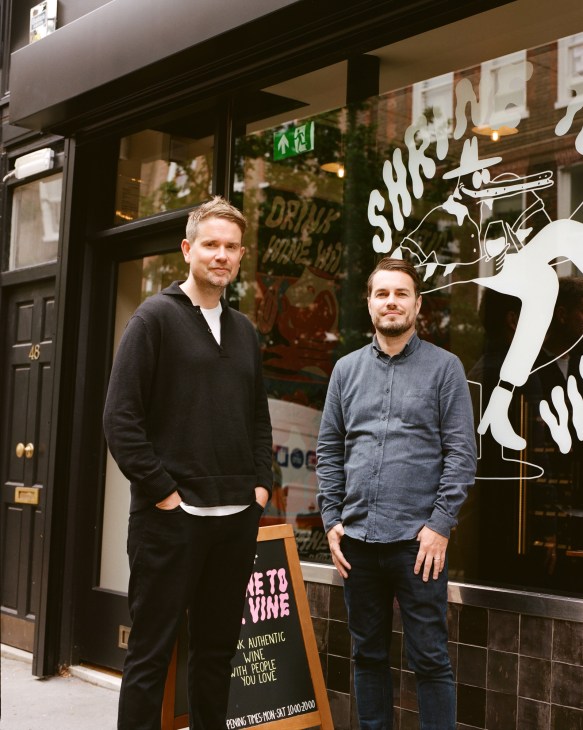
In 2006 Dan Keeling was managing director of Island Records. He was based in an office on London’s Kensington High Street but found himself spending a lot of his time in the nearby wine shops. Mark Andrew, a Mancunian whom Keeling describes as having “more front than Blackpool Pleasure Beach”, was working in one such establishment and the pair bonded over their love of wine. Neither knew at the time how their meeting would influence their careers but their shared passion led them to found a magazine in 2013 with the stated aim to “de-twattify wine”.
That magazine, Noble Rot, swiftly grew into a business that includes a restaurant on Bloomsbury’s Lamb’s Conduit Street, which opened in 2015, and another in Soho that launched in 2019. By telling the stories of the wine-making community in their magazine and in their book, Wine from Another Galaxy, published in 2020, the pair forged strong bonds across the industry. This allowed them to start a wholesale company, Keeling Andrew & Co, which now supplies the trade and provides lesser-known wine-makers with a platform for selling their bottles in London’s best bars and restaurants. But they weren’t done there.

“The pandemic spurred us into action,” says Keeling, explaining their decision to open a new wine shop called Shrine to the Vine, close to their first restaurant on Lamb’s Conduit Street, earlier in 2020. “It was a good time to negotiate and we love old buildings.” The pair signed a lease on a former bike shop in June, before tapping Steven Saunders of London-based interior design practice Fabled Studio to transform it into a more welcoming space.
Despite their expertise and passion for learning about wine and meeting the people who make it, Keeling and Andrew wear their knowledge lightly and still fizz with enthusiasm when discussing an old Latour or a punchy Umbrian sagrantino. “Opening a restaurant taught us to cater to everyone,” says Keeling. “That means both the 80-year-old who just drinks claret and the 20-year-old hipster who wants to try natural wine.” As for the pair’s own preferences? “We’re still exploring,” says Keeling.
noblerot.co.uk
Lesson learnt:
You don’t always need a plan. This pair quit stable jobs to start a passion project that grew from publishing to restaurants, a wholesale business and a shop. Their good taste and enthusiasm helped to guide the expansion. “We just love wine,” says Keeling.