The class of 2026: 16 emerging stars in art, politics, architecture and beyond
Monocle has always championed rising stars. Here we spotlight new talent in a variety of fields who are on the cusp of graduating to greater prominence.
Monocle has always sought out and celebrated fresh talent in everything from design and diplomacy to art and hospitality. Here, we spotlight 16 people who are challenging the way that we work and doing things a little differently. In a world beset by thorny problems and negative news, we’re putting forward folks with passion, energy and good ideas. From a Latin American musician finding international success to a self-taught Japanese designer with a mastery of fabric, new talent continues to flourish across the globe. We meet emerging stars in the fields of art, politics, architecture and more. Each has the potential to shape their industry, shift the norm and graduate to something even greater.
Sofia Xanthakou
The ambitious designer bringing fresh ideas to one of the world’s oldest cities.
Athens
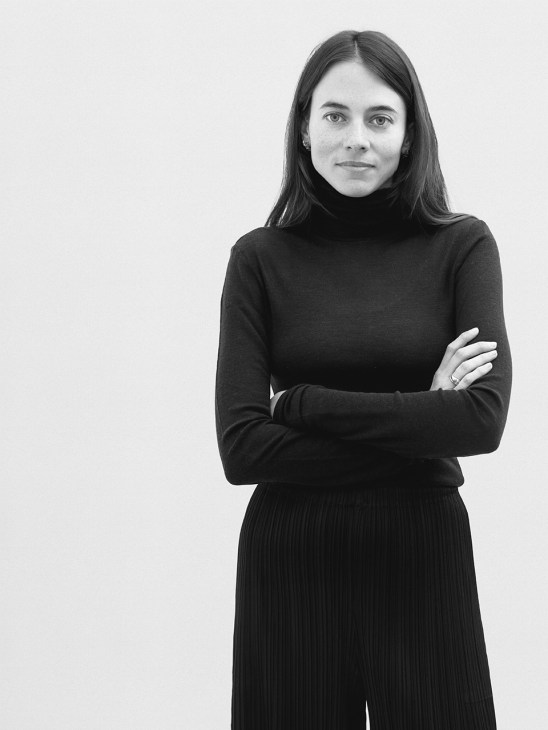
“I’m a young architect so my work still feels fluid,” says Sofia Xanthakou, the founder of Athens-based practice Local Local. “There’s room for exploration.” Prior to setting up her own office in May 2025, Xanthakou studied at Harvard University’s Graduate School of Design and the Pratt Institute School of Architecture, before working for firms in London and New York. “In big offices, you can only be in charge of a small part of a wider project,” she adds. “In Athens, I work across a variety of projects, from residential and commercial to something totally different, such as a university building or a hospital.”
Xanthakou and her four-strong Local Local team have completed the design of Melas Martinos art gallery in Athens’ Monastiraki neighbourhood. Another project consisted of the renovation of a 19th-century townhouse in Plaka. “It’s important to observe the site of a project, to understand its history,” she says about her approach to new commissions. “I’m not a loud person and want things to be refined. I like it when people enter a space and don’t necessarily understand what is old and what is new. It means that a project is well rooted.” To achieve this, Xanthakou works with local materials and craftspeople.
As an architect operating in one of the world’s oldest cities, Xanthakou spends a lot of time contending with Greek bureaucracy – something that she says requires equal parts tenacity and patience. “It’s hard to know which rules to obey and which are the most current – and obtaining permits is exhausting,” she says. “But creating something unique within these restrictions iiis an interesting challenge. And the wait for permits allows us the time to design carefully.”
The ambitious Xanthakou is poised to help transform her home city and beyond, with projects under way in the capital as well as in the mountains of northern Greece and the country’s islands. “It’s not that I don’t want to do things as they have been done in the past but it’s good to spice things up.”
José Luis Barquero
The Spanish painter captivating collectors and causing a stir.
Barcelona
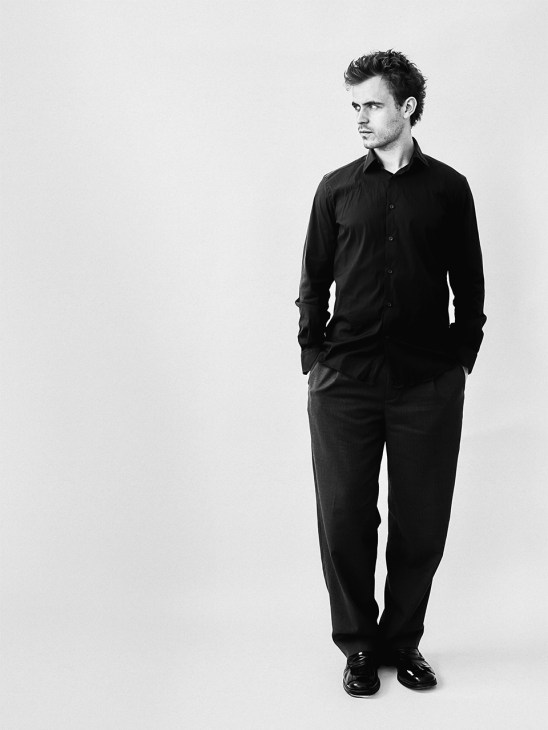
In the salons of Barcelona, there’s a growing buzz around José Luis Barquero – known simply by his surname on the nameplates at Galeria Mayoral, a respected Catalan gallery that acts as his local agent. Contemporary art dealer and philanthropist Carmen Thyssen was an early advocate and Barquero’s works are now on the walls of canny collectors in London, Paris and New York. From his studio in the industrial neighbourhood of L’Hospitalet de Llobregat, the 28-year-old graduate of London’s Central St Martins and Pompeu Fabra University in Barcelona paints large-scale canvases of human figures in abstract spaces. Some find them haunting but Barquero insists that his work is optimistic.
“These figures might not have a fixed gender – they’re somewhere in between – but they have intention, a sense of purpose,” he says. “Even if they’re struggling, they’re moving forward.”
Barquero tells Monocle that, for him, living and working in the same space is a crucial part of producing original ideas. “The short distance between my bed and the studio is important,” he says. “I can start working without rationalising anything. The ideas are raw, not yet shaped by the day. I also keep my library close and take reference from my books. There’s a dialogue between what I read and what I paint.” Literature also offers refuge when painting becomes too much. “When I need a break, I go to the books and then back again.”
Travel is another important influence on his work. “Barcelona is my base but I’ll spend a few months in New York and Paris this year,” he adds. “Travel opens you to completely different environments with unfamiliar inputs. Though social media connects artists globally, it’s not the same as living in another city. Going to places brings new colours, forms and ways of working. You see how other artists approach things and it pushes you out of your comfort zone.”
Where to see Barquero’s paintings
Barquero is in New York between June and August under the Cabin residency programme at the Kevin Kramer Gallery before returning to show at the Mayoral Gallery in Paris later in 2026.
Clara Vitaggio
The winemaker reimagining the taste of a terroir.
Sicily

Mention “marsala wine” and palates will be prepped for the familiar fortified tipple from the westernmost tip of Sicily. But 28-year-old Marsala native Clara Vitaggio wants to show that there’s more to her region than the sweet stuff, and attract thirsty connoisseurs in the process.
Though small in scale, Vitaggio’s namesake winery produces about 10,000 bottles a year using indigenous white grapes, including grillo and catarratto. “I’m interested in identity and quality, and want the terroir to be felt in the glass,” says the winemaker, who recently earned a doctorate in oenology from the University of Palermo, where she currently teaches.
After a two-year stint in the Mâconnais region of Burgundy, where she focused on ageing white wines, Vitaggio returned to tend her family’s plot. Today she’s preparing for her fifth harvest. Her goal is to produce wines that are “clean, focused and instantly recognisable”. For her red Gloria, which she makes using nero d’avola grapes, she removes the skins to avoid heavy, jam-flavoured variants.
Before releasing her bottles to the public, Vitaggio’s vintages are stored at the winery inside a naturally cool grotto that dates back centuries – a place that hints at the importance of honouring the past as we dash towards the future. Soon she hopes to have new additions made from overlooked grapes such as lucignola and inzolia nera, older Sicilian varieties that she believes will become increasingly useful as the island faces hotter temperatures and droughts. “Native varietals know the land better,” she tells Monocle. “They are part of our past but can help in the future.”
With her wines, Vitaggio is reminding the industry that tastes change, as well as practices. Today’s experiments could well become tomorrow’s mainstays.
Tong Hann Goh
The restaurateur spicing up a city’s dining scene.
Singapore
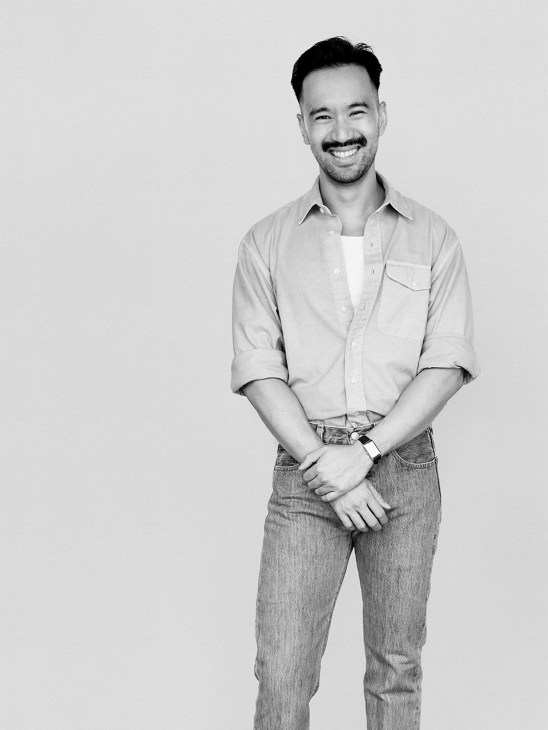
The first thing that struck Tong Hann Goh after he returned from New York to his hometown of Singapore was how restrained the city-state’s restaurants could be. “Clean, modern and minimal – there wasn’t anywhere I wanted to linger,” he tells Monocle. So, at the age of 26, he opened seafood restaurant Marcy’s. With its maximalist interiors steeped in Old-World charm – think drapes, tiered chandeliers and gilded mirrors – it offers a confident vision of how dining in a global city can look.
“I had always craved the experience of taking two steps from the street into a restaurant and feeling as though I was somewhere else entirely,” says Goh. Rather than relying on time-tested recipes, Marcy’s offers cosmopolitan interpretations of classic dishes, such as clams rockefeller topped with breadcrumbs, Calabrian chilli and Sichuan oil. “
When we started Marcy’s, most Singaporeans had a specific idea of what a seafood restaurant should be,” says Goh. “This presented us with an opportunity to expand the palate.” Bite by bite, the business has gathered pace, encouraging Goh to launch a dive bar, Parliament, and Maggie’s, a playful take on a Chinese restaurant. Both capture Goh’s founding idea of crafting new worlds. His latest venture is a daytime deli called Between Buns – an airy, colourful place serving tasty sandwiches.
“Pleasure is central to everything that we do,” he says, explaining the name of his restaurant group, PleasureCraft. “It doesn’t have to be cheeky or sensual. It’s about appealing to all five senses. Craft means that we’re always looking for ways to improve. The work is never done.”
Tong Hann Goh’s rules for starting a restaurant:
- A generous spirit will be remembered long after the moment or meal has passed.
- This is a team sport – one that starts with how we care for one another.
- It might take time for a great concept to become clear. Keep listening and trust your instincts.
Tura Cousins Wilson and Shane Laptiste
The architects with an eye on building communities.
Toronto
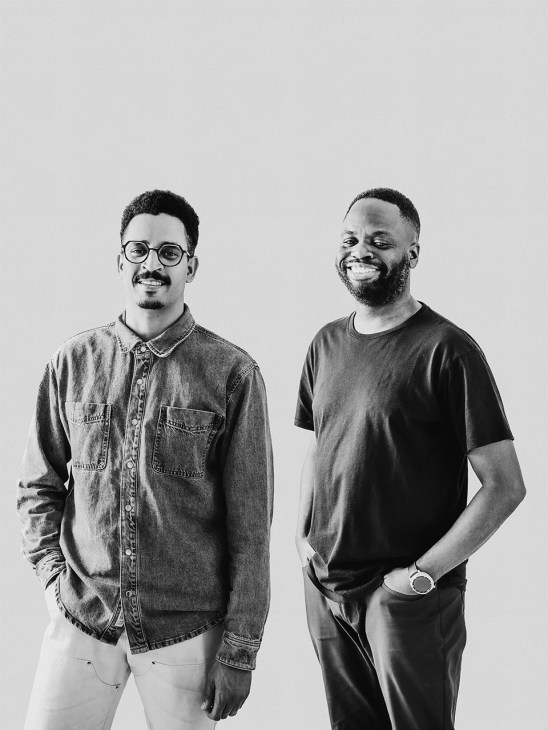
It’s April and the cherry blossoms that canopy a swathe of High Park in Toronto are blooming. In 1959, Toru Hagiwara, Japan’s ambassador to Canada, presented the sakura trees to the city to thank it for being a refuge for Japanese-Canadians after the Second World War. The petals inspired the design of the park’s public pavilion by Studio of Contemporary Architecture, a local practice that architects Tura Cousins Wilson (pictured, left) and Shane Laptiste (right) established eight years ago. “We’re curious about how architecture can facilitate culture, community and city building,” says Laptiste. The studio has applied that spirit to many settings, including changing rooms for a football pitch in Collingwood and an exhibition space for British-Kenyan ceramicist Magdalene Odundo’s first North American retrospective in Toronto.
Designing spaces in which people congregate is the studio’s signature. “We have been fortunate to take on projects that you can spend some time with – the architecture of spaces that are typically secondary or ancillary in some way,” says Cousins Wilson. “These are opportunities to showcase how architecture on a more intimate scale can have an impact.”
A big advantage of being a young studio on the up is the freedom to speculate. “As a smaller practice, we get to explore how we can make a difference and really cater to communities that we know could benefit,” says Laptiste. Among those is an urban vision for Toronto’s Little Jamaica neighbourhood and a report on reimagining one of the city’s defining urban features: its miles of laneways laced between major thoroughfares. “We are interested in how they can be used differently, beyond laneway housing or residential suites,” says Laptiste. “Perhaps for little neighbourhood cafés, bicycle repair shops or smaller gallery spaces.”
Margaret Austin and Hannah Rieke
The Brooklyn shopkeepers focusing on in-person experiences over digital distractions.
New York
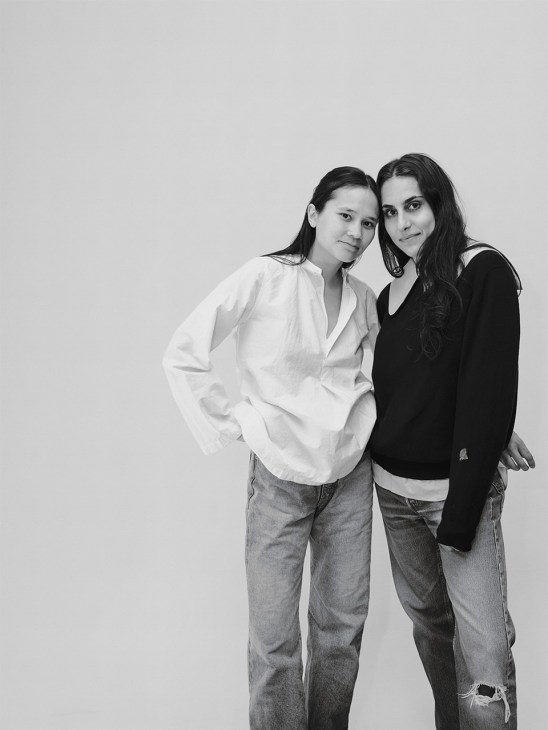
Longtime friends Margaret Austin (pictured, left) and Hannah Rieke (right) opened their womenswear boutique, Outline, at the ages of 29 and 28, respectively. Their goal was to create a classic neighbourhood shop serving the people they grew up around in Brooklyn. It was risky: since the coronavirus pandemic, the fashion industry had been questioning the relevance of bricks-and-mortar shops. Retailers from Barneys to Opening Ceremony (where Austin previously worked) were shutting their doors. But with its inviting interiors and smart selection – Outline has brought Japanese stalwarts Auralee and Ssstein to New York, as well as Lebanese labels Super Yaya and Renaissance Renaissance – the space quickly began to draw customers of all ages in search of artisanal design and a more sociable style of shopping. “What’s most important for us is catering to our immediate community,” says Austin. “These are the people we come into contact with every day.”
As the business evolves, the duo continues to make unorthodox moves that are helping to build customer loyalty. Most recently, they shut down their e-commerce site and created a catalogue to highlight their seasonal picks. “E-commerce didn’t feel very inspiring,” says Rieke. “We are about the in-person experience. Having a tangible object every season matches the essence of what we do.” Creating the catalogue also opened new opportunities for collaboration with photographers, graphic designers and friends who dabble as models. For spring/summer 2026, Oscar-nominated costume designer Miyako Bellizzi joined the team as a stylist.
Trusting your vision makes business sense. Since the duo abandoned e-commerce and introduced the catalogue, sales have gone up. “Shops existed before the internet and focusing too much on digital sales has been the downfall of some,” says Austin. “Why can’t we focus on what we do best?”
Chloé Ridel
The politician helping to steer her party’s – and her country’s – revival.
France

“I came into politics quite late,” says Chloé Ridel, a 34-year-old MEP for Parti Socialiste (PS) – but she has achieved an impressive amount already. Ridel’s CV encompasses stints in France’s ministry of economy and finance, as well as activism. She co-founded Mieux Voter (“Better Voting”) in 2018 to push for a more innovative approach to polling. In 2020 she co-founded Institut Rousseau, a left-wing think tank. With its emphasis on consensus building, it prefigured NUPES, the progressive alliance that overcame the far-right in the 2022 French legislative elections, by two years.
Since her appointment to the role of PS spokesperson in 2023, Ridel has been elected to the European Parliament and helped co-ordinate the ambitious new party programme – an ideological and policy roadmap designed to guide the PS into France’s 2027 presidential elections and beyond. “The left has been absent from the second round of French presidential elections three times now,” she says. “My generation is tired of waiting.” The programme that she worked on is awaiting ratification by PS members but could be the shot in the arm that the party needs.
“It’s built around liberty, which is not a classical notion for the left,” Ridel tells Monocle at the EU’s headquarters in Brussels. As in the US, the idea of liberty has a particular resonance in France. “It’s a revolutionary promise,” she says. “The problem today is that we are not equal in front of liberté.” The programme looks beyond France and touches on European sovereignty. Though she acknowledges that this is a challenging moment for the EU, Ridel is undaunted. “I grew up in the 1990s, when Europe was very positive,” she says. “Then, with the crisis of 2008, everything collapsed.” Despite the political turmoil of recent years, she tells Monocle that her generation remains hopeful and committed to delivering transformative change. “We’re not nostalgic for the world before.”
Winnie Dunn
The writer giving voice and optimism to a long-neglected community.
Australia
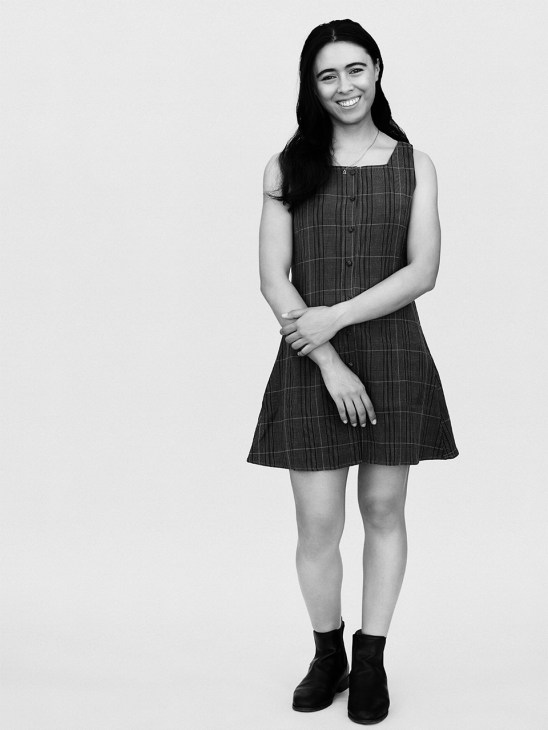
Writer Winnie Dunn’s work explores a subject that rarely makes the bestseller lists: the working-class migrant experience of Pacific Islanders in Australia. But her combination of humour and searing honesty has readers hooked. Her acclaimed novel Dirt Poor Islanders was nominated for a slew of prizes, including the prestigious Miles Franklin Literary Award. It showed readers an Australia that lies beyond the glittering blue waters of Sydney Harbour and the much-romanticised bush. The novel is set in the migrant heartland of western Sydney – just 40km inland from Bondi but, for many, a world away.
At the age of 30, Dunn has achieved the kind of success that most writers dream of. Still, she’s bemused to be considered an up-and-comer worthy of inclusion on a list such as this one. “In Tongan culture, 30 is actually considered pretty old and, if you’re not married with kids, you’re seen as a bit of a failure,” she says.
A third-generation Australian born to Tongan-Australian parents, Dunn grew up immersed in the culture of the Pacific Island nation, thanks to a large extended family. Tonga, an island kingdom not far from Fiji, is known for its tropical beaches and devoutly Christian values. Its already small population is falling as people migrate to Australia and New Zealand for work. “There are fewer young people to farm the land,” she says. “Tonga is now very neglected.”
Dunn’s suburb had a sketchy reputation for being socially disadvantaged and crime-ridden, which made her all the more determined to tell a fresh story about it. A voracious reader, she started writing in earnest at university and soon became the general manager of the Sweatshop Literacy Movement, which helps would-be writers from her neighbourhood. Dunn is now editing an anthology and working on her second book, a campus novel that is again rooted in the culture of Pacific Islander-Australians.
About ‘Dirt Poor Islanders’:
Dunn has said that the title of her debut novel is a nod to Kevin Kwan’s portrayal of the Singaporean high life in Crazy Rich Asians. The defiant work offers a complex portrait of the young protagonist, Meadow Reed.
Alice Carvalho
The actor whose pitch-perfect performances are scoring critical hits.
Rio de Janeiro
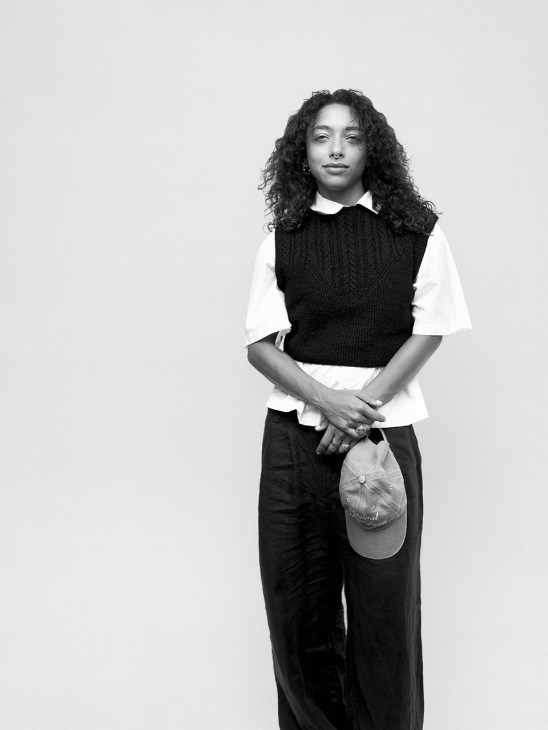
Though best known for her acting career, Alice Carvalho is also a screenwriter and playwright who dabbles in music. She has caught the eye of directors such as Ryan Coogler, who was among those impressed by her role in Brazilian film-maker Kleber Mendonça Filho’s Oscar-nominated The Secret Agent. Growing up in Natal in Rio Grande do Norte, Carvalho was hooked by music at an early age. A passion for theatre soon followed. Though her home state isn’t the centre of the Brazilian arts sector, she tells Monocle, “The alternative scene in Natal is so rich culturally.”
With job offers beginning to arrive, Carvalho moved to Rio de Janeiro in 2023. Besides her success with The Secret Agent, she has a leading role in Cangaço Novo (“New Bandits”). The first season was a global success; the second was released in April. Today she’s working on what is expected to be her biggest role yet: the lead in a biopic about star Brazilian-Swedish footballer Marta Vieira da Silva. The film is set to be released next year, just before Brazil hosts the Fifa Women’s World Cup.
When Monocle speaks to Carvalho, she has just returned from a training session. “Marta is my dream role,” she says. “This is certainly the biggest part in my career in terms of challenge and discipline.” It helps that Carvalho is friends with the real Marta. “We have been talking a lot. She has been giving me advice. The craziest thing about her is that she doesn’t have any notion of how iconic she is.” Couldn’t the same be said about the modesty of this rising star? Carvalho is cautious of praise. “I like to take calculated steps in my life and not to be presumptuous.”
Three performances to admire:
- Dinorah Vaqueiro in ‘Cangaço Novo’
Carvalho’s defining TV role, in which her anti-heroine joins a bank-robbing gang. - Joana de Pádua in ‘Renascer’
Carvalho is a revelation in this popular Globo telenovela, playing a woman living a tough life. - Otília Pellegrino in ‘Guerreiros do Sol’
Here, Carvalho portrays a woman in the 1920 and 1930s in an intense same-sex relationship.
Anton Thomas
The artist charting the world’s biodiversity with his hand-drawn maps.
Melbourne
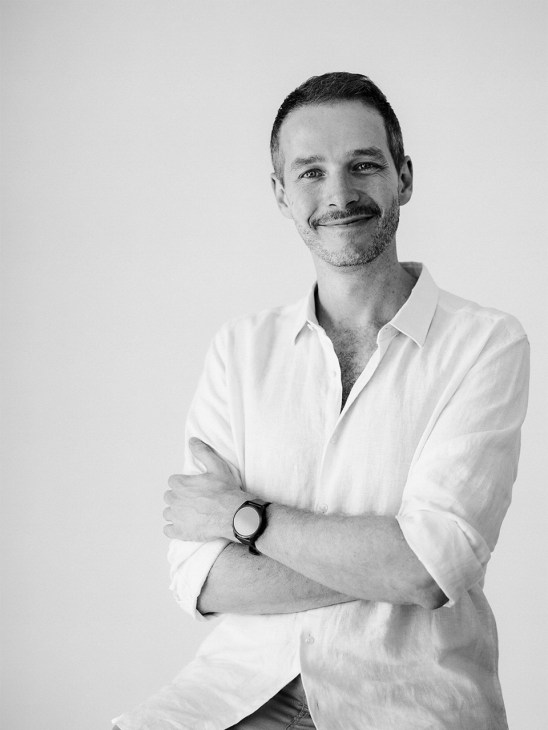
It was Anton Thomas’s childhood in the small city of Nelson on New Zealand’s South Island that ignited his curiosity for cartography. “My town is surrounded by mountains or ocean,” he tells Monocle. Thomas didn’t study art and had toyed with the idea of becoming a full-time musician but today he’s devoted to his beautifully hand-drawn charts.
In 2011, Thomas moved to the US and Canada, living in each country for about a year. The vast landscapes intensified his fascination with representing the world around him. Are maps meant to be functional or can they be art too? “They probably are art, as long as they’re made by people,” he says. “Mine are covered with illustrations and are all drawn by hand, which is increasingly rare.”
Thomas works from his home studio in the suburbs of Melbourne. Nearby is Yarra Bend Park, where he can get lost for hours gazing at flying fox colonies or spotting a wallaby or grey kangaroo. Thomas’s work includes a variety of wildlife; his Wild World project features 1,642 species. In an era of environmental pessimism, he says that he remains hopeful. This positivity suffuses his work.
The hardest animal for him to draw is the giraffe. “You have to be very patient,” he says. “All of those patches are time consuming. I’ve also long had an issue with porcupines; I find it difficult to get their quills just right.” And the easiest ones? “Cute little birds, especially the round ones, such as a finch.” Travel still informs Thomas’s work. “I have two maps under way: Wild California and Wild Kenya, two places I visited in 2024 and had mind-blowing adventures in.”
Kiichiro Asakawa
The rising Japanese fashion designer with a keen eye for fabrics.
Tokyo
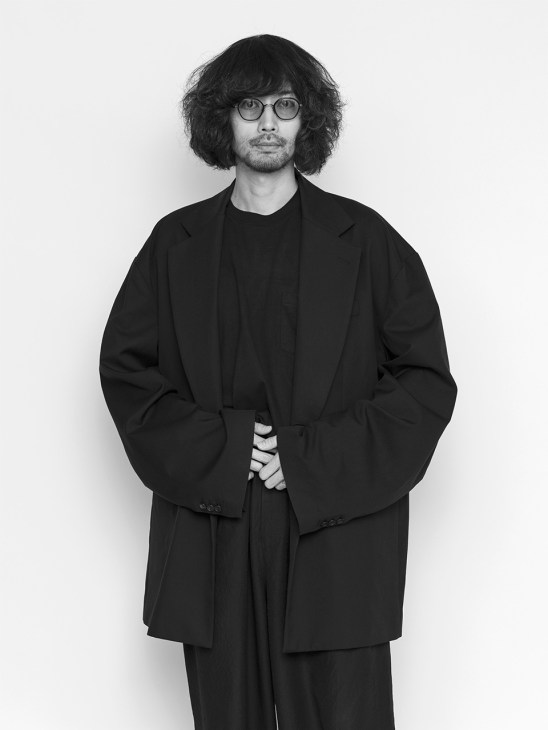
Kiichiro Asakawa’s first love was vintage clothing – denim jeans in particular, which he took apart, reconstructed and sold at his multibrand boutique, Carol. Ssstein, his Tokyo-based label, started quietly in 2016 with a handful of garments, all elevated by Asakawa’s eye for fabrics.
By teaming up with talented technical hands, developing textiles to his own specifications and manufacturing in Japan, the self-taught designer has gradually honed his vision of luxurious minimalism. His collections have grown, attracting a following for their subtle tweaks of convention and effortless elegance. The current season’s pieces include oversized premium cotton shirts and relaxed cashmere V-necks, loosely knitted for a lightweight summer feel.
Once a word-of-mouth label, Ssstein got its first international break in 2025 when it won the Fashion Prize of Tokyo. This took Asakawa’s clothes to Paris and gave the world a glimpse of his styling. Buyers snapped up the tailored coats and layered looks for the autumn/winter season; now the brand has 50 stockists in Japan and 90 overseas.
The speed of his ascent surprised Asakawa but he remains committed to his principles. He doesn’t feel the need to reinvent things every season and prides himself on his relationships with manufacturers. “We have taken a careful, conscious approach to expanding both in Japan and overseas,” he tells Monocle. “We intend to continue at our own pace in delivering our products steadily and thoughtfully to an ever-wider audience.”
Three Ssstein garments to admire:
- The oversized short-sleeved T-shirt, made in Japan from 100 per cent fine wool for year-round wear.
- The lightweight cashmere V-neck has a loose knit for a summery feel and is ideal for layering.
- The cotton-cashmere sweatpants are made using a one-of-a-kind knitting machine in Wakayama for a soft, plush texture.
Jessie Willner
The perfumer evoking the thrill of club culture with her scents.
London & Los Angeles

Jessie Willner had an unlikely path to the world of scent. The Angeleno taught herself to code at the age of 11 and built websites while nurturing her passion for design and animation. “I started doing freelance graphic design and created my luxury outerwear brand, The Mighty Company.” The inspiration for her fragrance firm, Discothèque, came from club culture, which she had soaked up over countless nights out with co-founders Hanover Booth and Whitney Moulton.
“It’s hard to find another moment when you feel as free as when you’re on a dance floor,” she tells Monocle. “The scent business was a passion project that kind of went out of control. We turned it into a brand.” Success came quickly. In 2025 the business grew sevenfold, says Willner, who splits her time between London and Los Angeles. Further growth is expected in 2026.
Every scent is rooted in a time and place. “Call for a Good Time” is inspired by a jaunt in Tokyo in the 2000s, while “Baise Moi on the Dance Floor” evokes an imagined night on the tiles in Paris in the late 1970s. Today the perfumery is growing rapidly and has a factory outside London, while its candles are made in Plymouth on the UK coast. US expansion is the focus for 2026. “We have just started working with a factory in the US, so we are now running simultaneous productions,” says Willner.
The brand’s big break was the launch of its products at Selfridges department store. “That was monumental,” says Willner.
What does the company foresee after its US push? “We’re probably working on 20 different perfumes, though some of them will never see the light of day,” says Willner. “We’re also launching in some of our favourite shops across the world later this year, in locations that correspond with cities that inspired the perfumes.” Despite the pace of change, she says that growth has been organic and that her focus is squarely on what the company makes. “We’re a product-first brand and everything is built around making something that we really believe in.”
Silvana Estrada
The soulful singer taking Mexican music worldwide.
Mexico City

Listen to Silvana Estrada’s voice and you’ll immediately understand why the international media has dubbed her the Latin American Joni Mitchell. Nature is ever-present in her work. Estrada, who grew up in the Mexican town of Coatepec, composed and sang from an early age, before moving to Mexico City to pursue a music career at the age of 18. “I had no plan and no money,” Estrada tells Monocle.
Her decision to relocate quickly began to pay off. Today she is celebrated in her home country and across Latin America. Her second studio album, Vendrán Suaves Lluvias (“Soft Rains Will Come”), is finding a global audience too. “This album is really personal,” she says. “I struggled a lot while making it. It’s self-produced and I wrote all of the tracks. It’s an album about trying to find beauty in pain.” She added an orchestra and layered instruments across the album for a fuller, more intense sound. Her favourite track? “Good Luck, Good Night,” she says, describing the song as one in which she laughs at herself. “It has a cabaret vibe,” she says. “It’s about a girl waiting for a person who never appears. There’s lots of drama but it’s funny and dark at the same time.”
Her focus this year is on touring, including in Europe. Expect new collaborations, such as with singer Pablopablo on the song “Antes de Ti”. When asked what she thinks of the Mexican music scene, Estrada says, “It feels like everything is possible. Artists are mixing different genres, including traditional music. It’s all happening at once. Every neighbourhood in Mexico City has its own scene.”
Three tracks to listen to:
- ‘Te Guardo’ (2018)
Estrada’s breakout single is a celebration of the euphoria of new love. - Milagro y Desastre’ (2023)
Another song showcasing Estrada’s powerful vocals. Here, love can transform and destroy at the same time. - ‘Como Un Pájaro’ (2025)
This Latin Grammy-nominated track, featured on her latest album, was written during the early days of the coronavirus lockdown.
Keerthana Kunnath
The photographer bringing together multiple perspectives.
London
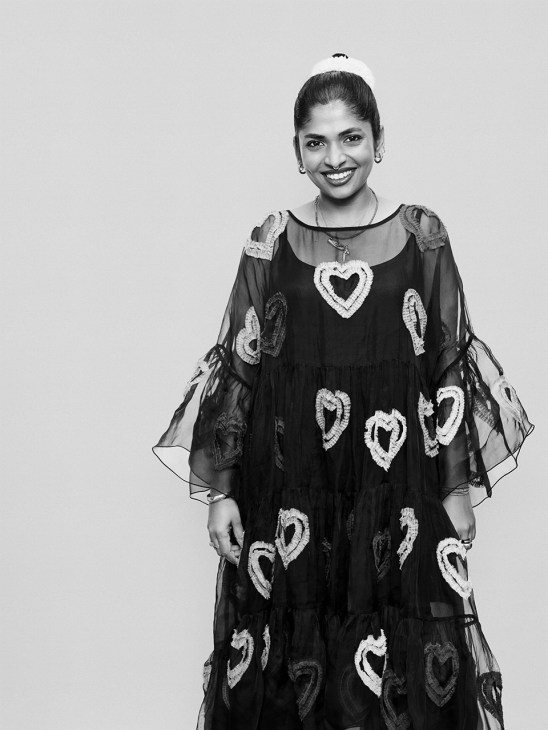
For Kerala-born, London-based photographer Keerthana Kunnath, there’s never just one way to look at things. The young artist has been pushed and pulled between continents and styles ever since she first closed one eye and looked through a viewfinder. For Kunnath, this sense of duality is a source of creativity. In London, she works on commercial and editorial shoots, including for Monocle; while in India, she pivots to carefully composing what she describes as “staged documentaries”.
Her most recent personal photo exhibition, Not What You Saw, is an examination of female bodybuilders in India that offers keen insights into a little-known community. “I grew up in the same region as these women but they were unfamiliar to me,” says Kunnath. “I strongly wanted to document them and to do it in Kerala. The more rural you are, the more rigid the views of what traditional women should be. The challenge that they’re posing was important to me.” The images’ power partly lies in their depictions of small details: bracelets on ankles, faded tattoos on tensed forearms, flowing dress materials against brown skin. “I could never be a snapshot photographer,” says Kunnath. “I need that sense of orchestration.”
Her care for the craft goes beyond knowing when to press the shutter. In an age of shoot-from-the-hip smartphone photography, her work offers examples of time-tested technical proficiency. “I shoot medium format on a Mamiya RZ67 and a Pentax 67, and hand-print all of my images,” she says. “But as I’m getting more exposure, I’m starting to travel more, leading to a lot of experimentation too.”
ARTICLE CREDITS
WRITERS:
- Aarti Betigeri
- Augustin Macellari
- Fernando Augusto Pacheco
- Fiona Wilson
- Grace Charlton
- Ivan Carvalho
- Joseph Koh
- Natalie Theodosi
- Rory Jones
- Saul Taylor
- Tomos Lewis