Hotels have a lot on their plate – but the least they can do is deliver a sense of place
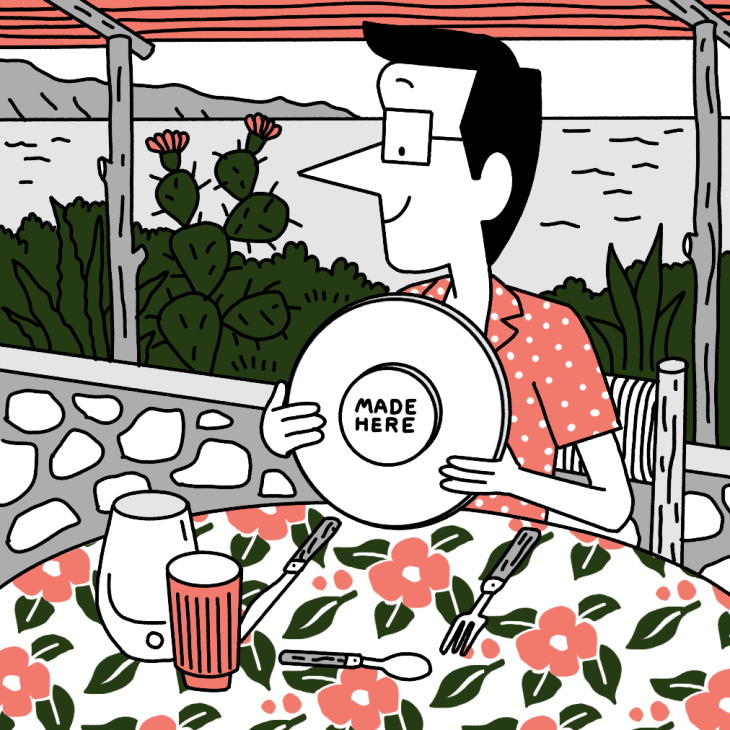
Are you a plate flipper? I can’t stop myself. Same with glasses. The labels on the towels. Where is this stuff made, I wonder? Often the answer is a delight but too often a disappointment.
Hotel groups have – like lots of brands – locked on to the fact that people are seeking authenticity. And when that comes to travel it means delivering that cliché, “a sense of place”. Guests don’t want to arrive in a room stripped of connections to the spot where it sits and where, as you awake, it’s hard to recall if you are in Milan or Minnesota without opening the curtains.
The only trouble is, if you are a hotel group, it’s very hard to stop your central buying team from dispatching the same plates, towels and even art, to every property in your portfolio. It’s quicker and cheaper.
I’m in Mallorca on holiday and have been doing a lot of crockery flipping. Last night we ate at a hotel where they emphasise the efforts they have gone to provide a made in Spain – and in particular Mallorca – experience. There’s lots to admire. Yet a quick flip of the plate reveals the mark of an Italian crockery company, the glasses are etched “made in Slovakia”, the pepper grinder is German.
Just down the road from our home in Palma is an example of what happens when a hotel is created by people who want you to flip the plates – and read the wine label, ask where the food is grown, even who made the sofas.
The Terreno Barrio Hotel, which opened this year (we have reported on the project), is owned by hotelier Lydia Piñero and was developed through a series of creative conversations with friends and designers. She was figuring out how to build a hotel that was truly of place and which could be of benefit to its neighbours (this would lead to adding co-working places, an outdoor gym now used by locals). And she signed Ohlab architects, an ambitious practice run by Jaime Oliver and Paloma Hernaiz, to deliver the scheme.
Instead of going to fast-turnaround contract furniture companies, Ohlab commissioned island makers to create as much as possible in Mallorca. It wasn’t easy, took time and required businesses to rescale. But as I sat at the rooftop bar the other night – drinking local wine, eating Mallorcan olives – I realised that there is a subtle manifesto about the future of hotel design in every fibre of this building.
There’s another take on this idea down the road in the new Mandarin Oriental resort at Punta Negra, which also featured in the supplement of our just out Med, Mountains & More newspaper. This Hong Kong-anchored hospitality player could have docked with a property that gave just a few nods to local talent to appease guests – but it hasn’t. And one of the best things they did was to hire the art advisor and curator Paloma Fernández-Iriondo, who filled the resort with specially commissioned artworks by artists based or born in Spain and whose stories reflect Mallorca’s history as a cultural crossroads. She installed works – such as Fran Aniorte’s tiled Balearic Constellation – that are riven with meaning but also fit with a Mediterranean hotel vibe. Fernández-Iriondo focused on finding artists without representation and located many of them by driving around the island, knocking on studio doors. It’s commendable – it took time and required them to ignore the easy path.
I don’t want to put Italian crockery makers out of business. But as hotel brands offer up increasingly elaborate stories of provenance, it’s important that they are true, that their stories withstand scrutiny. We need brands to do the hard work, to be genuine. Otherwise, the plate flippers will catch them out.