The timing couldn’t be better for Mallorca’s beautiful new Mandarin Oriental
Set on the Mallorcan coast just outside Palma, the new Mandarin Oriental Punta Negra seeks to redefine high luxury on the island.
It’s 07.00. I’m already up, so I step onto the balcony to take in the view, just as guests have done since the mid-1960s. Below me, the pool is tranquil, towels are being put out on the loungers and a couple of guests are already on the terrace for coffee and breakfast. Beyond the pine trees gently twisted by a lifetime of sea breezes is the Mediterranean. The bay is punctuated by boats, their sails down, still asleep like their owners.
This is Punta Negra, a rocky outcrop of land where, in 1966, the Blanes family opened a modern hotel designed by Spanish architect Felipe Sánchez-Cuenca Martínez. They couldn’t have found a better spot. While the original (and heritage-listed) hotel buildings still dominate the headland, they have been joined by a series of softly rendered casas, six world-class restaurants and a vast spa that together mark Mandarin Oriental’s entry into the Mallorcan market – just at a moment when the island’s hospitality scene is seeing a decisive shift to high-luxury accommodation.


Raul Guerra, a Mandarin Oriental veteran, is the man tasked with getting this resort up and running. With his whip of patrician hair and easy confidence, it’s clear that the director of marketing and commerce has the brand’s DNA flowing in his veins. I ask him why the Hong Kong-headquartered company wanted an outpost here. “Our resort business has been growing over the past seven or eight years and, in Europe, we are doing very well in places like Bodrum and Costa Navarino,” he says. “But we wanted to be here. We already have city hotels in Madrid and Barcelona. We were looking at projects in Marbella, Ibiza and Seville but Mallorca came up first. It’s perfect timing.”
That perfect timing is, in part, down to a new cohort of visitors being drawn to the island, thanks to two long-haul flights – a United Airlines one from Newark and, just launched this summer, an Etihad connection from Abu Dhabi. Americans, Emiratis, Saudis, Mexicans and Brazilians are happy to spend more than European guests (another hotelier tells me that the flights have allowed him to double his prices). Catering to this client base that often travels with staff and family in tow meant subtly changing how the rooms were designed. The expanded resort now has 131 rooms, with 26 suites, including a series of casitas. “And 80 per cent of the inventory has interconnecting doors,” says Guerra of this simple update that gives Mandarin Oriental a market advantage.
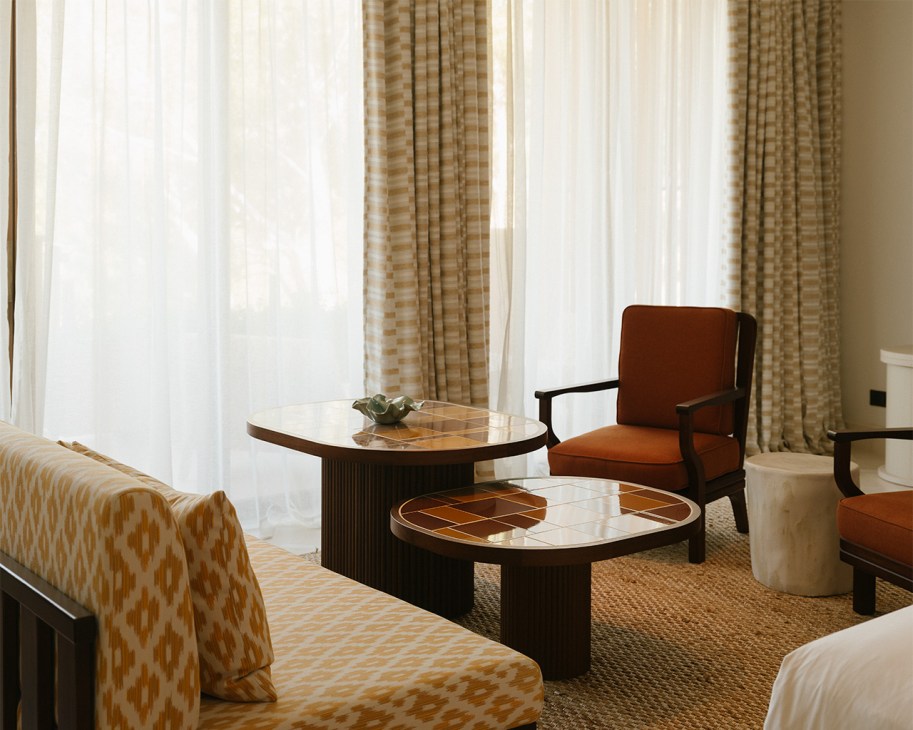
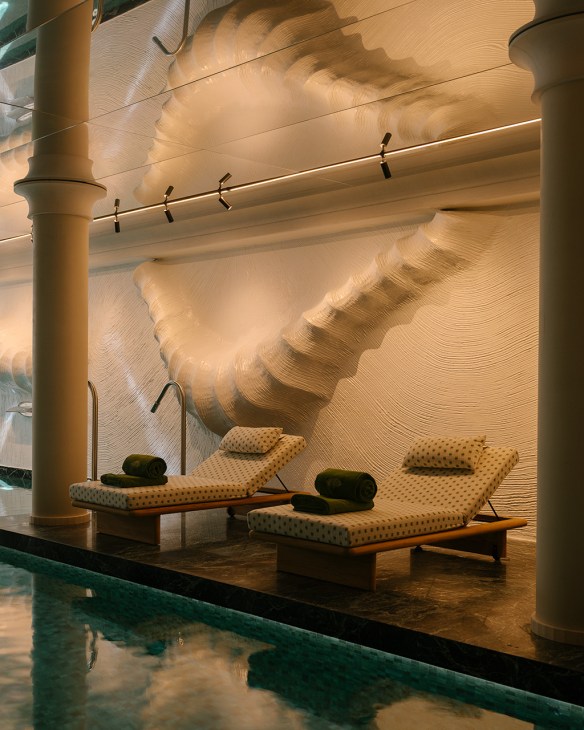
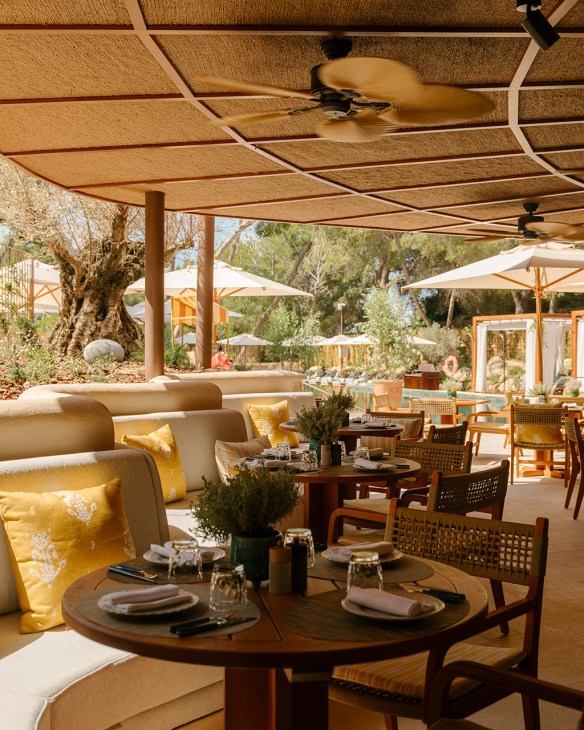
But there are also other factors working in its favour. Despite feeling pleasantly far from the realities of life, the resort – owned by Blasson Property, which has reportedly spent €200m on the project – is just 20 minutes from the airport and 15 minutes from Palma. Not only is this convenient for guests but it also means that the hotel can attract diners from nearby villas and the capital – important when you have six restaurants to fill. Guerra describes Mandarin Oriental as having an “open concept” and this extends to the spa and its glorious pool, which are also available to non-hotel guests.
But back to that restaurant mix because it demonstrates the hospitality brand’s ability to pull in peerless players. As Monocle goes to press, four of the six are up and running and these are Thalos, a Greek pool-club restaurant, Sobretaula for Spanish tapas and cocktails, Leppoc for a Mediterranean menu and steakhouse Leña. Next will be an outpost from chef Nobu Matsuhisa (the first of his Matsuhisa line of restaurants in Spain) and Jacinta, a Mexican affair by DZO Hospitality, a Miami-based group. The trick for the resort will be to find the sweet spot between being an open concept and offering discretion and privacy to clients who don’t want to spend time around a lot of other people. Luckily, the scale of the resort helps.
There are other good decisions that bind the Punta Negra property, make it feel of place and elevate the experience. The planting that weaves across the property is fluid, colourful and alive with butterflies dropping anchor on its blossoms. The giant cacti here are architectural and dramatic. The interior design by French designer Laura Gonzalez, in collaboration with BG Studio, also feels free, spirited and perfect for Mallorca. And then there’s the art.
Paloma Fernández-Iriondo has curated the latter in all of the rooms and public spaces, and she has done an amazing job. She began her career at Sotheby’s in Madrid, rising to become the head of the old masters department in Spain, then spent years helping industrialist Juan Miguel Villar Mir to create one of Spain’s greatest art collections, before launching a business to assist hotels in collecting and showing art. At Punta Negra, she wanted to work with artists based or born in Spain, as well as those whose stories reflect Mallorca’s history as a cultural crossroads. “Everything needs to fit with the interior but each piece needs to have merit,” she says of her role. “No piece should be better than another. It has to make a statement but be relaxed and of the island.”


To meet this brief, she crisscrossed Mallorca and sought out talent that didn’t have gallery representation – the kind of thing that only a person with an extraordinary eye can achieve. Then she started to commission unique pieces, such as the tiled “Balearic constellations” in the lobby by Fran Aniorte, an artist living between Istanbul and Barcelona, and the paintings by Vera Edwards in Casa Alma – part of the original hotel. A piece of history serendipitously floated to the surface when Edwards pointed out that her grandmother had made a ceramic mural for the hotel in the 1960s. Now that work, depicting the conquest of Mallorca by James I in 1229, sits just metres from one by Edwards. Here, you see a real commitment to quality but also a sense of creativity. Perhaps that’s what modern luxury is about – an elevated sense of place.
After taking in the view from my room, I head out past the pool, taking a fresh towel, and walk down the steps to one of two tiny public beaches beside the property. I dive into the silent waters and swim out, before turning back to look at the handsome hotel on the rocks. In the orange blush of the morning, it looks glorious.
mandarinoriental.com
Victory lap
The Mandarin Oriental Punta Negra’s lead architect is Estudio Lamela, which worked on the project in collaboration with HKS Architects and local studios including Palmer Blach Arquitectos. The practice was founded in 1954 by Antonio Lamela, known for his work on hotels, apartment buildings and landmark projects including Madrid’s Torres Colón. For the studio, the Punta Negra project marks a return to a piece of coastline that its founder knew well – he designed residential projects such as Edificio Zodiac in Illetes and Son Matías in Palma Nova.

This article is from Monocle’s Med, Mountains & More newspaper, on sale from 31 July. Subscribers will receive a printed edition including a magazine supplement as part of their subscription. Not a subscriber yet? Purchase a copy of the newspaper here.
Further reading:
Mandarin Oriental Hotel Group CEO Laurent Kleitman on the future of luxury hospitality, the hotel group’s growth and ‘The White Lotus’ effect
Where to go and who to know when making yourself at home in Mallorca